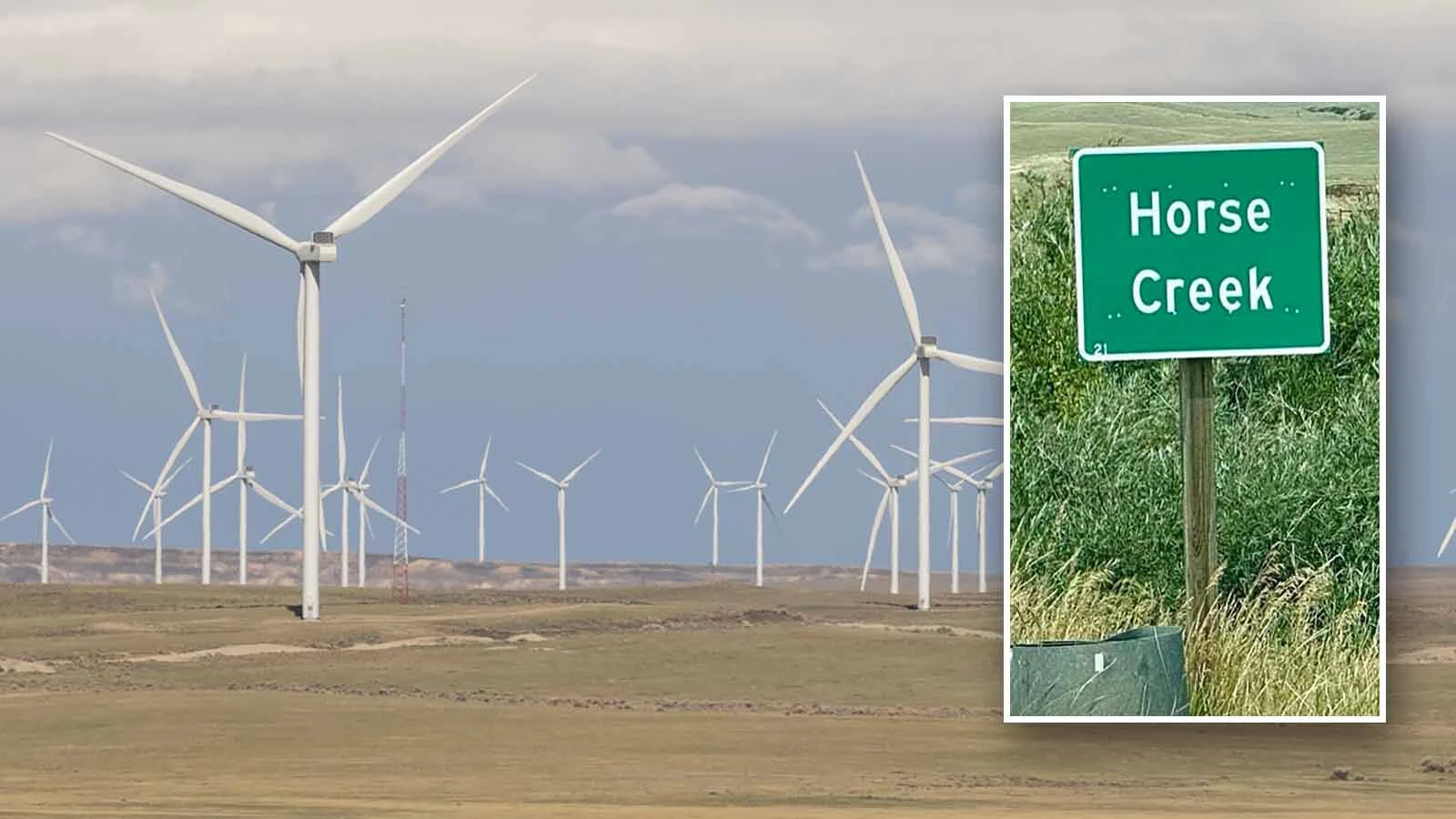
Project Jade, Wyoming’s largest data center, is now Project Tembo, and the company behind the 2.7-gigawatt facility is a mystery no longer.
The data center will be owned and operated by none other than Google, giving Cheyenne yet another of the world’s largest tech companies in what is fast becoming an emerging tech frontier.
Cheyenne has hosted Microsoft data centers for the past decade or so and that company has announced plans for a major expansion on a 3,500-acre tract of land whose annexation is pending before the Cheyenne City Council.
Meta announced last year it was joining the Wyoming fold with an $800 million, 715,000-square-foot data center campus on a 960-acre parcel in the High Plains Business Park. That project, recently making headlines because of bacterial contamination that showed up in Cheyenne’s wastewater system, is set to open as early as 2027.
Google’s new facility likely isn’t the last large tech company to show up in Cheyenne. In addition to its 10 existing locations, Cheyenne has five more under construction and another nine in advanced stages of discussion, according to data from Cheyenne LEADS.
LEADS has also had 36 data center companies or site selectors express interest in Cheyenne or Laramie County, plus another 30 “tire kickers” that made at least one exploratory call.
Prometheus Hyperscale, meanwhile, has said it’s talking with “name-brand” companies for one gigawatt-scale data center near Evanston and one near Casper.
Inside Project Tembo’s Massive Campus
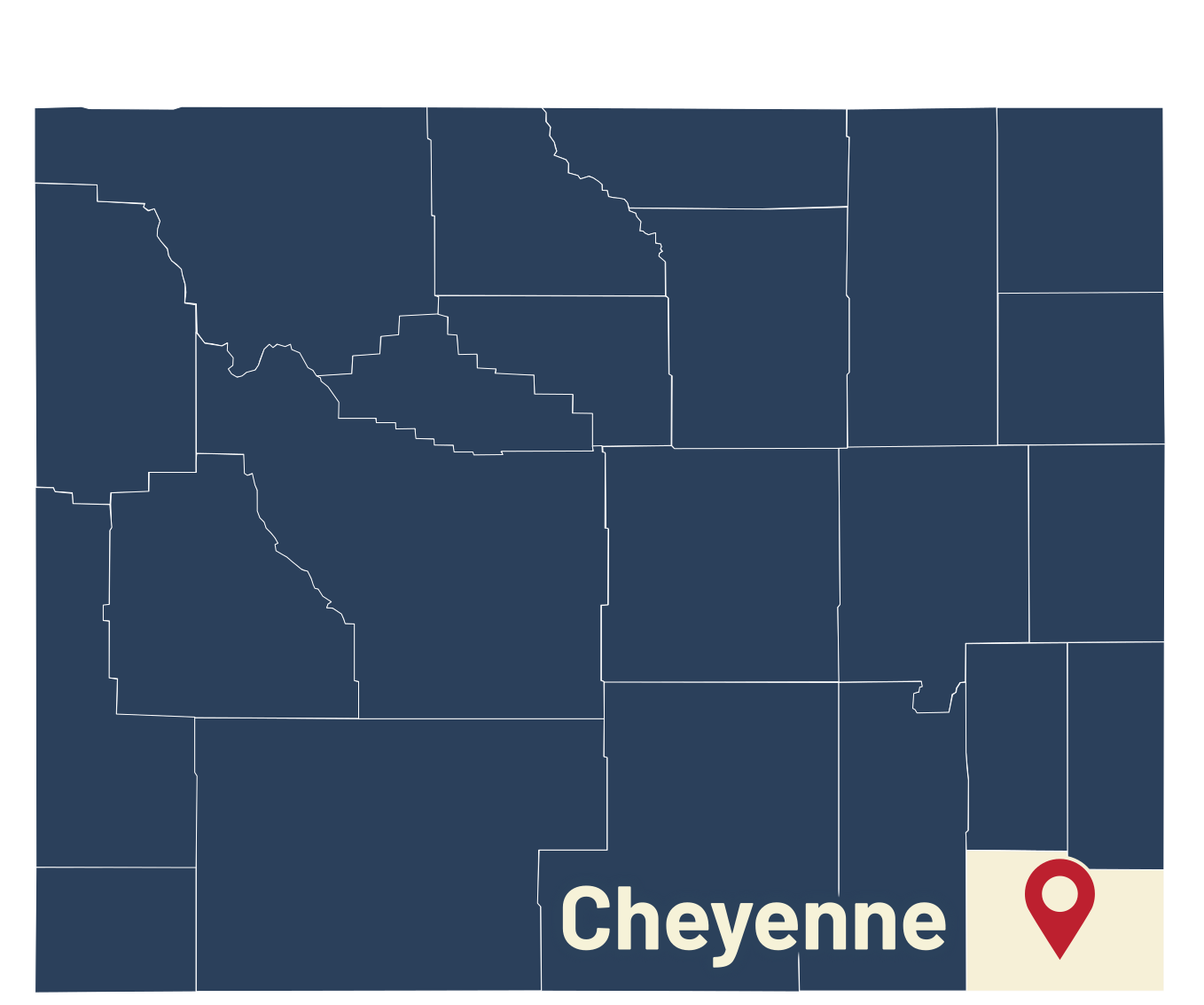
Google’s project, according to planning documents filed with Laramie County, will be a 716-acre campus 8 miles south of Cheyenne in the Switchgrass Industrial Park, formerly used for seasonal cattle grazing. It is surrounded by rural, agricultural private and state-owned lands, as well as a solar field.
The nearest residence is .1 miles east of the project. Single-family residences are also located .5 miles north and 1.34 miles south of the location. All of them are “low-density,” Google said in its filing.
Deeds filed with the application identify the owners as the Lazy D Grazing Association and Boyd and Allison Meyer.
The application outlines a project that includes four data center halls and an office hub, as well as logistics and network buildings and new access roads off U.S. 85, with a planned completion date of 2031. The size of each data center hall is not mentioned, other than to describe them as “large-scale” facilities designed to support “a large number of computer servers operating simultaneously, along with associated mechanical and electrical equipment” for high-density computer workloads.
Quiet Hand-off From Crusoe To Google
Google’s data center facilities are being built by Jupiter Star Holdings, LLC, a wholly owned subsidiary of Google. Jupiter Star Holdings is replacing Crusoe, which last month told Bloomberg it’d been asked to “pause” construction of Project Jade at the customer’s request.
That initially led some to believe the huge data center project, which can scale to up to 10 gigawatts, had been put on hold.
Subsequent statements, however, made it clear the project never hit the pause button. Crusoe actually had been asked to pack up and leave by the data center client, which was taking over construction of the facilities.
Tallgrass Energy executives told Cowboy State Daily at the time the project was “full steam ahead” and they would still be building out and delivering a bring-your-own power generation hub for the data center client. The client, Tallgrass added then, had not changed, though they declined to confirm who was building such a large data center.
Black Hills Energy also put out a media statement at the time, saying the project was continuing. In a subsequent interview with Cowboy State Daily about how the company is handling the surge of power-hungry data centers coming to its Cheyenne-area grid, the company confirmed it is a partner in the project.
That suggests the project will eventually be connecting to the existing electrical grid and infrastructure, even though it has been touted as bringing its own power.
Google’s application says Tallgrass Energy will “combine energy resources from Black Hills Energy, fuel cells, and its power plant” to a substation that will serve power to the data center campus.
Wastewater treatment, meanwhile, will occur on site with evaporative lagoon storage. Connection to Cheyenne’s municipal wastewater system was not deemed cost-effective.
All wastes will be handled in accordance with applicable local, state, and federal laws, the document goes on to say, and disturbed areas will be revegetated with native or adapted dry-land perennial vegetation.
Traffic studies will also be conducted, and efforts will be made to minimize noise, wildlife impact, and visual impacts.
Public Filings Reveal Google’s Role
Most of the new details about the former Project Jade aren’t coming from press conferences and ribbon cuttings right now. They’re from a June 30 site-plan amendment, filed with Laramie County’s Planning and Development, along with a stack of other documents.
The site-plan overview filed with the amendment identifies Google in its first sentence, publicly revealing the company behind the former Project Jade for the first time.
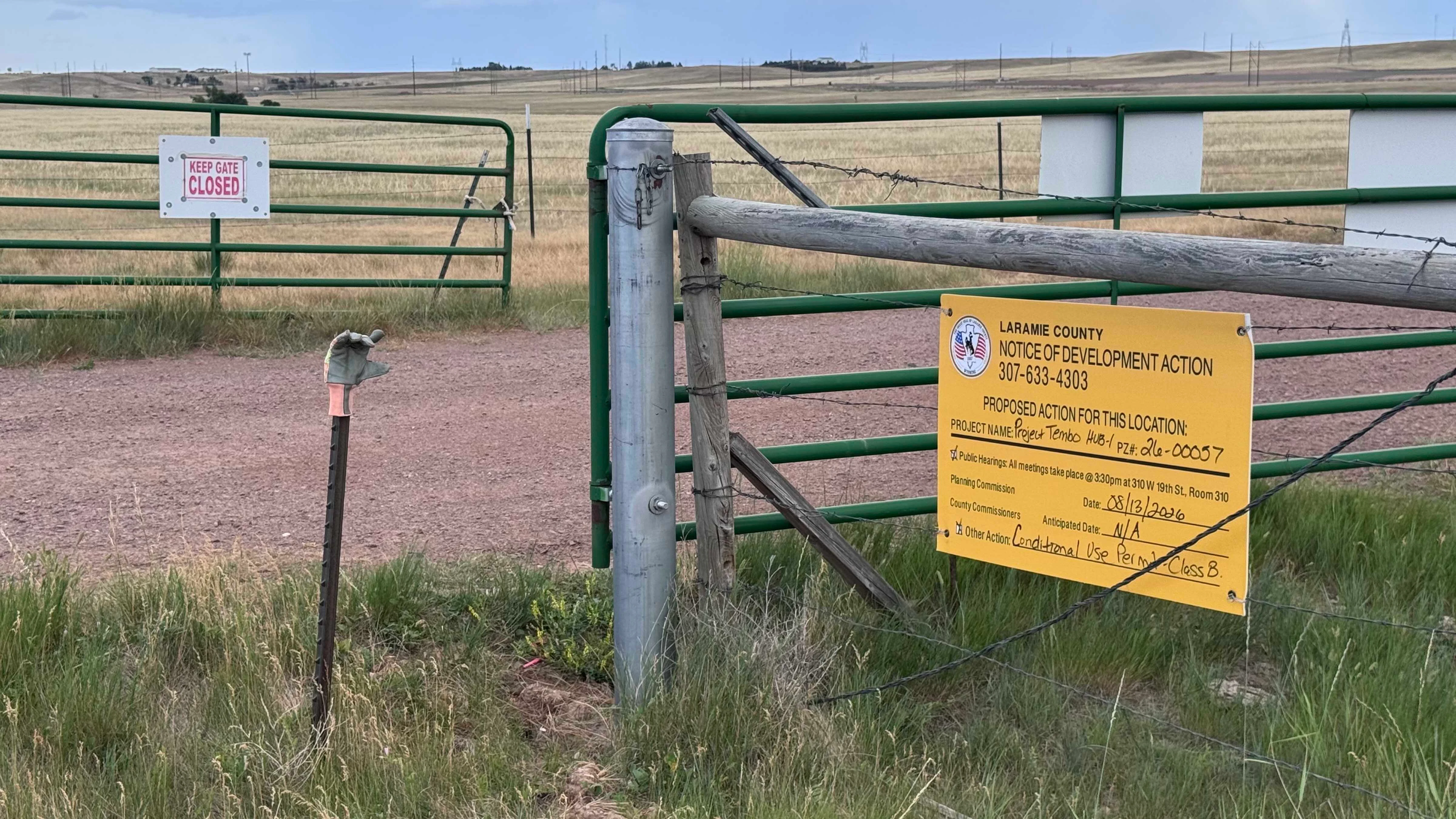
Google, through Jupiter Star Holdings, has also sent out a required “adjacent neighbor” notice identifying a 32.83-acre area where an office support facility is planned. That was not part of Project Jade’s original conditional-use permit, the letter says.
A hearing has thus been set for the required permit at 3:30 p.m. Aug. 13 in the Laramie County Commission chambers.
Comments on the matter are to be accepted through July 31, and may be emailed to planning@laramiecountywy.gov.
Growth, Power, And More Questions
Taken together, the January approvals for Project Jade and June’s amended filings for what’s now being called Project Tembo show that Wyoming’s biggest data center has quietly shifted from a Crusoe-branded campus with an unnamed “hyperscale” client to a Google-owned build advancing through Laramie County’s land use processes.
That evolution is happening alongside other large-scale tech build-outs in Cheyenne, a city once known as the Magic City on the Plains for its seemingly overnight growth when the Union Pacific railroad arrived.
Some local observers, including longtime Cheyenne attorney and Councilman Larry Wolfe, have begun questioning whether data center and power planning are keeping pace with the speed and scale of these projects.
It’s a debate that’s likely to grow as Tembo and other campuses continue to converge on Cheyenne’s new tech frontier.
Renée Jean can be reached at renee@cowboystatedaily.com.