
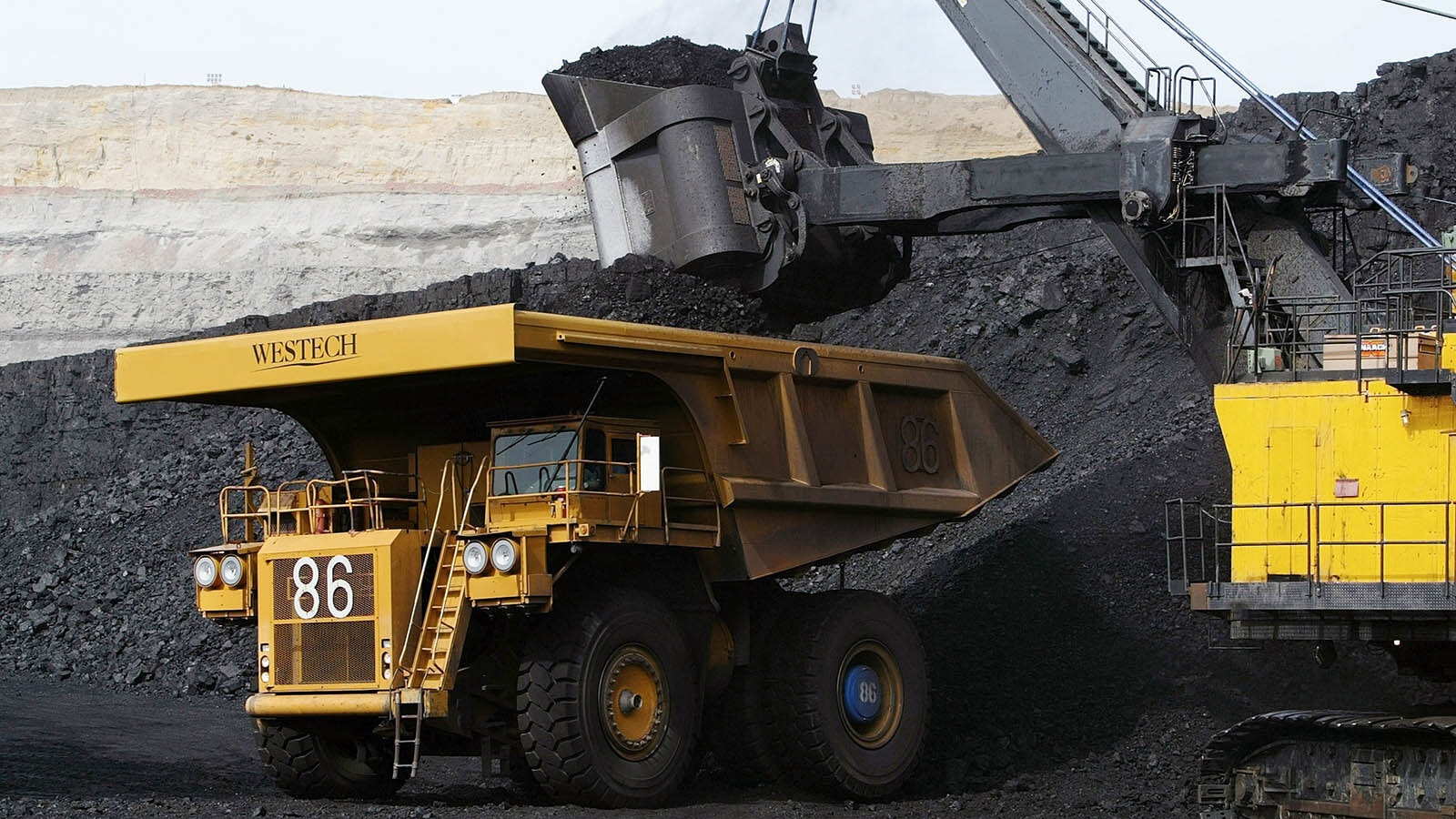
The future of Wyoming coal mining might depend less on the availability of coal than on whether mining companies believe there is enough demand to justify bidding for new leases.
Still, Wyoming’s senior Republican U.S. Sen. John Barrasso is trying to sweeten the deal for mining companies to pursue federal coal leases by reducing the up-front cost of opening new sources of coal on federal land.
Barrasso’s legislation, which advanced last week through the U.S. Senate Energy and Natural Resources Committee, would extend the payment period for federal coal lease bonus bids from five years to 10 years.
Companies would still pay the same amount for a lease, but they could spread those payments over a decade instead of five years.
Wyoming Mining Association Executive Director Travis Deti said that seemingly simple change could make a meaningful difference.
Companies now acquiring federal coal leases must make a substantial payment as soon as the lease is awarded, tying up capital long before the first ton of coal is mined.
"The issue is it's a lot of capital outlay in this market environment," Deti said.
By stretching those payments over a longer period, companies would have more money available to build roads, develop infrastructure and begin mining, he said.
"By extending those payments, you give the company more capital in their hands to do what is needed to start mining the coal," Deti said. "That's why it's a good thing for the industry.”
Spreading those payments out over more time may not be enough to encourage coal production companies facing a decade-plus-long decline in demand for Wyoming’s thermal coal to bid for new leases, said University of Wyoming energy economist Rob Godby.
"It may be too little, too late," he said.
It’s All About Demand
While industry advocates agree the proposal could make leasing more attractive by freeing up cash during the expensive early years of mine development, economists like Godby say the measure addresses only one piece of a much larger challenge: demand for coal itself.
Godby said the measure could make pursuing a federal lease more attractive because companies would have greater financial flexibility.
"There could be, at the margin, a few more bids," he said.
Coal lease auctions now typically attract only a single bidder, unlike many oil and gas lease sales.
But Godby questioned whether improving payment terms alone is enough to convince companies to accelerate their leasing activity.
"The bigger question is how strong the coal market is," he said.
Coal lease bonuses once generated substantial revenue for Wyoming, particularly during the industry's boom years in the early 2000s. Those payments helped fund schools and other state priorities.
As coal demand has fallen to less than half of its 2008 peak, however, companies have needed fewer new leases and the once-lucrative revenue stream has largely dried up.
Like An Extended Car Loan
Godby said extending payment terms could provide some benefit to state revenues if more leases are sold, though likely nowhere near the levels seen during coal's peak years.
Barrasso said in a statement that his bill, which supports the Trump administration's broader effort to revive the American coal industry, would give Wyoming mines the certainty needed to power homes and businesses and lower energy prices.
The legislation is co-sponsored by Sens. Cynthia Lummis, R-Wyoming, and Mike Lee, R-Utah. Rep. Harriet Hageman, R-Wyoming, introduced companion legislation in the U.S. House earlier this year.
The bill does not reduce what companies pay for federal coal leases. Instead, it changes when they pay.
Godby compared the proposal to stretching a five-year car loan into a 10-year loan — except without interest.
"It's changing when you pay to more favorable terms," Godby said. "It does potentially improve the profitability of coal mining companies."
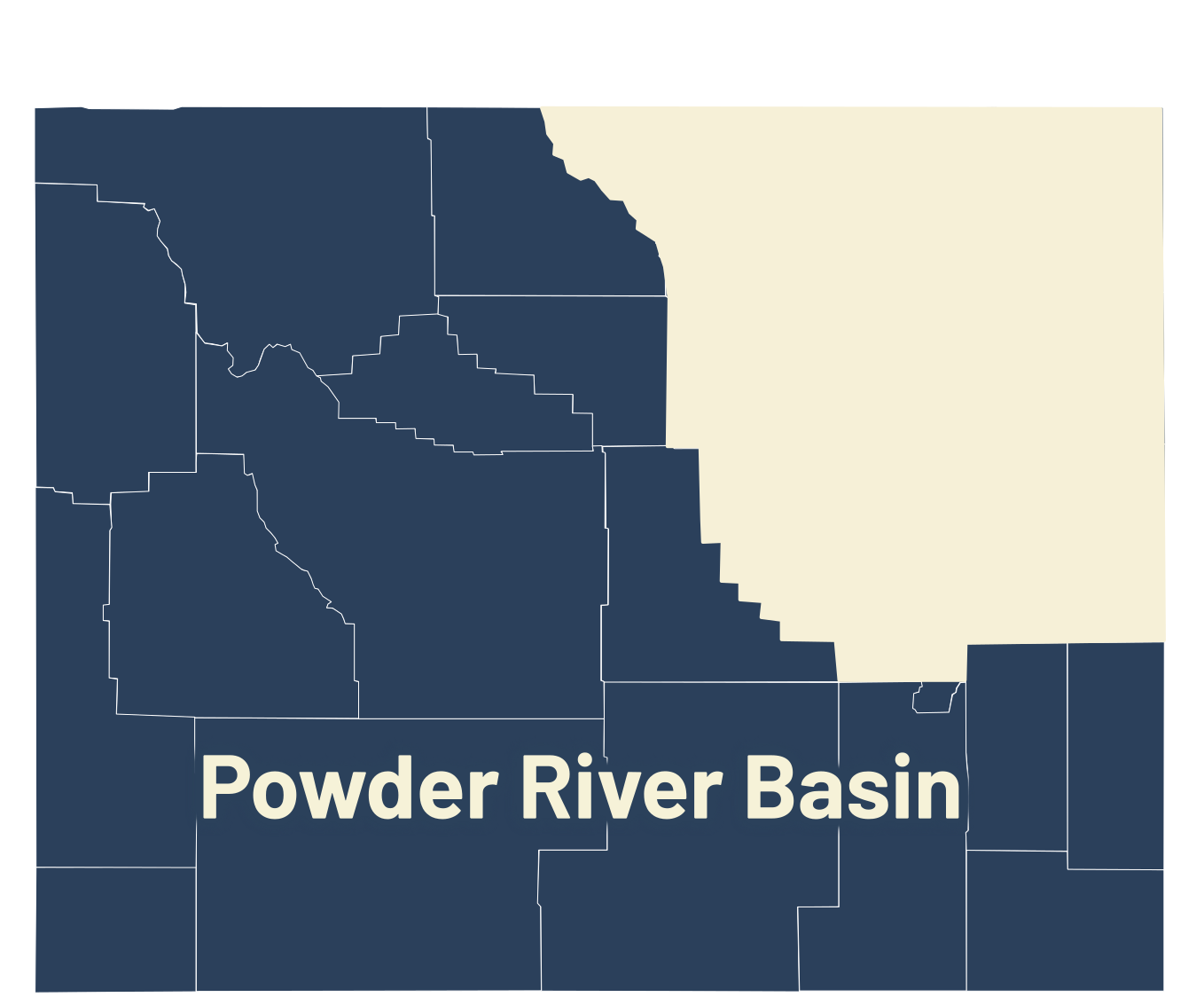
Supporters say the change would remove a financial hurdle for companies looking to expand production in Wyoming, which supplies nearly half of the nation's coal.
Demand Remains The Wild Card
Deti said he believes companies remain interested in expanding coal production and says demand exists to justify additional leasing over the next decade.
He said there is tremendous interest in leasing more coal to provide for more power demand, and there is enough demand for coal companies to expand their operations at least 10 years out.
“The bottom line is these companies have to be able to lease more coal,” he said.
Godby, however, said future demand — not financing — will ultimately determine whether companies seek new leases.
"Whether this creates more leases depends a lot more on companies' expectations of future demand for coal," he said.
Coal-fired power plants continue to age, and no major new plants are being built in the United States, he said.
The Trump administration has frozen their retirements but, Godby said, that’s at best a temporary fix. There are no new major investments.
"In fact, they're doing the opposite," he said. "They're avoiding investment."
Coal also continues to face growing competition from natural gas, wind, solar and emerging nuclear technologies that could help power future electricity demand, including energy-hungry data centers.
"The modern grid needs to be very flexible," Godby said.
He added that climate policy and the broader response to climate change remain significant factors shaping the industry's future.
"The elephant in the room is climate change (and) whether politicians want to recognize it or not,” he said.
For that reason, Godby said the legislation might improve the economics of acquiring a coal lease, but without stronger demand for coal, it is unlikely to dramatically reshape Wyoming's coal industry.
Kate Meadows can be reached at kate@cowboystatedaily.com.


