Raising show pigs can be time-consuming and, for many, a tough endeavor. From early spring to fall, 4-H and FFA kids spend one to two hours each day training and caring for their prized swine.
Not only do the young owners have to ensure they keep their pig healthy and bring them to full weight, they also must train them.
Show pigs must learn to prance around a ring with their heads held high to show off their assets. The goal is a grand-champion title. This takes months of dedication on part of both the kid and the pig.
The pig is then sold to the highest bidder at the annual fair livestock auctions.
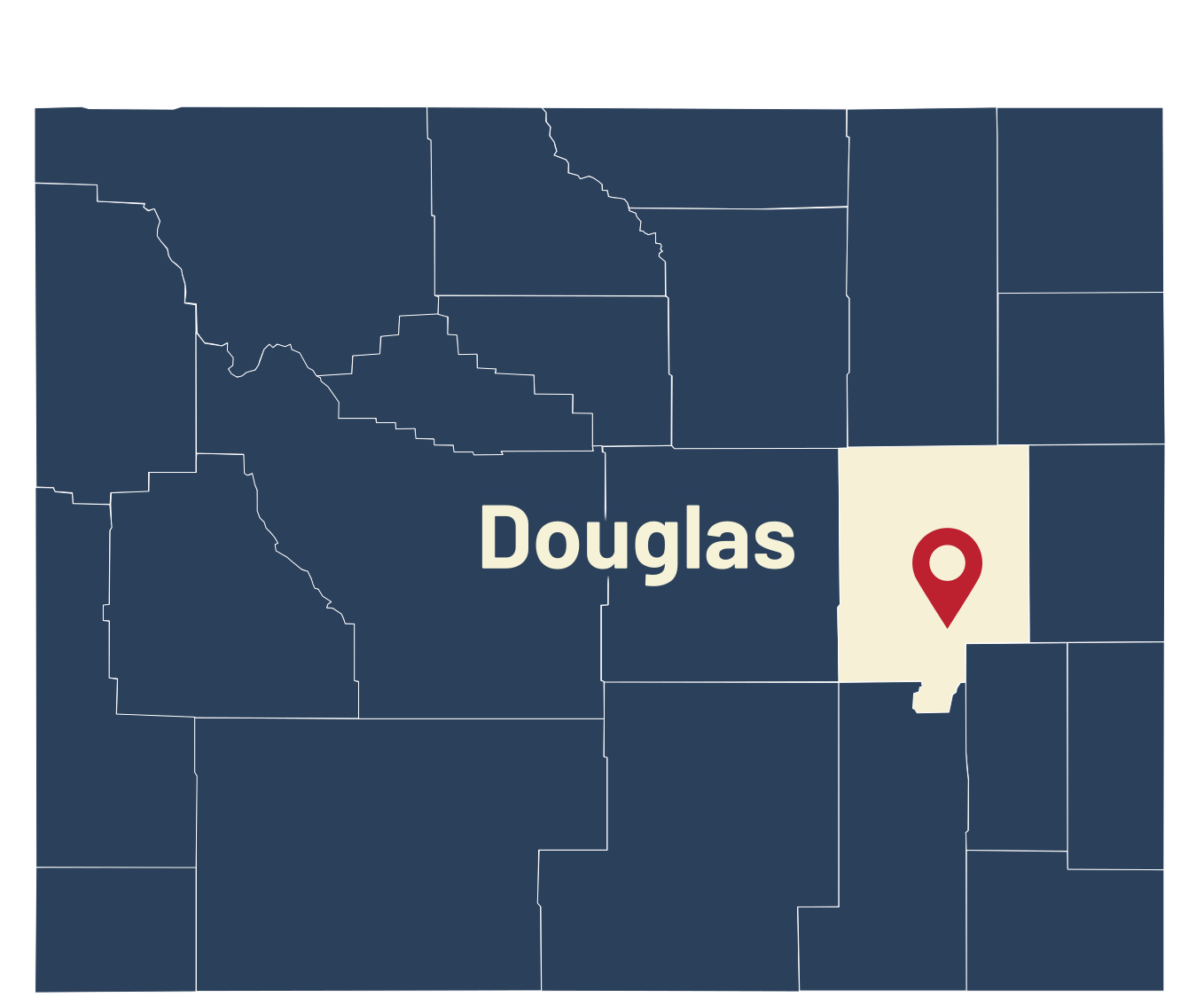
“I will not deny the fact it is one of the hardest things I do every year is sell my animal and realize that I will never see these animals again,” Tymber Eckley, 19, of Hot Springs County told Cowboy State Daily at the Wyoming State Fair in Douglas. “But you have to keep it in mind, obviously, that these pigs are being raised to be eaten.
“We are feeding the future of America.”
A couple of years ago, Tymber’s pigs picked up a variation of "pig flu" at a jackpot and the results were devastating. Her family lost pigs and those that remained were not the champions Tymber had hoped for.
Her family now, like many others across Wyoming, raises an extra pig as a backup. If all their pigs survive, they have the option of selling the pig privately or entering a lottery to help their community.
Since 2020, these extra hogs can be given to local charities to help feed those in need through “Fair to Fork” created by First Lady Jennie Gordon and the University of Wyoming.
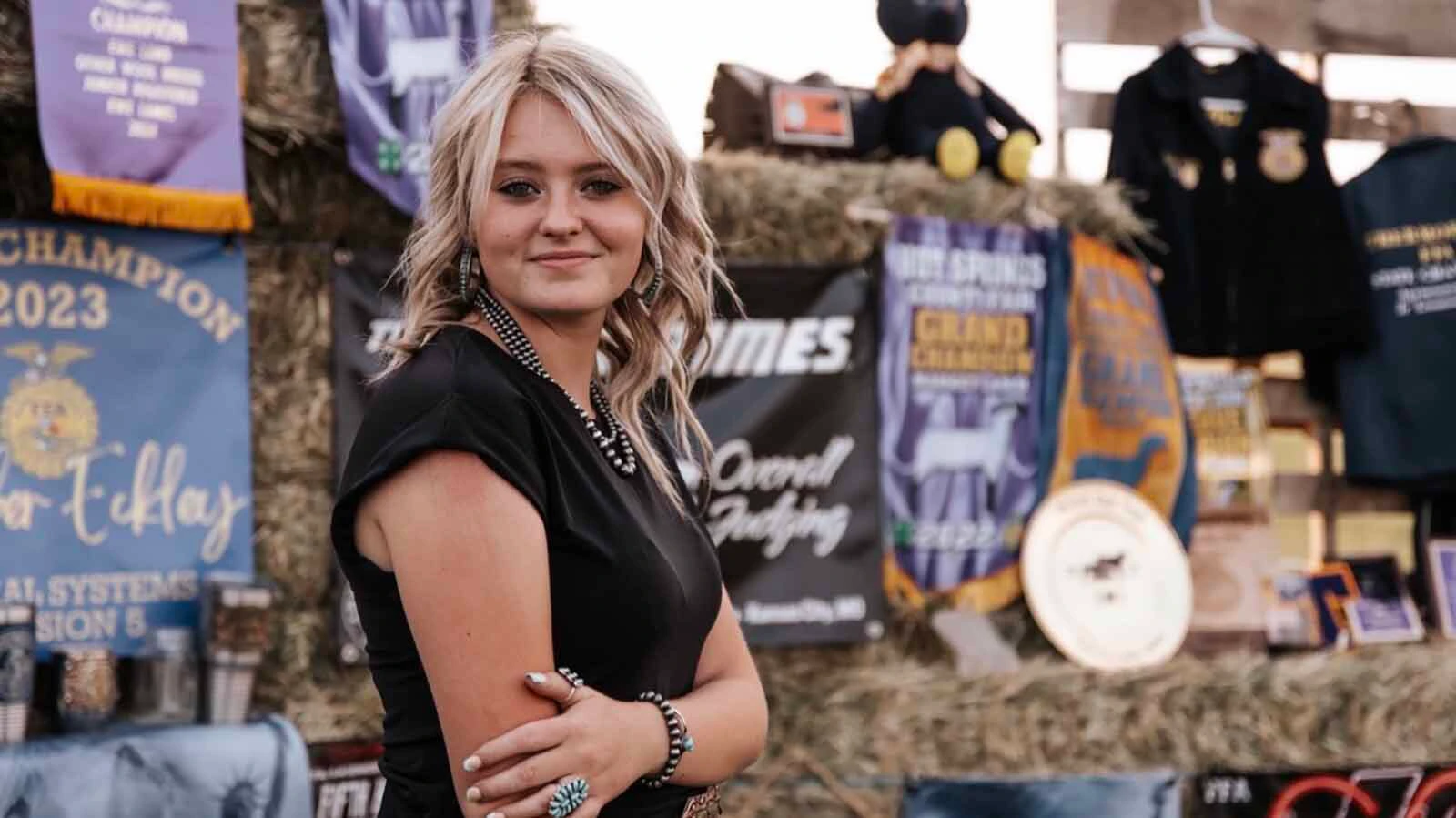
Each participant selected is given $750 for their hog and then picks a charity in their county to receive the meat. Tymber was selected in 2025 and her pig, Baby, was made into bacon and sausage for her food bank in Thermopolis.
“Raising a pig can be intense,” Gordon told Cowboy State Daily in a phone interview. “These kids are the cream of the crop and this program just gets kids that are already doing good work involved in their own community.”
Gordon said the reason she gives the prize money and a plaque to each winner at the State Fair every year is to honor their work.
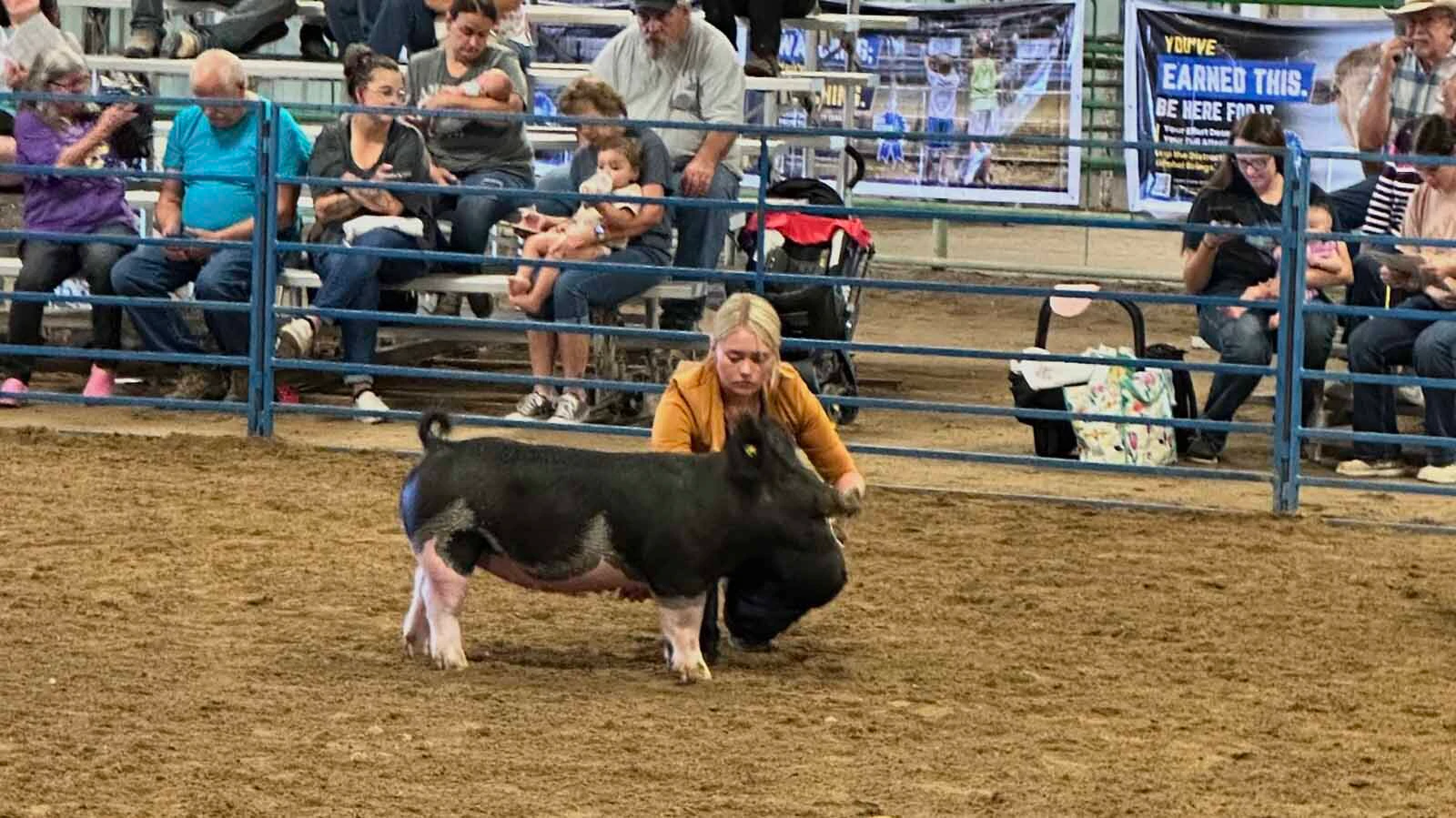
Tymber Eckley of Hot Springs County has spent the past 11 years in 4-H and one of her projects was raising show pigs. It takes a lot of hard work and dedication to get a pig ready for the show ring. After the family lost pigs to pig flu, they begun buying an extra pig and last year, Baby (pictured), was given to the local food bank through the Fair to Fork program that helps provide Wyoming grown protein to those in need. (Sadie Eckley) 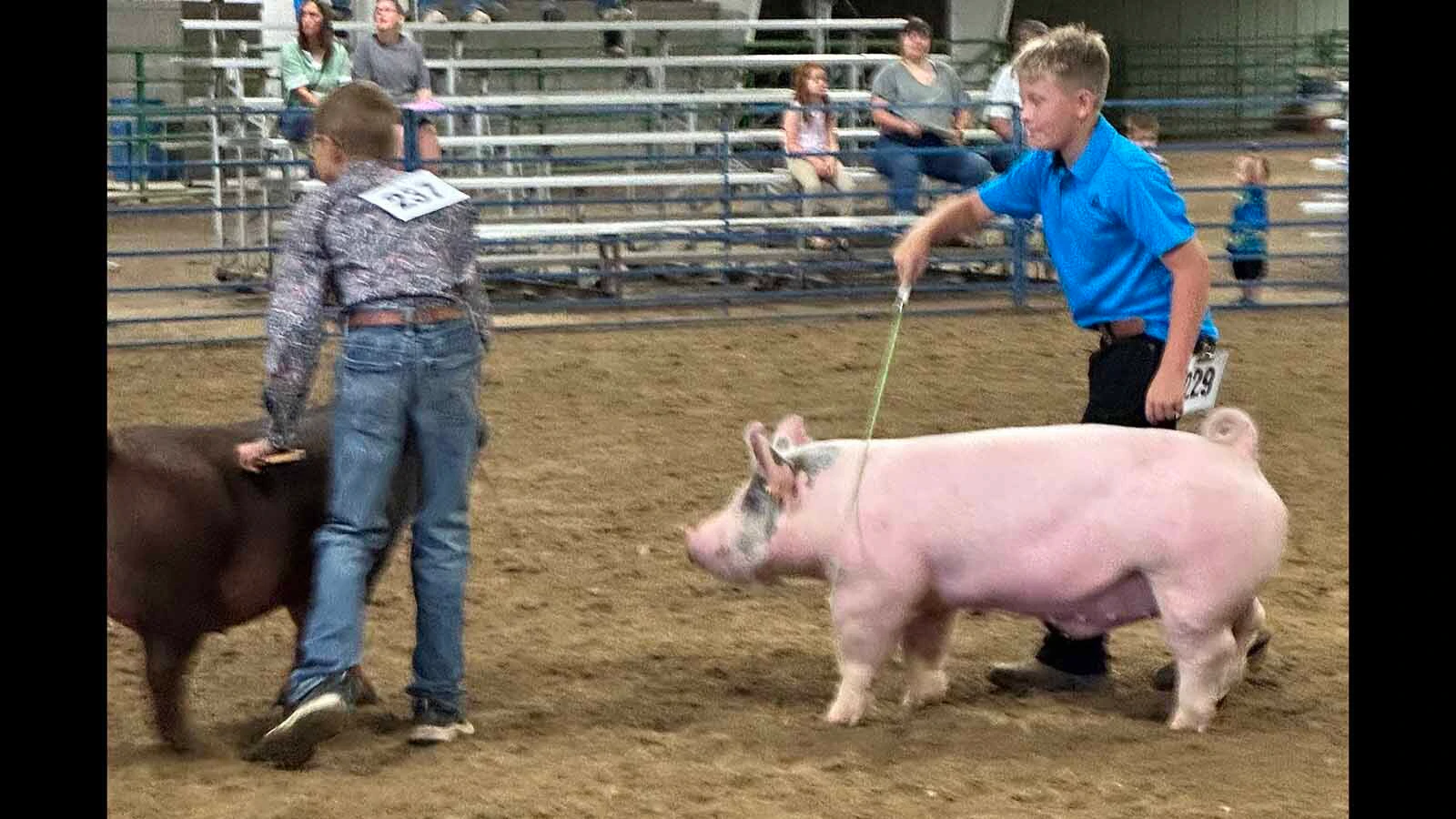
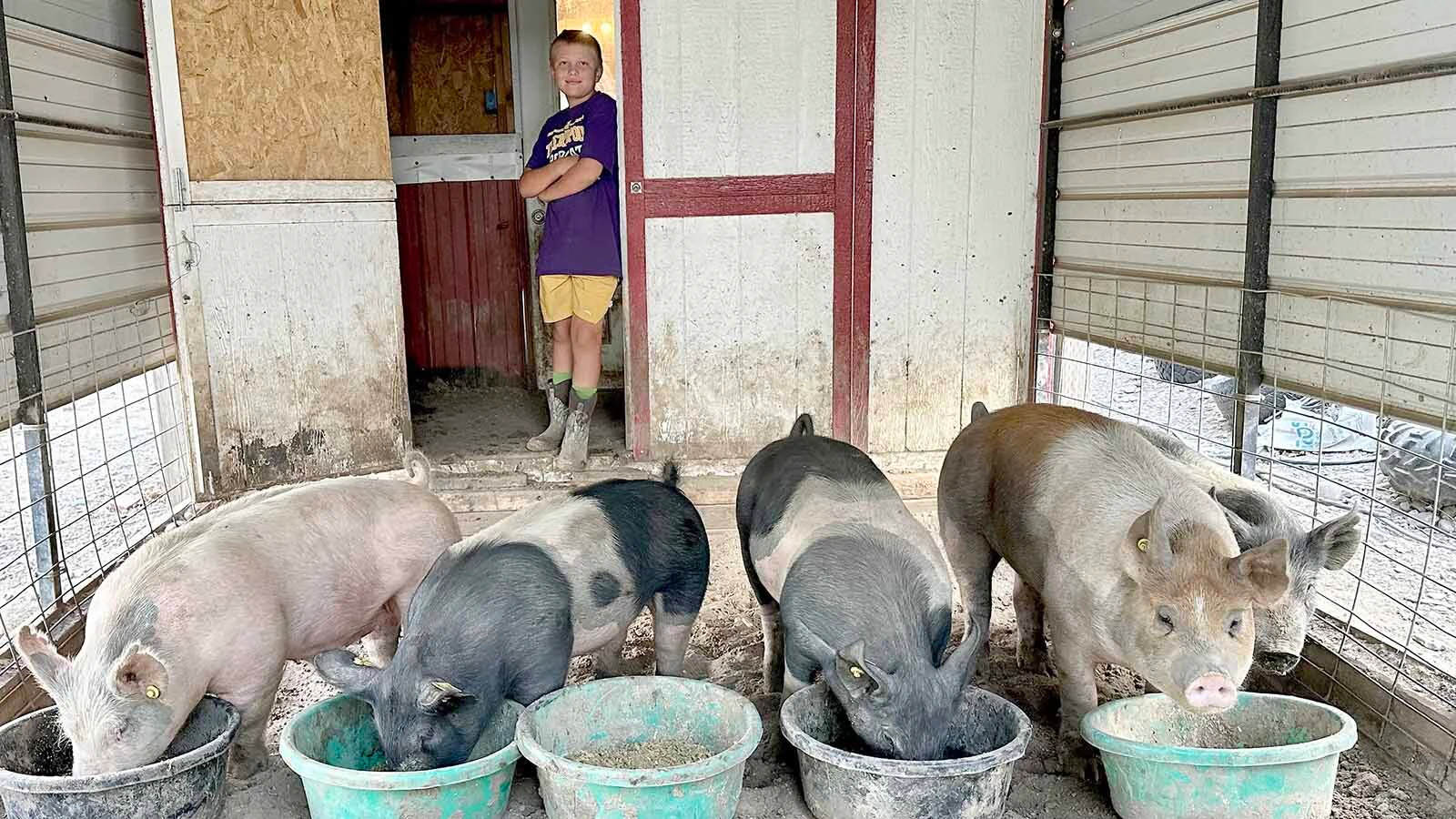
Sawyer Wilson, 12, spent hours training his show pigs to walk in the ring at county. He had to teach his pig to keep his nose in the air and trot in the right direction when touched by the whip. After fair, all his pigs are destined for the freezer and he will get new pigs in the spring to start the training process all over again. (Mandy Wilson) 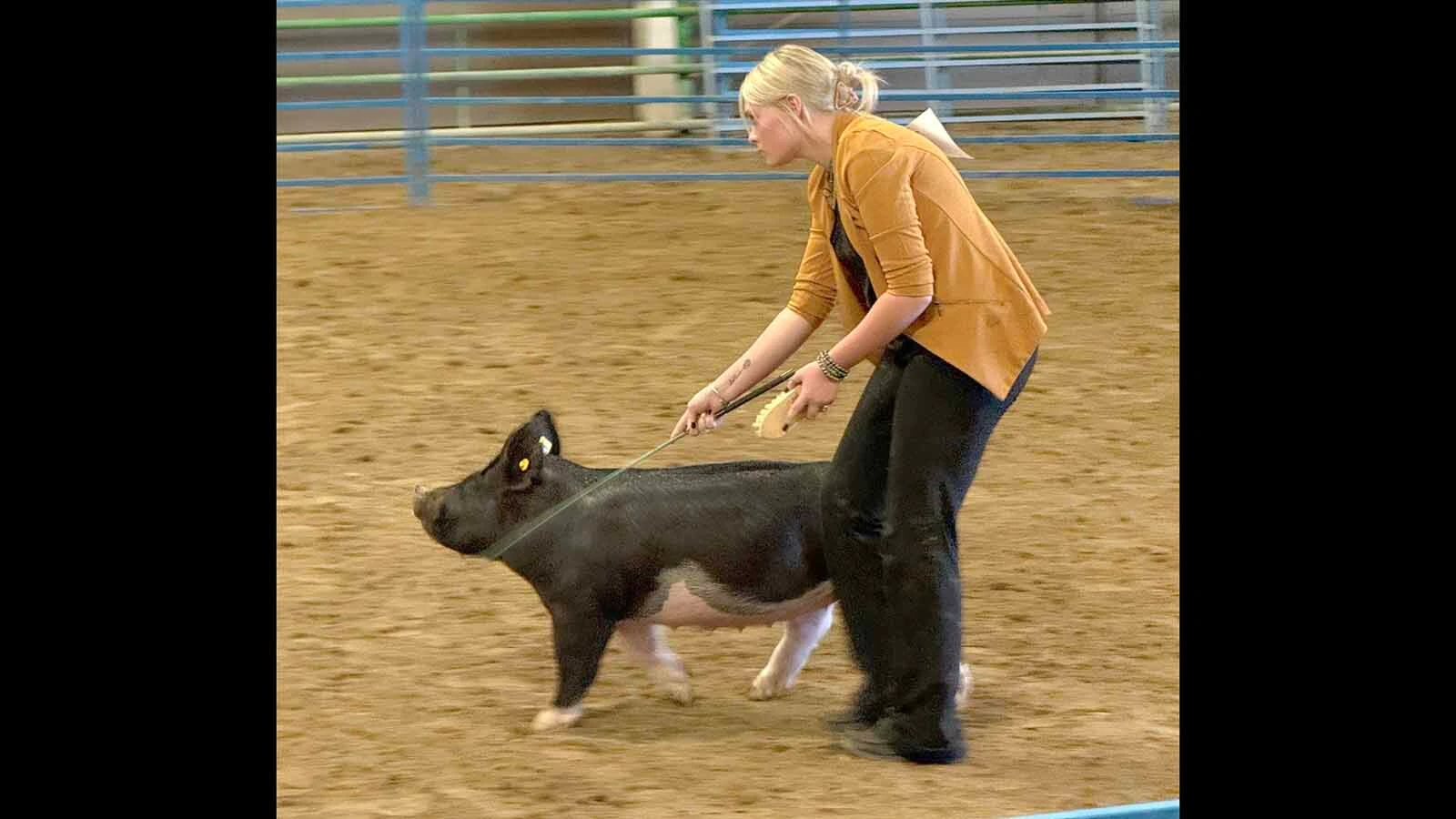
Tymber Eckley of Hot Springs County has spent the past 11 years in 4-H and one of her projects was raising show pigs. It takes a lot of hard work and dedication to get a pig ready for the show ring. After the family lost pigs to pig flu, they begun buying an extra pig and last year, Baby (pictured), was given to the local food bank through the Fair to Fork program that helps provide Wyoming grown protein to those in need. (Sadie Eckley) 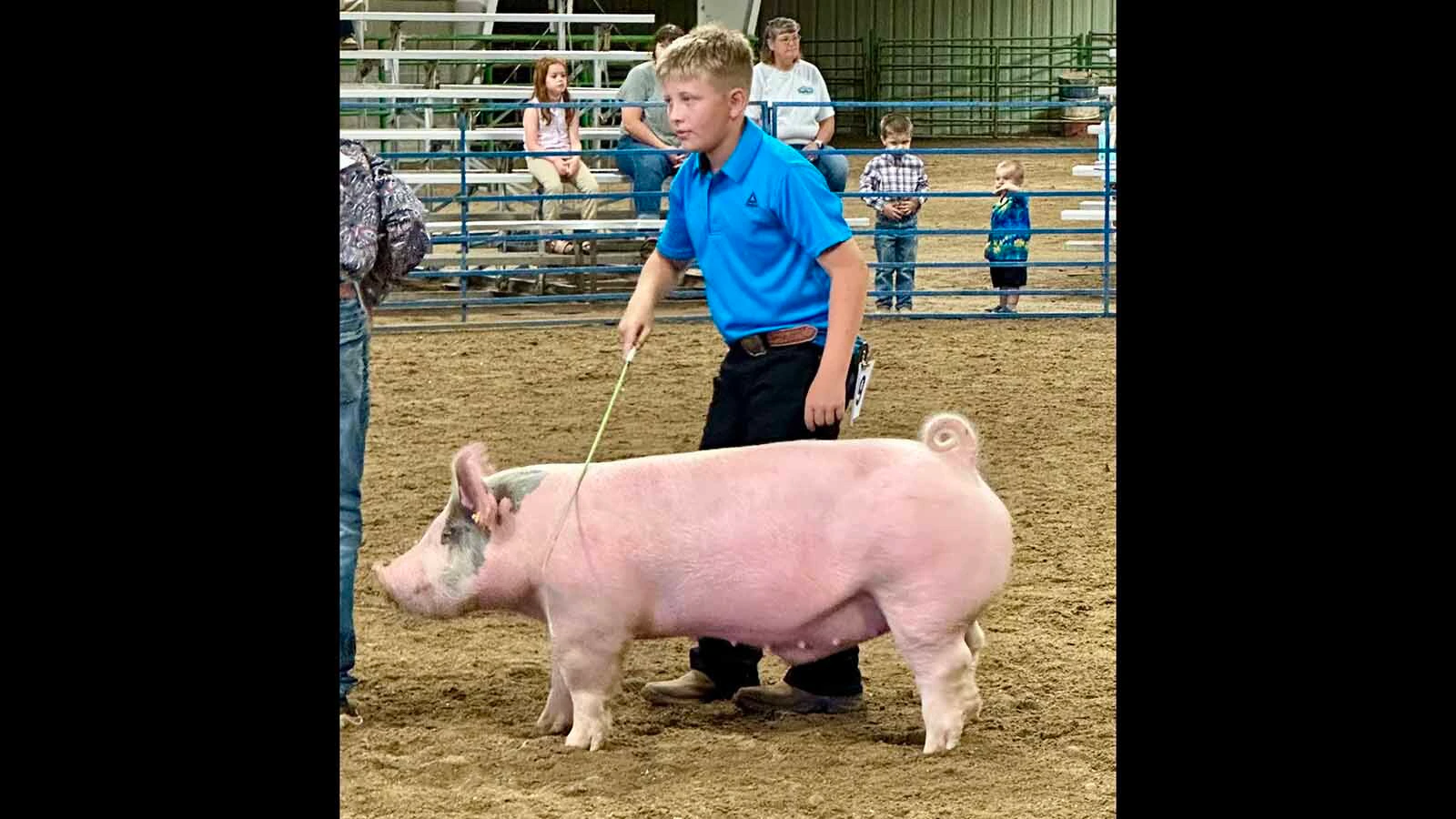
Sawyer Wilson, 12, spent hours training his show pigs to walk in the ring at county. He had to teach his pig to keep his nose in the air and trot in the right direction when touched by the whip. After fair, all his pigs are destined for the freezer and he will get new pigs in the spring to start the training process all over again. (Mandy Wilson)
Life of a Show Pig
This year, 23 counties were represented. Sawyer Wilson, 12, was selected to give his pig to a Hot Springs County charity of his choice.
“It kind of opened my eyes about all the people that don't get food,” Sawyer told Cowboy State Daily. “It feels good. Feels like I'm helping people.”
Sawyer’s family ended up with six pigs this year. To raise a show pig, it takes more than just daily feedings.
“I feed our pigs two times a day,” Sawyer said. “And then we train them with a baby bottle taped to a little plastic pole and filled with Gatorade to teach the pig to hold its head up.”
Sawyer said one person will hold the pole and another will guide it along with two whips, training the pig how to walk properly in the ring with its nose in the air and almost prancing. They should learn to turn when tapped with the pig whip and to pop their head up on command.
Sadie Eckley, Tymber’s mom, said her kids will spend at least an hour or two each night caring for their hogs and getting their chores done.
“When you first get the pigs, you should start training them right away before they get set in their ways,” Eckley said. “My kids work their animals almost every day, and when they put in the hard work, they have success in the show ring.”
There is even a certain direction each kid needs to be able to direct their pig so they are showing properly to the judge.
Some pigs naturally do better than others, Tymber explained. Baby was a big goofball and pretty naughty in the show ring. Despite this, with persistence, Tymber gother trained and won a few ribbons.
“She earned her name by being a little dramatic baby,” she said. “She definitely liked to push her limits but she loved her treats, especially animal crackers.”
Sawyer’s had chosen his extra pig, Marshmallow, because of an “eyeball” mark on his side.
“Marshmallow is kind of like a dog,” Sawyer said. “When you scratch him, he'll lay down.”
He was the first pig Sawyer had ever picked out himself and didn’t make weight as hoped. So now, Sawyer is keeping Marshmallow for at least a few more weeks to put on weight before his pig is taken for slaughter to make sure the charity gets the most meat possible.
His mother, Mandy Wilson, said raising pigs has been a valuable lesson for Sawyer.
“He got the whole experience of going to the sale to learn,” Wilson said. “And then to go through the process of training his pigs to realize what makes a good pig.”
Wilson said pigs, in general, are easy to raise compared to other livestock. They each have a unique personality.
“They're just fun,” Wilson said. “Marshmallow was always the pig that came out when you were mixing the feed and he was just a good pick.”
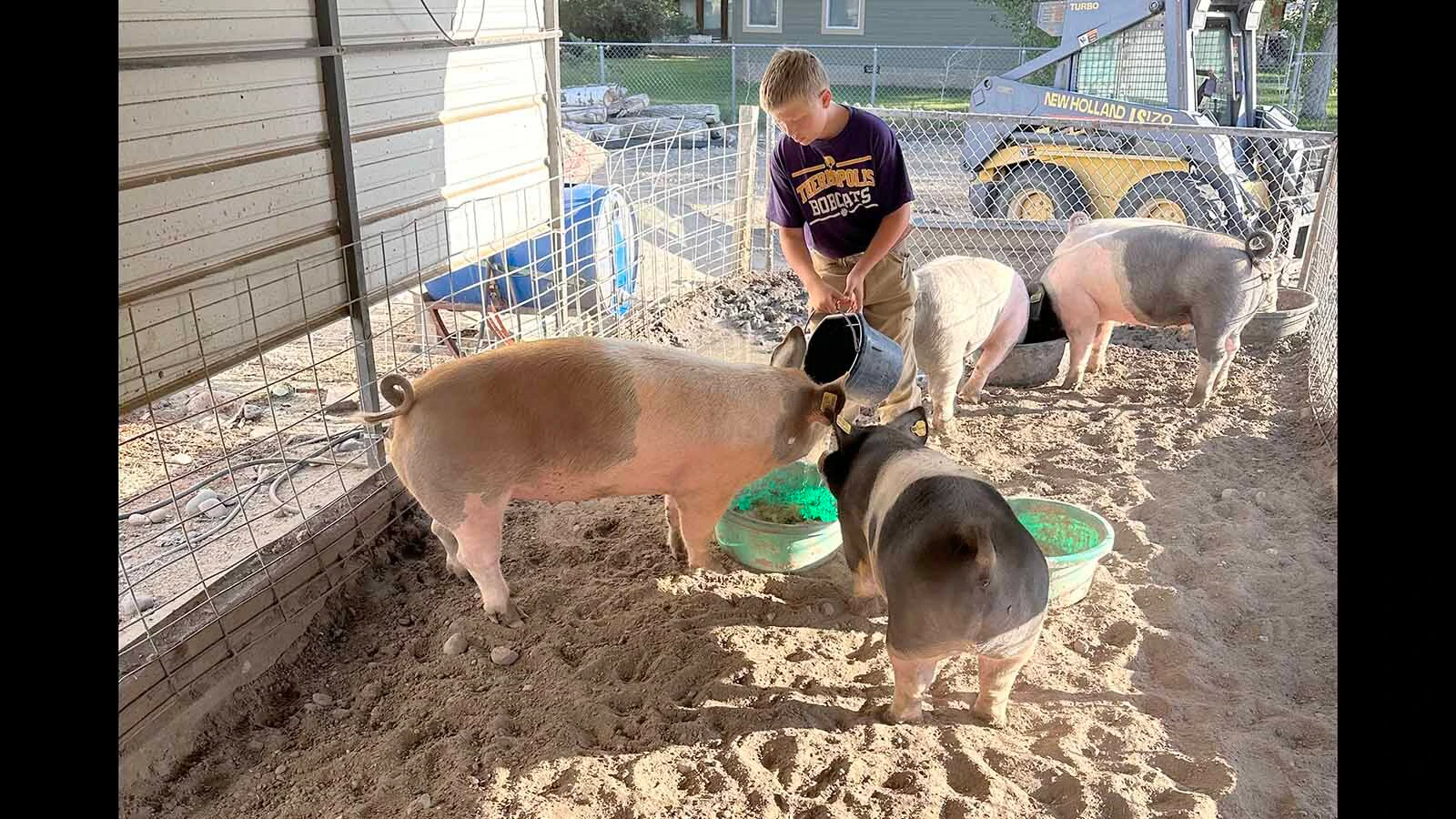
Sawyer Wilson's daily chores included feeding his pigs and training them to show properly in the arena. The family had ended up with an "extra pig" and Marshmallow was drawn in the Fair to Fork lottery. He will be fattened up a bit more and then given to a charity of Sawyer's choice to help feed the hungry in his community in Hot Springs County. (Courtesy Mandy Wilson) 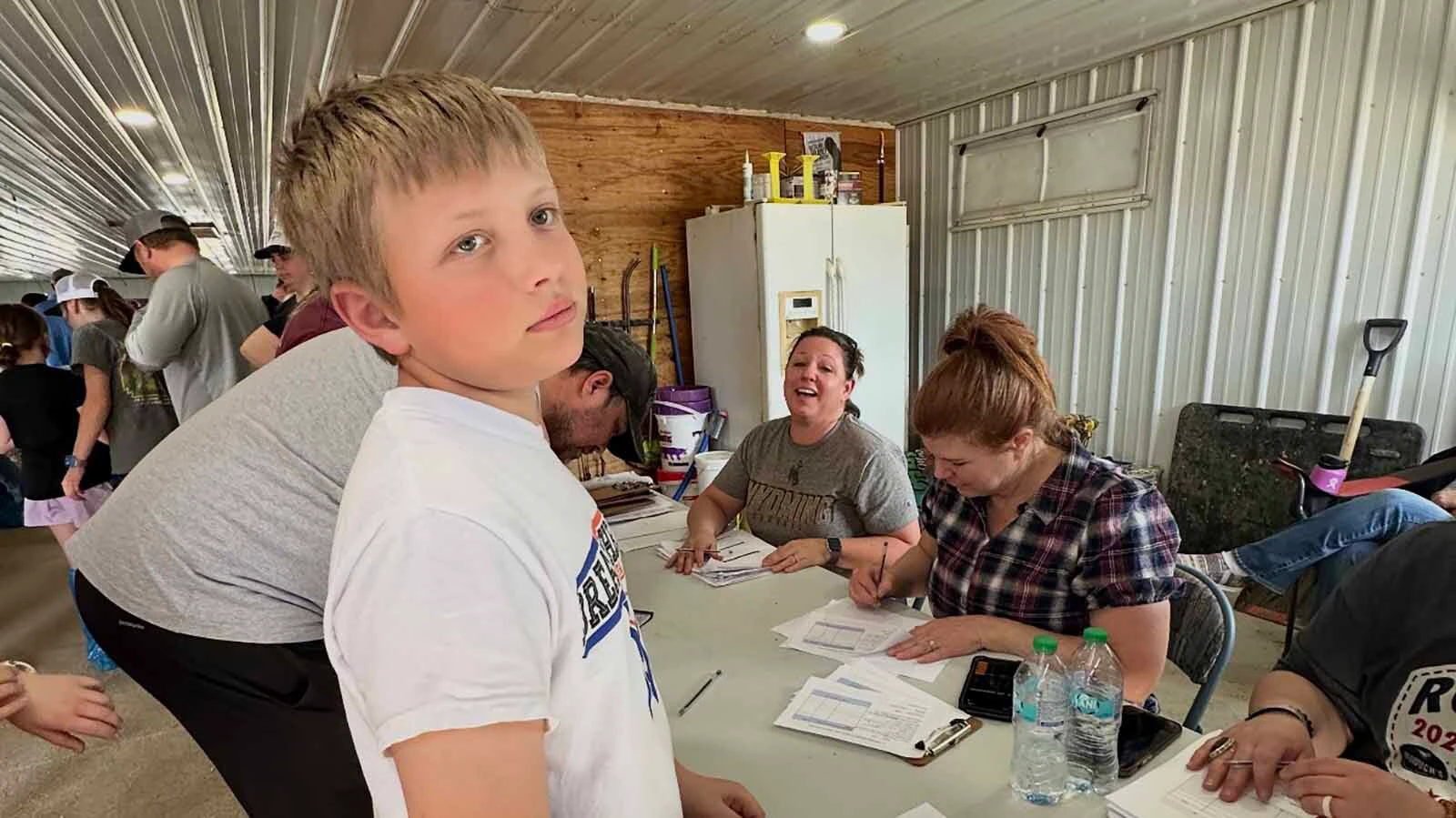
Raising a show pig begins in the sale barn. Sawyer Wilson bought his pig, Marshmallow, because of his unique markings. The pig became Sawyer's "extra pig" and did not sell at county fair. Instead, Sawyer entered the Fair to Fork lottery and Marshmallow will now be donated to a charity of Sawyer's choice. (Mandy Wilson) 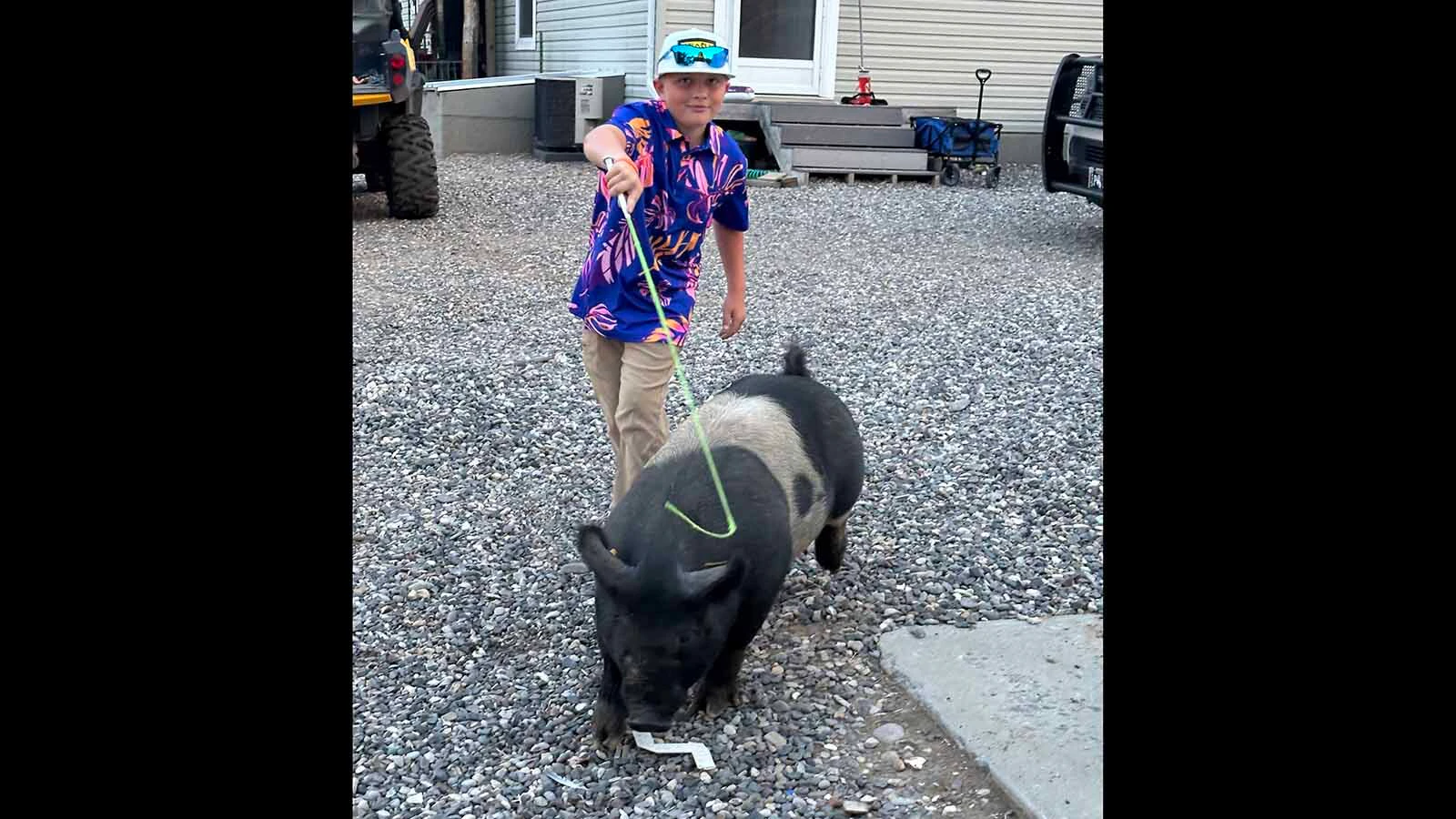
Sawyer Wilson trained his pig, Marshmallow, to walk properly at slight touches of his pig whip. The hog was an "extra pig" that will be given to a local charity in Thermopolis, Sawyer's home town, through the Fair to Fork program founded by First Lady Jennie Gordon. Sawyer was given $750 and a plaque and will be able to choose the charity of his choice to donate his pig to. (Mandy Wilson) 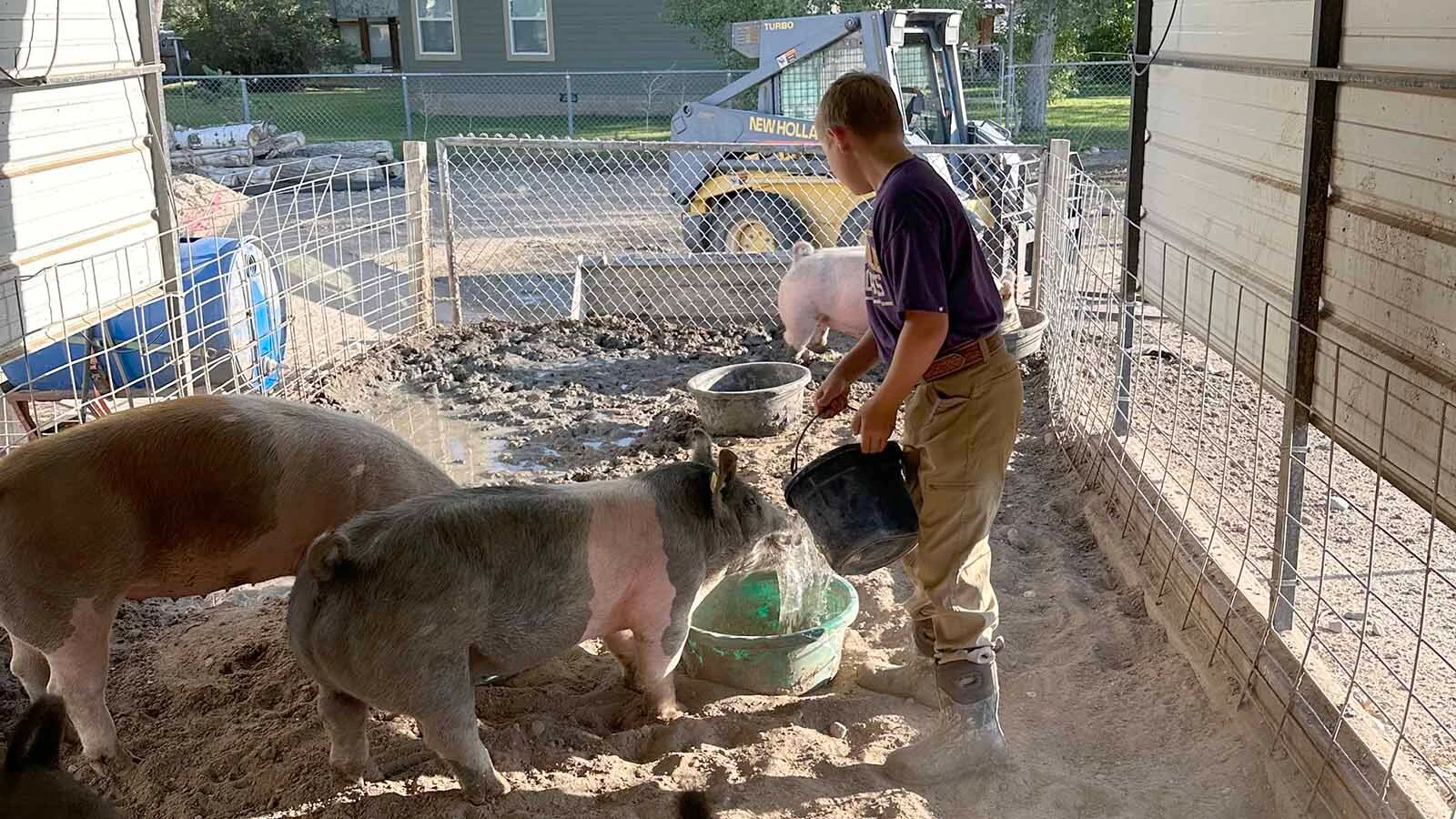
Sawyer Wilson's daily chores included feeding his pigs and training them to show properly in the arena. The family had ended up with an "extra pig" and Marshmallow was drawn in the Fair to Fork lottery. He will be fattened up a bit more and then given to a charity of Sawyer's choice to help feed the hungry in his community in Hot Springs County. (Courtesy Mandy Wilson) 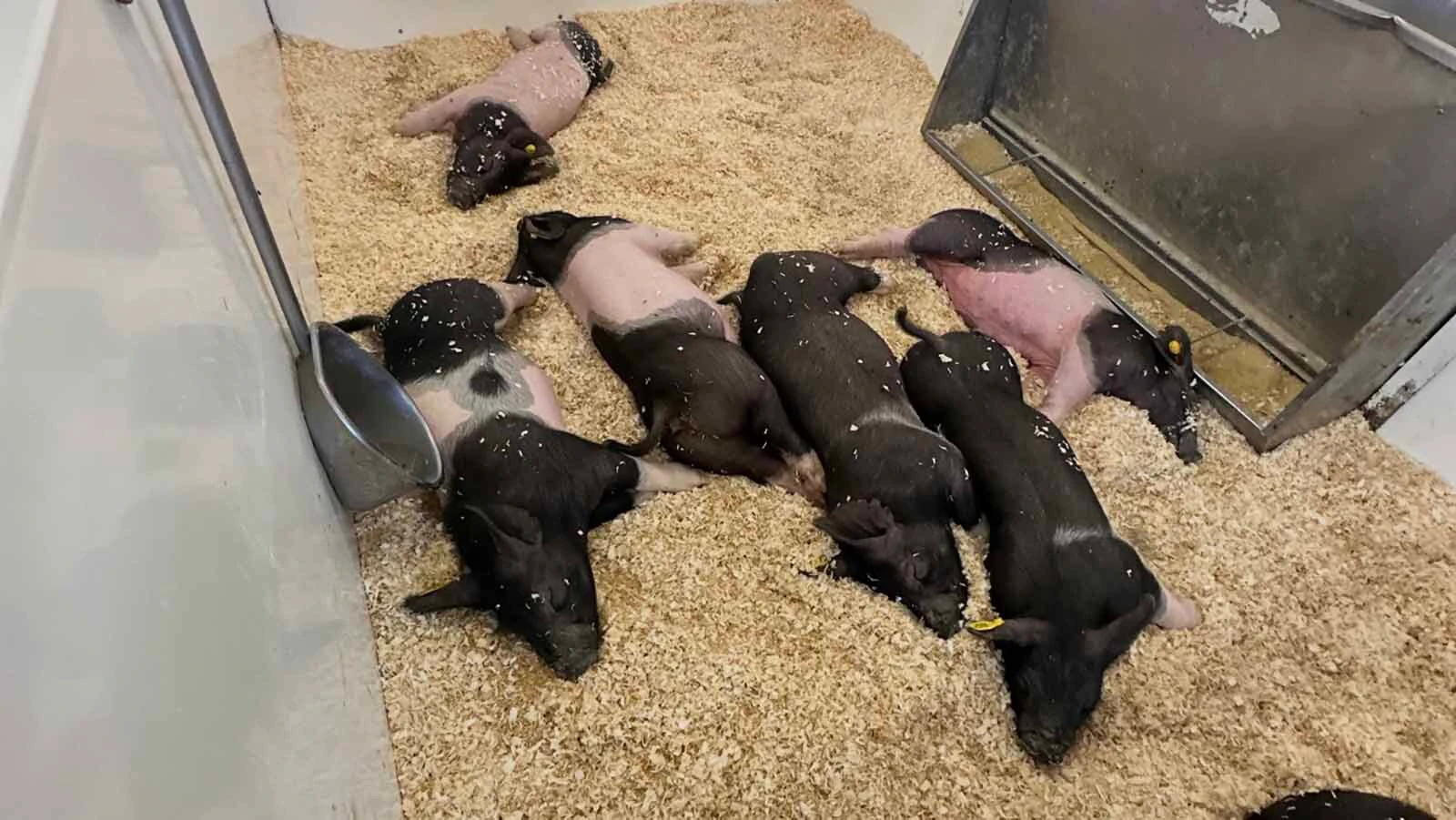
Raising a show pig begins in the sale barn. Sawyer Wilson bought his pig, Marshmallow, because of his unique markings. The pig became Sawyer's "extra pig" and did not sell at county fair. Instead, Sawyer entered the Fair to Fork lottery and Marshmallow will now be donated to a charity of Sawyer's choice. (Mandy Wilson) 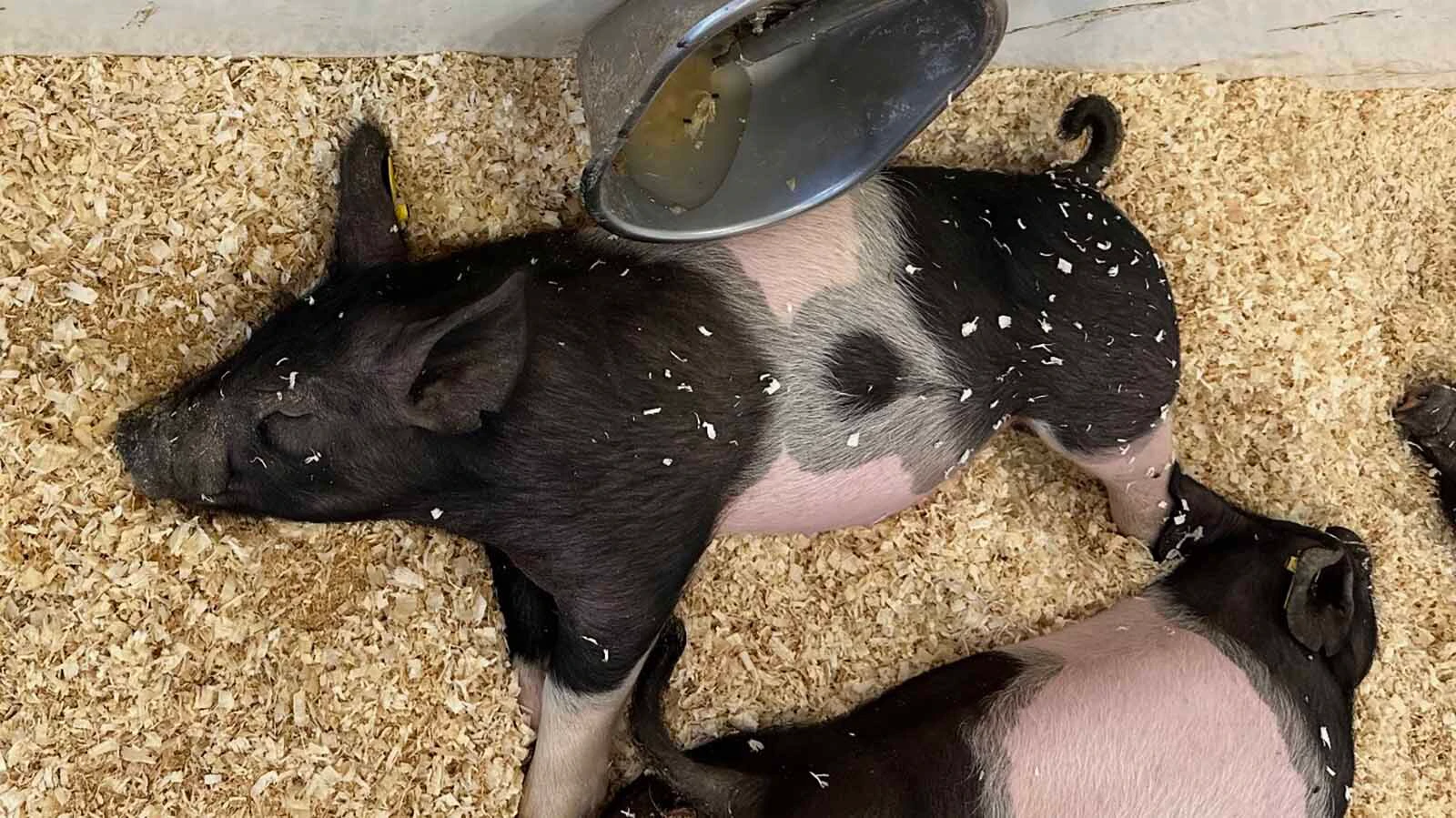
Raising a show pig begins in the sale barn. Sawyer Wilson bought his pig, Marshmallow, because of his unique markings. The pig became Sawyer's "extra pig" and did not sell at county fair. Instead, Sawyer entered the Fair to Fork lottery and Marshmallow will now be donated to a charity of Sawyer's choice. (Mandy Wilson)
Raised To Be Eaten
When it comes time for the butcher barn, Wilson said her family keeps it mind it is their destination from the get-go and what they were bred for.
It doesn’t mean that it is easy selling the pigs.
Gordon said she has personally gone to many sales over the years and gotten emotional watching some of the kids cry.
“It's been such a big part of their summer and they've gotten to know their animals,” Gordon said. “Their heart and soul is in the whole program and in their animals. It's a bit of a tear-jerker.”
Tymber said that over the years of her own career in FFA and 4 H it took a lot of hard work, dedication and passion behind each project. She said it has been ‘super cool’ to be in the livestock industry and she plans to continue to help out in the agricultural business.
“4-H and FFA kids work so hard,” Gordon said. “They're the future of our state and being able to work with them so closely has really been just the highlight of my career as first lady.”
The Fair to Fork program buys the "extra pig" raised by a 4 H or FFA student in Wyoming and the student then can donate the pig to their charity of their chose. Each student is also given a plaque by First Lady Jennie Gordon who founded the program to help families in need and to raise awareness of the lack of protein that some Wyoming families face. She said it also encourages our youth to help their community. Tymber Eckley donated her pig, Baby, to become bacon and sausage for the local food bank. (Sadie Eckley) 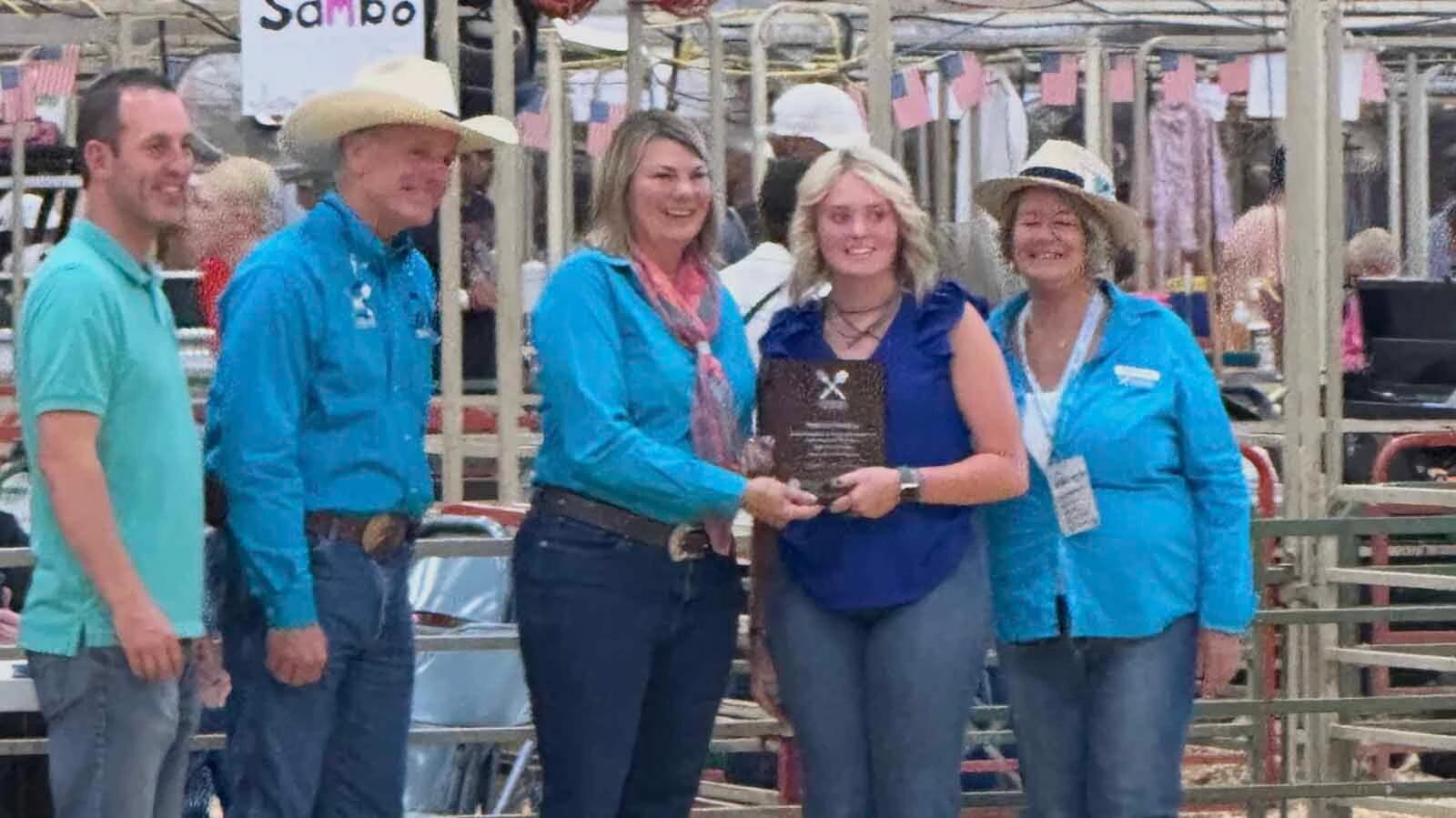
The Fair to Fork program buys the "extra pig" raised by a 4 H or FFA student in Wyoming and the student then can donate the pig to their charity of their chose. Each student is also given a plaque by First Lady Jennie Gordon who founded the program to help families in need and to raise awareness of the lack of protein that some Wyoming families face. She said it also encourages our youth to help their community. Tymber Eckley donated her pig, Baby, to become bacon and sausage for the local food bank. (Sadie Eckley)
Hunger Aware
Gordon told Cowboy State Daily one of the many reasons she began the program was because these extra pigs are Wyoming raised with the best genetics and feed. This provides great protein for those who normally don’t get it.
“Finding ways to help our neighbors that are struggling with food and security is what Wyoming does best and what we're all about,” Gordon said. “We should remember that everyone is one emergency away from being that person in need.”
The Fair to Fork program was developed in 2020 when the COVID pandemic threatened the public sale of show pigs at Wyoming county fairs.
“I thought to myself, 'Oh my gosh, what are these kids going to do that have already purchased their animals?'” Gordon said. “We started working with the UW Extension office and the 4-H team and came up with this idea of buying the pigs to donate to charity in lieu of the fairs.”
The fairs took place after all. Gordon then used the idea behind her program to raise awareness of hunger and to buy the extra hogs that the kids had raised. These extra animals are entered into a lottery and at least one pig per county is selected.
“One of the students actually went back and started volunteering at their local food pantry because of the connection that was made,” Gordon said. “It really is something that may make them lifelong volunteers and donors, and that's what we need to do is take care of our neighbors.”
Eckley encouraged Tymber to enter the lottery with their extra pig because she said is a strong believer in giving back to their community and wants to instill that in her kids.
“I think it's important for kids to learn that lesson at a young age,” Eckley said. “This was a great opportunity for my kids to help people in need.”
Tymber said the program was a good reminder that while their own freezers are full of the livestock they have raised, others are not so fortunate in Wyoming. During the process, Tymber discovered many people in her own community were not getting the proper protein she took for granted as someone raised in agriculture.
“I'll be the first to admit that I definitely kind of get blind-sided,” Tymber said. “I'm very fortunate to be able to raise livestock and fill my own freezers and I was reminded that some people don't get to do that.”
Gordon said they pay the kids for their hog to show appreciation for their hard work and then make sure the student is involved with giving away the meat.
“That way, they get to see the impact that they're having in their own communities,” Gordon said.
Jackie Dorothy can be reached at jackie@cowboystatedaily.com.