
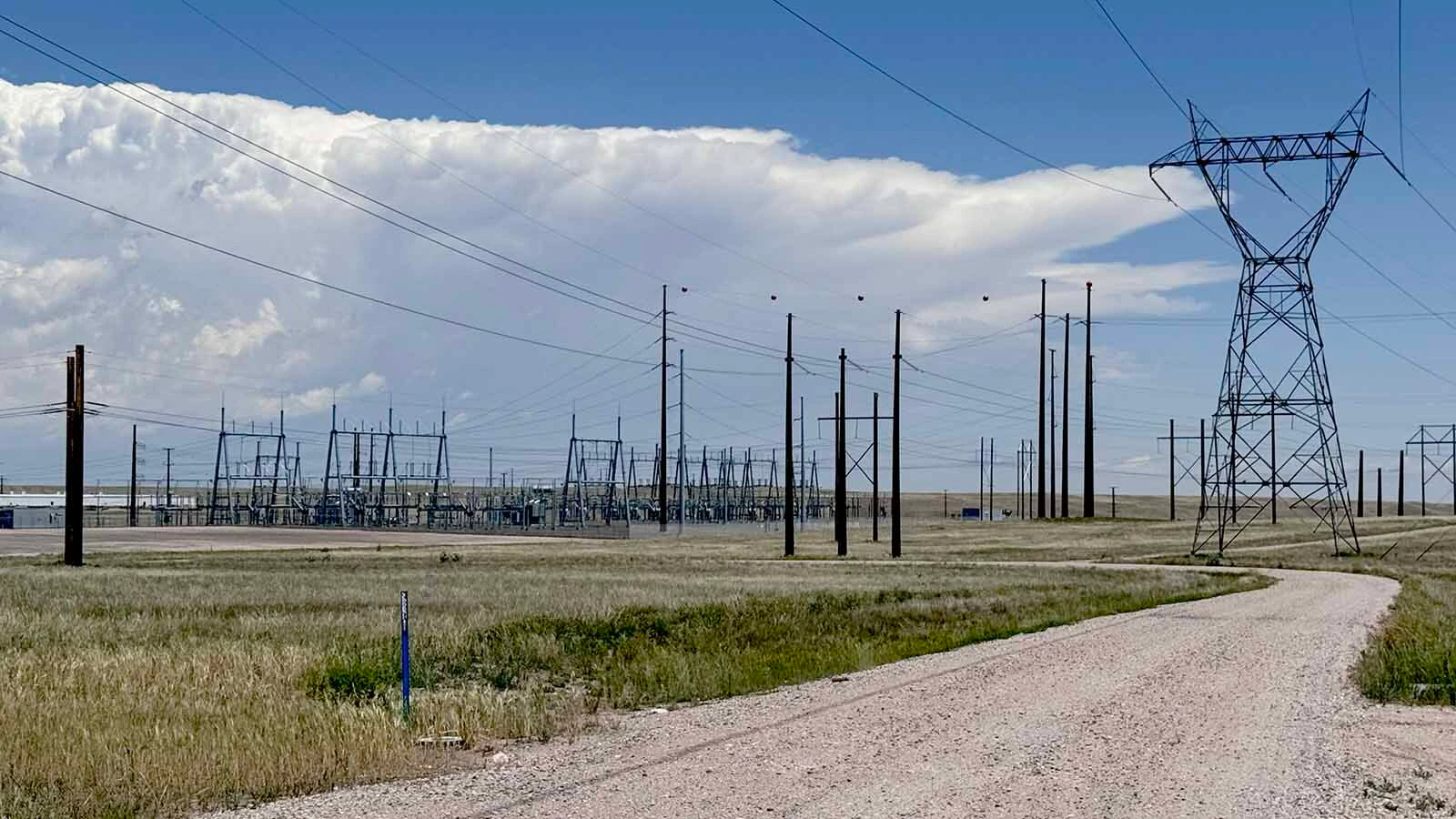
Black Hills Energy faces a future where individual data centers are proposing projects that demand power on the scale of a small state.
Project Jade, as just one example, will come into Wyoming with a “bring-your-own-power” mentality for an initial 2.7 gigawatts of power, which is nearly three times what industry analysts have said Wyoming uses now.
Ultimately, the data center could scale to a total of 10 gigawatts, which is almost as much power as Wyoming’s existing power plants could produce at peak capacity, based on Energy Information Administration data, which lists net summer power generation capacity for Wyoming at 10.8 gigawatts in 2024.
Project Jade’s developers have promised county officials a “bring-your-own-power” model, calling its campus “very self-sufficient,” and saying its approach will ensure there’s no pressure on the existing Laramie County power grid.
But Black Hills Energy is also a partner on the project, officials have confirmed. So, even as a “self-powered” campus, the development is still, at some point, depending on Black Hills for infrastructure and interconnection.
Project Jade is just one of several data centers looking to build within the Black Hills service territory, but the question for each of them is essentially the same, said Wes Ashton, Black Hills Energy’s vice president of utilities for Wyoming, South Dakota, and Montana.
Cost-Causer Is Cost-Payer
“Overall, the idea is to prevent any large loads or large customers from shifting any other cost to customers,” he told Cowboy State Daily. “And typically, LPCS (large power contract service) tariffs these days, I think most people (equate) it to data centers.
"That’s certainly the hot conversation and where a lot of the customer growth around the country is coming from.”
Customers coming into Black Hills' service territory are told up front about the large-load tariff and the company’s expectation that such customers will have to pay for any and all new infrastructure required to serve them.
That applies to their shares of the grid, as well as any other enhanced upgrade to transmission, or other sides of distribution.
“Anything like that has to be covered there,” he said. “Or the simple way to say it is, and you may have heard before out of our company, the cost-causer is the cost-payer.”
Tariff Born Out Of Microsoft’s Arrival
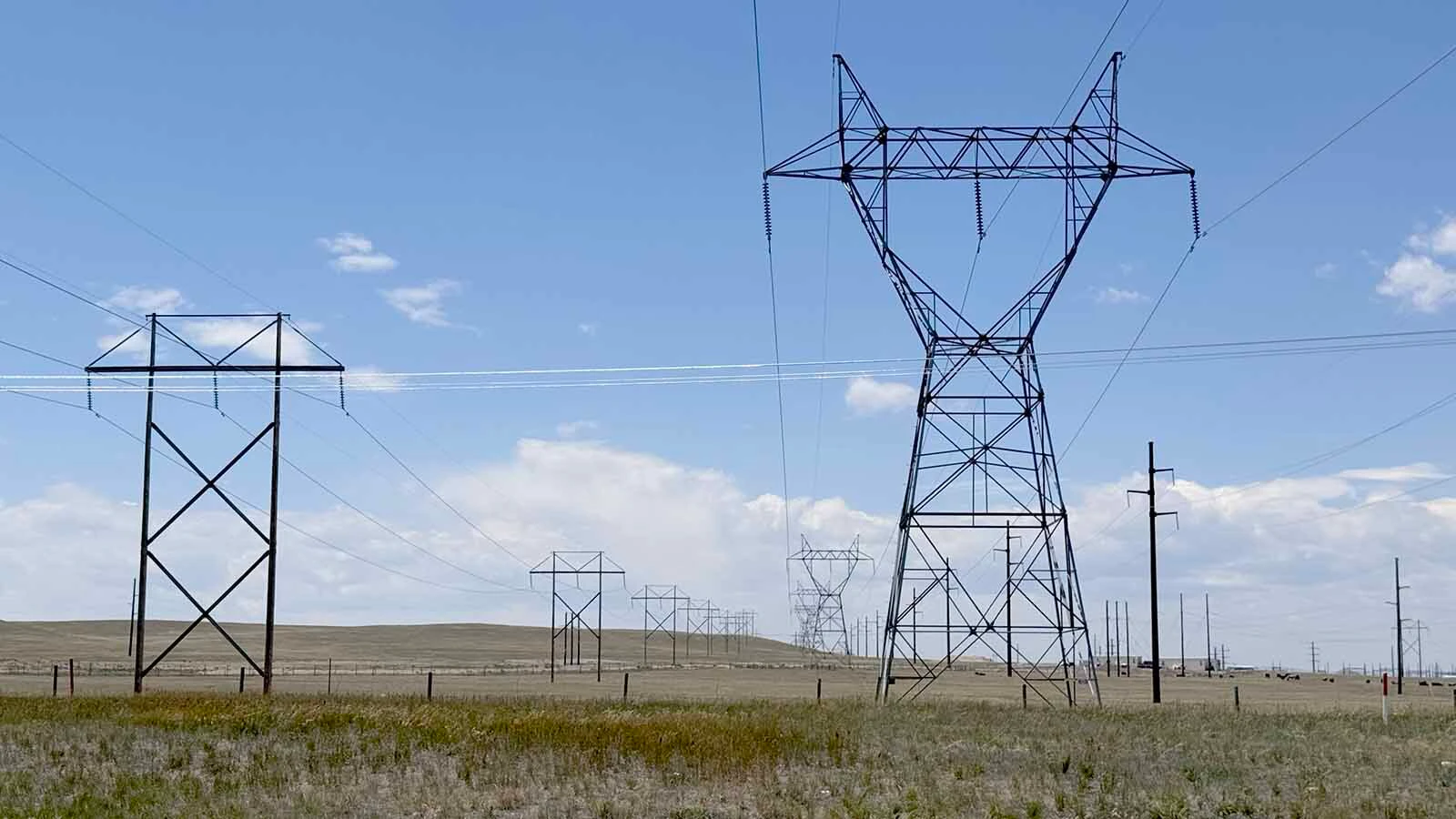
The Black Hills large-load tariff was created more than a decade ago in response to Microsoft building a data center in Cheyenne, which became Black Hills’ first commercial, large-load customer.
Under this system, large-load customers can expect a detailed analysis of their power requirements to happen in the early stages.
In practice, that means the data center is expected to build or contract for its own dispatchable, onsite power, which will ultimately be integrated into the wider grid.
“It’s a highly regulated process,” he said. “The requests that come in are negotiated out and there’s a number of different agreements that take place. Those requests and those load studies are evaluated … and all load requirements — generation, transmission system impacts — are studied in detail.”
Once the detailed system analysis is completed, a plan is then developed for serving the project’s power, which will be filed with and overseen by state regulators who evaluate the plan on whether it adequately protects existing ratepayers.
Ashton argues that this approach allows the utility to welcome extremely large data-center loads while isolating the financial risk to those customers themselves, rather than spreading it across households and small businesses.
“That is a process that takes place over a number of months, if not years, to get that set up,” Ashton said. “The core principle is that the tariff keeps away or isolates any risk on behalf of the utility, and it isolates it to that customer, so that customer makes their payments for the investment, and that customer would make their payments to be integrated onto a system.
"And then that tariff allows, through those individual negotiations, either generation that’s behind the meter, purchasing power over the open market.”
Few Rate Hikes Despite Dozen Data Centers
Black Hills already serves about 12 total data center sites across roughly eight customers, Ashton said.
Meanwhile, in the last decade it’s only had one rate increase request, according to a statement by Black Hills representative Austin Allen during a recent Cheyenne forum about data centers.
Here, company executives are referring to base-rate cases. Separate fuel and power-cost adjustments are handled through other mechanisms on a customer’s bills.
It’s a track record that has the company confident that its large-load tariff is working as intended, and keeping the costs of scaling up power for such customers from affecting ordinary ratepayers in an undue manner.
“We’ve probably got another maybe a dozen or so entities that we’re in various stages of conversations or negotiations with,” Ashton said. “There are always conversations and customers at various levels of maturity.
"Some are introductory conversations, some are actively trying to work a project, and some are developers.”
So far, nothing has suggested that the company’s large-load tariff won’t be scalable to gigawatt territory.
Data Centers As Anchor Tenants
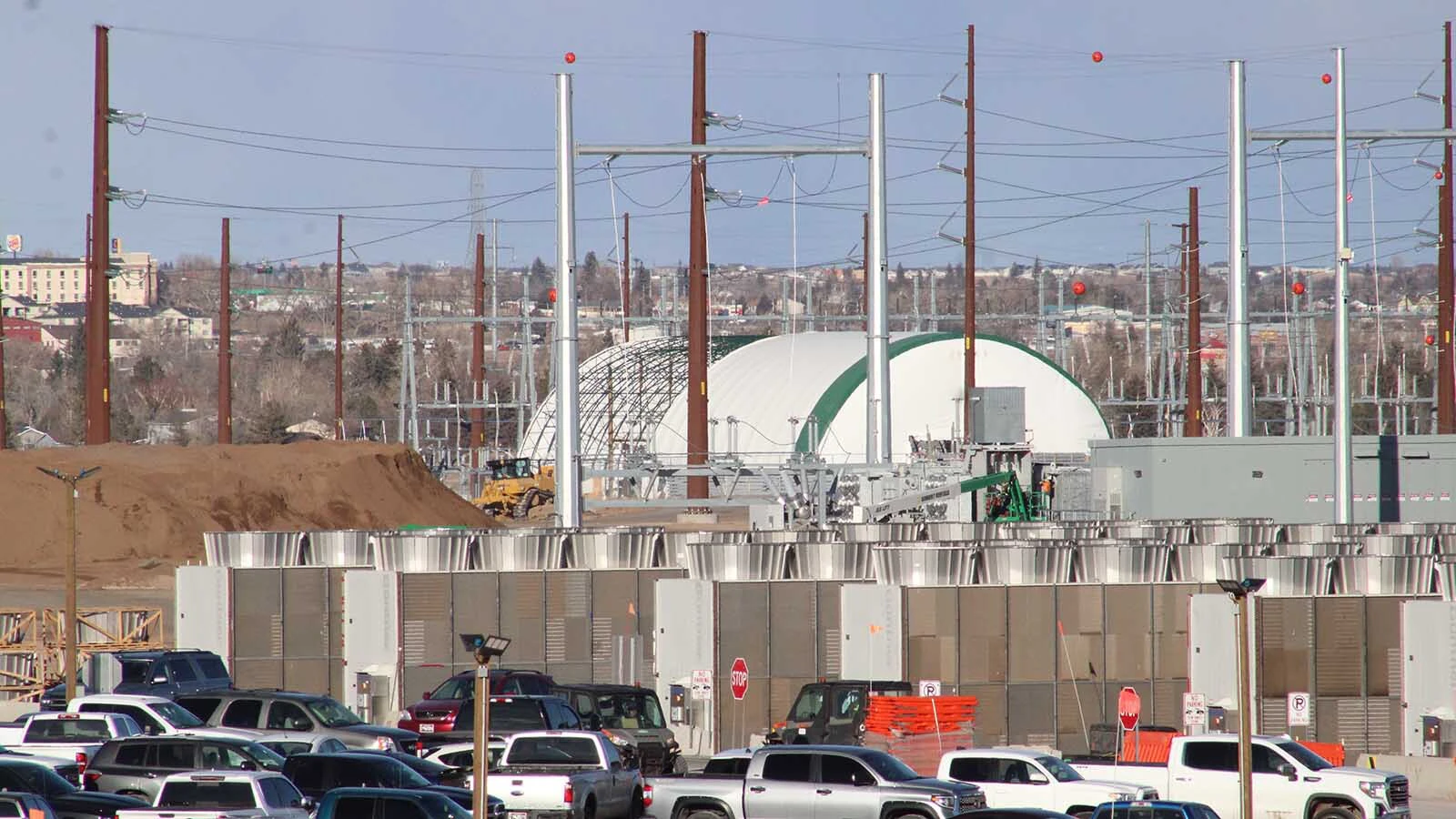
In fact, Ashton said the infrastructure that these companies have built out has ripple effects that have so far been positive for consumers, improving grid reliability and efficiency for everyone.
“They help by essentially funding the system enhancements that we have, and ultimately those benefits extend to all of our customers,” Ashton said, adding that new value also comes along as many of those customers continue to invest in infrastructure.
“That system investment not only provides greater reliability to our network, but it also has benefits to all of our customers,” he said. “And that’s why year-in, year-out, our Cheyenne system is one of the best — if not the absolute best — in reliability in the country. It’s always in the top one or two for reliability, because we continually invest in that system.”
The Edison Electric Institute is the body that publishes the ratings, which includes an annual study of interruption minutes. According to that body, Black Hills Energy’s electric utility in Cheyenne has been in the top quartile for reliability for the past 10 years running.
EEI data by the company consistently show outage minutes that land in top tier utilities, a point Black Hills frequently touts when marketing its system to data centers.
Could Bills Go Down?
Public concern about the power use of data centers has settled around the simple question of whether their power needs will show up on everyone else’s bill, but Ashton believes it’s actually the opposite way around.
Because of the data center improvements, rate increases have been slower than they might have been, which is to the regular ratepayers’ advantage.
Ashton doesn’t have a specific figure to encapsulate that, but said “rates have held steady as a result.”
The LPCS tariff has frequently been touted by state regulators, consumer advocates, and even Wyoming legislators as effective. So far, however, no large customers have scaled back or left, so that’s a scenario that has yet to be tested.
“I like to say that as we continue to experience growth on that system, or our system, that has been a good thing for customers, in addition to tax base and jobs,” he said. “We have been very involved in support for being a long-term partner to growing Wyoming’s economy by bringing value to the table, by bringing expertise, and to be a trusted partner for the communities we serve by providing safe, reliable, cost-effective energy.”
As the scale jumps from megawatt to gigawatt, Ashton said Black Hills continues to believe their tariff written for large loads a decade ago is still the right tool.
Whether that promise holds true as Project Jade and other massive data center projects move from concept to construction will help determine how much of the AI boom Wyoming can absorb — and at what utility cost to people already living on the high plains.
Renée Jean can be reached at renee@cowboystatedaily.com.


