
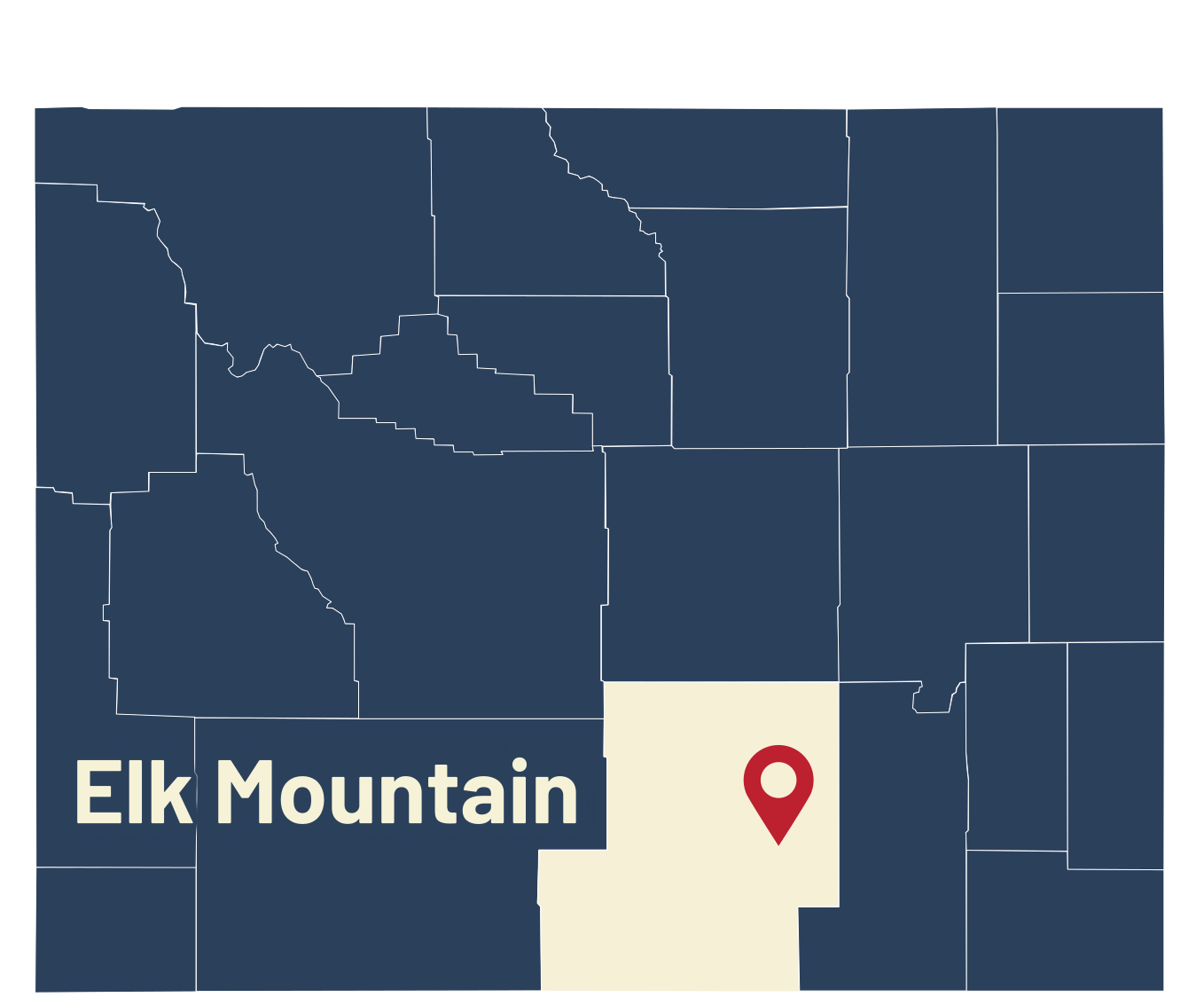
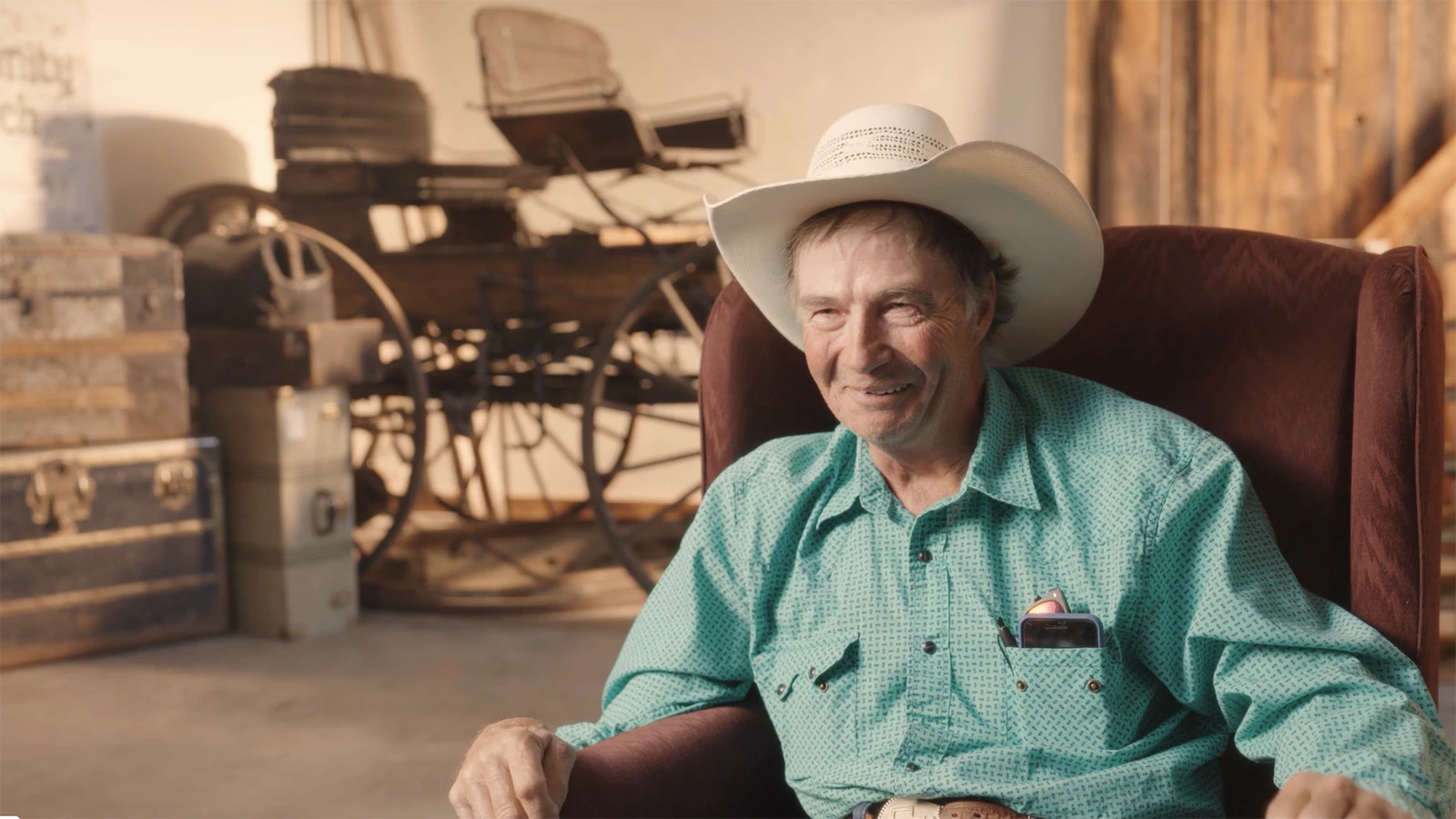
ELK MOUNTAIN — Margaret Karstoft’s grandfather came to America from Sweden in 1870. He spent three years earning the money needed to bring his family to Elk Mountain, where he worked as a tie hack.
Karstoft is among longtime Elk Mountain residents whose memories are now preserved in a new 30-minute legacy film commissioned by the Elk Mountain Museum.
Created as an America250 project, the film distills hours of interviews into an oral history of the Carbon County town — from its tie hacks and sheep camps to its blizzards, dances, and stubborn will to survive.
The museum has also retained the raw interviews as part of its archive, and given copies of the tapes to their families.
Karstoft’s grandfather had a backbreaking, seasonal job. The men lived in tents, working through the winter on Elk Mountain, a place where the brutality of wind and cold are legendary among locals.
The men hewed their ties by hand, one timber at a time, then hauled them to the river, where they were floated downstream in the spring, after it had warmed up enough to melt the ice.
“My grandmother wanted to come to this country because she heard that the streets were paved with gold,” Karstoft said in a soft voice. “She wanted to come here because it was hard times in Sweden at that time, too.”
In the film, old-timers tell of wind sometimes so harsh men had to crawl rather than walk, and blizzards where they had to trust their horse to get them home. But they also remember neighbors who banded together to help each other not only survive but thrive.
Tie hack camps in Carbon County shut down as large corporate ventures in 1912, but many people in Elk Mountain were still cutting railroad ties by hand into the 1950s.
Bob Johnson was one of them.
“It was before chainsaws or anything like that,” Johnson said. “We used a handsaw and an ax. I had a measuring stick and it was 102 inches long. That’s how long a railroad tie was back then. They had to be 102 inches. I cut a lot of those.”
Bill Jones remembers peeling the bark off railroad ties.
“It froze on there in the wintertime,” he said with a chuckle. “That was a ‘good’ job.”
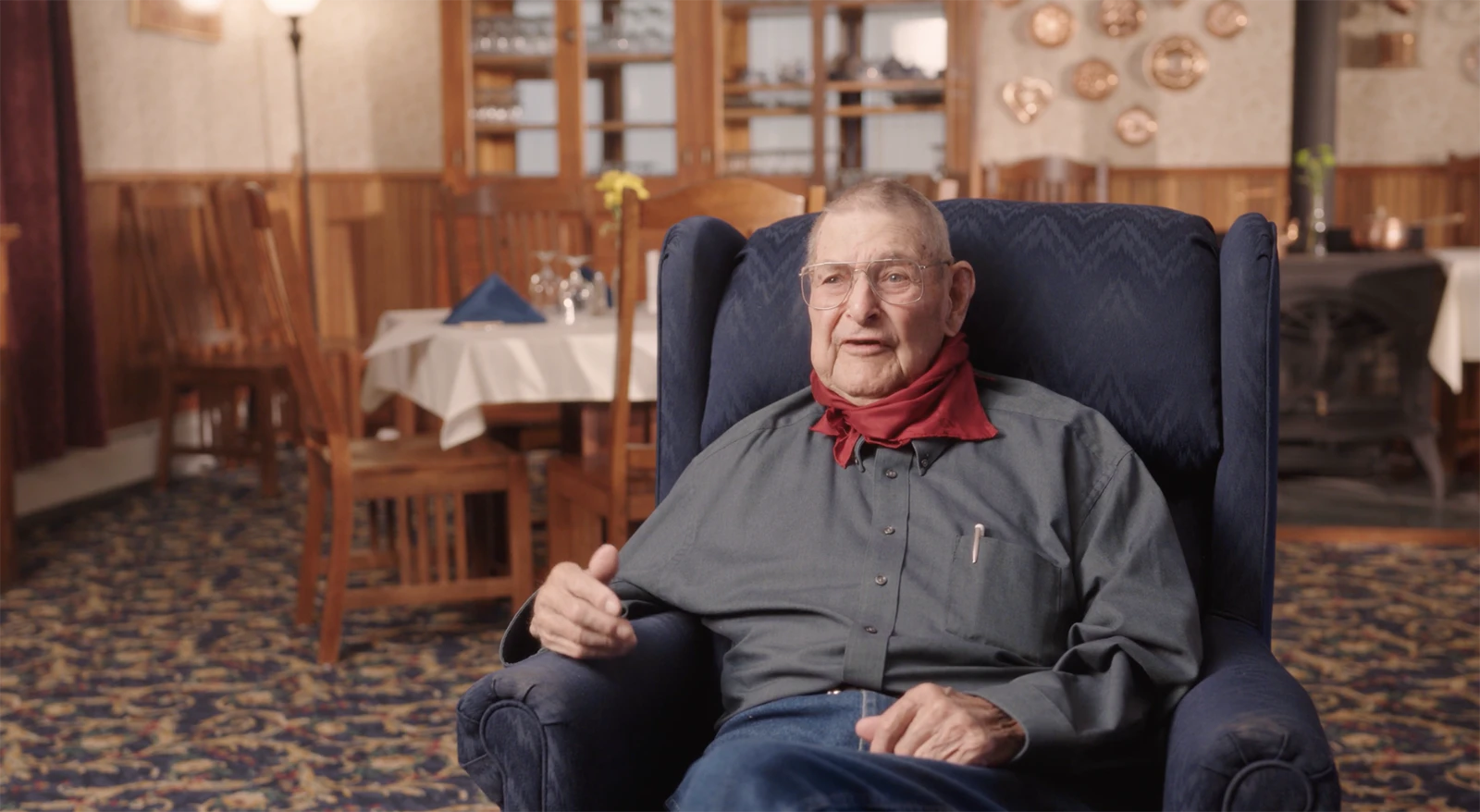
Before Elk Mountain Was The Crossing
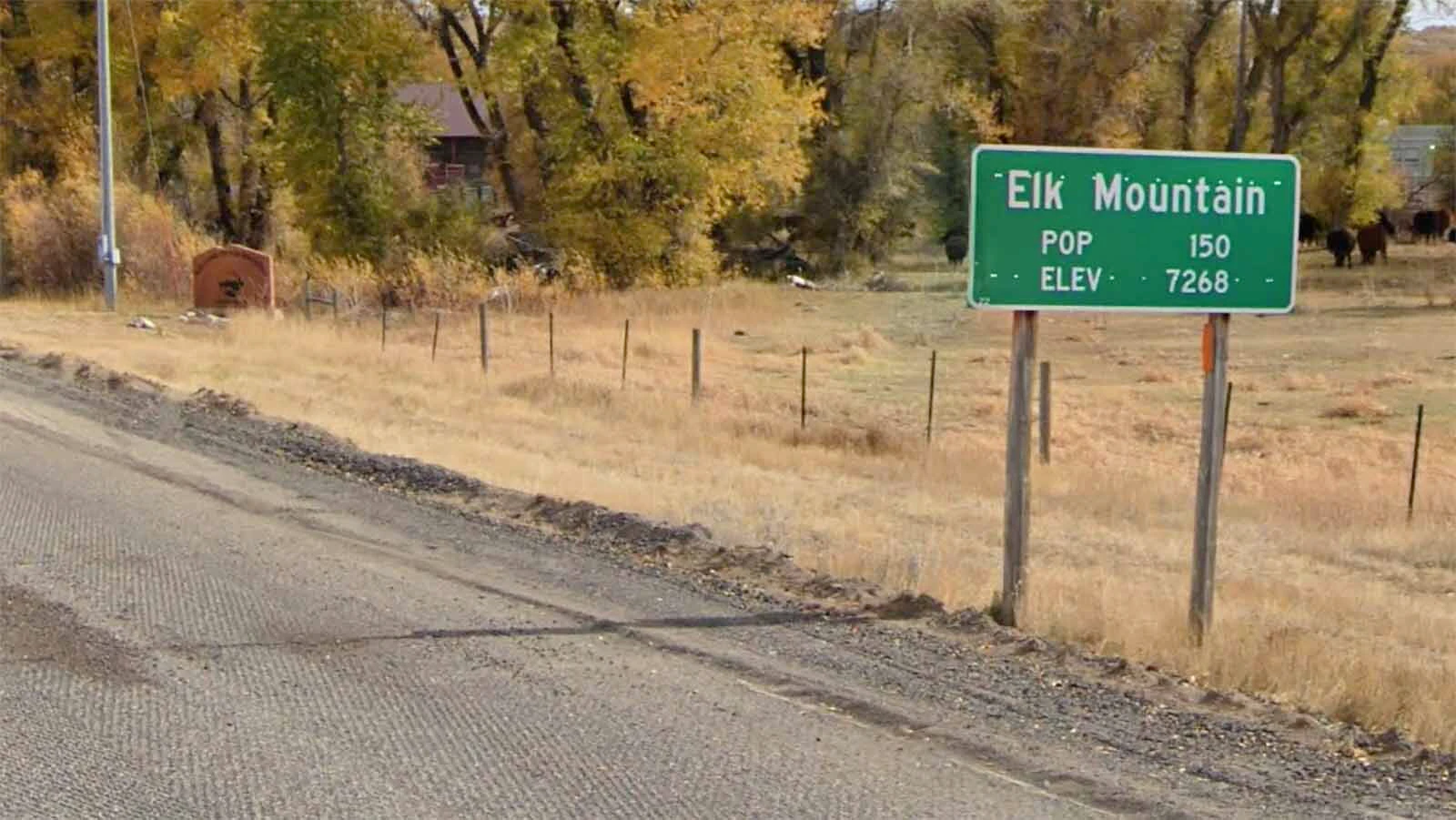
Elk Mountain today has 144 people, according to the most recent census. It has always been a tiny town, however, even from inception. When it was incorporated in 1909, it recorded 98 residents in the 1910 census.
Its peak population was recorded in 1980 at 338, on the coattails of a regional energy development boom in Carbon County that started in the late 1970s and continued into the early 1980s.
Before it was incorporated, people had a different name for the area. It was just called “The Crossing.” It had been a convenient stop along the Overland Trail in the 1860s, with the nearby river offering reliable, year-round water.
Fort Halleck was built just west of The Crossing in 1862 to protect emigrants, mail carriers and telegraph lines In the developing area.
Nearby Carbon, which incorporated in 1868, was much larger with a peak population of 1,140 in 1890. But its coal mines closed in 1902 — the same year a mercantile store opened at The Crossing, followed by the Mountain View Hotel in 1905. Both the hotel and the store remain standing.
Life In A Wind Tunnel
Elk Mountain has always been a place where weather sets the rules — especially true in winter.
“Up on that mountain, the wind can blow,” Shorty Richardson said. “Me and Pete Johnson, we went up on one ridge and we had to cross the top of that. I ain’t saying I was tough, but Pete Johnson, he was a horse, and we was on our hands and knees crossing that ridge, because we couldn’t stand up, the wind was blowing so hard.”
Powd Boles remembers his dad chaining a large sled to a telephone pole so it couldn’t blow away at night.
“That’s how hard the wind blows down through there all the time,” he said.
One day Pete’s brother, Bill Johnson, noticed a fellow walking what locals refer to as the UL flats, looking for something.
“He asked the guy, he says, ‘What’s the trouble?’ He says, ‘Well, I’m looking for the wheel for my anemometer. It blew off last night and I’m looking for it,’" Richardson said. "And Bill says, ‘Well, how hard was the wind blowing?’ He says, ‘Well, it registered 200 and then it died.’ So he said, ‘I don’t know how much harder it blew, but it did register 200.”
Richardson believes the wind blows so fast because it’s coming in down between mountains, forming a wind funnel.
It’s not unlike pinching a garden hose, causing the water to flow out with more force, but in this case the “water” is the wind.
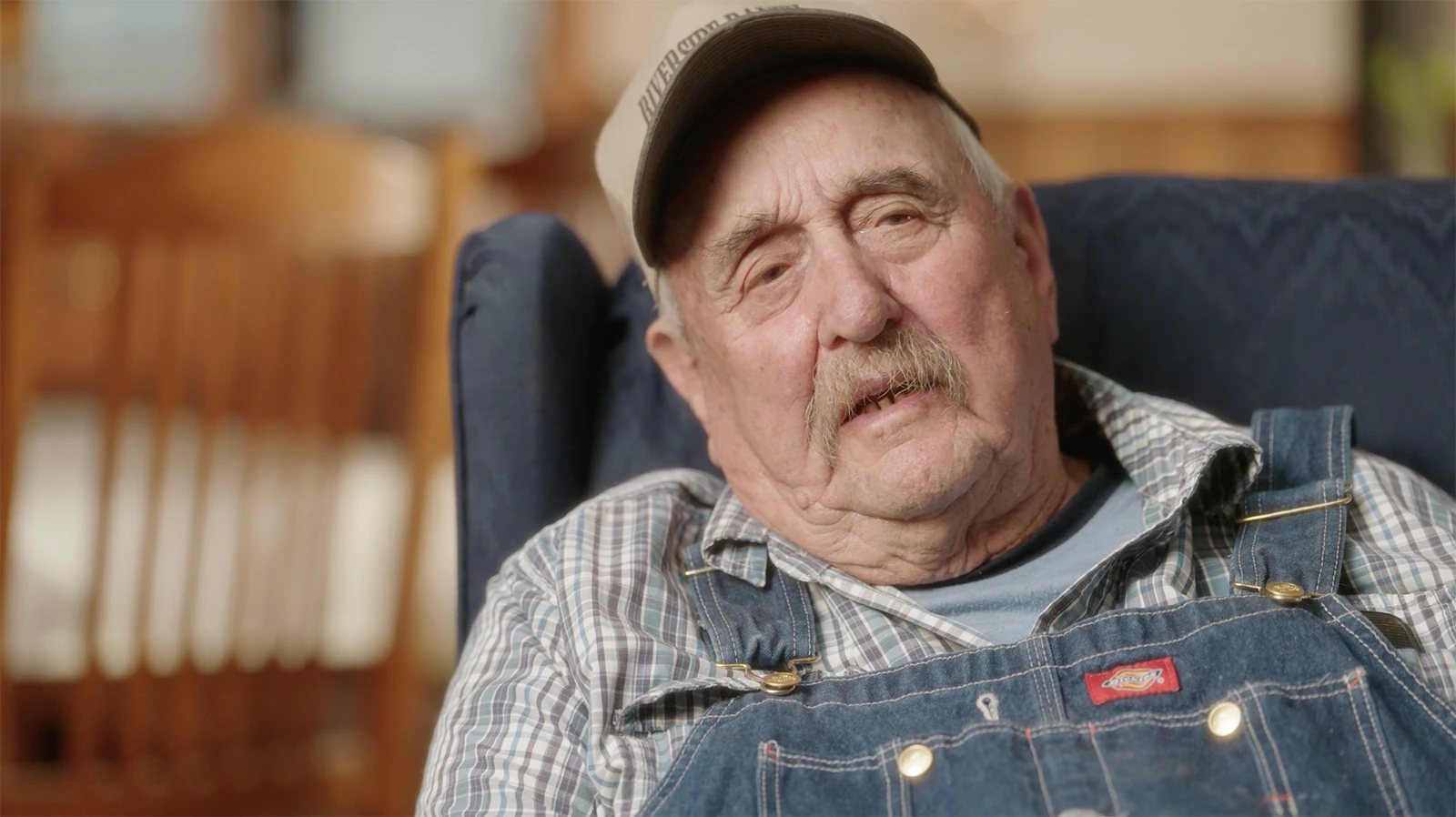
Getting To The Dance On Time
Neither wind nor cold stopped people from getting to town for dances, though, Powd Boles added. He remembers the time a fiddle player was snowed in upriver and couldn’t get to town for a dance.
“So Henry Cheesbrough, he had a Jeep, and he says, by God, he’d run up and get the fiddle player,” he said. “So he ground up there and got the fiddle player, and they were having a dance here in the Odd Fellows Hall.
"Old Cheesbrough, he just drove through the front doors, drove right up to the bandstand, and dumped the fiddle player off.”
Then he drove right back out the same doors he’d come in.
“The next day he had to, by God, go to town and find new doors for the Odd Fellows Hall,” Boles said with a laugh.
Another time, Boles remembers that a couple who wanted to get to a dance couldn’t get anything to start but an old tractor.
“So they drove it all the way down from the UL down here to the dance,” he said. “That was in the middle of wintertime, and of course that tractor didn’t have no cab on it or nothing.”
Winter Fun, Winter Peril
Winter was a time for fun. There was ice-skating on the frozen pond and there was skiing behind neighborhood vehicles. It was safe enough then because there were no major highways.
“You’d go up over where the roads are going into people’s ranches or meadows,” Bill Jones recalled. “You had to bounce over them a little bit when you ski. And then we’d have a whole line of sleds hooked together and somebody pulling us with their pickup around the streets. If you were the last one, sometimes you’d get snapped around.”
Winter wasn’t all fun and games, though.
“We used to follow the telephone line across this one spot we called UL Flat,” Bob Johnson said. “The horse knew the way, and I knew the way kind of, if you could see.”
In a blizzard, though, Johnson learned to listen for telephone wires overhead.
“You could follow them to get home,” he said. “It used to take me 45 minutes to come down this direction and nearly two hours going back against the wind and the crosswind.”
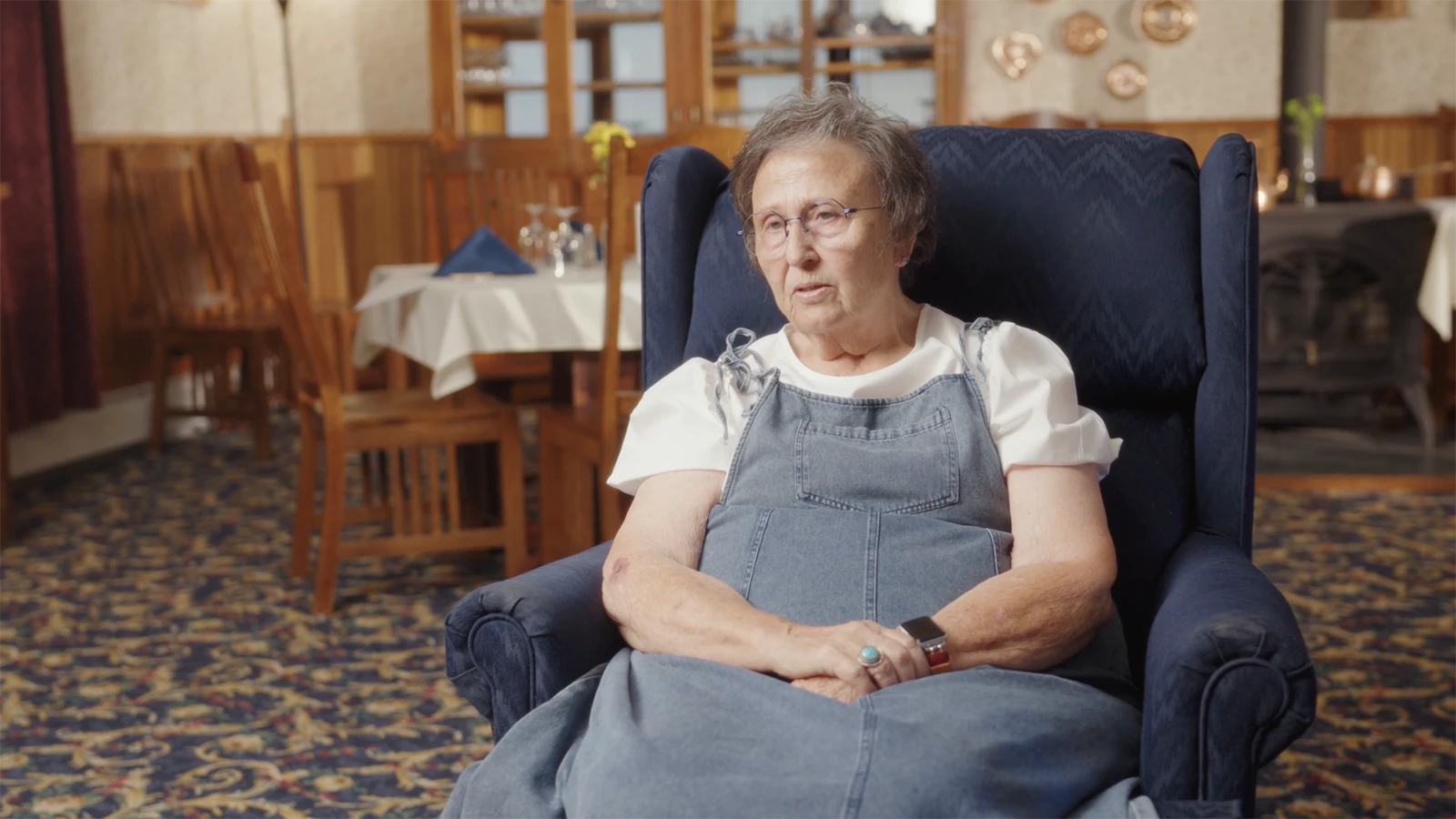
Cheryl Bowen remembers her dad making her stand with her back toward the wind to avoid her face becoming frostbitten.
She, like many children in that day, rode horseback to school.
“You couldn’t wear jeans to school, so I had to pack my dress,” she said. “And then I put my dress on to attend school.”
When Sheep Ruled The Range
Elk Mountain was sheep country when he was growing up, Boles said.
“Everybody had sheep back in the old days,” he said. “Predators got too thick and they couldn’t find any help to herd them, so that was the end of sheep. But Carbon County was like the largest sheep-producing county in the United States at one time.”
Johnson remembers living in a sheep wagon with his brother.
“My mother would live down on the ranch a mile and a half away,” he said. “We’d have lanterns, and we’d have a stake in the ground. We’d light a lantern to keep the coyotes away.”
His mother would climb up on the cellar to see if the light was burning at their sheep camp.
“If we had a light in our sheep wagon, it meant we were done flagging sheep and we were cooking supper,” Johnson said.
Boles’ family was among the first to bring Angus cattle to the area.
“Everybody else had Hereford cattle,” he said. “And everybody thought they were stupid for raising black cattle. But when they’d ship in the fall, their calves always weighed over 400 pounds and everybody else’s weighed like 310 or something. So they were a step ahead of everybody else.”
Making Do On The Ranch
Families worked hard and knew how to stretch a dollar, Karstoft said.
“We’d get flour in feed sacks,” she said. “My mom always tried to get a couple of them that would match, so she’d have enough material to make us clothes. That’s all we had were clothes made out of flour sacks. She did everything. She milked cows, fed chickens ...”
And she also cut the heads off those chickens herself whenever it was time to make dinner.
During times of war, women were also out in the field helping hay, Richardson added.
“There were no guys, they were all at war,” he said. “And you had to feed your livestock. It was a chore putting it up back then. Not like now. We’ll probably put up more hay in 15 minutes now than they used to put up in a day back then.”
There also used to be many more little ranches, Boles added.
“It’s 50, 60 head of cows,” he said. “Now all them little places are gone. The big outfits have bought them out, so all of them little places are history … when I was a kid, I suppose they delivered mail to probably 40 people out there. Now my wife runs the mail and she delivers mail to seven people.”
Why They Stayed
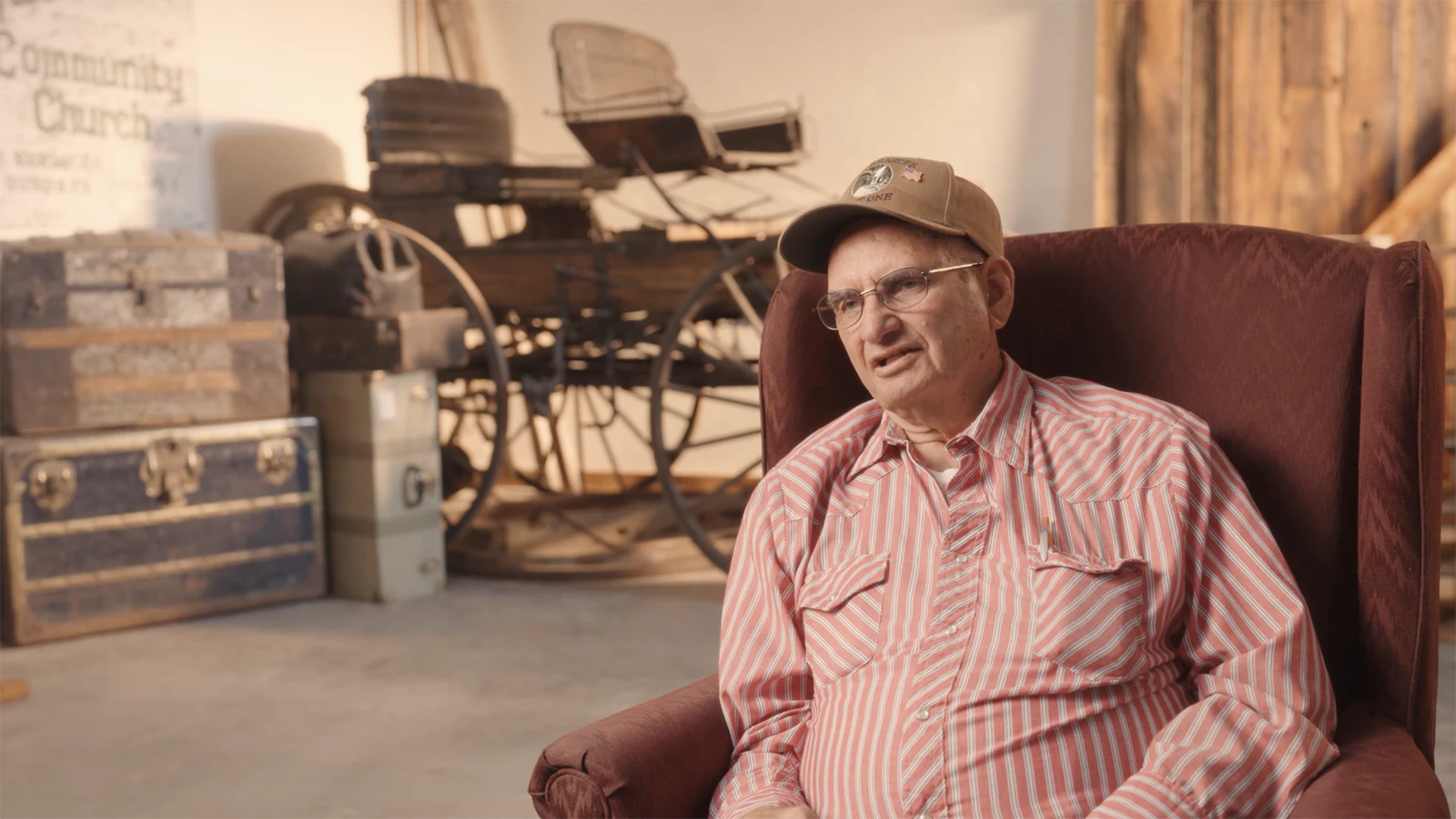
Many of the people who live in Elk Mountain today can trace their ancestry to the original homesteaders, and say they’ve never thought about leaving.
“I had chances to go elsewhere, and I always came back,” Jones said.
“It’d be hard to leave, I guess, now,” Boles said. “I wouldn’t know how to act anyplace else.“
What Karstoft has always liked about Elk Mountain is the “small town” living.
“Everybody knew each other, everybody helped each other,” she said. “Of course there was disagreements, too. There always are. But it was a beautiful place to settle.”
Richardson knows he could retire somewhere else — Florida, California, Arizona.
“I’m going to stay here,” he said. “I don’t know how much longer I’ll be here, but anyway, I’ll be here till it’s done.”
Through the years, what Richardson has seen is there’s always just enough to keep the town going.
“There will always be an Elk Mountain,” he said. “I’m sure of that.”
Thanks to the legacy film project, there will always be stories of the people who made it so, from the tie hacks and ranch families to the children on horseback and the neighbors who helped each other not only survive, but thrive.
Contact Renee Jean at renee@cowboystatedaily.com
Renée Jean can be reached at renee@cowboystatedaily.com.


