
Microsoft officials said the company is willing to talk about a $50 million community benefits agreement, but after Monday night’s Cheyenne City Council vote it won’t be necessary.
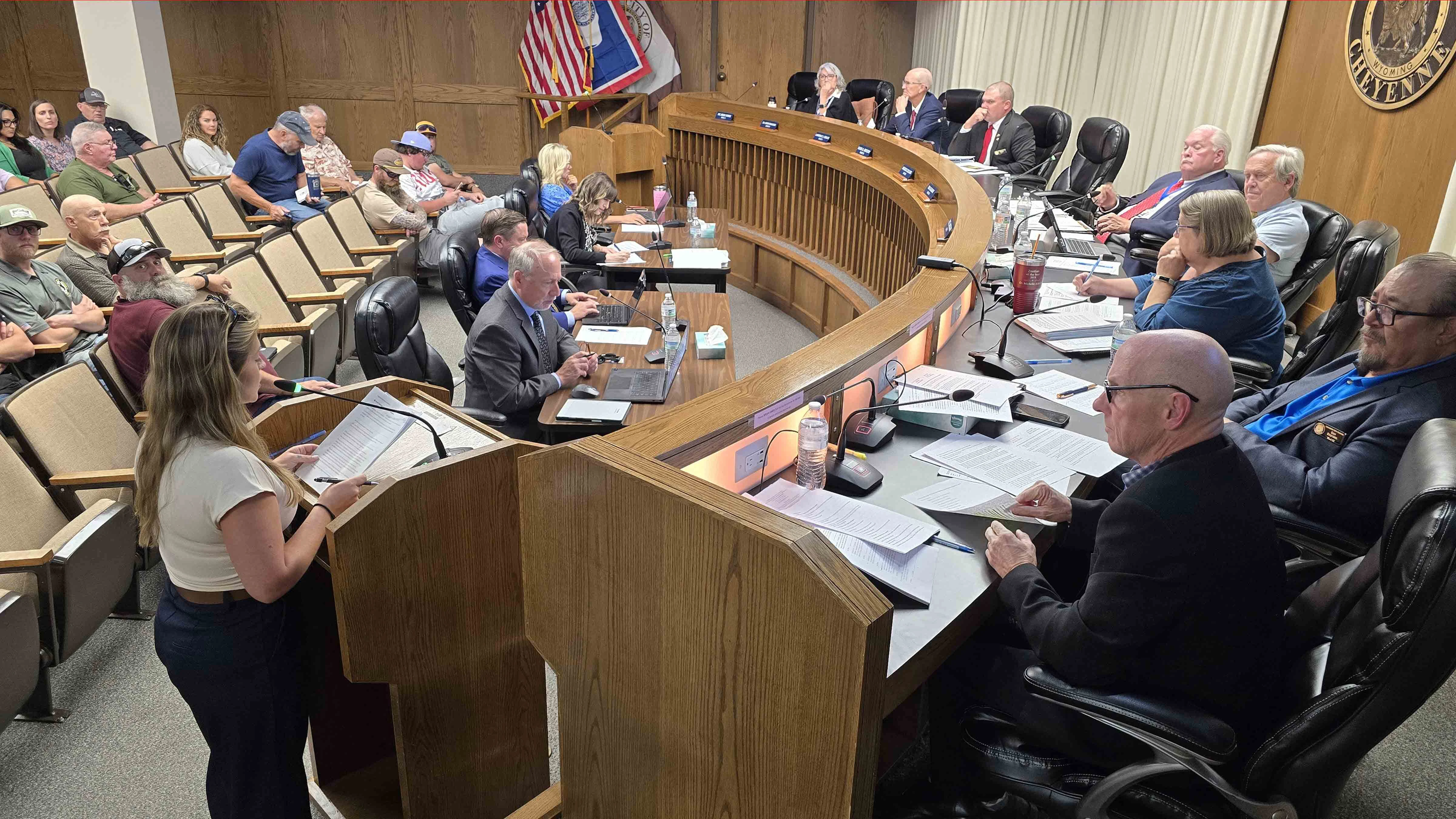
The council voted to advance the annexation of a 3,500-acre tract of land into the city, but rejected the idea of a community benefits agreement on an 8-to-3 vote. Cheyenne Mayor Patrick Collins was absent from the meeting.
The tract, roughly one-fifth the size of Cheyenne and adjacent to Microsoft’s existing data centers, is envisioned as a long-term expansion site where it would build its facilities out over the next 10 to 20 years. Supporters have framed the move as key to jobs and the tax base, while opponents have said the city is giving up leverage and reshaping the community without locking in enough concrete benefits or fully understanding water, traffic and neighborhood impacts.
Councilman Larry Wolfe brought the amendment that sought the $50 million agreement, saying it was necessary because of the extraordinary scale of the annexation.
Wolfe’s proposal outlined collecting $10 million annually for five years starting July 2027 to fund permanent improvements to Cheyenne. The agreement should also spell out an expectation, Wolfe has suggested, that Microsoft will use state-of-the-art technology to minimize water use, eliminate emissions, and set contractual guardrails on as many as 40 different items ranging from traffic and noise to wildlife and affordable housing.
Collins called the proposal for a $50 million community benefits agreement “extortion” the first time Wolfe mentioned it.
Wolfe asked Microsoft executives whether there would be any harm in a four-month delay so the city could negotiate terms of the annexation.
Microsoft’s land-development manager Rachel Irwing indicated the company is “willing to work with the city in whatever way is beneficial for both the city and this project” and is “open to discussions,” but added the company does want to move forward on the project as quickly as possible.
Microsoft spokesman Jonathan Noble, meanwhile, said that while the company’s timeline for the development is 10 to 20 years, they don’t plan to wait that long to start.
“That’s the reason why we’re eager to really lay the groundwork, establish the rules, work with city staff, make sure that we are all clear on the investment that is going to require,” Noble said. “That’s investment by Microsoft in conjunction with the city, various other folks, to build out the sewer, water, power, etcetera, and to make sure we are shouldering that cost completely. That takes time to design. It also takes time to build. Our hope is to start building well before that 10-year mark.”
The company could, Noble added, move forward under Laramie County, but felt it was better for the project and the community to proceed under the city.
Councilman Pete Laybourn, meanwhile, wanted to know if the company had considered an annexation agreement similar to the one made for Sweetgrass, the only other comparably-sized property the city has annexed.
Noble said the company is not looking for any exemptions from the city’s normal development processes, saying its existing structure has worked for the city and will work for Microsoft.
Growth Isn’t The Issue
Public comments on Monday underscored a divide over how — not whether — Cheyenne should grow.
While some residents completely oppose growth, most said they want clearer evidence the city is grasping the pace of development and guiding it to an appropriate landing.
“I’m not here to oppose growth,” long-time real estate broker Wendy Volk told the council. “Wyoming has always embraced innovation, entrepreneurship and opportunity. Economic development matters, and our state has a proud history of powering the nation through agriculture, mining and energy production.”
But even she finds the speed and scale of incoming industrial projects disconcerting.
“I believe we must ask some … broader questions about how we grow and who bears the cost,” she said. “We experience (these projects) cumulatively. We experience increased demands on shared roads. We see growing demands on water systems, emergency services, housing and public infrastructure.”
A key question, Volk added, is the character of southeastern Wyoming left for future generations.
“Growth itself is not the issue,” she said. “The issue is whether we have a long-term plan and whether growth is paying for its share.”
Volk said it’s fair for the community to ask companies that will benefit from the growth to be stronger partners in building out infrastructure and mitigating impacts.
“Once the character of a community changes, it is difficult to restore,” she said. “I’m not asking for us to stop progress. I’m asking for us to guide it wisely, with transparency, thoughtful planning, and a commitment to ensuring that growth strengthens our communities rather than placing new burdens upon them.”
For Harmony Meadows resident Heather Madrid the lack of a defined plan ahead of approving the annexation is a red flag that says the city isn’t doing it’s job to mind the store.
“The lack of a plan is not a legitimate reason to forgo any kind of annexation agreement,” she said. “In fact it’s quite the opposite. It’s a reason to wait until Microsoft has some idea what they’re doing here.”
Madrid also questioned how the city can claim the annexation will benefit residents when there’s been no examination of how much water will be used, how many backup generators will be necessary, and whether city services such as police, fire, and EMS will be reasonably available.
Without those details, the property is “not ready to be annexed, plain and simple,” Madrid said, adding that “corporate philanthropy is not a substitute for proper planning.”
Data Centers Offer Hope For Future
Those speaking for the data center’s annexation and against any postponement mostly came from building trade groups and from Microsoft itself.
Rob Turse, business agent for Local 192, was among them.
“The sooner we can get our local workers out to work on these projects, the sooner the middle class gets back to normal here in Cheyenne,” he said. “The middle class has been ... it's been hurting for a long time here in Cheyenne. It's been in decline. It really has.”
Multiple individuals talked about leaving volatile oil and gas or traveling construction jobs for steady data center work. That’s allowed them to be home with their families and make a high enough wage to support them.
Kevin Banish talked about growing up in Cheyenne believing there would never be a career for him in Wyoming.
“Today, there’s hundreds of people building technology centers right here in Cheyenne,” he said. “Over the last 13 years, I’ve watched Microsoft’s presence in our community grow from a few facilities into a major contributor to our local economy.”
The beneficiaries are not buildings, he added, but the people who work there and are now able to make a living closer to home.
“Today, students in Wyoming can look at careers in technology, engineering, construction, operations, networking, and skilled trades, and know that those careers exist right here at home,” he said. “They no longer have to assume that opportunity only exists somewhere else.”
Data centers have made that possible, and Cheyenne has become a recognized leader in the industry, Banish said.
“Approving this land addition will continue that momentum and position our community for future investment, future jobs, and future opportunities,” he said. “As a lifetime Wyoming resident and as someone who has worked in this industry since 2013, I believe this is a positive step in Cheyenne’s future.”
Benefits Agreement Is Moratorium 2.0
Councilwoman Kathy Emmons was among those who were displeased with Wolfe's motion, which was supported by Laybourn and Councilman Mark Moody, who earlier proposed a moratorium on data center development.
Moody said Cheyenne needs to more carefully consider the impact of so many data centers built all at once in and around the city.
Emmons said the community benefits agreement was just a new version of the proposed moratorium, which had already been voted down by the council after hours of testimony.
“We went through the whole process, we went through all the readings, we took all of the comment, we heard every single bit of it, we listened, we listened to both sides,” Emmons said. "This council took a vote to deny the moratorium and to move forward. So here we are again, doing the very same thing, which I find incredibly disingenuous.”
A four-month postponement won’t be productive, Emmons added.
“We’ll be in the very same situation, and we’ll just keep doing it over and over,” she said. “That’s not OK for the community who we’re supposed to be entrusted to represent. And it’s not OK for the people who have put in so much hard work on this issue, and we keep dangling this carrot in front of them. So I would encourage my fellow council members to vote no on this amendment.”
Councilman Jeff White said a community benefits agreement such as Wolfe proposed would set a bad precedent.
“Does Microsoft have deep pockets?” he said. “You bet, but just because they’re a a multi-billion-dollar corporation doesn’t mean we should be treating them differently. The owner of the property wants to engage in a lawful business transaction with a willing buyer.”
Councilman Ken Esquibel suggested that those wanting to stop data centers have picked the wrong venue for their fight.
“If you really want to stop data centers, the building you need to go to is the one with a golden dome, about seven and a half blocks that way,” he said. “The reason data centers come here is because of tax laws, the tax structure in Wyoming, that get set at the state legislative level."
“They're not coming here because the Cheyenne City Council has given them their golden ticket,” he added. “We actually have the strictest regulations for data centers of any city in the country. That's why they want to build in the city, as opposed to the county.”
A 3,500-Acre Annexation Is Different
Wolfe disagreed with the contention his motion was anything like a moratorium. That was a much longer delay, with broader consideration about data centers.
His proposal targets a specific data center project, looking at impacts to the city and addressing them, similar to the annexation agreement used for the Sweetgrass development.
“This comes to us with every single issue you can imagine in an annexation proceeding,” Wolfe said. “When this first arose .. I said we should treat this differently. We should treat this with the enormity and respect that it deserves. We didn’t do that. We treated it with the same respect we treat a 2.7-acre annexation.”
Wolfe acknowledged many people are on data-center information overload, given how many committees the matter has traveled through, but this is the first time it’s arrived at a full council meeting.
“There are a host of issues that we should address with this,” he said. “And I’ve been trying to do that. But the biggest issue is that what is proposed here is trying to balance up the benefits with the detriments, the burdens that come from all of these projects.”
Microsoft’s contention that the city will be its best partner for future projects is a telling detail, Wolfe suggested, that points to the city taking more time to think about what the annexation entails and the measures to be agreed upon before the council accepts it.
“That’s all I’ve suggested is that we spend some time talking about what a partnership looks like,” he said. “And guess what, we have a perfect model from 2018, and I have it right here.”
Wolfe was referring to the Sweetgrass annexation, which was Cheyenne’s largest single land annexation. That agreement talks about a range of issues from zoning and traffic to dedication of land for parks and planned development.
“It’s in all of our interests, members of the council, to postpone this,” he said. “It’s in all of our interests to lock up the mayor and the chief of staff and say go negotiate a strong agreement that deals with all of these issues.”
Public Vs. Closed Doors
Emmons said agreements like Wolfe is seeking can still take place without any postponement.
“We’re going to have those studies,” she said. “They have to provide the studies through EPA (Environmental Protection Agency), through the county, through the city. They have to do those things in order to go forward anyway. I feel strongly we can proceed with this and still make sure that everything is done appropriately.
That’s a process, Wolfe countered, that will happen behind “closed doors.”
“So while yes, you’re right that some of that work may be done, the reason you put it into an annexation agreement — and the reason they did it in the Sweetgrass annexation is that they’re locked into it by contract — and that’s what we need to do now,” he said. “If we miss this opportunity to get an annexation agreement now, and define these issues and define their obligations ... because remember, they want these things not in place now but 10 years from now, we better be awfully careful and awfully thoughtful. Because in 10 years from now who knows what the environmental constraints are going to be?”
Laybourn argued that Cheyenne does have great needs that should be considered in light of the annexation, and suggested it’s not extortion to expect some agreements up front that will cover economic impacts, especially given that the facilities do not go through the Industrial Siting Commission.
“We believe it's a legitimate attempt, a good-faith attempt to look at something that's never happened here before, and probably will never happen again,” Laybourn said. “And to try to make sure that right from the initiation of that annexation we have these conditions, and these conditions are serious, so I'm sorry that some individuals seem to believe that those of us that support this are obstructionists or unrealistic or trying to, I can't imagine what our motivation could be. My motivation is to look at these facts.”
Monday’s vote was the second of three required readings by the city council on the annexation. The council will still have to take a third and final vote.
If approved on final reading, the annexation will clear the way for Microsoft to begin detailed planning for a multi-decade data center buildout on Cheyenne’s southern edge.
Renée Jean can be reached at renee@cowboystatedaily.com.


