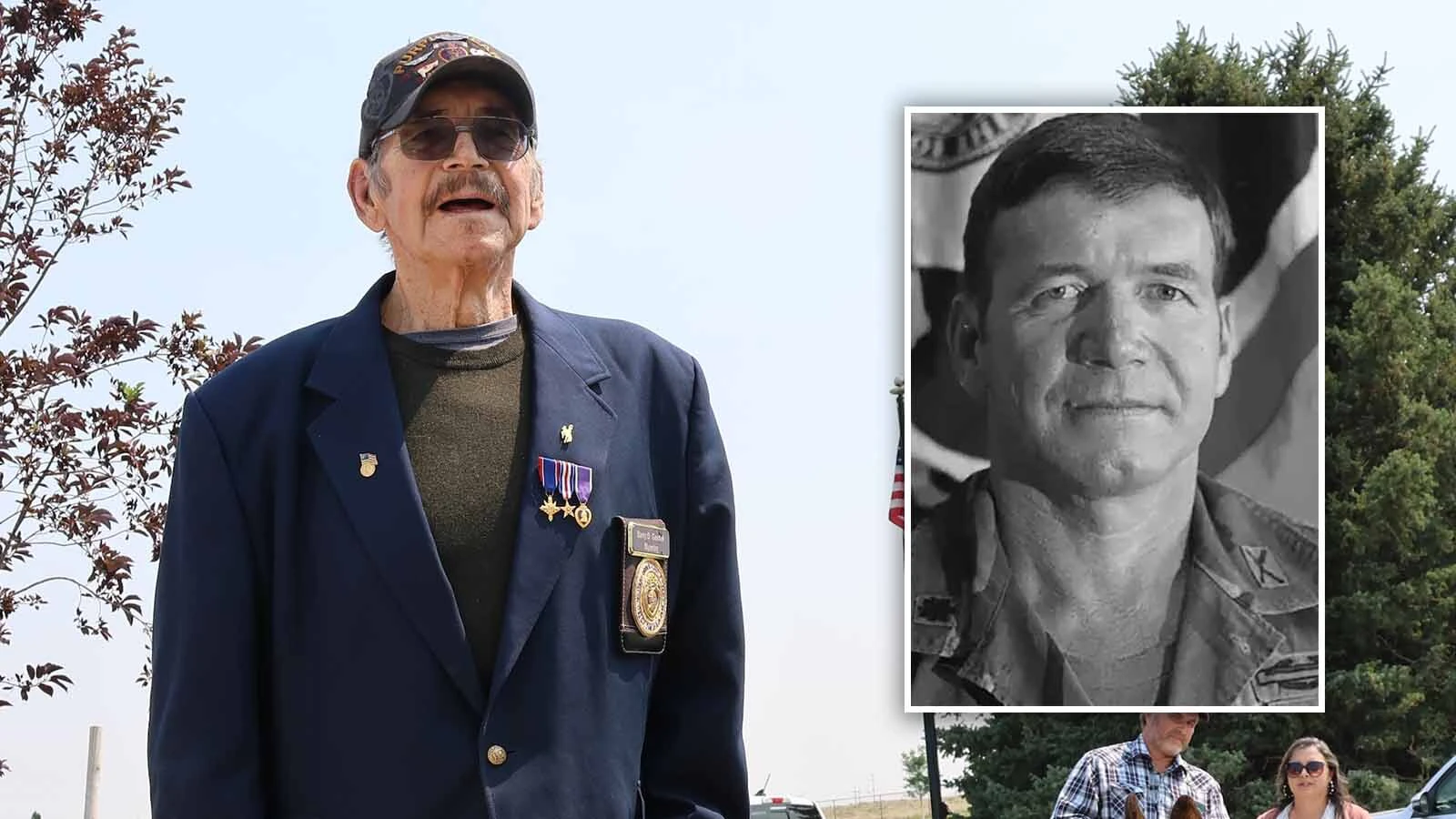
He rescued two wounded men under heavy enemy fire, took a bullet to his leg, and the next day was blown into the air as a rocket-propelled grenade hit a half-track vehicle he was standing beside, sending shrapnel into his legs and back.
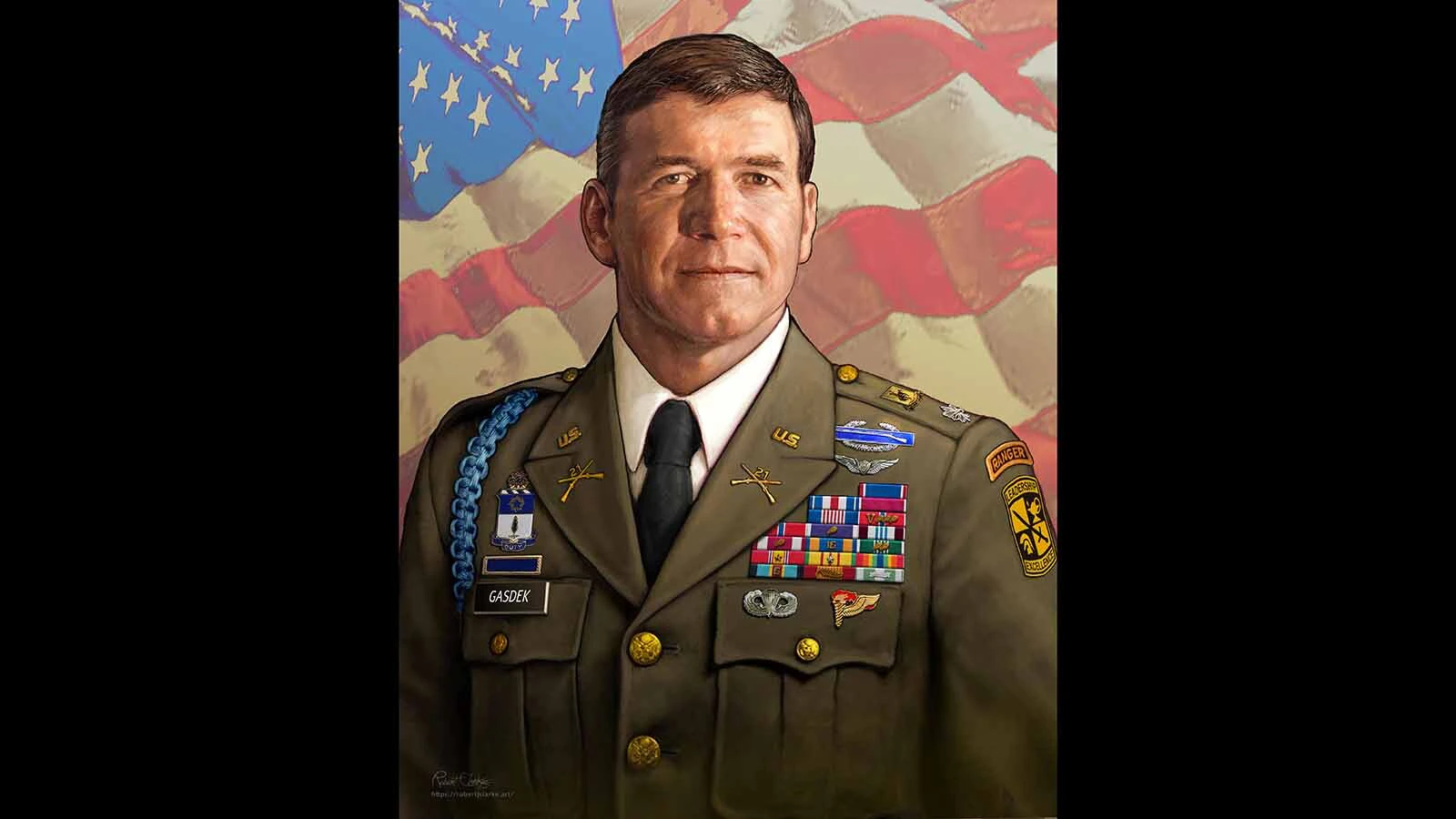
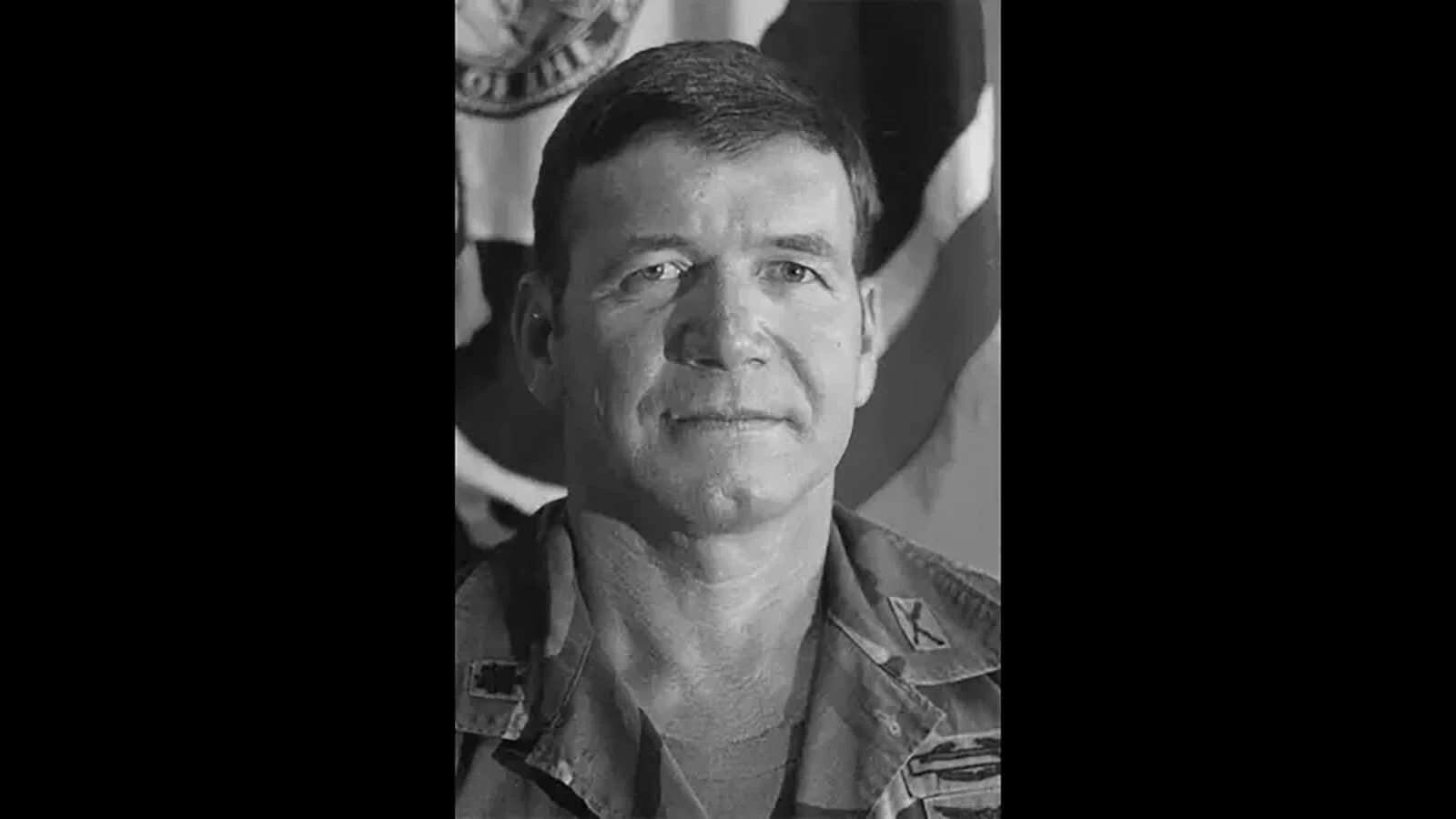
Capt. Barry Gasdek kept leading his men in September 1968 while countering a heavy North Vietnamese Army attack. During other action in Vietnam, he was shot out of the air twice while riding in helicopters.
Gasdek's philosophy then and now as a retired lieutenant colonel who closed his career at the University of Wyoming teaching ROTC students is that officers “lead from the front.”
“If you’re closer to the front, then you’re in whatever’s going on,” Gasdek said. “I never asked my men to do anything that I would not personally do, including being a tunnel rat or point, whatever.”
He left Vietnam after two consecutive tours with the Distinguished Service Cross, Legion of Merit, Soldiers Medal as well as a Silver Star, Bronze Star with a “V” for valor and four oak leaf clusters, and the Purple Heart with an oak leaf cluster for wounds received on the battlefield.
Growing up, Gasdek said he never considered the military as a career. He was born the day before Memorial Day on May 29, 1942, as the nation tried to respond on two fronts in the early days of World War II.
Born and raised in Loyalhanna, Pennsylvania, southeast of Pittsburgh, in a Czechoslovakian neighborhood, Gasdek’s grandparents had left the old country and moved to the U.S. to find a better life. His grandfather was a coal miner and his father also worked in the coal mines and steel mills around Pittsburgh.
An Eagle Scout and multi-sport athlete in high school, Gasdek was a three-sport college athlete at Indiana State College in Indiana, Pennsylvania. He played guard on the football team, wrestled in the heavyweight class and ran the two-mile on the track team.
Entering college, he chose to join the Army ROTC rather than do two years of required physical education because his sports commitments already meant he would have a lot of gym time.
He found he enjoyed the military order.
During his junior year, he committed to advanced ROTC training and graduated in 1964 with a degree in art education and due to his superior academic performance received a commission as a second lieutenant in the regular U.S. Army instead of a reserve commission.
Germany To Vietnam
Gasdek said initial assignments took him to Fort Benning, Georgia, and then three years in Germany during the Cold War with the 4th Armored Division, where he had roles as a platoon leader, company executive officer and then company commander with the 1st Battalion, 54th Infantry Mechanized in the 3rd Brigade of the 4th Armored Division.
In 1967, he received orders to join the 1st Infantry Division, the Big Red One, in Vietnam. Gasdek said he convinced the army to send him to Ranger school before he went into combat. The Army gave him a slot in the school, but a month through the training he injured his knee and spent three months recuperating.
After the knee was good to go, he was reassigned to Hawaii and a new battalion being formed for Vietnam, the “Jungle Warriors.” They were deployed to Vietnam in February and March of 1968.
A short time after entering the country and being sent to 11th Light Infantry Brigade headquarters, Gasdek was promoted to a company commander role.
During his first six months in Vietnam, Gasdek was involved in directing search and destroy missions in the northern part of South Vietnam. He said they mostly were dealing with Viet Cong fighters. However, in September 1968, his unit, Company D, 4th Battalion, 21st Infantry, 11th Brigade Americal Division, was sent farther north, where North Vietnamese Army troops were active.
On Sept. 22, his unit was conducting a combat assault into the new area and one of the 40-soldier platoons became engaged with North Vietnamese forces.
Gasdek recalls sending in another platoon to reinforce them and both were pinned down.
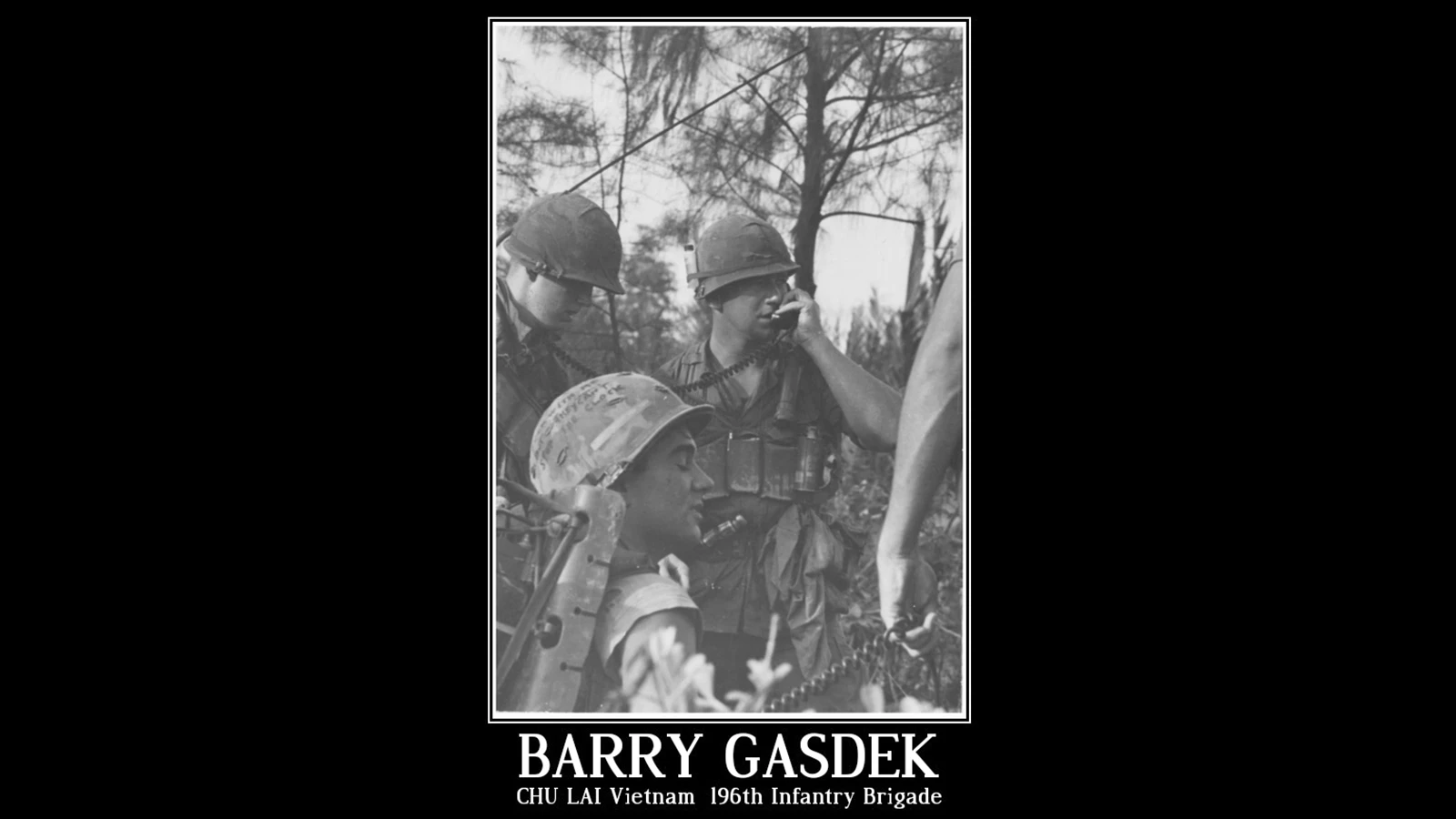
With two radio operators, Gasdek moved to where the action was occurring. He called for help from an armored cavalry unit but the M-113 track with a .50-caliber machine gun and two M-60 machine guns could not make it through a narrow pass.
AK-47 Fire
As Gasdek spoke via radio with a platoon leader, his two radio operators were on either side of him. A North Vietnamese soldier sprayed AK-47 fire on their position. Both radio men were hit in the head, Gasdek was untouched. One of the operators was dead and the other wounded.
Gasdek applied first-aid to the fallen.
“The one that was wounded, he calls me once in a while,” Gasdek said. “He was a police captain, I think in the New York Police Department. He said after Vietnam he healed and all that and went from one war to another in New York.”
Gasdek’s Distinguished Service Cross citation states he was wounded in the leg during the firefight. After learning two other men in one of his company’s platoons were wounded and laying in front of a defensive position, Gasdek crawled out and pulled them back into the defensive perimeter.
Other soldiers had hesitated due to the withering enemy fire.
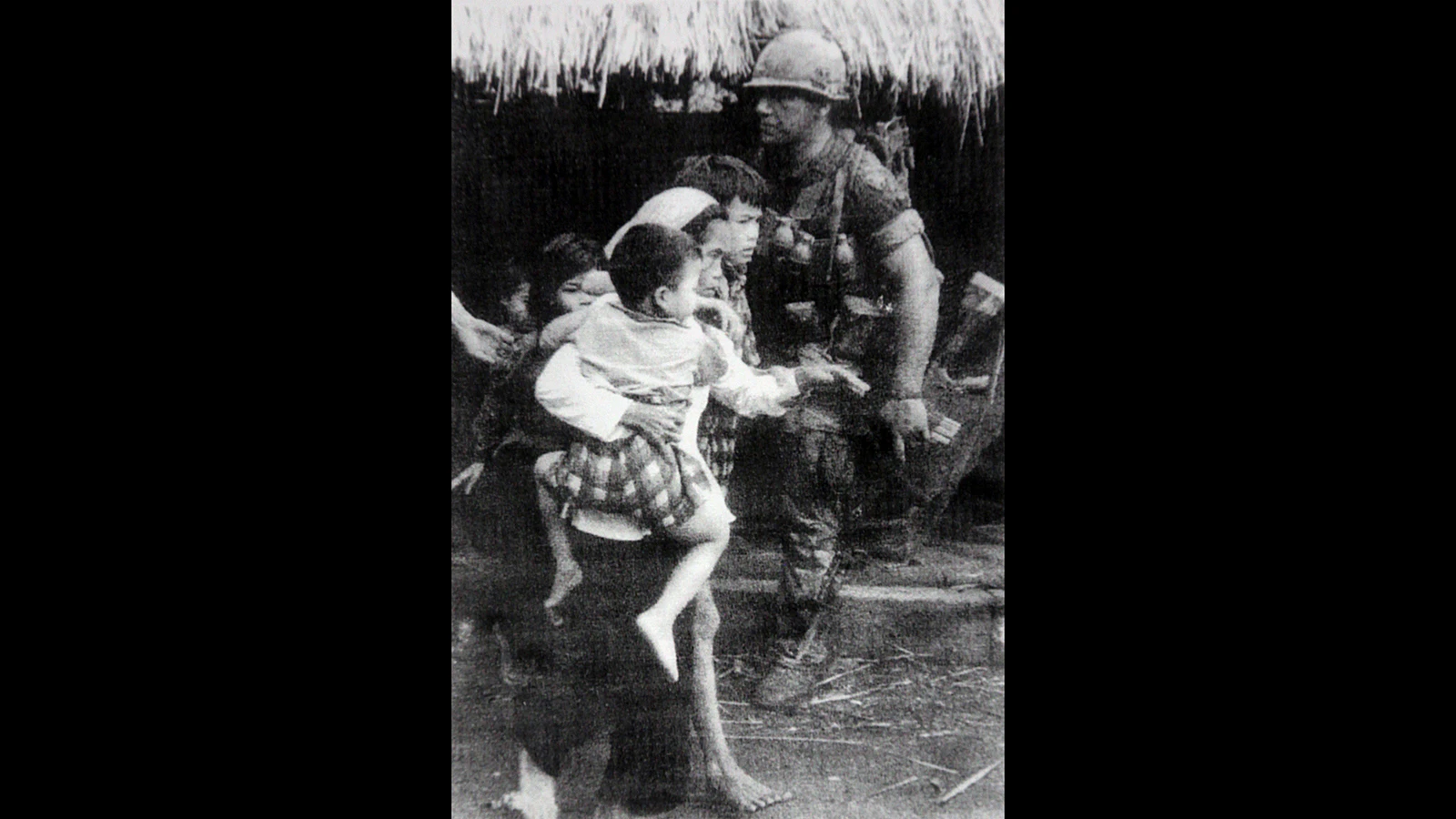
The next morning, despite the leg wound, he led an attack through hedgerows and little villages and carried the radio himself due to the loss of his radio operators. As he crossed a rice paddy into a village, the enemy opened up with AK-47s, machine guns and rocket-propelled grenades.
Armored tracked vehicles accompanying Gasdek’s troops were hit and he was blown off his feet, taking shrapnel in his legs and back. He led the counterattack and “ended up just going bunker to bunker” killing the enemy.
Gasdek said headquarters informed him they wanted prisoners to interrogate, so he had a tank drive on top of an enemy bunker until it collapsed. They then dug North Vietnamese troops out and sent them to headquarters for questioning.
The Casualties
“I ended up with six soldiers killed and 15 wounded,” he said. “I was wounded myself a couple of times.”
The North Vietnamese suffered 67 killed as well as the loss of rocket-propelled grenade launchers, ammunition, AK-47s, and other weapons.
During the battle, Gasdek continued to communicate via the radio and help get air support for his troops as well as engage the enemy. The chaos of war from helicopter gunships, rocket-propelled grenades, machine guns and other small-arms fire somehow brought him to a place where “in your mind it goes quiet.”
“I thought that if this is the day I die, at least I’m where I should be up front with my men,” he said.
His actions that day resulted in his being awarded the Distinguished Service Cross by Gen. Creighton Abrams, for whom the Abrams Tank is named. Gasdek said he had no clue who Abrams was until after the presentation.
Abrams later become the Army Chief of Staff.
Gasdek remained in Vietnam for two tours and served for six months flying Visual Reconnaissance Missions as a base defense commander with a pilot on a light observation helicopter. He had at his disposal a mini-gun with 2,000rounds of ammunition and a case of grenades at his feet.
His responsibility was to protect a brigade-size firebase at night.
“We got attacked a couple of times. One night we killed 19 at the wire, and another time 21,” he said.
On other missions, Gasdek was shot down twice while flying as a passenger in Huey helicopters. In one instance they were flying over a village and took 21 bullets and fortunately were able to radio for support.
“It was about 5 or 10 minutes before we had gunships come out,” he said. The pilot found an old French airstrip to make a skid landing and a large Chinook helicopter was sent to lift what was left of the helicopter and take it back to base.
After Vietnam, Gasdek returned to the states through Hawaii, where he spent a week scuba diving, and then San Francisco and back to Pennsylvania. He said he never experienced personally the anti-war sentiment that many Vietnam veterans received.
His Welcome Home
In Pennsylvania, he said the miners and steelworkers made sure he did not have to pay for anything.
However, his own payment for the many battles he experienced involved post-traumatic stress and a traumatic brain injury. He said he believes staying in the service and talking with other Vietnam vets helped him cope and kept him from becoming socially isolated like other buddies from Vietnam who wanted to be a hermit and “wind up in the hills.”
“Sooner or later you’ve got to deal with your issues, your demons, and you know, life goes on,” Gasdek said. “So, for about 40 years, I never even mentioned Vietnam actually. I never wore my medals until we got invited to a couple of things at the national cemetery at Arlington and the secretary of veterans affairs said ‘How come you guys aren’t wearing your medals?’ That’s when I started wearing my medals.”
Assignments after Vietnam included Ranger school ,where he finished first in his class. He became not only a Ranger but a Pathfinder, qualified for setting up helicopter landing zones and drop zones. His experience in Vietnam led to his decision to stay in the military rather than pursue his original plans of teaching art in school classrooms.
Gasdek went on to serve as a leadership instructor at the U.S. Army Infantry School at Fort Benning, and through assignments as part of the Army Training Board traveled the world.
He was in Panama during riots that occurred a few blocks from his hotel and in South Korea in 1979 when a two-star general triggered a coup d’etat resulting in a shootout at the nation’s Ministry of Defense.
“Our compound was right on the other side of their Ministry of Defense,” Gasdek said. “They were shooting that up, and bullets were flying through our barracks. I was spread-eagled on the floor, but you know I didn’t get any combat pay for that. I was in the wrong spot at the wrong time.”
Protocol Role
His career also included a stint as deputy chief of protocol for the Pacific in Honolulu, Hawaii, working for four-star U.S. Navy admirals at Pearl Harbor. His job was to handle all the VIPs, from presidents, heads of state, congressional delegations, and others who came through Honolulu.
Gasdek and members of the team took care of VIP itineraries and made sure their accommodations and experience matched their expectations and status.
That job allowed him to meet the king and queen of Spain, Reagan administration Secretary of State George Schultz, several cabinet and congressional officials, and play basketball with George H. W. Bush’s vice president, Dan Quayle. Quayle was traveling back from the Philippines and arrived about 3 a.m.
He had a 30-minute meeting with an admiral and then wanted to play basketball — at 4 a.m.
“My boss told me, Barry, you pick up a team,” he said. “We played the Secret Service and Danny Quayle. I can say part of my job was to guard the vice president, he was dribbling the ball of course.”
Gasdek ended his Army career teaching ROTC at the University of Wyoming. He said his role as a professor of military science allowed him to meet many people, including state leaders and governors.
He became an advocate for veterans being appointed to serve on the Wyoming Veterans Commission and also for several years as the first Wyoming veteran services officer. Gasdek said he took on the role to help veterans because he “knew what they were going through.”
Gasdek said he also wanted to make sure Wyoming Guard members on deployment were taken care of.
“We would make all the homecomings and yellow-ribbon events where they would brief the troops and the families (about) what was going on, making sure you had somebody look after the family while they were deployed,” he said.
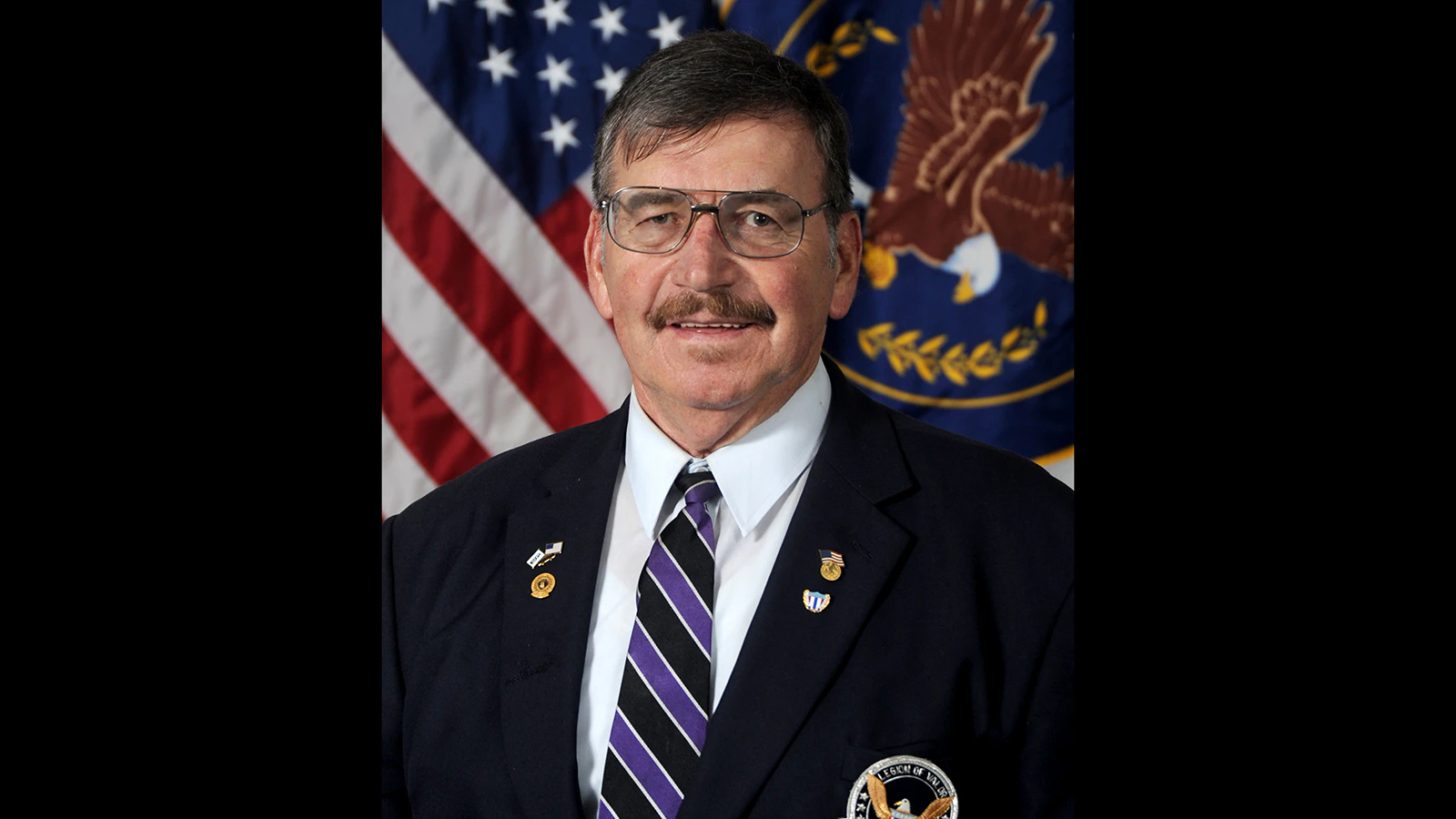
After his Army career, Gasdek joined the exclusive Legion of Valor veterans’ organization that is open to veterans with the Medal of Honor, Distinguished Service Cross, Navy Cross or Air Force Cross. He was its national commander from 2008 to 2009.
Gasdek also belongs to the Military Order of the Purple Heart and has had leadership positions with the American Legion and Veterans of Foreign Wars.
While he never pursued his art education career, Gasdek said a three-story log house he built in the mountains northwest of Pikes Peak while he was stationed at Fort Carson, Colorado, decades ago became an outlet for his artistic side.
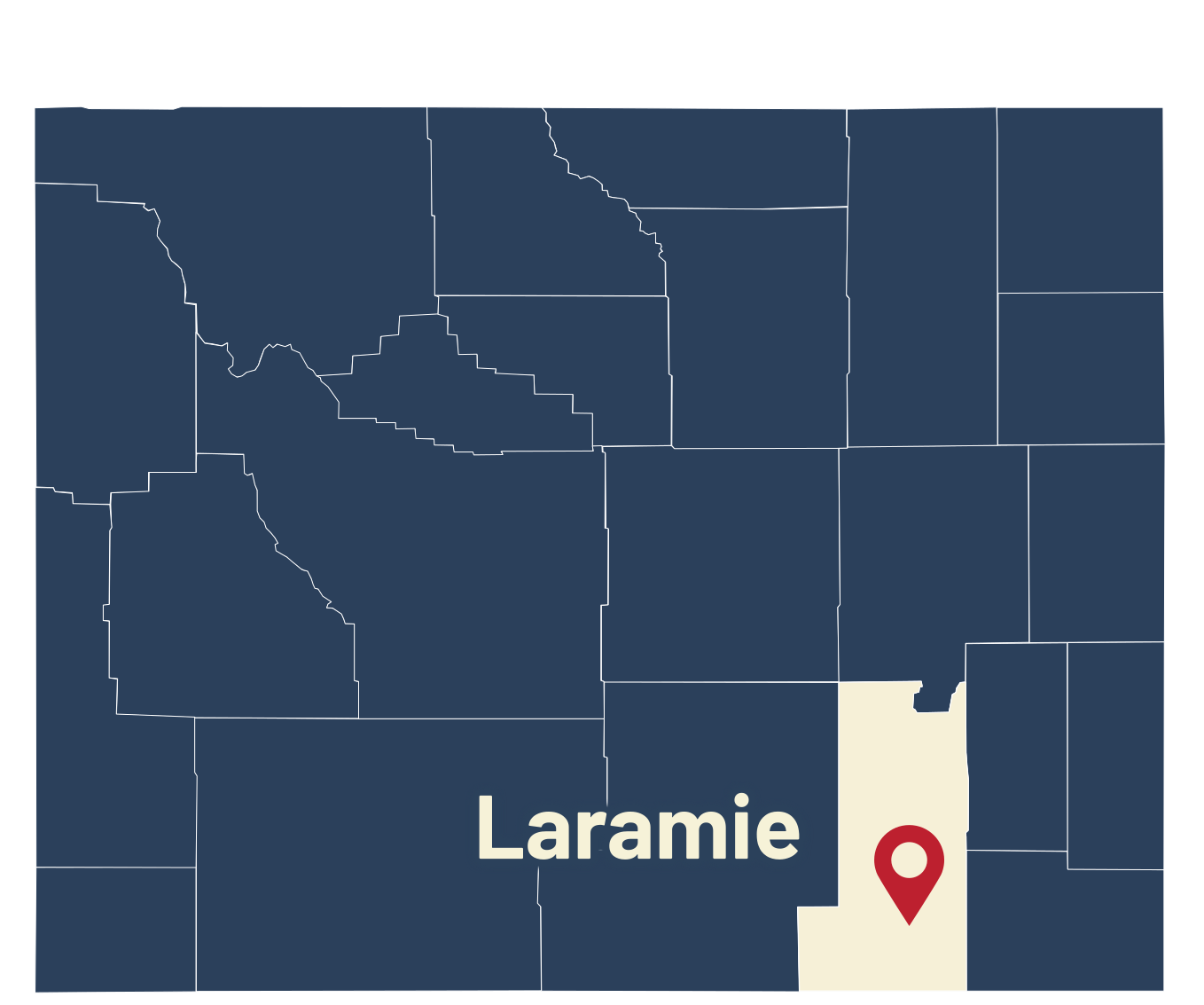
He has hung onto the house but characterizes Laramie as his final home.
“Three or four weather systems would be up there,” he said. “I got a view of Pike’s Peak, which is really neat.”
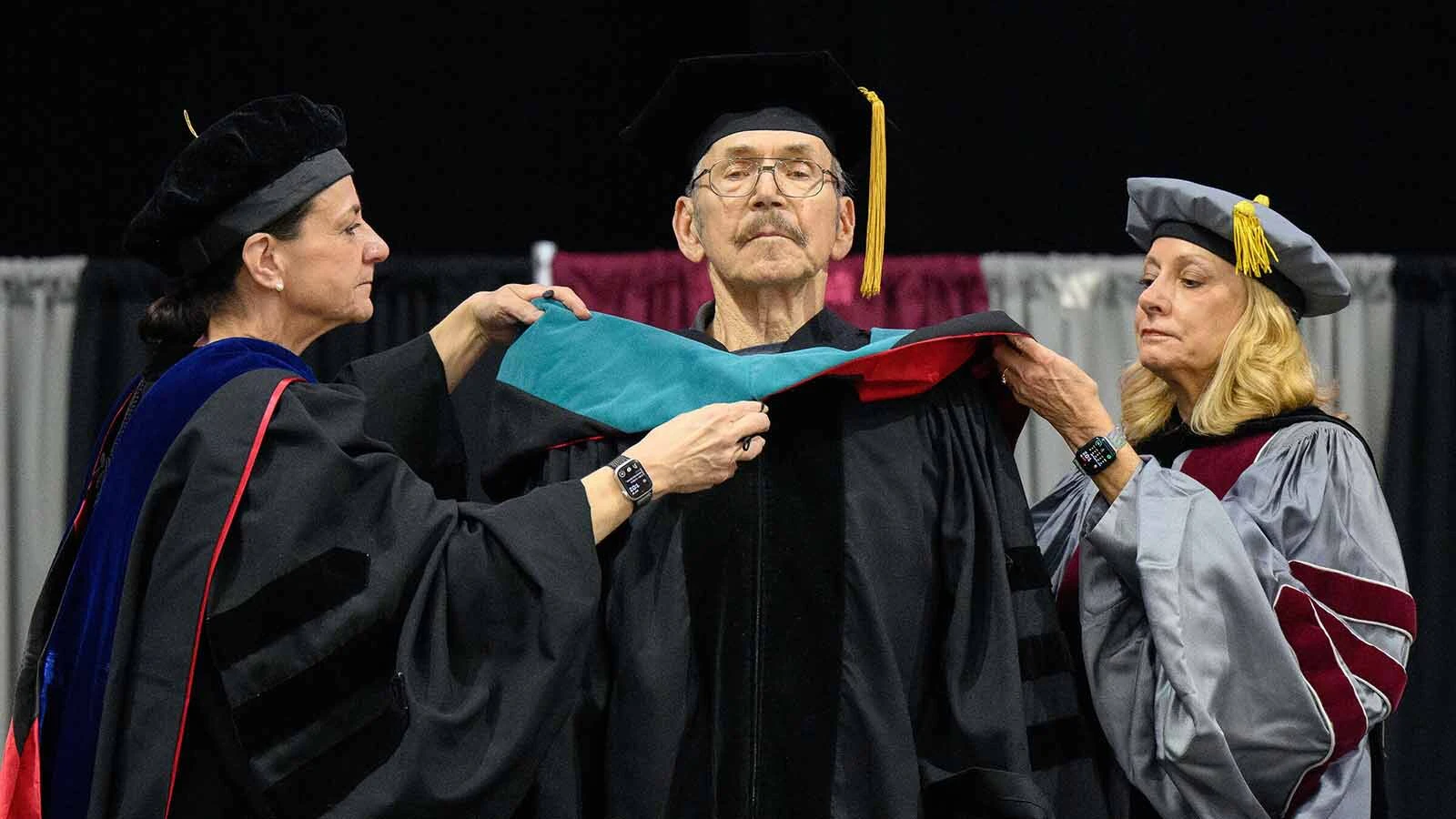
Gasdek’s lifelong efforts have been honored by his alma mater with a Doctor of Public Service Degree and in the past by U.S. Sen. John Barrasso in the Congressional Record for his service and advocacy for veterans.
“He embodies the cowboy ethics and what it means to be a citizen of Wyoming,” Barrasso said in remarks published in the Congressional Record in 2012. “It is certain that the legacy of his leadership will inspire new generations of brave soldiers.”
Contact Dale Killingbeck at dale@cowboystatedaily.com
Dale Killingbeck can be reached at dale@cowboystatedaily.com.