
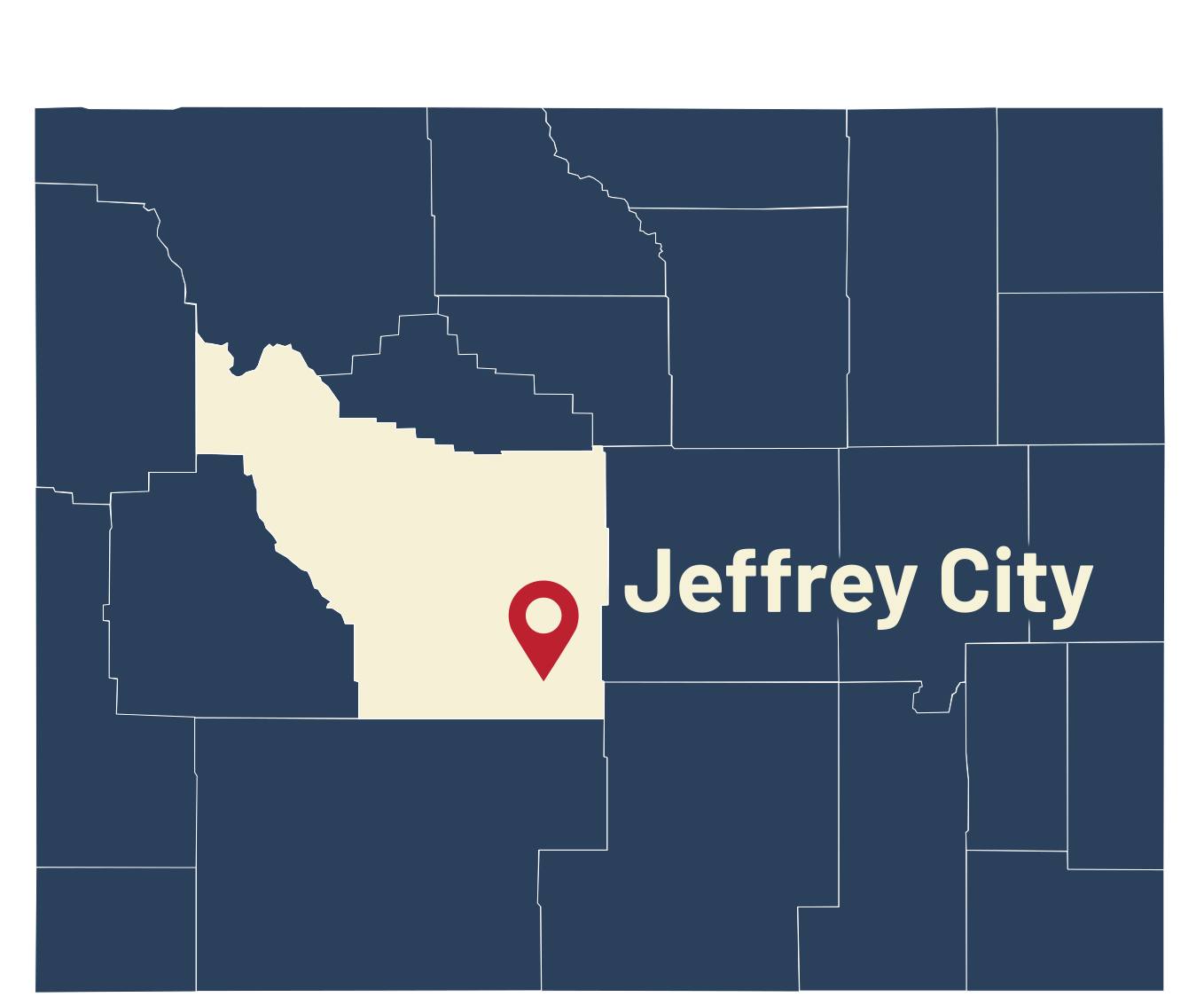
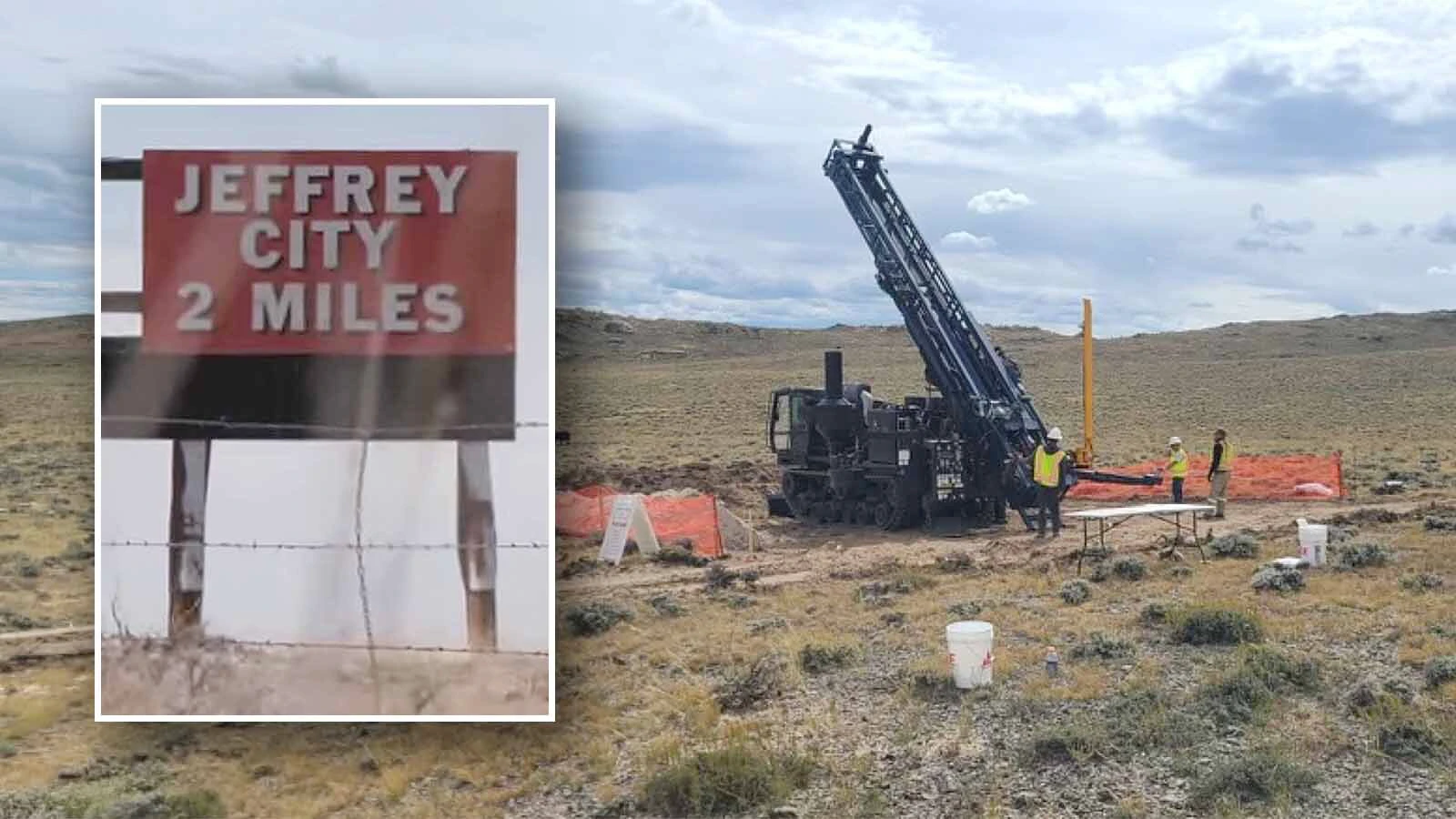
Visionary Metals made Wyoming’s first nickel sulfide discovery in the Granite Mountains north of Jeffrey City in 2024. This year, it’s moving into a decisive drilling phase as it tries to turn that find in the under-explored greenstone belt into Wyoming’s first and only nickel mine, producing a metal the federal government has designated as critical.
“We’ve identified some nickel targets, and we’re going to be drilling them this year,” Visionary Metals CEO Wes Adams told Cowboy State Daily. “We’ve used a lot of scientific methods to help reduce the amount of areas we have to explore.”
Among them was an aeromagnetic survey, scanning the earth’s crust from the air down to roughly 3,300 feet below the surface. It might sound like something out of a Star Trek movie, but it isn’t science fiction anymore.
The technique uses subtle changes in Earth’s magnetic field to point the way to where valuable metals and minerals might be hiding.
“That helped narrow down areas for exploration,” Adams said. “And then in areas where we do see targets, we follow up with ground surveys, which tell us exactly where these critical metal deposits might exist.”
After that, it’s drilling time — to test the areas with as little environmental impact as possible and further hone in on whether Wyoming has a nickel mine.
“It’s not like oil and gas drilling, where you have these giant pads and giant rigs,” Adams said. “We’re just drilling a 3-inch hole in the ground, to get a representative sample of what’s down there.”
That will ultimately determine how big the resource opportunity is, and whether it’s economically feasible to develop today in the future as technology matures.
Better Tech Uncovering New Deposits
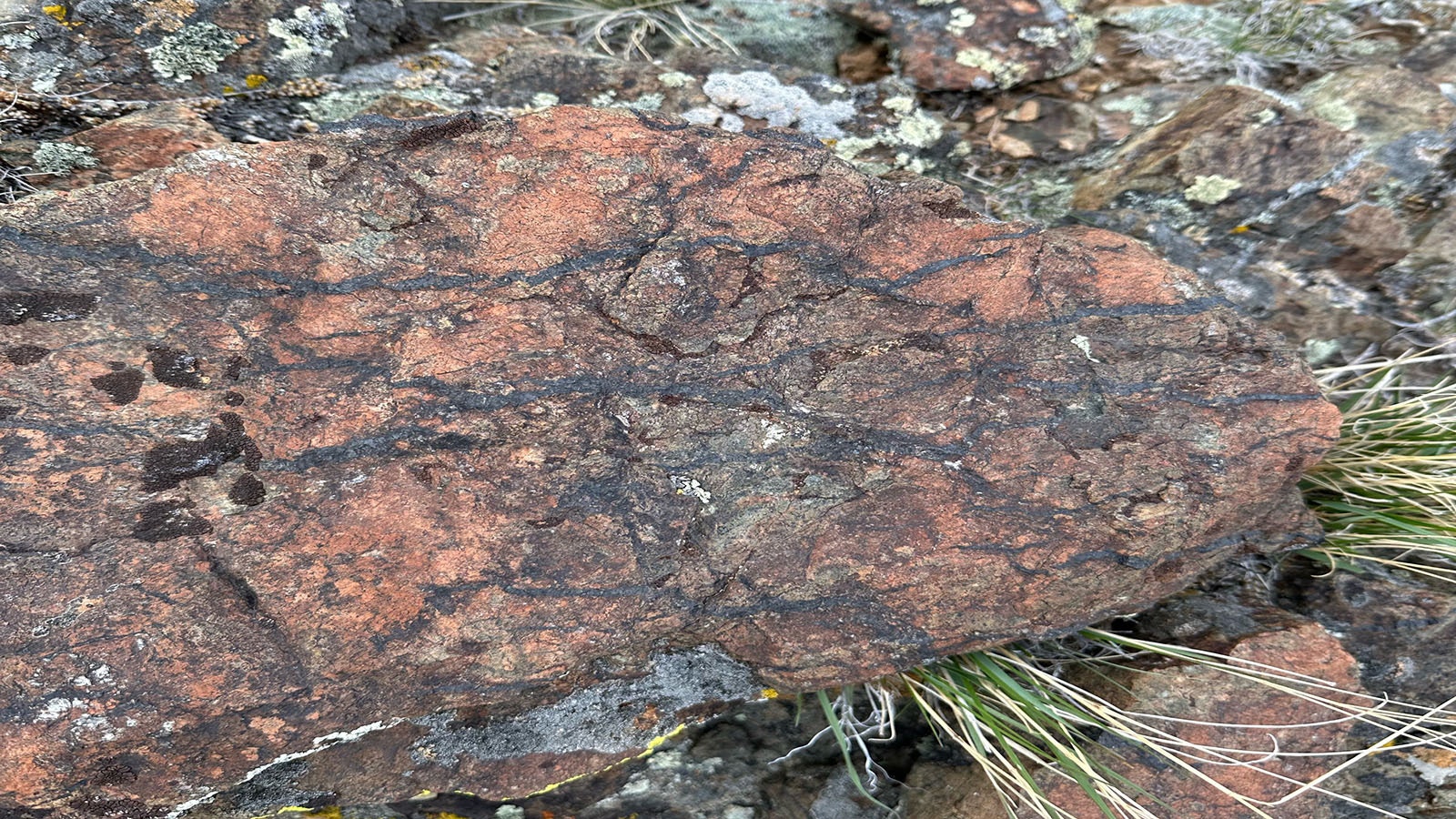
Visionary’s core Wyoming focus is an Archean greenstone belt, a blend of ancient volcanic and sedimentary rock that often hosts gold and nickel, in the Granite Mountains. There’s a potential for multiple discoveries across a belt that’s 62 miles long and 25 miles wide.
Any future mine would still go through permitting and environmental review. Leading up to that, the company has leveraged technology to keep its environmental footprint as small as possible.
“The (aeromagnetic survey) was a great tool because it allowed us to cover a lot of ground without much impact,” Adams said. “We don’t need boots on the ground to conduct airborne surveys, so that gives us a lot of really good data we can use.”
Three-dimensional modeling was used to further refine what might be where, helping to reduce disturbance to the ground.
“It also makes things more efficient from a cost perspective,” Adams said. “And it gives you a higher chance of having success … instead of if you were to drill, like when you were doing mineral exploration in the 1950s, '60s or even '70s.”
The approach in that timeframe involved spotting minerals on the surface as a primary indicator, then digging to see if there were more.
“With modern technologies we can use all the data we can collect with a helicopter, with satellite surveys, with geologic mapping that’s been done over the years, with soil sampling, to figure out where the highest potential areas are,” Adams said. “And once we’ve narrowed those down, you can go out and use some geophysical ground surveys — magnetic surveys — that help you model the conductive metals in the ground before you even have to drill-test them.”
That way, once a company starts drilling tests, it’s more about determining the specific grade of metals rather than where the deposits are.
“So now we’ve defined a few key target areas and we’re going to be testing the kind of mineralization that exists at our Tin Cup project and our King Solomon project,” Adams said. “So this is really an exciting year for us.”
Deep Wyoming Roots
Although Visionary is listed on the Toronto Stock Exchange and maintains its headquarters in Vancouver, British Columbia, Adams grew up in the Rocky Mountain Region and frequented the Rawlins area when he was growing up. He now lives in Lander and maintains a working office there.
“My family’s been in mining for three generations, so I’ve always been around it,” he said. “My dad actually grew up in Rawlins, and my grandfather was Rawlins-based as well. We’ve been involved in Wyoming since the 1930s, starting with dairy farming in Rawlins.”
The family eventually became involved in uranium exploration in the area and has remained connected to Wyoming ever since.
“I live in Lander, and we love it up here,” Adams said. “It’s a great place to be exploring for things. Outside of Wyoming, I don’t think people realize that every kid has the opportunity to go to college here because of royalties that are generated by the mining industry and primarily, right now, that’s coal.”
One day, Adams hopes those royalties will include a contribution from the nickel he finds.
“We’re at an early stage right now, but if there’s a possible development scenario that would benefit the Office of State Lands and Investments, that money goes directly into the Wyoming school system,” he said.
Adams would also love to see a resurgence of economic health in Jeffrey City.
“It’s one of the reasons why it’s important to diversify and find new things,” Adams said. “And that’s kind of what we’ve set out to do here, is find new things that we can mine that are going to be important for not only green-energy technologies but just for future generations. It’s exciting to be able to define new opportunities like this that could be important in the long-term for the state, especially in Fremont County, where we’ve seen kind of an uptick in unemployment … things have been a little stagnant.”
World Mining Leader Joins The Effort
To help it with this new phase of exploration, Visionary Metals has inked a deal with Canada's Teck Resources, the fifth largest copper miner in the world.
“They have mines all over the world and they bring a lot of technical expertise, a lot of mine development and exploration expertise,” Adams said. “They have a great team of geologists and geophysicists.”
Teck Resources is both an equity investor and a technical partner, according to Visionary Metals’ website. It has invested around $3 million in the partnership for exploration work at Visionary’s King Solomon and Tin Cup projects, which will fund testing for multiple high-potential sites starting in 2026.
“Success in this year’s drilling would accelerate the projects toward resource definition and support our goal of establishing Wyoming as an emerging nickel and copper district in North America,” Adams said in a video about the partnership.
The areas identified for testing have already shown high conductivity. While not a guarantee, it is an indicator of potentially economic levels of mineralization, and the geology is similar to other sites in the world where high concentrations of nickel are found.
Teck has taken a 9.9% equity stake in the company, buying 17.4 million common shares of Visionary at roughly 7 cents per share. It has also committed to non-dilutive funding for geophysics and drilling on top of the equity stake, extending partnership through 2028.
Teck retains the right to lead Visionary’s next equity financing, potentially deepening its stake in the company to nearly 20%. Under the broader alliance, Teck also has an optional path to earn up to 70% ownership in designated properties through a joint venture.
Tomorrow’s Ore Today
Adams is careful to temper expectations. At this stage, the company doesn’t know how big the nickel deposits are. Indications remain promising, but it could turn out that the deposit is not yet economically feasible to mine.
As technology improves, those deposits could become economically viable, though. Knowing about them and how big they are is key, he said, to knowing when the trigger can be pulled for development of a location.
That’s a trend that’s already played out in Wyoming’s favor in other areas of the state, he added.
“That’s what we’ve kind of seen with the U.S. Gold Corp project that’s outside of Cheyenne,” Adams said. “That was originally discovered in like the 1900s. And then a lot of the (recent) development work that went into it was conducted by Strathmore, which was run by one of our directors, Mr. David Miller.”
The CK Gold Project 20 miles west of Cheyenne has all its permits and is “shovel-ready,” with a gold and copper reserve that’s larger than initially anticipated, right at a time when gold and copper prices are performing well.
New technology helped make that project economically viable, in addition to the favorable price of gold — a trend that’s been seen in other areas of the state as well, such as the Relevant Gold project near South Pass City.
“Sometimes it takes time,” Adams said. “That’s just kind of the way that mineral exploration works, and it’s one of the reasons why it’s a good thing to do right. If you know where these deposits are, even if they don’t get developed right away, they can pay dividends down the road not just for companies but for the state of Wyoming and the people who are trying to find work here.”
If the drill bit confirms what models so far suggest — high-grade nickel sulfide and copper at economically feasible depths — Wyoming’s first nickel discovery in 2024 could go down as the beginning of a new U.S. critical minerals district.
Nickel is used in a variety of energy-storage technologies and infrastructure, as well as high-grade stainless steel and super alloys useful for military hardware. The U.S. has been relying heavily on foreign imports from Indonesia and the Philippines, putting the nation’s domestic supply at risk to geopolitical unrest and export restrictions.
Success in this area will position Wyoming to help the nation advance in one more area of independence.
But even if it doesn’t pan out today, the datasets being generated in the Granite Mountains will still enrich Wyoming’s geological map, keeping the door open to future explorers in an era when secure, domestic supplies of critical metals have become increasingly important.
Renée Jean can be reached at renee@cowboystatedaily.com.


