
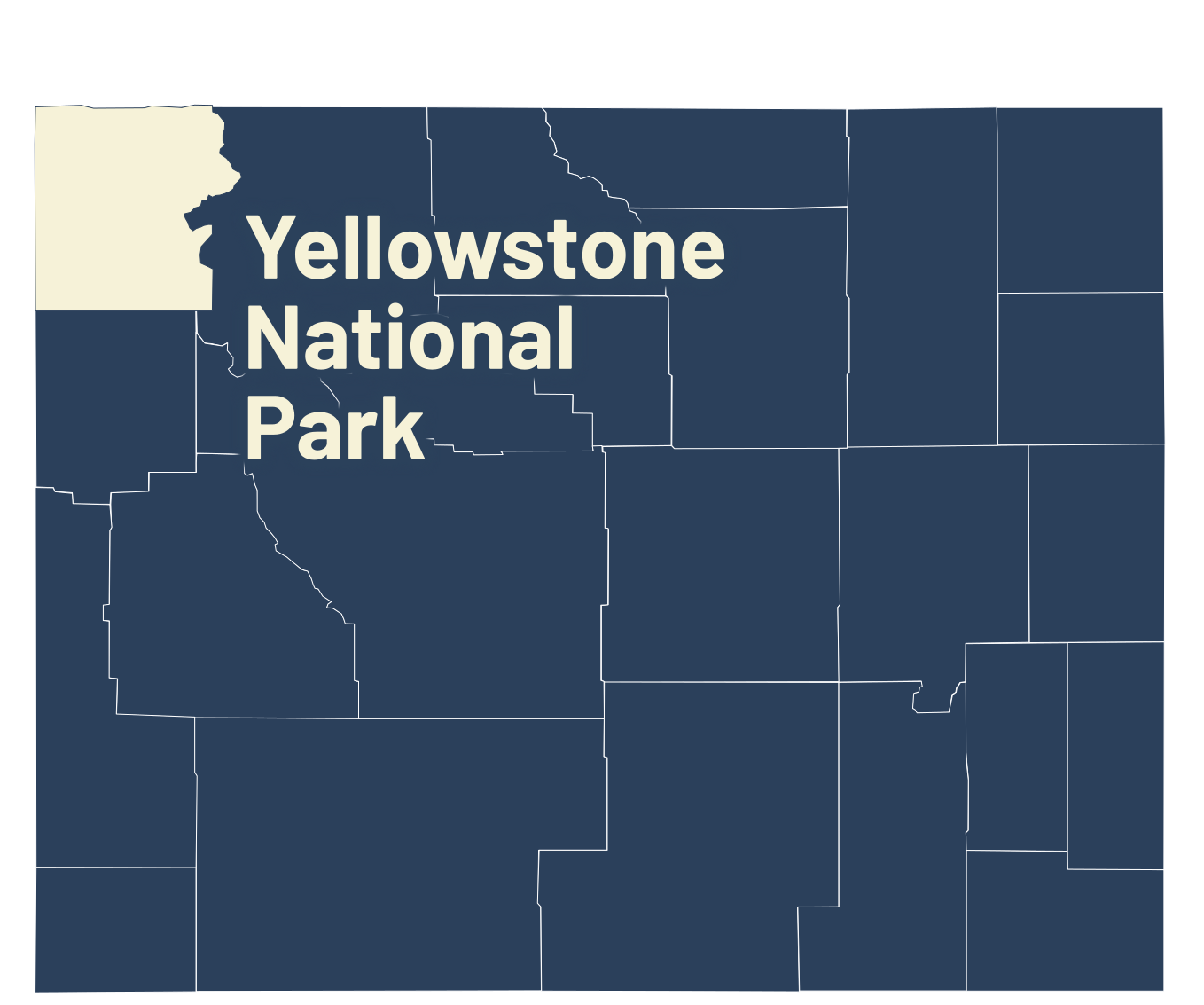
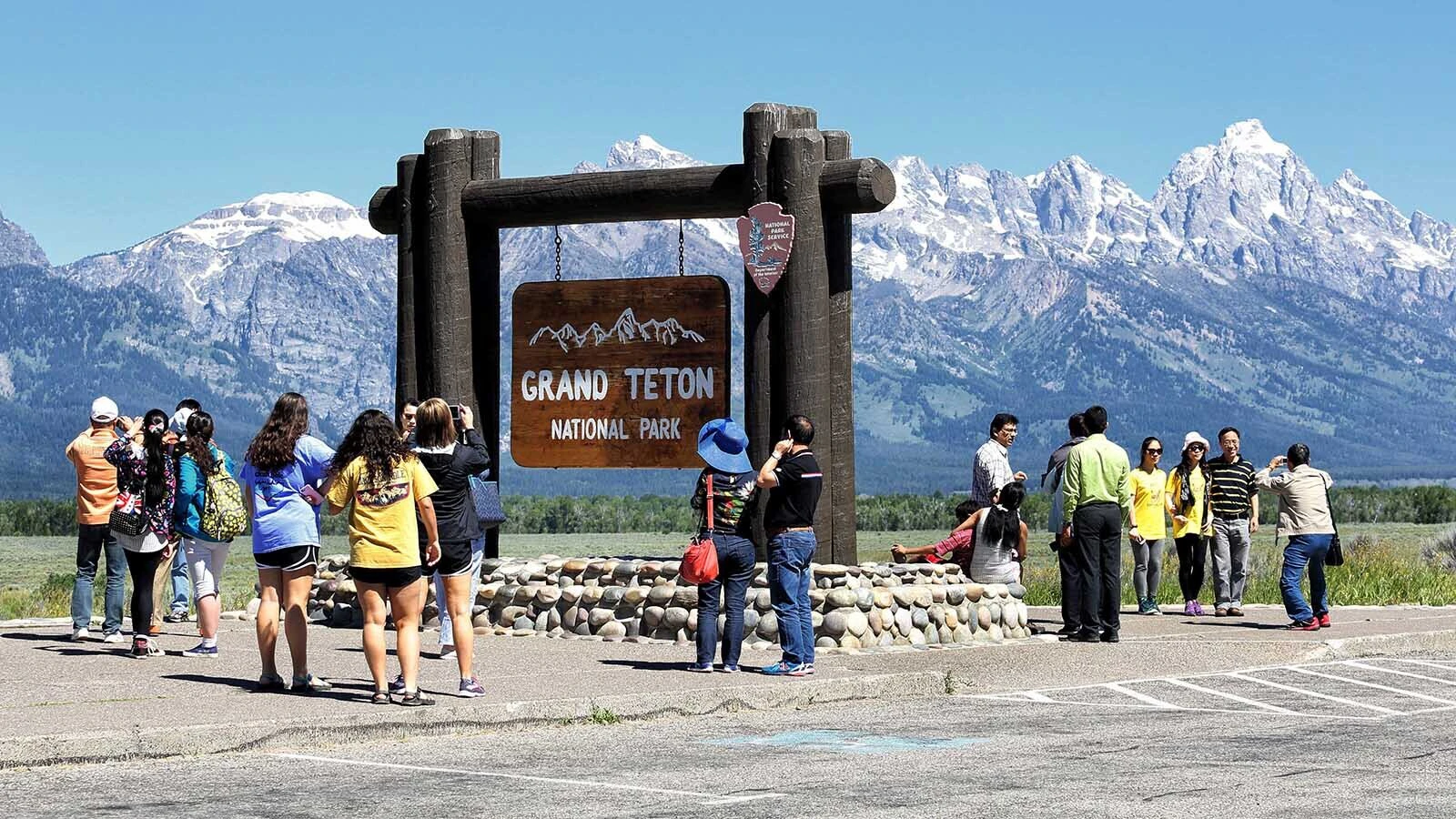
A new $100-a-day per-person entry fee for international visitors to Yellowstone and Grand Teton national parks has so far been “fantastic” as the parks get more money to help offset the impact of mobs of tourists that get bigger every year.
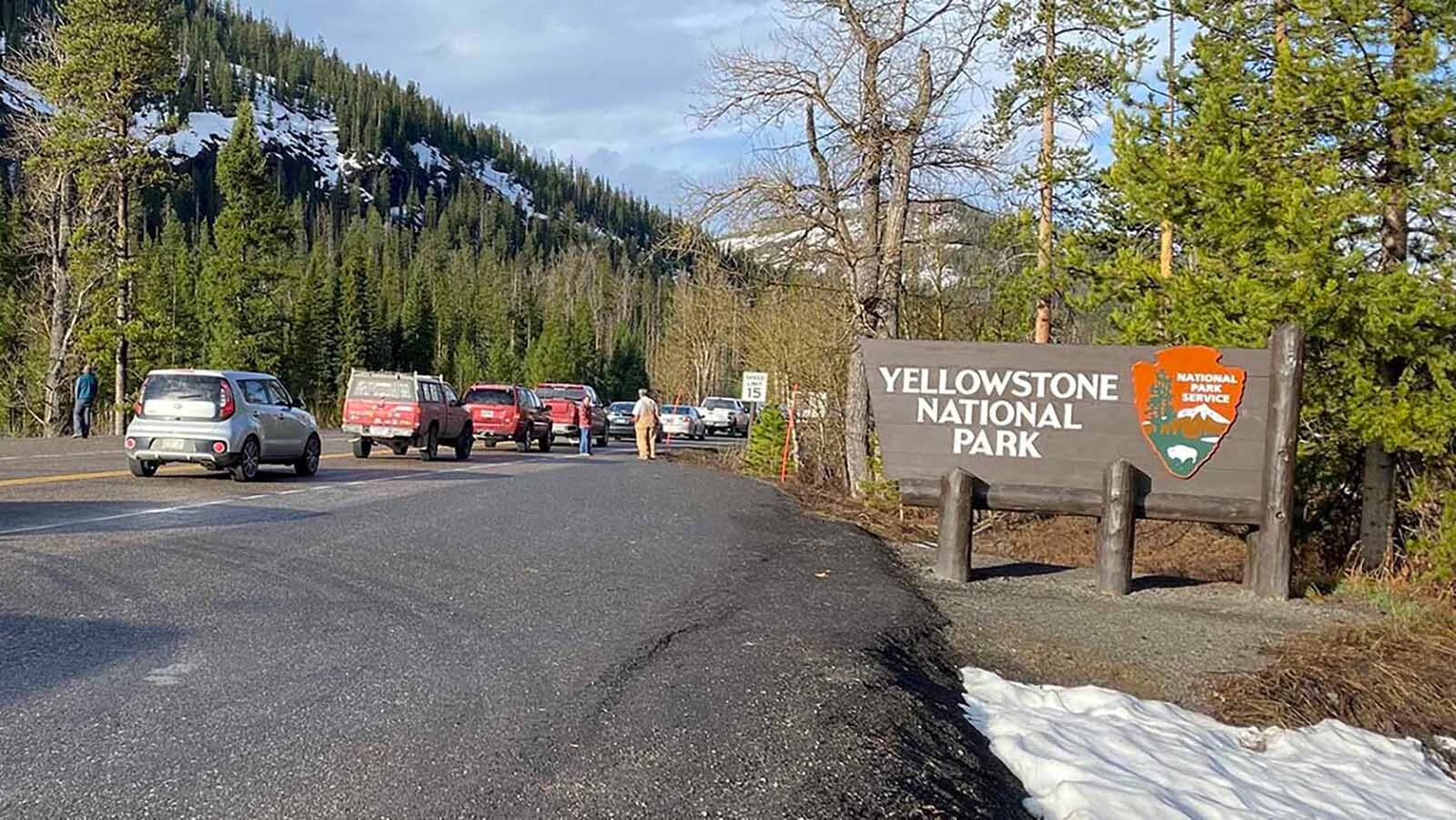
Yellowstone National Park Superintendent Cam Sholly said he supports the new fee that went into effect Jan. 1 there, along with Grand Teton and nine other national parks.
“I think it's a fantastic decision,” he said during a Monday’s National Parks Day lunch. “We retain 80% of what we collect in entrance fees. The more we collect, the more money we can invest in the staffing and infrastructure in the parks.”
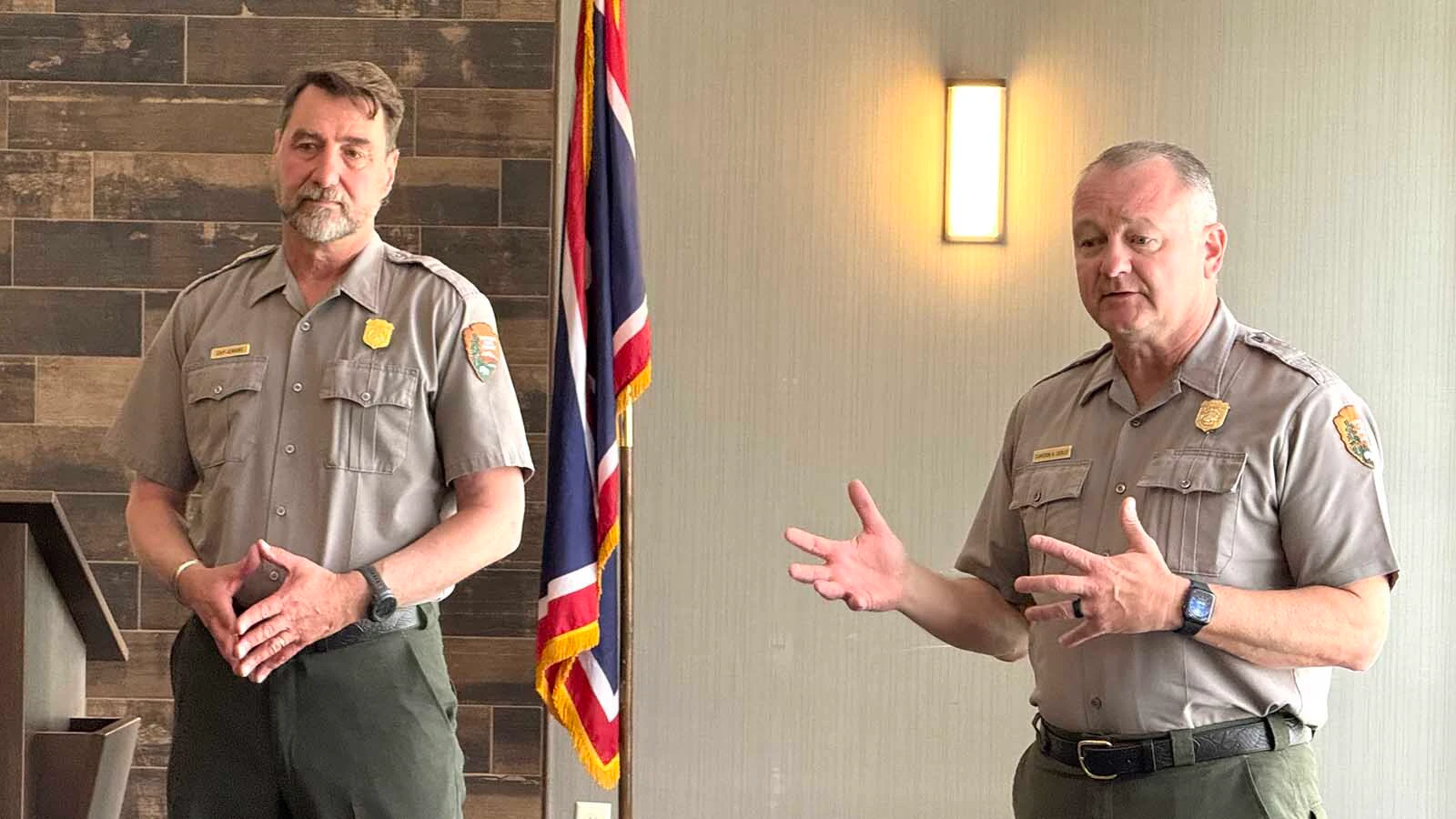
He was joined by Grand Teton Superintendent Chip Jenkins, along with civic and business leaders from Park County, to update the ongoing work at Wyoming’s two national parks.
As Sholly called out the $100 international fees, Jenkins discussed the ongoing effort to augment the Grand Teton visitor experience while reducing strain on the park and its infrastructure.
“Visitation in Grand Teton National Park is up about 20% over the last 10 years, but our trail use has gone up 40% over the last five,” he said. “People are visiting and experiencing the landscape in very different ways than they did 10 or 15 years ago, so we're feeling pressure in different ways.”
Year In Review
Sholly started his portion of the presentation touting Yellowstone’s achievements of 2025.
• 4.4 million contacts in visitor centers
• 178 million gallons of wastewater and 279 gallons of drinking water treated
• 28 wildfires reported and put out
• 27,000 law enforcement, fire, rescue, and medical calls
• 6,035 native fish tagged
• 1,527 bear jams managed
Sholly also touted the completion of the $134 million Yellowstone River Bridge near the Northeast Entrance, which was opened to traffic in late 2025.
Another $936 million of infrastructure improvement investments, including the new North Entrance road, are planned between 2026 and 2031.
Jenkins said several much-needed construction projects will be underway at Mormon Row, Taggart Lake, and Death Canyon Road. He described these as the result of experiments with the idea of having a “grand experience” in Grand Teton.
“You can experience Grand Teton from inside the park boundary, from Bridger-Teton and Caribou-Targhee National Forests, and the community of Jackson,” he said. “We're experimenting with how to help people have an awesome time while doing more things over a greater area of the landscape.”
Many of these projects will take several years to complete, but Jenkins said they’ve been planned for years. Still, these are the kind of projects that will be noticeable and, for some, unavoidable.
“The joke in Wyoming is that if it’s summer, it's road construction season,” he said. “That's exactly how the parks are, too. There will definitely be inconveniences this summer, but it's going to make for a better park for years and years to come.”
More Money Is A Good Thing
When Sholly and Jenkins finished their presentations, they opened the floor to questions.
One of the questions involved the Department of the Interior’s new $100 per-person international visitor fee.
Sholly said it was “a fantastic decision,” citing multiple reasons, adding that it’s something he’s advocated for in the past.
“I've mentioned this multiple times since I've been (at Yellowstone), but $35 per car was the fee for everyone,” he said. “That boils down to $2.89 per day, per person, per family of four for three days.”
Sholly said the fee increase will give the parks more money to invest in conservation projects, infrastructure upgrades, and everything else needed to keep the parks financially sustainable.
That will augment the money the parks already receive from congressional appropriations, philanthropy, corporate partners, and other sources.
Furthermore, Sholly doesn’t believe the fee increase will deter international visitation to either of Wyoming’s national parks.
“There's a bit of an interesting conversation around this, but do you think someone on a tour bus from Tokyo is really that concerned about paying $100 to get into Yellowstone when you look at their total trip costs?” he said. "That bus is 50 people who use our bathrooms and dump their trash in our trash cans. That takes work to manage.”
Sholly also added that he doesn’t think international visitors should be getting into the U.S.’s national parks “cheaper than American taxpayers.”
He said the fee increase was “a long time coming” and sees it as a positive change.
“More dollars in the park is a good thing for all of us,” he said.
Finding Homes
One of the biggest challenges facing both superintendents is housing for the small army of people it takes to run the parks. Both Sholly and Jenkins discussed the challenges of building new housing and renovating old structures to become housing.
“If you care about wolves and wildlife, we want the best of the best working in these parks,” Sholly said. “The best aren’t going to want to live in trailers from the 1960s.
"If you want good, high-quality wildlife scientists working in these parks, you need some place for them to live with their families.”
In 2024, two anonymous donors gave $40 million to the National Park Foundation to expand and improve NPS employee housing at Yellowstone. That was enough for 70 new modular units that met 21st-century living standards.
Sholly announced that the same donors had given an additional $10 million to Yellowstone for the same purpose.
“It’s the largest single gift ever given for a project,” he said. “We’ve invested over $100 million of federal funding into new housing for employees.”
Jenkins said philanthropy is “baked into the DNA of the national parks.”
He said that Grand Teton exists today because of the 33,000 acres of land that J.D. Rockefeller bought and donated to the NPS.
Jenkins is working with the Grand Teton Foundation to build 12 new housing units in the park. Housing is a serious issue throughout Teton County, so Jenkins is looking for solutions everywhere he can.
“While the county is trying to do some stuff in terms of housing, what it's coming to is that individual organizations are trying to figure (housing) out on their own,” he said.
“We're doing the same thing in terms of building more housing or taking historic buildings and rehabbing them to create housing,” Jenkins added. "Being able to meet such a critical underlying need as housing with private philanthropy is remarkable.”
For Future Generations
While working in the here-and-now, both Sholly and Jenkins discussed the need to work for the futures of Yellowstone and Grand Teton.
They see themselves as stewards of the future, which is why they’re focused on what they can do today to anticipate tomorrow.
“We're thinking forward into the future to make really strategic investments and ensure that we're not only protecting that place, which is paramount, but we're also providing for a high-quality experience,” Sholly said.
Yellowstone’s future projects include more than $300 million for the new North Entrance Road between Mammoth Hot Springs and Gardiner, Montana; assessing which of the park’s 62 bridges need replacement next; and widening the Northeast Entrance Road.
“We're going to widen the road through Lamar Valley, add shoulders and more pullouts,” he said. “Since that's like the North American Serengeti, it's pretty frustrating from the standpoint of parking.”
Jenkins is taking smaller steps as Grand Teton embarks on several multi-year infrastructure projects.
One of those smaller changes is placing NPS rangers and volunteers at the famous Snake River Overlook to address their feelings of FOMO, or fear of missing out.
“We've come to learn that there's a percentage of folks who visit the park that don't realize they're in the park when they’re driving on Highway 89 between Jackson and Yellowstone,” he said. “They'll stop at the overlook and think they're looking over at the park, and have a bit of FOMO, fear of missing out.”
By placing standalone rangers and volunteers at this and other overlooks, Jenkins hopes to enhance stewardship, awareness, and visitor experiences by reminding drivers they’re in the park.
“What we’re doing this year is help people understand they’re having a national park experience,” he said. “You're experiencing the Grand Teton, and this is one of the best ways to do that.”
The Great Migrations Begin
Both Sholly and Jenkins anticipate another good year for Yellowstone and Grand Teton national parks. Statistics are already indicating that 2026 might be a record-breaking year for both.
“From January through the end of March, we're tracking pretty closely to 2021, which was the peak visitation year for Grand Teton,” Jenkins said. “Bookings for hotels are up 5% over last year for May, and up 10% over last year for June.”
It’s already been an unpredictable year in certain ways.
Sholly shared how his team spent a portion of the winter shoveling snow onto the East Entrance Road after an unseasonably dry season, to ensure snowmobiles could keep traveling to Old Faithful from Cody.
“They were taking snow off the side of the road and putting it onto the pavement,” he said. “The team in Yellowstone cares. They truly represent the very best of America.
"We've got a lot of work to do moving forward, and conversations that come out of meetings like this are really important in the future.”
Jenkins agreed, saying that “the great migrations” have already begun.
“The elk are moving north out of Jackson Hole, the moose are moving down into the Snake River Canyon, grizzlies are moving around the landscape, and our summer employees are arriving in the park from many different places around the country,” he said.
Andrew Rossi can be reached at arossi@cowboystatedaily.com.


