
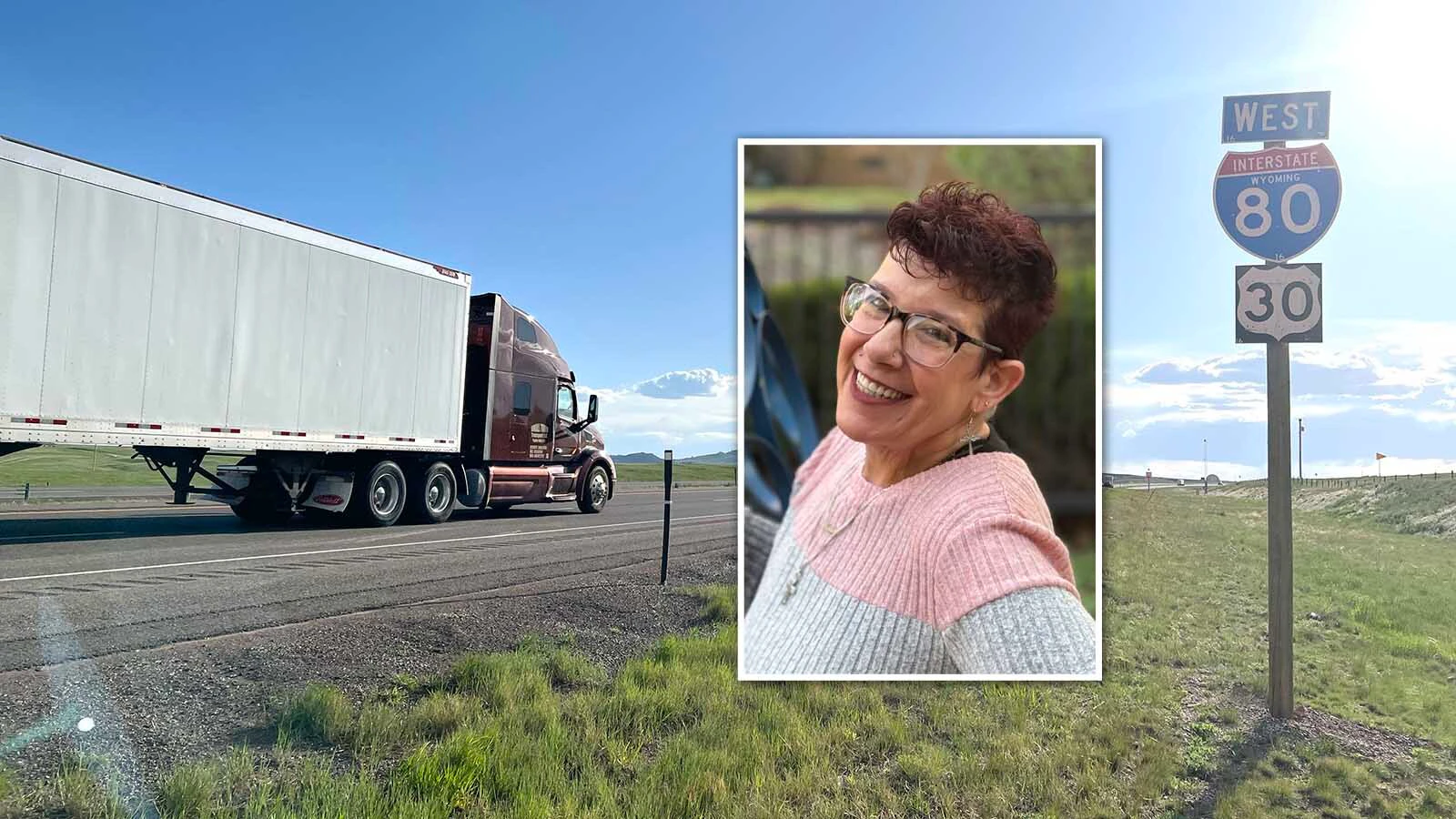
The last beating was the worst. Her trafficker dragged Kelley Marshall by the hair out of the hotel room she shared with her toddler daughter and into his.
Marshall had learned to go still and take it; crying or fighting back only made things worse.
The beatings were almost daily, but this time was different. She’d broken one of his cardinal rules.
He hit her like she was a man, she said, all the while threatening to kill her. It went on for hours.
First, he held her head under the bathwater. When that didn’t work, he poured alcohol over her body and said he was going to light her on fire.
He changed his mind and choked her instead until she went unconscious.
“I really believe that he thought I was dead,” she said.
Marshall’s trafficker seemed surprised to find her still breathing when she finally came to.
He told her that since she was still here, she might as well get out to the track and make some money, then kicked her out of the hotel room.
Off she went in her ridiculously short skirt, low-cut top and fishnet stockings — the same uniform she wore out on the streets, whatever the time of day, whatever the weather.
Last Day
How had she gotten to this point, Marshall wondered?
At age 25, it felt like she’d lived a lifetime. She heard her dad’s voice, the same refrain that played on loop in her mind: she was no good and would never amount to anything.
It turned out he was right, she thought as she hobbled down the dimly lit street in San Diego with her face and head swollen to twice its size and bruises covering every inch of her body.
A patrol car drove slowly past her, braked, then backed up. A door opened and two familiar faces got out.
“We almost didn’t recognize you,” one police officer said. They wondered if she was ready to give up the life.
Marshall knew that if she went back, she’d be dead. She was ready, no matter the short-term risks and costs.
Her trafficker was arrested and she and her daughter, who was not trafficked, were placed in protective custody.
That was Marshall’s last day on the streets, a fresh start from which it would take her nearly two decades to recover, beginning with the understanding that she had not chosen to sell herself for sex, but had been trafficked by men who claimed to love her.
Invisible Chains
One of the lessons Marshall imparts in telling her story is that most people in the sex trade did not arrive there by choice, they were coerced.
In her case, that coercion came wrapped in professions of love wielded against the vulnerabilities of a girl who had grown up in a violent home where her father had sexually abused her.
The chains holding victims are often invisible, she said.
Had she not been rescued — twice, it turns out — by well-meaning police officers who understood the dynamics of trafficking, then she would likely still be on the streets or dead.
Another key lesson that Marshall hopes to impart is that people can play a huge role in helping to stop sex and labor trafficking by recognizing the signs and reporting it to authorities.
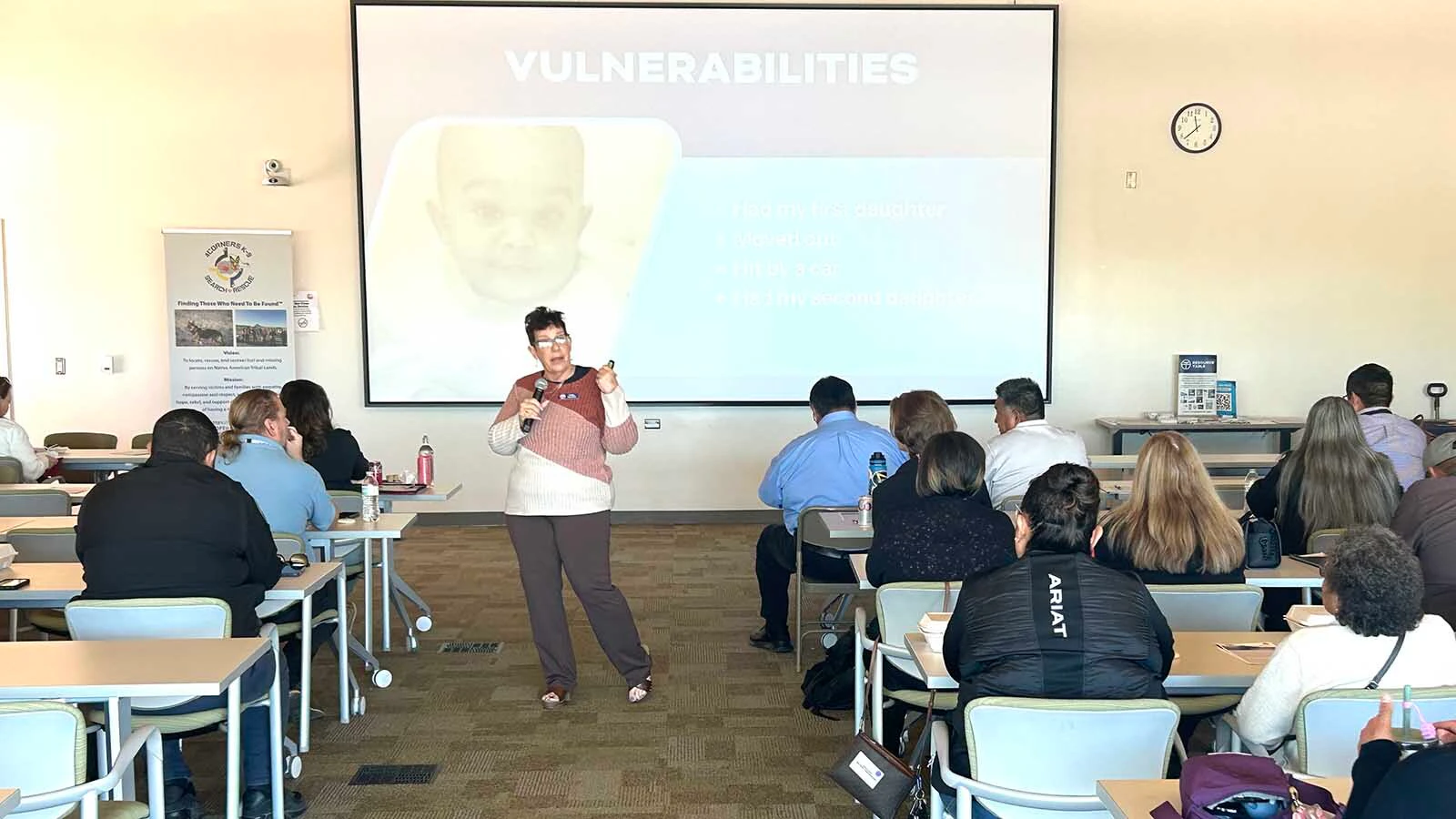
This is why Marshall channels her own experience into educating others as a training specialist and survivor leader for Truckers Against Trafficking (TAT), a national nonprofit that prepares truckers, law enforcement, truck stop employees, port workers and other individuals and groups to identify and report human trafficking.
Billion Dollar Industry
Human trafficking, like any other criminal enterprise, relieves heavily on transportation to thrive.
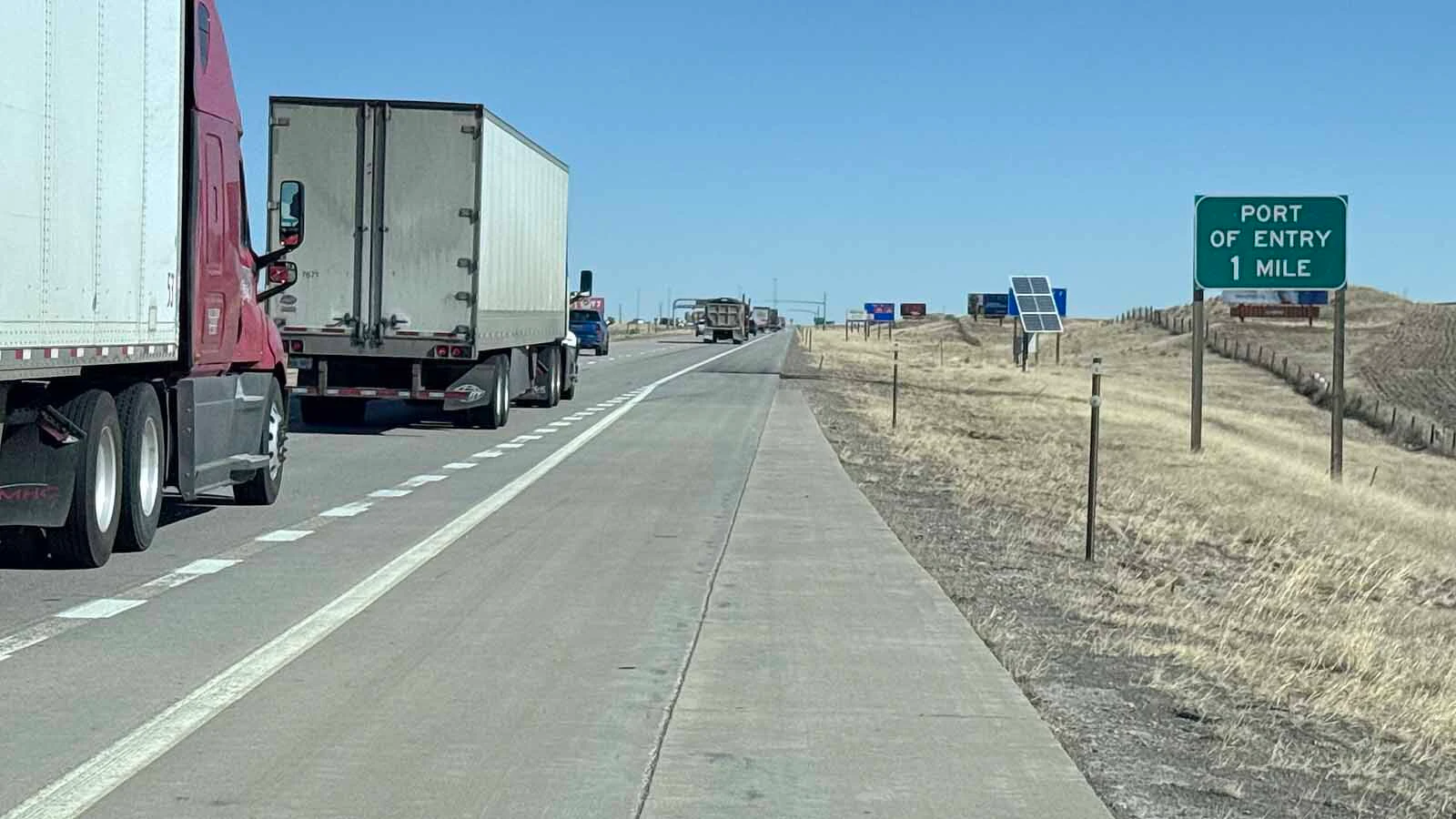
As such, interstates and highways serve as vital arteries for traffickers who may be just passing through the state or purposefully targeting Wyoming’s rural and urban communities.
Like Marshall, victims are often ferried to places under coercion and threats.
One study by the National Outreach Survey on Transportation found that 81% of survivors questioned used transportation during their recruitment while 76% used transportation during the course of their exploitation.
It’s a money-making business.
In fact, human trafficking is the world’s fastest growing criminal enterprise with an estimated global profit of $32 billion, according to the U.S. Attorney’s Office.
It’s also a crime that’s happening in all communities, including in Wyoming, said Louis Greek, training specialist for TAT.
Hard To Guage Problem
“People seem to think that it doesn’t happen in rural states like Wyoming, but it does,” he said.
Measuring the scope of the problem in Wyoming is difficult because prevalence is not reflected in the number of arrests.
Human trafficking cases in the state historically have been prosecuted almost exclusively at the federal level, mostly because the crimes tend to cross state lines.
It’s also largely unreported because much of the trafficking in Wyoming tends to be familial in nature, said Cara Chambers, director of the Division of Victims Services for the Wyoming Office of the Attorney General and head of the state-wide human trafficking task force.
As such, many trafficking crimes are charged under child abuse and other statutes, so the numbers don’t reflect the reality on the ground, she said.
In terms of helping children who may be victims of familial trafficking, TAT is also focused on offering training to school bus drivers who get to know the children well and may be able to spot a child who is being exploited, he said.
Crime Of Opportunity
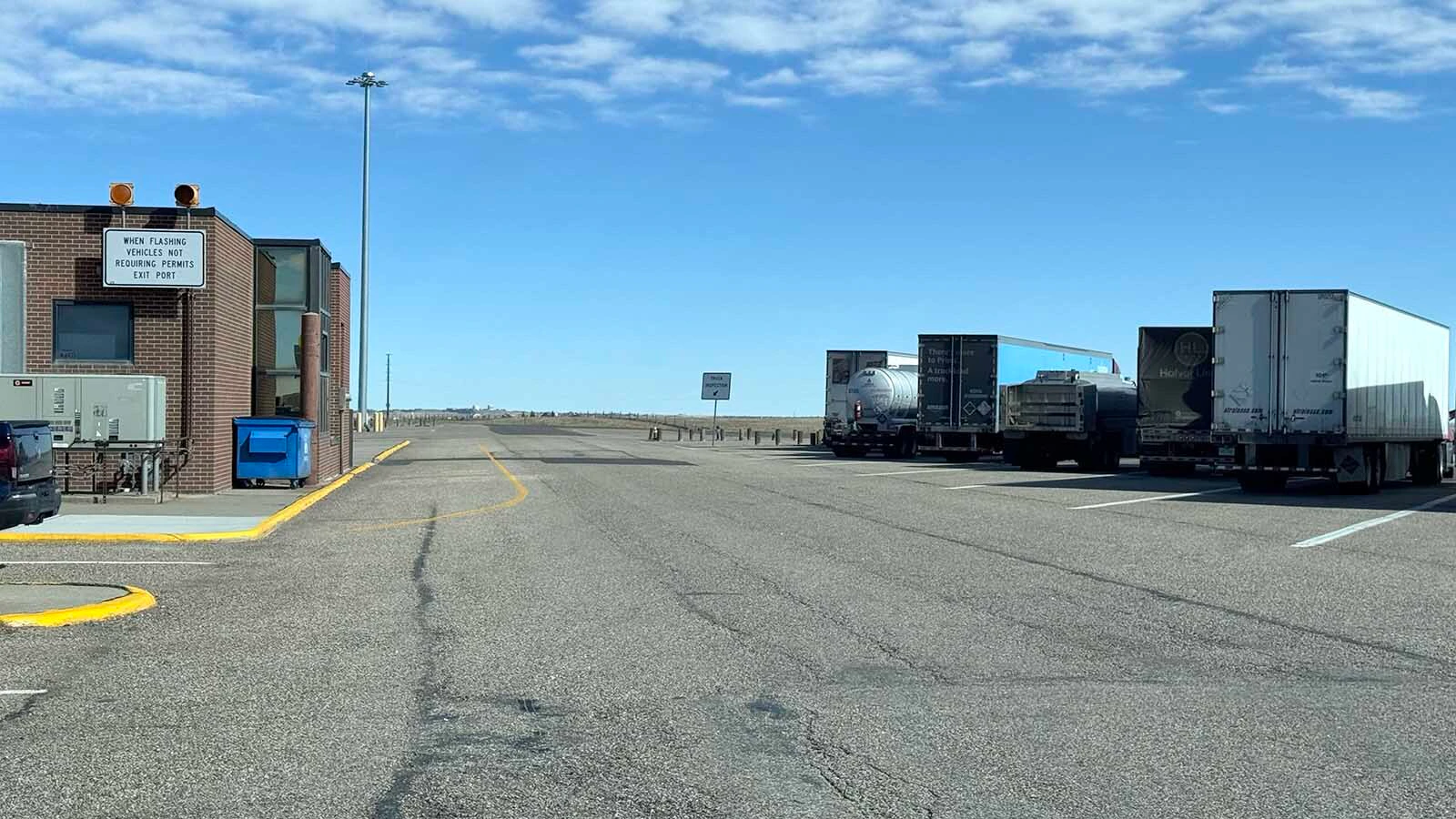
Primarily, however, TAT’s efforts focus on training workers along the interstates such as truck stops, port terminals, gas stations and other affiliated jobs within the transportation industry because these workers can provide key help for law enforcement through the course of their everyday jobs.
Sex trafficking at truck stops and rest areas in general continues to be a pervasive problem, Greek said, but functions differently today.
Back in the day, sex workers went from truck to truck soliciting interested buyers, earning them the derogatory name “lot lizards,” which is a term Greek and TAT are working to stamp out now that people have a better understanding of the nature of trafficking.
Now, much of the buying is done online over social media apps like Facebook.
But these workers can play a pivotal role in helping to spot trafficking situations.
In one example, a worker at a truck stop in Albany County helped Laramie police and the Wyoming Highway Patrol to bust a 47-year-old Utah man who was caught trafficking a 21-year-old female at a truck stop in December 2023.
The caller had reported seeing a car driving through the parking lot with no headlights and then stopping to let the female out to wander around the truck stop.
That was a red flag, according to earlier reporting by Cowboy State Daily, as was the age difference between the two.
Other signs that a person may be being trafficked include bruising or other injuries; clothing that is inappropriate for the situation or weather; and behavior that suggests anxiety or fear, such as avoidingeye contact, having another person speak on their behalf, being restricted in their movements, or nothandling their own money during financial transactions, Greek said.
Anyone looking uncomfortable or out of place can also be a sign that person is being trafficked, noted Greek.
No Modeling Gig
Other locations like ports of entry between states are also great watchpoints for workers to spot and report incidents of trafficking.
Greek recounted the story of a female port of entry worker in Colorado who got a bad feeling when talking to a truck driver.
He appeared to be in his 40s, but his passenger was a young female who looked to be in her late teens. She also had a shaved head and was heavily tattooed, signs that she may be being exploited.
The worker had just completed TAT training, Greek said, and noted the red flags.
The driver claimed to be giving the teen a lift across country to a modeling gig. When the port of entry worker ran both of their driver’s licenses, there were no immediate red flags, but the bad feeling remained.
With no reason to detain them, she let the truck go through, Greek said.
She continued digging until she found that the driver had active warrants for child sexual assault in another state.
She called the Wyoming Highway Patrol, which was able to stop the truck and apprehend the driver and rescue the teen who was likely being exploited.
Truckers also can provide vital roles because they’re out on the road, often at all times of the day in remote places.
One such driver in Idaho, Joe Aguayo, stopped to call law enforcement after spotting a naked woman along an Idaho highway who was wearing nothing but a towel, according to KTVB news in Idaho.
It turned out the woman was a trafficking victim and Aguayo’s call saved her life. His heroism earned TAT’s annual Harriet Tubman award.
Mandated Training
The Wyoming Trucking Association is also on board with these efforts, said Kevin Hawley, president and CEO of the group.
“WTA has long supported efforts to combat human trafficking and has partnered with organizations like TAT,” Hawley said.
In addition to these trainings, one initiative WTA is exploring is floating legislation that would make it mandatory for commercial driver’s license (CDL) programs to include a minimum of 30 minutes of industry-specific human trafficking awareness training.
There’s no such mandate in Wyoming now, though other states like Louisiana have passed legislation that makes it mandatory for training programs.
“The best opportunity to make a meaningful impact is at the beginning of a driver’s career, starting with CDL training and education,” Hawley said.
“Professional truck drivers travel through truck stops, rest areas, hotels, and transportation corridors at all hours and are uniquely positioned to serve as additional eyes and ears for law enforcement,” he added.
TAT is also focused on trainings within the energy industry because traffickers also target crowds such as temporarily man camps — such as the 5,600-worker camp proposed south of Cheyenne — and the numerous construction projects currently going on or slated to being in the state.
The key is to amping up training efforts to help combat both sex and labor trafficking throughout the state, Greek said.
Easy Target
For her part, Marshall uses her terrifying and brutal experience to train workers from a survivor’s perspective by continuing to share her story.
It’s been a long, hard road to recovery, she said, but her goal is to help people understand that human trafficking is a complicated crime and that some victims, like herself, walk right into it without realizing what they’ve done.
Her father had made sure she understood two things: that his touch was love, and that she was nothing. By the time she left south Florida, she believed both.
After escaping home as a teen, she had her first child by age 18.
“I was just this easy target for traffickers,” Marshall said. “Here I was a young single mom, I had a very low income coming in, no self-esteem, and I had already endured massive trauma from my dad.”
She willingly walked into two relationships with men who pretended to be her boyfriend before exploiting her.
The third man kidnapped her and her daughter against her will and drove them to San Diego, where Marshall was forced onto the streets.
It was a terrible, violent life that went on for six years until those two police officers stepped in that final night to save her and her daughter’s life.
This is the simplified version of her story.
The detailed one is outlined in her book, “Shhh … I’ve Got a Secret” by Kelley Alsobrook.
Marshall’s goal is for people to understand the extenuating circumstances that lead many people into this life and the nefarious ways that traffickers manipulate and coerce their victims into the sex trade.
“We’re nothing but commodities to them,” she said. “They don’t care about us and never did.”
She also wants to reiterate that people can make a huge difference to someone in this situation, she said.
Not only can they recognize the signs and actively report it, but even simple acts of kindness can make a big difference and can be incremental steps in helping someone escape the life and help them feel seen.
“A kind word, maybe a bottle of water, a smile,” she said. “You never know how that can affect a person.”
Jen Kocher can be reached at jen@cowboystatedaily.com.


