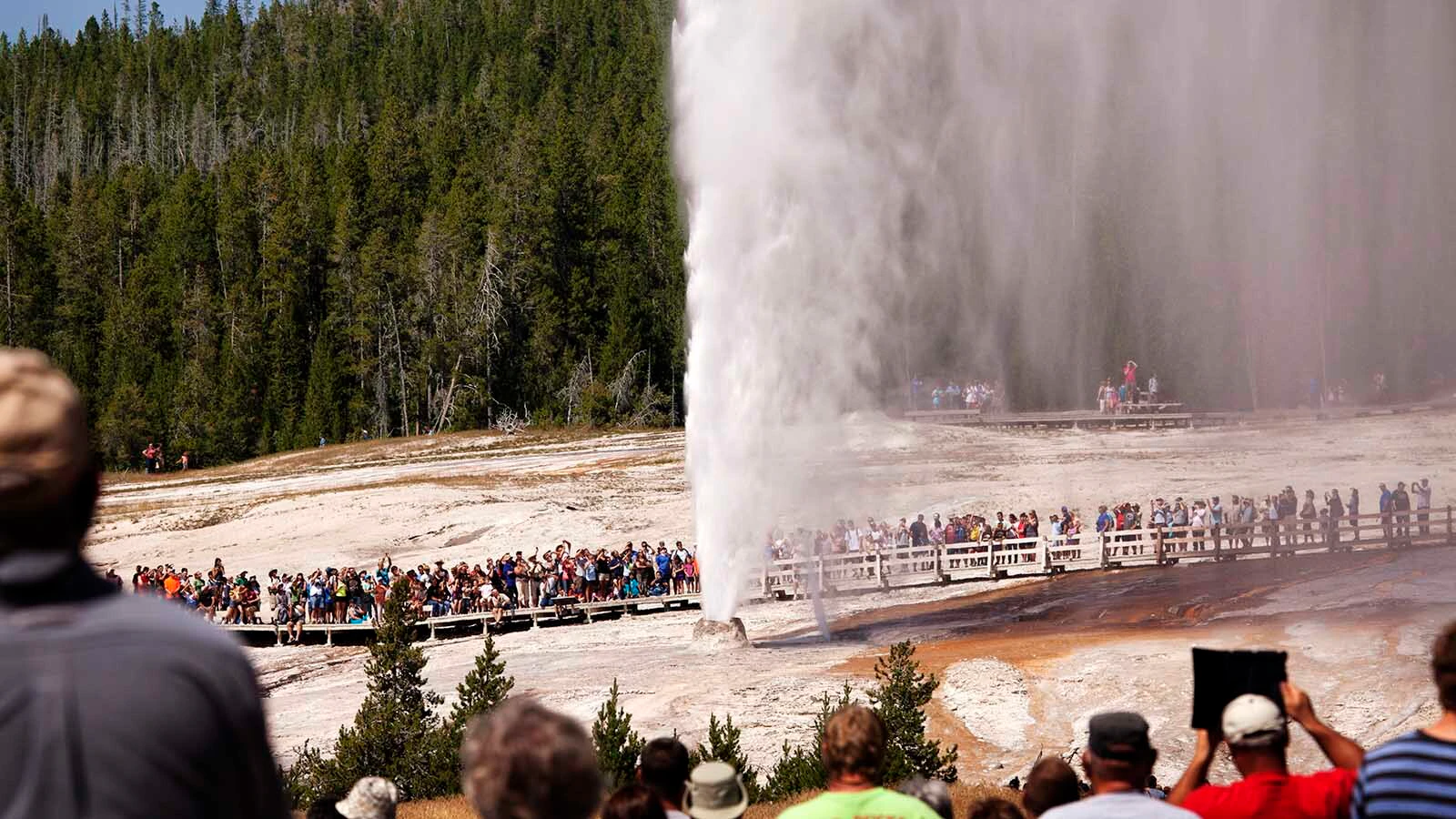
After going a day without any documented eruptions last week, some people are freaking out over the notion that Old Faithful, with its set-your-watch-to-it eruption schedule, has stopped being that faithful.
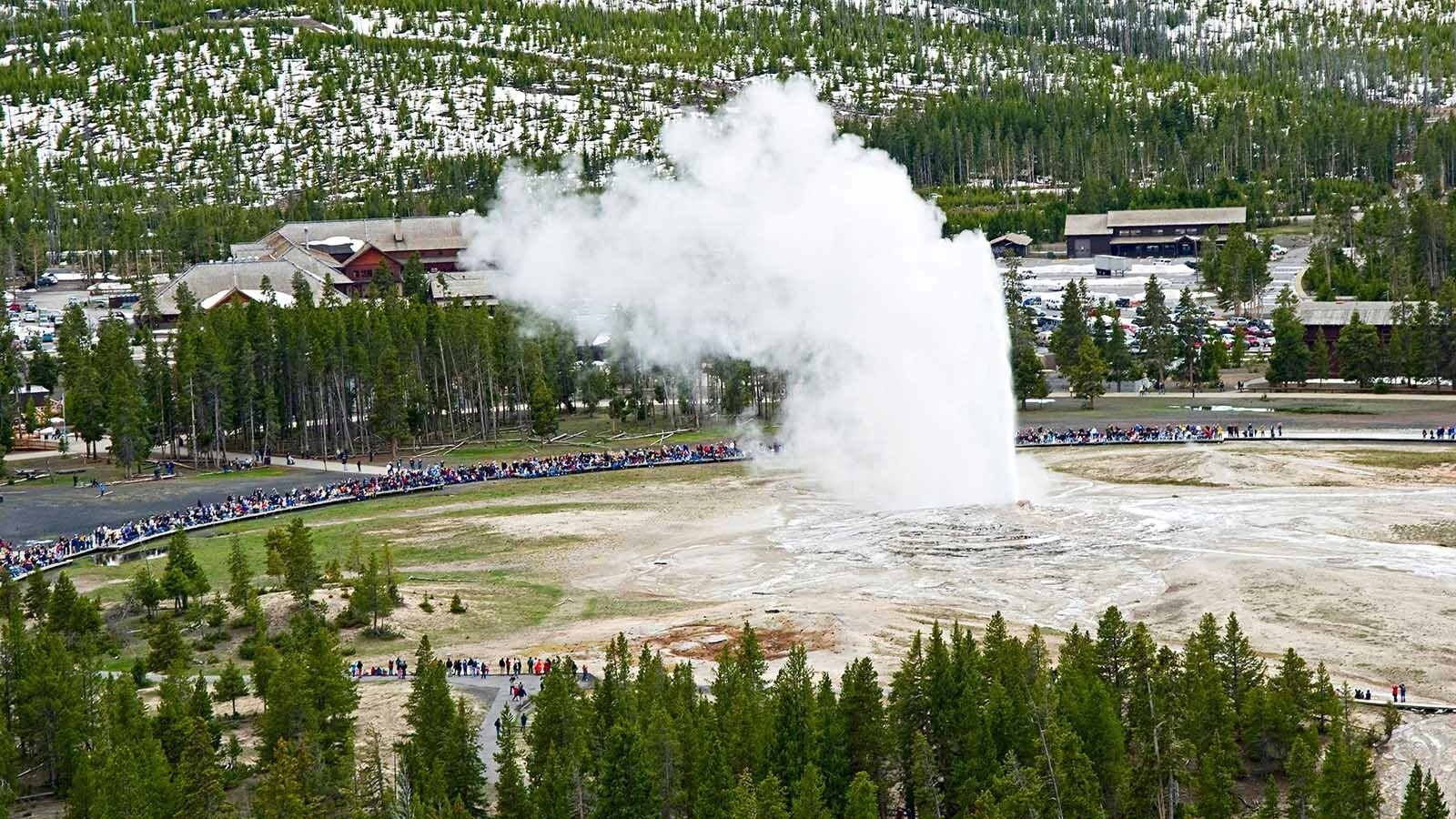
For most first-time visitors to Yellowstone National Park, seeing an Old Faithful eruption is at the top of their to-do lists. That’s why the Old Faithful area is the busiest and most developed spot within the park.
However, many people doing their pre-vacation research get dismayed when they check Old Faithful’s eruption activity online.
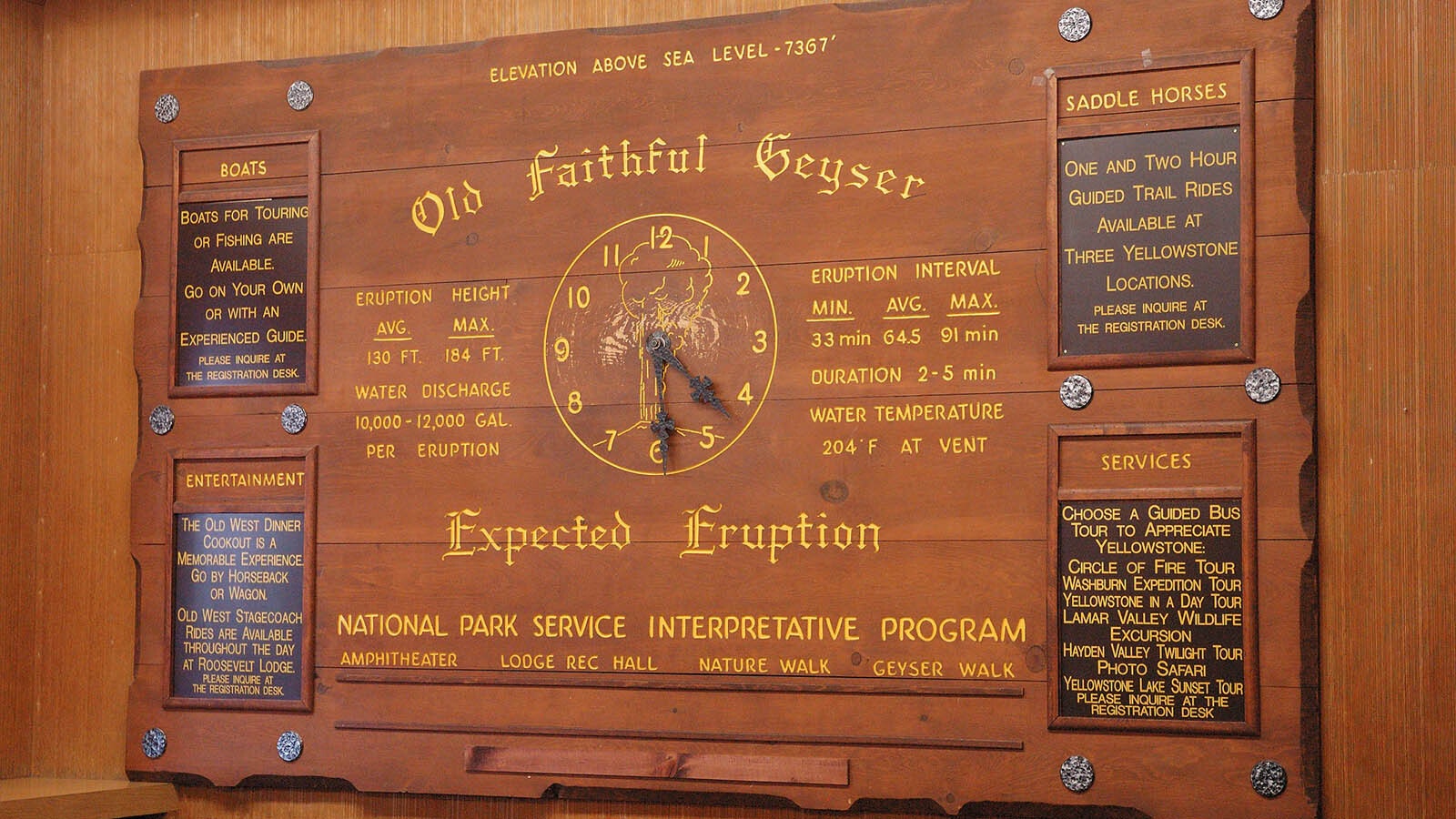
The geyser is supposed to erupt every 94 minutes, give or take, hence why it’s called Old Faithful.
When an online record of its blowups shows significant gaps between eruptions, people jump to conclusions that the world's most famous geyser is slowing down or going dormant.
When faced by these timelines, many people become dismayed that they might not have the time to wait for Old Faithful or even spend an entire day waiting for nothing.
Are the online records accurate?
Yes. And no.
If A Tree Falls In The Forest ...
Most people get their information on Yellowstone’s geyser eruptions from GeyserTimes, a nonprofit organization dedicated to acquiring and preserving every piece of information they can on Yellowstone’s dynamic thermal features.
GeyserTimes is an incredible resource for people eager to see and learn about Yellowstone’s geysers.
The information it shares comes from an all-volunteer team doing field and virtual observations from cameras and other equipment.
That’s where people can get confused about what they’re seeing online. If GeyserTimes didn’t see or get direct confirmation of an eruption, it won’t appear on the website.
This is especially true for Old Faithful.
“The GeyserTimes record should never be considered ‘complete’ for Old Faithful,” said Mike Poland, scientist-in-charge of the Yellowstone Volcano Observatory.
Poland said he doesn't mean to disparage GeyserTimes or any of its volunteers, who he consistently praises for their dedicated citizen science efforts to collect and share accurate information on the park’s geysers.
He was simply pointing out that the online records of Old Faithful don’t reliably reflect real-time information on every eruption of the world’s most reliable geyser.
“At times, the Old Faithful webcam, which is most often used to get the times reported on that site, is not operational,” he said. “That leads to gaps in the record preserved on that site.”
Poland said the Old Faithful webcam was temporarily offline earlier this past week as the National Park Service (NPS) moved it to a new telemetry system.
That temporarily prevented people from observing and documenting Old Faithful’s eruptions remotely.
There were no documented eruptions for Old Faithful on the GeyserTimes website on Monday, leading to speculation because the nonprofit group didn’t report them they weren’t happening.
That doesn't mean Old Faithful didn't erupt every 94 minutes, but someone who wasn't aware of its schedule might have panicked when they saw a one day, 18-hour interval between eruptions.
It’s the literal manifestation of the classic thought experiment of if a tree falls in a forest and no one is around to hear it, does it make a sound?
Just because nobody’s there to see and document an Old Faithful eruption doesn’t mean it didn’t erupt.
“There’s nothing different at Old Faithful,” Poland said. “There’s been no change in the Old Faithful interval.”
Up And Down
Cody resident and geyser enthusiast Janet Jones is aware of how meticulously the GeyserTimes volunteers maintain its records.
She knew exactly when the Old Faithful webcam went down, and how it will be addressed.
“They'll go back and review the video from the webcam when it’s available,” she said. “They also have an electronic monitor they can get eruption data from, but someone has to go out and collect that data from the monitor, so there’s a time lag.”
Jones said the NPS rangers also documented every Old Faithful eruption. Any number of factors can lead to gaps in their records, just as they would on the GeyserTimes website.
Old Faithful is better documented than any other geyser on the planet, but that doesn’t mean every one of its eruptions is observed. When it’s 2 a.m. with a new moon over Yellowstone, there’s unlikely anyone to be documenting an eruption, virtually or in-person.
While the length and output of its eruptions can vary, it’s been faithfully erupting every 94 minutes for decades.
“There are no complete records for any geyser,” Jones said. “They try to get as much information as they can on Old Faithful because it’s so famous, but lapses occur because nobody’s observed the eruptions.”
Losing Faithfulness
Old Faithful got its name for its shockingly consistent eruption timeline, but even that’s changed over time.
“It has slowed down with every major earthquake that has affected Yellowstone,” Jones said. “The 1969 Hebgen Lake earthquake changed it a little under an hour between eruptions to an hour and 15 minutes, then the Borah Peak earthquake in1989 slowed it to the current hour and a half.”
Shaul Hurwitz, a research hydrologist with the U.S. Geological Survey, has researched Old Faithful’s eruptive history across the centuries.
He found one point where the geyser didn’t erupt at all for over a century.
“In the 12th century, there was a severe regional drought across the entire Western U.S.,” he told Cowboy State Daily in April. “Old Faithful probably wasn’t erupting for 100 years because of that extended drought.”
Hurwitz believes less water in Yellowstone has and could lead to less frequent geyser eruptions, or certainly less water for the geysers to erupt.
He led a study that determined Old Faithful’s average water output, published earlier this year, to see if there are measurable changes over time.
“What I know from the long record is that it’s more faithful than most other geysers, but it's not always faithful,” he said. “If eruptions lengthen, or there’s fewer of them, we and the NPS want to know.”
Jones said it’s entirely possible that Old Faithful’s timeliness could change in the future, but there’s no indication that it’s happening now or anytime soon.
“I think a lot of people don't have a good baseline for what's normal and what's not normal at Old Faithful,” Jones said. “The chances of Old Faithful stopping are not zero, but when there’s a gap at Old Faithful, it’s usually because the webcam’s down.”
Andrew Rossi can be reached at arossi@cowboystatedaily.com.