
One of Wyoming’s historic treasures is coming home after all.
Buffalo Bill Cody’s Wild West contract with Sitting Bull is on its way to the Buffalo Bill Center of the West, after one of the museum’s longtime supporters, Naoma Tate, bought it for $136,000.
The contract was among 170 Wild West artifacts up for auction, which raised $1.2 million overall. The Sitting Bull contract was the second-highest auction item. The most expensive item was the papers of Judge Thomas Hartley Crawford, an unpublished chronicle of Indian Removal and Western Expansion, which went for $343,750.
The contract was one of several Wyoming artifacts in the auction. Other items of particular note included a glass plate negative of Butch Cassidy’s mugshot, Buffalo Bill Cody posters, Annie Oakley photographs, and more.
Cassidy’s mugshot is not listed with the final auction items, indicating it either did not meet its minimum reserve price, or was pulled from the sale. Cowboy State Daily reached out to the auction house, but they had not responded at the time of this article being posted as to the fate of Cassidy’s mugshot negative.
Many of the items in the auction were well beyond what Wyoming’s museums could afford, including Cody’s contract with Sitting Bull. It is only thanks to a generous patron that the item is returning to Wyoming.
Tate told Cowboy State Daily she bought the item because it is a one-of-a-kind piece of Wyoming’s history, one that will help better tell Buffalo Bill Cody’s story.
“I love the energy of objects,” she said. “There is a difference between the actual presence of the real, so when I heard about this document, I was excited to be able to tell the story better, and I think this is going to help us do just that.”
Tate has not yet received the item from the auction house, but expects it to arrive soon, after which it will be displayed at the Buffalo Bill Museum.
Third Time’s A Charm
This is the third time that Buffalo Bill Museum has had a chance to buy this rare, one-of-a-kind artifact, Buffalo Bill historian, Paul Hutton, told Cowboy State Daily. He is the Tate Chair of Western History as well as curator for the Buffalo Bill Museum, Buffalo Bill Center of the West.
The first time the contract became available, its owner wanted half a million dollars for the document. The museum couldn’t afford it and the item eventually went up for auction.
From there, it ended up in the hands of German businessman named Jochen Zeitz.
Zeitz was willing to sell the contract to the museum at cost, but it was still too much for the museum to afford.
“It slipped through our hands,” Hutton said. “They didn’t have the money to do it at the time, so it went off to Europe. This time, we got it, thanks to Naoma and her incredible generosity.”
Tate has contributed numerous items to the museum over the years, Hutton added.
“These museums couldn’t exist without collectors like Naoma,” he said. “We don’t just get this stuff. It comes because people have a passion for the West, for Buffalo Bill, for Western art, and want to share that passion with the public. So I can’t say enough about her and what she’s done here, stepping up and doing this, because we couldn’t afford it without her.”
Now that the museum has acquired the item, a special display is planned. Hutton also hopes to have some special programs around the object once it is in place.
Hutton said it’s a “piece of the true cross” for the Buffalo Bill Museum.
“This is such a wonderful item, Sitting Bull’s contract with the Wild West Show. Oh my goodness, this is the place it belongs. This is so wonderful to me, it’s almost like a homecoming. This should have always been here.”
Wild West Show’s Best Season
Buffalo Bill Cody’s most successful Wild West season was 1885, which was the year both Sitting Bull and Annie Oakley were its headliners.
“When you think about the three kind of great characters associated with the Wild West, it’s Cody, of course, Annie Oakley, and Sitting Bull,” Hutton said. “This is a real touchstone to the past, and it shows how quickly these great events of history — something like the Battle of the Little Bighorn, Custer’s Last Stand — turned into show business and the celebrity status that someone like Sitting Bull had.”
The contract also offers a revealing portrait of Sitting Bull as a skilled negotiator, who understood his value in an emerging celebrity culture.
“I love how he gets, essentially, it’s like these sports figures today have likeness rights to sell their merchandise,” Hutton said. “Well he got the same thing for himself back in 1885.”
Sitting Bull wasn’t being paid a whole lot for his appearances, Hutton said, but with the rights to his own merchandise and other features of the contract, he “drove a tough bargain.”
“He got himself an advance, he got family members hired, and some of his friends hired,” Hutton said. “And Halsey is his interpreter, so he’d have his own interpreter.”
The details in the contract give the Buffalo Bill Museum a “real touchstone to the past,” Hutton said, and help tie together the legend of the Wild West show to the realities of the Native American performers who traveled the world under Cody’s banner.
Cody’s Nostalgia For The West
The contract also shows a different side to Cody, who had defended Sitting Bull, and had hired hundreds of Lakota performers to be in his show.
“(Cody) knew Custer, he got along with Custer, he liked Custer,” Hutton said. “But it was a war, and (the Sioux) were defending their homeland, defending their families. So he said, ‘Who wouldn’t do what they did?’”
Having the contract is a direct route into that part of Cody’s story.
“It allows us to talk about that relationship that Cody had to the Lakota,” Hutton said. “He took all those kids around the world. Can you imagine going to Paris, to Venice, Rome, Berlin. What a thrill for them all. And that’s another side of Buffalo Bill. We think of him as a hunter and Indian fighter, but he was also a kind of peacemaker.”
Cody wanted people to know that the first Americans deserved real admiration, and that’s the way he presented them in the show, Hutton said.
“They attack the stagecoach and all that sort of thing, you know the kind of Western movie tropes we are so familiar with today,” Hutton said. “But he presented them with real dignity, and Sitting Bull was certainly presented that way.”
Cody fought American Indians, and even received a Medal of Honor.
“Like so many soldiers, he had respect for them as a worthy enemy, a worthy foe,” Hutton said. “And after they’re defeated he sees them as part of that vanishing West he loves so much. He’s a man of the world, but he has this nostalgia for that old West that he grew up in and lived and had all those adventures in, and that includes the native peoples.”
From North Dakota To Europe And Back To Wyoming
Cody’s contract with Sitting Bull, meanwhile, has itself had a winding journey.
The document first surfaced through Usher Burdick, a prominent New Deal-era congressman from North Dakota, who was also a big history buff and collected many artifacts of the West.
“Somehow this contract came into his possession,” Hutton said. “And his papers went to the University of North Dakota, but he had two sons, one who was a senator and one who shared his father’s passion for collecting.”
Hutton believes that the son who was into history probably held onto the contract with Sitting Bull, recognizing how special it was.
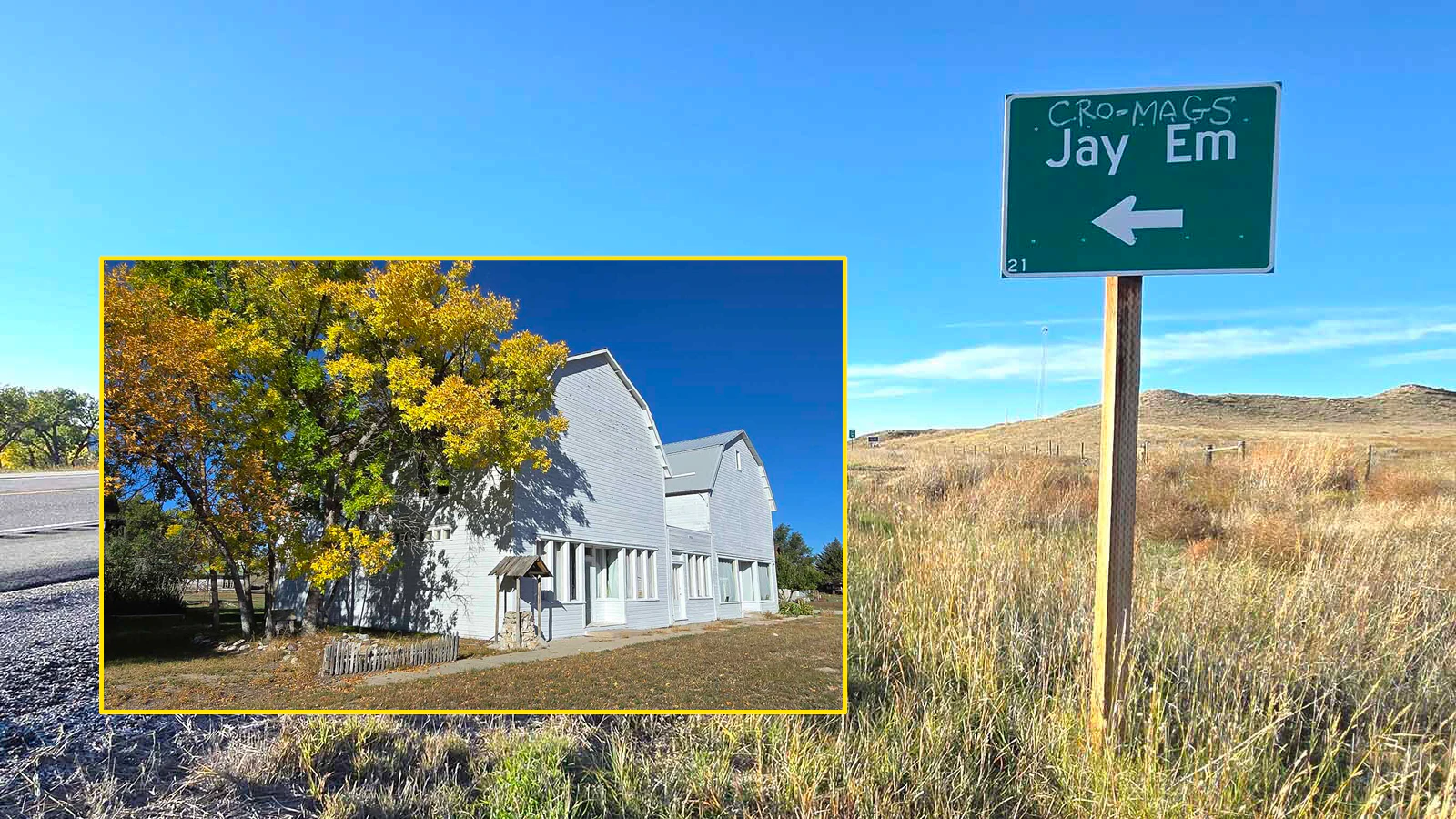
The contract eventually showed up in the hands of a private collector on the Crow Reservation, displayed in a small roadside museum that doubled as a gas station and post office stop.
From there, it went up for sale with Heritage Auctions in Dallas, which is where Zeitz purchased it.
“We have a pretty good custody trail for this,” Hutton said. “So there’s no question in any of our minds that this is the real thing.”
Keeping Wyoming’s History Alive
Both Tate and Hutton stressed that acquisitions of this magnitude almost never happen with government funding.
“We don’t get a lot of government funding at Buffalo Bill Center of the West,” Tate said. “We have a really pretty nice endowment now over the years, but that’s because of private individuals who have stepped up and done that.”
Wyoming’s conservative tax structure leaves museums in the Cowboy State heavily reliant on private donors.
Tate estimates 90% of the Buffalo Bill Center’s collections, from documents to artifacts, came from private collectors and donors.
“These things are valuable because of their history,” she said. “The pieces that aren’t in museums get collected by private individuals who sometimes care for their items better than some of the museums I’ve seen over the years.”
Tate said for her, it’s part of a larger mission to keep the history of the West alive.
“My kind of mission in life is to try to tell our story through the documents and objects and treasures of the past,” she said. “Teach history to our children, which I think is one of the most important things to do … we can all be proud of our past.”
Having Sitting Bull’s contract allows that one-of-a-kind story to be told in ways that will capture imaginations, and keep the West alive.
“It’s just wonderful this is coming back to Wyoming,” she said. “We’ve got probably the most interesting history in the country … and it’s right in the state of Wyoming, where we only have 550,000 people. There are a few of us but we’re mighty.”
Renée Jean can be reached at renee@cowboystatedaily.com.