
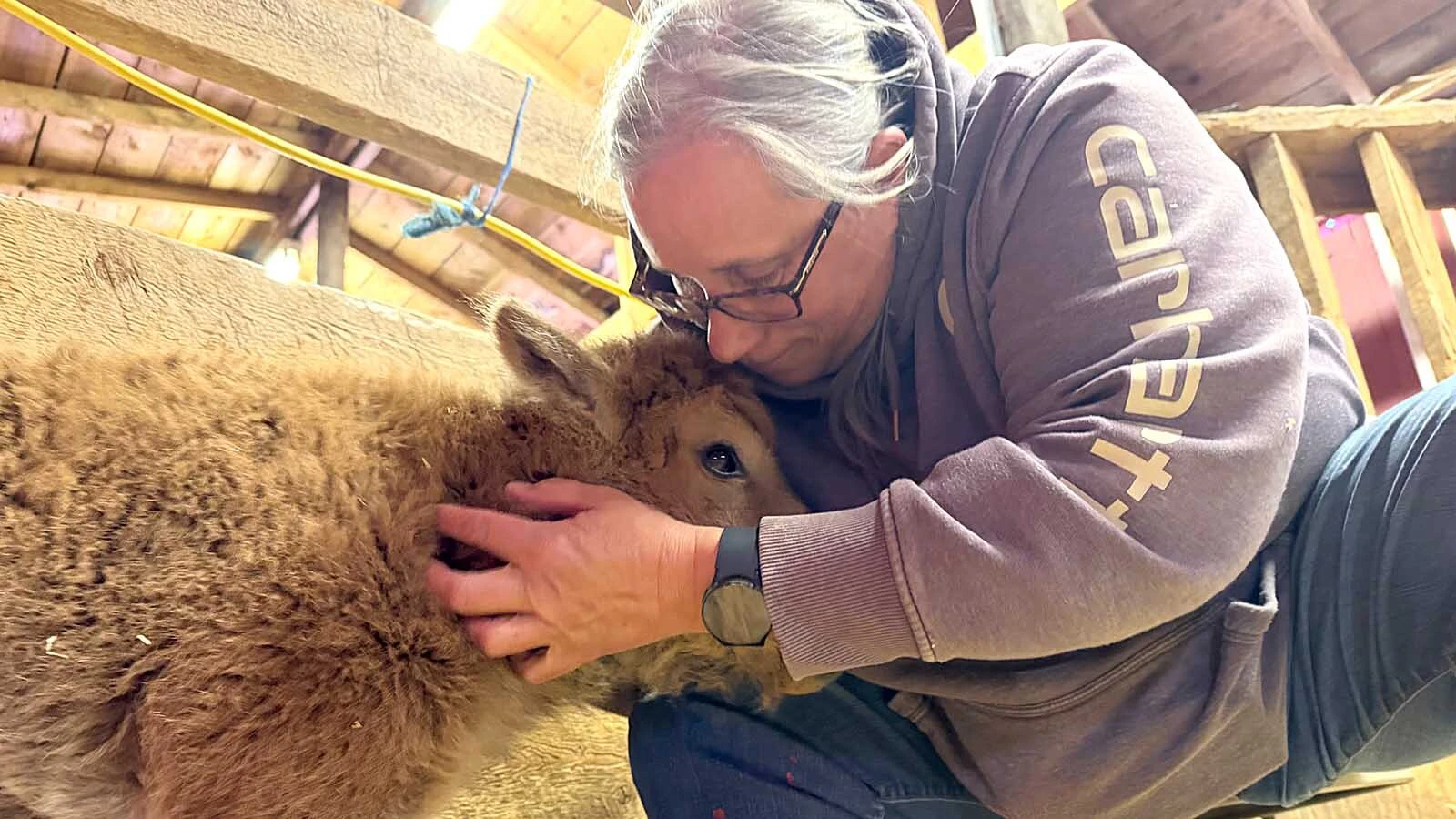
When Erin Grey spotted the newborn bison calf alone in an alleyway at the Terry Bison Ranch outside Cheyenne earlier this month, something immediately felt wrong.
The umbilical cord was still attached — and still wet.
“We were like, ‘Where is the mom?’” said Grey, the ranch’s general manager.
Grey tried repeatedly to guide the calf back to her mother in the herd. But a 3-year-old bull named PJ kept forcing the calf away. At one point, Grey said that the bull even tossed the newborn a foot or two into the air.
Every time the calf got near her mother, PJ pushed her back out into the alleyway.
“It was definitely different,” Grey said about watching the herd actively reject the newborn calf.
Bison cows are typically fiercely protective mothers. But in rare situations — particularly when there is competition from older calves or yearlings — a mother may reject a newborn.
Grey realized that was exactly what was happening, and in this case being encouraged by the bull PJ.
For hours, ranch employees tried everything they could think of to reunite mother and baby. They moved mom into a pasture away from the rest of the herd and released the calf nearby. The mother ran right past her calf.
They loaded the calf into the back of a pickup and drove her directly to the mother again. They lifted the baby from the truck to the ground. The mother walked the other way.
The calf cried out.
At that point, Grey knew the tiny bison’s survival depended on humans stepping in.
“I said, ‘Let’s get her,’” Grey recalled.
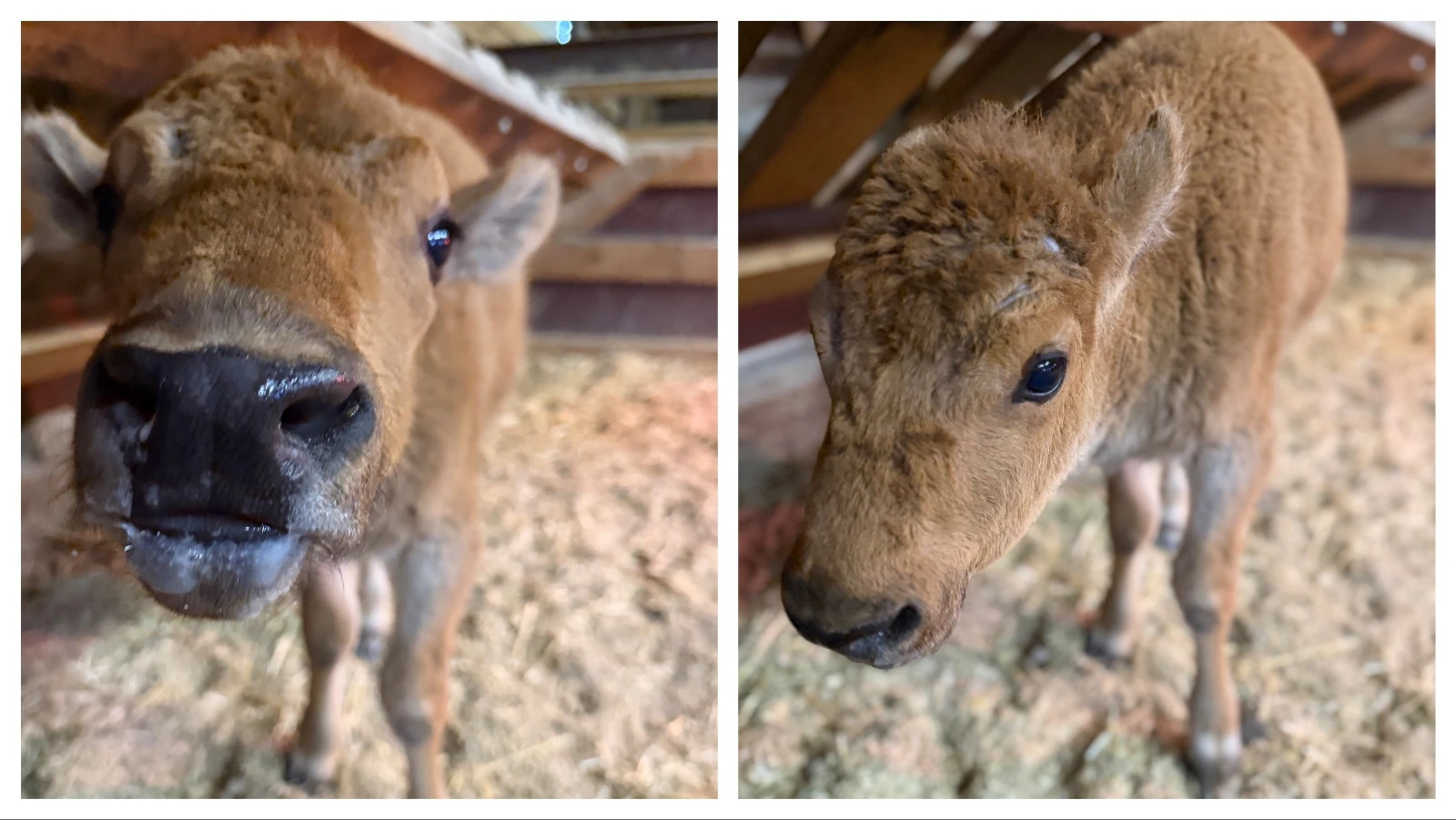
During the ride back to the barn, Grey gave the calf a name: Koa, which means “warrior.”
“Koa has a very strong spirit,” Grey said. “She lets you know what she wants.”
Fighting To Survive
For a newborn bison calf, the first few hours of life are critical.
If a calf does not receive colostrum — the nutrient-rich first milk produced by its mother — within roughly four hours, its chances of survival plummet, Grey said.
Grey mixed beef colostrum into a bottle and braced herself for a battle.
“She fought me. Oh man, she was kicking good,” Grey said.
Koa bucked and groaned as Grey and other ranch hands tried to feed her.
“We would hold the bottle, hold her head, stroke her face and talk to her,” Grey said.
Finally, Koa latched on.
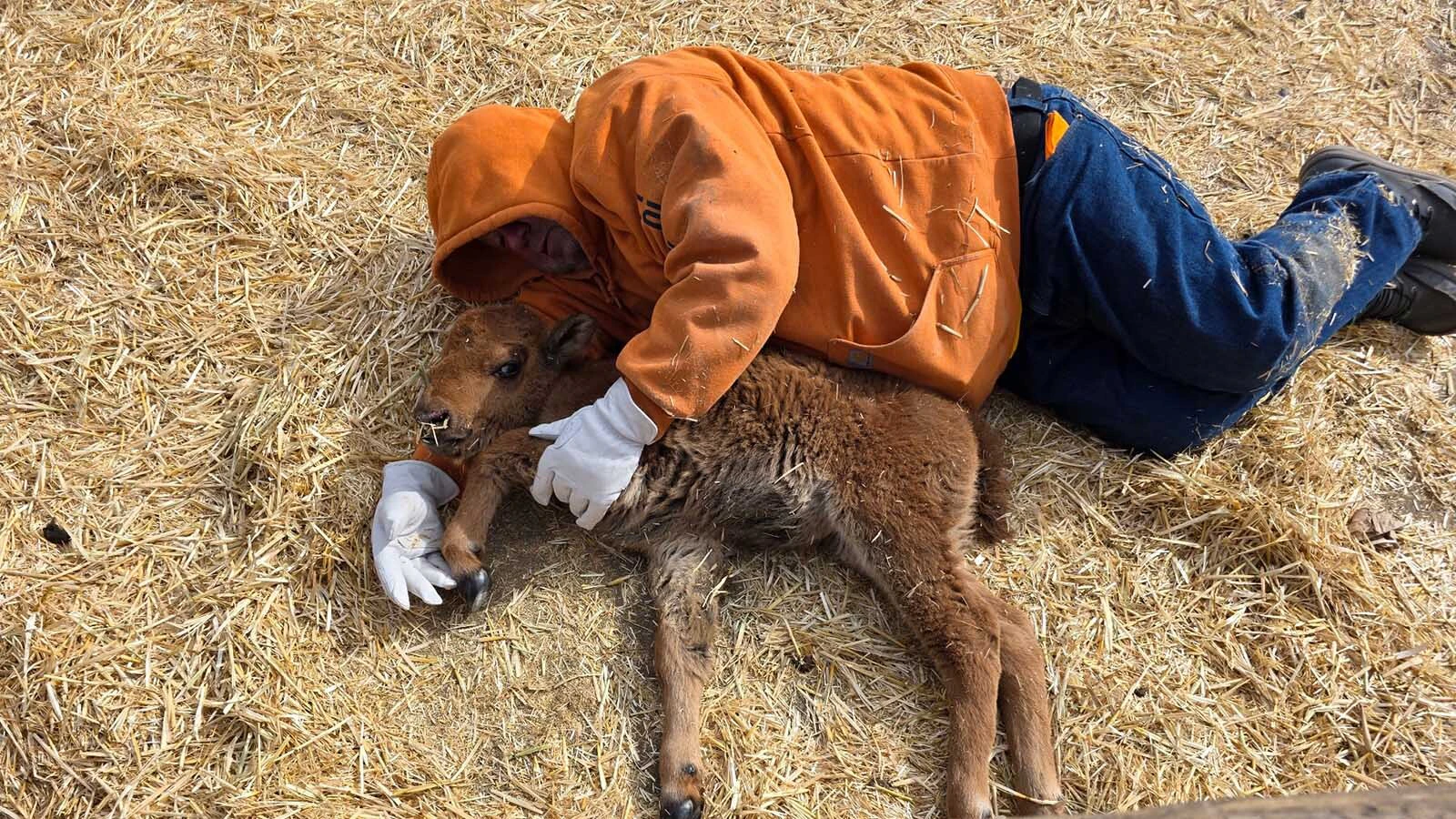
By day four, the team was offering Koa a bucket of water with a nipple attached to it.
Grey dropped onto all fours and pretended to drink from it herself.
The team put alfalfa in Koa’s pen, and again Grey got on all fours and pretended to eat it.
“It’s teaching,” she said.
Like students in a classroom, bison watch and imitate. They learn to be bison from the herd around them.
“They are a herd,” she said. “They do remember and they build a strong connection and they build imprints on people just as much as with their herd.”
Keeping Koa on a feeding schedule is key. Grey said bison formula is expensive, and many bison ranchers opt for sheep or goat formula instead. Grey fed Koa goat formula.
“She’s taken to it very well,” she said.
Fragile Beginnings
Despite their size and strength later in life, baby bison are surprisingly delicate.
Bison calves typically weigh between 30 and 70 pounds at birth. Within a half hour after being born, they can run nearly 30 mph. Adult cows can weigh up to 1,000 pounds, while mature bulls can top 2,000 pounds.
But surviving those first weeks can be precarious.
“How fragile baby bison are is absolutely amazing,” Grey said.
Koa is fed warmed goat formula every few hours. The temperature has to be just right — between 100 and 110 degrees.
Too much food can make a calf sick. Too little can weaken it.
And Koa, true to her warrior name, always wants more.
“When she starts ramming her head up at you, she’s really hungry,” Grey said.
Social media followers who learned about Koa online ask why the bison can’t be placed with calves from cattle herds instead.
Grey said that's risky.
“What a lot of people don’t realize is bison are more susceptible to diseases,” she said. “Their immune systems are so delicate.”
Ranch Family Steps In
Caring for Koa quickly became an around-the-clock job. Grey tried to shoulder most of it herself.
But other members of the ranch family, Tony and Jannette Hiener, weren’t about to let that happen.
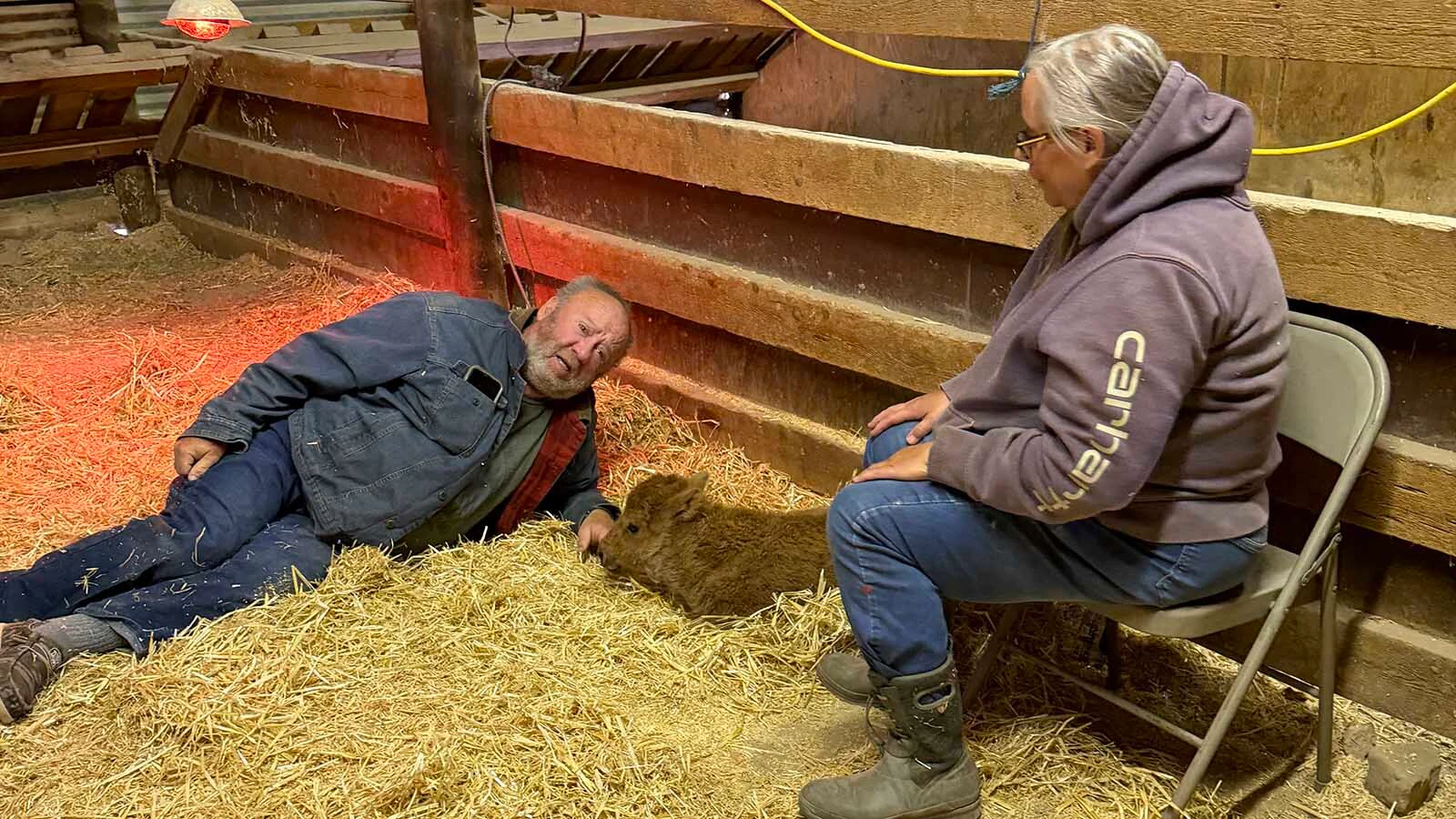
Blind veteran Tony Hiener and his wife, Jannette, began taking shifts sitting with Koa so Grey could rest.
“We sit here and we take turns,” Grey said, affectionately calling the Hieners "Mom and Dad."
“It takes spending that time to know what we have to do to pull this off,” she said.
The effort to save Koa became even more emotional because Koa arrived only days after the ranch lost a 21-day-old calf named Ember.
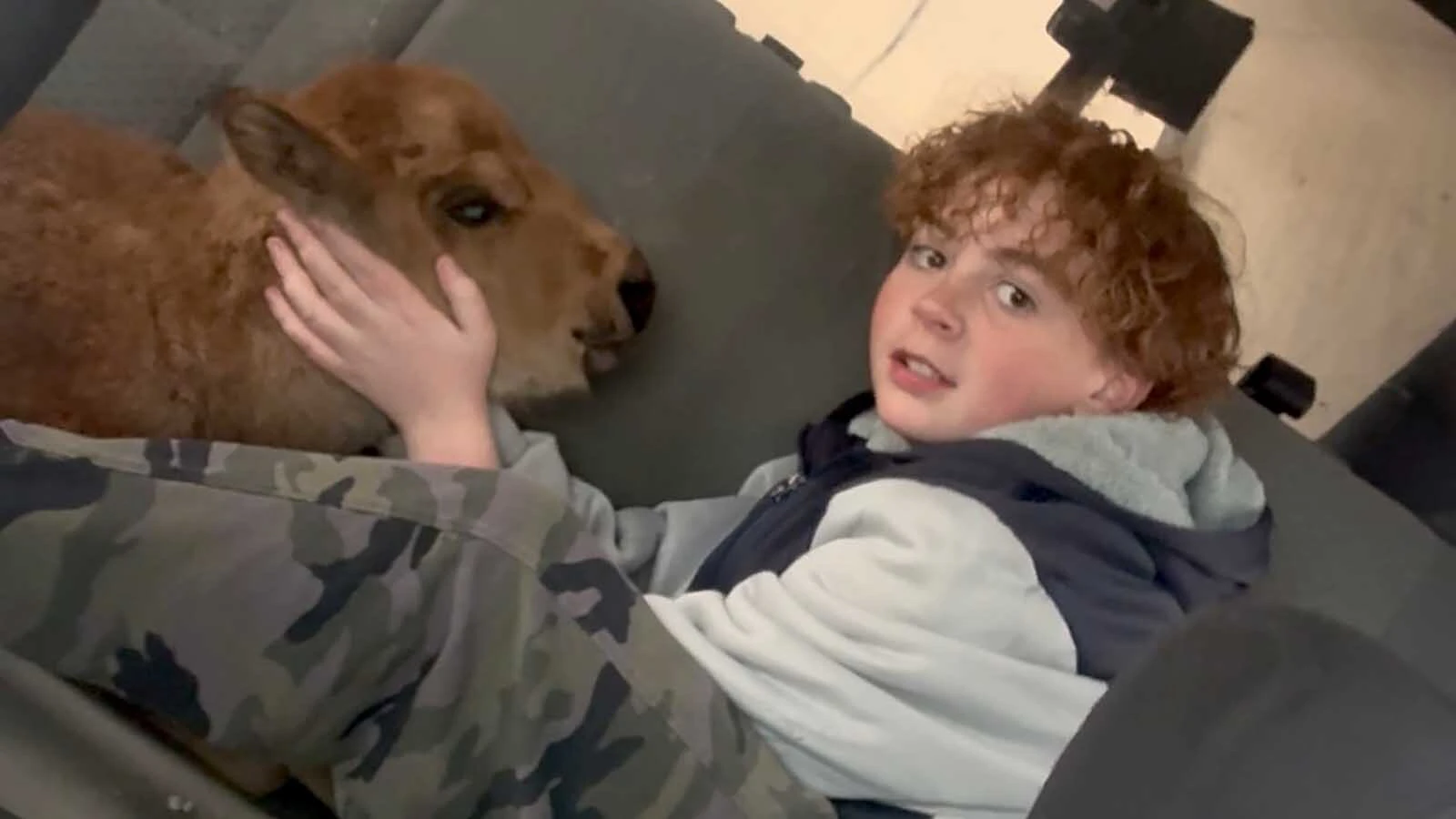
Ember had also been abandoned shortly after birth. Grey and her 12-year-old son, Hunter, rushed to rescue the struggling calf and spent weeks trying to nurse her back to health.
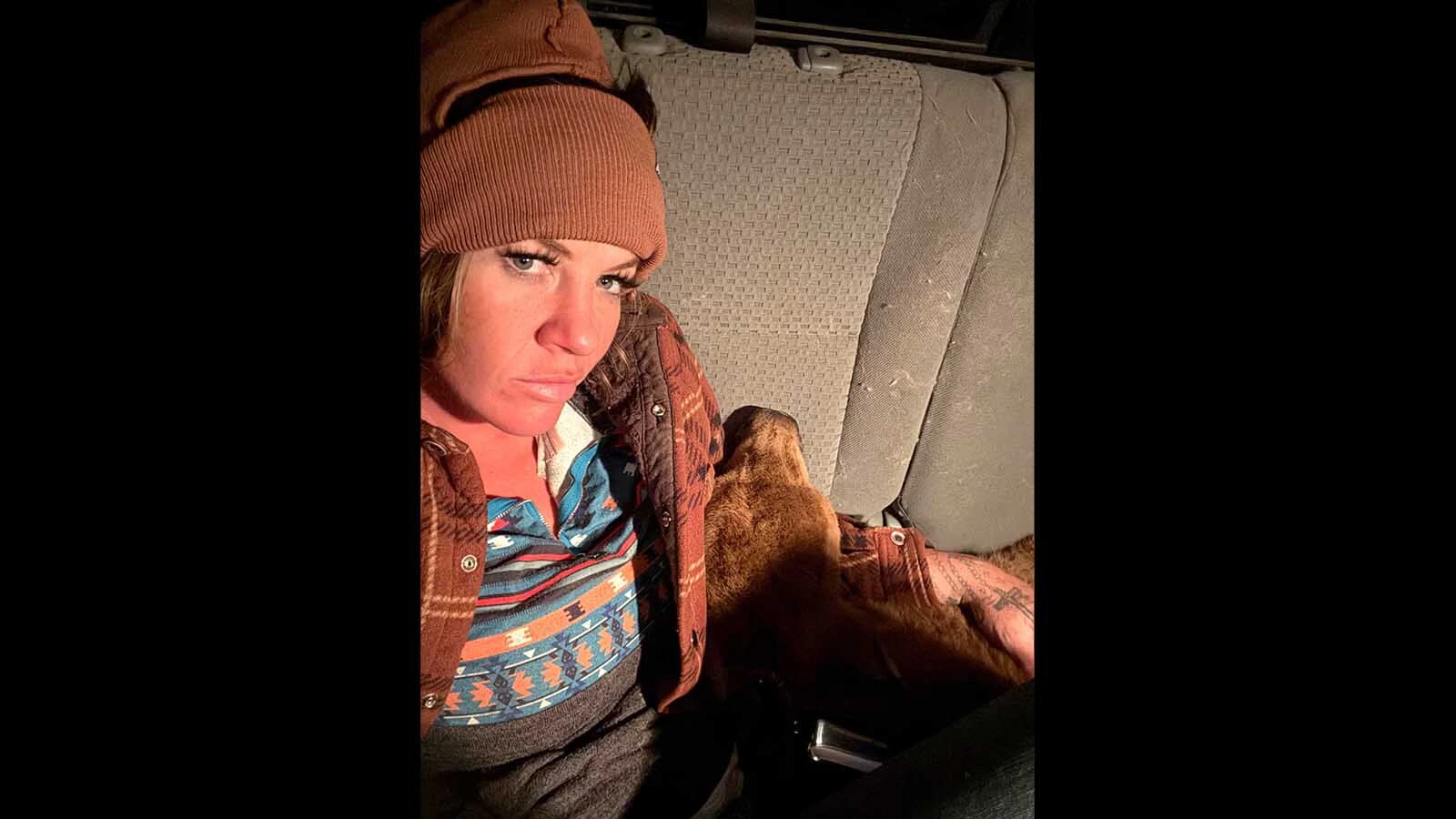
Grey bottle-fed Ember while driving. She dropped off her son at school with the baby bison in the truck. She slept overnight in the hay-filled pen beside her.
“I can’t leave her,” Grey remembered thinking.
For a time, Ember improved. She learned to stand and walk, though sometimes her legs would not cooperate.
But her health constantly fluctuated.
At 21 days old, Ember died.
“You can’t change Mother Nature,” Grey said through tears. “You can love as much as you can, but if it’s something out of your control, there’s a time and a place.”
The Hieners helped then, too.
“They would give me a couple days’ rest because I was not smelling so good,” Grey joked.
A Rare Situation
George Wuerthner, a longtime bison expert and ecologist, said he has never personally witnessed a bull throw a newborn calf the way Grey described.
“It’s not something I would call common,” he told Cowboy State Daily.
In wild herds, he said, bulls are often separated in bachelor groups while cows and calves remain together. Ranch environments can create more interaction between males and newborn calves than would normally happen in nature.
Still, Wuerthner said, jealousy and competition are common behaviors among mammals.
That is what Grey suspects happened with PJ.
Learning To Be A Bison
Now past the fragile two-week mark, Koa’s chances of survival are steadily improving.
Grey and her team have started halter-training her and encouraging natural behaviors through play and exercise.
“In the pen we play with her. We run,” Grey said.
One of the biggest challenges, she said, is teaching an orphaned calf how to act like a bison.
The ultimate goal is to eventually reintegrate Koa into the herd.
“We want her to have a good life, not just quarantined in a pen,” Grey said.
“She’s a fighter,” Grey said.
And after surviving rejection from her own herd, she now has an entire ranch rooting for her.
Kate Meadows can be reached at kate@cowboystatedaily.com.


