
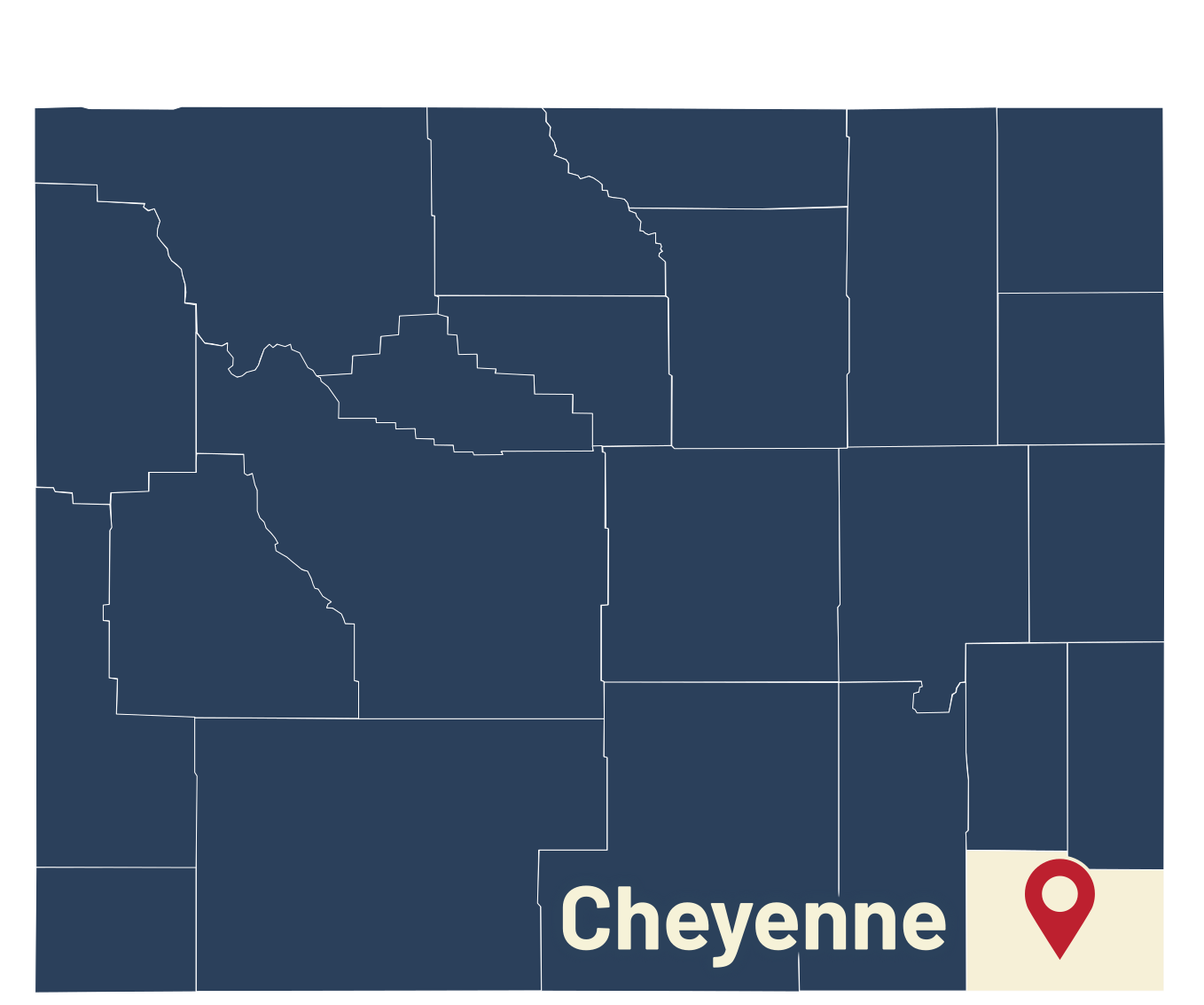
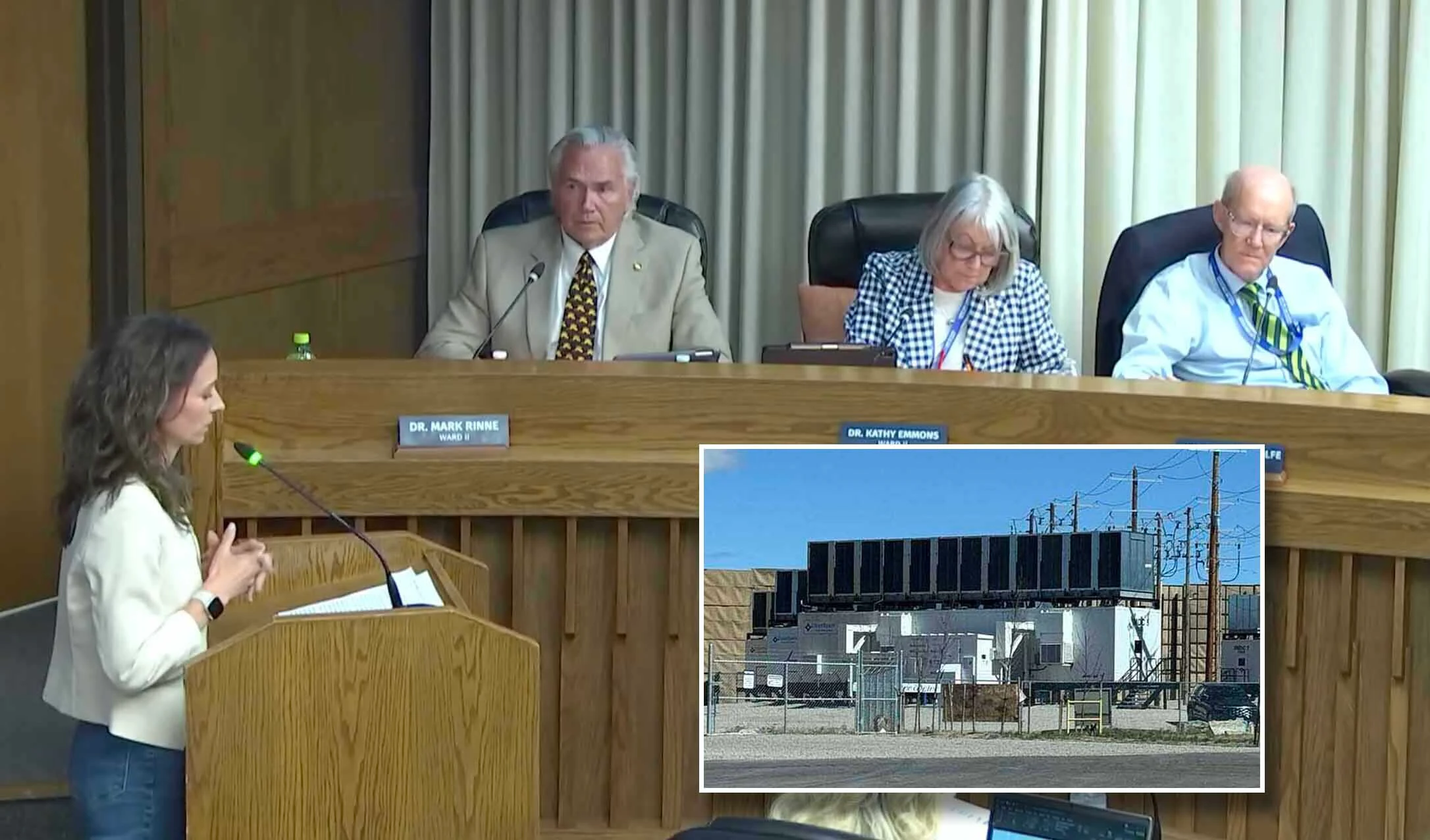
A proposed 12-month moratorium on data centers in Cheyenne was rejected on a 9-1 City Council vote after nearly four hours of emotional, and at times angry, testimony Tuesday night.
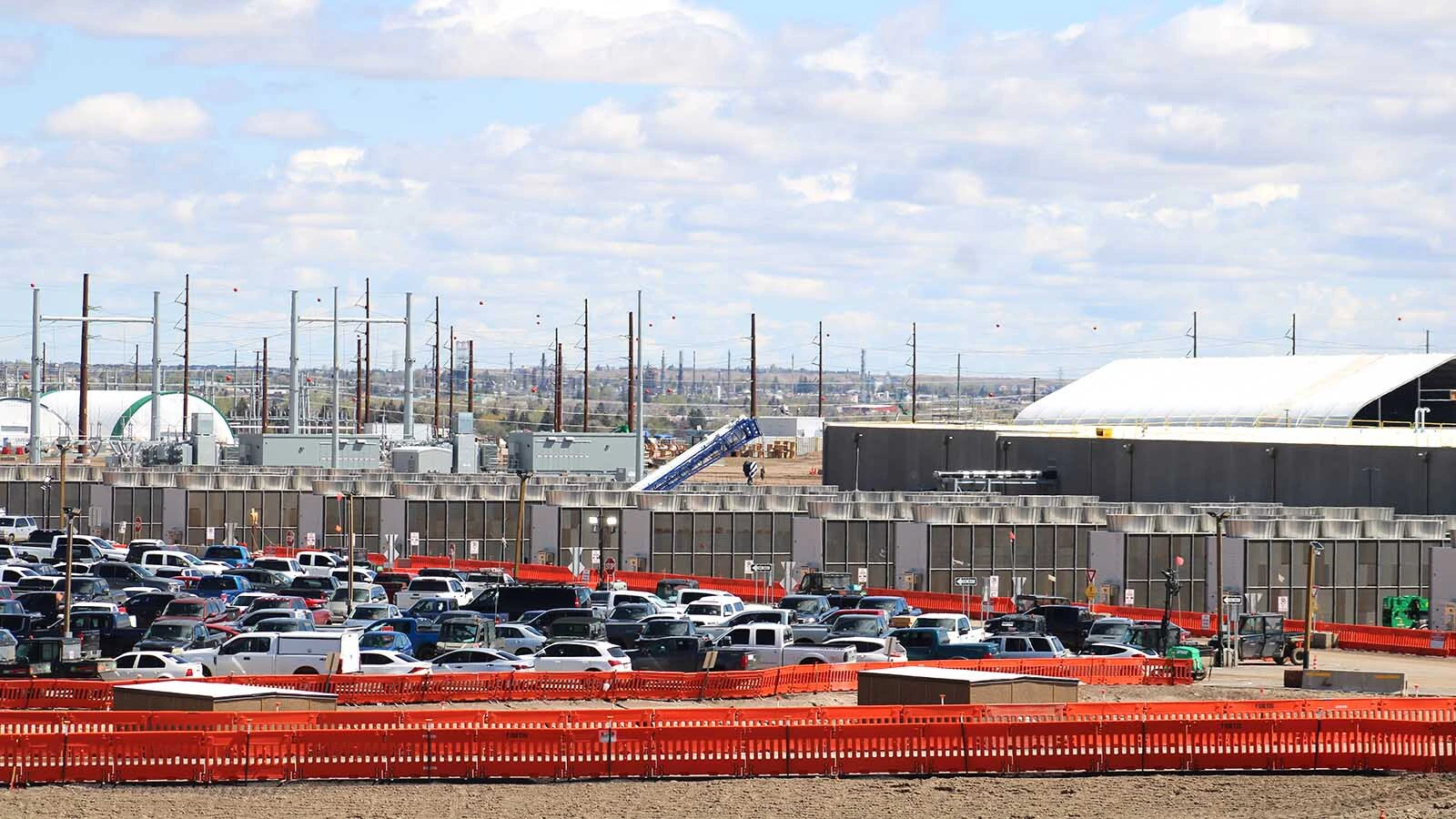
The discussion pitted data center workers happy with good jobs against local residents who are skeptical — and some fearful — of the impacts that rapid data center growth brings to the city.
About half of those who spoke were in favor of the moratorium with the other half opposing it.
Throughout the marathon debate, Cheyenne Mayor Patrick Collins called for respect from the audience more than once.
“There are two sides to this story,” he said. “Let’s be respectful to both sides.”
Union Workers Weigh In
Marcie Kindred, representing Wyoming’s AFLCIO, the state’s labor federation, said a troubling narrative began to emerge after last week’s city planning commission meeting where the moratorium was discussed.
The city’s Public Service Committee also took up the moratorium during a May 18 meeting and decided not to issue a recommendation on the moratorium either way to the council.
“The community on one side and pro data center big-tech billionaires and unions on the other,” Kindred said.
Union members are also Cheyenne residents, she said, adding they are taxpayers who live here and love Wyoming.
“Our opposition to this moratorium is not a broad endorsement of AI,” she added.
She addressed concerns about artificial intelligence and the threats that data centers pose to workers before saying that fight belongs in Washington, D.C., not in a city council meeting.
Do we want economic development done right, under Wyoming standards, or do we hand it off to someone with a rubber stamp and no safeguards? she asked.
“These workers are here today because they know what a pause really means,” she said about the strong turnout to oppose the moratorium. “It means in a few months they’ll be back out on the road answering the nearest work calls, sleeping in a hotel instead of in their own beds.”
These data center projects have allowed people to put down roots and dream a little, she said, adding that, “A moratorium does not protect our community.”
Matthew Miles introduced himself as a pipefitter from Cheyenne and said most of the men in the union he belongs to he met in South Dakota.
“Until Meta ramped up and brought all of us home, all of these guys were in a completely other state away from their families,” he said. “A moratirum will force these companies to go somewhere else.
"All it will do it hurt the local workers you see tonight.”
Truett Thompson, president of the Local 415 electrical workers union, said a pause on data centers means a pause on economic growth.
“We believe we’re at a crossroads at the future of our community’s infrastructure,” he said, adding that members of his union are enjoying good-paying jobs because of the local data center buildout.
David Richardson called a moratorium “a stop sign in the road for the middle class.”
Paid To Be Here?
Not everyone was convinced the workers represented the broader community.
A Cheyenne resident who identified himself only as Adam clutched a yellow index card with a shaky hand.
“Everyone here who is opposing this moratorium are literally being paid to do so,” he told the council.
Adam added that as soon as the projects are finished, the workers will be gone. He referred to the data center workers as “transient residents,” saying if we had local workers, we would not need a huge proposed 5,600-person man camp.
“The permanent residents by and large do not want these data centers,” he said.
Others countered that the industry has already created long-term local careers.
Shawn Broad, an employee of Microsoft who received training at Microsoft’s data center academy, assured the council he was not paid to be at the council meeting.
He said he grew up in Cheyenne and immediately left because he didn’t see a future there. A job at Microsoft allowed him to return to his roots, he said.
Quality Of Life
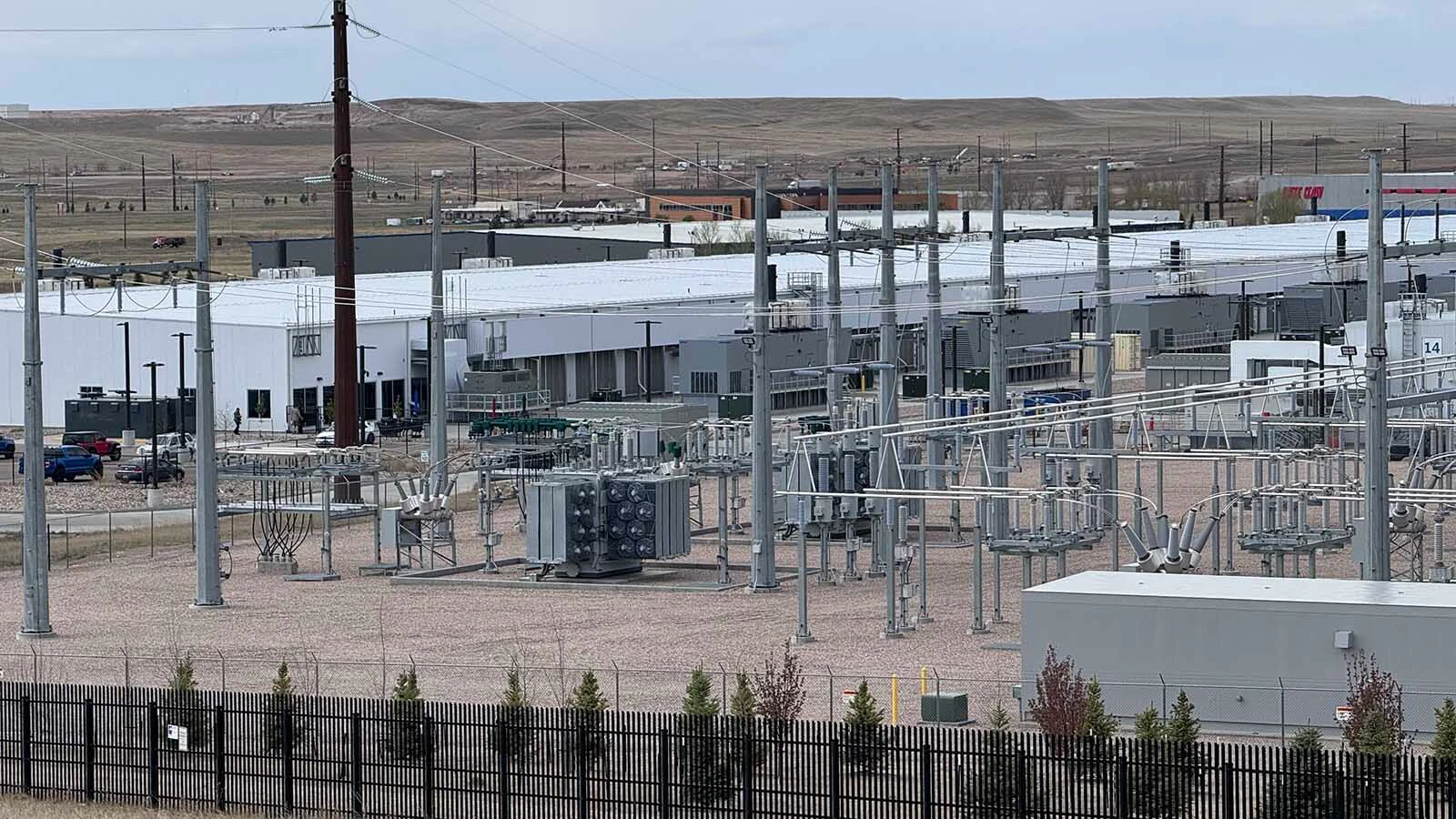
For many speakers, the discussion came down to competing visions of Cheyenne’s future and what kind of quality of life residents want to preserve.
Ryan Blue, a Cheyenne resident and data center technician, said that his data center job "financially changed my life.”
“Your whole life anymore runs on a data center,” he added.
Elizabeth Marvin said she fought “tooth and nail” to get back to her home state of Wyoming, yet the Wyoming she moved back to is not the Wyoming she grew up in.
“I brought my kids with me,” Marvin said through tears. “As soon as I got back, I learned that there were data centers going in south of my neighborhood.”
Marvin likened Cheyenne’s data center boom to the uranium mining boom in Jeffrey City, which lasted from the late 1950s through the 1970s.
Jeffrey City grew large enough to support an Olympic-sized swimming pool, Marvin said. “Then, the workers ran away from the radiation.”
Anne Domas didn’t mask her disdain for data centers, and accused the council of being “the pimps prostituting our resources.”
A Pause Is Not A Stop
Supporters of the moratorium repeatedly emphasized that a moratorium would be temporary, not permanent.
Jimmy Chiro, a candidate for a Ward 1 City Council seat, spoke in favor of the moratorium, saying a one-year pause is not asking a lot.
“It’s not going to stop their work,” he said. “It’s a pause.”
Richard Lyle suggested a moratorium won’t slow AI technology and will only drive it offshore.
Several people said their biggest frustration has been what they see as a lack of information and transparency when it comes to data center development.
“The community is a little scared over what’s been happening, and that’s because we’re not getting answers,” said Cheyenne resident Heather Madrid.
Dominic Syracuse, who introduced himself as a comedian and positive psychologist, spoke about the existential threat of artificial intelligence.
“Unfortunately, nothing I have to say today is at all funny or positive,” he told the council.
Syracuse said he leads a workshop across the country called “Staying Human in the Age of AI.”
He said Geoffrey Hinton, the godfather of AI, has given AI a one-in-five chance of creating human extinction.
If we continue data building center rapidly, we are facing a severe existential threat, Syracuse said.
Cheyenne resident Michelle Cobb, who works in the construction industry and admitted she has profited from data centers, spoke in favor of a moratorium “so we know exactly what is coming to Cheyenne.”
Resident Patricia McCoy suggested the moratorium was an opportunity for the council to effectively communicate with residents.
“The people who put you in your position are terrified,” Elizabeth Marvin said. “That should mean something. We don’t want to be Silicone Valley.”
Chris Camargo pleaded with the council to approve the moratorium.
“That’s all they’re asking for,” he said.
Exie Brown, who is running for state House District 9 from Cheyenne, spoke about the national security aspect to data centers, saying, “There is a risk to having all your assets in one location.”
Having so many data centers in one concentrated area increases vulnerability, he said, and makes Cheyenne a target-rich environment for bad actors.
Before The Discussion …
Tensions over data centers surfaced even before the moratorium agenda item came up.
Several residents objected to a proposed rezoning classification affecting land in the Cheyenne Business Park and Campstool Business Park.
The land in question is currently zoned as light industrial, heavy industrial and community business. Changing the zoning to Business Park would relax landscaping requirements, a move that drew expressions of mistrust from the crowd.
“Why are we fast-tracking this rezoning while the moratorium is still on the table?” asked Charles Miller.
He requested the rezoning decision be postponed.
“Rezoning anything is a bad idea right now,” said a woman who identified herself as Christine.
“I don’t trust any of this,” said a Cheyenne resident named Lilia.
“We’ve got data centers knocking at the door,” said Jesson White. “Not to bring that up early, but that’s why we’re all here.”
The mayor explained that with the business park areas zoned as they are now, day care centers aren’t allowed in the area. If you want other support businesses for folks in the business parks, this would allow those businesses to be there.
The council has been working for a few years to make it easier to allow other types of businesses to set up shop in these business parks, Collins said.
“So it’s strictly coincidence,” Jesson replied, eliciting laughter from the audience.
The mayor called for order.
“Now we want to relax the rules?” White said. “That’s ridiculous. That’s absurd.”
People clapped as White sat down.
Again, the mayor called for order.
“I appreciate everyone being here and being respectful this evening,” he said.
Betsey Hale with Cheyenne LEADS addressed landscaping in the business parks as a matter of maintaining order and consistency.
“I would hope folks don’t think the only businesses in Cheyenne are data centers,” Hale said. “Not everything that’s happening in Cheyenne is for data centers.”
Councilwoman Dr. Kathy Emmons spoke to the business-friendly culture of Cheyenne.
“What we hear is, we want to come here and we have unmanageable restrictions to come here,” she said. Looking to the audience, she added, “You can shake your head all you want. It’s true.
"We’re hearing, ‘Don’t make everything so restrictive that it’s not business-friendly.’ There is nothing nefarious in this,” she said.
The zone change was approved on second reading.
The Council’s Turn
Councilman Mark Moody, the author of the moratorium ordinance, thanked everyone for voicing their opinions.
“I want to be clear: I’m not against data centers,” he said. “But we have to think about it. Can we have 40-70 data centers? How are we going to expand if we’re surrounded by data centers?”
Emmons spoke to a world that’s evolving.
“Technology is evolving,” she said. “There are scary things out there. Nobody can say there’s not. We can continue to do our due diligence and will continue to make sure we are maintaining a safe environment. We all live here, too.”
Dr. Mark Rinne asked why the council should spend taxpayer dollars on a study when we can look back to 14 years of data center experience in Cheyenne.
The council voted 9-1 against the moratorium, with Moody being the sole “yes” vote.
Many Moratoriums
Cheyenne’s debate over whether to halt data centers mirrors a broader national conversation unfolding as communities grapple with the explosive growth of artificial intelligence infrastructure and the enormous power and water demands tied to hyperscale data centers.
On May 19, the Denver City Council unanimously approved a one-year freeze on new data centers tied to cloud computing and digital storage. The measure took effect May 21.
The Denver area already hosts roughly 50 data centers, and residents there raised concerns similar to those voiced in Cheyenne — including water use, noise and strain on local infrastructure.
Lawmakers in at least 14 states have recently introduced or considered legislation aimed at slowing or temporarily pausing new data center construction while governments study long-term impacts on energy grids, water supplies and community growth.
Kate Meadows can be reached at kate@cowboystatedaily.com.


