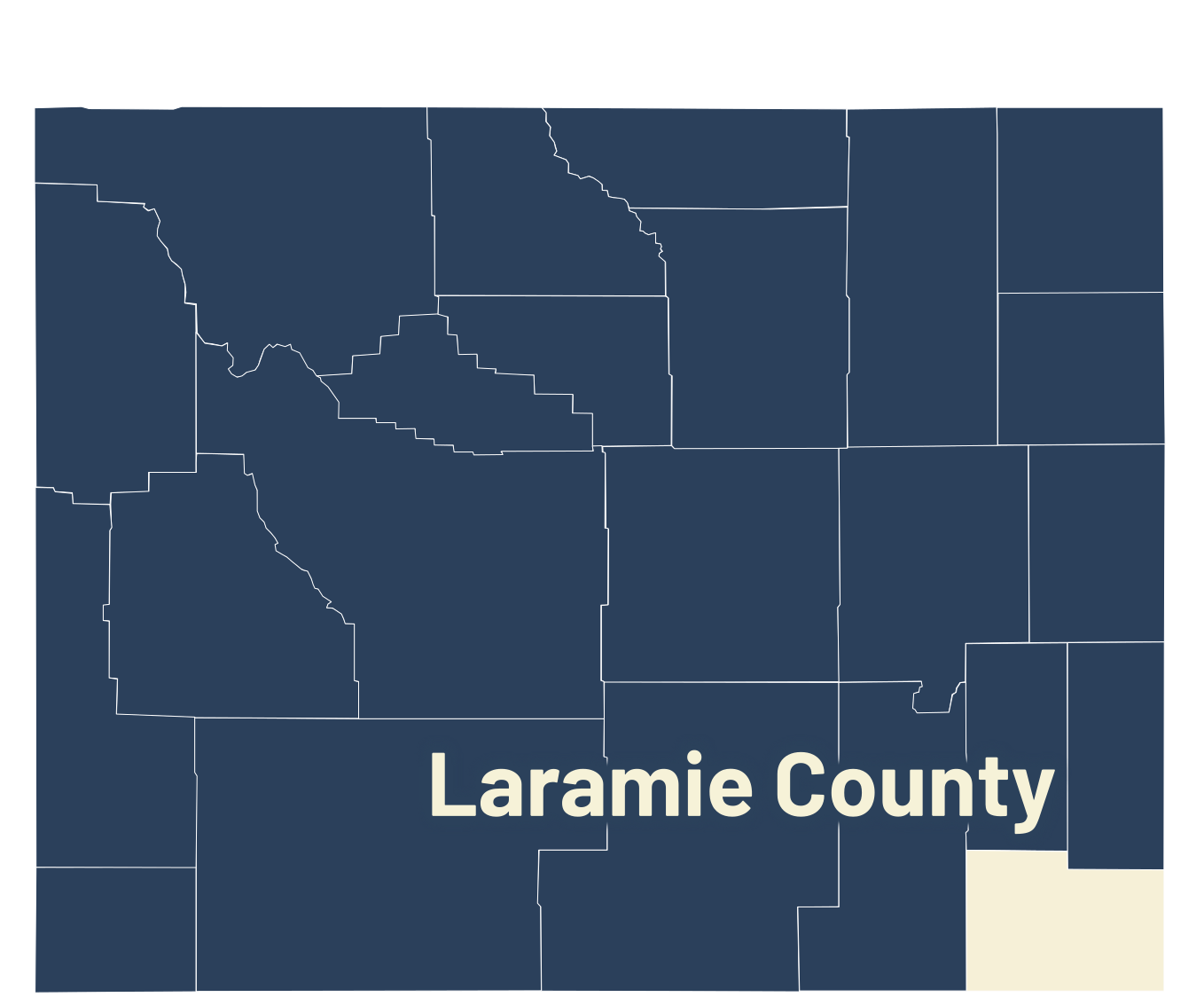
CHEYENNE — Using license plate reader technology to track down and arrest a Laramie County suspect on allegations of sexual abuse of a child has fanned an already smoldering debate over protecting the public at the expense of violating personal privacy.
The Cheyenne Police Department extolls the former position in a Tuesday statement announcing the arrest of an alleged child sex abuser.
“A detective with the Cheyenne Police Department was able to utilize a license plate reader in Northern Colorado to locate a person who was from Cheyenne and wanted on felony sexual abuse of a minor charges on a case originating with the Laramie County Sheriff’s Office.”
The CPD didn’t identify the suspect, citing Wyoming laws about releasing names of sex abuse suspects, but said that the license plate readers helped facilitate “the arrest of this dangerous individual.”
“Within 48 hours of the CPD detective looking for the suspect, conducting interviews, and utilizing license plate reader technology he was found and arrested,” the agency reports.
A vocal opponent of the use of Flock brand license plate readers in Cheyenne said that while getting dangerous people off the streets is always the best outcome, it shouldn’t happen at the cost of the personal rights of everyone.
“We will never argue the cameras don’t work,” said Ted Hanlon, chairman of the Laramie County Democratic Party and candidate for state Senate District 5.
Hanlon has led local pushback against the use of license plate readers, including presenting a petition with nearly 800 signatures opposing them to the Cheyenne City Council about six months ago.
The one thing supporters and opponents of the technology seem to agree upon is that license plate readers work.

A ‘Conundrum’
“Police departments across the nation like them because they do work,” Hanlon told Cowboy State Daily on Wednesday. “And that’s my reason for not using them.
“It seems particularly in Wyoming that this is a bad solution. We appreciate our individualism and freedom.”
Put simply, Hanlon said he thinks personal privacy rights trump public safety because in order to achieve that safety, it puts everyone under “Big Brother-like” surveillance.
“You’re always weighing personal freedom against safety, and that’s the law enforcement conundrum,” he said. “We can all give up personal freedoms in the name of safety, but where do you draw the line on that?
“I’ve thought about it a lot. The police department talks about Flock cameras in terms of if everything goes right with them, and I talk about them in terms of if something goes wrong.”
The chances of everything going right without anything going wrong “is almost zero,” Hanlon added.
Tuesday’s example helps prove both points of view, he said. It’s a great example of finding a suspect in less than 48 hours after being spotted by a license plate reader.
“My argument would be that if you can find this person in 48 hours using this tech, you can find anybody,” Hanlon said. “That is the privacy concern, that if you or I drive through Cheyenne right now, these license plate readers are going to take pictures of our cars, and theoretically we haven’t done anything wrong.”
Not The Big Brother It’s Made Out To Be
The Cheyenne Police Department said there’s some misinformation about the scope and nature of the agency’s use of license plate readers (LPRs).
Police don’t use them to do random sweeps and need a reason to be looking for specific vehicles tied to suspects or people of interest in potential crimes, CPD Sgt. Matt Coulson told Cowboy State Daily on Wednesday.
“Our agency uses them as an investigative tool, along with other investigative tools,” he said, adding that they don’t go on fishing expeditions.
“The LPRs give us an ability to locate vehicles identified as being associated to those individuals,” he said.
In this latest case, a warrant for the suspect’s arrest was issued two weeks prior and there were other attempts to locate him, Coulson said.
By using license plate readers, “we were able to narrow (where the suspect was) down to a specific city and an area of that city where he was frequently driving that car,” he said.
CPD Chief Mark Francisco defended their use to Hanlon and city officials during a February City Council meeting.
The cameras reading license plates aren’t new and have been in use for decades around the United States, he said. The Flock brand readers are relatively new, however.
Francisco said the concern over the cameras he hears most is about privacy issues and questions about whether the cameras violate the Fourth Amendment, which protects people against unreasonable search and seizure by the government and ensures rights to privacy.
“I understand where they’re coming from,” Francisco said. “We do live in a society now that everything you do and say is tracked.”
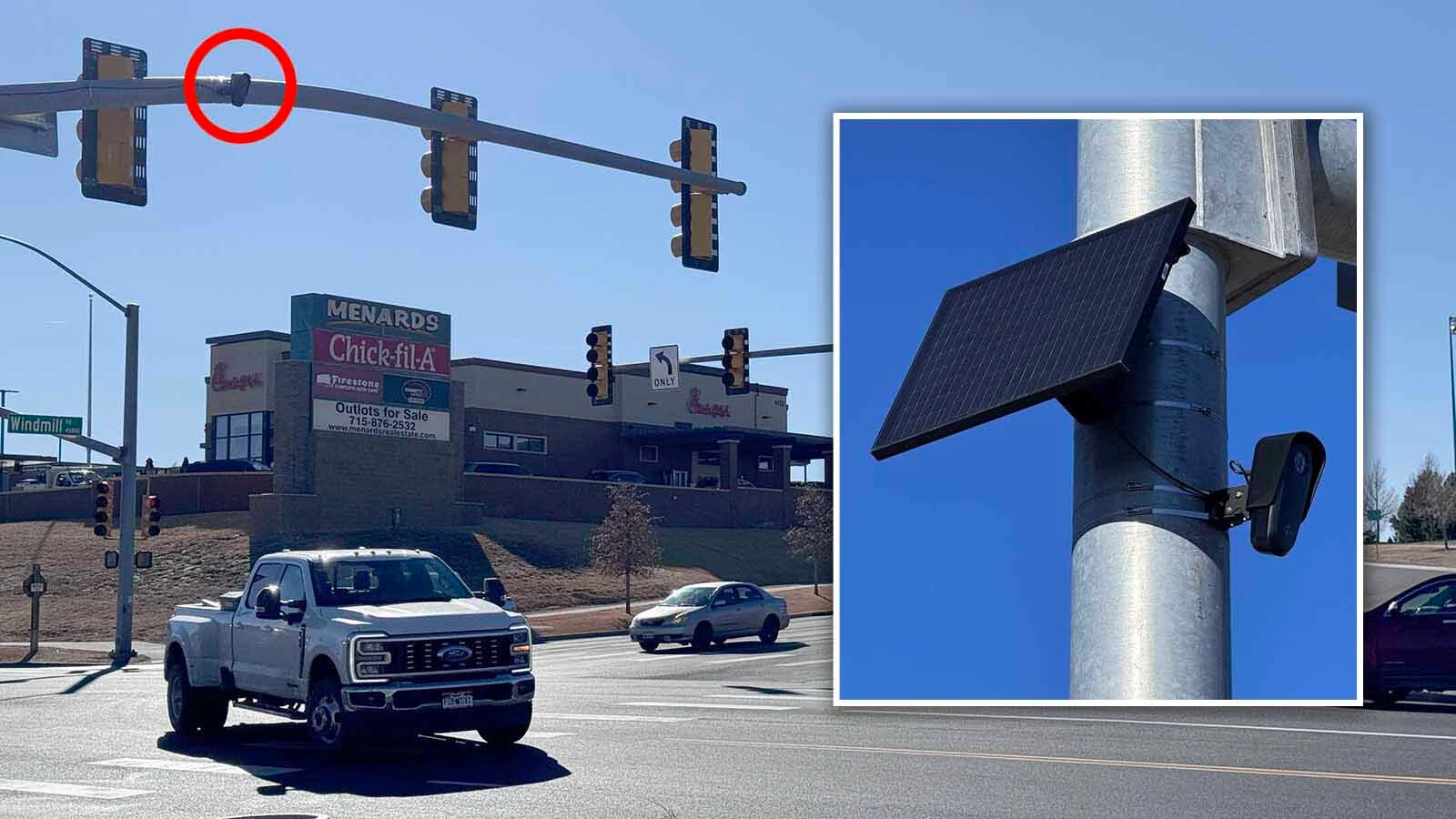
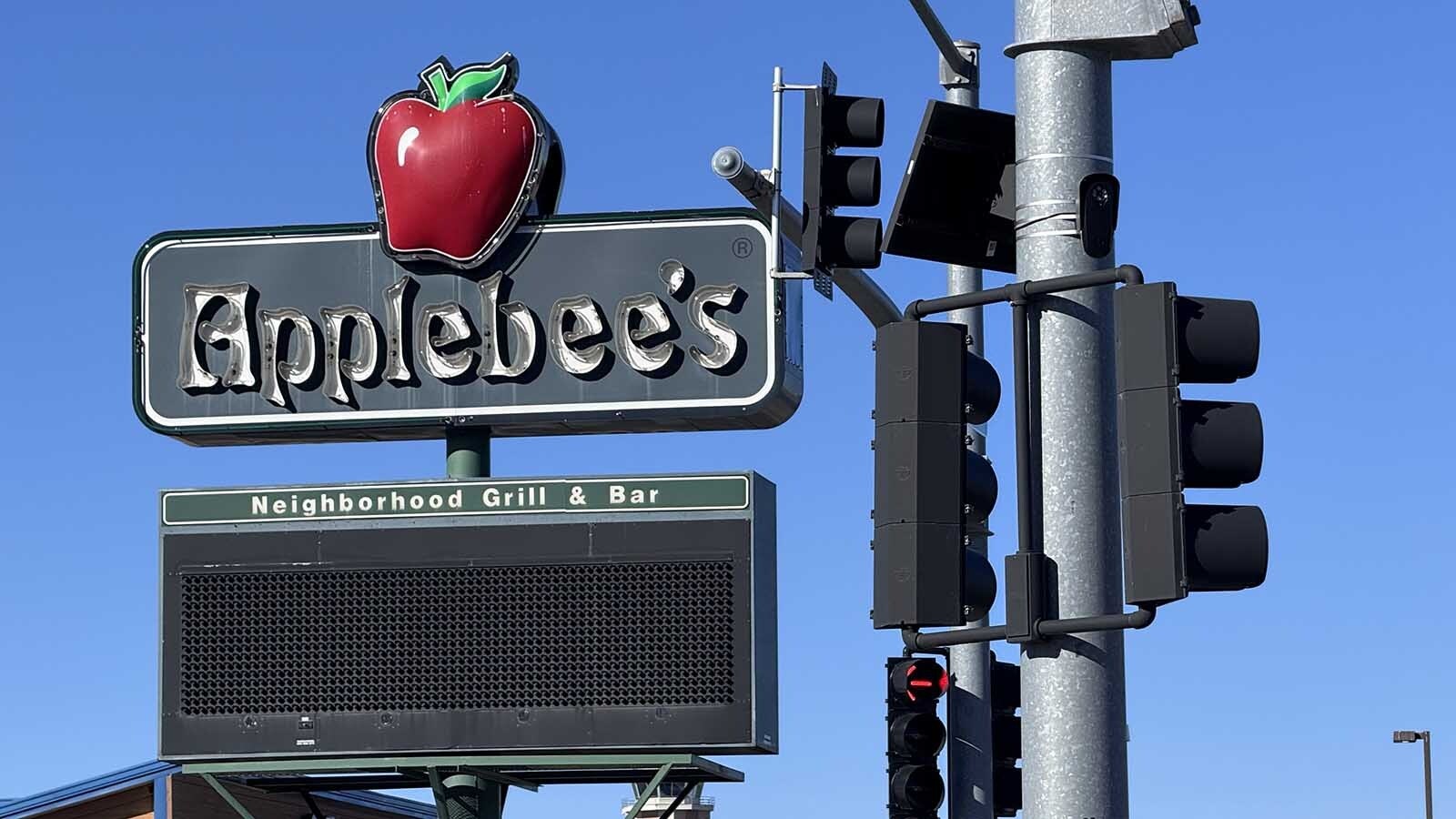
But, he said, the cameras are not set up to do some of those things people fear that they do. The cameras are placed at public intersections and take still photos of vehicles and their license plates.
“None of these are in neighborhoods,” Francisco said. “The notion that these things could follow you from your home to your travel destination is just not accurate.”
Coulson agreed, saying that people who know they’re wanted will deliberately avoid areas with LPRs.
“People just hear we can locate anybody at any time, and that’s not true,” he said.
‘Change The People’
If the city won’t adjust or stop its use of license plate readers, Hanlon said people should elect public officials who will.
“We live in interesting times, right?” he said. “The problem I’ve had getting anywhere with the City Council is everything they’ve done the past six to eight months is so controversial, their meetings go to 1 or 2 o’clock in the morning.”
Without LPRs on the agenda, that means the issue of the readers is usually not discussed or brought up so late nobody is lucid enough to discuss it.
“We’ve made it clear to candidates that we’re supporting people who appreciate privacy issues,” Hanlon said. “If you can’t change the people, change the people.”
For his part, Chief Francisco said that everybody is being watched by cameras, and that privacy rights when out in public aren’t the same as in your house.
“As we all know, you give up some of your privacy rights when you’re in public,” he told the council. “Every store you go in is videotaping you.”
Francisco called the cameras one of the greatest technology advances in his 36-year law enforcement career. The primary purpose of the cameras, he said, is to double down on crime in Cheyenne.
They are fantastic for situations like Amber Alerts, missing people and wanted people associated with vehicles, he said.
“Crime these days is so mobile and transitory,” Francisco said. “Every day these cameras are helping us solve crime.”
It’s The ‘Perception’
Councilman Pete Laybourne said he has “full faith” in the city’s police department and has no worries that it’s using Flock cameras in an underhanded way.
But because people have those doubts, the cameras aren’t worth losing “the trust of the public,” he told Cowboy State Daily.
“Our police department is not spying on people and is not misusing this system,” he added. “But I believe we should terminate the contract (with Flock) and acknowledge it’s not worth it.
“We’re losing the trust of the public in our police department, and I don’t think that’s really justified. But the belief is that we’re spying on them.”
Because there is a large outcry against LPRs, Laybourne said he believes that “it hasn’t worked out … because the belief is that we’re spying on them.”
Laybourne said his belief that the Flock contract shouldn’t be renewed has nothing to do with the CPD.
“We tried this technology, there was certainly success with it,” he said. “But I don’t believe those successes justify the continuation.
“That perception is poisonous and dangerous, and that’s why I think we ought to terminate that contract.”
Greg Johnson can be reached at greg@cowboystatedaily.com.