

Editor's note: This story includes graphic and disturbing descriptions of torture and inhumane prisoner of war conditions. Read at your discretion.
After more than 80 years, a 32-year-old Casper man believed to have been killed as a prisoner of war aboard one of the infamous Japanese “hell ships” during World War II may finally be close to being found.
John Clarke Goldtrap, a young husband and father, was listed by his captors as one of the 284 Americans who died after the Japanese hell ship the Oryoku Maru was destroyed on Dec. 15, 1944.
The POW transport ship sunk to the bottom of the ocean and has remained there, virtually undisturbed, until now.
The Defense POW/MIA Accounting Agency (DPAA), working with the Navy and the Philippine government, are excavating the wreck in Subic Bay.
Divers have recovered American military footwear, an identification bracelet, broken eyeglasses, medical equipment and material that may be human bone.
The work is expected to continue in the coming year.
The DPAA said that the recovery effort has significant challenges that will require its team to employ advanced underwater recovery and identification techniques to ensure the mission is conducted with the utmost care and dignity.
Modern archaeology and DNA testing may then restore names to some of those remains, correct wartime records and allow families to bury men who have been listed officially as missing for nearly 82 years.
For Goldtrap, it could finally reveal whether he died inside one the hell ship, in the water or after reaching shore.
It is the fulfillment of the promise made to American servicemen that those missing in action will not be forgotten.
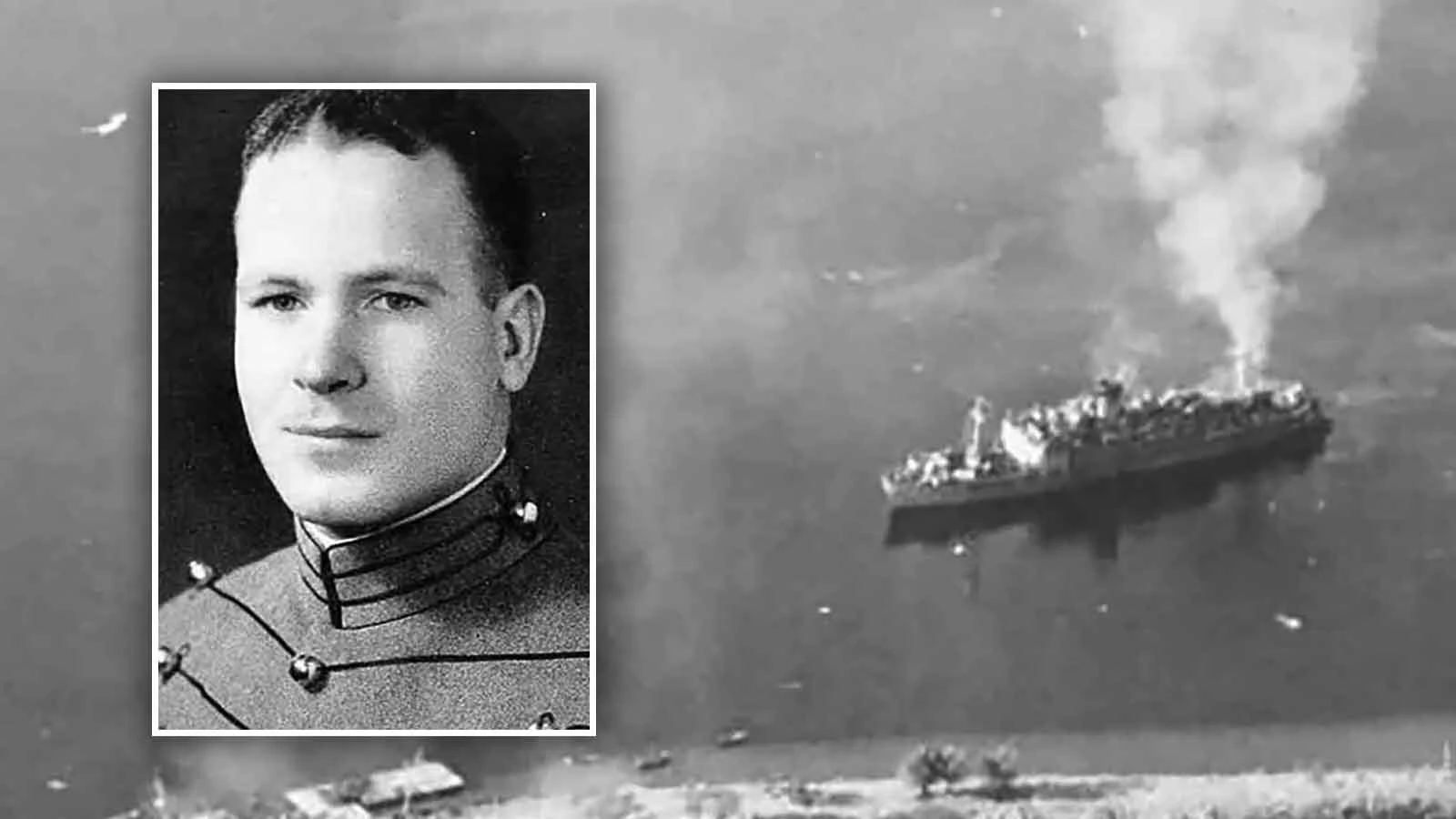
Lt. Col. John Clarke Goldtrap, 32, of Casper had a promising military career and a young family when his life was cut short in World War II. After over two years as a prisoner of war, he was killed when the Oryoku Maru was sunk and he left behind his wife and five-year-old son. 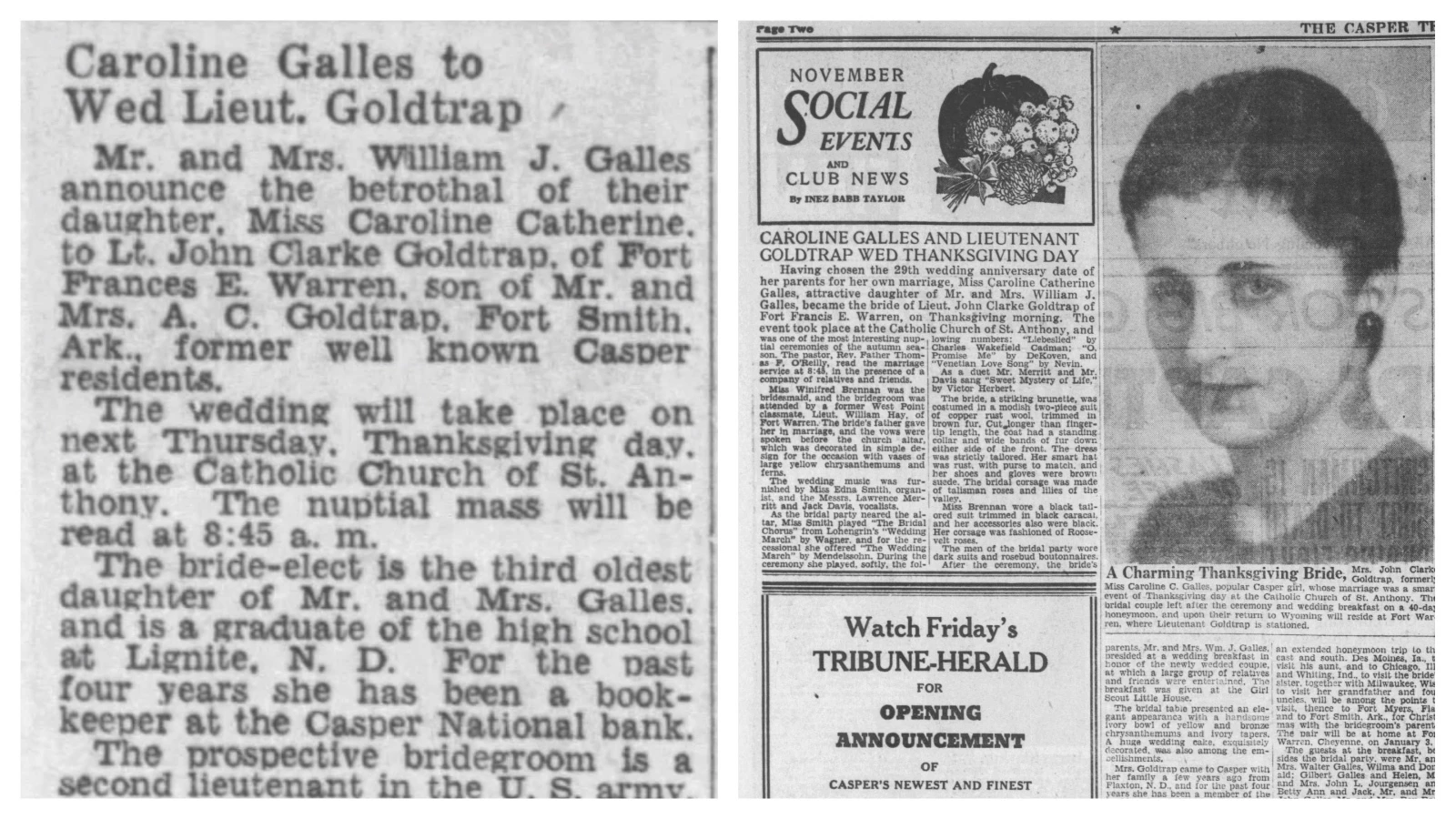
Lt. Col. John Clarke Goldtrap, 32, of Casper had a promising military career and a young family when his life was cut short in World War II. After over two years as a prisoner of war, he was killed when the Oryoku Maru was sunk and he left behind his wife and five-year-old son. 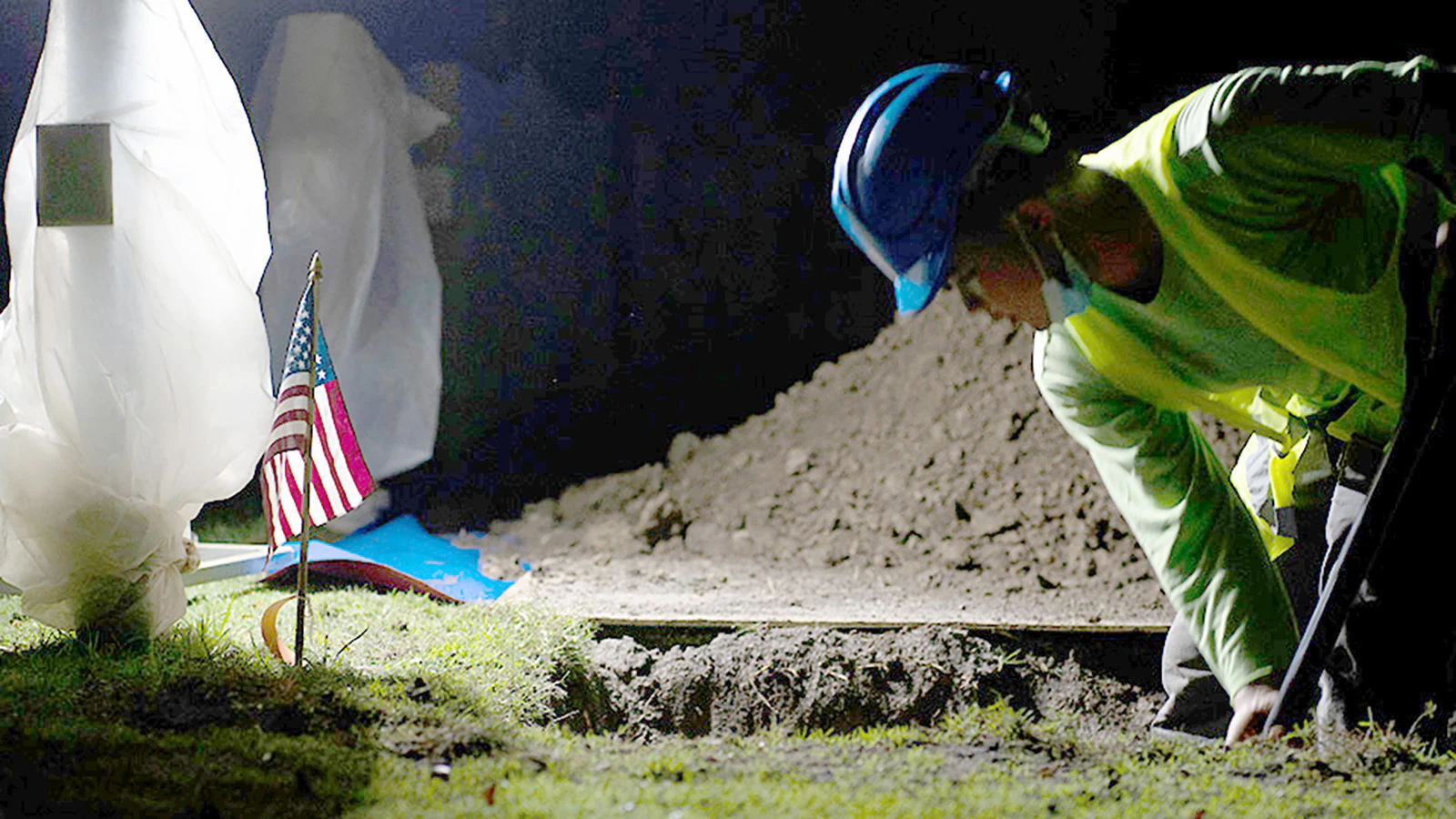
Staff with the American Battle Monuments Commission work in conjunction with members of the Defense POW/MIA Accounting Agency to exhume a casket during a disinterment at the Manila American Cemetery and Memorial in Manila, Philippines, March 1, 2023. Twenty two of the individuals recovered from the disinterment are part of the “Enoura Maru” project, which includes three POW transport ships used by Imperial Japanese forces throughout the second World War, known as “Hell Ships,” and over 400 unidentified sets of remains. (U.S. Marine Corps photo by Sgt. Zachary T. Beatty)
Sinking The Oroku Maru
The air strike in which Goldtrap was killed is known as the Oroyku Maru Disaster because it was Allies who sunk the ship.
Another Wyoming solider, Staff Sgt. Joseph Henry Robertson of Rock Springs, survived by swimming to shore and enduring another hellish eight months as a prisoner of war of the Japanese.
According to the Department of the Army, on Dec. 13, 1944, Japanese forces in the Philippines began the transfer of 1,621 Allied prisoners of war to Japan.
Goldtrap, Robertson and the other POWs were to make the journey aboard transport ships whose harsh conditions and extreme overcrowding led survivors to refer to them as “hell ships.”
These ships lacked markings that would distinguish them from any other military target and were often attacked by Allied forces who could not identify them as POW transports.
On Dec. 14, 1944, Allied aircraft attacked the first of these transport ship, the Oryoku Maru, in Subic Bay in the Philippines, killing many of Allied POWs on board.
War crimes were committed on that day as Japanese soldiers shot many of the escaping prisoners as they tried to swim to safety, while others drowned in the attempt.
According to the Army’s personnel profile on Goldtrap, the officer was listed as dead by his Japanese captors, but the information was unreliable since the first number of dead was listed as “about 250.”
As a commanding officer, Goldtrap was confined in the ship’s rear hold, although it is unknown just how he met his death.
Worse Than Bataan Death March
The stories shared by hell ship survivors paint a horrific picture of human brutality and suffering.
Ben Skardon was one of these men packed into the rear hold of the Oroku Maru where Goldtrap was believed to have been kept.
In a 2015 interview with the National World War II Museum, Skardon said that it was total chaos of the worst type as they were loaded into the hold.
He had found a spot pressed against another soldier on the floor, “one in the crotch of the other.”
All around him, men were breaking down, going crazy, yelling and pleading. Skardon passed out from lack of oxygen and others helped move him to where he could get air.
Many of the men on the Oryoku Maru had survived the Bataan Death March and described the conditions crammed into the ship a living hell, worse than the infamous march.
First-person accounts were preserved in the book “The Rising Sun” by John Toland from men who kept forbidden journals and recorded the hell they barely survived.
Major Virgil McCollum, wrote Toland, was a veteran of Bataan who said the hell ship was “the most horrible experience imaginable and probably unprecedented in the annals of civilization.”
As the dim light of dawn filtered through the hatch, several score bodies lay lifeless — suffocated or murdered.
“Many men lost their minds,” a colonel later wrote in his official report, “and crawled about in the absolute darkness armed with knives, attempting to kill people in order to drink their blood or armed with canteens filled with urine and swinging them in the dark.”
Major Roy L. Bodine would have been in the same hold as Robertson, packed amidships, three decks down with 300 Army and Navy medics and civilians.
He described the constant prayers and the chaos that quickly took over as men went mad from lack of water, oxygen and sanitation.

West Point graduate John Clarke Goldtrap of Casper was a popular Rotary speaker and inspiration to his community. His death in World War II was made even worse when his family never knew exactly what happened to the young husband and father when the ship he was on was sunk in an attack by Allies. 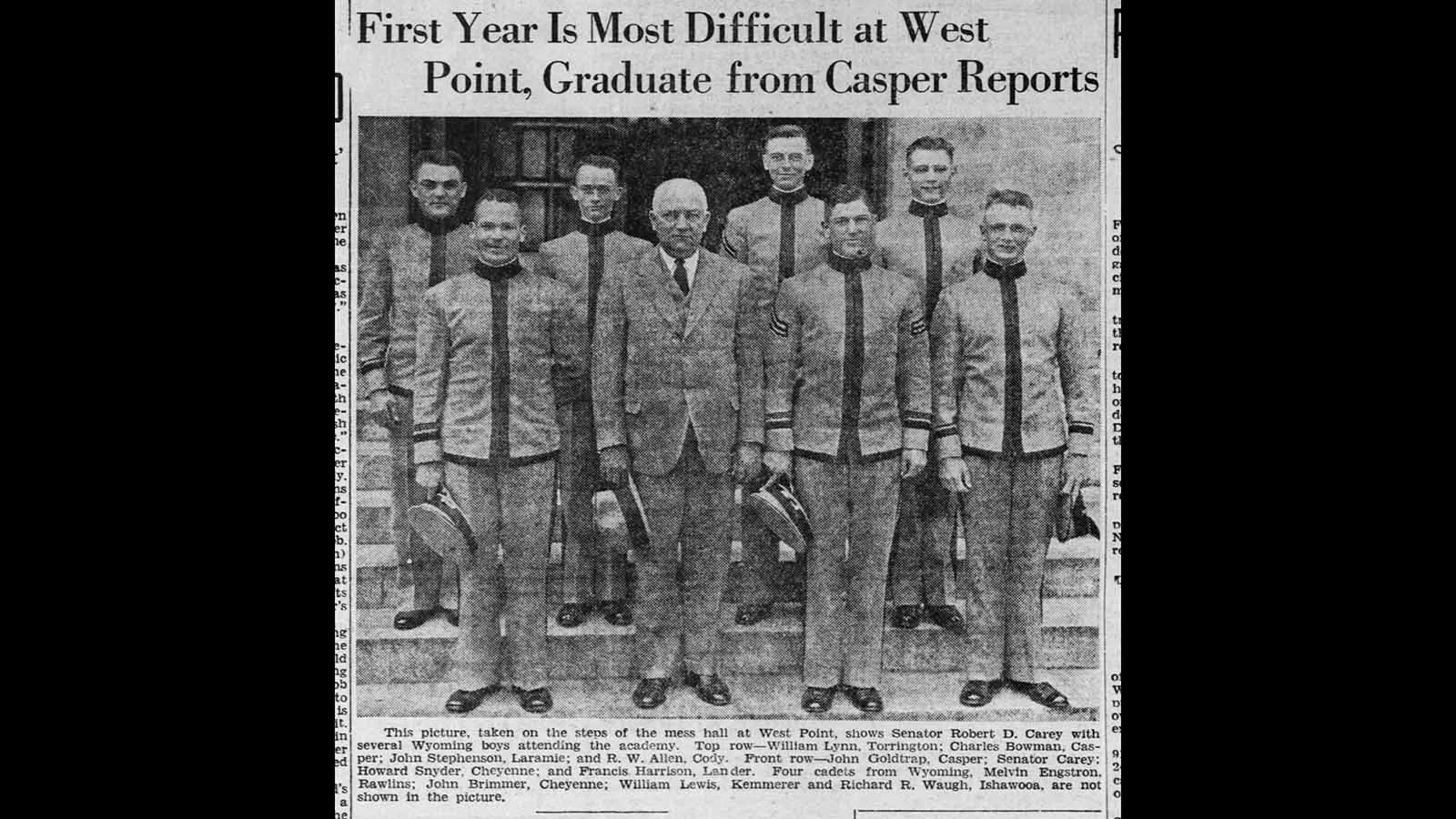
West Point graduate John Clarke Goldtrap of Casper was a popular Rotary speaker and inspiration to his community. His death in World War II was made even worse when his family never knew exactly what happened to the young husband and father when the ship he was on was sunk in an attack by Allies. 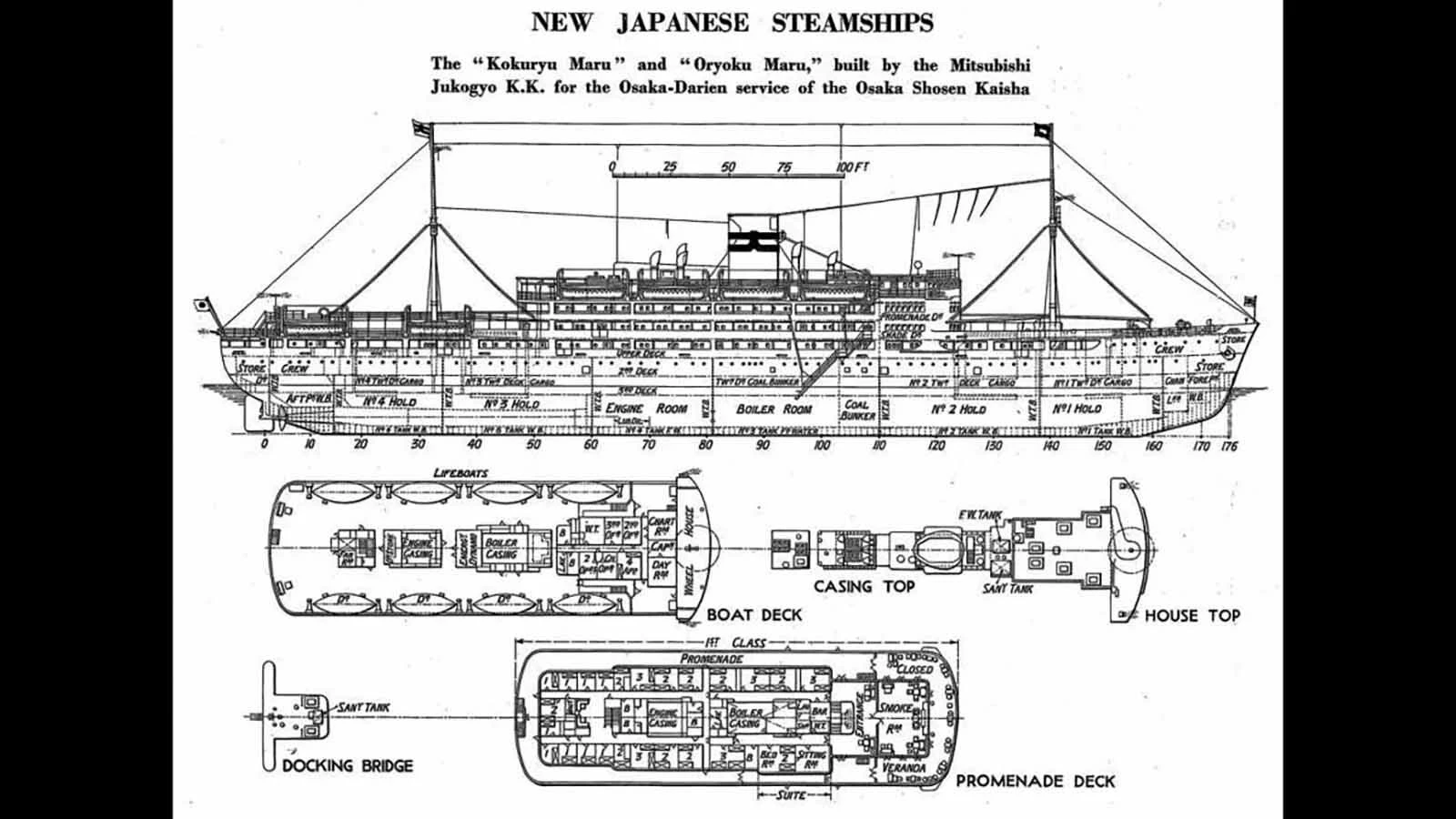
Waiting For Rescue Or Death
Another American soldier, Lt. Col. Curtis Beecher, was in the forward hold which had just recently transported horses and had never been cleaned.
Within moments, the 700 men crammed into the hold were drenched in sweat and, already weak from two years of imprisonment, began to go mad.
A dozen men, crazed by thirst, went berserk; they slashed at the throats and wrists of companions to suck blood. The panic turned the hold into bedlam.
Men began to drop dead, some silently while others thrashed wildly.
When the bombing from the Allies began on the unmarked ship, many of the POWs on board cheered. Over the deafening roar of the attacks, men prayed and waited for rescue or death.
As the temperature reached 110 degrees, riots again erupted, according to Toland.
Men collided with one another in the dark, slipping and falling in their own feces. The sick were trampled, and wild, deadly fights erupted. Men dropped to their knees like animals to lap up sewage running in open drains.
When the ship was sinking, men escaped the hull by jumping into the sea. Skardon described how a bomb killed many of the men in the rear hold with him while he crawled over their bodies to reach the deck.
“Those men saved my life,” Skardon said, explaining that they had taken the brunt of the bomb and he was able to escape.
Goldtrap was not so fortunate.
He was either one of those killed in the rear hold by suffocation, murder or the bombing. Another possibility is that Goldtrap made it into the sea and was one of the 55 soldiers who were either shot for trying to escape or drowned.
His life that had been so promising in Wyoming had ended brutally with an estimated 21,000 other POWs lost in the hell ships.
A West Point Graduate And Proud Casperite
As a teenager, Goldtrap enrolled in the Citizens’ Military Training Camp at Fort Russel and then served in the Wyoming National Guard before heading off to the U.S. Military Academy at West Point.
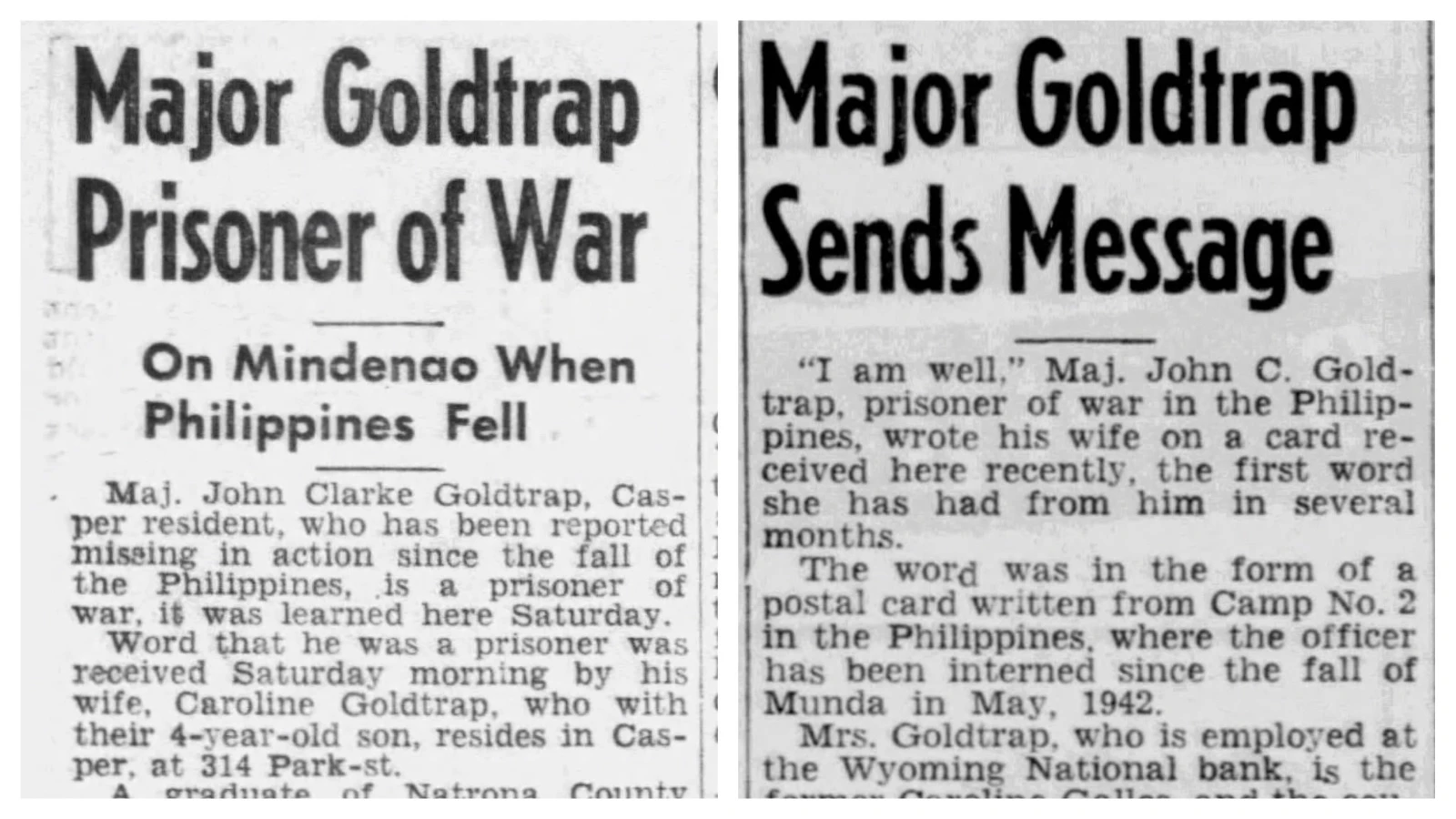
Goldtrap had a promising military career ahead of him and often appeared with his wife, Caroline, in the social section of the Casper newspaper. They were also the proud parents of a little boy.
Goldtrap served at Fort Francis E. Warren before heading off to Infantry School.
On June 1940, the young officer sailed to the Philippine Islands and joined the 57th Infantry Regiment, the Philippines Scouts. His wife and son returned to live with her father in Casper to wait for Goldtrap's return home.
Then on May 7, 1942, Goldtrap was reported missing in action following the fall of Mindanao.
He was subsequently confirmed as a Japanese prisoner of war and survived more than two and a half years in enemy hands.
His wife received messages saying that he was well, and another serviceman saw him alive in June 1944.
Six months later, as the Japanese attempted to move him to Japan, Goldtrap was declared dead after the Oryoku Maru was sunk.
According to his personnel records, attacks on these POW transports ultimately resulted in a series of death notifications from the Japanese government through the International Red Cross, and some casualties were given up to five different dates of death at various locations during the transfer.
Witness accounts from surviving POWs offer detailed information for a handful of casualties, but the specific dates of loss or last-known locations for many of these POWs are based on the most recent reported date of death.
Although Goldtrap was reported to have died during the destruction of the Oryoku Maru on Dec. 15, 1944, no known eyewitness account has yet established precisely where or how he died, and his family was left wondering how he had met his fate.
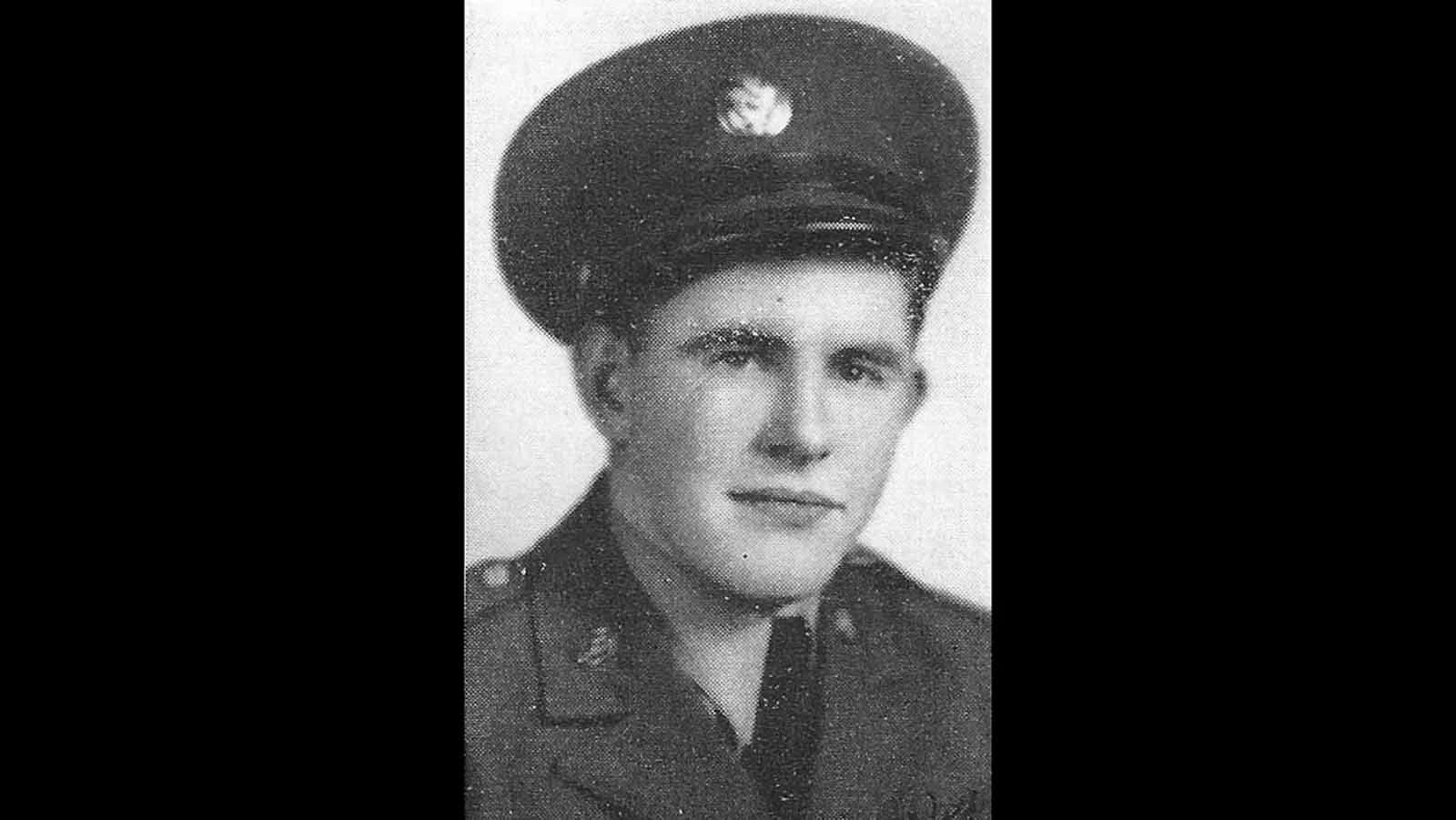
Staff Sgt. Joseph Henry Robertson of Rock Springs survived the sinking of the Oryoku Maru by swimming to shore, He endured another hellish eight months as a prisoner of war of the Japanese and nearly lost his own life to starvation. 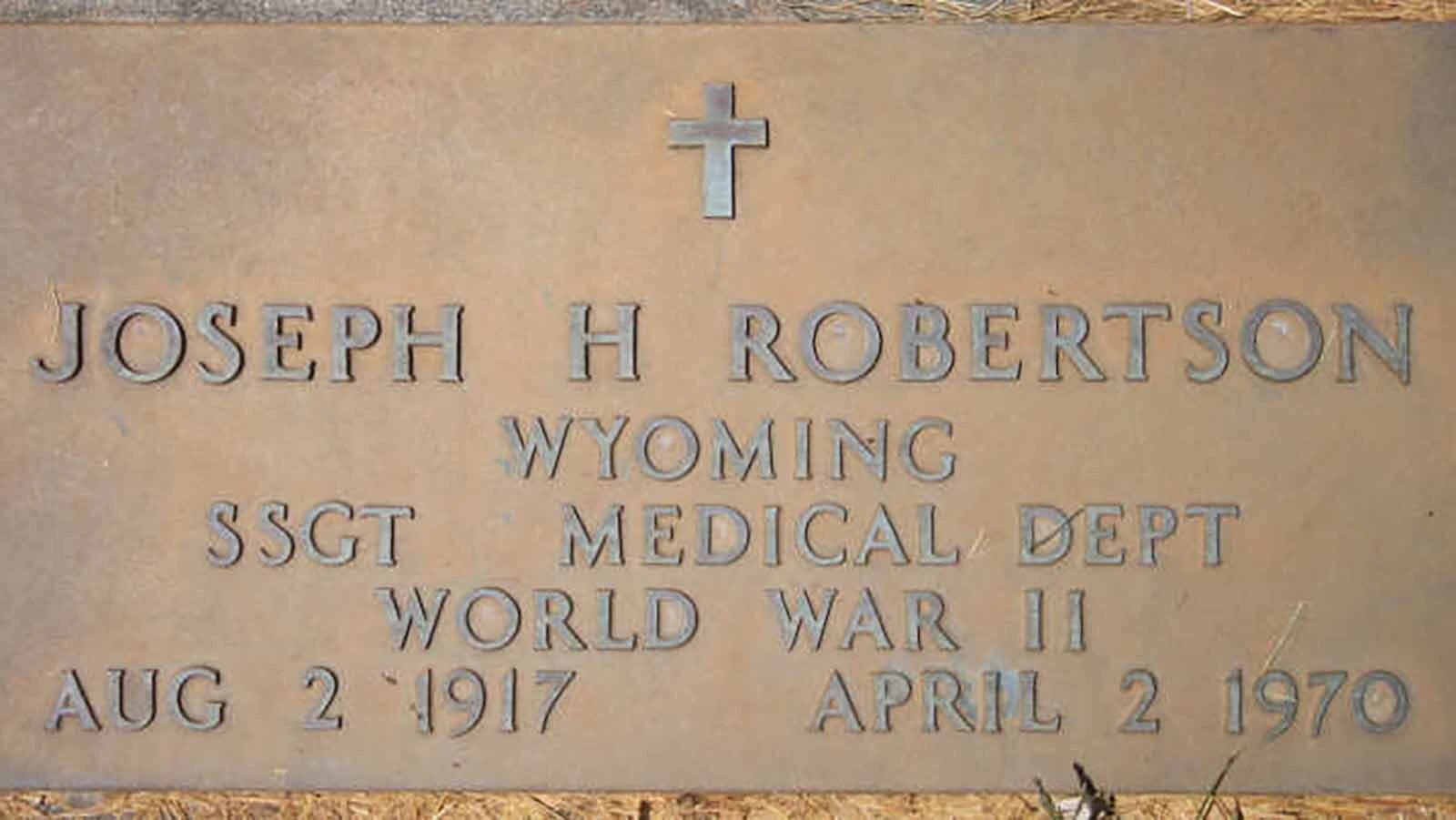
The Wyoming Survivor
Meanwhile, another Wyoming serviceman was aboard the Oroku Maru in a different hold.
Robertson, a medic, had been a captive for two years when the Oryoku Maru was bombed. Although Robertson was able to swim to shore, his torture was not over.
The Army said that survivors of the bombing were put aboard two other hell ships, the Enoura Maru and the Brazil Maru, to continue on to Japan.
While anchored in Takao Harbor in Formosa (present-day Taiwan), the Enoura Maru was attacked by Allied aircraft from the USS Hornet (CV 8). Survivors of the Enoura Maru bombing were loaded onto the Brazil Maru, which reached Japan on Jan. 30, 1945.
As a result of these incidents, many Allied POWs, such as Goldtrap, were lost at sea between the Philippines and Taiwan, while anchored in Taiwan, at sea between Taiwan and Japan, and in Japan.
When Robertson was finally freed two years later, he gave his sworn testimony at F.E. Warren.
It was prepared for the War Crimes Office in connection with Japanese naval medical officer Satoru Nakazawa and conditions at Nichols Field, Las Piñas and Bilibid Prison.
During his war crime affidavit debriefing, Robertson said that he was placed on another hell ship after swimming to shore.
He suffered in the cramped conditions for two months before reaching Japan, where he was tortured and nearly went blind from lack of food.
According to his obituary, Robertson had enlisted on Jan. 30, 1940, at Ft. Douglas, Utah. He was stationed in Bataan as a surgical technician with the Army medical detachment at General Hospital No. 1.
On April 10, 1942, he and companions made their way to Corregidor, where they stayed until it fell to the Japanese May 6, 1942.
After capture, he was sent to Bilibed in Manila and then to Cabanatuan, a main Japanese prison camp, where he was held 58 days.
He then was sent to Nichols Field camp and was there until 1944, when he was returned to Bilibed for treatment of his eyes, as his vision was impaired because of a lack of food.
Roberston returned home to his wife, Alice, in Rocks Springs where he worked for the next 22 years as an auto body shop operator.
The couple had three sons — Joe, Vernon and Richard — when Robertson died unexpectedly after one day of being ill. He was 52 and proud of his service to the end.

Recovering Our Missing
The Department of the Army lists Goldtrap’s case as an “active pursuit.”
Official records state “that Goldtrap was reportedly killed on Dec. 15, 1944, during the attack on the Oryoku Maru; however, these reports often involve information solely furnished by enemy governments.”
With so many unanswered questions of what happened to the young Casper officer and the other Americans declared dead on the Oroku Maru, the DPAA said it will continue to search for the missing servicemen.
The latest search effort is their largest to date on the Oroku Maru.
“This mission represents our solemn commitment to provide the fullest possible accounting to families and the nation,” said U.S. Army Capt. Barrett Breland, DPAA team leader for the Oryoku Maru recovery on their official website.
“We carry this responsibility with compassion and integrity, and our success depends on strong partnerships and unwavering respect for the fallen.”
For his service in the Philippines, Goldtrap received the Silver Star, Bronze Star and Purple Heart. He was also promoted posthumously from major to the rank of lieutenant colonel. The promotion was an honor but not a military decoration.
Goldtrap has a marker at Arlington Cemetery in Washington, D.C., and there is now the possibility Goldtrap may have more than just a memorial as searchers look for answers of what happened to the Americans who died on the hell ship Oryoku Maru.
Jackie Dorothy can be reached at jackie@cowboystatedaily.com.


