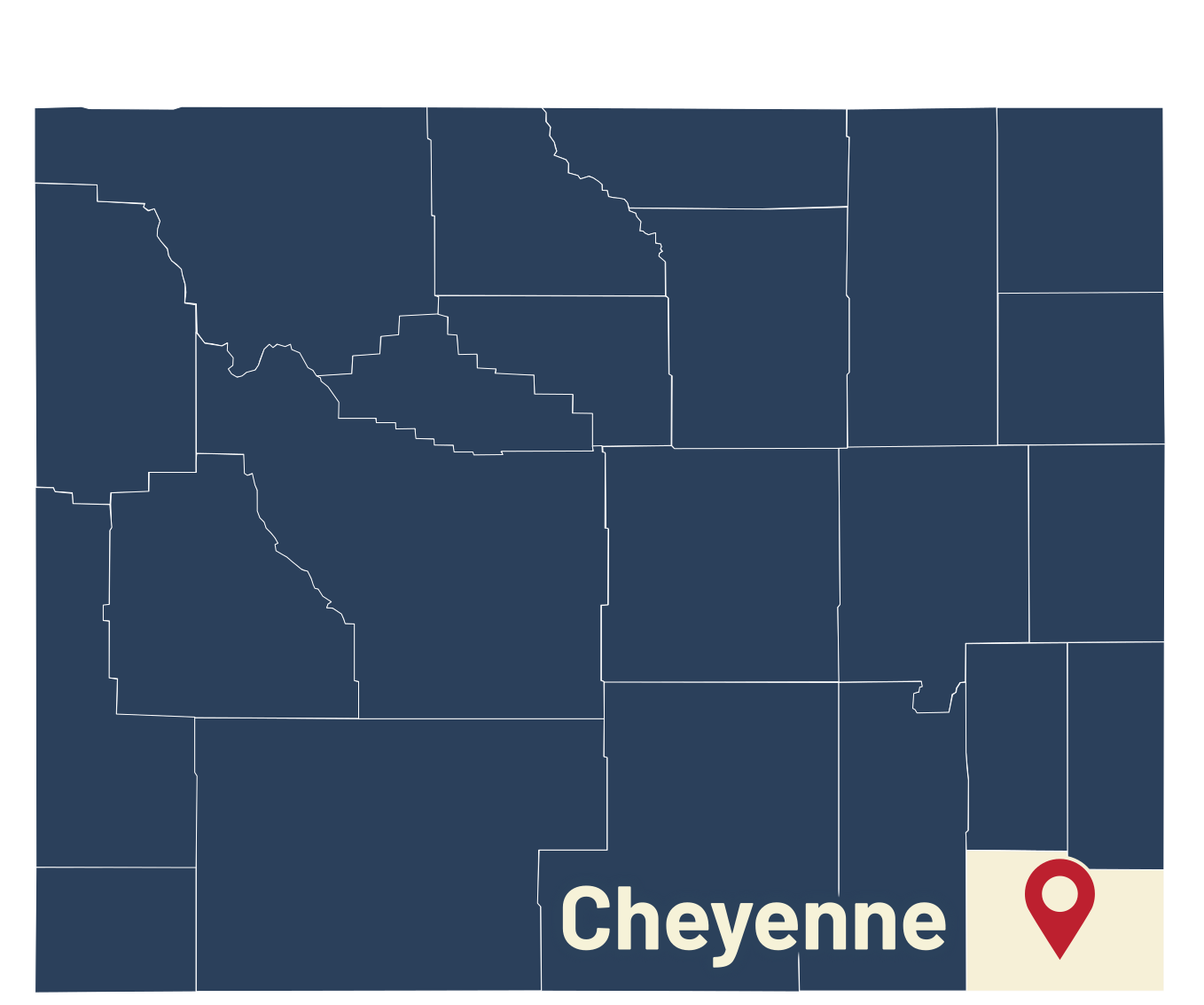
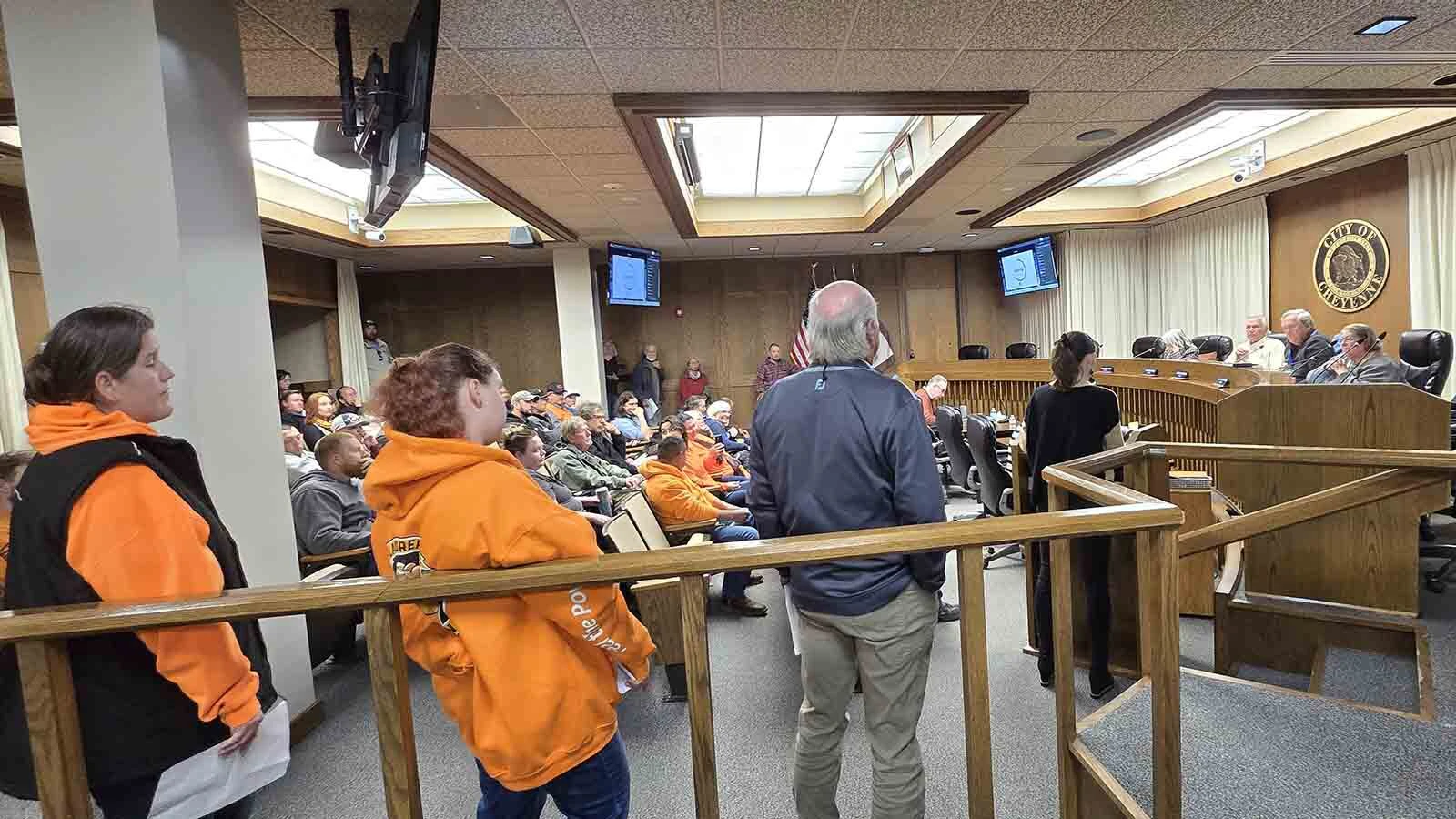
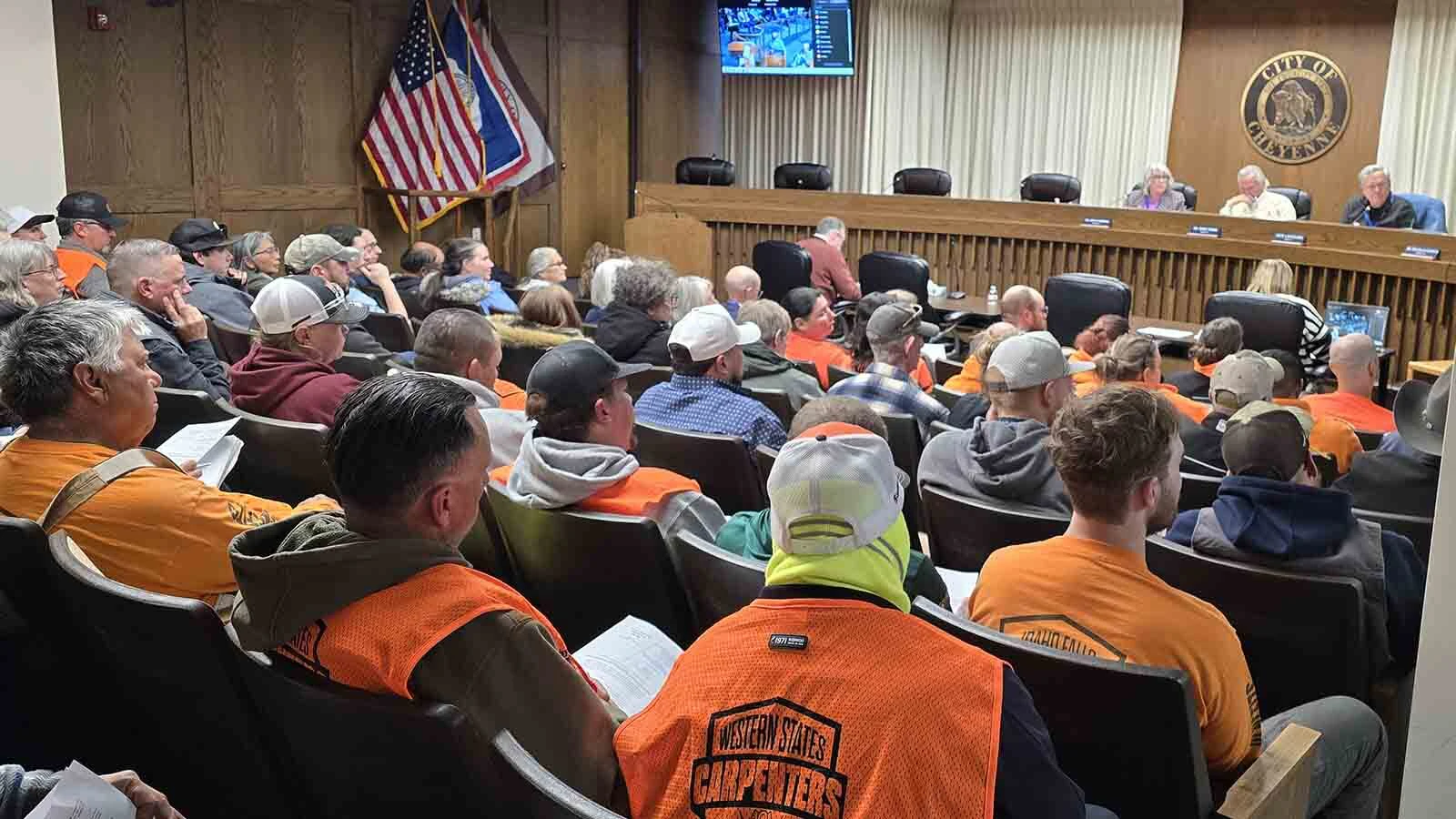
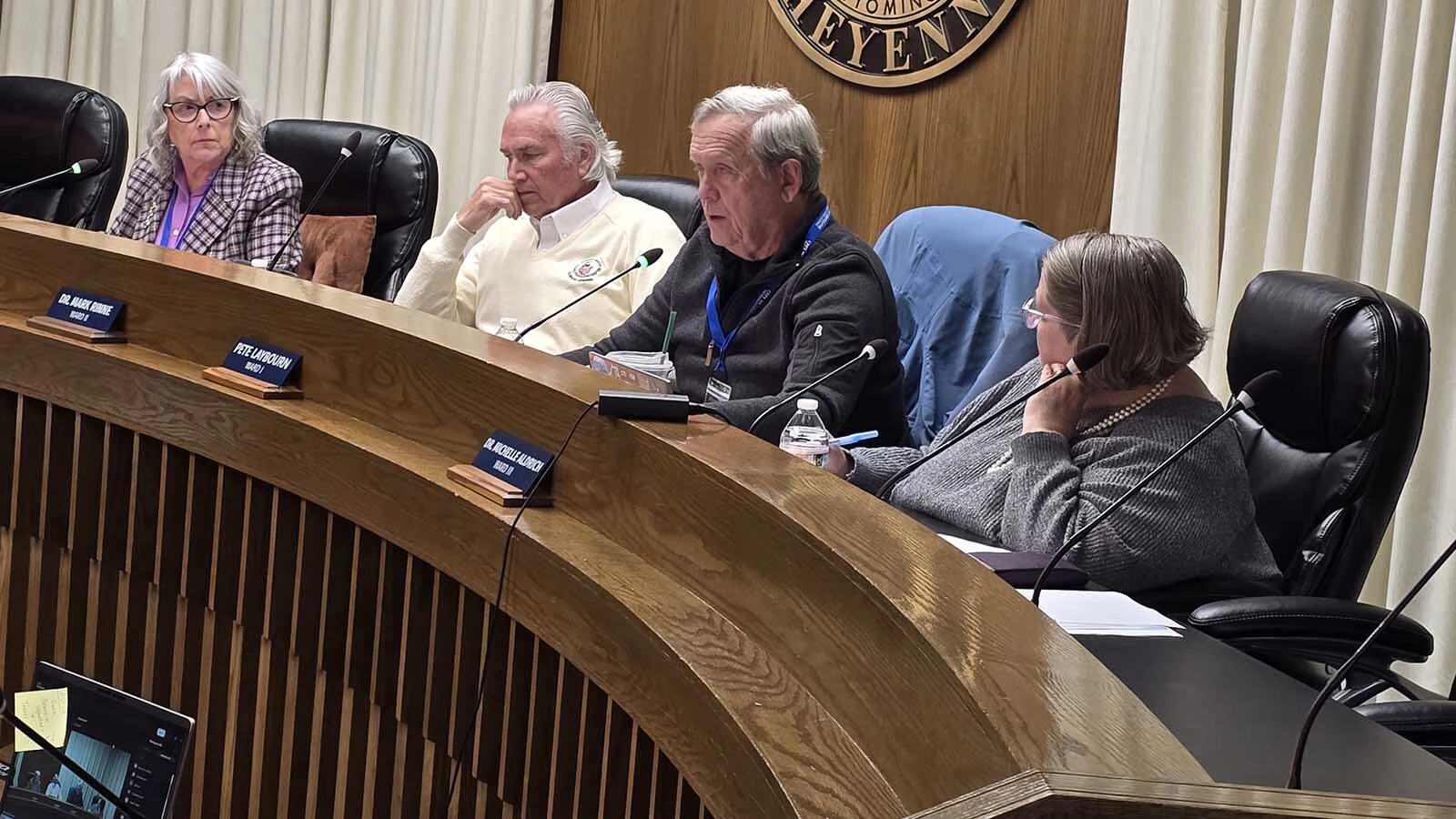
CHEYENNE — A proposed 12-month moratorium on new data centers will head back to the Cheyenne City Council without a recommendation after an emotionally charged, four-hour hearing before the city’s Public Service Committee.
The committee’s Monday decision highlights deep divisions over the rapid growth of data centers in Cheyenne, where union workers credit the industry with life-changing jobs, while nearby residents worry about water use, noise, rising electricity demand and the pace of development.
Because the committee only makes recommendations, a final decision on the moratorium still rests with the full City Council. That body could still vote to enact a moratorium when it meets to consider the measure next week.
If it then dies for lack of a second, a moratorium would be dead in Cheyenne — at least for now.
That won’t, however, end debate over data centers.
At least two state legislators say the clash over the developments has exposed issues that require state-level action.
“The conversation is not over,” Rep. Daniel Singh, R-Cheyenne, told Cowboy State Daily. “The way I see it, the moratorium was like bringing a gun to the table, and we’ve removed the gun from the table, but we still have a lot to talk about.”
Meanwhile, Sen. Cale Case, R-Lander, told Cowboy State Daily that Wyoming has tilted so far toward tax breaks and incentives for large outside companies that it amounts to a kind of “modern colonialism.”
Wyoming’s lack of corporate income tax and generous exemptions, combined with light oversight, means the state is “giving away the store” when it comes to its own land, wind, and infrastructure.
Case wants to see tax changes that will capture better value for Wyomingites, whether the infrastructure in question is a data center, wind turbine, or something else.
Moratorium Rationale
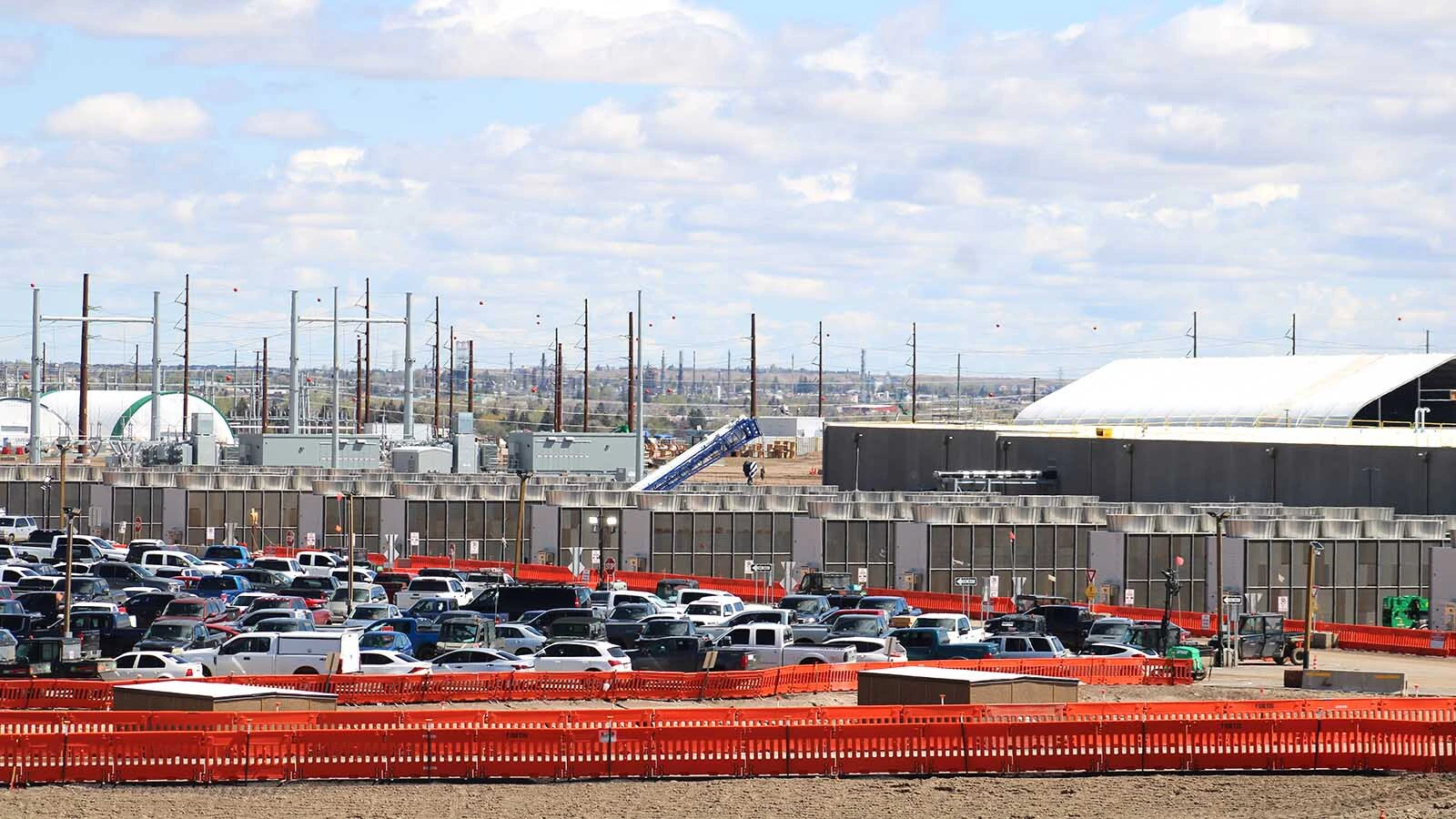
Cheyenne’s data center moratorium was proposed by Councilman Mark Moody, who framed it as a constituent-led, temporary brake for something critics feel has become a runaway train.
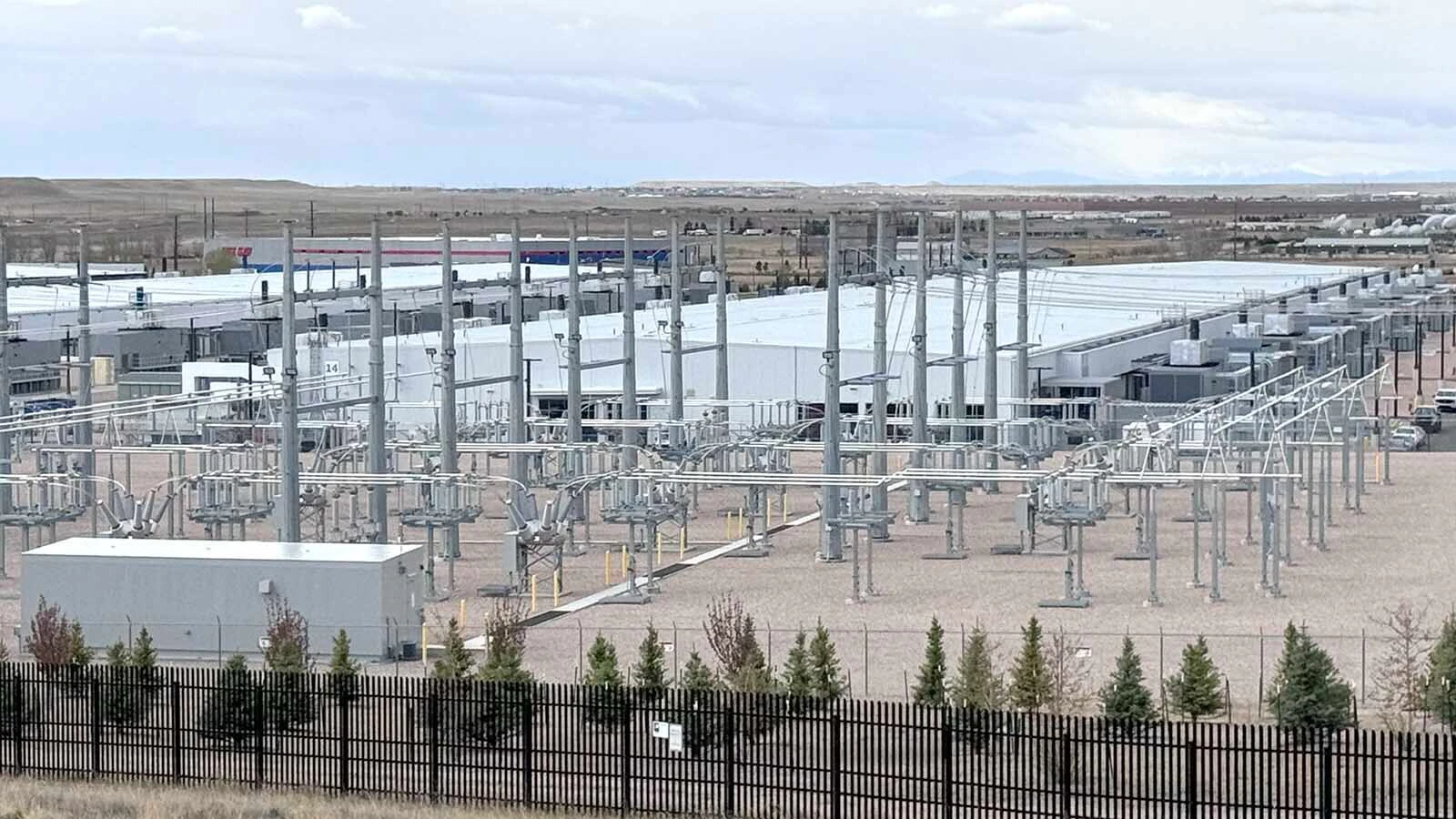
There are as many as 70 data center projects of various sizes and stages of development are potentially pegged for the Cheyenne area, Councilman Larry Wolfe has told Cowboy State Daily.
“There are petitions circulating asking the council to adopt this,” he said. “It’s a bipartisan issue … and there have not been foreign adversaries involved in this.
"I think that’s just a distraction from the main issue at hand. The people involved in circulating petitions are just concerned citizens taking part in what our constitutional republic involves.”
Data centers are needed for national and economic security, Moody acknowledged, but that doesn’t mean the city can’t take some time to think about the long-term impact of data center development in Cheyenne.
“How many can we sustain?” he said. “That’s what this is looking into.”
Moody’s proposed moratorium would not touch existing data centers or those already under construction.
It will provide time for city staff to study environmental impact, electricity rates and grid strain, water usage, and broader effects on health, safety and welfare, he said.
Moody also argued that Cheyenne’s data center buildout is no longer a small, incremental force. Numbers wise, if Laramie County reaches 70 data centers, that would mean its per capita density of facilities surpasses that of Loudoun County, Virginia.
“I can’t verify 70,” Moody added. “But I can verify 40 to 43, which has been mentioned by numerous sources.”
That kind of density could not fail to have some impacts for Cheyenne’s water and available power, Moody suggested, and deserves a closer look.
“I know that modern data centers use the closed-loop system,” he said, referring to newer cooling systems that recycle water or use other water-frugal approaches. “I understand that. But we have to look at long-term impacts.”
Issues Outside The City’s Scope
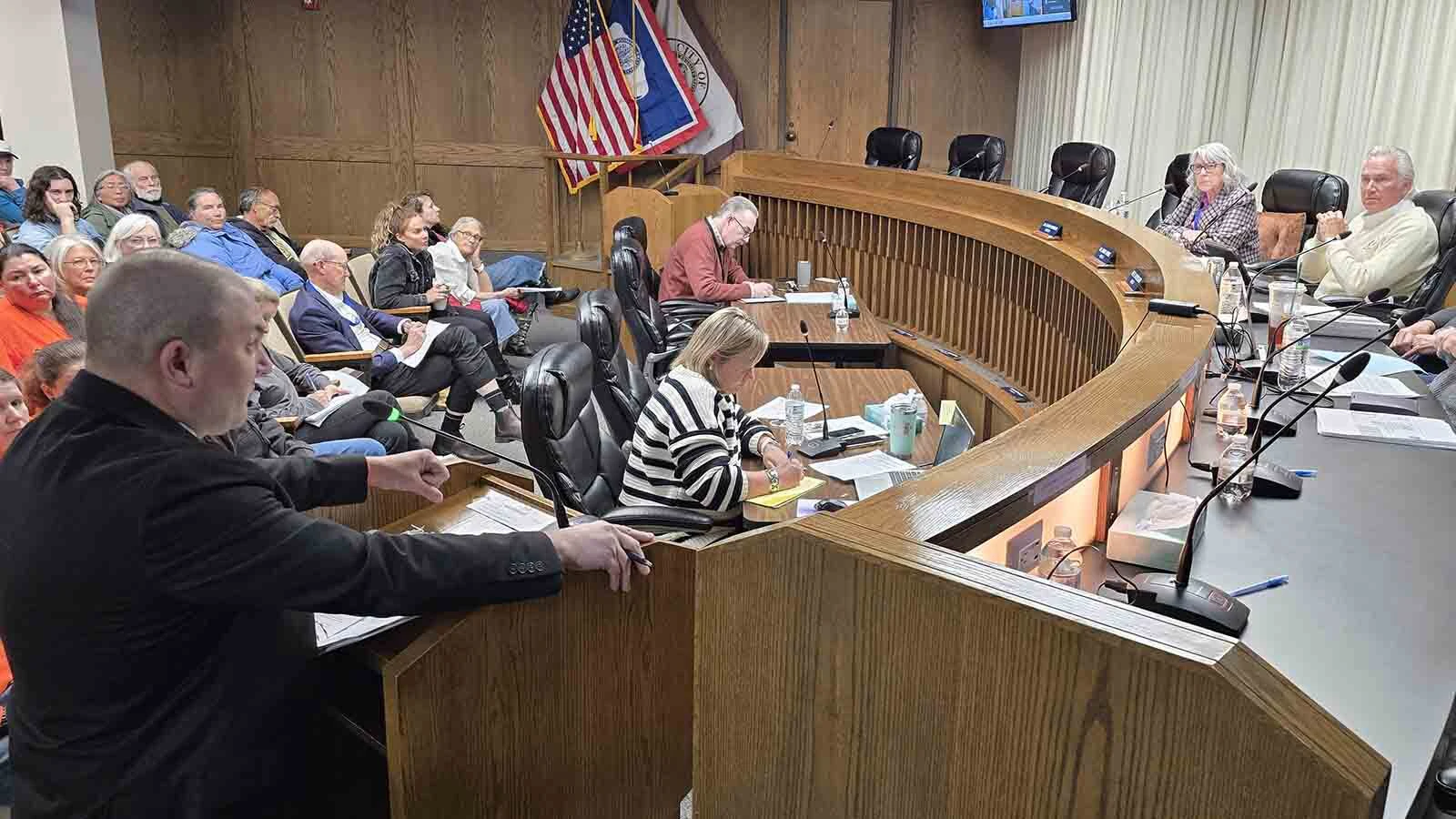
Mayor Patrick Collins said he hadn’t intended to testify during the committee’s Monday meeting, but did so when asked to provide the city’s staff report.
Collins said the moratorium ordinance is asking city staff to address issues that are above their pay grade.
“The ordinance asks for a study on the impact of data centers on the environment, on our electric rates, on our power grid, on water usage, and factors like health, safety and welfare of our residents,” he said. “So, as I looked at those over the last few days, and I looked at the environmental impacts, and asking staff, I don’t think that staff has the expertise to do an environmental study.”
As far as electric rates, Collins went back and looked at those.
There was one rate case in 2022 for infrastructure and another in 2014, both of which the mayor said were driven by overall growth in Cheyenne, not data centers.
“At the same time, we had the power tariff in place that prevents utilities from passing data center capital investments on to our residents,” Collins said. “It asked about the power grid. I did a little research on the power grid and I learned it’s really a shared responsibility.”
Black Hills Energy is responsible for the reliable distribution of electricity to homes and businesses, working in cooperation with entities like the North American Electric Reliability Corp., Federal Energy Regulatory Commission, and the Wyoming Public Service Commission.
“When I look at the grid, I’m not sure I see a place for the City Council in that process,” Collins said. “It’s regulated above our pay grade.”
As far as water usage, Collins said there’s no need to speculate. The city has been tracking its water usage and can extrapolate that data to predict future water use.
“We know that our existing data centers use 200 acre-feet of water annually, and that the original data centers used an adaptive cooling technology that was more water intensive,” he said. “All of our data centers combined today use 1.48% of all of our water usage, as sold by the Board of Public Utilities.”
Data centers, meanwhile, continue to improve their cooling processes to use less and less water, Collins added.
“We’re using today closed-loop systems, which reduce water consumption,” he said. “The examples we’ve gotten from two data centers currently being built are 2 acre-feet of water to charge the system. That water is recirculated for up to six years.
"And we also have new air-cooled systems where no water is used at all in the cooling.”
There’s a similar evolution going on with power, Collins added, with data centers planning “bring-your-own” power strategies. Those have also been designed for frugal water use.
“This project that is ongoing in south Cheyenne today will be composed of three different kinds of generation,” Collins said. “One is a fuel cell. They use natural gas, and I’m not quite sure — I call it magic because I don’t understand how it works — but the fuel goes through a filter type of device that creates electricity.”
The byproducts there are carbon dioxide and water vapor.
“The CO2 will be sequestered, and there’s no water at all used in the process of creating that electricity,” Collins said. “The second part will be simple gas turbines where natural gas is burned and the high pressure of expanding gas directly spins the turbine blades. No water is used in that process either.”
The third phase are combined cycle turbines, which will include a closed loop system with water that’s heated to boiling to turn a secondary turbine and generate electricity.
“The water is recycled and used over and over and over again,” Collins said. “So I don’t know what’s left for us to study when it comes to water.
"We have a pretty good handle on historic usage and our Board of Public Utilities has studied it. They have a pretty good idea of what the future looks like with new technologies.”

Water Is Sacred In The West
Water was a top concern cited by those who support the moratorium.
“I was born in Wyoming and I’ve been here for 83 years,” said a woman identifying herself as Nancy Sunde. “In that length of time, I’ve seen many, many changes. A lot of them weren’t for the better.”
As a child, Sunde had what she called “running water.”
“We ran out and we pumped it and we ran back in,” she said with a chuckle. “So, I learned at a very early age to be very conservative with water. And I still am. Water is for Wyoming … the blood of life.”
People can live 14 weeks without food, but only one week without water, she added.
“You cannot drink data,” she said. “You cannot grow food on data. So my suggestion would be to think about what is really necessary and what really will keep us alive, and what we’re passing on to a future generation.”
Others pushed back on the city’s 1.48% usage figure, asking how often closed-loop systems are really flushed and refilled. Some wanted to know where the chemically treated water used in a closed-loop system goes when the system is recharged.
Still others mentioned already-declining groundwater tables in parts of Laramie County and wanted to know about the compounding effects of additional facilities on that situation.
“My name is Ben Marley,” one resident said. “I live about a mile and a half from a crypto mining facility, and when I put my one good ear down to the pillow at night, I can hear that thing. Because sound not only travels through the air, it travels through the ground as well.”
Marley also worries that heat coming off data centers will be great enough to affect rainfall, resulting in evaporation before it can fall to the ground.
Process Needs More Transparency
Lack of transparency was also a chord struck by many of the commenters.
“My name is Patricia McCoy … and I’m standing here today alongside many of my neighbors because we are demanding transparency, accountability, and a seat at our own table,” she said. “For months, the citizens of Cheyenne have been subjected to a slow drip of information.
"We watch as massive tracts of land, like the 1,200-acre Cox Ranch property, are quietly annexed or rezoned under generic light industrial labors,” she said. "Only after the ink is practically dry do we discover that these deals were cut behind closed doors using non-disclosure agreements.”
That lack of transparency, McCoy added, extended in some cases to councilmen, who were so out of the loop they were left “scratching their heads” and asking “basic questions.”
“When the very representatives who vet these projects … are finding out details at the exact same time as the general public, the system is fundamentally broken,” McCoy said.
She also said that non-disclosure agreements (NDAs) “have no place in local government. When administration officials sign NDAs with multibillion-dollar tech corporations, you aren’t just blinding the public you’re blinding our legislative body. You’re choosing to represent a corporate bottom line over the citizens who put you in office.”
McCoy also took issue with flyers being circulated by Cheyenne LEADS, which she said misrepresent public concerns as misinformation or coming from foreign governments.
“I’ve lived here 18 years. Ain’t nobody paying me,” she said. "We are not misinformed. We are paying attention. And clearly we are doing more homework than the people cutting these deals.
“We are here today to strongly support the 12-month moratorium on new data center approvals,” she continued. “A pause is a responsible protective measure. It gives our city staff and you, our council members, the necessary time to study the cumulative impacts on our utility rates, groundwater, and infrastructure before our resources are completely spoken for.”
Workers Say Pause Is Wrong Approach
Opponents of the moratorium didn’t claim there are no risks, and some agreed that more oversight, better communication, and tighter guardrails are needed.
But they argued a 12-month pause would do more harm than good to workers and their families.
“These jobs are not just numbers on a development report,” Crystal Edmonds-Carter said. “They are opportunities that have changed lives. They’re putting single mothers (to work) … and allowing parents to stay close to their children and families while still earning a strong living.”
The are high-paying jobs that offer health insurance and other benefits, along with stability that can be hard to find.
“For a lot of families, these jobs mean being able to afford rent, groceries, child care, and the rising cost of utility bills,” she said. “I understand the concerns surrounding data centers. As a resident, I also worry about infrastructure, water, usage, energy demands and the rising cost of utilities.
"Those concerns are real and they deserve serious attention.”
Checks and balances are absolutely needed to ensure facilities are built responsibly and operated the way companies have promised, she added. But not in a way that slows down jobs and puts people’s livelihoods at risk.
“We put our trust in our elected officials and governing bodies to create strong relationships, enforce accountability, and protect the community,” she said. “The answer should not be stopping opportunity altogether. The answer is smart oversight, responsible growth, and clear standards that protect residents while allowing people to keep working.”
Debate Eye-Opening For State Lawmakers
While a moratorium faces an uncertain future in Cheyenne, state lawmakers heard a much wider debate in the comments people were making, ranging from water and power use to an uneasy sense that there’s a “surveillance” society that’s commercializing data in ways that take unfair advantage of consumers.
“All of the problems that people were addressing, everything from ratepayers when it comes to electricity to questions of environmental quality like sound and light pollution, and even the water issue, they all kind of stem down to state statute, policy-type questions,” Singh said. “So I think if we really want to solve these problems, it’ll take some sort of state solution.”
Data privacy laws, meanwhile, have not yet found much traction in Wyoming, Case said, adding that the way commercial interests are commoditizing people’s data has become “stunning.”
“Every place you go to buy something, they want you to be part of their membership,” Case said. “You have to give your phone number at the grocery store as well as your email so you can get targeted. And now with geo-targeting, they can hone in on your phone, where you live. People talked about being worried that when you got a vaccine the government was putting microchips in you?
"You carry the microchip around in your pocket,” he continued. “It’s crazy. It’s stunning how you’re targeted and marketed. All of these algorithms that figure out what you’re looking at.”
Renée Jean can be reached at renee@cowboystatedaily.com.