
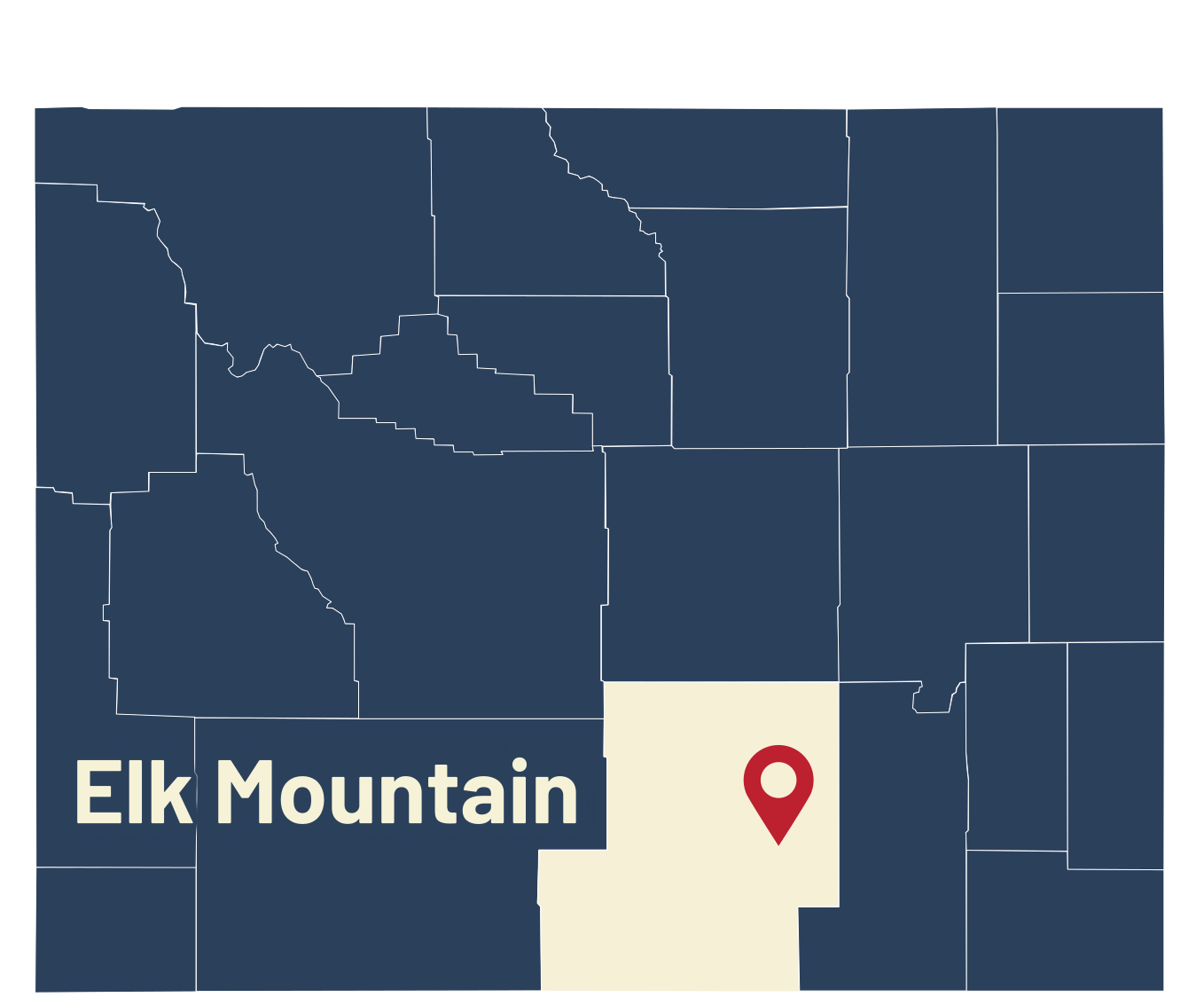
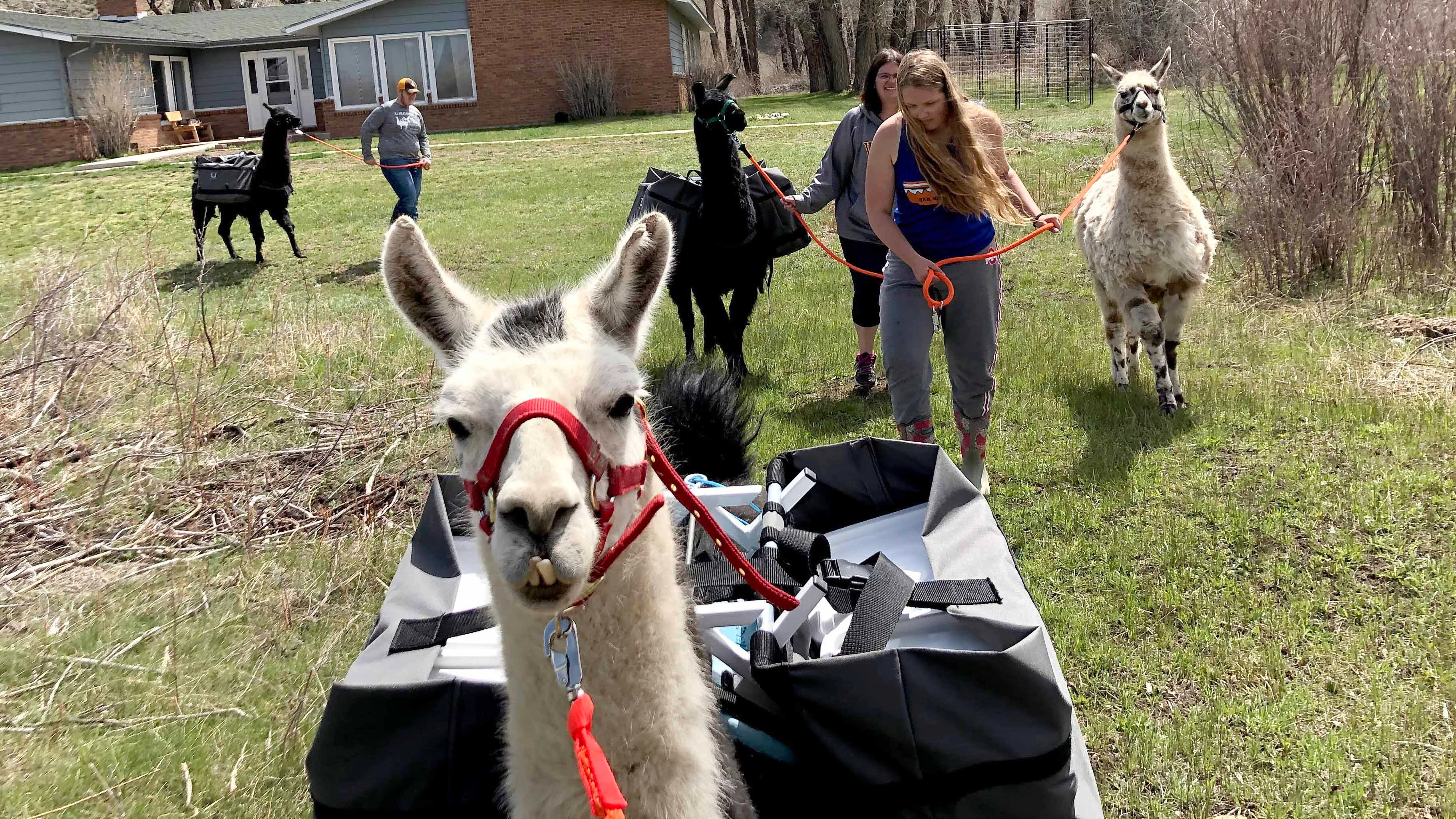
Steve Priest grew up on a farm in Ohio, but even he didn’t know what he was in for when his daughter settled on llamas for an FFA project.
It was supposed to be a short-lived livestock experiment.
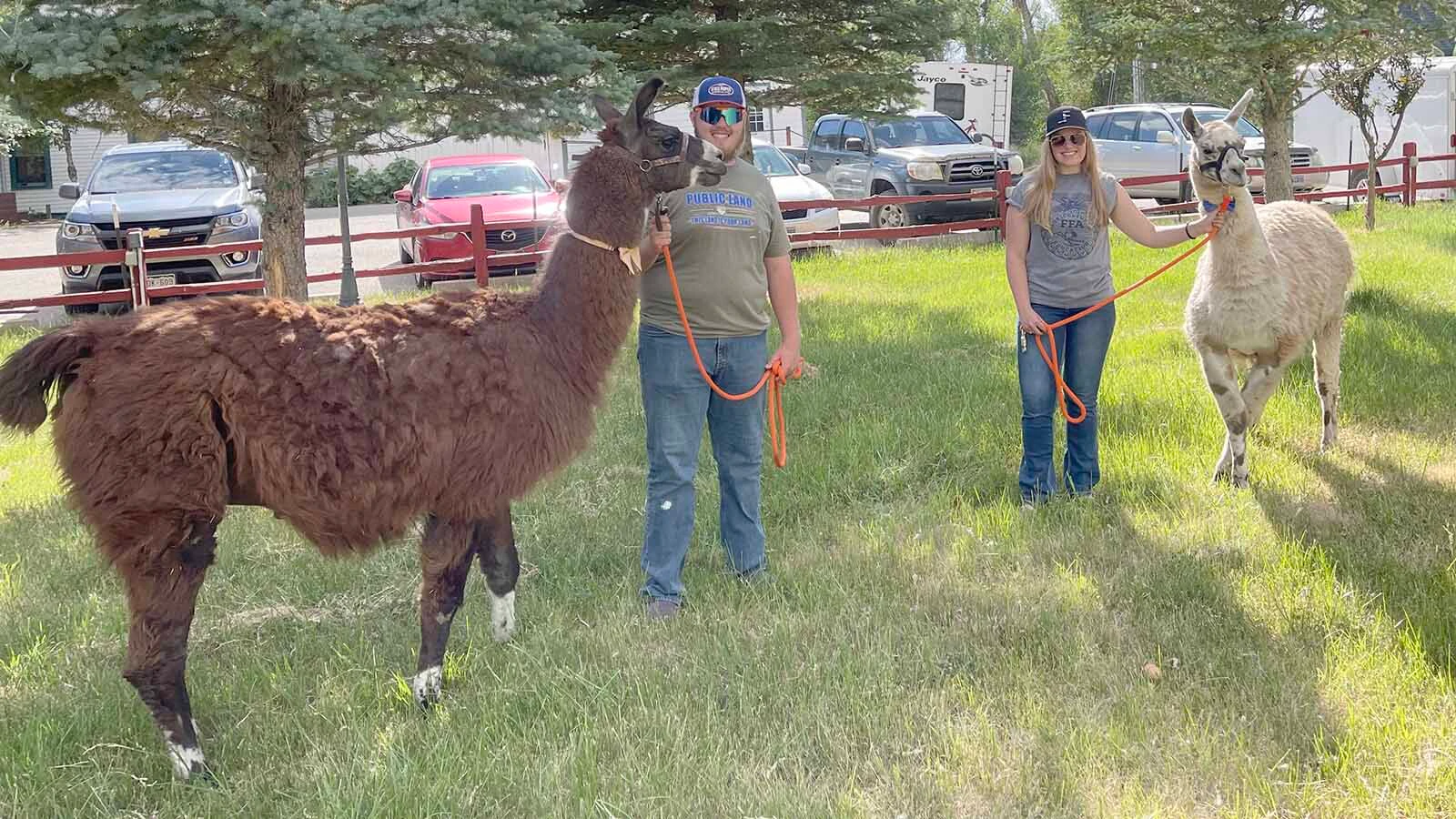
Instead, it’s become a herd of long-necked pack animals that now escort Elk Mountain visitors on farm tours, appear at parties and holiday events, and could soon return to Wyoming trails for guided treks.
“They look like something that came out of a Dr. Seuss book with the long necks and everything,” Priest said with a chuckle. “They’re in the camel family, so they look different than a lot of livestock animals people have seen.”
And that’s part of their charm at any celebration.
A goofy-necked llama has a way of making people smile. It’s all giggles and good feelings from there.
That’s made Priest’s llamas unexpectedly cool party guests in Elk Mountain. They’ve also become a quirky tourism draw for visitors of the nearby Elk Mountain Hotel.
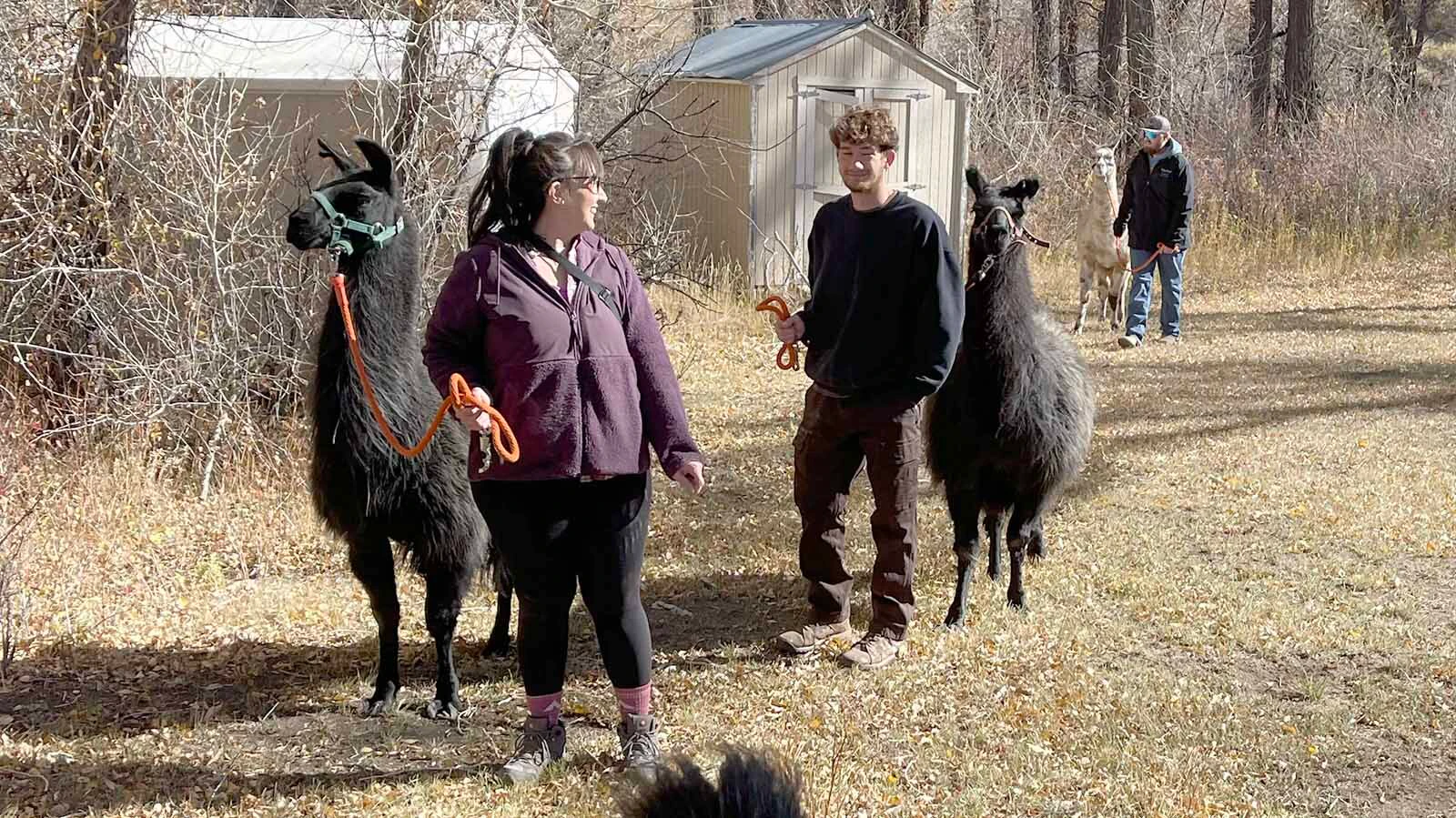
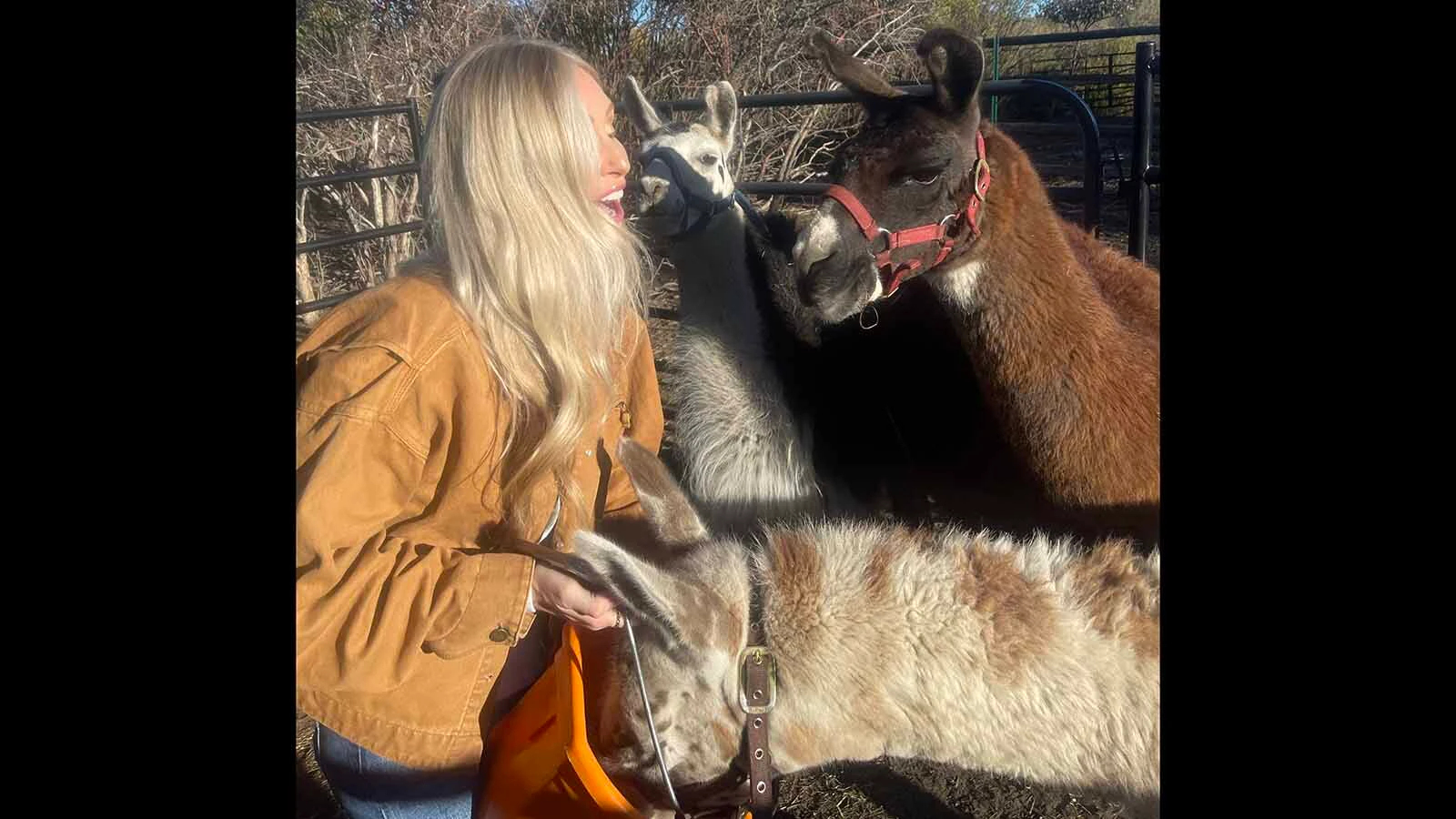
“A lot of people who stay at the hotel will come over and do farm tours,” he said. “They’ll lead the llamas around, pet them, feed them and play with them.”
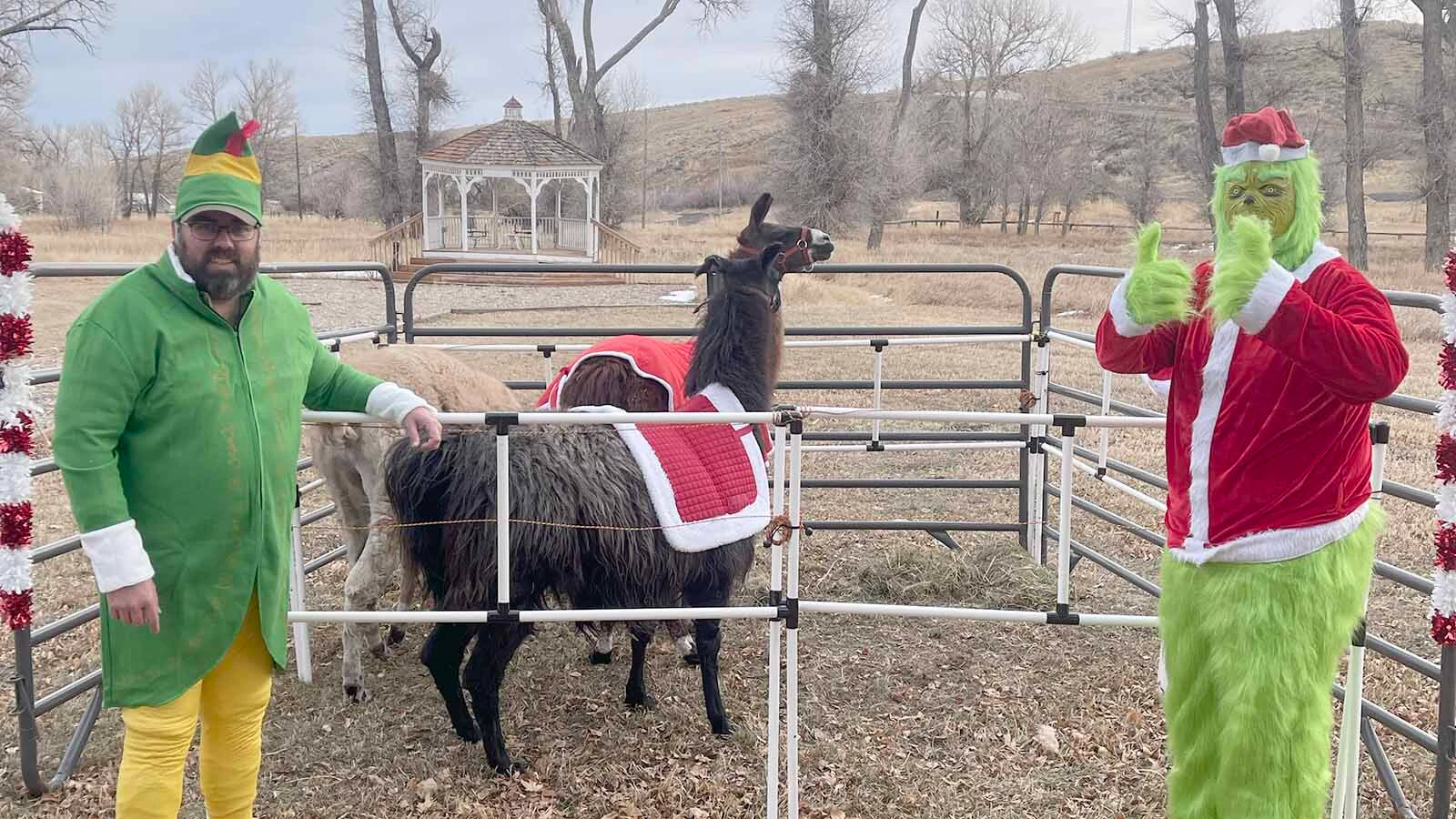
Llamas are good sports about it all — even when there’s some dress-up involved.
“They’ll wear hats,” Priest said. “Like we’ve taken them over to the hotel and they do a breakfast with Santa and they have quote-unquote costumes they wear — some that look like reindeer, some that look like elves, or whatever.”
Lions And Bears And ...
Llamas have a protective streak in them that makes them effective at fending off predators. And that was about all Priest knew about llamas before his daughter’s FFA project.
He wasn’t sure how effective they would really be against Wyoming predators, but they quickly showed him — and he was impressed.
“We actually had a mountain lion get in with them, and one of our female llamas fought it off,” he said. “They are very tough, very protective, and they’ve got some big guard instincts.”
He doesn’t believe they’d hold up against a grizzly bear, but so far black bears, too, have steered clear.
“When there’s a predator, they’ll make a sound that’s a cross between a horse and I don’t know what,” Priest said. “We’ve heard it a couple of times because there’s something back in the willows.”
That first call alerts everyone in the group of llamas to orient on the threat.
“I think there’s enough of them that they would band together and fight it if need be,” Priest said. “A grizzly bear could easily take them down, but the black bears are a little smaller … there’s enough (llamas) that (black bears) have just passed on by.”
Why One Llama Is Never Enough
One problem with llamas — which leads quickly to getting more llamas — is they’re herd animals. One lonely little llama is going to be unhappy if left to itself.
“So we started out with four,” Priest said.
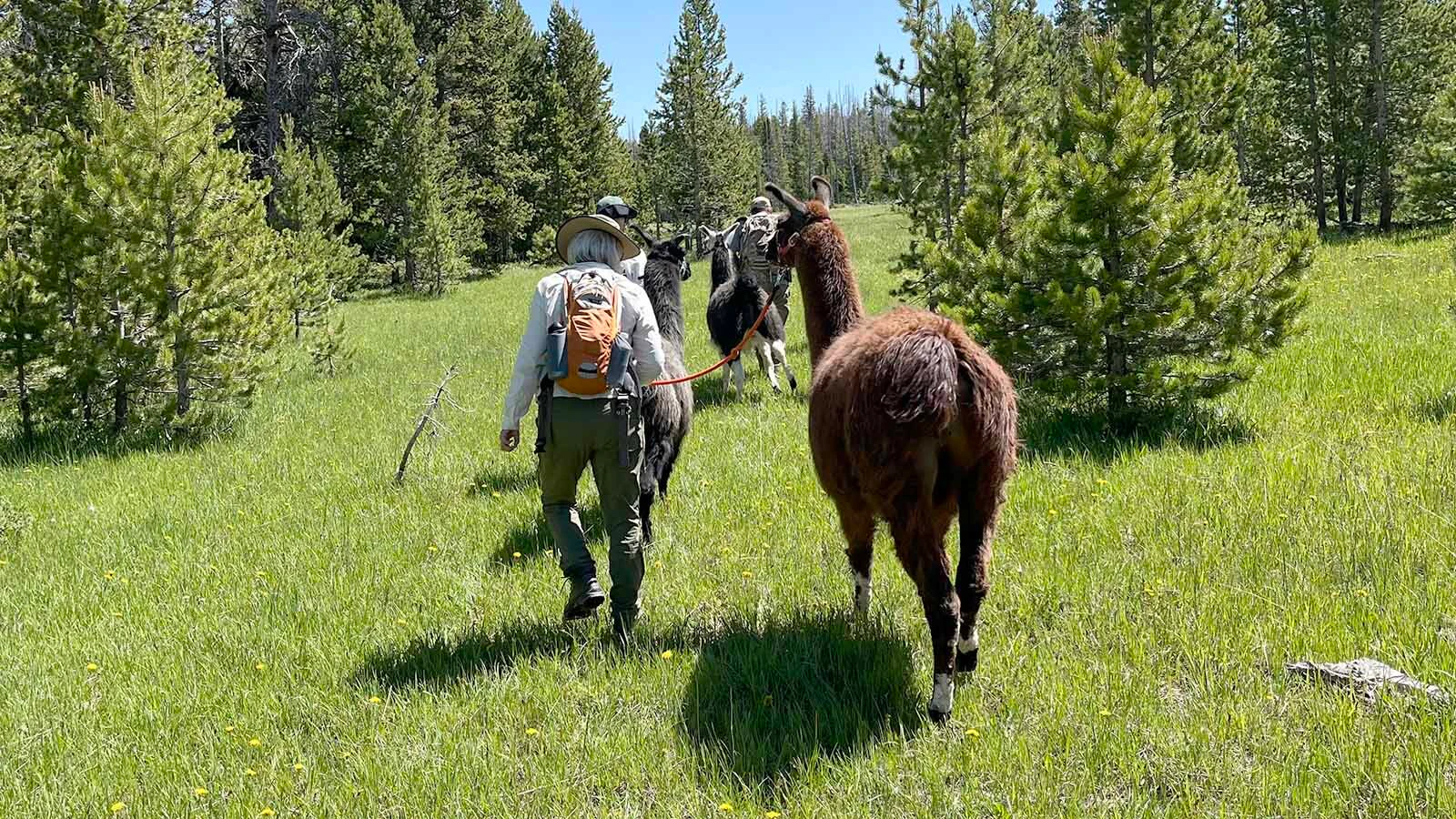
Then Priest’s son pointed out that llamas make great pack animals for hunting and hiking — a growing trend in Wyoming — so the family decided to get four more.
“One of them, Barb, was older and she ended up passing away at I think she was 20,” Priest said. “Our females are Peg and Linda and then our males are Peak, Boulder, Chris, and Kuzco.”
Now Priest is well on his way into a breeding program to grow his small llama herd — even though the daughter and son who started it all are no longer at home. They’ve both gone off to college. Priest’s daughter is studying occupational therapy while his son is working on an agriculture degree.
That makes the llama herd all Priest’s now, but he’s not worried.
“(My children) will go wherever life takes them,” he said. “That’s what I always tell them. Go wherever life takes you, and enjoy the ride.”
Priest is going to keep growing his llama herd, though he hasn’t decided just how big it should be.
“I’m just playing it by ear,” he said.
Llama Super Powers
Llamas have a chill and calming demeanor, one humans find catching. It’s one of the first traits Priest appreciated.
“I work in technology for my job,” he said. “And so the ability to just go unplug and take them and be in the outdoors, playing in the outdoors with them, is something I really enjoy.”
They are great hiking companions, Priest added.
“Their eyesight is so much better than ours,” he said. “Like, you’ll be walking and you won’t notice a deer that’s standing 200 yards out, because it’s frozen and not moving.”
The llamas notice it though, and freeze, with their eyes locked in that direction.
“Then you look over there and you’re like, ‘What are you looking at?’” Priest said. “Then it will move a bit and you’re like, ‘Oh I see what you’re looking at. There’s a deer over there.’”
Llamas can carry roughly 70 to 80 pounds, depending on their own weight, and Priest said they’re a little easier to take care of than other pack animals. Their diets aren’t as restricted as horses. They’ll browse woodier plants like thistle, sagebrush, and dandelions. They still require careful pasture management, because some ornamental and native plants can be toxic.
“Llamas aren’t necessarily as spooky as a horse, and they’ll go anywhere you can go,” Priest said. “You can’t ride them, just lead them, but they’ll follow you along and they’re really fun to have around.”
Wool And Whimsy
Ask Steve what the next five to 10 years with his llama herd look like, and he won’t unveil any grand business plan.
He talks in terms of keeping the llamas and enjoying them, sharing them with visitors, and being open to new ideas — like yoga with llamas if someone in Elk Mountain ever wants to teach it.
“They’re easygoing,” he said. “They would probably just come up and nuzzle people and bother them, because they think they’re going to get a treat while they’re doing yoga.”
Unlike alpacas, which are generally more reserved around human touch, Priest said his llamas don’t seem to mind hugs.
“They’ll come right up to people and let them hug on them and love them,” Priest said. “They’re just a very, very laid-back animal.”
Priest eventually hopes to offer hiking treks in Elk Mountain with his llamas again, but now his focus is on building a healthy, strong herd for hunting with family and friends, as well as funny farm tours and parties.
The side gig doesn’t pay the mortgage, Priest acknowledged. But it helps cover the hay and grain, and it’s bringing tourists all over the country to his pasture for llama selfies.
He’s also taking the advice he gave his own children — going wherever the llamas in his life take him, and enjoying the ride with a string of long-necked, Dr. Seuss-looking pack animals.
Contact Renee Jean at renee@cowboystatedaily.com
Renée Jean can be reached at renee@cowboystatedaily.com.


