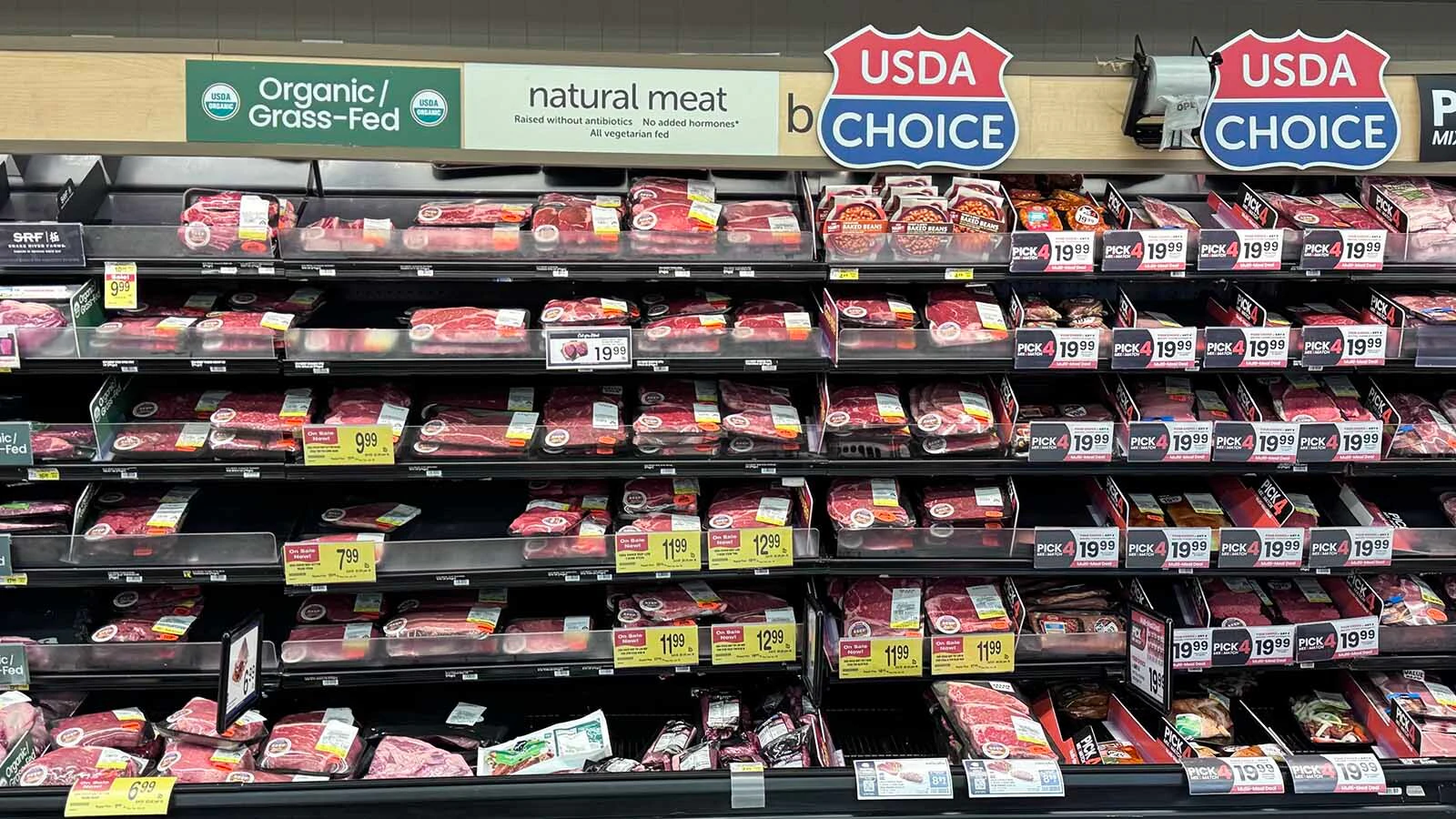
A mishmash of factors including drought are causing a historic cattle shortage that's led to a continuing tightened beef supply across the United States, which in turn has beef at record-high prices.
Yet people are still buying beef and showing a willingness to pay a higher price for it.
While the situation looks bleak now, Wyoming ranchers are optimistic — confident that herds will be rebuilt eventually and that, one of these days, it will rain
The U.S. is grappling with its smallest cattle inventory in decades, a shortage analysts expect will continue pushing prices higher through at least next year.
The U.S. Department of Agriculture reports 2027 prices are expected to be even higher because of continued limited supply.
Drought, rising production costs, an aging ranching population and concerns about livestock disease have combined to make rebuilding the nation's herd a slow and expensive proposition.
Drought the No. 1 Culprit
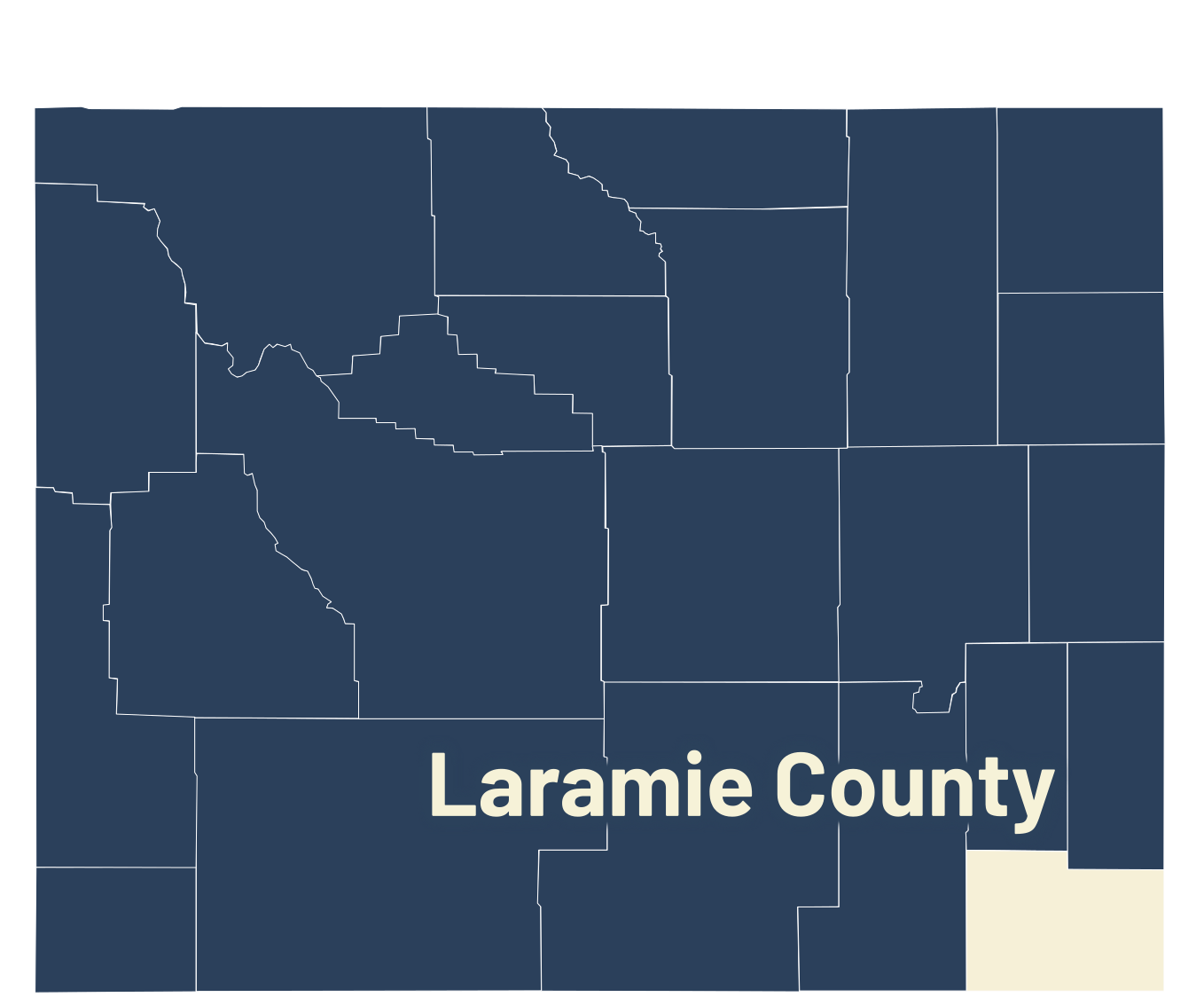
For former National Cattlemen's Beef Association president and Laramie County rancher Mark Eisele, one factor towers above the rest.
"This is about drought, pure and simple," Eisele told Cowboy State Daily. "It's as big and as widespread as it's ever been."
Eisele said he is considering selling calves and yearlings earlier than usual this year because pastures have not produced enough forage to sustain his herd.
"You used to be able to go over to the next valley and rent some grass or buy some hay," he said. "You might even go over into the next county or the next state. Now, that's not an option."
When drought forces ranchers to sell breeding cows, rebuilding takes years, Eisele said. Producers must retain heifers that otherwise would have gone to market, reducing beef supplies in the short term before increasing them later.
Herds Are Hard To Rebuild
Unlike other agricultural sectors, cattle production cannot be ramped up quickly.
Todd Fornstrom, Wyoming Farm Bureau President and a rancher, sees herd building as a long game.
It can take two years or more for cows to give birth. At one year, a calf is old enough for the breeding system, Fornstrom said, but it will still be another year at least before that calf has a chance of breeding.
And that assumes the rancher retains the calves.
“You have to make the decision to sell them or keep them for rebreeding,” Fornstrom told Cowboy State Daily.
Fornstrom said he is choosing this year to sell off his calves, because he is earning all-time highs.
“The decision I’m making right now is, when I’m at an all-time high of selling calves, do I sell now and reinvest that money into my operation or do I retain my calves?” he said. “Ranchers are making those tough decisions.”
Overall, Fornstrom said Wyoming ranchers are retaining more cattle this year than they did last year. While that might be good news, “that’s only the start of the relief, because we still have two years before the calves are even able to breed,” he said.
“It’s the long game you have to play as a rancher.”
Demographics At Play
Eisele said another obstacle to strengthening the cattle supply is demographics.
The ranching population is aging, he said.
"We've got a lot of older producers who see good prices and they're wanting out," Eisele said. "But the capital to get in — for the land and the equipment — is so much higher now. So young people aren't getting in."
He said many younger would-be ranchers watched parents and grandparents work seven days a week while struggling to make ends meet.
"We don't have enough incentives to bring them back," Eisele said.
President Trump’s One Big Beautiful Bill Act has tried to make the ranching sector more attractive for young people, Eisele added.
“It’s great,” he said. “But it’s coming a little late to the party.”
Screwworm A Concern
Wyoming ranchers say the recent New World screwworm outbreak isn’t a direct threat to Wyoming cattle, but restrictions tied to the parasite are tightening overall beef supplies.
Given Wyoming’s historic drought conditions, the screwworm dynamic can complicate ranchers’ decisions, Fornstrom said.
“If I don’t have the feed for these cows, where do they go? What does it cost to take them there?” he said. “I obviously don't want to go too far south to get them anywhere near the screwworm outbreak.”
Compounding the supply shortage is the closure of the U.S.-Mexico border to cattle imports.
Mexican cattle accounts for 4-5% of the U.S. beef supply.
“Were not importing Mexican beef into the U.S., so that pinches (the supply) further,” Fornstrom said.
Agreed Eisele: "The screwworm has shortened the supply."
Eisele also voiced concerns about expanding beef imports from countries where he believes disease-monitoring standards are more lax than those in the United States. He said maintaining confidence in USDA-inspected beef remains important to American producers.
Meatpacking Plants Pivot
The shortage is also affecting meatpacking plants.
JBS recently announced plans to close a beef-production plant in Pennsylvania and a processing facility in Tennessee.
Last fall, Tyson Foods shuttered its beef-processing plant in Lexington, Nebraska, the town’s largest employer. The closure resulted in an approximate 5% cut to the daily total U.S. beef slaughter capacity.
Demand Hasn't Budged
Despite rising prices, Americans continue to buy beef.
Eisele said that speaks to the public’s seal of approval of USDA-inspected meat.
USDA approval is the gold standard, he said.
"Nobody celebrates a big business meal with a chicken leg," Eisele said.
Fornstrom said he believes demand is still strong for beef because it is a high-quality, nutrient-rich product.
“Your bang for your buck on your hamburger is still better than buying an $8 latte,” he said.
For ranchers who still have cattle to sell, higher prices can provide an opportunity to pay down debt or potentially expand operations.
"The best time to expand is when prices are high," Eisele said.
High prices allow ranchers to pay off their debts quicker.
“Maybe the plus side is that there are some people who say, ‘I could start leasing some ground from older operators',” Eisele said.
Prices are not expected to ease this year or next, according the USDA.
“You hate to say you’ve got a crystal ball to tell when we’re coming out of it but that’s what we need. And no one has that,” Fornstrom said.
Eisele remains optimistic.
“It will rain — eventually,” he said.
Kate Meadows can be reached at kate@cowboystatedaily.com.