Agricultural land continues to get more expensive in Wyoming.
Bob Brockman, a longtime Wyoming real estate agent who has worked with agricultural properties, said he once asked an established Platte County rancher how a young person could get into the ranching business.
“The womb, the tomb, or the altar,” the rancher replied.
Decades later, Brockman said, the joke still contains a good deal of truth.
Buying a ranch requires substantial capital, and rising land values only increase the amount of money a beginning rancher needs.
“Capital is an extensive commitment,” said Kerin Clark, executive vice president of Wyoming Farm Bureau.
The latest U.S. Department of Agriculture (USDA) land values report shows farm real estate values increased 2% in Wyoming in 2026, compared to 3.4% nationwide. Cropland values increased about 4%, higher than the national average of 3.3%.
For Wyoming ranchers, farmers and those hoping to enter agriculture, the numbers tell a complicated story.
Higher land values can be a sign of a healthy agricultural economy, said Kerin Clark, executive vice president of the Wyoming Farm Bureau. But they can also make it increasingly difficult for the next generation to afford a place of its own.
“The USDA reports that come out definitely paint a picture,” Clark said.
That picture is one of steadily rising land values even as Wyoming agriculture faces high input costs, drought and a host of other challenges.
A Valuable Piece of Ground
Brockman said the state's land market is growing, though he wouldn't characterize the increase as explosive.
“It’s growing, but not by leaps and bounds,” he said.
Brockman said he remembers a much more dramatic period of appreciation in the 1990s, when agricultural land values began recovering from the depressed market of the late 1970s and 1980s.
Land that sold for about $35 an acre in the mid-1980s is now selling for roughly $300 an acre, he said.
The numbers vary widely depending on location, water, improvements and the quality of the ground. But the broader trend remains.
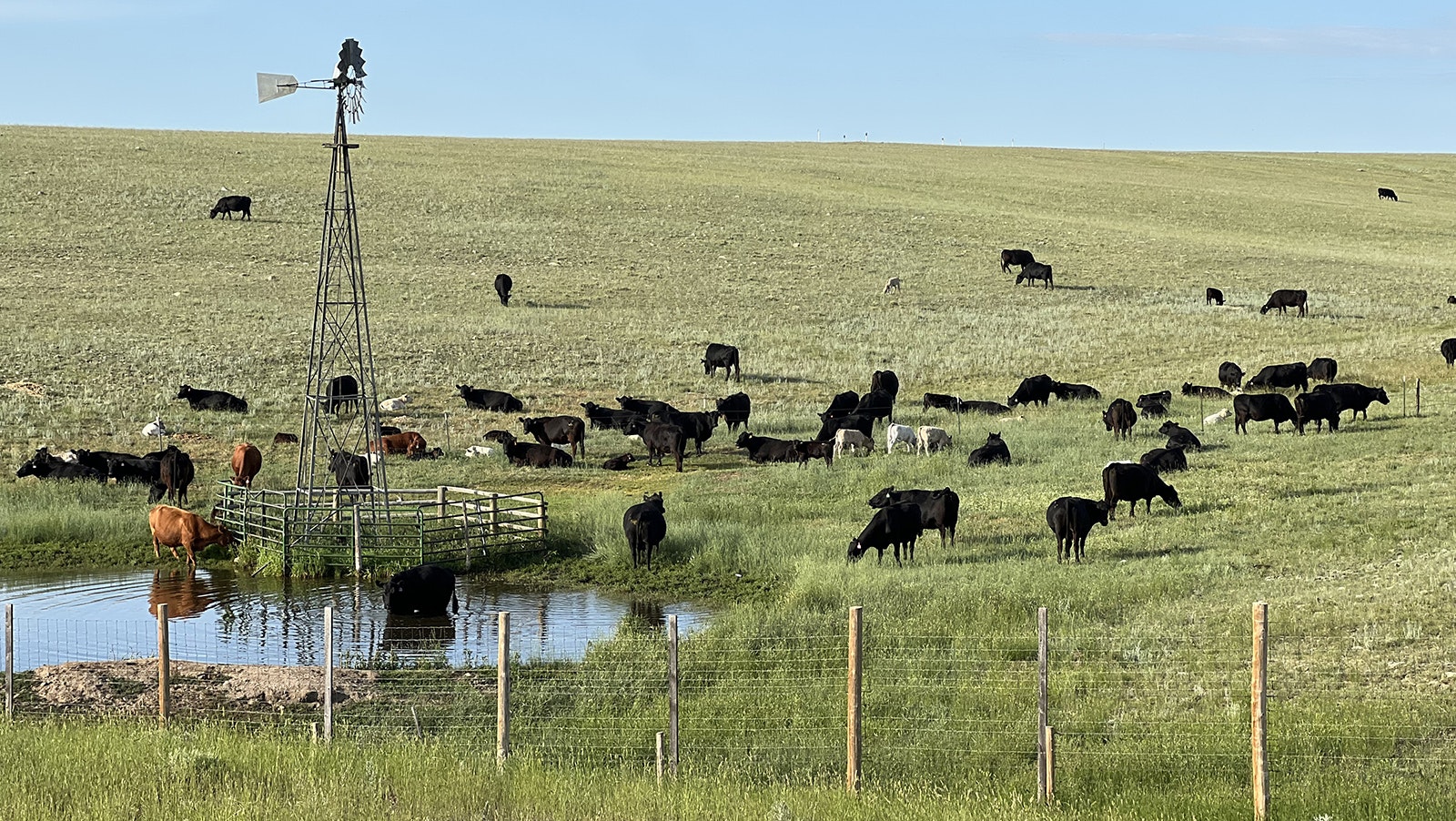
And one factor making certain Wyoming properties especially valuable is water.
“Land that has water will definitely increase in value,” Clark said.
That is particularly important in a state where drought can quickly affect the amount of grass available for livestock and the productivity of cropland.
Clark said agricultural land values don't necessarily translate directly into bigger profits for the people selling their land.
“A lot comes into play, including cost of doing business,” she said.
At the same time, demand for agricultural land can come from outside traditional agricultural uses.
Pressure to sell agricultural ground for nonagricultural purposes can contribute to higher values, Clark said, making it increasingly important to preserve the state's working lands.
“It’s definitely important to keep in mind the difference and highlights the importance of keeping working lands working,” she said.
Cattle Prices Bring Optimism
Wyoming's agricultural land market is also benefiting from an unusually strong cattle market.
Cattle prices remain historically high at a time when the nation's cattle herd is at its lowest level in roughly 75 years.
“The cattle market is fantastic,” Clark said. “It’s great to see ranchers receiving what they work for.”
Brockman said high cattle prices haven't hurt the agricultural real estate market. If anything, they have added some energy to an industry that has weathered years of uncertainty.
“It injects quite a bit of optimism,” he said.
But high cattle prices don't erase the other costs of running a ranch.
Input costs have risen along with cattle prices, Clark said, meaning a strong market doesn't necessarily make every ranch more profitable.
And drought remains a looming question.
“I don’t know what the values are going to do if our state doesn’t get some moisture,” Brockman said.
Wyoming ranchers are accustomed to drought, Clark said.
“Drought is something we have dealt with for generations. It’s cyclical,” she said.
But this year's conditions have brought additional concerns, including increased fire danger and reduced grass and crop production.
The value of land with dependable water, therefore, could become even more significant.
The Barrier To Getting In
For someone already established in agriculture, rising land values can be an asset.
For someone trying to get started, they can be a formidable barrier.
Yet Clark said young people are finding creative ways to build agricultural careers in Wyoming.
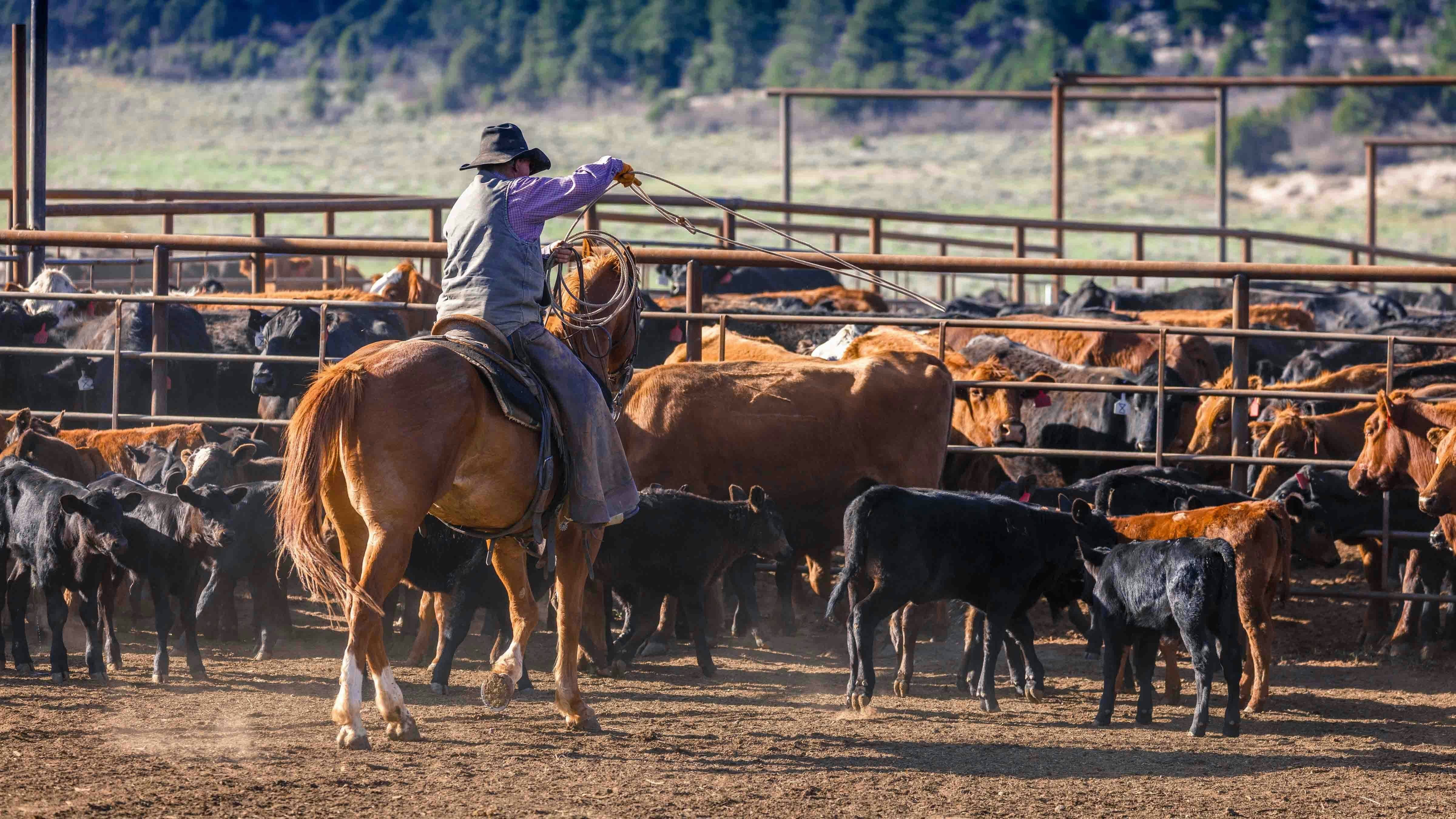
Some work on ranches they don't own while building their own cattle herds. Others work for established ranchers and eventually have the opportunity to buy into a property.
Clark said that is one reason she believes Wyoming needs to continue encouraging agricultural opportunities for young people.
“Of course in agriculture we want our young people to stay in Wyoming,” she said. “But that doesn’t take away the fact that it’s a capital-extensive business.”
Brockman has seen one solution work firsthand.
His son and daughter-in-law recently purchased their first piece of ranch land.
“They leased damn near 10 years before that,” Brockman said.
For people who can't immediately afford to buy, leasing can provide a way to build experience, livestock and capital while waiting for an opportunity to purchase land.
Who Is Buying Wyoming?
Another piece of the land-value puzzle is who is able – and willing – to pay the asking price.
Brockman said many people purchasing Wyoming ranches did not make their money through cattle.
Instead, they made their fortunes through investments, businesses, stocks or other ventures and can use that wealth to purchase agricultural property.
“They just want to go back home to their country club and talk about their ranch in Wyoming,” he said.
Clark agreed that out-of-state buyers can play a role in driving land values.
That can make it harder for someone whose livelihood depends on agriculture to compete with a buyer who sees the property primarily as an investment, recreational retreat or second home.
But it also underscores the importance of finding ways for Wyoming's agricultural producers to continue working the land, even when they don't own it.
For some aspiring ranchers, leasing may be the most realistic first step.
And for established ranchers, strong land values can provide an important source of equity, even if they don't necessarily make the day-to-day business of ranching any easier.
A Changing Market
The USDA's annual land values survey, which is based on data from roughly 30,000 agricultural operations nationwide, provides a broad snapshot of the market.
But Wyoming's agricultural economy is anything but uniform.
The value of a particular ranch can depend on its water rights, location, grazing capacity, improvements, access and a host of other factors.
Still, the broader trend is clear: Wyoming agricultural land continues to become more valuable.
For those who already own it, that's generally good news.
For the young rancher hoping to buy it, it's another hurdle.
And for the state as a whole, Clark said, the challenge is making sure rising land values don't push the people who actually work the land out of the market.
Wyoming's agricultural future might depend not only on how much its land is worth, but on who can afford to keep working it.
Kate Meadows can be reached at kate@cowboystatedaily.com.