The first presence of the dreaded New World screwworm in America since 1968 represents an “immediate threat” to Wyoming’s ranchers and owners of horses and pets, Wyoming’s state veterinarian said Friday.
“We don't know that it won't show up tomorrow,” said Hallie Hasel. "We don't know that it might not show up for six months. It may not show up at all, but we would consider screwworm something that we immediately need to start watching out for," she said.
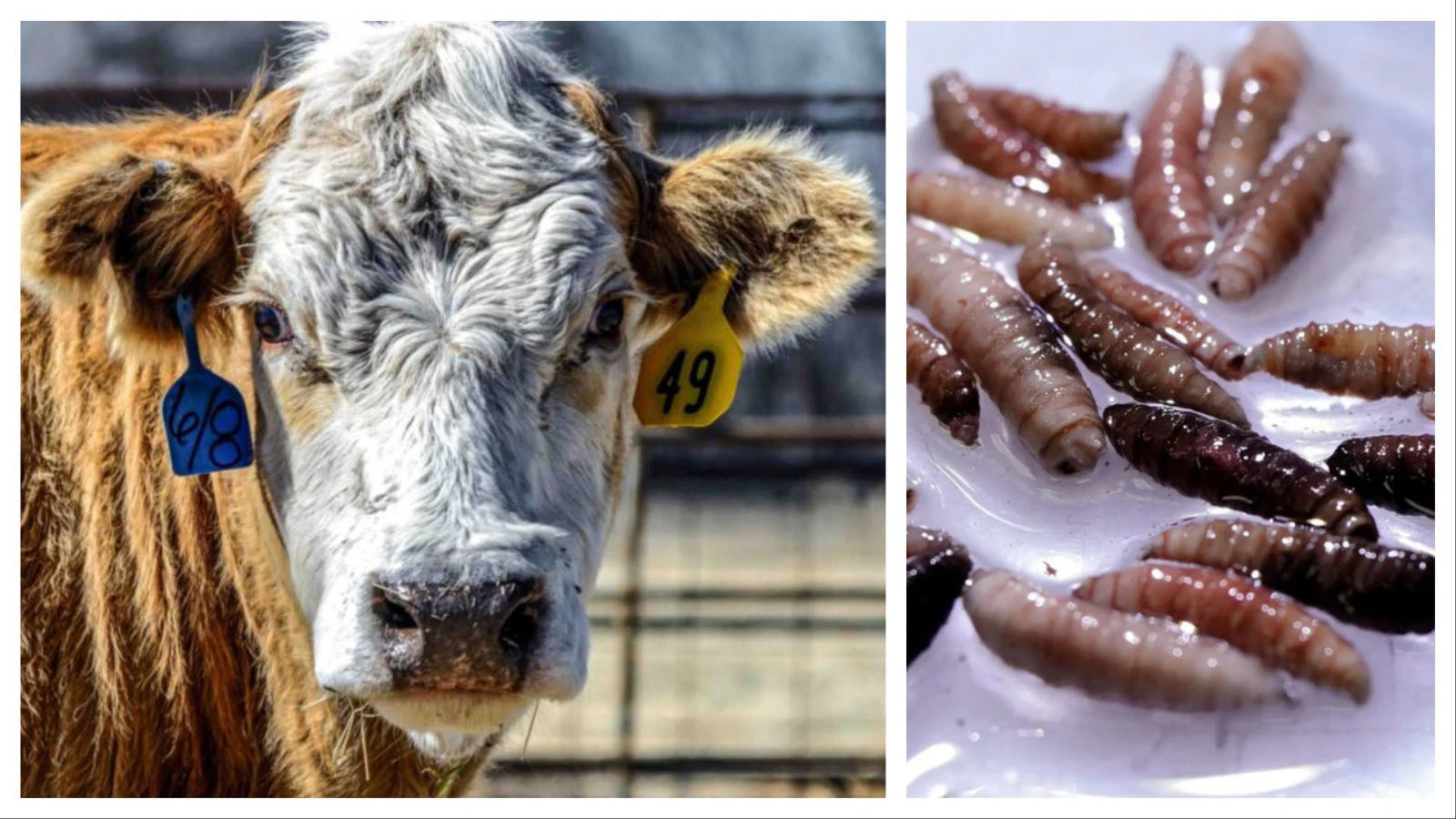
Earlier this week, the U.S. Department of Agriculture (USDA) confirmed a 3-week-old calf in La Pryor, Texas, near San Antonio, was infested with the flesh-eating larvae of the parasitic fly.
Another case of screwworm had been confirmed in Mexico, 25 miles from the U.S. border, a week earlier.
La Pryor is more than 1,000 miles away from Wyoming, but Hasel said the long distance that doesn’t mean ranchers should underestimate the spread of screwworm.
If anything, she added, they need to be more on their guard than ever.
The Screwworm Situation
The discovery of screwworm in the U.S. wasn’t exactly surprising. Hasel was the chair of a symposium on the preparedness, prevention, and response to screwworm in September 2025, which discussed the fly's anticipated return to the U.S. at some point in the near future.
“The United States has been preparing for this since about 2024, when we knew that the screwworm was moving north out of Panama,” she said. “We were aware there was a problem and needed to start preparing immediately, which the federal government and several states did.”
As of Friday, the USDA has taken “immediate action” to contain and stop the potential spread of screwworm. They’ve established a 12-mile "infested zone" around the detection site and have implemented additional proactive measures in coordination with the Texas Animal Health Commission.
Hasel spoke highly of the federal and state response to this confirmed case of screwworm.
“Texas has been implementing an excellent program to make sure that they stop screwworm right where it's at,” she said. “We have a lot of faith in their ability to stop it right where it's at.”
With the current programs in place, Hasel didn’t anticipate screwworm spreading rapidly into the rest of the country, let alone into Wyoming, in the near future.
“We don't expect it to come out of South Texas anytime soon,” she said.
However, that doesn’t mean the threat of screwworm isn’t worth taking seriously.
Not A Food Issue
Gene Copenhaver, president of the National Cattle and Beef Association, was in Cody on Friday for the Cattle Industry Convention and Trade Show. He took time to discuss the screwworm case in Texas that morning.
“There is a concern, but we've been expecting this for over a year,” he told Cowboy State Daily. “We thought it'd come last summer, so it gave a lot of time to get ready for it.”
Copenhaver agreed with Hasel’s assessment of the current situation. While there isn’t much concern about screwworm spreading beyond South Texas, livestock owners need to stay vigilant to ensure nothing gets past them.
There was one big thing Copenhaver wanted “the consumer” to know: screwworm is a pest issue, not a food issue.
“It’s not a food-borne safety issue,” he said. “The beef from a cow infested with screwworm is still good. There was some concern that speculation (on screwworm) was going to hurt the market, but they’re dealing with it, and I think we’re good.”
The confirmation of the screwworm immediately led to concern that beef prices could increase. Even if screwworm spreads much further and faster than anticipated, Copenhaver said that shouldn’t be a concern for beef buyers.
“It's a pest issue for the producer, not a food safety issue for the consumer,” he said.
Help On Wheels
New World screwworm is the larva of the New World screwworm fly. The flies lay their eggs in living tissue, usually in open wounds or body openings like the eyes, nose, and mouth.
When the eggs hatch, the maggots feed and burrow into the surrounding tissue, which can quickly kill the afflicted animal.
“They can burrow into that wound and kill the animal within seven to 10 days,” Hasel said.
A female screwworm can fly more than 120 miles and lay more than 3,000 eggs in its short 20-day lifecycle.
The fly itself can’t move very far or very fast, so the flying range of female flies is not the primary concern in the spread of screwworm. The biggest concern is what Hasel called “help on wheels.”
“The fly doesn't move long distances, except when it has help on wheels,” she said. “The primary concern is that larvae go unnoticed on an animal that moves from an area where they’re supposed to move, or from where we aren’t aware that screwworm is present.”
Cattle are constantly moving throughout the United States in tractor-trailers. If one individual has an open wound with screwworm larvae inside, it could quickly become a widespread issue.
Screwworm was eradicated in the United States between 1966 and 2025, but many ranchers still have nightmares about its impact on their cattle. Its reappearance has many agricultural producers spooked, and Hasel thinks they’re right to be concerned.
“We need everyone to maintain their vigilance, just in case it does move on a trailer somewhere else,” she said. “That it doesn't mean that you need to put every animal in the chute every day. It just means you need to be aware, look at any wound that you see on an animal, and make sure there isn't something in that wound that looks unusual.”
Toto, Too
The discussion around screwworm has focused primarily on its potential impacts on cattle ranchers, as the first case was detected in a calf.
While the impacts of screwworm on livestock is a potent concern, Hasel believes that’s narrowing the scope. The threat of screwworm is much broader.
“What we're really concerned about is not just livestock, but all species,” she said. “It’s not just cows and horses. It’s cats, dogs, and other companion animals.”
That’s where Wyomingites need to be concerned now and in the future.
Hasel mentioned that animal shelters nationwide take in rescued cats and dogs from southern states like Texas and Florida. That’s where they’re more likely to be infested with screwworm and, potentially, spread it very far in a very short amount of time.
“We get a lot of pets into Wyoming rescues that go up for adoption from states like Texas,” she said. “Should any of those animals have a wound and the larvae aren't noticed, we're concerned that that could also spread screwworm into Wyoming.”
Fortunately, there are several approved treatments and preventative products that protect pets from screwworm. If people don’t already have this protection for their pets, Hasel highly encourages them to obtain it now.
“Having them on a preventative is just a great all-around measure,” she said.
It’s also worth noting that humans can be afflicted by screwworm, too.
In August 2025, the Department of Health and Human Services and the Centers for Disease Control and Prevention confirmed that someone in Maryland had screwworm after returning from a trip to El Salvador.
It was the first human case of travel-associated New World screwworm myiasis from an outbreak-affected country identified in the U.S.
“It could get into a slight wound or scratch on any warm-blooded animal,” Copenhaver said. “It can affect wildlife too, and we can’t doctor to wildlife like we can our own cattle. That’s the fear.”
What To Do (When You Need To)
Hasel doesn’t believe the single confirmed screwworm case in Texas this week poses an imminent threat to Wyoming. However, the risk of screwworm needs to be taken seriously.
If anyone confirms or suspects a cow, horse, or companion animal has an open wound infested with screwworm, they need to take immediate steps to save the animals and notify the proper authorities.
“If it's a livestock-sized animal, do not move that animal,” Hasel said. “Lock it up in a small pen, right where it's at. If you see any larvae in an open wound, do not throw them on the ground. Collect them into a container, take pictures of the wound and the larvae, and examine the rest of your herd.”
For potentially afflicted cats and dogs, Hasel said pet owners should take them to a veterinarian immediately. Any larvae should be collected and placed into a sealable container.
Regardless of the animal, Hasel said Wyomingites need to report any confirmed or potential screwworm infestation to her and the Wyoming Livestock Board immediately.
“We all work together,” she said. “If you can’t reach us, your veterinarian will know how. People just need to remember that even if you find it in cattle, and if it spreads to more cattle, we have appropriate treatments in place.”
300 Million Solutions A Week
Since the return of screwworm to the U.S. has been anticipated for years, preventive measures have been in place for some time.
The primary way screwworm was eradicated in the 1960s was by breeding and releasing sterile male screwworm flies. That’s the same strategy being developed to stop screwworm in the 2020s.
“The flies only breed once,” Copenhaver said. “If the females breed with sterile males, they can’t put out their larvae.”
Copenhaver mentioned that a facility in Panama is already releasing 100 million sterile screwworm flies a week to reduce, and hopefully eradicate, the parasitic fly in Central America. A new facility being built in Mexico, with financial support from the U.S., will release over 300 million sterile flies a week.
“That will be on board by midsummer 2027,” he said. “Hopefully, we’ll have screwworm on the run by this time next year.”
In the meantime, Copenhaver believes the USDA and the Texas Animal Health Commission are “doing a great job” handling the single confirmed case of screwworm and reducing the potential spread by every means necessary.
“Screwworm needs to be taken seriously, but I think this case is very much under control,” he said. “We want people to know that this is a pest issue, not a food issue, and this is a single confirmed case that we’ve anticipated for a while.”
And, if all else fails, Wyoming livestock and companion animals have an additional layer of protection. Screwworms don’t like the cold.
“They won’t come where it gets very cold,” Copenhaver said. “When it's wintertime, they’ll go away because of the cold weather.”