
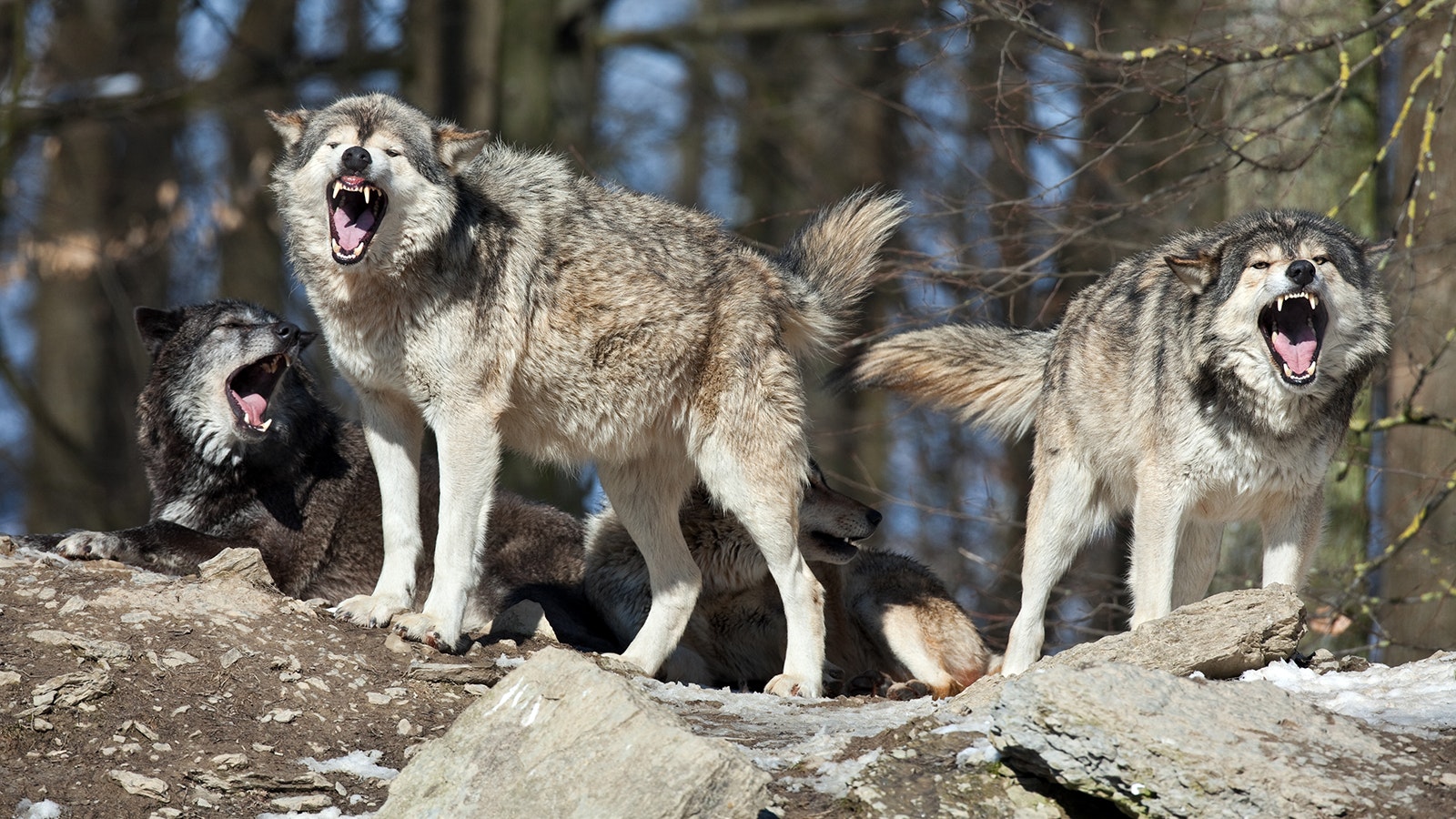
The push will continue to get wolves delisted from Endangered Species Act protections across the Lower 48 state despite a delisting bill being blocked in the U.S. Senate on Tuesday.
Sen. Ron Johnson, R-Wisconsin, sought unanimous consent to pass his bill, S. 1306, but Sen. Cory Booker, D-New Jersey, objected and blocked it.
Even so, Wyoming Republican U.S. Sens. John Barrasso and Cynthia Lummis, who are co-sponsors of the bill, told Cowboy State Daily on Wednesday that they'll continue to back the bill.
A companion bill passed in the U.S. House and was supported by Wyoming Rep. Harriet Hageman, who blasted the blocking of the legislation.
“Before coming to Congress, I successfully sued to secure Wyoming’s right to manage its own gray wolf population and will continue to support legislative efforts to allow others to do the same," Hageman said in a statement to Cowboy State Daily.
"Elitist East Coast politicians' continued objections to common-sense proposals to return wildlife management to the states are another case of those unburdened by predators attempting to dictate what other states are forced to survive," she added.
Lummis said wolves have recovered and it's damaging to not delist them.
"America's wolf population has fully recovered, and it's long past time to take them off the endangered species list," Lummis wrote. "Wolves are tearing through cattle herds and hurting ranchers' livelihoods across the West, but some Democrats will fight delisting no matter the recovery numbers because they'd rather keep these populations under federal control.
"That flies in the face of what the Endangered Species Act was meant to do, and it hands more power to Washington bureaucrats who don't know these states or their wildlife. I'm very hopeful Senator Johnson's bill gets a vote before the year is out.”
Barrasso concurred.
“Wyoming is the model state for the successful delisting of wolves. Wyoming has proven that states, not Washington, are in the best position to manage the wolf,” he wrote. “We’ve fully recovered and protected our state’s wolf population for years. Senator Johnson’s legislation rightfully returns the management of wolves back to all 48 lower 48 states.”
Hageman said wolf-delisting efforts mirror those to delist grizzly bears.
“I have cosponsored and voted numerous times in favor of legislation to delist gray wolves from the Endangered Species Act, as these apex predators have far exceeded the law’s explicit recovery goals," she wrote. "Gray wolf populations — just like the grizzly bear — are best managed by the states they roam.
National livestock organizations also issued a joint appeal for delisting wolves. The National Cattlemen’s Beef Association, the Public Lands Council, and the Wisconsin Cattlemen’s Association called upon the Senate to immediately pass the bill.
Back and Forth Five Times
Wolves have been delisted for several years in Wyoming, Montana and Idaho and can be hunted in all three states.
Colorado launched a reintroduction program in late 2023, and wolves remain protected there. Even if a nationwide federal delisting passes, state protections for wolves would still apply.
Wisconsin has one of the largest populations of wolves in the Lower 48, estimated at around 1,250.
During his remarks on the Senate Floor, Johnson said Wisconsin wolves were supposed to be delisted once the population hit 250.
Since 2007, wolves have been delisted then re-listed five times, he said.
Many Wisconsin residents are calling for delisting, saying wolves threaten livestock, pets and public safety, Johnson said.
In 2024, Wisconsin outdoorsman Chase Melton told Cowboy State Daily he shot a wolf in self-defense after it aggressively approached him and other hunters in a duck blind.
Booker countered by saying wolves have been viciously pursued and killed to the point where they occupy only about 10% of their historic range in the United States.
For, Against the Bill
Jim Magagna, executive vice president of the Wyoming Stock Growers Association, told Cowboy State Daily that he supports delisting wolves across the Lower 48.
There could be value for Wyoming ranchers in having ESA protection for wolves removed across the country, he said.
“It perhaps, in the long term, would provide protection against efforts to relist wolves here in the Rocky Mountains,” Magagna said.
Along the Wyoming-Colorado state line, it might not make much difference on the ground because Colorado still has “a state initiative” offering protection for wolves, he said.
Colorado resident Samantha Miller, the senior carnivore campaigner with the Center of Biological Diversity, told Cowboy State Daily she opposes the delisting bill.
“I could absolutely disrupt the reintroduction program in Colorado,” she said. “It could really put them (wolves) under threat any time they are seen as a threat.”
A nationwide delisting could loosen the parameters under which wolves could be shot in Colorado, she said.
For example, wolves must be actively attacking cattle before they can be killed. Under nationwide delisting, that requirement might be reduced to wolves simply being in the same field with cattle, she said.
Miller added that wolves need safe “corridors” for genetic exchange between populations.
Eliminating ESA protections in the Lower 48 could further hamper wolves’ ability to move safely between Colorado and other Rocky Mountain states, she said.
Mark Heinz can be reached at mark@cowboystatedaily.com.


