
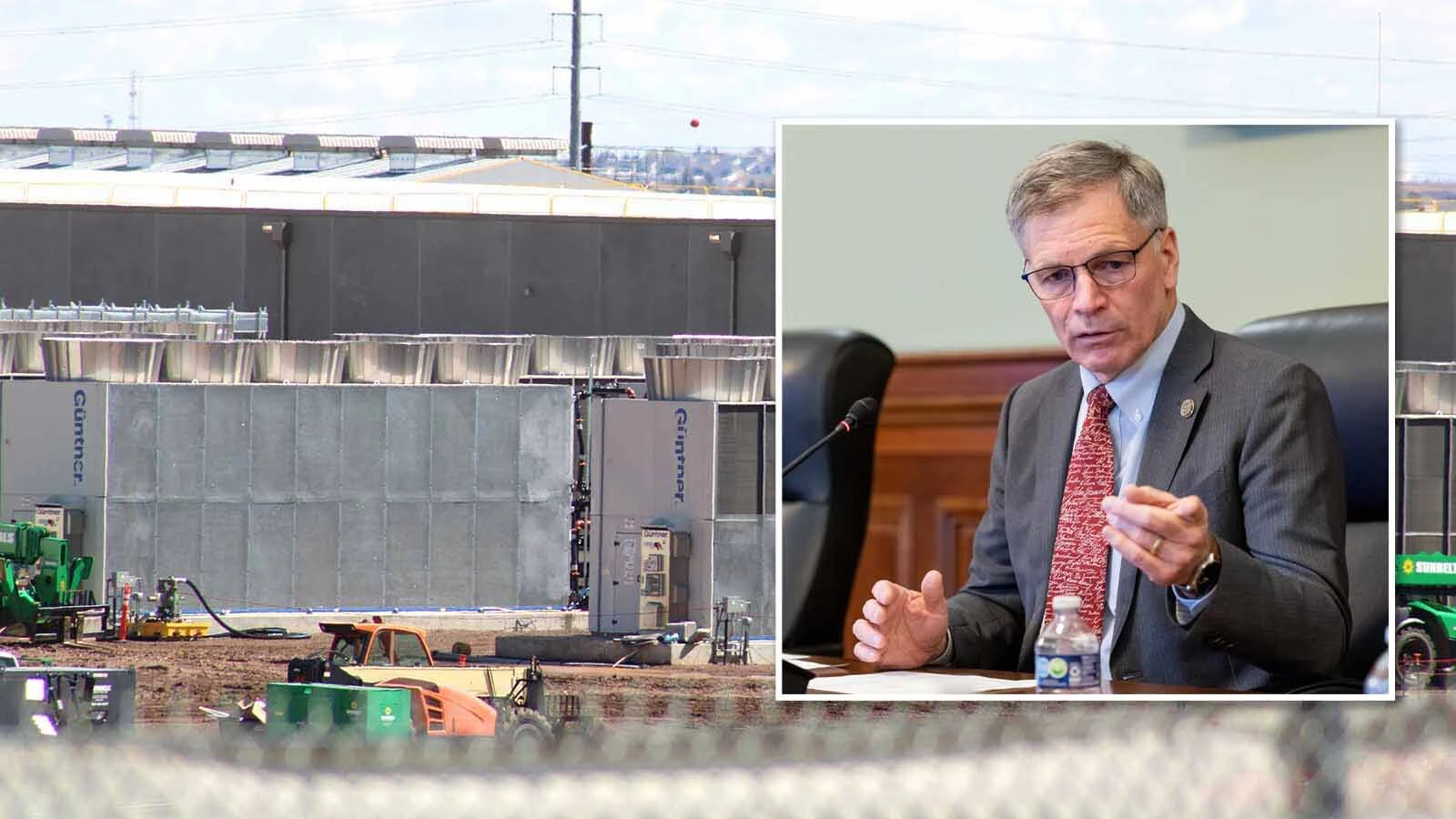
Wyoming Gov. Mark Gordon released an executive order on Wednesday telling state agencies to “promote responsible development of data centers and other large-load facilities.”
The order is effective immediately.
On the one hand, the order points to Wyoming’s capacity to produce energy, its business-friendly environment, reliable infrastructure, and what the governor called a “proven commitment to innovation which provides Wyoming a leading role in America’s digital future.”
It also points to a June 2 order President Donald Trump signed, promoting advanced artificial intelligence development and its role in support of national security.
Data centers feed artificial intelligence.
On the other hand, Gordon’s state-level order requires Wyoming executive-branch agencies to heed several considerations while they advance these projects.
Those are:
• Encourage advanced technology uses and practices that minimize water consumption and protect water quality, including by supporting innovative cooling tech “appropriate for Wyoming’s semi-arid climate;”
• Balance economic growth with wildlife and open space conservation;
• Encourage “open and continual communication” and allow meaningful opportunities for public participation on proposed builds, while being transparent about project impacts, benefits, and regulatory processes;
• Recognize “that data centers are increasingly important to national security, global technological competitiveness, and economic growth” while pursuing opportunities that strengthen the nation’s energy security and technological leadership – and Wyoming’s role as the nation’s leading energy state;
• Protect residential and small-business utility customers from bearing incremental costs exclusively associated with data center builds;
• Leverage the state’s competitive business climate to “attract investment across Wyoming” while ensuring that expansion is in line with the state’s heritage, and generates “meaningful benefits for local governments” and systems.
• Prioritize workforce development efforts to prepare state citizens for careers in digital infrastructure or related trades. That means working with the University of Wyoming, community colleges, school districts and businesses;
• Encourage projects that show a commitment to helping and improving their host communities.
Explosive On The Home Front
Local communities in Wyoming are roiling at the prospect of data centers.
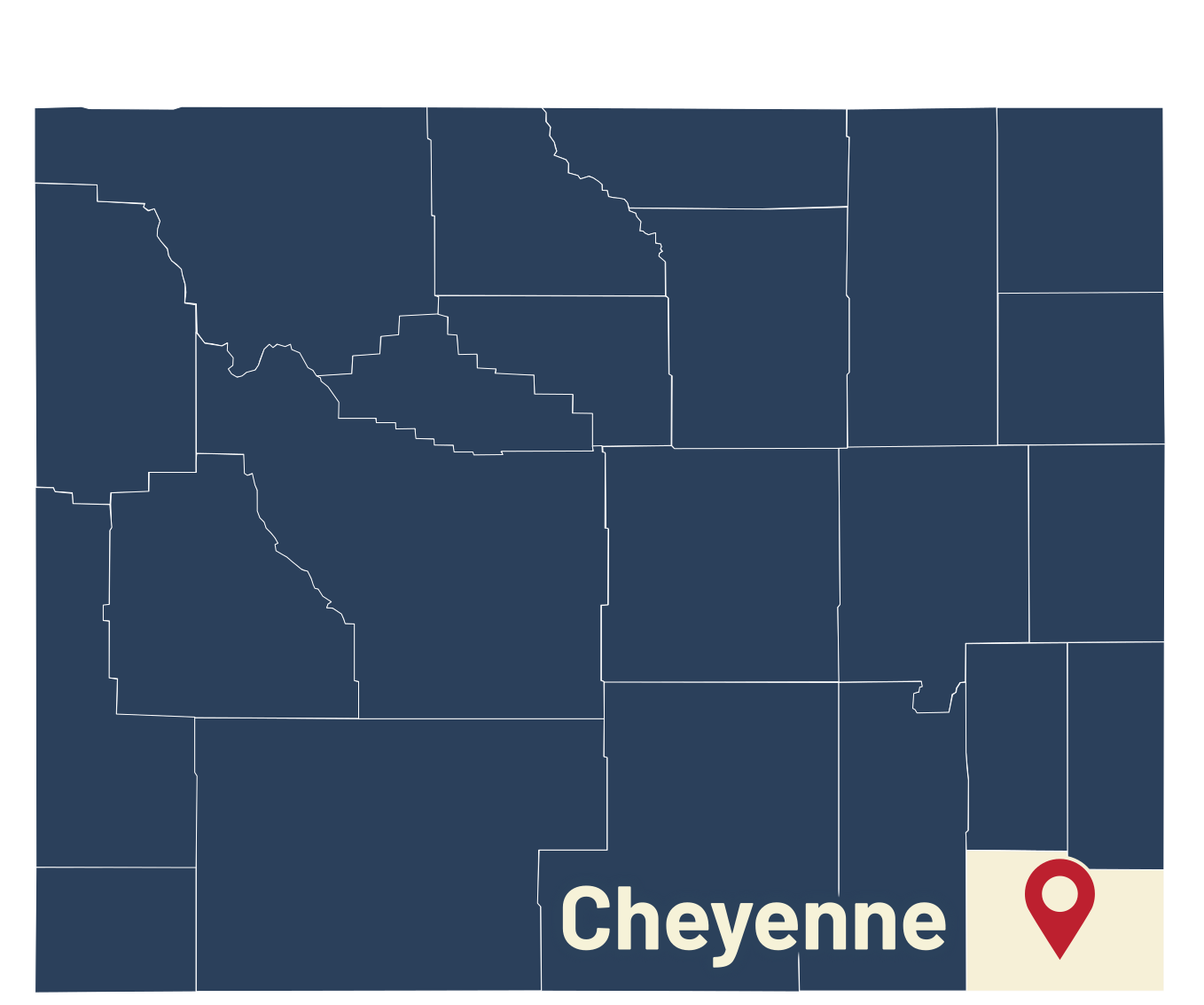
The Cheyenne City Council rejected a proposed moratorium on data center development last week after four hours of emotional, sometimes angry testimony by community members on both sides of the issue.
In Evanston, the Uinta County Planning and Zoning Commission faced less vocal pushback – despite a packed room – during a similar approval meeting last week.
The planners voted unanimously to recommend permit approvals for a 1.25 gigawatt data center.
Many tribal members of the Wind River Indian Reservation are still indignant over an April announcement, that the Wyoming Business Council has awarded a $50,000 grant to the Northern Arapaho Tribe’s government to study the prospect of a large data center on the reservation.
That reservation headquarters a second tribe, the Eastern Shoshone Tribe.
“Hell no,” said Wade LeBeau of the development.
LeBeau heads one of the two factions currently vying in court for executive-branch control of the Shoshone Tribe.
The Converse County Commission tried and failed earlier this year to create a special industrial park to fast-track a data center on private land. The Attorney General told the commission to walk that vote back — and the commission did — reportedly because the county doesn’t already have a zoning system in place to allow such a targeted land designation.
More About …
Data centers are large warehouses full of servers that power parts of the internet and increasingly, artificial intelligence.
They may use a closed-loop cooling system, which proponents tout as a water-conservative way of keeping the equipment from overheating.
In a closed-loop system, water still should be flushed periodically because its quality can degrade and cooling chemicals can break down over time, USA Today reported.
Wyomingites have voiced fears of water pollution and consumption, noise, vista degradation and a shift from the state’s agricultural environment with the influx of data centers.
Proponents of the builds, however, have pointed to their capacity to generate immense revenues and create jobs.
Datacentermap.com says 31 data centers exist currently in Wyoming.
Clair McFarland can be reached at clair@cowboystatedaily.com.


