
With countless miles of rusty old fences threatening pronghorn and other wildlife across Wyoming, conservationists say devices called wire winders are giving them an edge.
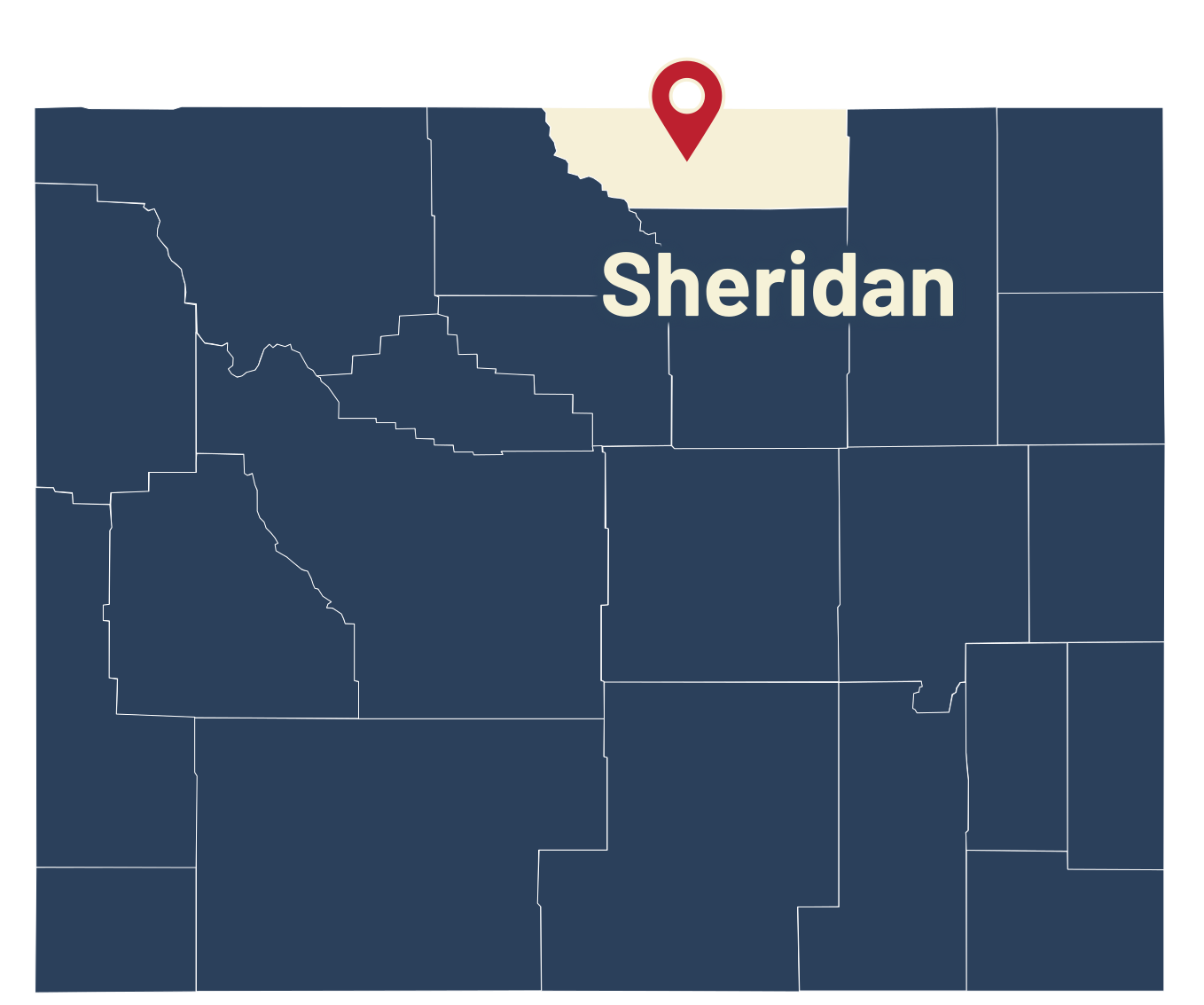
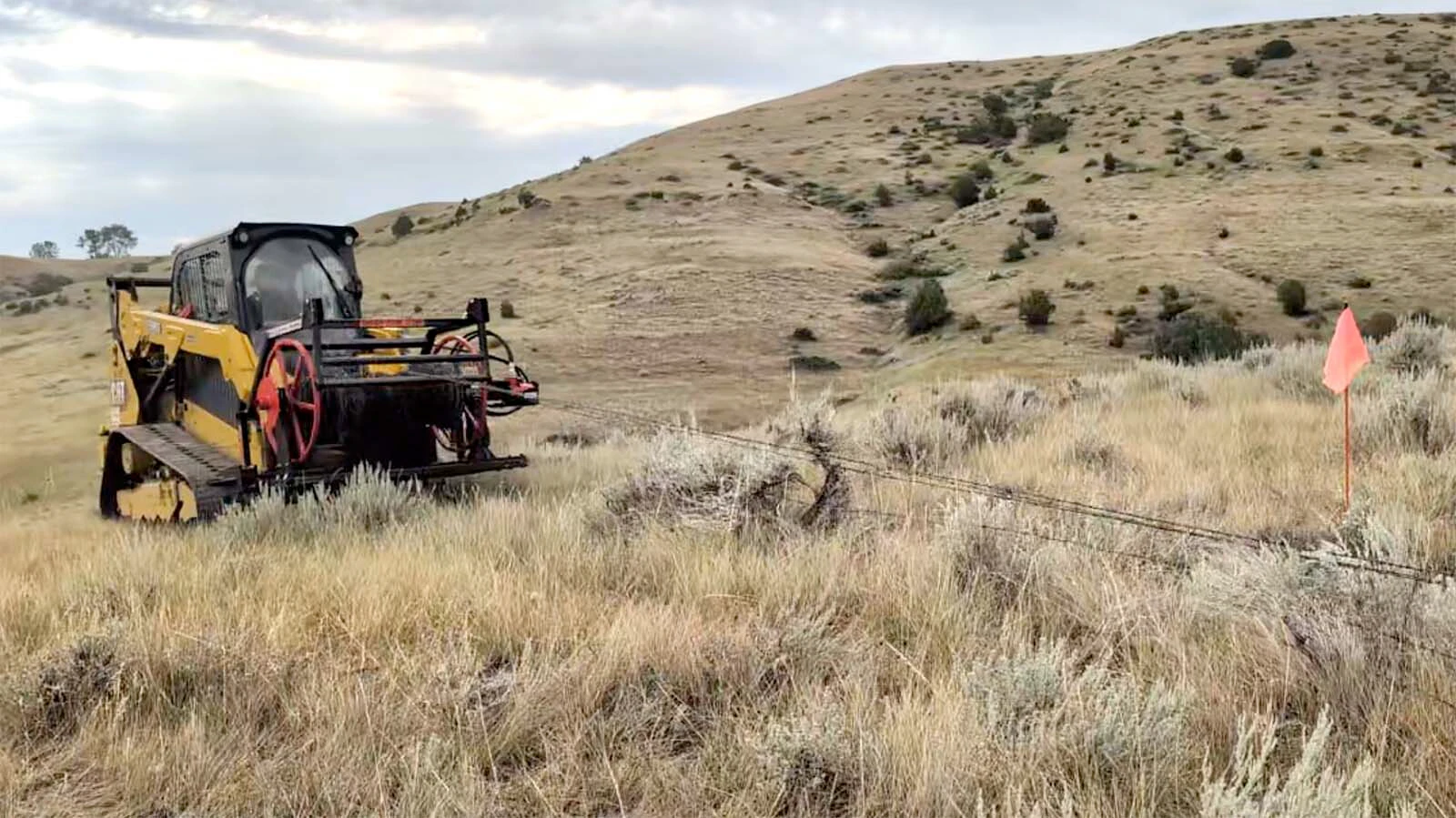
A wire winder mounted on a skid steer can roll up a half-mile of old fence in about two minutes, a task that would probably take a half-day to accomplish by hand, said John Graves, director of conservation and resource management for the Sheridan Community Land Trust.
“It’s pretty darn cool,” he told Cowboy State Daily. “To sit there in the cab of the skid steer and watch that wire come in, it’s great.”
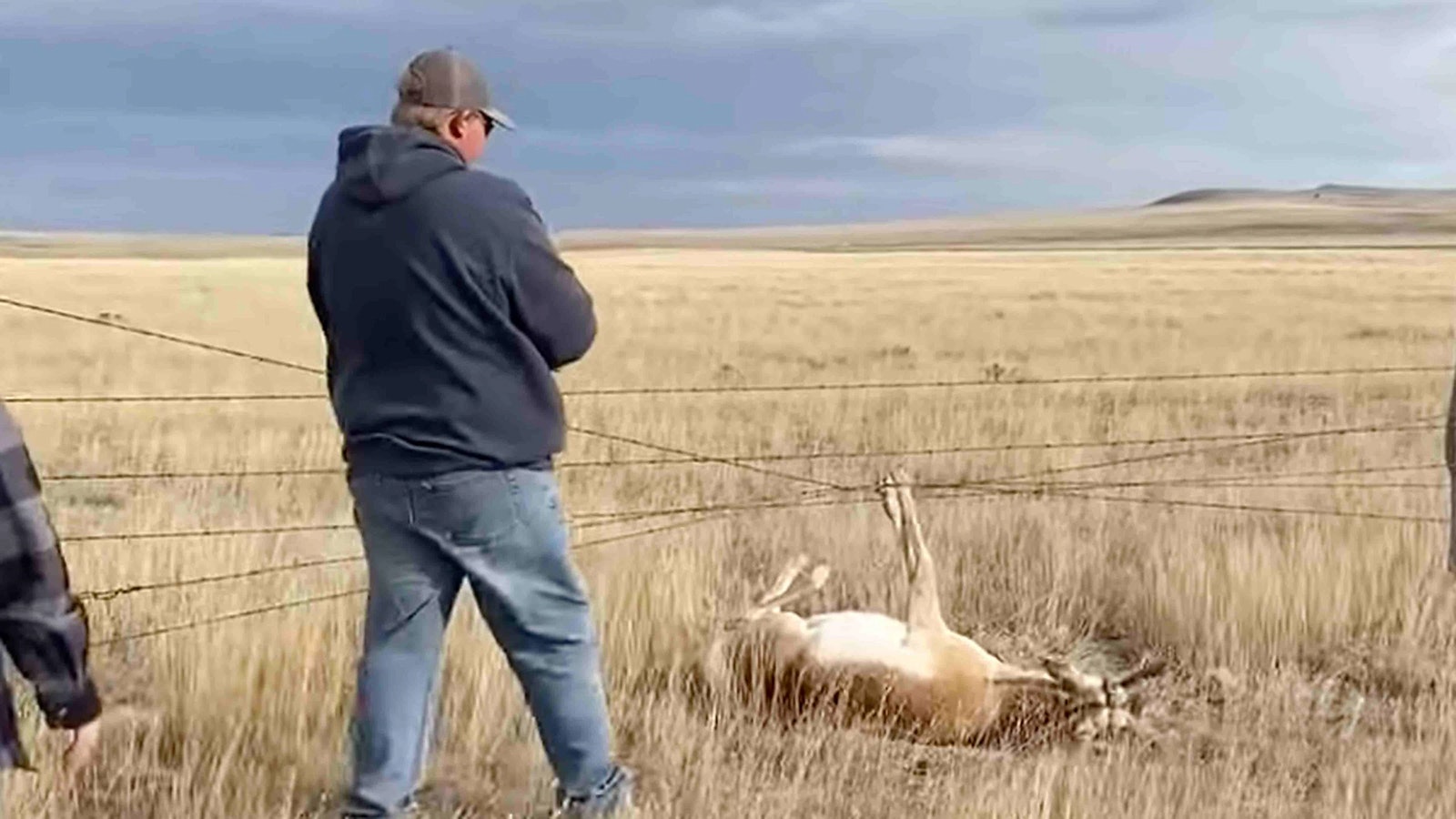
The importance of removing old barbed wire and woven-wire fences can’t be overstated, said Steve Martin, Wyoming director of the North American Pronghorn Association.
Old fences can block pronghorn from reaching thousands of acres of habitat in the Red Desert and other places in Wyoming and Montana, Martin told Cowboy State Daily.
There are countless miles of fence that must be removed and replaced with wildlife-friendly fencing, he said.
Bringing wire winders to bear “is a game changer” in that daunting task, Martin said.
Short Work By Sheridan
The Sheridan Community Land Trust manages the Big Goose Natural Area, just west of the city.
The area includes an off-leash dog-walking trail for residents and cattle ranching, as well as ideal habitat for pronghorn and other wildlife, Graves said.
The problem was that about a mile and a half of old barbed wire and woven-wire fence was making it nearly impossible for pronghorn to get in, he said.
The land trust had a contractor, Black Fern Fencing, lined up to replace it with wildlife-friendly fence in early July. But the old fence had to come out first.
“Rolling up all of that wire by hand takes hours and hours, and it will get you all cut and scraped up,” Graves said.
The trust had a skid steer. And the Pronghorn Foundation and Bowhunters of Wyoming donated about $8,000 to buy a wire winder to mount on it.
Volunteers removed the wire from fence posts and then pulled the posts.
That cleared the way for Graves to come in with the wire winder.
“That machine just sucks up all the old barbed wire and woven wire into neat rolls that can be taken to the recycling center,” Graves said.
The Black Fern crew came in right behind him, installing the new fencing.
It includes a smooth bottom wire, which allows pronghorn to crawl under without getting snagged on rusty barbed wire.
“We’ve already seen increased pronghorn activity on the property,” Graves said.
Pronghorn Foundation Wants One
The Pronghorn Foundation hopes to soon acquire a skid steer with a wire winder to start going after other old fences in Wyoming and Montana, Martin said.
Old fencing hampers wildlife movements across the West, and removing and replacing all of it will be a gargantuan task, he said.
“Unlike deer and elk, pronghorn will rarely, if ever, jump a fence. They want to crawl under it,” he said.
So woven-wire fences are particularly hard on pronghorn, he said, because there’s no way to get underneath them.
Researchers from the University of Wyoming concluded that fences trapped pronghorn in areas of the Red Desert during the harsh 2022-2023 winter, and many of them died.
Recent upgrades to wildlife-friendly fences in the Red Desert opened up about 10,000 acres to pronghorn, Martin said.
Never-Ending Job
The task of removing and replacing old fences won’t be finished anytime soon, Martin said.
But bringing wire winders will expedite the process.
“If you’ve ever been out there, wrestling with that old wire by hand, you know how many hours that can take,” he said.
Removing old fence can be done mostly with volunteer labor, and wire winders can spare volunteers the nastiest part of the job, he said.
The next hurdle is coming up with the funding for new fencing, which allows wildlife to crawl under or jump over it but still keeps cattle safely contained, Martin said.
“That new fence can cost $25,000 per mile,” he said.
Mark Heinz can be reached at mark@cowboystatedaily.com.


