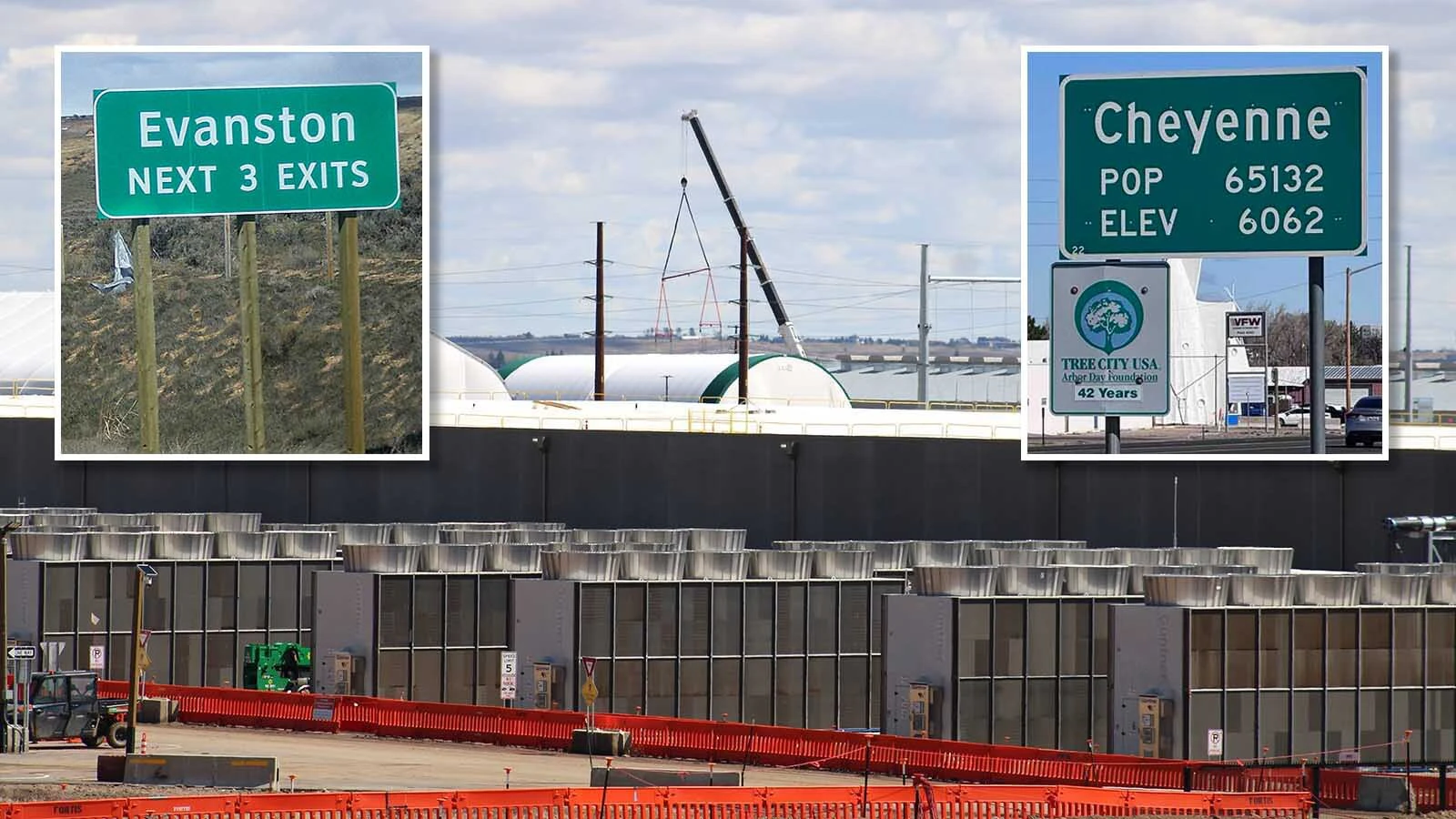
When it comes to data centers and their future in Wyoming, Evanston and Cheyenne residents are looking at similar engineering diagrams and hearing similar talking points.
Who controls the water?
Who pays for the power?
How many jobs and who will actually get them?
What does this do to our community, the place where our kids will grow up?
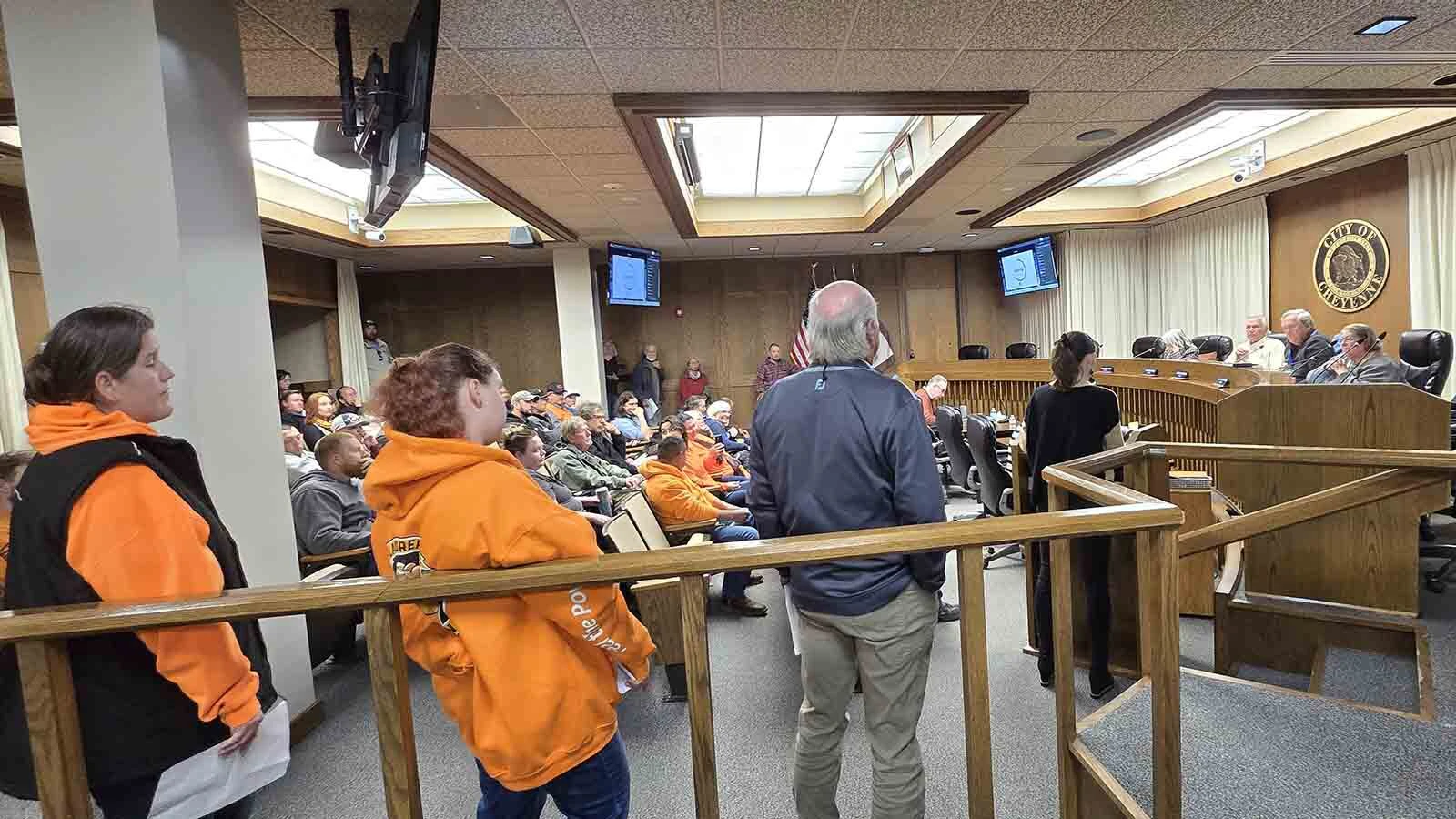
Both communities have packed meeting rooms with standing-room-only crowds with questions scribbled onto notebooks and folders stuffed full of printouts, trailing out into hallways where it’s difficult — if not impossible — to hear.
But the tone in these communities separated by 359 miles of Interstate 80 across southern Wyoming has been markedly different.
In Cheyenne, the reaction has been much more strident and emotional than it has been in Evanston.
The contrast was readily apparent a Uinta County Planning and Zoning Commission meeting Wednesday night, where commissioners voted to recommend approval of Prometheus Hyperscale’s conditional use permit and zoning change for its 1.25-gigawatt data center.
Cheyenne was just coming off an emotion-packed night of testimony over a 12-month data center moratorium, which began at 6 p.m. Tuesday and didn’t end until after midnight. The issue split the community, with roughly half for and half against.
In Uinta County, the commission chambers were also packed, with people trailing out into the hallway.
But when their turn at the microphone came, not many of those residents put their thoughts and questions on record. Most sat listening silently.
Those who did speak, for the most part, were thoughtful, and spoke with even tones that betrayed little emotion.
Keaunna Archuleta, for example, half-jokingly told Cowboy State Daily after the meeting ended that she’d brought “five notebooks” worth of questions that she felt commissioners ought to consider when it comes to Prometheus Hyperscale’s data center, but said she had not yet made up her mind about that project in particular.
“It seems like they’re going as clean as they possibly can when it comes to a lot of the emissions,” she said. “When it comes to the environmental stuff.”
But some things were vaguer than she would have liked, she added. She wanted to know more about job training and apprenticeships.
“It’s going to supply jobs, but jobs to who?” she said. “And how is it going to be accessible for those who don’t have the training?”
She also has larger questions about how artificial intelligence centers are using the data they collect. She is uneasy with things like dynamic pricing, for example, and surveillance by Flock cameras.

A Map Of Data Centers Dots
One reason things feel more tense in Cheyenne may come down to numbers. In one widely circulated map, for example, the city looks as though it’s being surrounded with data center blocks ringing its perimeter in nearly all directions.
That has people wondering how the city will be able to grow if so much land is being taken up with rapidly expanding data centers.
Councilman Larry Wolfe has told Cowboy State Daily as many as 70 data centers are in various stages of discussion. He developed that number by surveying Cheyenne LEADS documents and working with the Board of Public Utilities.
Some of those 70 could be tire-kickers that never further pursue a project, he acknowledged. Data centers often “shop around” for locations. Any data center looking at Cheyenne is probably looking elsewhere, too.
Others have put the number of incoming data centers at more like 43 potentials.
Publicly announced data centers, meanwhile, are much smaller.
Meta has announced it's building a data center campus, while Microsoft has announced it will triple its data center footprint in Cheyenne.
Project Jade has announced an initial 2.7-gigawatt facility, with the capacity to scale up to 10 gigawatts in the future, making it one of the largest planned data centers in North America.
Related Digital is building a $1.2 billion data center campus spanning 115 acres at Campstool Business Park that will deliver 302 megawatts of capacity.
More recently, Blockmate Ventures has acquired land near a Wyoming substation, announcing plans to shift the site from bitcoin mining to a dedicated artificial intelligence data center instead.
The visibility of data center projects in Cheyenne hasn’t helped them any, Wolfe has told Cowboy State Daily.
“I mean, you can see them from your front porch,” he said. “That’s why I keep telling people, and I said it at the meeting the other night, it’s the difference between having them out in these, where they have been, in the North Range Business Park.”
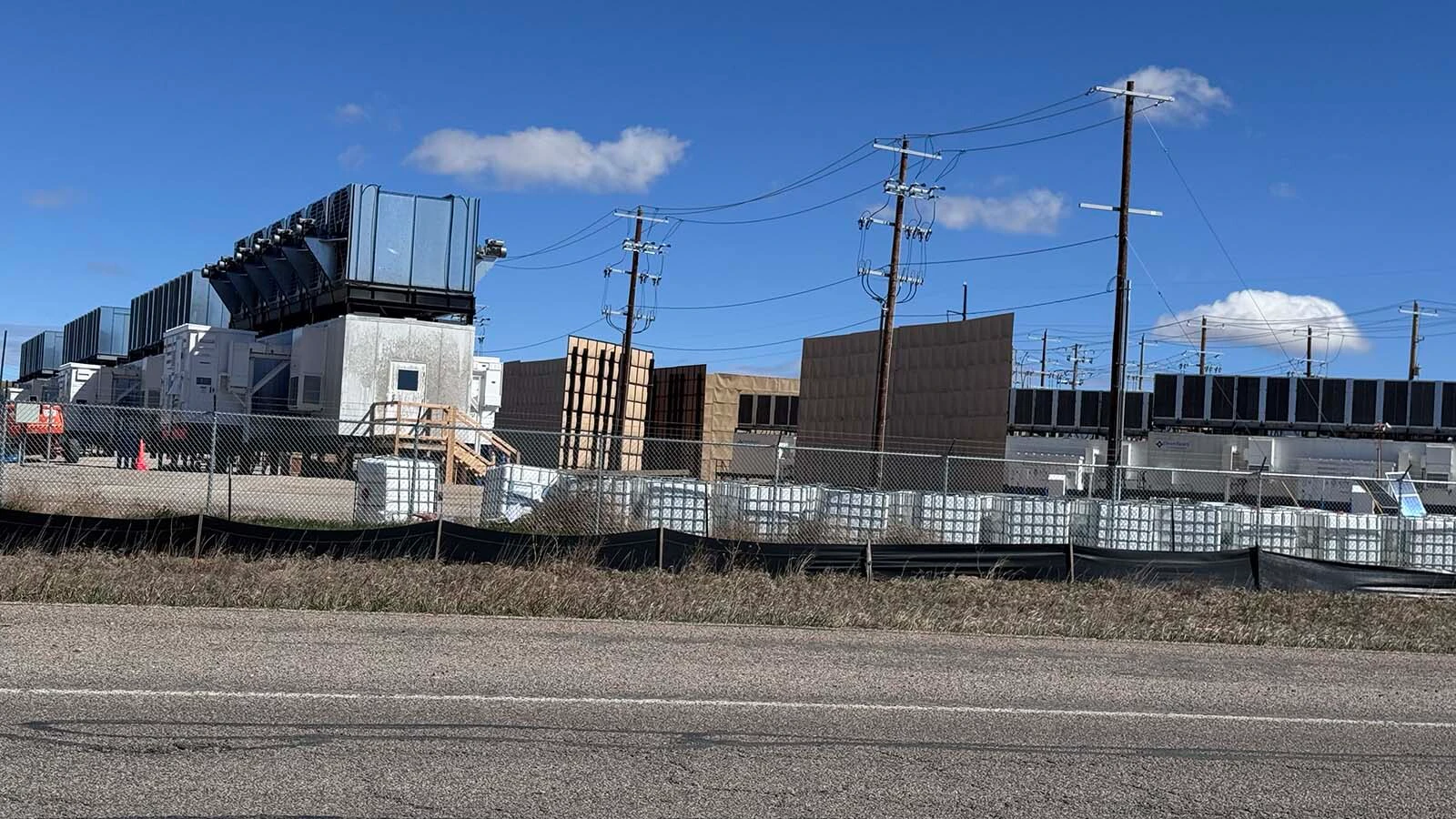
When they were confined to business parks on the outskirts of Cheyenne, they felt less imposing.
“Now you don’t have to look very far to go around and see these just enormous construction sites,” Wolfe said. “In fact, you can buy homes where you can sit and watch the Tonka trucks moving the land and keep your kids entertained for the rest of (their lives), or at least, a couple of years.”
'Too Much Of A Good Thing'
In Cheyenne, hundreds of residents are still calling for a moratorium, even after the City Council rejected it.
“Too much of a good thing is a bad thing,” Cheyenne resident Heather Madrid said about why she’s circulating the petition. “We’re overdoing it a little bit.”
Madrid has stressed she doesn’t object to what’s already been built in Cheyenne, nor is she necessarily against more data centers at some point in the future.
“I just think we need to slow down a little bit,” she said.
She wants the city council to consider more guardrails around water and power use, as well as better transparency on its own part when it comes to letting the public know about developments.
Right now, from her perspective, it’s a steady drip of non-information. There will be an annexation, but the annexation doesn’t come with the relevant information that it’s a future data center site.
That typically comes later — too late for much, if any, meaningful public comment about either the development or the annexation.
Madrid also wonders whether the data center juice is really worth the squeeze long-term.
She sees an economic hangover looming if the surge in data centers causes a surge in housing demand in an already tight market — not to mention how it’s already inflating labor costs for local services like plumbers and electricians.
Although Cheyenne recently rejected a moratorium ordinance brought by Councilman Mark Moody, Madrid told Facebook followers in groups like Cheyenne Community Connections that she will continue to collect signatures petitioning for one, and that she plans to seek state-level solutions to protect Wyoming residents.
Longer Data Center History
Cheyenne has a much longer history with data centers than Evanston.
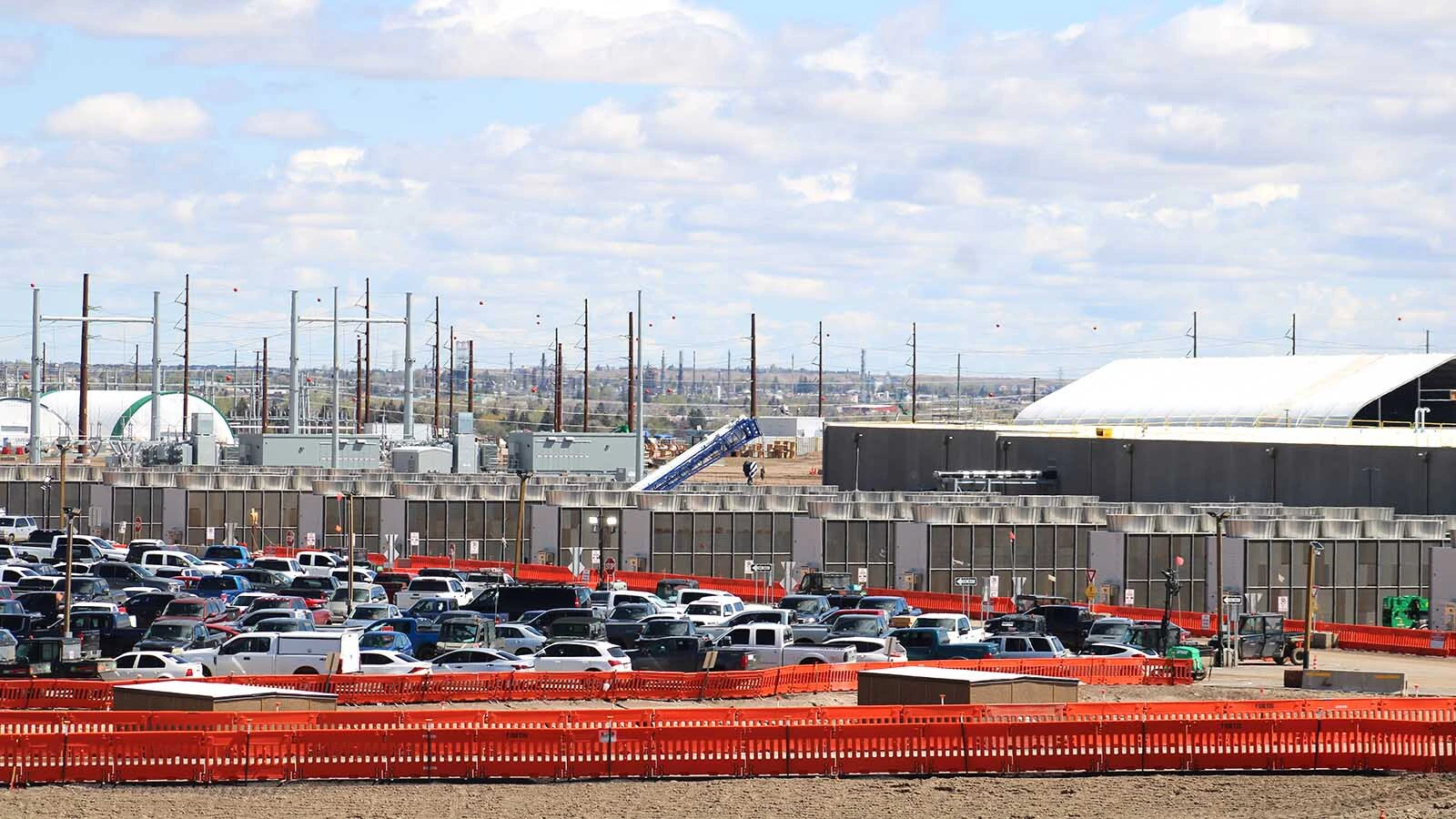
While Evanston does not have any data centers yet, Cheyenne’s largely successful history with them goes back to 2010, when the National Center for Atmospheric Research (NCAR) selected Cheyenne for a new supercomputing center in the North Range Business Park.
At the time, some had scoffed and said Wyoming didn’t have what it took for such a high-tech project, but people from across the state pulled together to change minds and prove that the Cowboy State not only had exactly what it took, but more: an attractive baseline for more data centers.
NCAR, meanwhile, opened doors that had previously been tightly shut. Microsoft was among the companies taking note of the decision.
It built its first data center in 2012, and has been here ever since, building new data centers every couple of years or so.
Its original site in Cheyenne expanded in both 2014 and 2016, and then, in 2021, two additional data centers were launched in the Cheyenne Business Parkway and Bison Business Park.
This past April, Microsoft announced it will triple its Cheyenne footprint, adding 3,200 acres to it. That’s in addition to data center expansions it was already working on. Just this week, Microsoft announced it will add another 420 acres to that.
“Wyoming is fortunately blessed in the sense that it is a net exporter of energy,” Microsoft’s Rima Alaily has told Cowboy State Daily.
She is Vice President & General Counsel, Infrastructure and Legal Affairs for Microsoft. “Rather than sending their energy out of state to support jobs in other places, that energy can be used in-state to really support jobs here in Cheyenne.”
A Longstanding Effort
Cheyenne’s pitch for data centers has been straightforward and longstanding, Cheyenne LEADS Executive Director Betsey Hale and Cheyenne Mayor Patrick Collins have both told Cowboy State Daily in various interviews.
Cheap and abundant power, cooler than average temperatures, the right infrastructure, and a labor force with high integrity and a great work ethic are among factors Cheyenne LEADS has used over the years to establish itself as a data center haven.
Hale, who has been in the state the last seven years, said LEADS’ efforts to win data centers goes back to 1986, when the state was looking for ways to diversify its economy.
That effort’s never been a secret, Hale has said, while also conceding city processes have been “the clunkiest.”
There’s a portal where all developments are listed, but it’s organized off project numbers, not categories. That makes it hard for people to parse which developments are data centers, which are housing, and which are something else.
“The city has not done a very good job of explaining how long the process takes, how many times the public can comment,” Hale said. “I think in addition to (that), what LEADS is going to start doing is trying harder to do stuff just like I’m doing with you. Hey, let’s educate people on where to find the information.”
The reasons for Cheyenne’s data center push are straight forward as well. Wyoming needs economic diversification to keep its youths, Collins has said.
“Wyoming exports our kids at one of the highest rates, if not the highest rate in the country,” he said. “Sixty-seven percent of our high school graduates leave the state, and they don’t come back.”
Picking Up The Pace
It’s ultimately the pace of such developments that’s changed the tenor and tone of opposition in Cheyenne.
The city’s business-as-usual approach — where big public announcements about data centers aren’t made until everything’s practically a done deal — has contributed to people feeling like they’re discovering the scale of things by accident.
“The citizens and the residents of Laramie County are kind of having to play detective and piece together what’s going on,” she has said. “The whole process doesn’t feel … it just isn’t transparent. There’s been like this slow drip of information that’s not exactly information.”
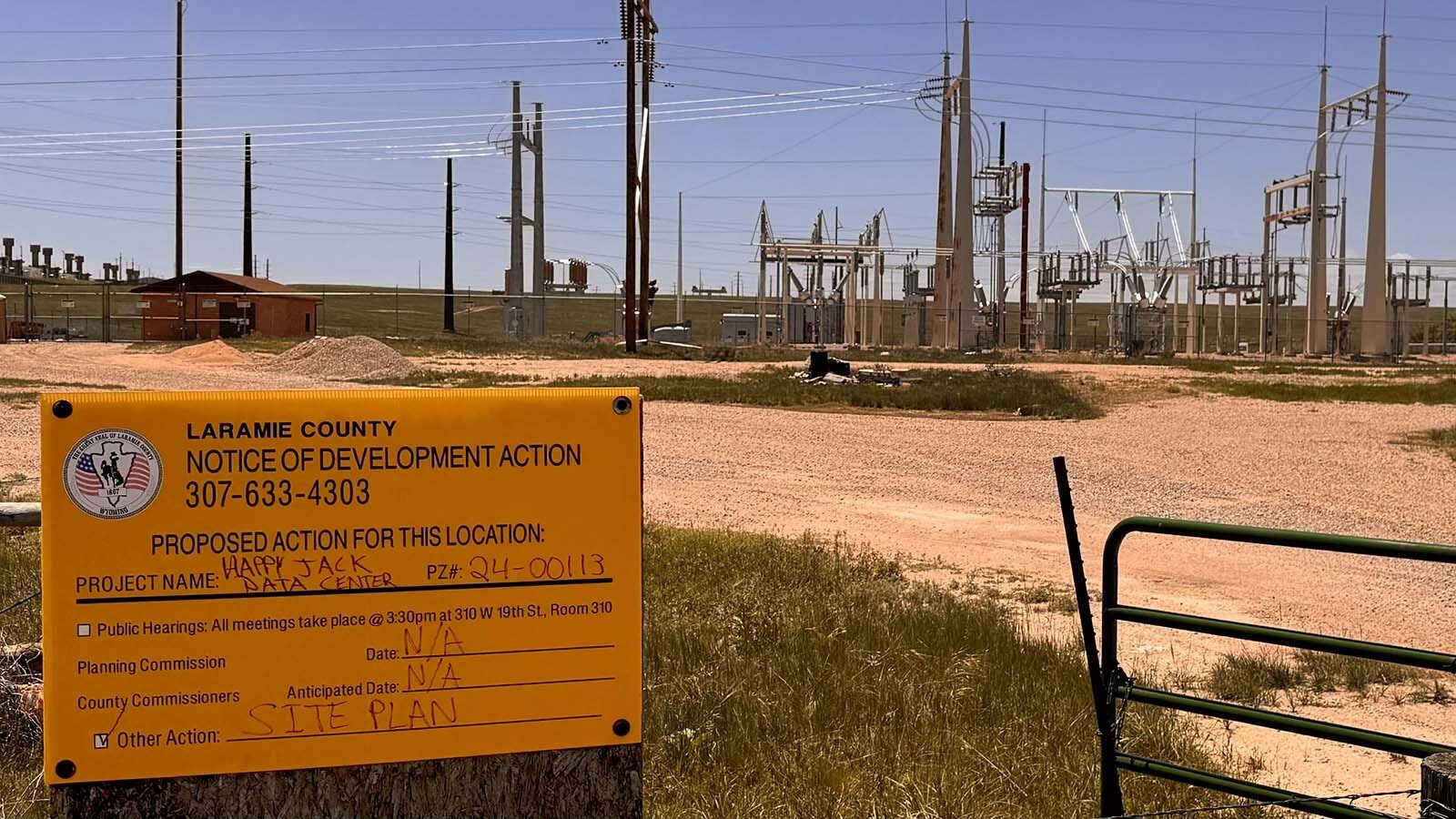
In Evanston, the relationship to data centers is newer, more self-conscious. There’s opposition, but many people are still deciding what to think, while others hope for new and long-sought economic vitality.
“I’m excited for the new jobs,” For Pete’s Sake owner Pete Bass told Cowboy State Daily with a shrug and a big smile at his Main Street coffee shop. “I’m also excited to see that someone from Wyoming is doing something spectacular, instead of Bill Gates or someone like that.
"We’ve got a sixth or fifth generation Wyoming guy doing it instead. They’re ranchers, building it on their own land, and it just excites me to see that.”
Data Centers Have Made Their Own Bed
Prometheus founder and Uinta County native Trenton Thornock has said he understands why many Wyomingites are wary of data centers.
The industry’s practices are, in fact, what inspired him to start his own company.
“The problem that I saw with the industry when I started is that the industry did not care how much power it consumed,” he said. “It did not care how much water was consumed for the (computing power). The whole point of starting this company was to provide a new type of infrastructure that was more environmentally responsible.”
As someone who grew up in Uinta County, Thornock also understands that his hometown needs an economic boost, and that was another part of his inspiration to propose a data center for his family’s ranch.
Many of his classmates left Wyoming to find jobs that would support a family — including Thornock.
It’s because of that he said his hire local promises have more teeth than many similar corporate pledges.
He doesn’t want to just pay lip service to the idea of hiring local. He’s already made investments in educational institutions near Casper and Evanston, with an eye toward creating a training pipeline for local residents who are interested in jobs at his facilities.
He has said those jobs will range from $75,000 to $150,000.
“These are high-quality jobs,” he has said. “What we would like to see happen is, instead of Wyoming’s energy being exported, for more of that energy to be consumed in the state for the benefit of the people in Wyoming.”
Same Questions, Different Timing
Ultimately, beyond the acronyms, many of the questions in Evanston and Cheyenne remain the same, as do many of the technical details — closed-loop systems, gigawatts instead of megawatts, environmental and noise concerns.
The difference, perhaps, comes down to timing.
Cheyenne, as the early adopter, is facing a surge that many of its residents, busy with life, weren’t expecting — even though it’s something the city’s leadership has been seeking to attract for decades.
Evanston, as the newcomer, is at Day One, still wondering what its boundaries should be.
Meanwhile, the state has not yet taken a hand in things. But that’s coming.
There’s already discussion at legislative levels wrestling with whether Wyoming is giving away the store when it comes to data centers, and whether there should be more guardrails on water, power, and land-use decisions that could have widespread effects on the state’s residents as well as its scenic landscape.
Only time will tell where things shake out in the end.
But the siren song of economic diversification and high-paying jobs is still music to many ears, even as pointed questions about water, power and land use are being asked.
That’s meant two countermelodies, both playing loudly and competing to be heard, from Evanston to Cheyenne, with Casper in between.
Renée Jean can be reached at renee@cowboystatedaily.com.