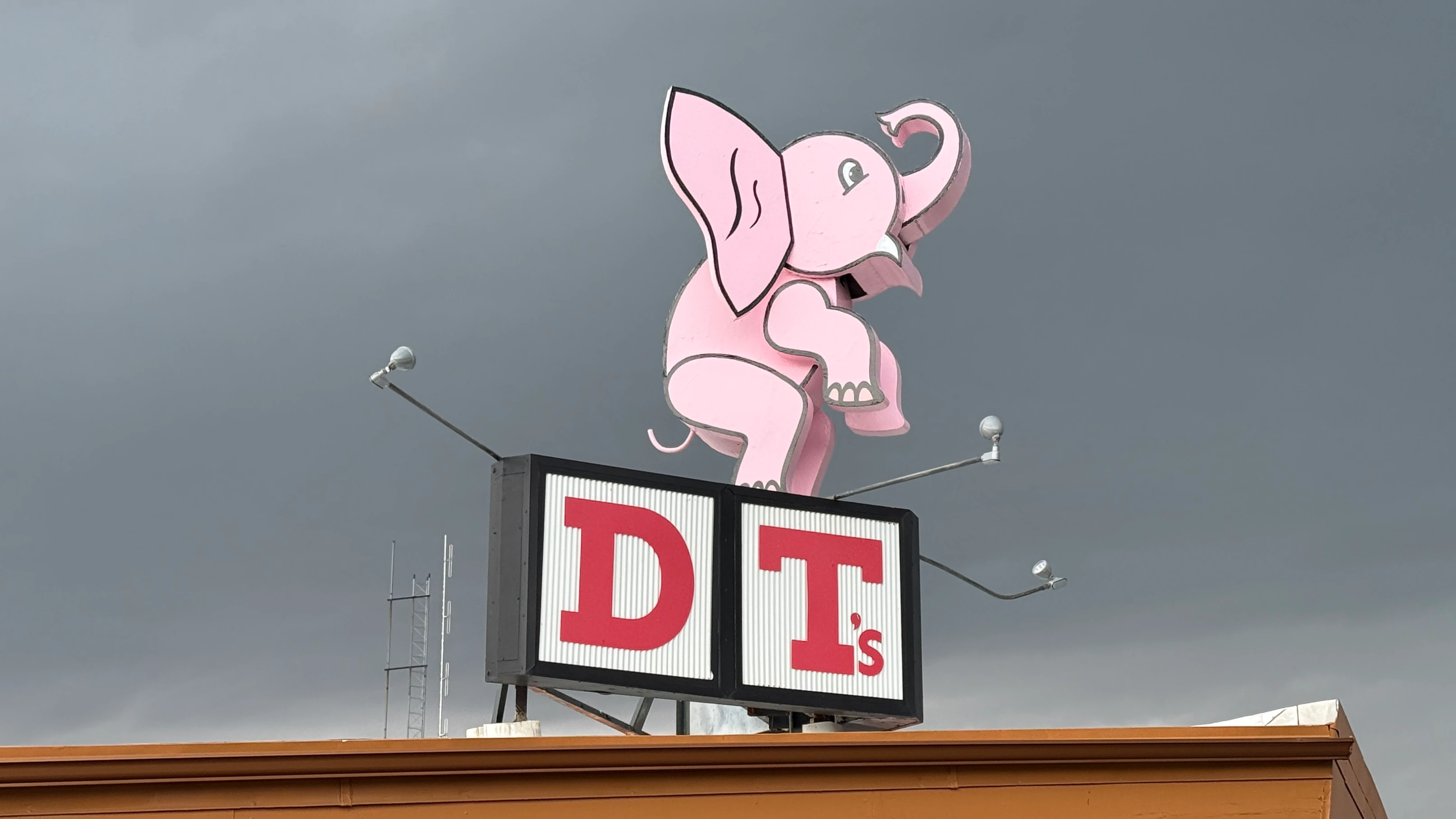
When Brian Downing opened his eyes somewhere in Wyoming in the summer of 1975, he saw a giant pink elephant dancing above him.
For a moment, he wasn't entirely convinced it was real.
Downing had gotten out of the Army a few months earlier and was hitchhiking from Washington, D.C., to Bellingham, Washington, before starting college at Georgetown University that fall.
"It was a respectable means of transportation then," he recalled.
Somewhere in eastern Wyoming, two Native American men picked him up and offered him a Coors.
That alone was something of a novelty. At the time, the cold Colorado beer was hard to get east of the Mississippi River, and Downing remembers it as a welcome break from the summer heat.
"My hosts were at least somewhat inebriated and had a dismembered doll on the dashboard," Downing said.
That was disconcerting, but off they went.
Eventually, Downing fell asleep.
He woke when he sensed the car had stopped. Still groggy, he looked up.
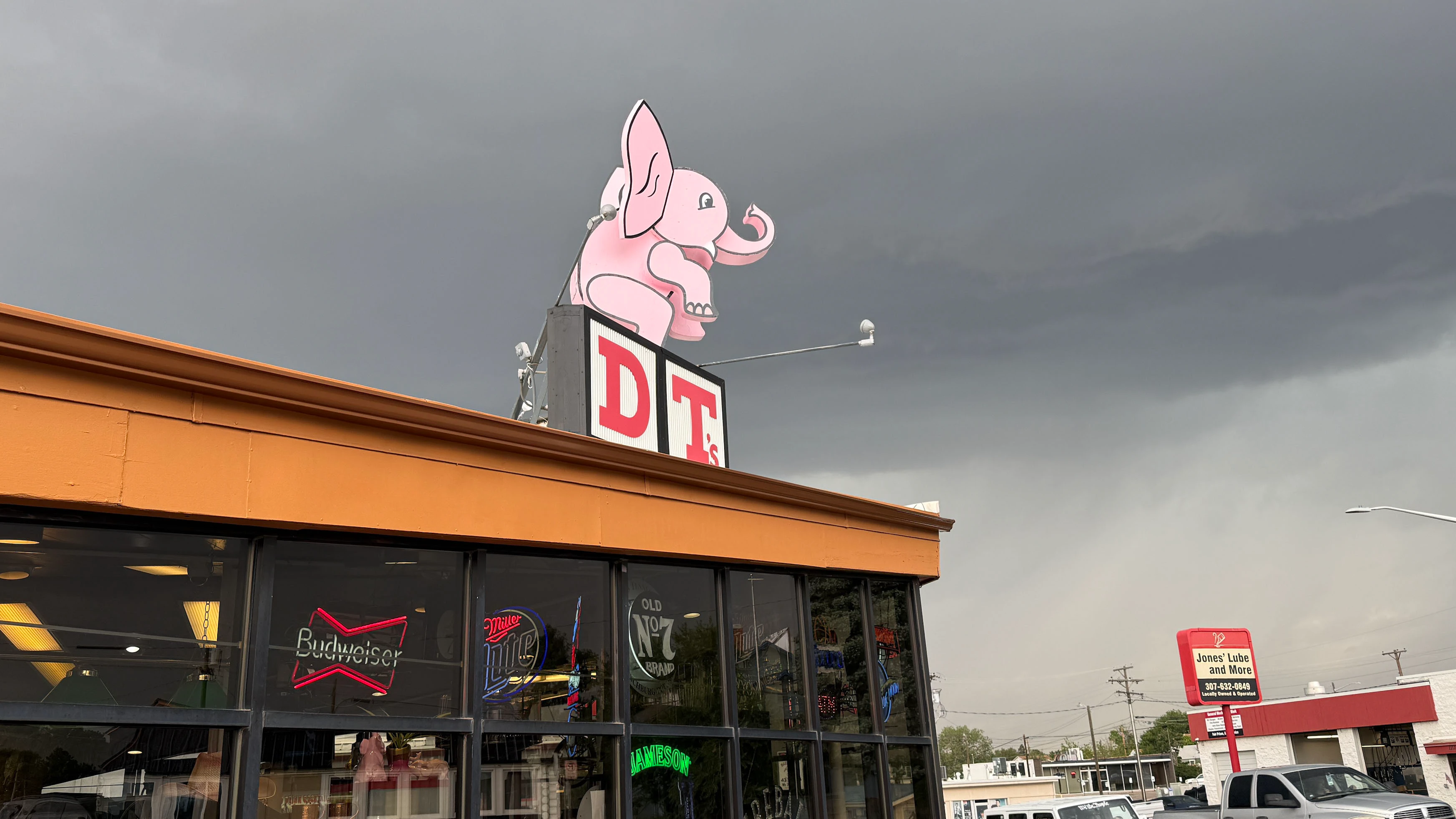
There it was.
A dancing pink elephant and a sign for DT's Liquors.
"It took a moment to shake off the idea I was dreaming," he said.
The men dropped him off near Rawlins about two hours later. Downing continued west and made it all the way to Washington.
He doesn't remember much more about that peculiar ride, but more than 50 years later, he vividly remembers the elephant.
Seeing Pink Elephants
There is something almost too perfect about Downing's story.
Americans, after all, had been "seeing pink elephants" long before Downing saw his in Wyoming.
The expression became shorthand in the early 20th century for the bizarre hallucinations associated with heavy drinking and alcohol withdrawal.
Jack London famously invoked the imagery in his 1913 autobiographical novel John Barleycorn, writing of a man who sees "blue mice and pink elephants" in his delirium.
In Walt Disney's 1941 animated classic, Dumbo and Timothy Mouse accidentally drink water spiked with champagne. What follows is one of the strangest sequences Disney ever put on film.
Elephants multiply, dance, march and morph into bizarre shapes in a surreal, ethanol-soaked dream.
"Pink Elephants on Parade" didn't invent the association between pink elephants and booze, but it helped plant the image firmly in American popular culture.
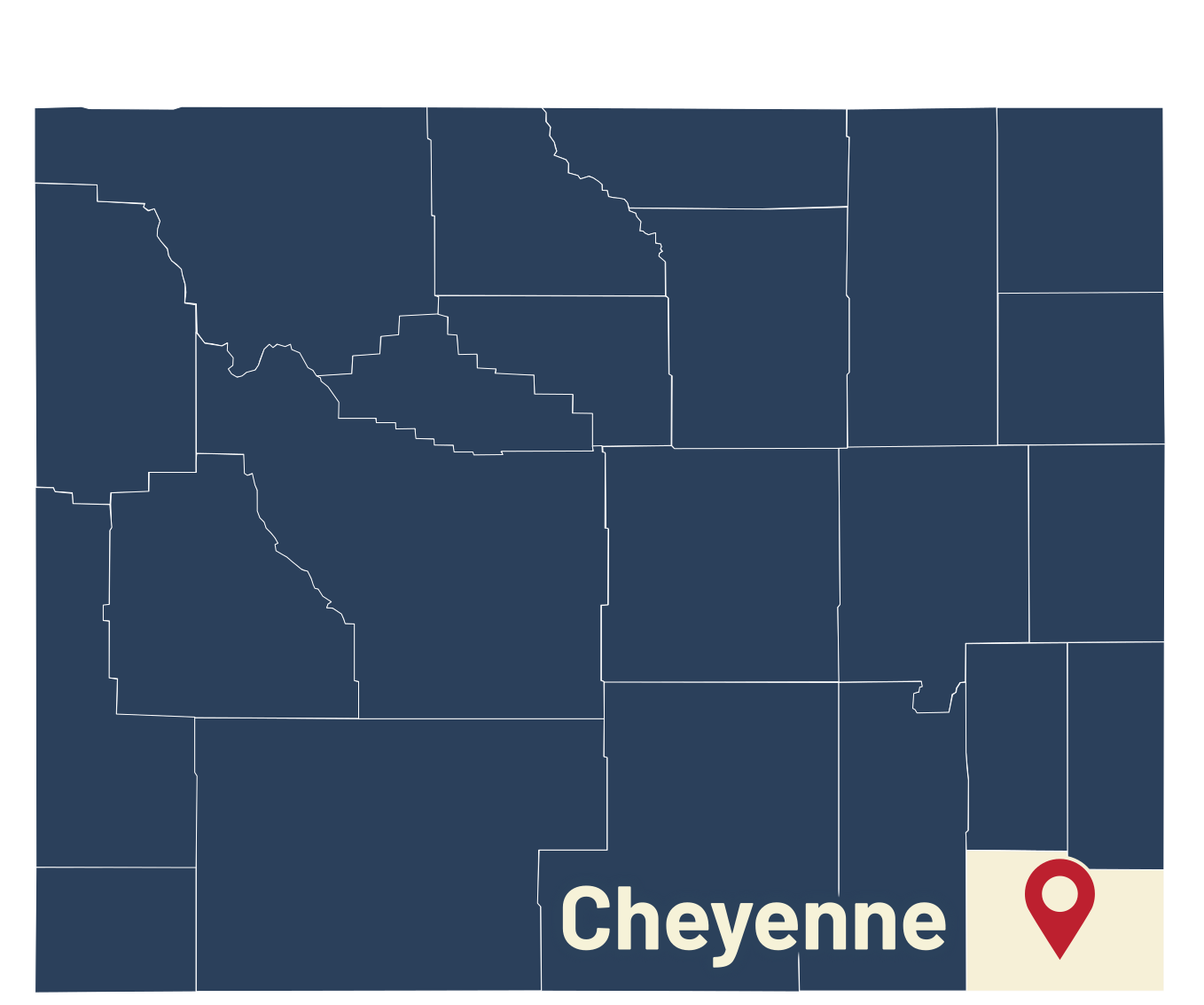
And in Cheyenne, the joke became even better.
Because DT's wasn't named for delirium tremens, although it would make sense.
D.T. Was A Guy
Mike Moser has heard the assumption plenty of times.
Moser, executive director of the Wyoming State Liquor Association and a former Cheyenne bar owner, first moved to the city in 1980 and has spent decades in Wyoming's liquor industry.
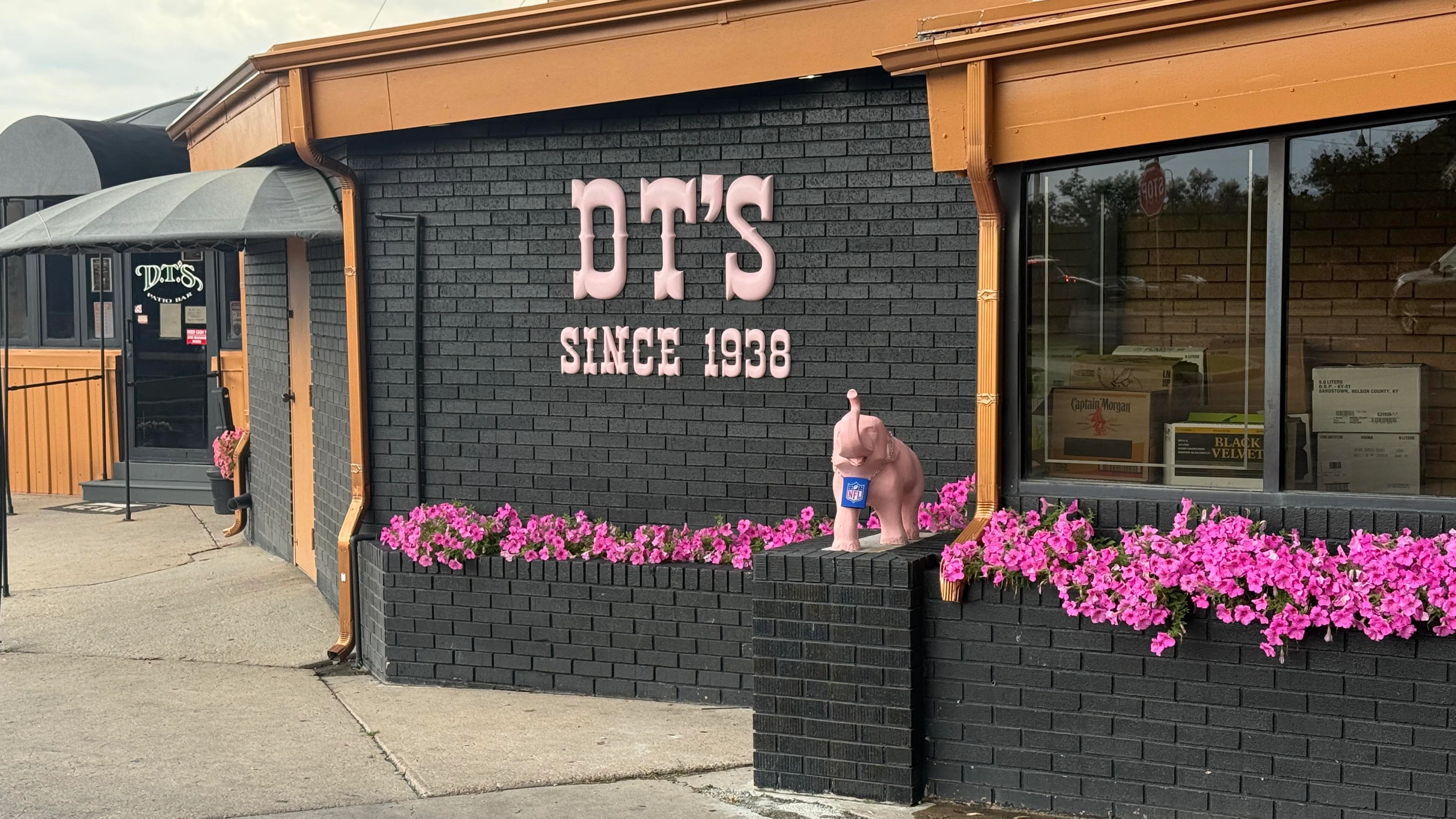
"The vast majority of people don't realize the dude's name was D.T. Johnson," Moser said. "It wasn't the DTs that you get from alcohol. It was just his initials."
Johnson was also an important figure in Wyoming's early liquor industry. Moser said he became the first president of the Wyoming State Liquor Association in 1945.
It wasn't until the early 2000s that DT's expanded, Moser said. The owner bought A&A Discount Liquor and converted it into a second DT's.
That larger operation became DT's Liquor Mart and Tusker Bar. It eventually closed in late 2024.
The old Lincolnway DT's kept going.
Moser said the Sullivan family owned the store for years before Kevin Georges bought it.
The Kid Who Bought The Place
Georges was born and raised in Cheyenne, and he remembers a handful of markers around town that stuck in his mind as a little boy.
"We always would drive by the pink elephant," Georges said.
Sometimes on Sundays, his parents would take the kids to get doughnuts and swing past DT's so they could see the elephant moving above the building.
"That was a marker for us," Georges said. "I was familiar with the pink elephant way back when, having no idea even what the building and the establishment was."
Georges came from another old Cheyenne retail family. His family had operated a furniture business for generations.
Eventually, the furniture industry began changing, and the family faced a decision about whether to remain in the business or try something different.
Mike Sullivan, then the owner of DT's, was a close friend of Georges.
A conversation between the two turned into an idea, which turned into negotiations.
In 2008, he officially bought the place.
The Neighborhood Bar
For Moser, the staying power of DT's isn't simply about a funny sign.
"It's unique," he said of the elephant.
And its location helps.
"Lots of people drive on Lincolnway, so everybody knows where it is," he said.
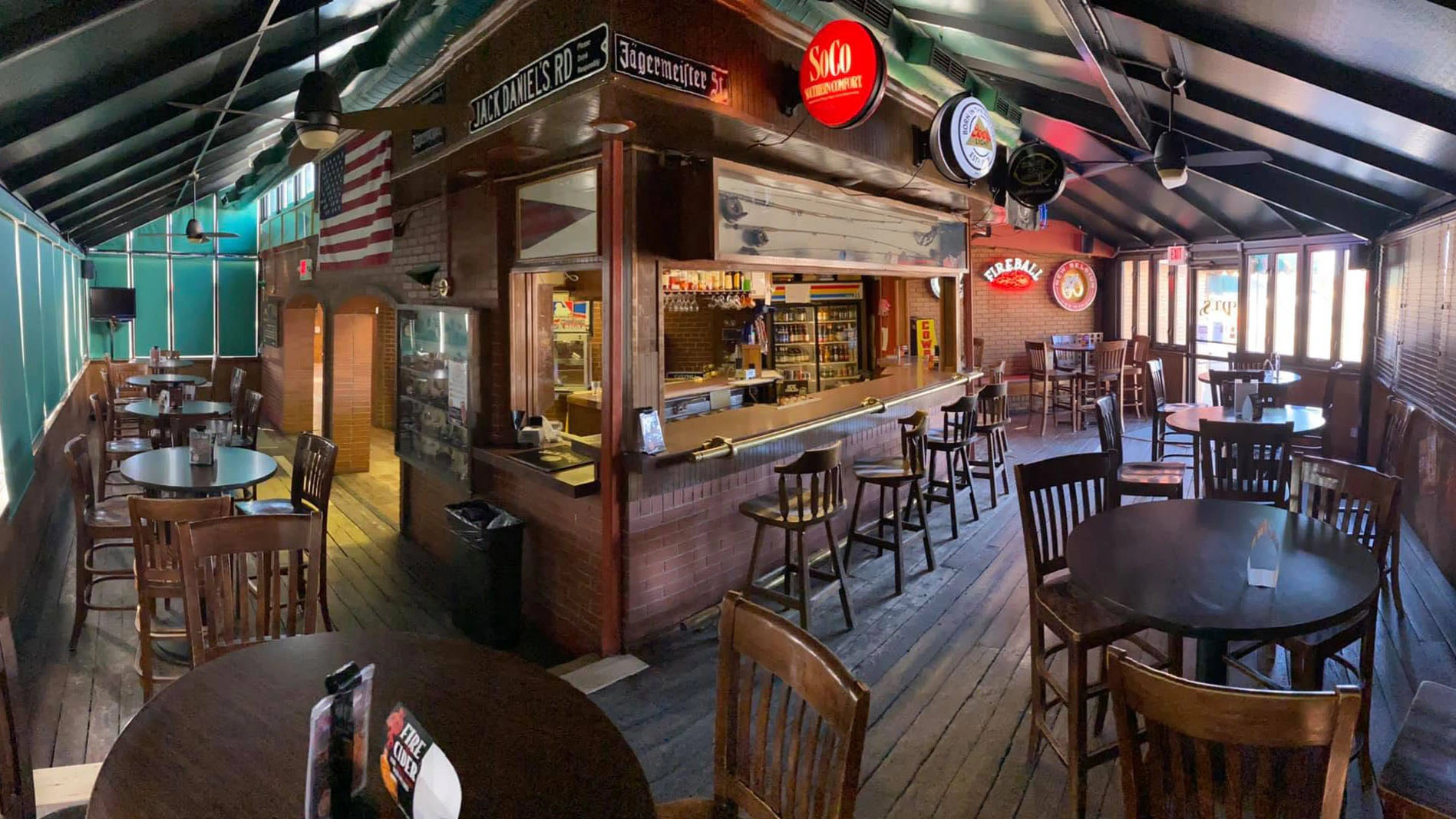
Moser sees DT's as part of something that's becoming increasingly uncommon: the locally owned neighborhood bar and liquor store that survives long enough to become part of a community's identity.
Retail has changed dramatically during his lifetime. Grocery stores and other businesses that were once locally owned have given way to large corporate chains.
Local watering holes have proved more stubborn.
"I think there will always be a place for the neighborhood bar because that's where we meet our friends," Moser said.
"There's not too many businesses where you can still walk in and shake the hand and have a beer with the owner."
Bars and package liquor stores, he said, remain among the "stalwarts of small business."
"I think that's part of the nostalgia that the liquor industry has that most industries, sadly, have lost," he said. "We're still hometown businesses."
Still Nodding
Roadside America was once filled with strange things built to make travelers look twice.
Giant cowboys, dinosaurs, doughnuts and fiberglass animals loomed over highways, each competing for the attention of motorists speeding past.
Many disappeared along with the businesses they advertised, but the pachyderm keeps keeping on.
The rooftop animatronic is old — exactly how old, Georges doesn't know — but much of its original mechanical construction has survived.
"Back in the day they built things to last," he said.
The old parts can still be serviced, Georges said, and DT's makes a point of maintaining them. About two years ago, the elephant got another fresh coat of paint.
"We hope that it never goes down," Georges said. "We make sure that we keep that icon moving."
Kolby Fedore can be reached at kolby@cowboystatedaily.com.