
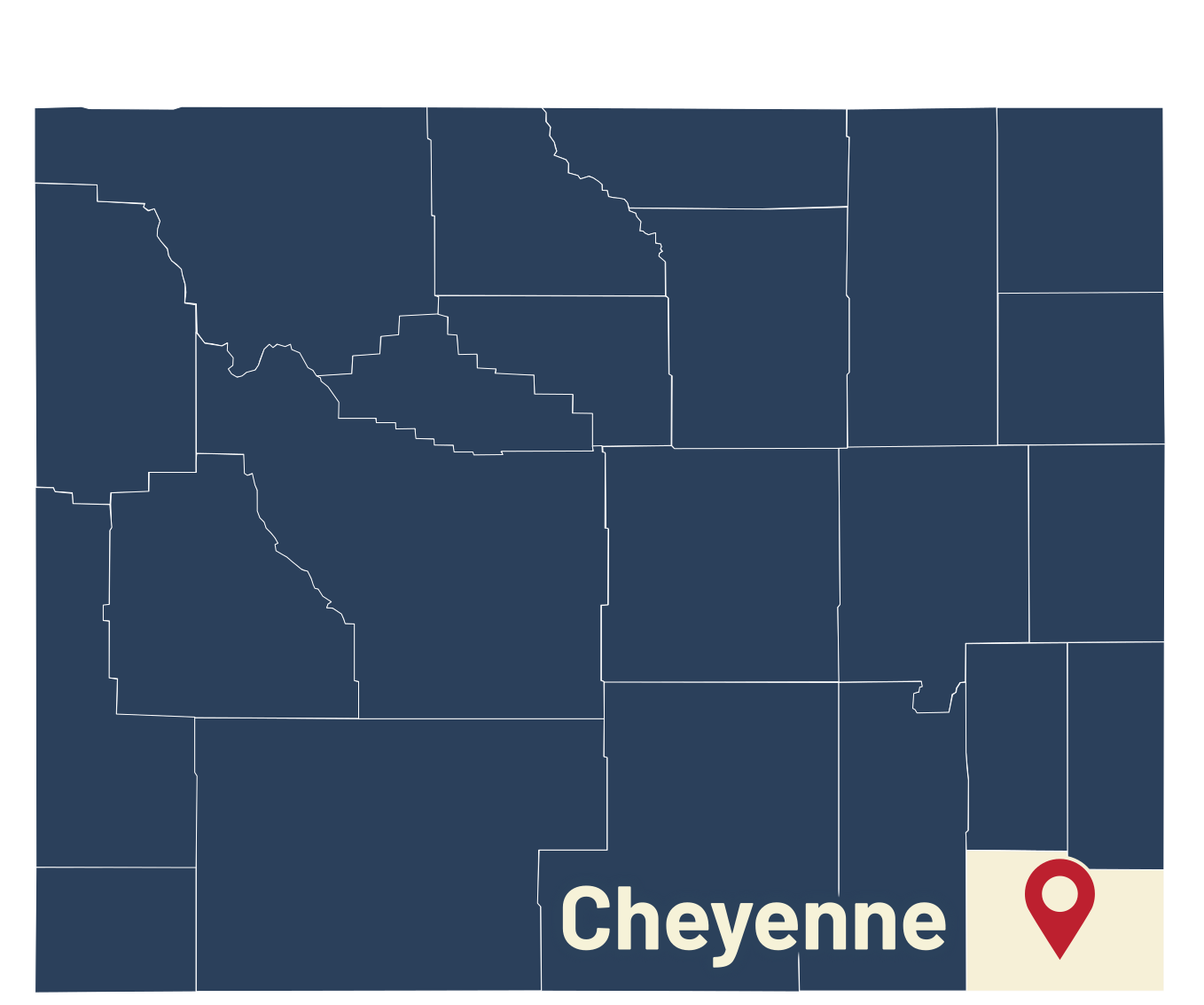
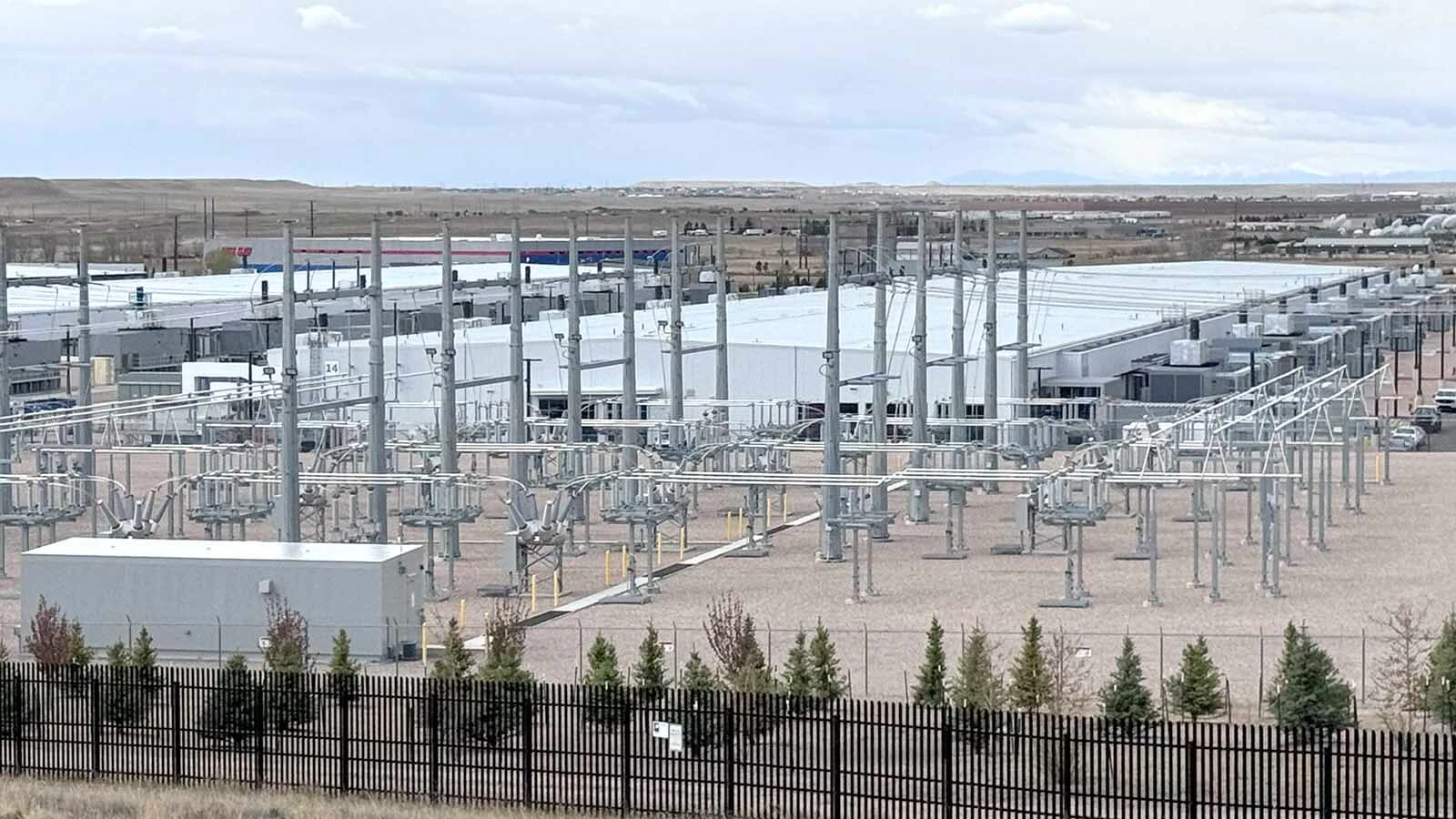
Microsoft announced a massive new expansion in Cheyenne on Tuesday that will effectively triple its physical footprint in Wyoming’s capital city.
The announcement comes amid simmering debates about data center impacts to energy costs and water usage, as well as what kind of economic development best fits the Cowboy State.
Microsoft officials told Cowboy State Daily on Tuesday that they plan to buy about 3,200 acres on the south edge of Cheyenne, which is roughly 5 square miles.
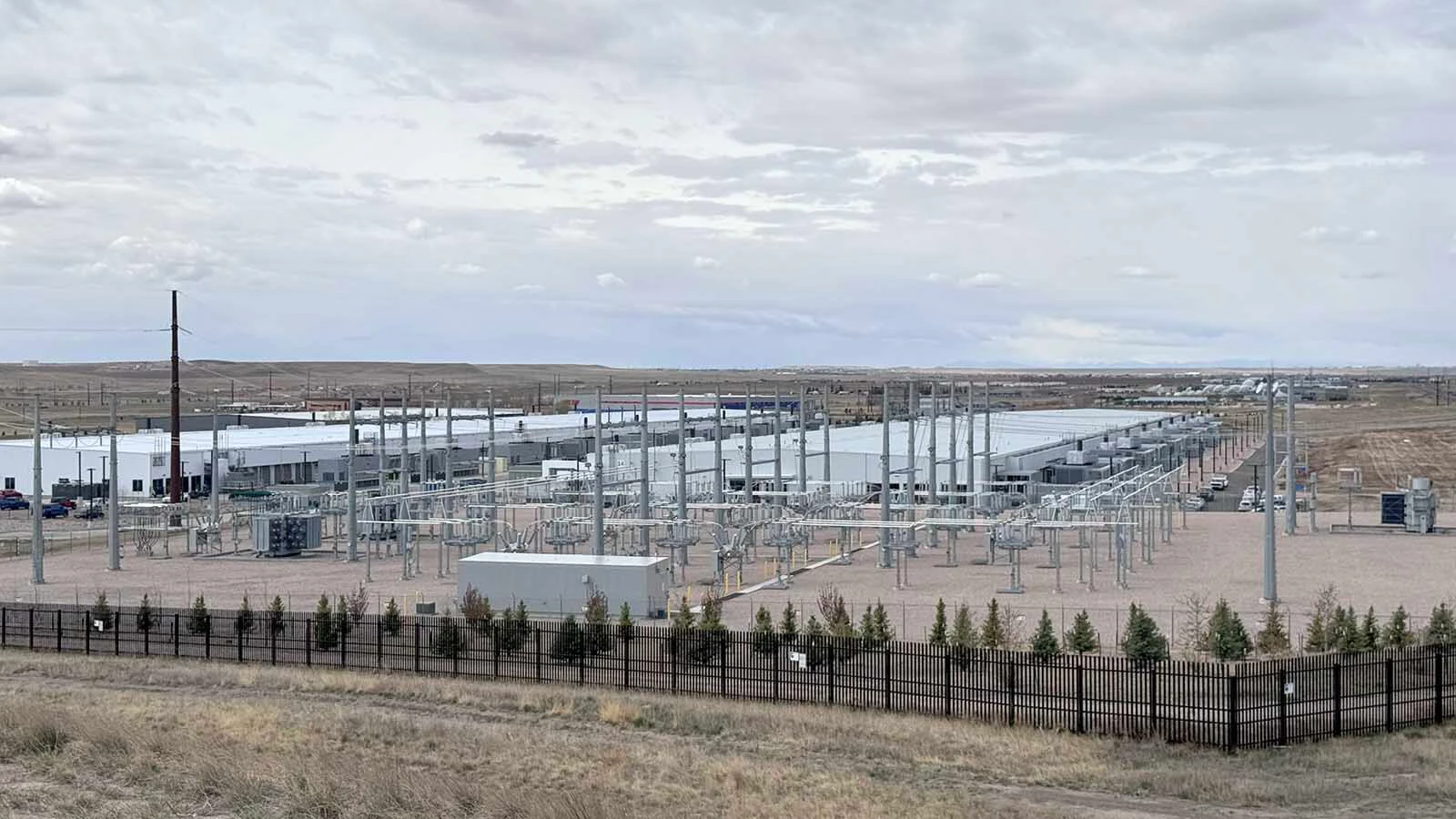
That will triple Microsoft's current footprint, which includes 11 operational data centers and three more that are under construction spread across four campuses.
The purchase involves two pieces of land, one 200-acre parcel located in Bison Business Park on Wapiti Trail east of South Greeley Highway, and an adjacent 3,000-acre parcel accessible from Wapiti Trail.
The announcement is a continued commitment to growth in Cheyenne, Microsoft spokeswoman Rima Alaily told Cowboy State Daily. She is vice president and general counsel for Microsoft infrastructure and legal affairs.
“We built our first data center in Cheyenne back in 2012, more than a decade ago,” she said. “At the time, we were really attracted by the city’s high-skilled workforce, its infrastructure and its real, thriving energy industry.
"I think today, the investment that we’re making is really a commitment to continued growth in Cheyenne for those same reasons. They continue to be true.”
Alaily added that the company is also committing more broadly to Cheyenne to contribute to all the things that make it a “great place to live and work.”

Wyoming Has The Right Stuff
Wyoming has the right climate to keep energy costs to cool data and artificial intelligence centers down, Alaily said.
“We still have not ultimately closed on the land, so we will continue to work through what our specific design will be, and that will ultimately determine, at the end of the day, what our energy consumption will look like,” she said.
The company’s plan is to look first to the “innovative utility partnership” it has with Black Hills Energy, which offers a large power contract service tariff, although Alaily did not rule out the possibility of a “bring-your-own-power” solution if necessary.
Black Hills Energy’s unique tariff ensures Microsoft pays for “all of the infrastructure upgrades and the power that’s procured by the utility to serve our load,” Alaily said.
“That makes sure that the community residents don’t see their rates go up because we are present in the community,” she said, adding that Wyoming is a net exporter of energy, shipping far more energy out than it uses.
“We are hopeful that we can tap into some of that energy,” she said. “And I think the great thing for Wyoming residents is, rather than sending their energy out of state to support jobs in other places, that energy can be used in state to really support jobs here in Cheyenne.”
As far as water usage goes, Alaily said Microsoft has been pushing toward more efficient, closed-loop cooling technologies that limit how much water is withdrawn and consumed.
The company has also made broader water-replenishment commitments in every community where it operates. Those projects have ranged from collaboration with Cheyenne to address stormwater pollution in Crow Creek to improving drainage capability for Dry Creek.
Microsoft also worked with the U.S. Forest Service to decrease erosion and sedimentation to protect wetland habitats and watersheds downstream of the Pole Mountain area, which is a 55,000-acre high-elevation recreation area in the Medicine Bow-Routt National Forest of southeast Wyoming.
Increasing Skepticism
Wyoming, like much of the nation, has become increasingly skeptical of promises made by data centers.
Microsoft’s announcement comes even as Wyoming lawmakers have continued to wrestle with how to handle the issues they pose.
Chief among those issues, said Sen. Cale Case, R-Lander, is how to fully insulate ordinary ratepayers from the impacts of massive new data centers.
Case worries that with opposition rising across the nation to data centers, that could invite an influx to Wyoming before it’s quite ready for all the issues involved.
“We have a lot of new proposals on the table,” Case said. “So that is concerning. They don’t fall under industrial siting quite the way other things do, so it’s a little bit hard to figure out when they’re in Black Hills territory.”
Black Hills, Case added, has been a little more innovative about supplying large loads with its tariff. It is a model he hopes would be used across the state.
“The law that allows for that tariff doesn’t just apply to Black Hills,” he said. “But saying some of these things and doing are kind of two different things.”
Case feels it’s disingenuous how data centers will claim they’re not going to affect power rates because they plan to bring their own power.
“It looks good on paper,” Case said. “But what happens down the road when those supplies become constrained? So, it’s not benign, and it takes a lot of thought. I don’t think you can ever say this is not going to impact other customers.”
Even if tapping natural gas doesn’t immediately cause price spikes for that resource, Case added that there are issues with connecting to the grid.
“To bring it in, you interface with the rest of the grid,” he said. “And the grid gets congested. If the lines are full, people can’t get power when they need it. It’s really interactive, interconnected, and complicated.”
As far as the claim they’ll use less water, Case questions that entire narrative, given that the state is already looking at critical groundwater issues for the entire Colorado Basin.
“They also need a lot of other infrastructure,” Case said. “Power lines, substations, roads — all that stuff they don’t necessarily completely pay for, and then the power demands are just amazing.
"So, I think we should be skeptical. And I think it’s beyond the capabilities of a county commission, for example, to grant a permit. I do think there ought to be more involvement in industrial siting in Wyoming.”
Housing Issues Loom
Cheyenne city officials, including Mayor Patrick Collins, have been in talks with Microsoft about its proposal to triple its footprint.
Steps are already being taken by the city to deal with housing challenges that Cheyenne’s growth presents, Collins said.
“Last night, we did some zone changes to allow more traditional lots to be split into smaller sizes to make smaller, more-affordable houses,” Collins said. “We rezoned some areas to allow for some additional apartment buildings.
"I think 120 more apartment buildings on land that was going to be zoned to do other things. So, we’re working really hard to address housing issues.”
As Collins sees it, Cheyenne’s housing situation isn’t unusual. Lack of affordable housing has been an issue across the state and the nation.
“There’s not a mayor I talked to that doesn’t tell me one of their largest challenges is housing,” Collins said. “So, you can’t stop, because there’s not enough houses anywhere.”
Cheyenne did 1,100 housing units last year, Collins added, while the state as a whole did 1,600.
“So, we’re making a dent, and we’re working hard at it,” he said. “And a lot of the credit for that goes to our City Council for all the regulatory work we’ve done to allow for more flexibility so our builders can build what people are looking for, which is the affordability.”
To Collins, data centers are more about opportunity than challenges. And the biggest opportunity, as he sees it, is the chance to retain more of Wyoming’s young adults with high-paying, attractive jobs.
“In Wyoming, we export our kids at the highest rates, if not the highest rates in the country,” he said. “Sixty-seven percent of our high school graduates leave the state. By the time they’re 30, they’re gone.
“And of college graduates, that number is 70%, so one of the things we need to do as a community is to find a way to create jobs so those kids have the choice to stay.”
Some of them may not choose to stay, Collins added.
“But at least they have a choice,” he said. “And that’s what’s really exciting for me with companies like the announcement today for Microsoft. They’re building great, great opportunities for people to make careers.”
The company has also made substantial investments in the community, Collins added, which he believes helps Cheyenne attract and retain more families.
“Microsoft is the largest taxpayer in Laramie County right now,” he said. “And that will continue to grow. Those taxes are going to give us the opportunity to start working on more of the amenities we’ve been trying to do, like we just built the ‘Beast’ — which is the gymnasium, the gymnastics facility — last year.”
Public Engagement Opportunities Ahead
Microsoft paid $11 million in tax revenue last year, a Microsoft spokesperson told Cowboy State Daily, which made it the No. 1 taxpayer in Cheyenne and the No. 2 in Laramie County.
Alaily pointed out that’s money that supports schools, hospitals, and other services.
Microsoft has also invested $4.7 million in local IT training with various entities, including Laramie County Community College. That’s a commitment Alaily said will continue.
Alaily frames Microsoft’s plan to triple its footprint in Cheyenne as part of a much larger national trend. Demand for cloud computing and AI is exploding across the nation. Data center capacity has to follow.
Furthermore, Cheyenne is being seen by the company not as a short-term boomtown, but as a long-term bet.
The plan is to roll the expansion out as a multi-year, carefully sequenced build-out that will align with infrastructure capacity and permitting, and that will take into account community needs. This means multiple public hearings are ahead of the company as the plans are developed.
The specific number of construction jobs and permanent jobs that will be associated with the project is not yet known, Alaily said.
The company is still in the design phase for the project and expects to come before city officials multiple times as the project unfolds.
The company already employs 200 for its current footprint, however. The new number of jobs would be in the hundreds, according to a Microsoft spokesman who spoke to Cowboy State Daily on background.
The construction jobs would not necessarily be fleeting, Alaily added.
“These types of developments enable people to build a career in the construction trades around jobs that tend to last many years, and up to a decade in a single location,” she said. “So that’s a tremendous opportunity for local tradespeople in Cheyenne, in Wyoming, and further afield.”
Renée Jean can be reached at renee@cowboystatedaily.com.


