
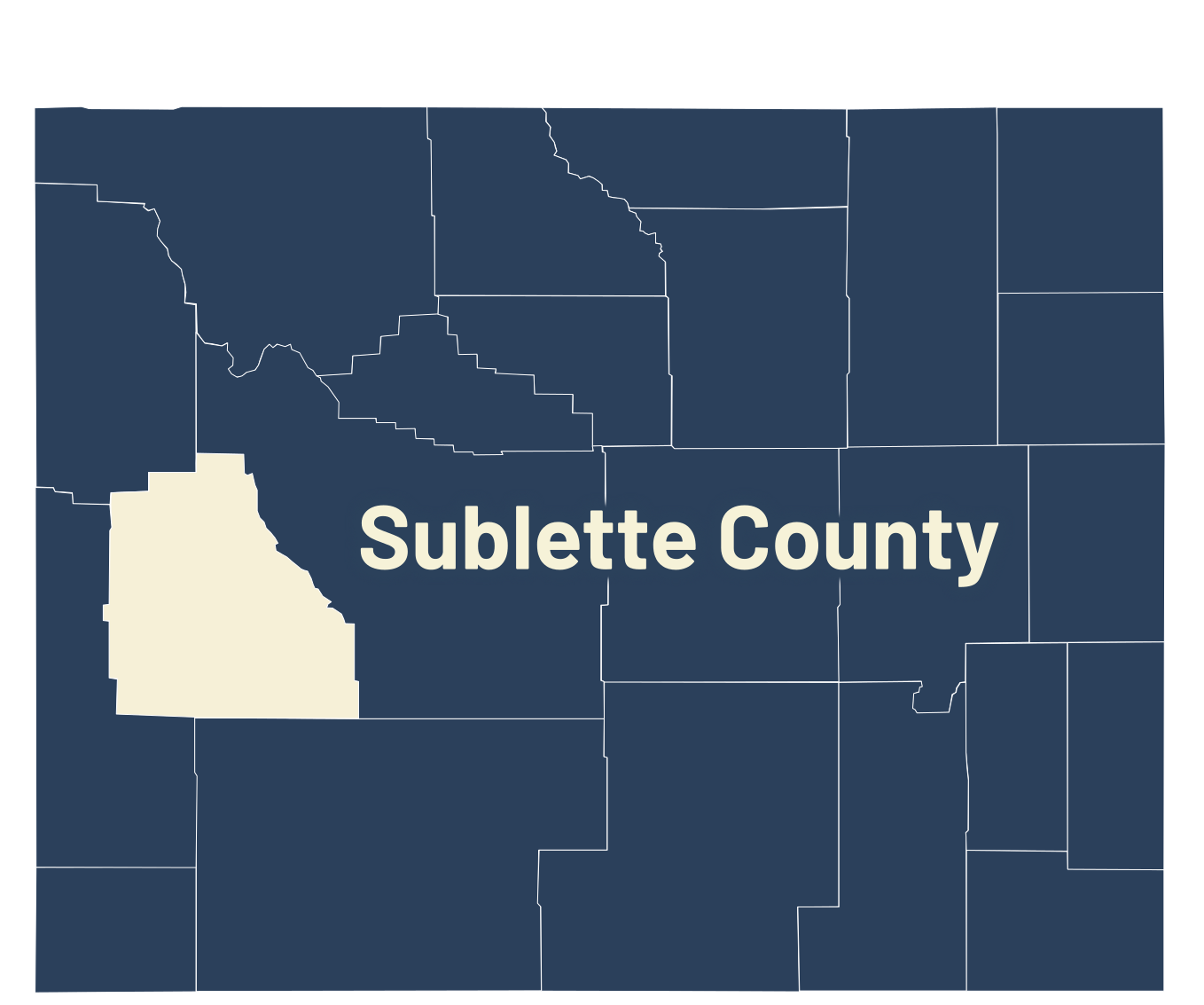
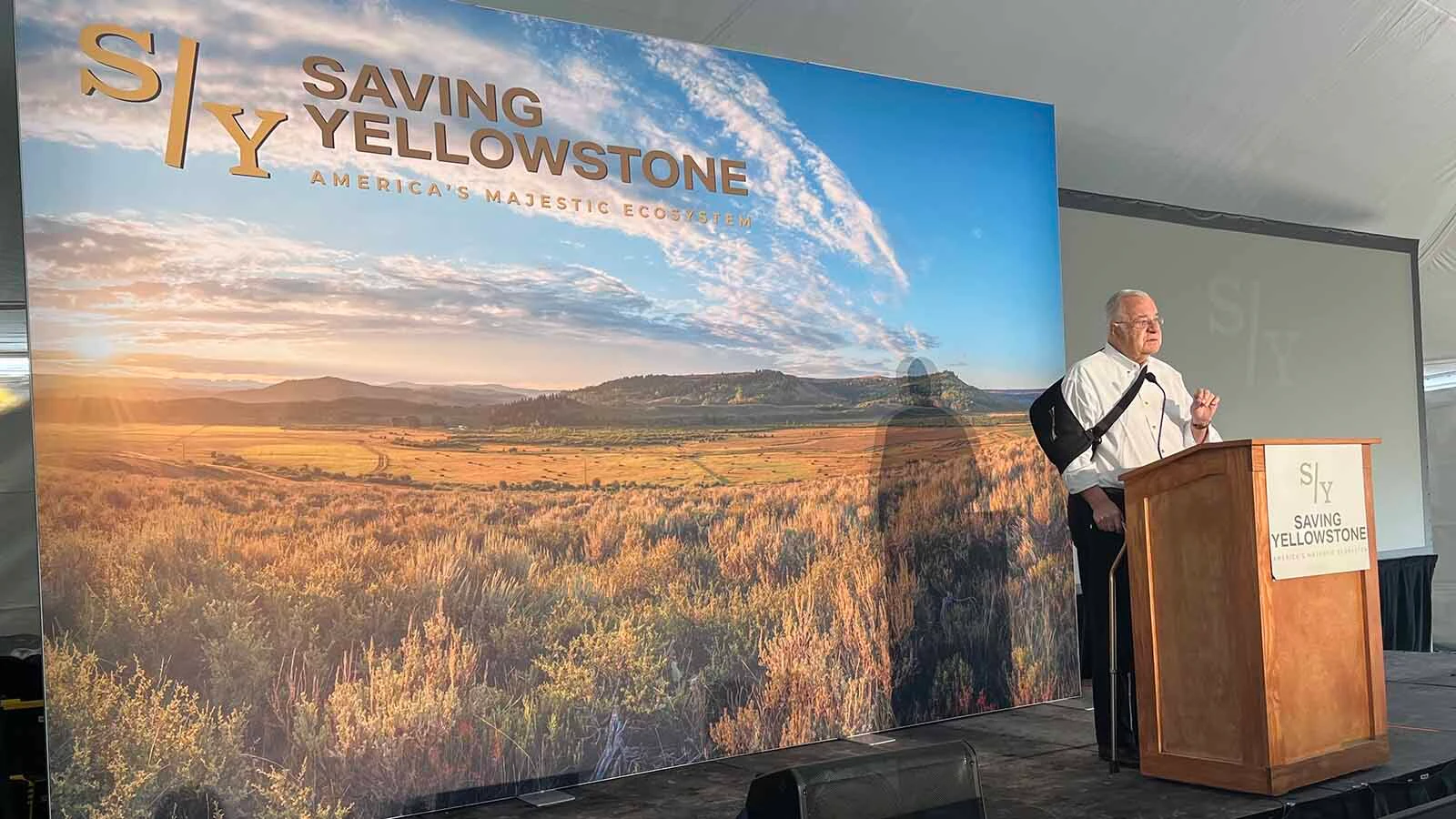
When billionaire Joe Ricketts moved to the Bondurant area in 1999, he didn’t grasp how his actions could affect the landscape and wildlife he’d fallen in love with.
He set up a pasture to raise a prized herd of rare white bison, unaware of how that hurt local big-game herds.
“I didn’t know that I had put that (bison) fence right on the ungulates’ migration path,” Ricketts told an audience gathered Wednesday at his 1,300-acre Jackson Fork Ranch in the Upper Hoback Valley.
So, he revised the bison pasture so it no longer disrupted the movements of mule deer, elk, and other wildlife.
Ricketts, 85, said it was his first step on a journey to becoming a staunch supporter of better understanding and protecting the 20-million-acre Greater Yellowstone Ecosystem in Wyoming, Montana, and Idaho.
Since buying the Jackson Fork Ranch, Ricketts has been a polarizing figure in Wyoming..
The billionaire TD Ameritrade founder and Chicago Cubs owner once wanted to change the name Bondurant to Little Jackson Hole. He also proposed a 56-acre, 230,000-square-foot luxury resort at the ranch, but canceled the controversial project in the summer of 2024 over increasing costs.
Saving Greater Yellowstone
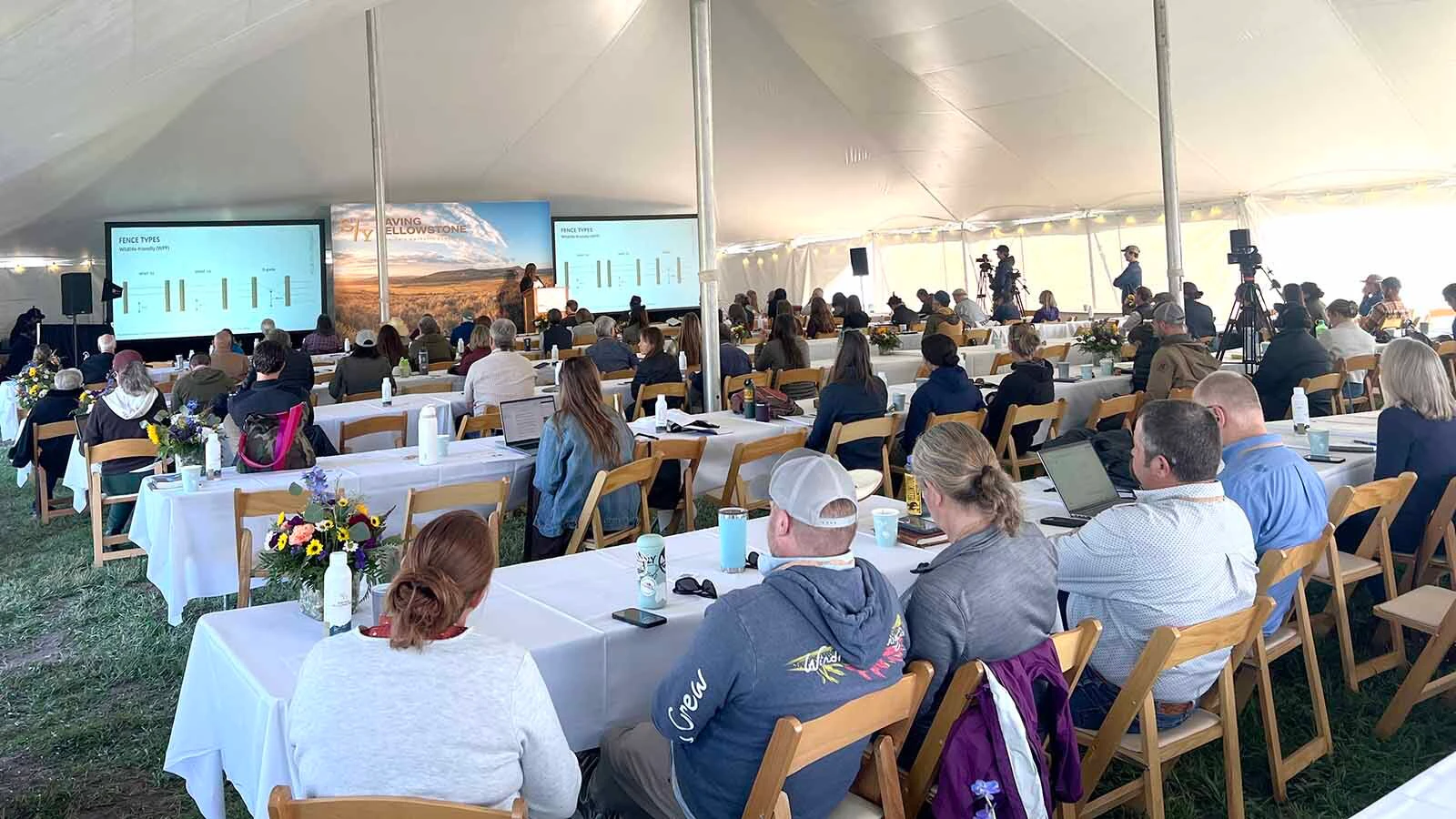
On Wednesday, Ricketts hosted his second "Saving Yellowstone: America’s Majestic Ecosystem Conservation Summit" at the ranch.
The summit drew roughly 200 people, including wildlife and environmental scientists, landowners, representatives of conservation groups, and others.
"The Yellowstone Ecosystem, covering 22 million acres in Wyoming, Montana, and Idaho, is one of the last intact temperate ecosystems, now facing significant threats from climate change and human activity,” the Saving Yellowstone website says. "The 2026 Summit aims to connect university researchers, elected officials, conservation professionals and land managers to ensure coordinated action for its protection."
The GYE, Ricketts said, is in “better shape now than it was 50 years ago.”
However, amid a population boom, conservationists must get ahead of the curve or recent gains will have been for nothing, he said.
“If we don’t move now, it will be lost forever,” he said.
Ricketts said he sees the summit as the first step toward putting out a broad call to protect the GYE.
Because the ecosystem is widely beloved among Americans, “we need to get the whole country involved,” he said.
Starlink Is the Greatest Threat
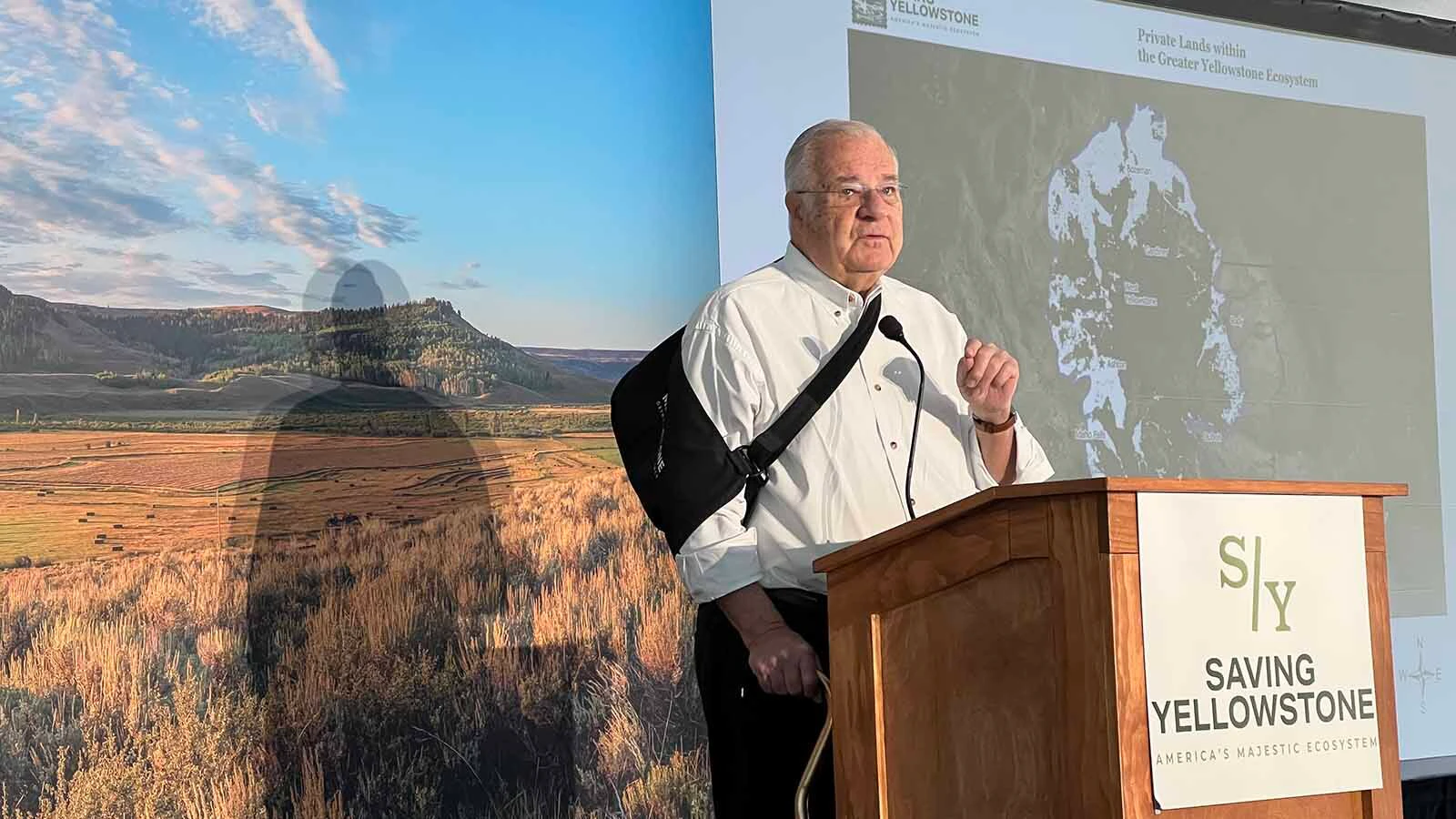
Ricketts began his speech Wednesday morning by asking the audience what the greatest threat to the GYE is.
His answer, “Starlink.”
The satellite communications network and similar technology have enabled an ever-growing number of people to work or conduct business remotely, he explained, allowing them to live wherever they want.
And many of those people want to live in the GYE, Ricketts said.
Increasingly, people are moving in and perhaps buying a few acres to have their own little piece of paradise, he said.
But many might not understand the ecosystem, even if he didn’t understand it when he first arrived, Ricketts said.
“They know what they’re doing or can do to the ecosystem,” he said.
Any chance of saving the GYE for future generations hinges on connections and communication across perspectives and areas of expertise, Ricketts said.
His initial step at his first summit in 2025 was to build connections between scientists at different universities in the region. But it needs to go beyond that to include everybody with a stake in the health of the ecosystem and the prosperity of the communities scattered around it, he said.
“I would like to suggest that the people who study the ospreys go talk to the Chamber of Commerce,” Ricketts said.
The GYE can have both environmental conservation and prosperous growth if it’s done right, he added.
A Bigger Tent
The first summit drew about 120 participants, nearly all of them academics, event moderator Doug Smith told Cowboy State Daily.
Ricketts funds graduate-level wildlife and environmental research at five universities, said Smith, senior wildlife biologist at the Jackson Fork Ranch.
The main focus of last year’s summit was graduate students reporting how they were putting that money to use, he said.
This year, Ricketts wanted to greatly expand the base of participants.
“I put out calls to every conservation NGO (non-government organization) in the GYE," and about 40% responded, Smith said.
There is also more representation from state and federal agencies this year, he added.
University of Wyoming professor John Koprowski attended the 2025 summit and told Cowboy State Daily the 2026 summit has a different atmosphere, with more people from more backgrounds.
"That's moving things in the right direction," said Koprowski, the chair of UW’s Hab School of Environment and Natural Resources. “The way we’re going to make progress is to be more inclusive.”
And face-to-face meetings add another dimension to efforts to save the GYE, Koprowski said.
“Once you know people as people, you learn and understand their perspectives,” he said.
Koprowski shares Ricketts’ sense of urgency about getting ahead of potential threats to the GYE.
“Now is the time,” he said.
Mark Heinz can be reached at mark@cowboystatedaily.com.


