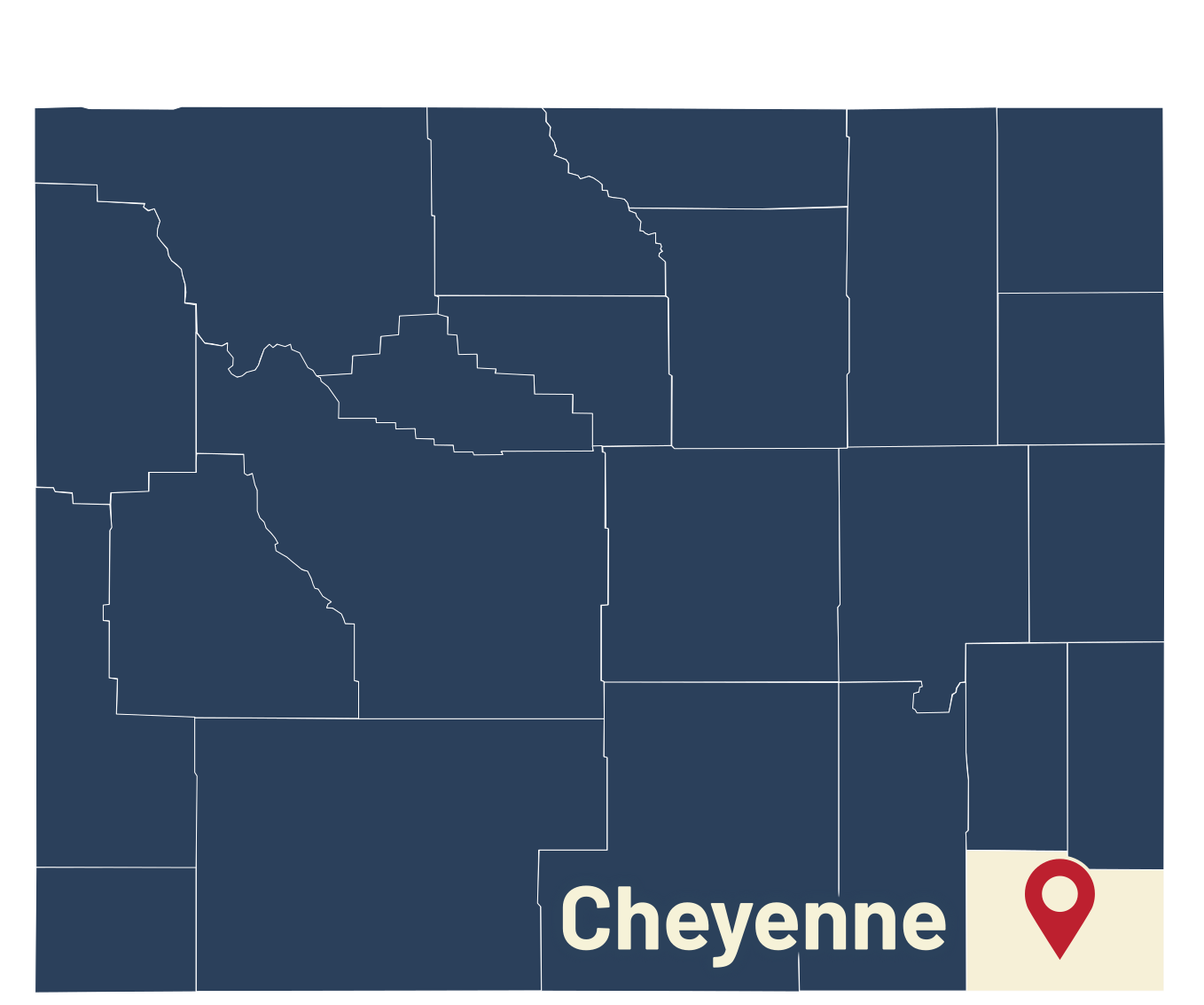
A grassroots petition circulating in Cheyenne calls for a moratorium on new data centers in Laramie County, amid a growing clash between local residents and the policymakers and economic development officials promoting the projects.
The Cheyenne petition comes as other Mountain West counties and more than a dozen states weigh enacting temporary moratoriums on new data centers, reflecting a much wider national debate.
Heather Madrid is one of the individuals circulating the petition in Cheyenne.
She said organizers of the petition are aiming for 7,000 signatures in all and already have hundreds in less than two weeks.
Madrid said she’s not personally opposed to data centers, but she feels they are flying into Laramie County at an unprecedented speed, and that it’s not something the city’s existing planning framework is ready for.
At a recent “Council and Coffee” forum with Ward I Councilman Larry Wolfe, he told Madrid that Laramie County has 70 data centers in various stages of discussion right now.
Wolfe also circulated a map with about a dozen of the data centers with more definitive plans surrounding Cheyenne. That, in particular, really got her attention.
“The rate of these projects being filed and approved is alarming,” she said. “And know that the scale of these projects is just unprecedented.
"We do not have appropriate regulations in place to account for the impacts of these hyper-scale data centers in these business parks in our communities.”
Data centers are needed for things like national security, she acknowledged, and she doesn’t want to see existing projects that have already broken ground reversed.
But she does want to see better regulations that “reflect the magnitude of these projects” on future projects.
Lack Of Transparency
Madrid traces her alarm back to a proposed man camp near her neighborhood. That prompted her to become more aware of just how many data centers were landing in Cheyenne and Laramie County.
In her efforts to follow and track new data centers, she has come to feel that they’re being handled in a less than transparent way.
“It feels like there is this slow drip of information that’s not exactly information,” she said. “Residents of Laramie County are having to play detective to piece together what’s going on. The whole process just does not feel like it’s transparent.”
It starts with a large annexation, Madrid said, followed by a couple of rezoning measures to get the property to light industrial — all without mention that the property is being rezoned for a data center.
“(Annexations) are when the public has an opportunity to talk about and raise concerns, ask questions, or whatever,” Madrid said.
Once the annexation is approved, meanwhile, she’s not seeing many opportunities after that for the public to object.
“It just feels like they don’t disclose that it’s a data center until it’s already been annexed, already been rezoned, already (turned) into a business park,” she said. “It feels like we should know before all of that. We should just be getting the truth up front.”
Councilman Felt Blindsided
Wolfe said the figures he shared with Madrid and others at the “Council and Coffee” event on Saturday were compiled by looking through Cheyenne LEADS documents and adding the 43 potentials being tracked there to both existing and announced data centers.
He said he enlisted the help of city planning and building departments to prepare the map, which shows the location of what’s so far been approved and where.
“You have to be a little careful with it, because 'data center' itself hasn’t been really well-defined,” he added. “It can be a small building all the way up to a campus with three 800,000-square-foot buildingds.
“(The terminology) is fairly imprecise nomenclature.”
Wolfe agreed there has been less transparency around data centers than he would like.
The recent annexation of 1,200 acres of what used to be the Cox Ranch is a case in point.
Wolfe told Cowboy State Daily he didn’t learn about the data center company connected to that until the morning of the meeting where the annexation was to be considered.
“Nobody even knew what their names were,” he said. “I had just learned that morning who these two companies are.”
That’s despite the fact the developers had been talking with city agencies for months beforehand, Wolfe added.
“But nobody told us about it until they just show up and say, ‘Oh yeah, we’re the people who have put this all together, and have an agreement with the landowner, which is the Cox family entity, to buy their property if it goes through all the permitting processes,’” Wolfe said. “We don’t see any of that. That doesn’t ever come before us.”
Wolfe said he believes that’s part of the reason why the council “rightly” postponed the Cox annexation.
“There’s a lot more we need to learn about that,” he said.
Spreadsheet Of Issues
Wolfe has driven around Cheyenne to see many of the business parks and their associated data centers.
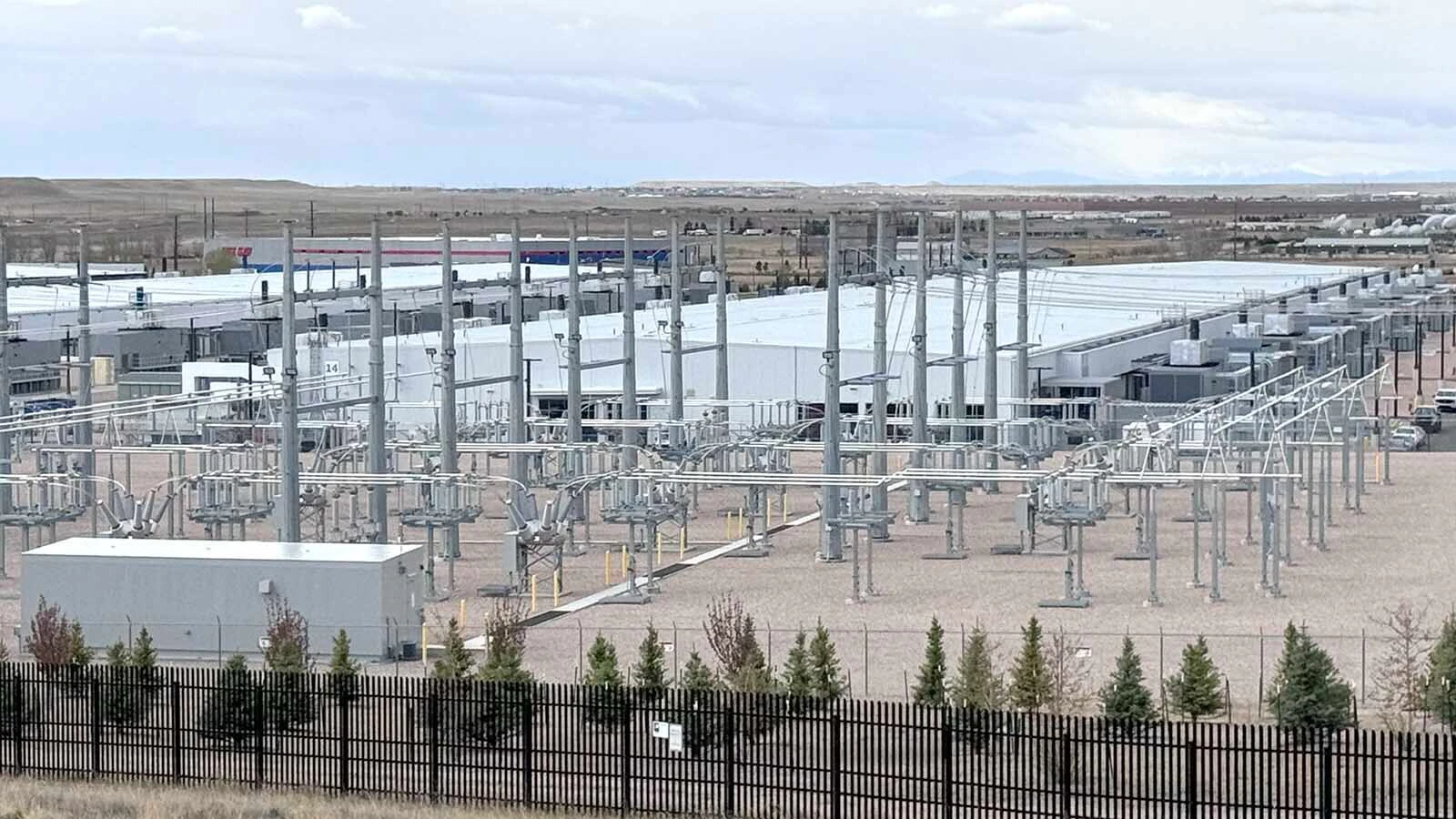
“It’s a pretty impressive thing to see all of these large facilities in various stages of development,” he said. "And actually, the really impressive part is to go out east of town and see the Microsoft Project that’s being built there already.
"And also go across, north, where Related has got that huge, huge building under construction.”
One question Wolfe keeps asking, though, is: “When do we reach a saturation point, where we think we’ve got enough?”
Wolfe has been keeping a spreadsheet of issues the city needs to consider when it comes to data centers, from land consumption and infrastructure demands to neighborhood impacts.
“The data center boom has outstripped our ability, our city’s ability to plan,” he said. “It’s moved so fast that really neither the city nor the county have been able to apply any kind of, ‘Well, this is how we want to plan to deal with these things.' And there are a huge number of issues … because they’re enormously land consumptive.”
Despite that, Wolfe has not yet decided if he supports a moratorium.
“In my view, it would be premature to consider that,” he said. “You can mark me down as undecided at this point.”
Data Center Campaign Has Not Been Secret
Cheyenne LEADS CEO Betsey Hale pushed back on the framing that LEADS is somehow operating in secret when it comes to data centers.
“Data centers are not new,” Hale said. “It’s been a signature effort for 20 years now. So, it’s an interesting timing that we’re seeing where, up until about four weeks ago, there really wasn’t a problem in Cheyenne and Laramie County about data centers.
“And you saw the Tall Grass-Crusoe project get resounding support from County Commissioners,” Hale continued, adding that after the public hearing, people told Hale that the companies had made a concerted effort to listen and address their concerns.
“So I feel like there might be a little bit of subterfuge right now coming from some of these,” she said, referring in particular to a full-page “No More Data Centers” ad she saw in the Cheyenne Tribune-Eagle that claimed it had been paid for by “Citizens of Wyoming.”
That group doesn’t seem to exist, Hale added.
“We wanted to validate who actually paid for the ad,” she said. “And there’s no such organization as 'Citizens of Wyoming.'”
Hale said she’s also had occasions where she tried to follow a comment back to the original poster’s profile but found the profile had been removed and no longer existed.
“There’s a chat bot or something getting into these social media streams,” she said. “They’re not even real people. They don’t exist.”
Hale: New Data Centers Don’t Guzzle Water
Hale also implored the public to get truthful information about data centers as they exist today.
She told Cowboy State Daily that many of the complaints she hears constantly repeat the problems of yesterday’s data centers.
Most data centers have gone to closed-loop systems that either use a different substance than water for cooling, or that recycle brackish water from far below the water table.
Hale said they’re no longer gulping down the amount of water that data centers of old did.
As far as power use, data centers locating in Cheyenne have for a long time paid a large-load tariff to Black Hills Energy that’s designed to ensure a business pays for all of the costs associated with serving it power. That’s kept Cheyenne rate increases in check, Hale said.
In other cases, data centers such as Tallgrass and Crusoe’s Project Jade have made plans to bring their own power, instead of requesting it from the existing grid. They plan to build natural gas generation on site.
“I’m not really interested in saying I do or don’t love data centers,” Hale added. “What I’m saying is … just get the facts. I’m not here to say I’m pro or against data centers. I’m here to say they don’t use water (anymore).
"They’re in our business parks. They’re not contaminating the water, she added. "The water is monitored when it goes back to the treatment plant. Everything is tested. If there’s an issue, it can be shut down.”
The data centers also have to follow all the covenants associated with the business parks they are located within, as well as pay for their own roads, as well as any sewer, water, and utility upgrades.
Hale’s broader message is that Cheyenne has spent the last two decades building a tech-friendly business park strategy.
That’s not something that’s been done in secret.
“You’re not going to engineer a solution with a moratorium,” Hale added. “What needs to happen is the city and the county need to do a Plan Cheyenne update. This is all about land use, not about data centers right now.”
Need To Consider Cumulative Impacts
State Sen. Cale Case, R-Lander, is among lawmakers who have been wrestling with the implications of data centers on a more statewide basis.
“How did things get so out of control?” he said when shown Wolfe’s map, outlining the locations of all the data centers that are already in progress around Cheyenne.
Case said he’s sympathetic to the idea of a temporary moratorium. Not to block them, but to ensure that the state’s framework is set up to ensure they’re not having undue effects on energy rates, water usage, and overall land consumption.
He said there tends to be an overall momentum to things once one data center has been accepted.
“When the 11th one comes in, you say, ‘Well, we can’t cut them off now, because it’s not fair. We did this for these other ones.’ Things get kind of locked in,” he said.
“The truth is, you can do whatever you need to do, from a policy perspective, to protect your water, to protect your land use, and to protect the interaction with people on their electricity needs,” Case added.
The cumulative impacts of developments are not necessarily benign and are not something that Wyoming agencies have really considered before, he said.
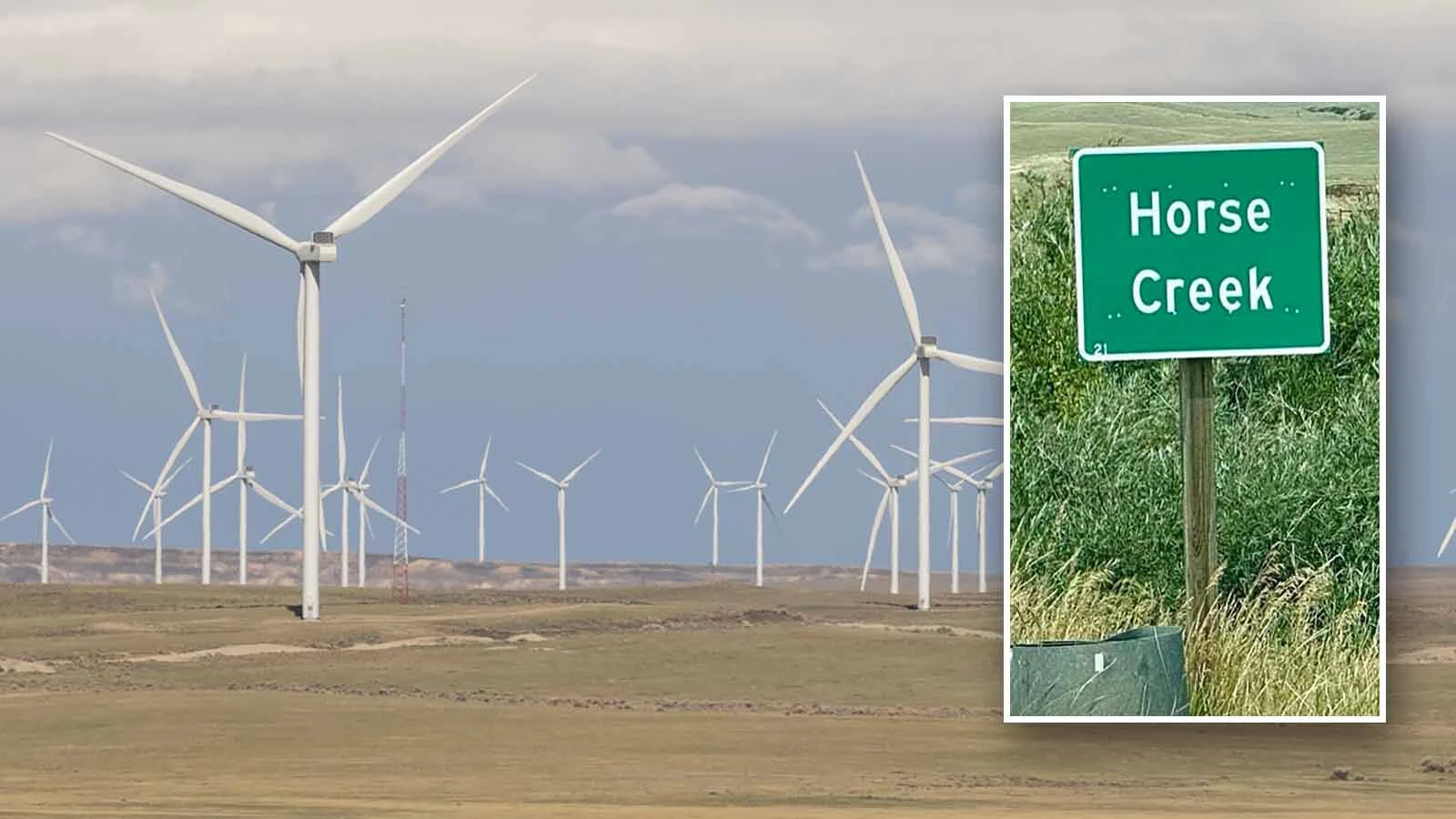
“I’ve been bothered by this,” Case said. “Like, even our Industrial Siting (Council), they don’t really look at cumulative impacts. Every time they come in and say, ‘Well how many eagles will this wind farm kill?’
“And this is what the Feds do as well. They look at that wind farm in isolation,” he continued. "But when you start looking back and realizing you’ve built a wall of wind across the region, the impacts are greater than the sum of individual additions. Suddenly, you’ve given these birds no choice.”
The same principle applies to groundwater use and other natural resources, Case said.
“And remember, we’re not getting a lot of taxes out of data centers, and that is a problem,” he said. “What Cheyenne is getting is the electricity tax, but we’re going to change that in the legislature.
“We’re going to take that money and use it to support the direct distribution to other small towns and counties,” Case continued. “I’m going to bring that forward again.”
Residents Want More Say, Transparency
Madrid knows that some critics may paint her and other petition organizers as anti-tech or anti-growth, but what she really wants to see is a more transparent and thoughtful approach to the issues data centers pose.
“I just don’t like the idea that local residents are being treated like we’re stupid,” she said. “This community is full of hydrologists and mechanical engineers and cyber-security professionals and public-health analysts.
“They deserve to be listened to,” she added. “Just as much as Meta deserves to be listened to.”
Looking at the map, where a growing number of data centers surround Cheyenne, Madrid believes it’s natural to feel uneasy and to think things need to slow down.
“That’s just a huge amount of acreage,” she said. “Too much of a good thing is a bad thing. We’re overdoing it a little bit.
“I’m not saying everything should come to a screeching halt and let’s shut down what’s already here,” Madrid continued. “I don’t think that’s helpful or necessary.”
There are impacts that just need to be sorted through first, she said.
“I hear our rates aren’t going to increase,” she said. “OK let’s say that’s true. But there are these service fees that continue to creep up, and if I need a plumber to come to my house, I have to wait seven weeks because they’re all working on the data centers.”
That also means she’s ultimately paying more for that plumber, too, because local companies had to boost their employee’s wages to keep them. That means her services now cost more.
“So, there are indirect ways the community is impacted by these data centers,” she said. “Which I don’t think are talked about often enough.”
Renée Jean can be reached at renee@cowboystatedaily.com.