
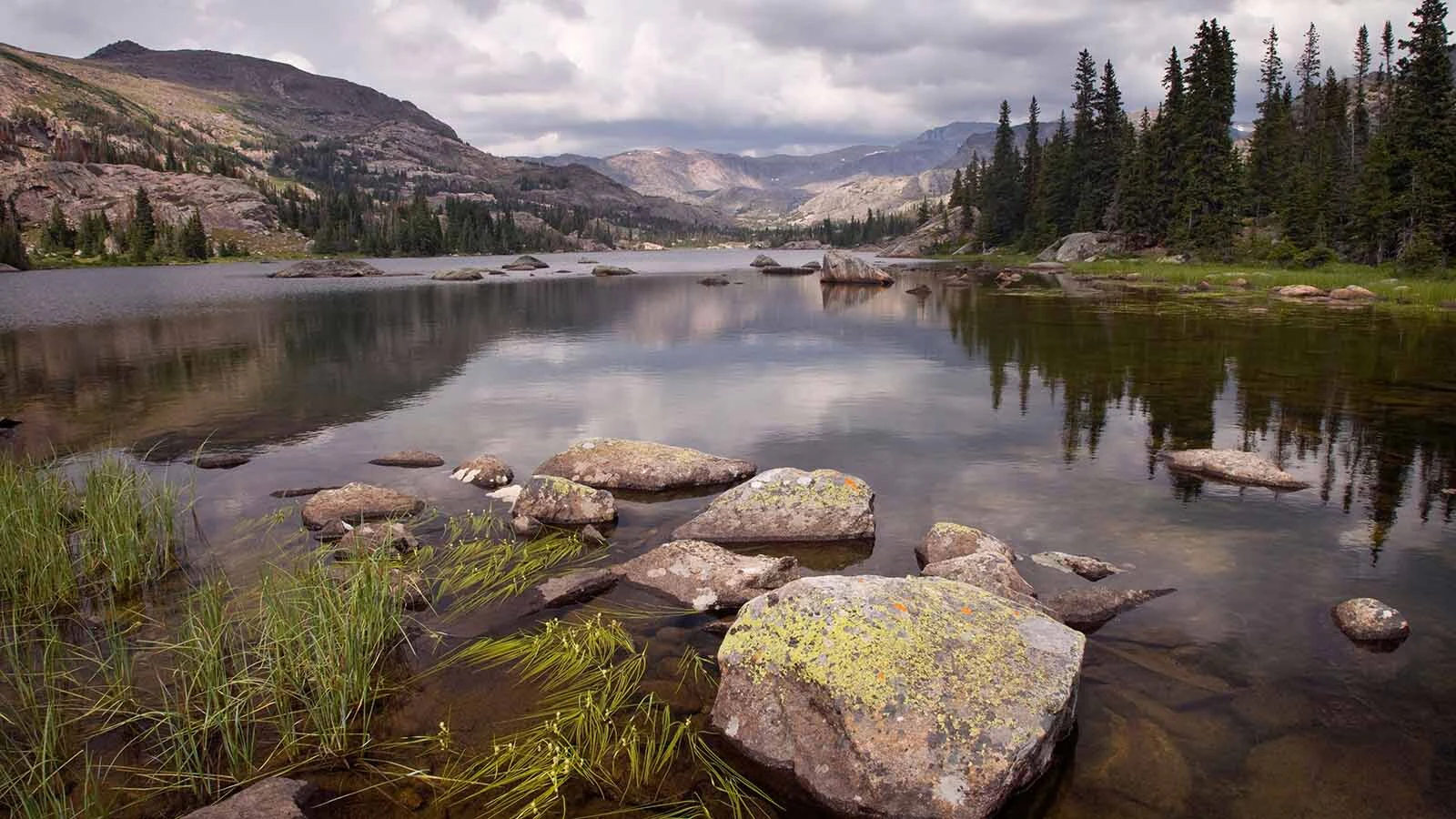
A yearlong saga over the Clinton-era Roadless Rule could be coming to a close, making it a near-certainty that 3.3 million acres of national forests in Wyoming could be open for road construction.
That could be bad news for some of Wyoming’s prime hunting, angling, and tourism destinations, opponents tell Cowboy State Daily.
If the 2001 Roadless Area Conservation Rule is rescinded, affected areas in Wyoming could include the Bridger-Teton National Forest and parts of the Wind River, Wyoming, and Bighorn mountain ranges, Craig Benjamin, executive director of the Wyoming Wildlife Federation, told Cowboy State Daily on Wednesday.
“The places we go to shoot big bucks and catch big trout,” Benjamin said.
The Forest Service and U.S. Department of Agriculture on Tuesday proposed completely rescinding the rule, which restricts road construction, reconstruction, and commercial timber cutting on affected lands.
Wyoming Republican Rep. Harriet Hageman has been a vocal supporter of rescinding the Roadless Rule, which covers about 45 million acres on national forests across the West.
She’s argued it would give Wyoming’s logging industry a boost while making it much easier to fight and prevent forest fires.
Wyoming Sens. John Barrasso and Cynthia Lummis also support rescinding the rule.
But Taylor Phillips, owner of the Jackson-based Ecotour Adventures, told Cowboy State Daily that undisturbed land with abundant wildlife is what draws tourists to Wyoming,
So, he’s concerned over how rescinding the Roadless Rule could hurt his industry.
“This ecosystem is one of the most naturally intact ecosystems in the U.S. People come from all over the world to experience that,” Phillips said.
Year-Long Process
The process began in August 2025, when President Donald Trump directed U.S. Agriculture Secretary Brooke Rollins and Forest Service Chief Tom Shultz to begin the process of rescinding the rule.
Hageman subsequently pressured Shultz.
Hageman has stated that the Roadless Rule leaves Wyoming and the West vulnerable to catastrophic wildfires.
She argues that roadless areas cut off access for wildland firefighters, as well as logging crews, which could clear out dry, dead timber.
Barrasso and Lummis have similarly argued that the Roadless Rule has hobbled Wyoming’s logging industry.
Sen. Mike Lee, R-Utah, has attached an amendment to Barrasso’s Wildfire Prevention Act of 2026, calling for the Roadless Rule to be nullified.
Let Wyoming Decide For Itself
Wyoming would be better off if its congressional delegation favored keeping the rule in place, Benjamin said.
“We would respectfully request that the delegation fix what’s broken in the rule” rather than rescinding it entirely, he said.
“If you blow an alternator in your truck, you don’t get rid of your truck, you fix the alternator,” he added.
The Roadless Rule has provisions to allow for emergency access to fight fires or to remove dead timber and other possible wildfire fuel, he said.
Allowing road construction in those areas could disrupt vital fish and wildlife habitat, Benjamin said.
He said he doesn’t like the top-down approach of the sweeping changes to land-use policy by federal decree.
Instead, Benjamin favors the “Wyoming way” of interested parties coming to the table to work out a compromise, rather than an all-or-nothing policy change.
“Any time the federal government tells Wyoming what to do, it’s going to be problematic,” he said.
Phillips pointed back to the value of roadless areas.
“I believe that the roadless areas increase the interest that people have in coming here,” he said.
Public comments on the repeal are open until Sept. 21.
Mark Heinz can be reached at mark@cowboystatedaily.com.


