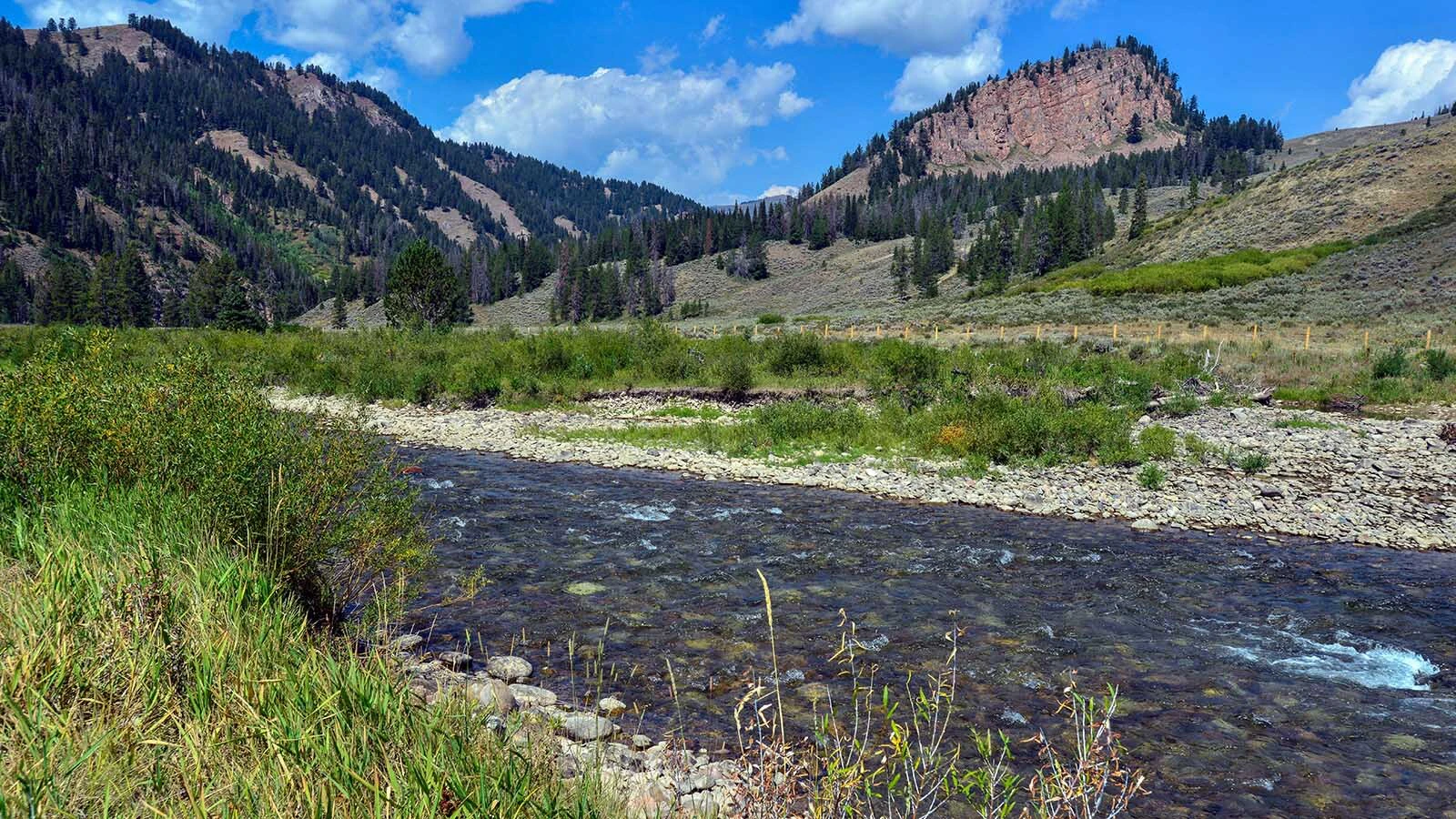
Teton County Commissioner Luther Propst told his colleagues Monday he expects a proposal to surface in Congress within the next few years to divert water from the Upper Hoback into the Upper Green River drainage to meet Colorado River obligations.
He wants Teton County on record now opposing that idea, before the fight arrives.
"I will not be at all surprised if in the next few years there's a proposal floating around Congress to move water from the Upper Hoback to the Upper Green," Propst said during a Teton County Board of County Commissioners discussion of a letter to the Bridger-Teton National Forest on wild and scenic rivers eligibility.
"The more we indicate that we are concerned about waters that originate elsewhere and flow into our county, the better we're going to be when that battle comes along,” he said.
The idea isn't new. In a November 1971 report, the Wyoming State Engineer's Office laid out five potential reservoir and pumping scenarios for moving Snake River water into the Green River Basin.
Propst linked any future Hoback-to-Green response to a Flaming Gorge Reservoir drawdown he said is coming this summer, when roughly a third of Flaming Gorge could be drained to shore up dangerously low water levels at Lake Powell on the Utah-Arizona line.
The Teton County Commission letter, dated Monday and addressed to Bekee Hotze, acting forest supervisor of the Bridger-Teton National Forest, was one of two the commission unanimously approved, signaling that the county is preparing for escalating challenges over public lands, water and the management of Grand Teton and Yellowstone national parks.
River Eligibility
The rivers letter was drafted by Chris Colligan, who has been representing the county as a cooperating agency in the Bridger-Teton National Forest Plan Revision process.
Colligan told the commission the Forest Service asked cooperators to weigh in on more than 200 stream segments winnowed from roughly 800 reaches across the forest.
"It's a pretty challenging process to ask cooperating agencies to review every stream for outstandingly remarkable values and not have that be a very biased, subjective process," Colligan said.
The letter asks the Forest Service to explain its screening criteria, stating that "additional clarity regarding the screening and evaluation criteria used during the eligibility review process would improve transparency and analytical consistency."
It also argues the Snake River headwaters deserve elevated recognition for their native fisheries, describing the drainage as supporting "one of the largest remaining intact metapopulations of Yellowstone cutthroat trout ... within the species' historic range, locally recognized as the fine-spotted Snake River form of Yellowstone cutthroat trout."
A separate section asks for clearer forest plan guidance on Section 7(b) of the Wild and Scenic Rivers Act, which governs federal review of water projects affecting designated corridors, as it applies to tributaries upstream of reaches Congress designated through the 2008 Craig Thomas Snake Headwaters Legacy Act.
Watershed Thinking
At Commissioner Len Carlman's urging, the board added a sentence supporting the continued eligibility of all stream segments identified in a 1992 Forest Service analysis but not designated under the 2008 act.
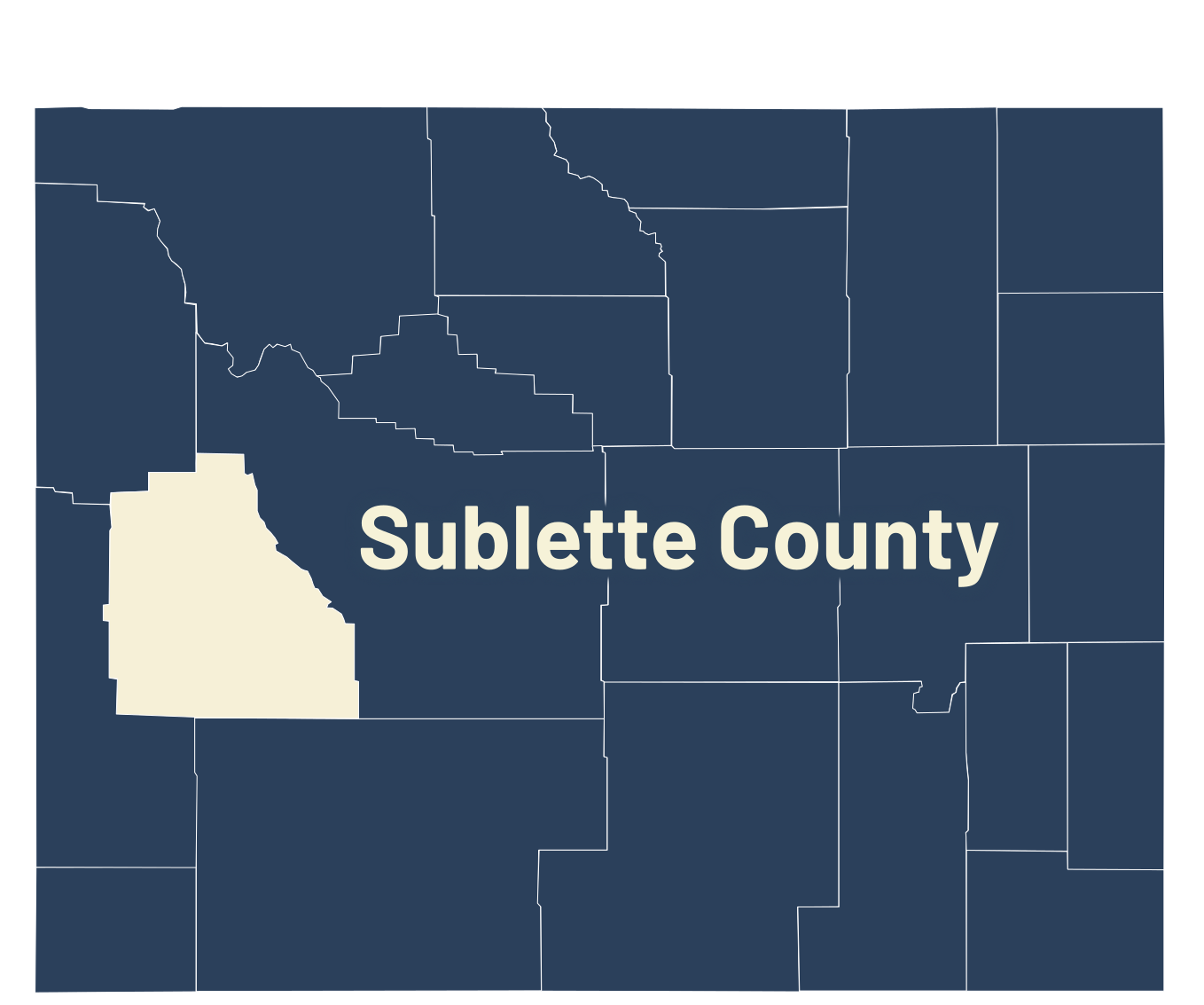
"Streams don't stay within boxes," Carlman said, explaining that headwaters of some of those reaches lie in Sublette and Lincoln counties. "The idea is to maintain ecological thinking at this stage, not box thinking."
Colligan said reaches such as the headwaters of the Yellowstone River, Willow Creek and stretches of the Granite Creek drainage fell outside the 2008 designation but remain legally eligible under the 1992 inventory.
"The forest should continue to maintain those eligible streams as they were in 1992 across the forest," he said.
The letter also presses the Forest Service to recognize cultural and community values tied to forest headwaters, noting that the streams "contribute directly to the federally recognized Snake River aquifer system, which provides clean drinking water to residents of Teton County and contributes to water supplies for communities and agricultural users throughout the larger Columbia River Basin."
And it urges the agency to ensure that any future wild and scenic protections do not foreclose "habitat restoration projects, fish passage improvements, barrier management, and other conservation measures" that may be needed to keep native fish populations viable.
Public Comment
Jared Baecker, Wyoming conservation manager for the Greater Yellowstone Coalition, was the only member of the public to speak on the rivers letter.
"Water policy is one of the most complicated things in the American West," Baecker told the board. "In this day and age, where we face water crisis across the entire West, this is going to be a critical juncture for us to manage free-flowing characteristics and opportunities for projects to retain water within the headwater systems in a natural way."
Thanking the commission for "writing a letter that thinks outside of your box and thinks in the watershed context," Baecker said the Greater Yellowstone Coalition, Snake River Fund and American Rivers would sit down with the county to review specific stream segments.
Chairman Mark Newcomb closed the discussion by thanking Colligan before moving to approve the letter, which passed unanimously on a motion from Carlman and a second from Propst.
David Madison can be reached at david@cowboystatedaily.com.