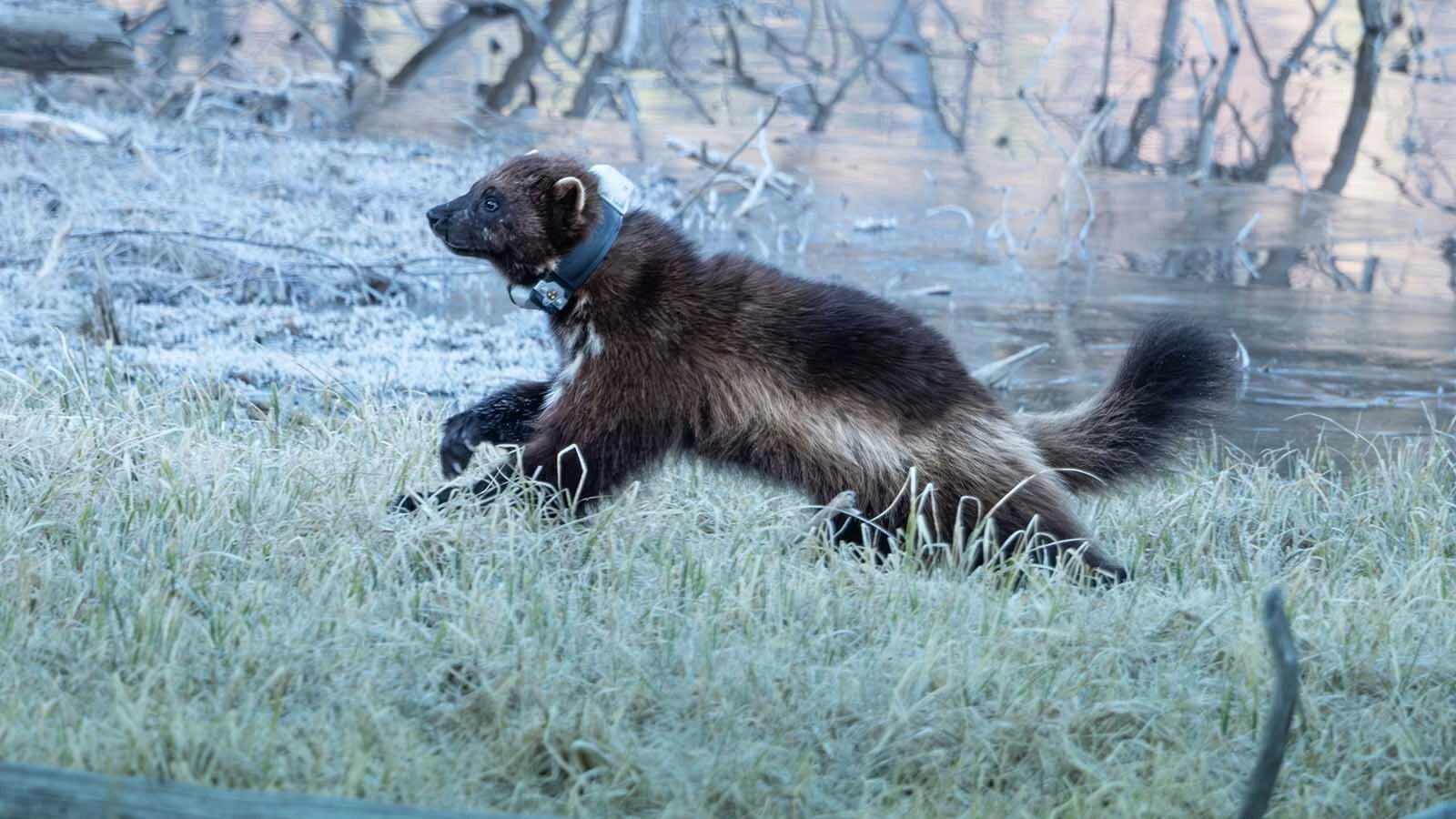
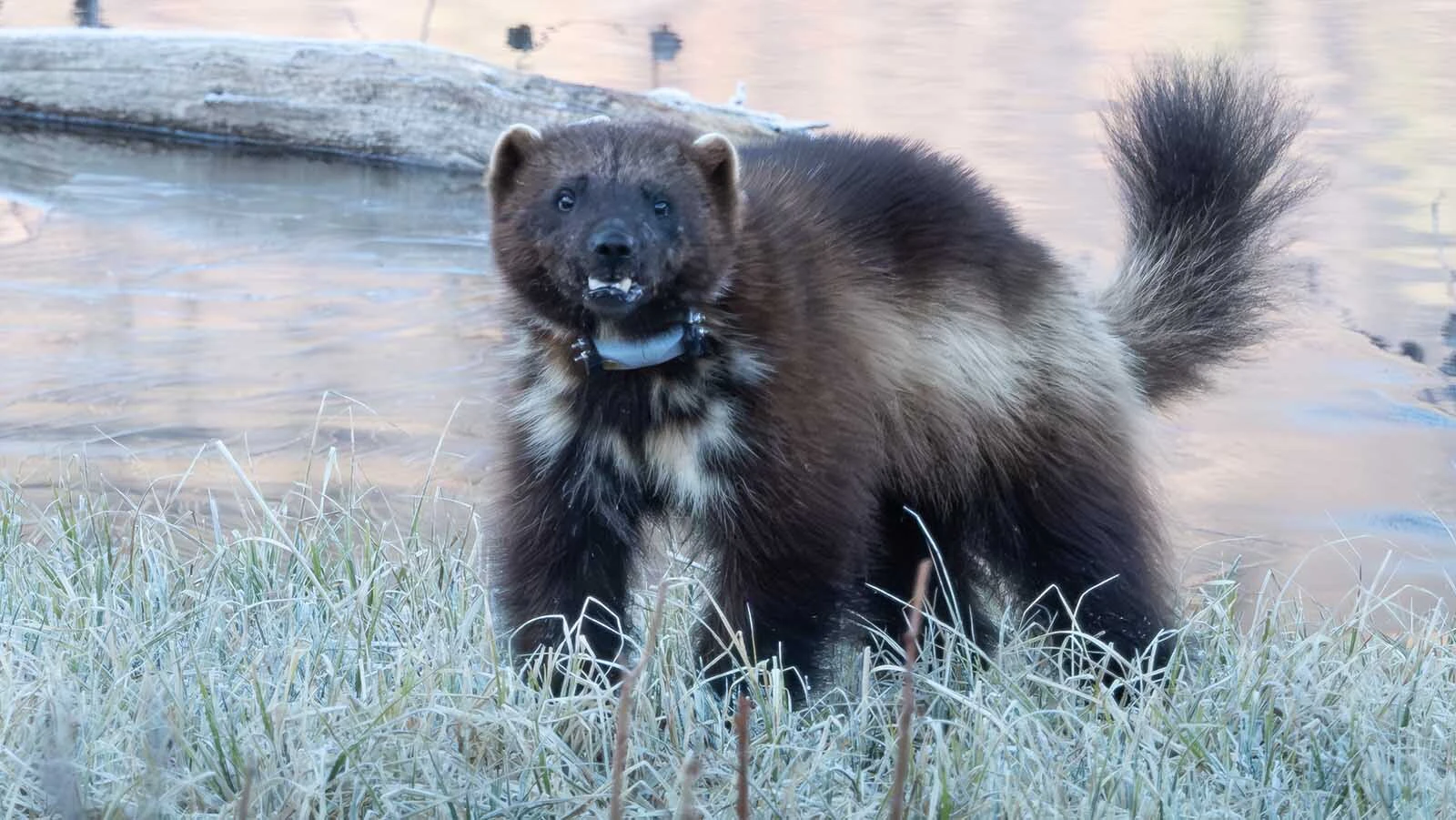
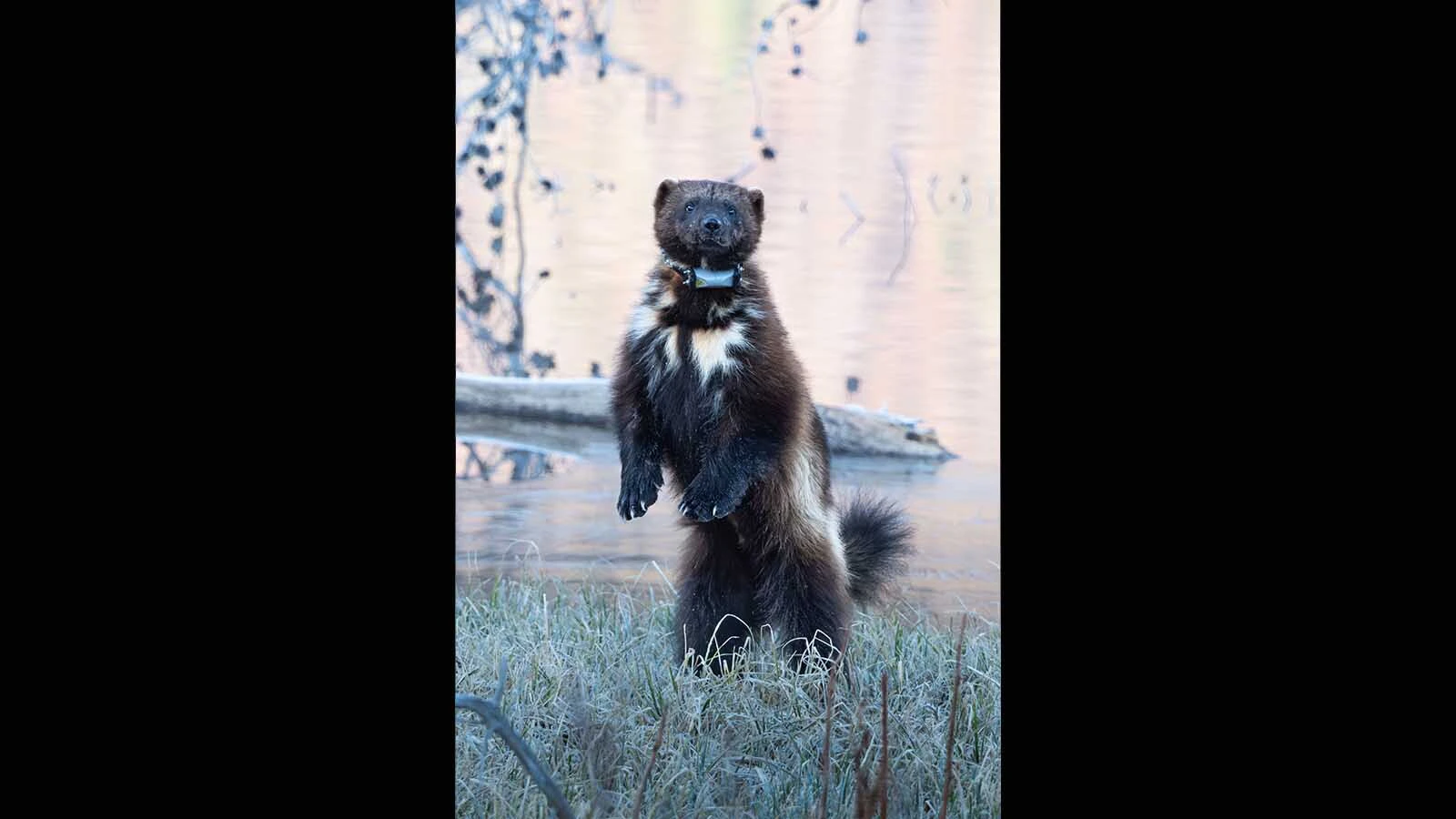
When a hiker had an incredibly rare close encounter with a wolverine earlier this month in the Wind River Range mountains, he saw that the animal had a radio collar. Biologists have now confirmed it's one of four wolverines they’re tracking in the area.
They also say the wolverine is quite the traveler, having already established a range of about 200 square miles.
The wolverine that Zachary Shifrel photographed from about 20 yards away is a mature, 28-pound male, biologists Dean Clause and Rusty Kaiser told Cowboy State Daily.
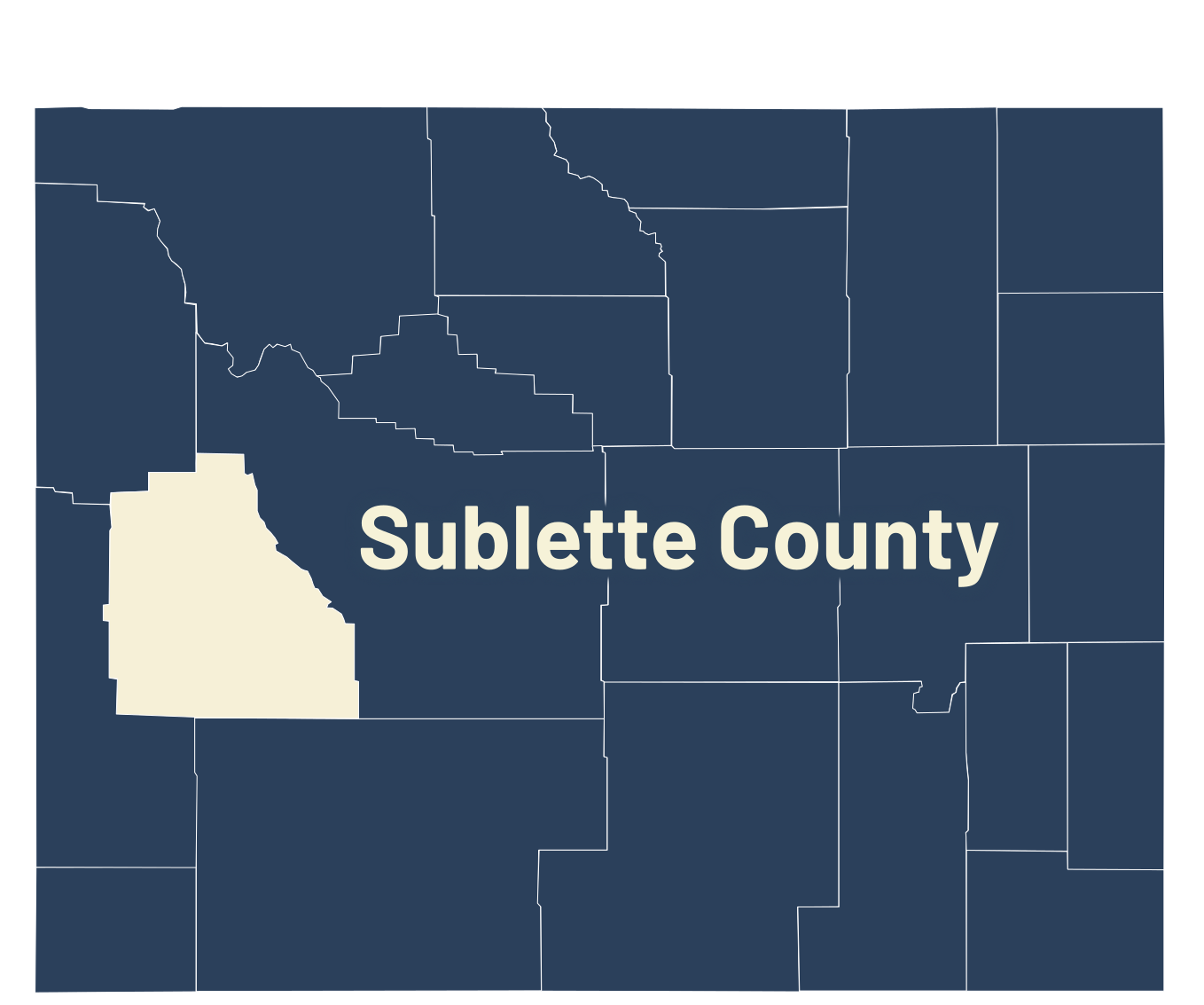
Shifrel told Cowboy State Daily he saw the wolverine near the Green River Lakeside Trail in the Wind River Range mountains.
The encounter probably lasted less than a minute, he said. Shifrel had just enough time to snap a few photos and take a brief video of the wolverine before it ran off.
Mysterious Species
The wolverine that Shifrel saw was first captured and fitted with a GPS transmitter collar in April 2025, then again in March, said Clause, the Wyoming Game and Fish Department Pinedale wildlife biologist; and Kaiser, the Forest Service Bridger-Teton east zone wildlife biologist.
Typical of the species, the wolverine is quite the traveler.
“During 2025, the documented range for this wolverine was about 200 square miles,” the biologists said in an email to Cowboy State Daily. "The 2026 data have not yet been analyzed."
Another male and two female wolverines have also been captured and collared in the Pinedale region, they said.
Game and Fish and the U.S. Forest Service are conducting joint research on wolverines in the Pinedale region to clear up some of the mystery around the species in Wyoming, because so much remains unknown, according to the biologists.
Tracking collar data and analysis of the animals’ scat could help determine the wolverines’ movements, demographics and diet.
So, How Many Are There?
Wyoming’s total wolverine population was previously estimated to be about 15.
But how many are out there still largely remains a mystery. Data collected from the four Pinedale region wolverines could help determine more accurate population models, the biologists said.
“At this time, there is no accurate estimate of wolverine numbers in Wyoming, although studies like ours should help to get better estimates in the future,” they stated in the email.
Wolverines have been documented in the Wind River Range since the 1960s.
“A recent increase in wolverine observations” there might indicate that their numbers are growing, according to the biologists.
There are multi-state wolverine population surveys in the Rocky Mountain region about every five years. The next one is scheduled for the winter of 2026-2027.
The last time Game and Fish did a survey of wolverines was during the winter of 2021-2022.
Using a grid system across prime habitat in western Wyoming’s remote and rugged mountain ranges, they placed monitoring sites with cameras in 51 “cells,” said Zack Walker, the nongame wildlife supervisor for the Wyoming Game and Fish Department.
Photos of wolverines were captured at 15 of those, Walker said.
That means Wyoming’s known wolverine population is “likely slightly more than 15,” Walker said. “In some cases, we determined that there was more than one individual animal that came into the same monitoring station.”
Don’t Expect To See Them
When it comes to eating, wolverines are opportunists and will scavenge and hunt.
The scat analysis for the four Pinedale region wolverines is ongoing, so it’s yet to be determined what their primary food sources are.
In general terms, it’s thought that wolverines probably scavenge more than they hunt for food, Clause and Kaiser stated.
Even if there are more wolverines in the Wind River Range, people probably shouldn’t count on having an encounter like Shifrel’s, according to the biologists.
“They are predominantly solitary animals that have very large home ranges in mostly wilderness landscapes, so the potential for human-wolverine encounters exists, but would likely be rare,” they stated.
Wolverines are listed as a protected species in Wyoming, meaning that hunting and trapping them is illegal here.
The U.S. Fish and Wildlife Service (FWS) also lists them as a threatened species in the Lower 48, citing habitat loss as one of the primary reasons.
Wolverines have long been absent from Colorado, but that state is planning a reintroduction program, pending final approval from FWS.
Colorado Parks and Wildlife plans to release 10 to 15 wolverines annually for three years.
Mark Heinz can be reached at mark@cowboystatedaily.com.