“Leah, get up. The horses got out.”
I burrowed my head deeper into my sleeping bag against the cold, feigning sleep. Outside my synthetic-filled cocoon, my tentmate was shuffling around, unzipping her sleeping bag.
In the distance, a creek was roaring, and horses were whinnying, and dull bells were ringing.
“You put the bells on the mares,” Matt, a contractor who grew up locally, explained to me the previous day. “They’re the trouble makers. If they get out, the rest will follow.”
Like a queen bee, I had thought.
Suddenly, I was fully awake. Shit, the horses got out! Deep in the Absaroka-Beartooth Wilderness, dozens of miles from the nearest road, two days into a five-day trip, the horses and mules were our only way to pack out our camp.
I threw open my sleeping bag, pulled on my jeans, grabbed my headlamp and bear spray, and crawled out of the tent.
Despite the darkness, camp was alive with motion. Tent doors flew open, riding clothes were thrown over sleepwear, and saddles were slung on the remaining horses. I clicked my headlamp to the highest setting, blinking hard to adjust my eyes to the low light and shake the sleep from my mind.
Two horses and two mules came into view, tethered to trees by their lead ropes. That left eight animals missing. Lights scanned like spotlights as horses whinnied and the mules brayed, casting an eerie, wail-like sound into the darkness.
As Matt and Antonio, a seasonal outdoors worker, mounted their horses to track the escaped equestrians, the outfitter turned to me.
“Stay here and watch the animals in case any trouble comes.”
Two days earlier, our posse of five mules, seven horses, an outfitter, two contractors, a nurse, an outdoorsman, and a reporter embarked on an extended weekend pack trip.
New to horseback riding, having taken a multi-year hiatus from the backcountry, and largely unfamiliar with my companions, I was immediately overwhelmed with a deep appreciation for their company, keen to learn as much as I could.
Most members of the group had worked for the outfitter at one point, spending a summer taking dude rides or a fall guiding hunts in the Absaroka-Beartooth. Cumulatively, they had more than a century of experience. With no dudes on this particular trip, they were afforded a unique opportunity to let loose, exchanging banter and stories freely.
Food packed into Yeti coolers and Milwaukee Packouts, tents and personal items loaded onto mules, horses saddled, bridled, and ready to go, we set out on the 20-mile ride into camp around 11 a.m., three hours after our target departure time.
“I hope you all brought headlamps,” Hazel, a life-long outdoorswoman and practicing nurse, joked.
As the miles wore on, I got to know Cherokee, the 10-year-old paint I was riding.
The cadence of her stride set the pace of my day. As we passed lakes and paralleled streams, the reflection of the sunlight glimmered with every step she took.
I watched as her ears twitched and tail swooshed, shooing away early-season mosquitoes. I noticed the way her sides flared out as we rode up ridges, and the snorts she released to clear the dry, dusty air from her nostrils.
I sneezed in tandem. I learned to anticipate the way she leapt over streams, favoring dry land for the muddy trail most of the other animals trudged through.
As we rode in, the outfitter narrated, sharing personal and historical anecdotes about the route. He had been riding in these mountains twice as long as I had been alive. His stories chronicled the time Teddy Roosevelt spent in the wilderness, the history of resource extraction in the area, and childhood stories that echoed with the ring of universal human experience.
He led a string of five mules with one hand, and the reins of his paint gelding Cabaret and a Coors Banquet in the other. Every time the string would stall, he’d kick up Cabaret.
“I’m not even upset about the mules stopping,” he said. “I’m just pissed it’s spilling my beer.”
Packed in the panniers were three boxes of wine, and two 30-packs of Coors.
Matt rode ahead of the group, scouting the path where the trail fell out. When my borrowed Stetson hat blew off my head for the umpteenth time, and I started rolling my saddle getting back on after retrieving it, he looped back, ensuring everything was OK. He rode this way the whole trip, scouting and keeping everyone together, offering me horsemanship tips over the five days.
By the time we arrived at camp, nestled between a mountain ridge and a swollen creek, the sun had started to descend, and the air temperature fell.
As we dismounted and started to untack the stock, the outfitter walked over to me, his back bent permanently 10 degrees forward from a lifetime of riding, and showed me how to take off the bridal, the cinch, and the breast collar, hands on autopilot from decades of repetition.
“Always unbuckle from the left,” he said, looping and tying the cinch strap like a necktie. “And put your saddle blanket upside down on top of the saddle so it can air out.”
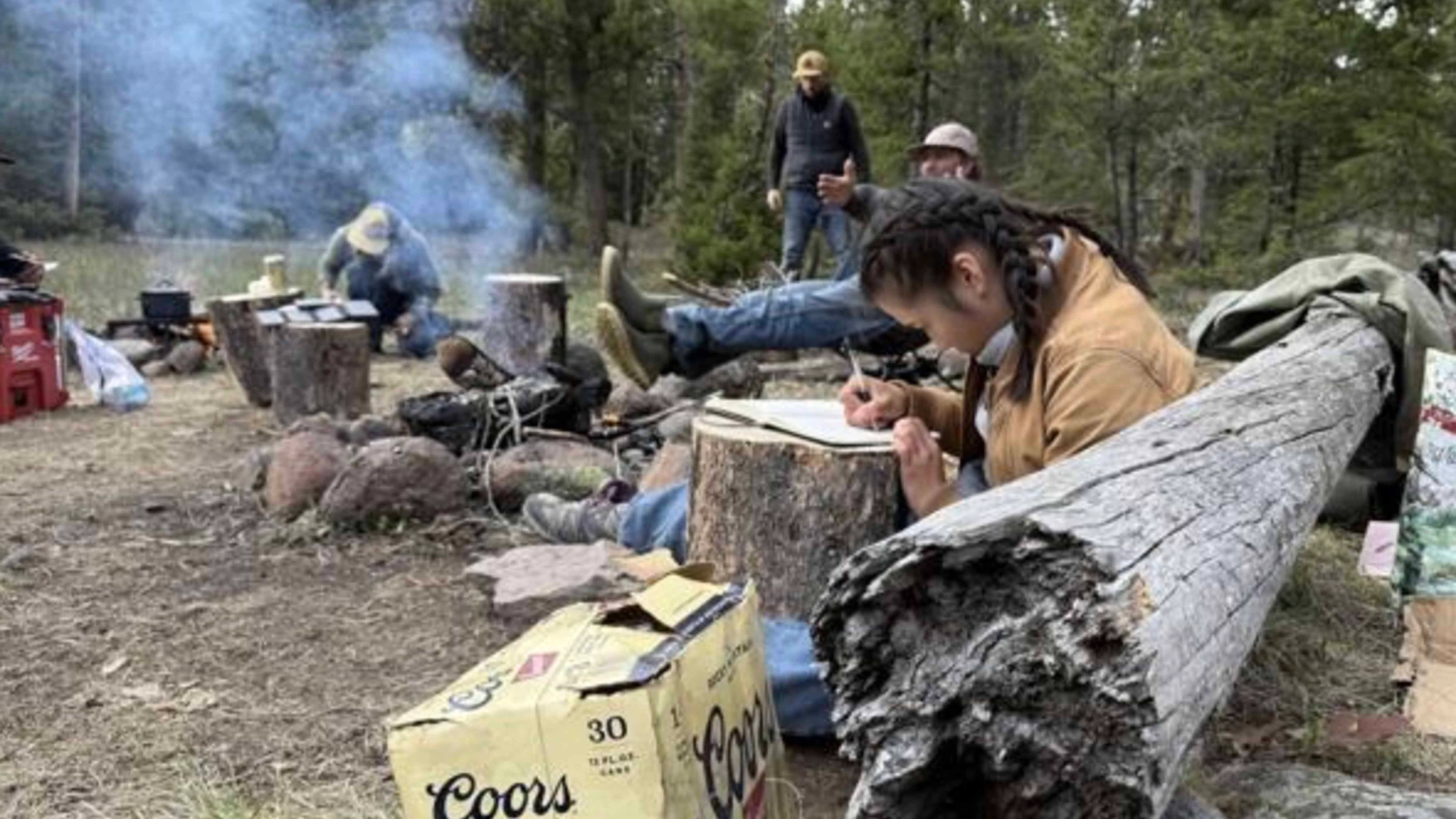
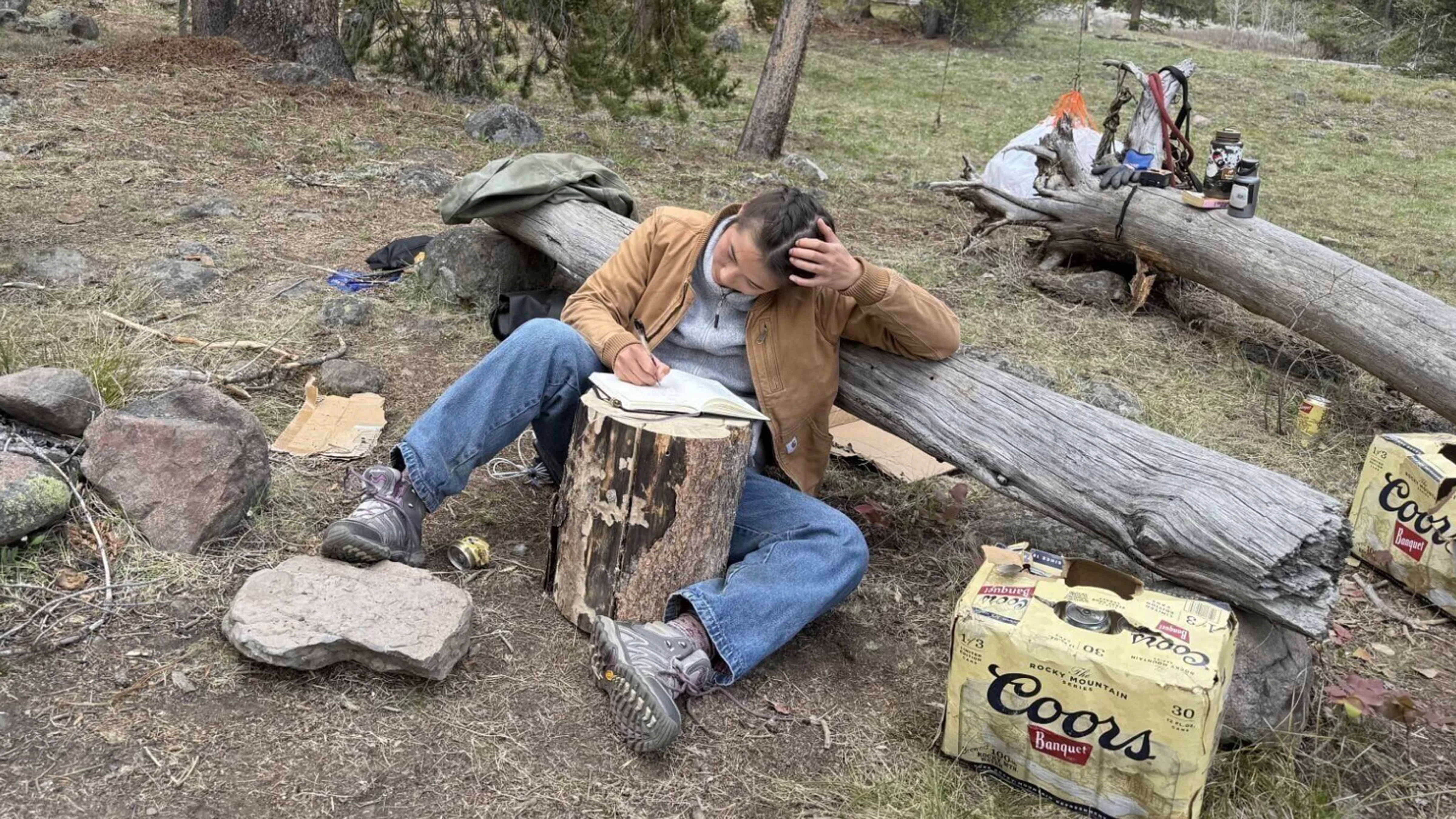
I nodded, making mental notes I later translated to my journal. In this same way, I learned how to tie the quick-release knot necessary to tether her lead rope to a tree (always at neck height or higher), and how to bridle and saddle Cherokee.
Any time I faltered, someone was there to help, offering demonstrations and heuristics.
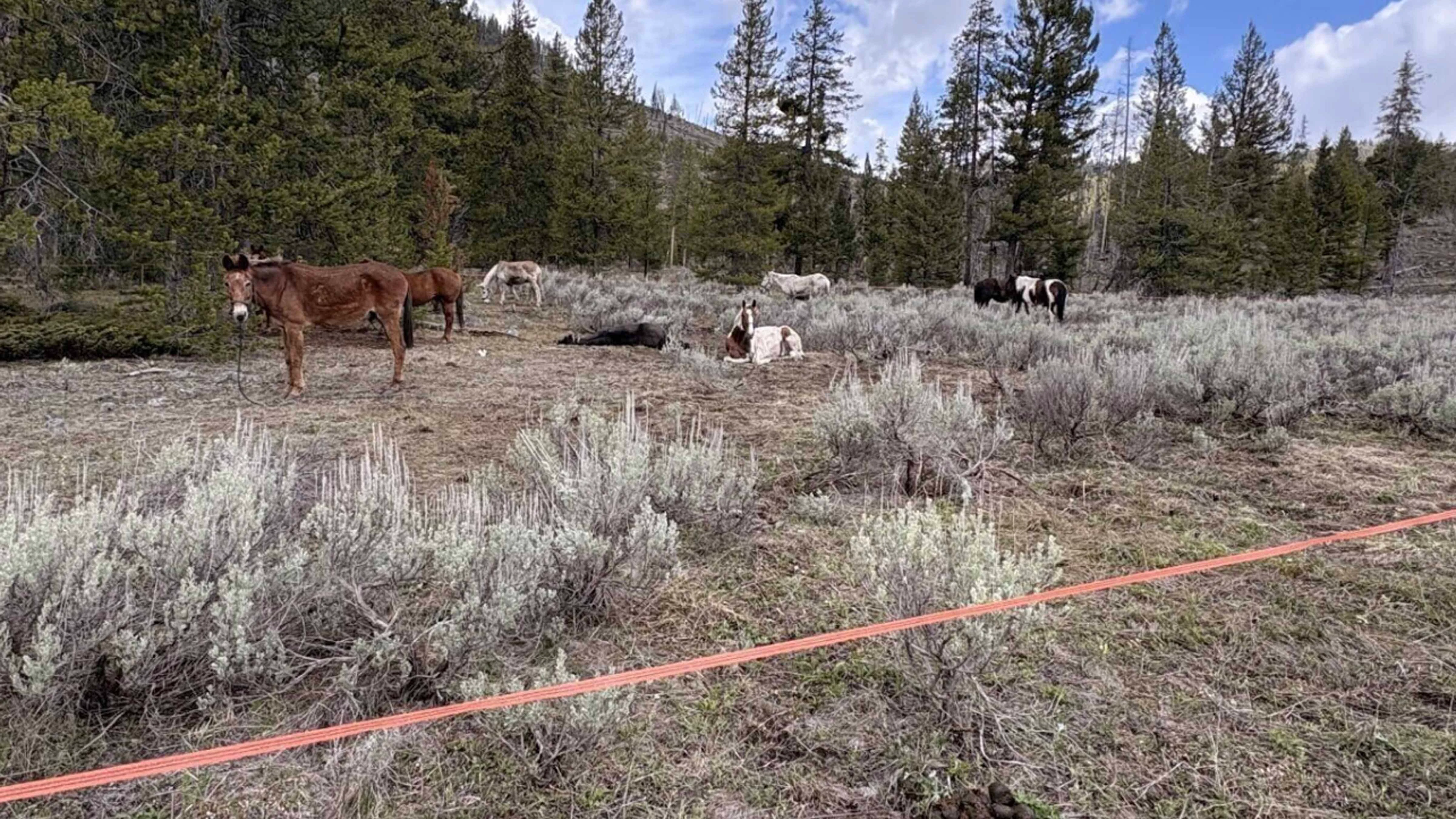
Once the horses were brushed, untacked, and put to pasture behind an electric fence, camp was erected, illuminated by our headlamps.
Orange, yellow, and green tents stood in the conifer forest like presents under a Christmas tree, packed close enough together to provide perceived protection in grizzly country, but spread apart far enough to create a semblance of privacy.
By the time I crawled into my sleeping bag, the day had stretched over 18 hours. Stomach full of chili reheated over a camp fire, legs and back sore from riding, and my heart happy to be in the backcountry with good company, I drifted off to sleep.
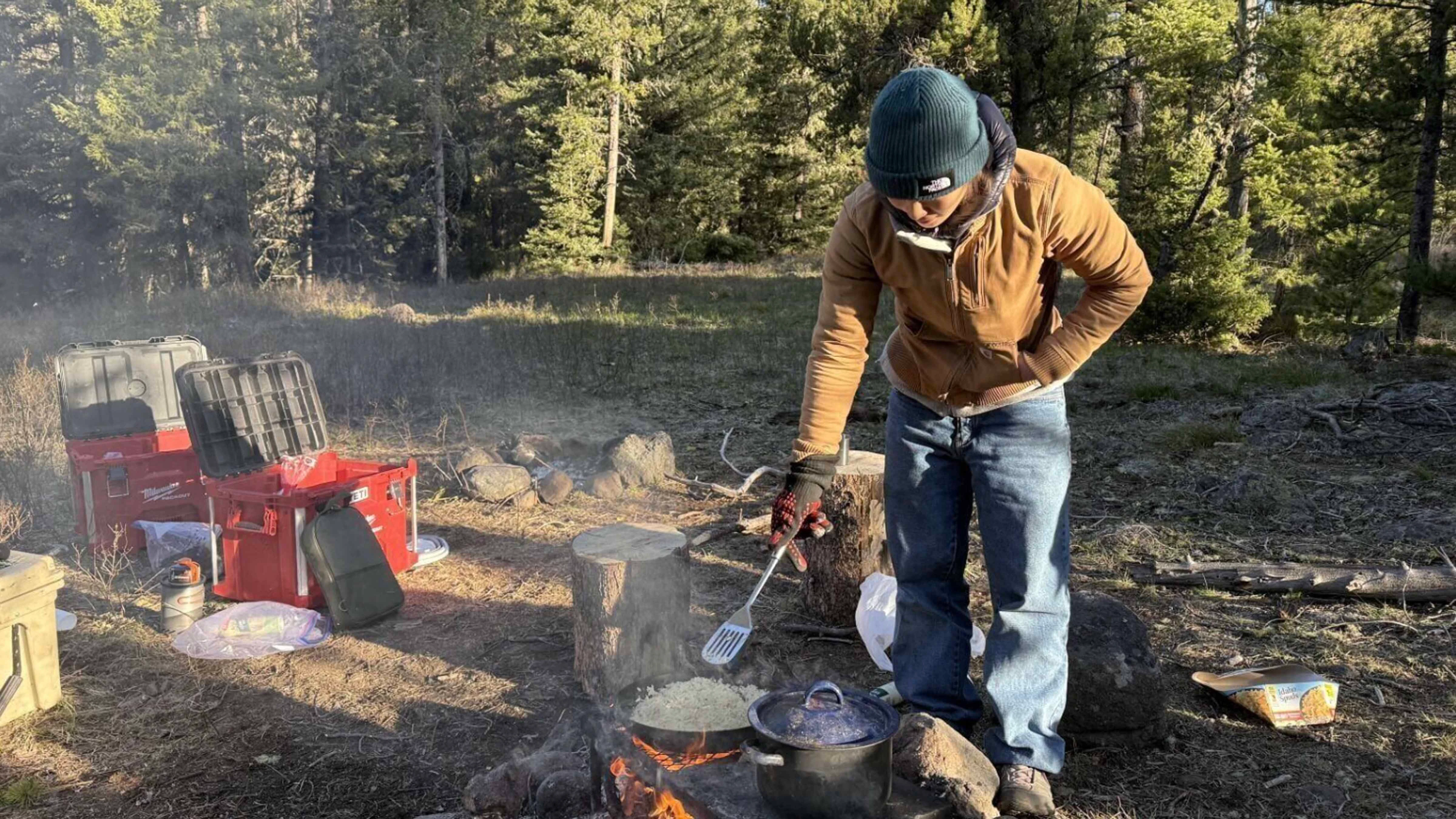
Over the next three days, we cooked all of our meals over an open fire: Corn, potatoes, steak, eggs, hot dogs, pasta, Jiffy Pop. Blue and white enamel cookware was charred black by the soot and washed with murky water retrieved from the creek.
By day three, we had built a second ring. One for talking around, one for cooking over.
“Less pressure on the chefs,” the outfitter said.
Stumps, cut from felled trees with hatchets, rocks, and a single REI pop-up chair surrounded the talking ring, each a chamber for smoke roulette.
As conversation drifted from shared memories to political beliefs and everything in between, laughter permeated the air, infectious and heavy. Hours passed this way, with the campfire burning steadily, fueled by a seemingly never-ending pile of deadfall, blanketing our dust-covered clothes in a comforting aroma of smoke.
As the week lumbered on, we trekked to nearby lakes, waterfalls, and ridgelines, riding single file, weaving through the landscape like a condensed centipede.
With no cell service and limited charging opportunities, our phones transformed from universal tools into cameras and jukeboxes. Temporarily entirely relieved of the worries and responsibilities a tower connection carried, I contentedly diverted my attention to the people, animals, and space immediately around me.
As we explored the mountains, valleys, meadows, and waterways, I found myself overwhelmed by gratitude. Gratitude for the head on my shoulders and the earth beneath my feet. Gratitude for the people around me, their humor, banter, and willingness to share their wilderness experience and expertise with me.
On day three, we rode to an alpine lake, dipping into willow-blanketed meadows full of bear claw-marked trees, before climbing to snow-covered lodgepole stands. For lunch, we ate sandwiches: PB&J, bologna, turkey, Velveeta, and drank filtered river water.
I watched as Larry, who had moved to Montana from New Hampshire a decade ago and never looked back, and the outfitter fished for cutthroat, one brandishing a spin rod and the other a fly rod.
“I’ve caught eight,” Larry touted, less than a minute after hitting the water.
“That’s OK, pal,” the outfitter called back, holding his spin rod. “One of these days we’ll teach you to count.”
As they fished, Hazel and Antonio read, lazily sprawling out on dried grass.
“I hope there aren’t ticks up here,” Hazel said, resting her book on her lap, pages spread, spine up.
“Don’t say that word,” said Antonio, half-joking.
“Tick, tick, tick,” she taunted.
I laughed and rested my back against a felled tree, settling my weight into the dirt below. As ants crawled up my arms, I watched them, making no motion to swat them away. I pulled open my journal and started to sketch the lake.
My pen traced the contours of the landscape, filling the page with ink. I reveled in the warmth the unobscured sunshine cast on my face. Closing the book, I tilted my face upward, and drifted off to sleep.
Despite cold evening temperatures, late nights, and early mornings, the trip brought some of the best rest I had experienced in months. Between being lulled to sleep by the steady roaring of the creek, eating hearty, fire-cooked meals, drinking fresh water, and filling fleeting moments with laughter, this experience felt like a turning point.
Exactly the direction I was pivoting toward, I still don’t know.
Before this trip, I had spent fewer than 10 cumulative hours on horseback. It had been years since I had been in the backcountry, and even longer since I had felt this level of adoration for the wilderness. Here, I was surrounded by people who made the outdoors their life, and stock that knew these mountains like the back of their hooves.
In this company, in a camp surrounded by sage, pines, glacier lilies, shooting stars, bears, deer, bison and wolves, I found comfort. It was their confidence, good nature, and competence in the backcountry that kept me calm as I stood watch in camp after the horses broke down the electric fence and disappeared into the night.
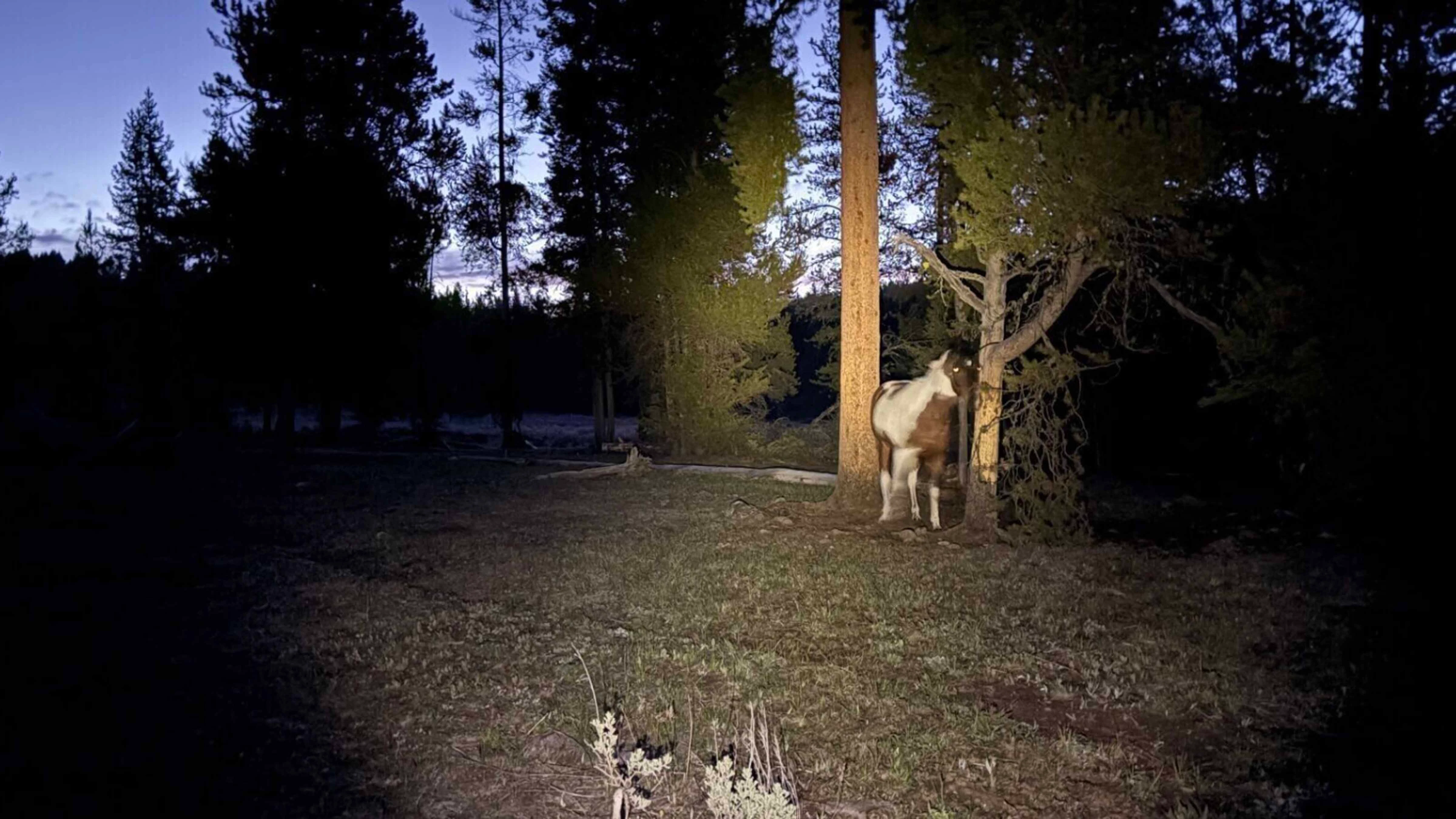
Nestled next to a Douglas fir tree, keeping a careful eye on the four remaining animals, I watched as the sky slowly turned forget-me-not-blue against the gray mountain ridges and valleys.
Beside me, I heard a snap. I jerked my head up, my headlamp catching the eyeshine of Wrangler, a 12-year-old bay quarterhorse. As her head lurched toward me, I groped at the air, missing her lead. She beelined down the trail, and across the creek, following the other escapees to a meadow that lay beyond.
Shit.
The outfitter’s words echoed in my head.
“Stay here and watch the animals in case any trouble comes.”
Resigned to my watchpost, I waited. The symphony of chaos continued around me, swirling like a storm cloud. Horses and mules snorted, pawing the ground anxiously as the creek our camp shouldered roared, angry and swollen with spring rainfall and runoff.
Slowly, color returned to the earth as first light careened down the ridgeline into camp. As I flicked off my headlamp, the faint ring of bells returned, followed by the clomping of hooves against dirt and rock.
“We got ‘em,” said Matt, leading a string of mules.
I checked my watch. 5:36 a.m. Just like that, it was all over, less than 40 minutes after it began.
“We should let them loose to graze,” the outfitter joked, signifying that the danger had passed.
For the remainder of the trip, the livestock were tied up at night. In this way, I learned that horses sleep standing up.
“If they’re confident they’re safe, they’ll sleep lying down,” Larry told me. “They’re prey animals, and they always want to be ready to run.”
He kept his horses in a corral on his property. He said it took them months to feel comfortable enough to sleep laying down.
By the time we rode out on the final day, the coolers and packouts were lighter. Clothes were saturated with dust, grease and smoke. Animals were well-grazed on native grasses that blanketed the meadow serving as their temporary pasture.
Anticipation for the trip’s commencement rested heavy on everyone’s chests.
The ride out took more than 10 hours, culminating in a steep climb back to the outfitters. Tired, sweaty, and hungry, we untacked the animals, moved them to the corral, unpacked the mules, loaded our cars, hugged goodbye, and dispersed, like ashes in a campfire pit.
The names of the horses have been changed to protect their identity.
Republished with permission from the Bozeman Daily Chronicle.