
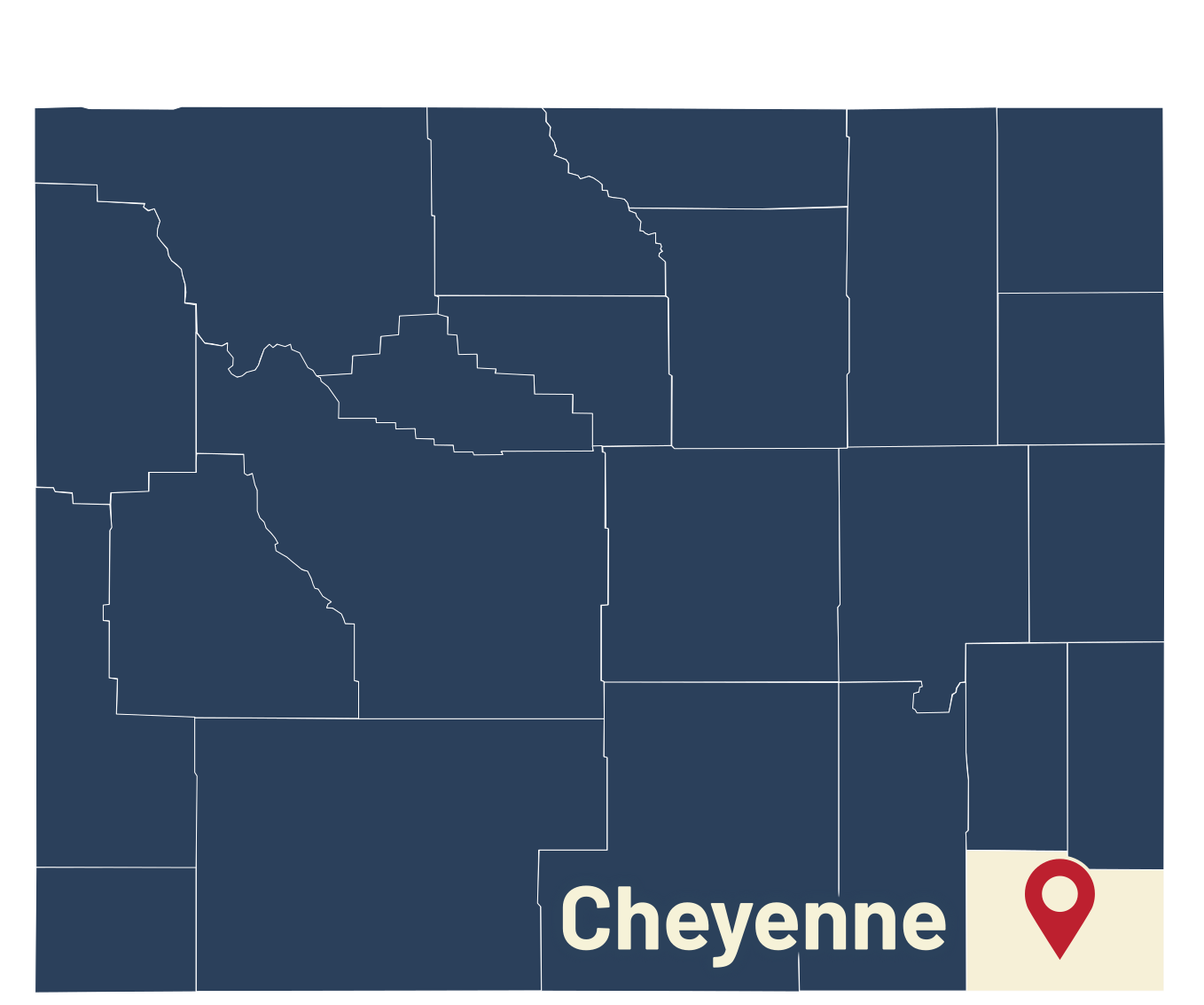
CHEYENNE — Inside the ballroom at the Little America Hotel in Cheyenne on Saturday morning, the Central Committee of the Wyoming Republican Party gathered for a round of party business and political speeches.
Seated among the faithful was Rebecca Bextel, the Teton County conservative activist who has spent years crusading against affordable housing mitigation fees in Jackson — and who now sits at the white-hot center of the CheckGate scandal.
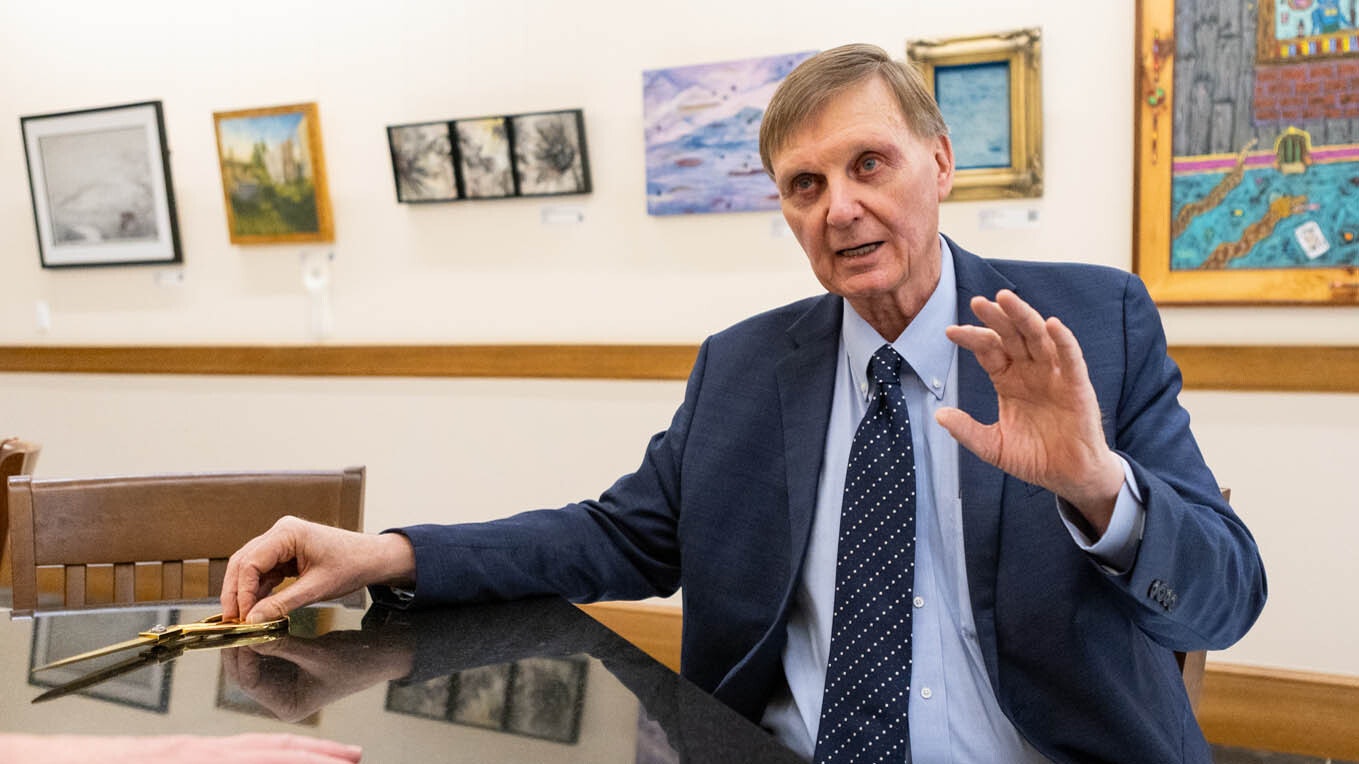
At the podium stood Wyoming Treasurer Curt Meier, a fellow conservative and outspoken fan of President Donald Trump.
In a room packed with Republicans from around the state, Meier delivered a message his audience might not have expected: Wyoming desperately needs to build more housing, and the state's economic future depends on it.
After touting his office's role as the single largest supplier of revenue in the state budget, Meier pivoted to what he called the intersection of affordable housing, workforce development and capitalism — telling the Republican faithful that housing and a great economy "go arm in arm with essentially capitalism."
"We need $6 billion for housing in the next 15 years, and that doesn't include your infrastructure," Meier told the room. "And if Wyoming builds, when we can, because of Donald J. Trump releasing basically our ability to have everything carbon in Wyoming. We're going to go crazy."
That $6 billion figure hangs in the air like an unpaid invoice. For all the challenges it represents — and all the rhetoric, hearings, debates and political bloodletting that surrounded housing this session — the 2026 Legislature will end without a single piece of housing legislation reaching the governor's desk.
Those who promote affordable housing frame it as a necessary tool of capitalism, essential to growing Wyoming's economy and keeping young workers in the state.
Those opposed brand it as socialism, government overreach into markets that should sort themselves out. And for all the lofty arguments and gnashing of teeth from both sides, lawmakers accomplished nothing in either direction.
Senate File 64, the bipartisan Investment in Wyoming Housing Act, would have created a $30 million revolving loan program administered by the Wyoming Community Development Authority.
Sponsored by Sen. Evie Brennan, R-Cheyenne, Sen. Mike Gierau, D-Jackson, Sen. Bill Landen, R-Casper, and a bipartisan group of House members including Rep. Trey Sherwood, D-Laramie, the bill was designed to fund new construction, rehabilitation of existing housing, land acquisition and infrastructure — with loans at or below the federal funds rate flowing to local governments, housing authorities and nonprofits.
It failed introduction in the Wyoming Senate on a split vote of 15-15 on the second day of the session.
CheckGate
House Bill 141, the Fifth Amendment Protection Act, took the opposite approach.
Rather than funding new housing, it sought to ban the affordable housing mitigation fees that Teton County and Jackson have imposed on developers for decades.
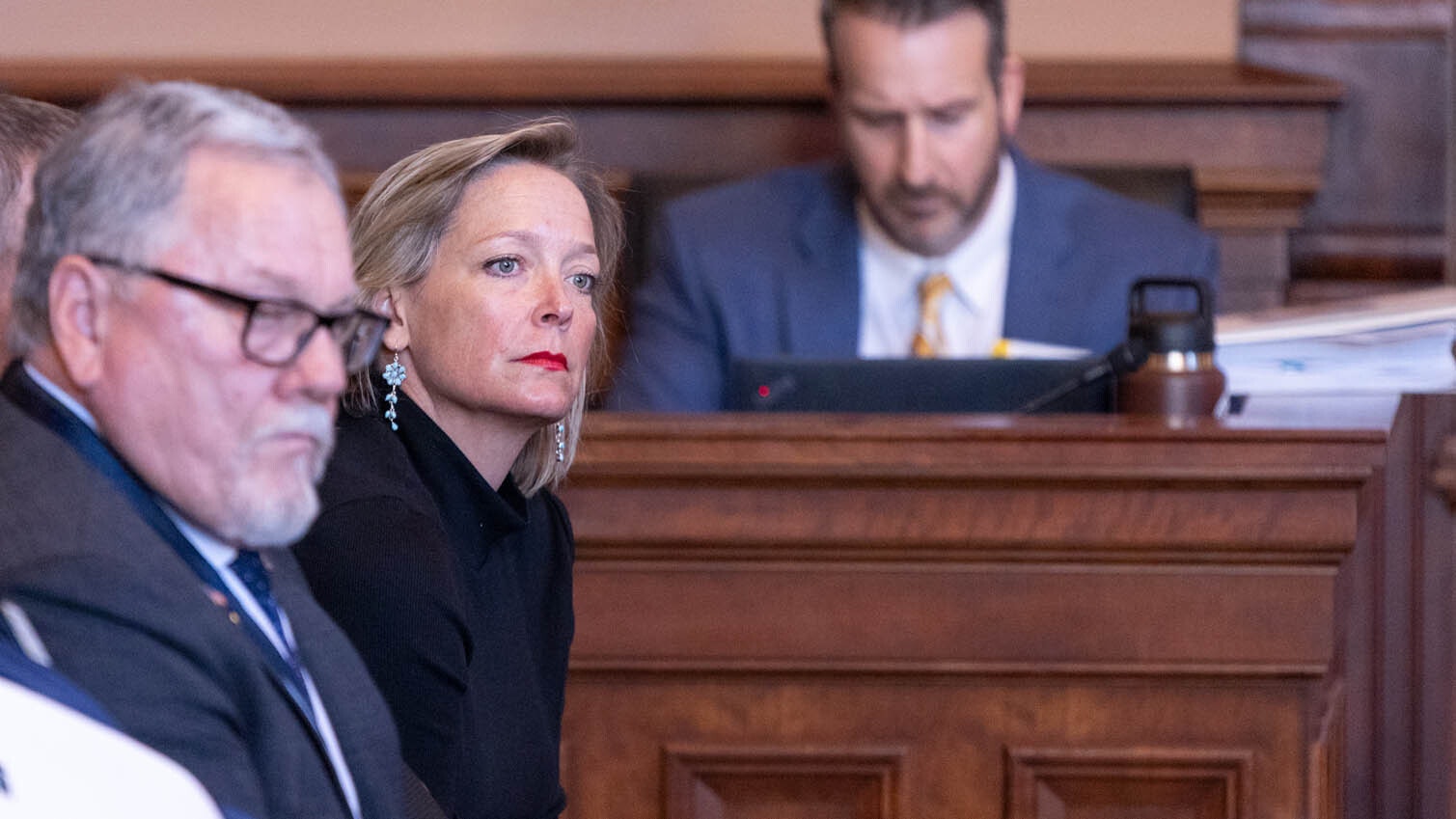
The bill passed the House 35-17 but became engulfed by the Checkgate controversy after Bextel distributed $1,500 campaign contribution checks to House members on the chamber floor.
A criminal bribery investigation by the Laramie County Sheriff's Office and a House special investigative committee followed, and the bill arrived in the Senate under what its own president called "a dark cloud of suspicion."
Speaking up for HB 141, Sen. Cheri Steinmetz, R-Torrington, said the legislation sticks up for rights protected by the state’s constitution.
"Private property shall not be taken or damaged for public or private use without just compensation,” Steinmetz told her fellow senators. “And that property may not be taken for private use without the owner's consent."
She then addressed the specific practice the bill targeted — housing mitigation fees.
"When the government can pressure a property owner through fees, conditions or concessions to surrender value as price of the permit, that is not voluntary. That is a coerced transfer,” said Steinmetz.
Sen. Larry Hicks, R-Baggs, also framed it in policy terms: "Is this good policy for the state of Wyoming or is it not? Are we going to protect private property rights… or are we not? That's the debate that we're having."
The Senate ultimately voted 7-24 against even bringing HB 141 to the floor — nearly the inverse of the two-thirds majority required.
Dark Cloud
Monday's debate on the Senate floor laid bare the tension between policy conviction and institutional preservation — and revealed a body wrestling with a bill several members believed in but didn’t want to touch.
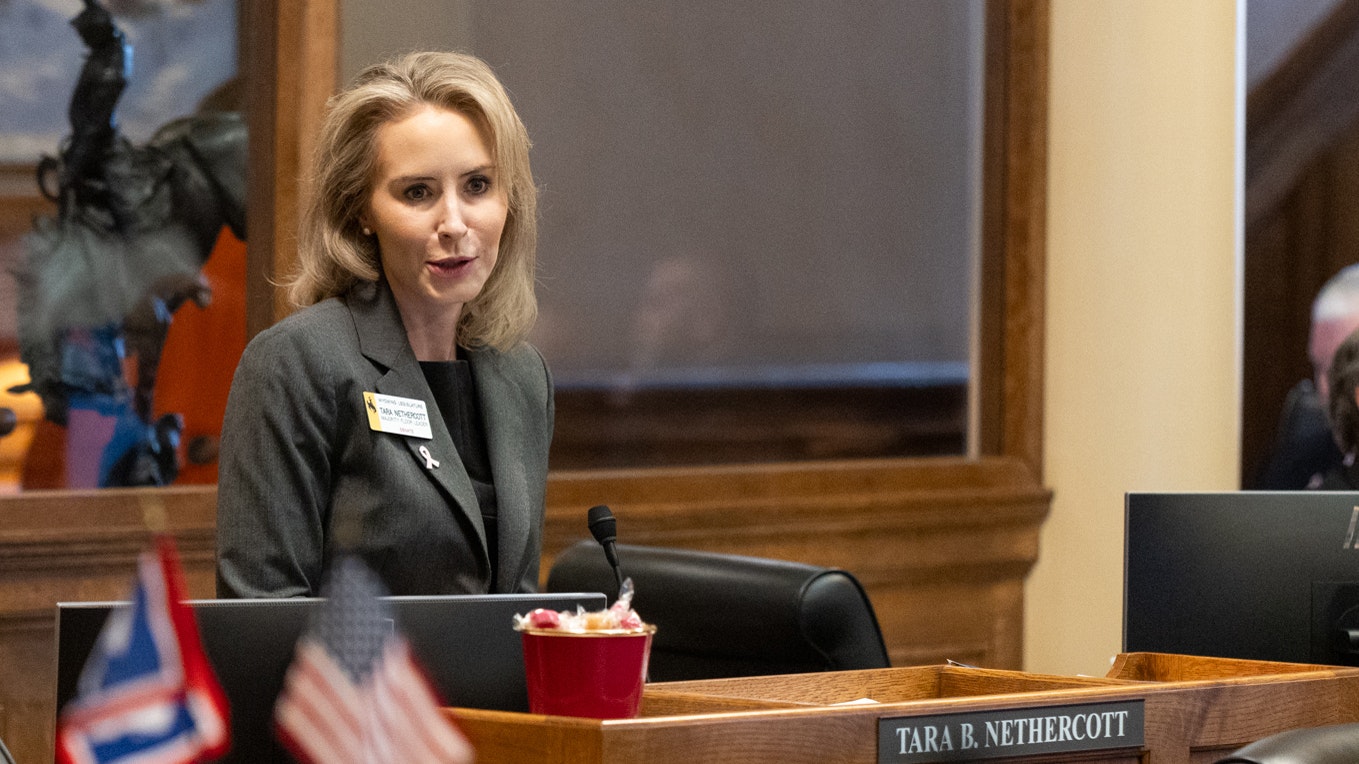
"The bill would have passed," said Senate Majority Leader Tara Nethercott, R-Cheyenne, who was adamantly opposed to bringing it forward. "But it's become something else entirely."
In sharp terms, Nethercott rejected the bill's framing as a constitutional property rights measure.
"The bill is about money, not private property rights," she said. "It's about making money. This isn't protecting the poor. This isn't protecting the children. This isn't fulfilling any constitutional obligation. This is about intimidation and threats."
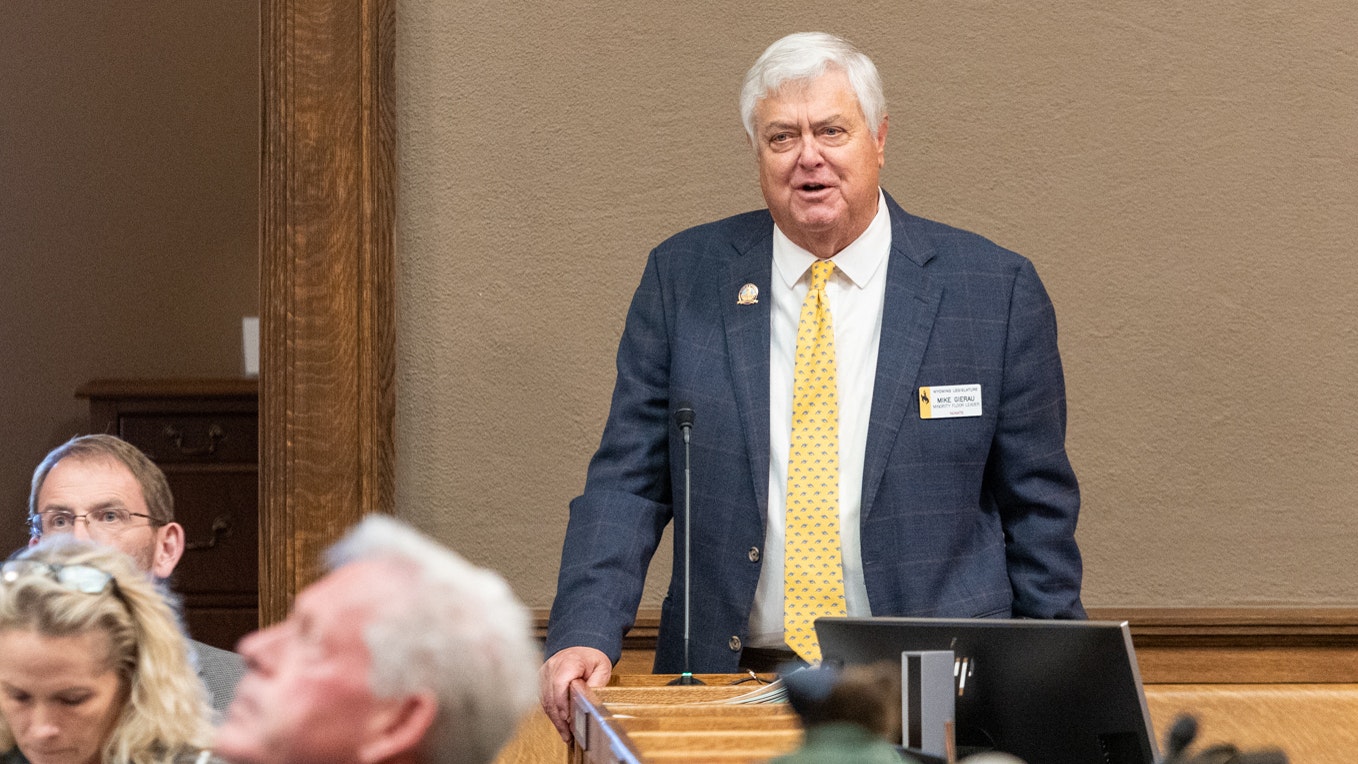
Before the vote, Sen. Mike Gierau, D-Jackson, rose with pointed humor aimed at colleagues' persistent focus on his home county.
"Well, well, well," Gierau began. "I'd first like to thank the body for once again being so concerned about the county in which I represent."
In a follow up interview with Cowboy State Daily, Gierau brought a perspective shaped by decades of tackling housing issues.
As the owner of a restaurant and food service operation with more than 100 employees, and having served four years as a Jackson town councilman and six years as a Teton County commissioner, few legislators can match his direct experience with housing policy.
Of his own workforce, only about 15% actually live in Jackson.
"We built 1,700 homes for working people in Jackson," Gierau said. "The number in the rest of the state? Zero."
That track record, he argued, is what separates Teton County from the rest of Wyoming's housing conversation.
"Down here, they like to talk about it. They like to say what they don't like about it, but no one is doing anything about it," Gierau said. "We (Teton County) are the most robust economy, per capita, in the state of Wyoming right now. Why? Because we have housing."
The core problem, Gierau said, is that the economics of homebuilding don't favor working families.
"The money's in high-end homes... on 3-acre lots," he said. "Not as much money to be made in dense housing, condos, apartments, and small homes, starter homes for working folks. It's not as big a spread, so a little government help goes a long way."
Asked whether affordable housing serves capitalism, Gierau didn't hesitate. "Yes. Absolutely. Ask the mayors,” he quipped, mentioning Cheyenne and Kemmerer.
Grassroots Push
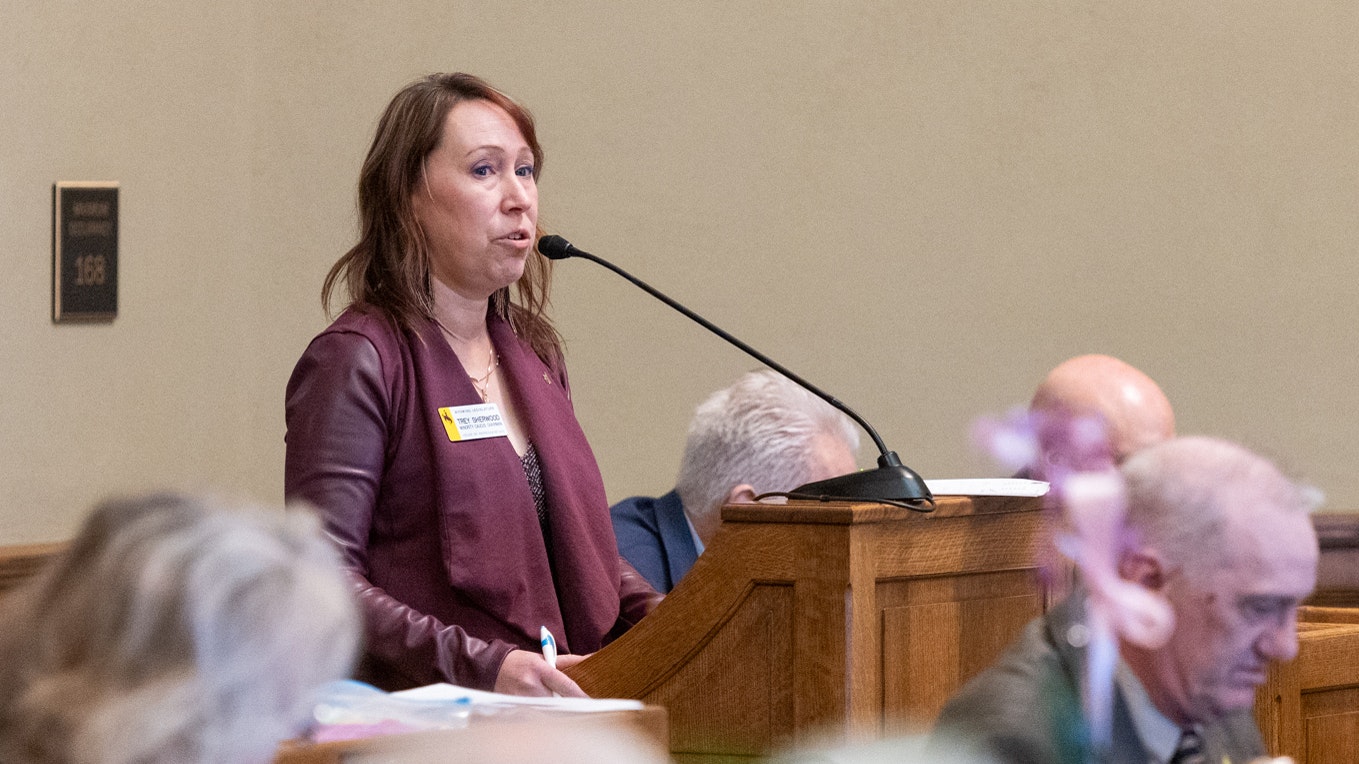
As a co-sponsor of the failed SF 64, Rep. Trey Sherwood, D-Laramie, has run what she calls the Investment in Wyoming Housing bill twice now — and says she'll keep running it.
"Some of my colleagues understand that this is a linchpin to economic diversification and helping young people stay in our state," Sherwood told Cowboy State Daily. "And others just feel like it's absolutely not the role of government."
Sherwood pointed to a recent success closer to home: a coalition in Albany County that grew from a grassroots housing group into a formal nonprofit, the Albany County Land Trust, which just this week hired its first executive director.
"That was supported by the chamber, the hospital, WyoTech, the university, just regular citizens being like, this is nuts," she said. "My kiddos can't stay here, or I want to grow my business, but my workforce can't afford to live here."
Last year, Sherwood secured $5 million for an unmet housing needs program administered by the Office of State Lands and Investments. When the application window closed at the end of January, there were 21 applications totaling roughly $60 million in requests — for just $5 million in available funding.
Ninety percent of those applications were for infrastructure: water, roads, sewer and lights to support affordable and workforce housing.
"To me, that's proof of the need," Sherwood said.
Going forward, the budget contains nothing for housing — no unmet housing needs funding, no investment in housing, and the loss of Business Ready Community funding through the Business Council that some communities had been using for infrastructure buildout.
"There is no new tool other than what the Wyoming Community Development Authority (WCDA) has in federal funds," Sherwood said, "which we know those aren't always right-sized for Wyoming problems."
Federal Promise
In a follow-up interview, Meier explained the passion behind his Saturday speech. His strategy bypasses the statehouse entirely, focusing instead on federal Opportunity Zones — a tool that allows investors to defer and ultimately eliminate capital gains taxes by placing money into designated development areas.
"If you have, let's say you got a $50,000 tax bill, you put that into an opportunity zone," Meier explained. "In 10 years' time, you get the $50,000 out, and it's all yours. Never had to pay taxes again."
The concept first captivated him in Washington D.C., where he heard a speaker describe it as "the greatest thing that I've ever seen."
A member of the WCDA board, Meier broached the idea with Sen. John Barrasso, Sen. Cynthia Lummis and — through the state treasurer of South Carolina — the staff of Republican Sen. Tim Scott.
His mission: ensure that when federal opportunity zones are designated in Wyoming, developers and homebuilders have input on locations so zones land on shovel-ready sites rather than parcels that are years away from utilities.
The pitch to Saturday's Republican audience was intentional — a deliberate effort to frame housing as a conservative, capitalist cause.
"We need about $6 billion in the next 15 years, just in housing in the state. But if we can do half of that with other people's money — like the billionaires in Jackson that need a tax loophole — this is a loophole,” said Meier. “This is the law."
"I think this is a bipartisan issue," Meier added. "Everybody wants to basically get affordable and workforce housing."
Opposing View
That bipartisan framing stands in sharp contrast to the picture Bextel painted during her Feb. 26 appearance before the House Special Investigative Committee.
Testifying about the CheckGate scandal, Bextel cast the entire housing fight in starkly ideological terms.
"This is about hundreds of millions of dollars and developer fees going up in smoke here in Teton County," she told the committee. "That's all this is."
Having described herself as "the public face of mitigation fees," Bextel characterized Teton County's housing programs as government confiscation dressed up as community development.
"What the Democrats and others are willing to do — they are taking, if you develop your land, 70% goes to total strangers in the form of low-income or affordable or workforce housing," she said. "You don't even get to pick who lives there. You have no control over it. That's a scam."
While insisting she did not ask any legislator to vote for HB 141 during this session, Bextel acknowledged the bill addressed issues she has long championed.
"I didn't change my mind. I'm not all of a sudden a socialist and into housing mitigation fees," she told the committee. "Of course I'm still against those."
The larger controversy, she argued, was manufactured to protect a decades-old system.
"This whole CheckGate or whatever you want to call it — this is about mitigation fees," Bextel said. "They're willing to do anything. Defame me, defame these legislators, to stop — keep this 30-year practice."
Looking Forward
For Meier, who has seen both the political and the practical dimensions of Wyoming's housing shortage, the challenge now is keeping economic reality front and center in a debate that keeps getting hijacked by ideology and scandal.
Asked whether pitching capitalism and affordable housing in the same sentence is a hard sell in some Republican circles, the treasurer shrugged it off.
"We are a capitalist nation," Meier said.
But he drew a clear distinction between ideological posturing and the economic math that Wyoming cannot escape — then circled back to his embrace of Opportunity Zones, known as OZs.
Summing up his point, Meier again said, “The nice thing about this is that you do this with other people's money.”
David Madison can be reached at david@cowboystatedaily.com.


