
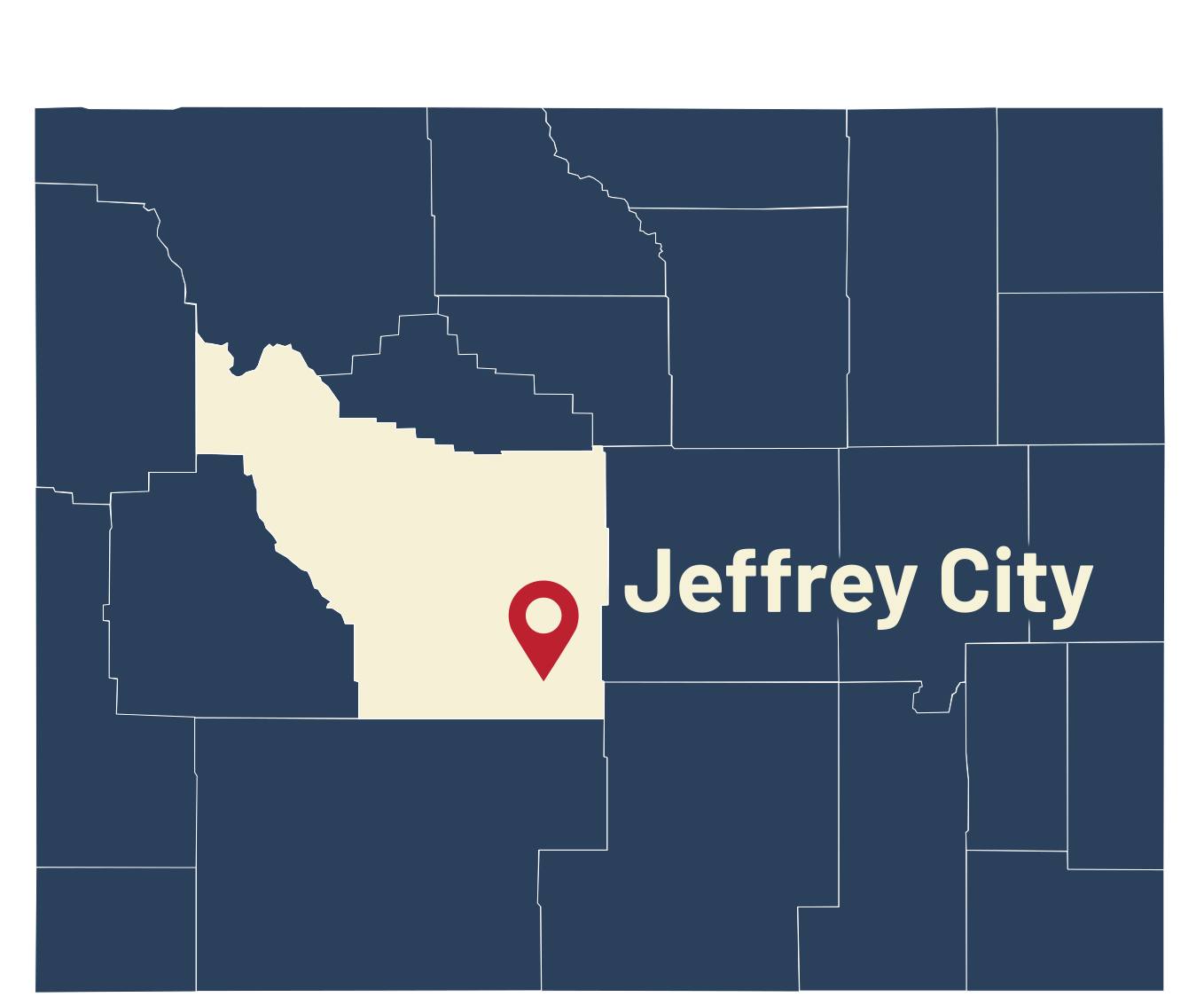
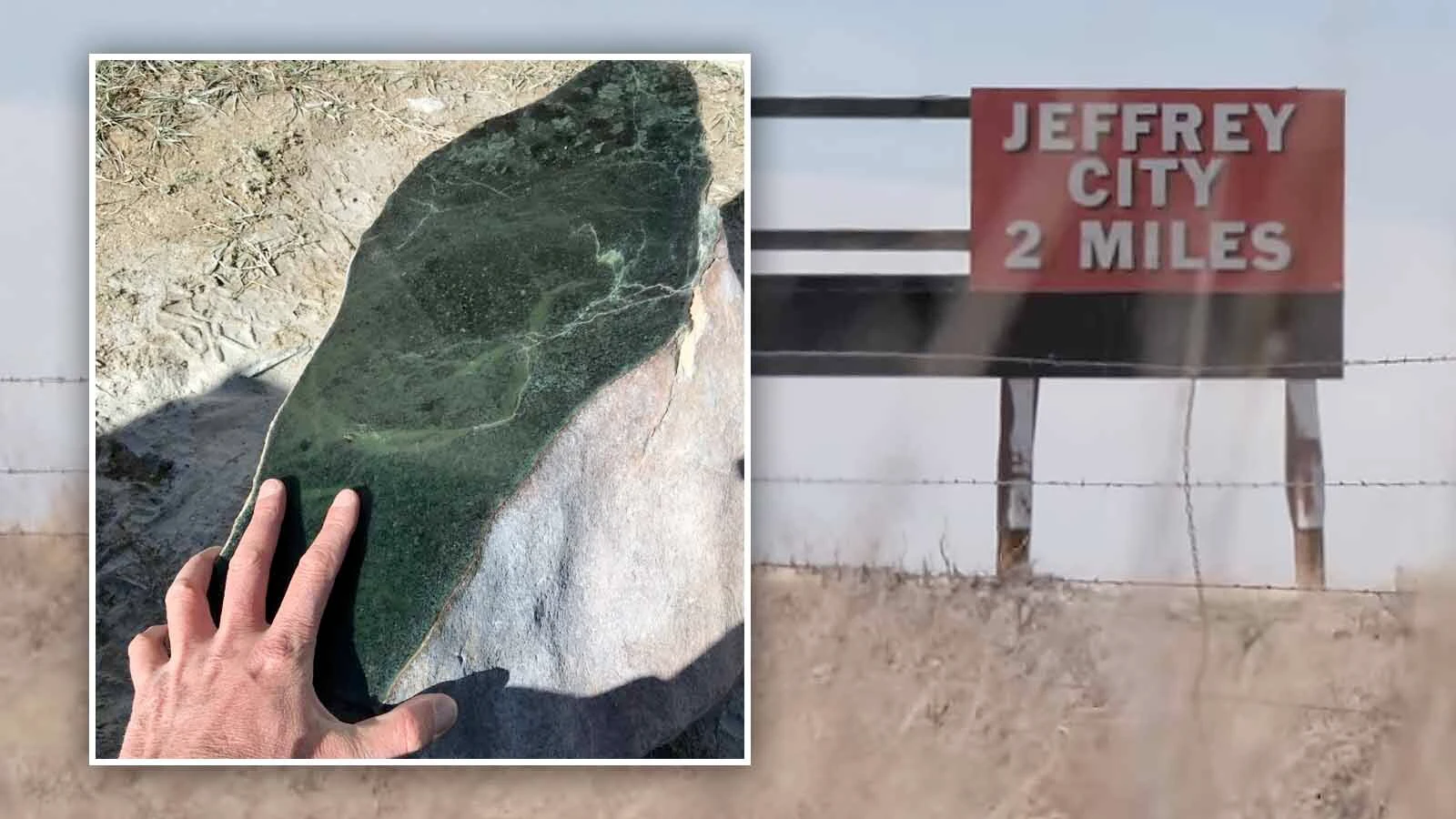
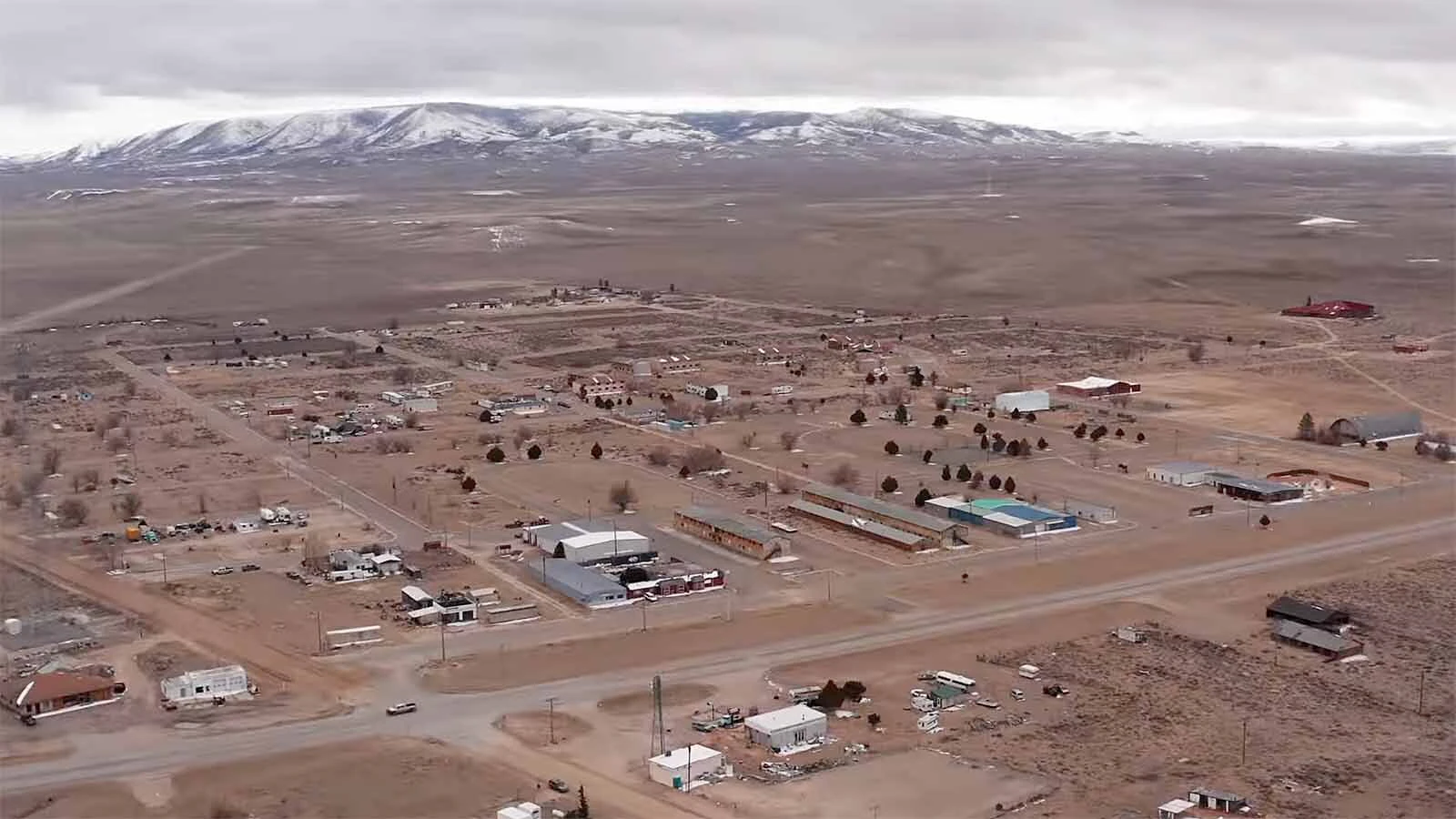
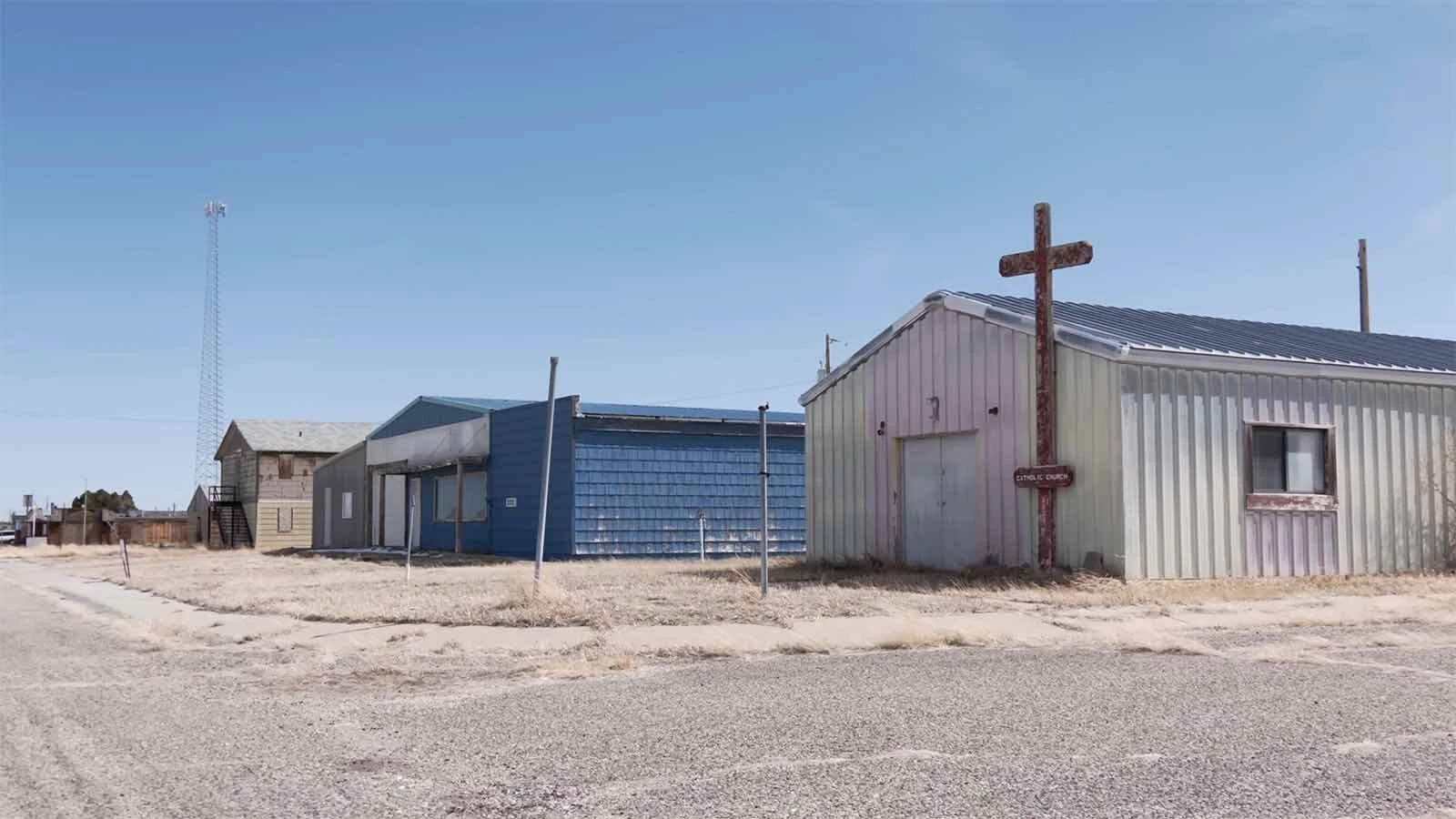
Jeffrey City is best known for uranium and near abandonment after the yellowcake market crashed in the 1980s.
But things are looking up for the near-ghost town in the central desert region of Fremont County.
And that’s not because of Wyoming’s renewed uranium rush or Visionary Metals’ new nickel project nearby.
Jeffrey City, which has about 60 residents after boasting around 4,000 during its uranium heyday, could be poised for a brand-new industry thanks to a Canadian geologist named Jean-Pierre Jutras, who said he’s on the verge of finding significant new sources of both ornamental and gem-quality jade.
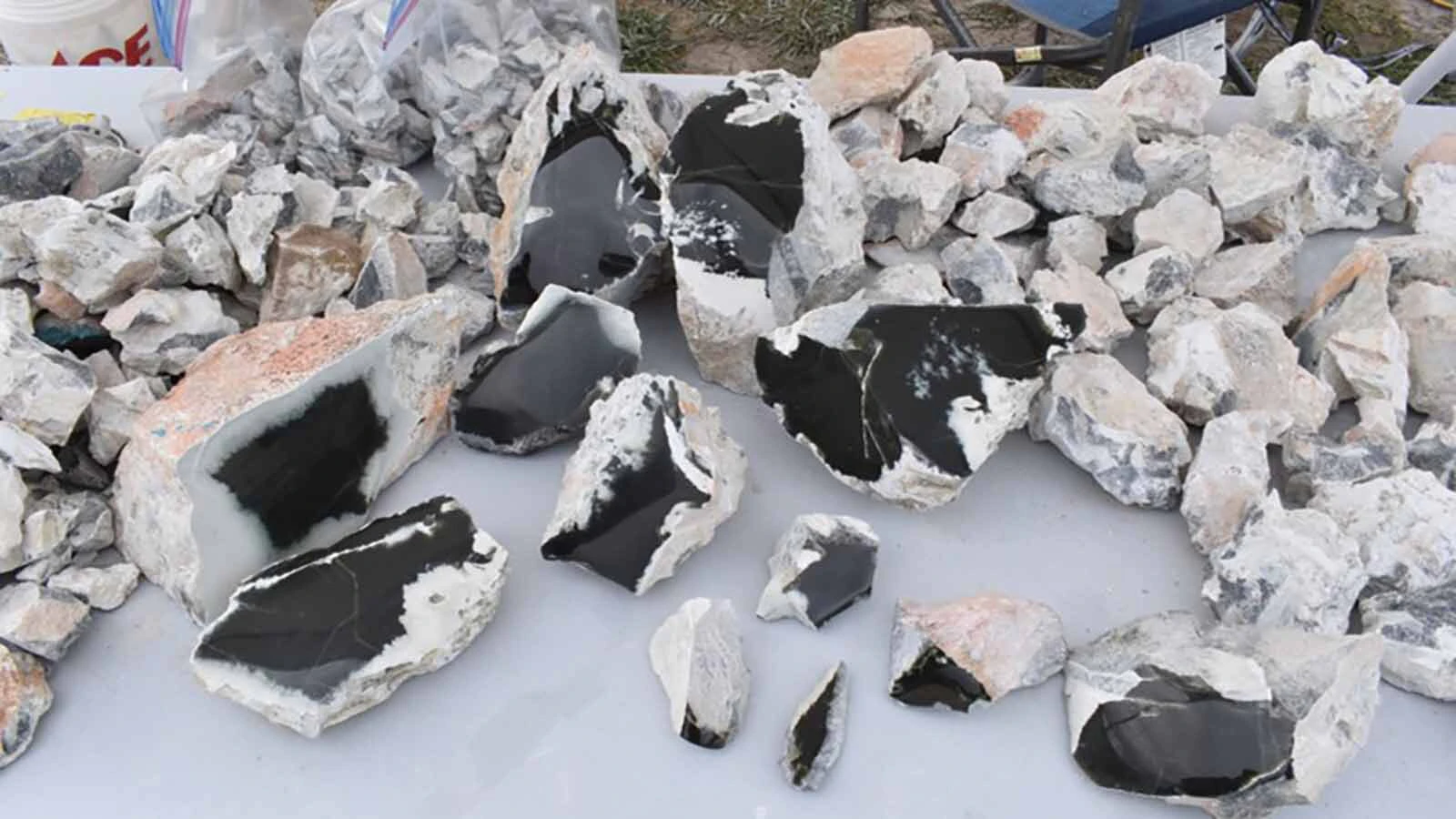
Ghost Town With A Legendary Stone
“Wyoming jade is legendary in the circles of jade carvers,” Jutras told Cowboy State Daily. “Production has been curtailed for a long time, and everything’s been looked at quite a bit and picked over, but when I looked at Wyoming as a geologist, what struck me was that there was barely any information at all on the geology.”
Jutras’ company, Jade Leader, is taking a similar tack to that of Relevant Gold, which is using new geological knowledge and new technology to uncover deeper veins of gold in the South Pass area and other Wyoming locations.
“We just decided to take a hard look and see if the sources of a lot of the surface material that was collected from the '30s all the way to the '70s could be identified and if we could understand if there was any significant potential for renewed production.”
At one time, Wyoming had so much jade laying around on the surface people could walk around and pluck it straight from the sagebrush.
That supported roughly 868 tons of jade production from the 1930s to the 1970s. There was even a company devoted to jewelry production that was sending 18 tons of materials into the world annually, to Taiwan, New Zealand, Europe, and Far Eastern countries.
But as the easy jade became rarer and rarer, the state could no longer support the scale anymore.
Wyoming’s decline happened about the same time as the Canadian jade industry was starting to rise.
How A Canadian Became A ‘Jade-aholic’
Growing up in Canada, Jutras was interested in rocks and geology from a young age. A career as a geologist only seemed logical.
In the 1980s, he was gifted some jade from a mine he was allowed to visit, which honed his interest in this semiprecious stone formed by intense environmental conditions found deep underground.
“I took that home and I’ve been cutting and carving jade and other gemstones ever since then, alongside my geological career,” he said. “So I kind of became a jade-aholic very quickly, very early.”
It wasn’t until he was invited to a jade-carving competition in China, though, that he realized just how interesting — and valuable — jade is.
“To me, jade was like the little souvenirs and tourist shop pieces,” he said. “Once in a while there’s a historical piece that’s really nice. So I went to this festival not knowing what to expect.”
Inside China’s Jade Obsession
When he arrived at the Zi Gang Bei Festival in Suzhou, he witnessed a spectacle unlike any he’d never seen.
There were 550 competing jade carvers who had brought more than 1,100 pieces for judging.
During the three-day event, more than 90,000 visitors streamed in to admire the pieces entered in the competition, as well as to buy jade.
“I was so impressed, first, because of the quality of the carvings that were there, valued in the millions of dollars per piece,” Jutras said. “And we saw jades of all qualities. We saw carvings from Guatemala, New Zealand, Germany, Canada, the U.S., and, of course, China. And I looked at all of this and went, ‘I’m missing something here. How did I not know about this?’”
Jutras had planned to stay for just a week, but decided instead to stay longer and keep exploring this vast new world of jade, visiting all the carving towns and all of the major markets.
“In one of the towns I visited, called Shifosi, they said they had 125,000 carvers, just in that one town alone,” he said. “It was incredible, and essentially all of the businesses in China that sell jade go there because that’s the big manufacturing center. And I mean, it was display after display, buildings the size of airplane hangars, with 2,000, 3,000 vendors in them.”
It was during this time that he learned the jade the Chinese most prized came from Wyoming. It was also the jade that had disproportionately earned gold medals during the festival.
“It’s received extremely well at the highest level, in a culture highly sophisticated in the jade arts,” Jutras said.
Why Wyoming Jade Stands Out
The Chinese have been obsessed with jade for generations.
Emperors made entire suits of jade to wear on their journey to the afterlife.
“We’re talking about 7,000 little tiles of jade all connected together with gold wires that they would clothe the dead with,” Jutras said. “So they could go into the afterlife protected with jade.”
These jade tiles were often said to be too precious to steal, he added. That’s because only nobles were allowed to own it.
“They opened up a tomb and it had a sarcophagus of jade,” Jutras said. “And the thieves had gone in and stolen everything else, including the gold wire that was connecting the jade plates. But they left the jade because you just couldn’t fence jade if you weren’t a noble.”
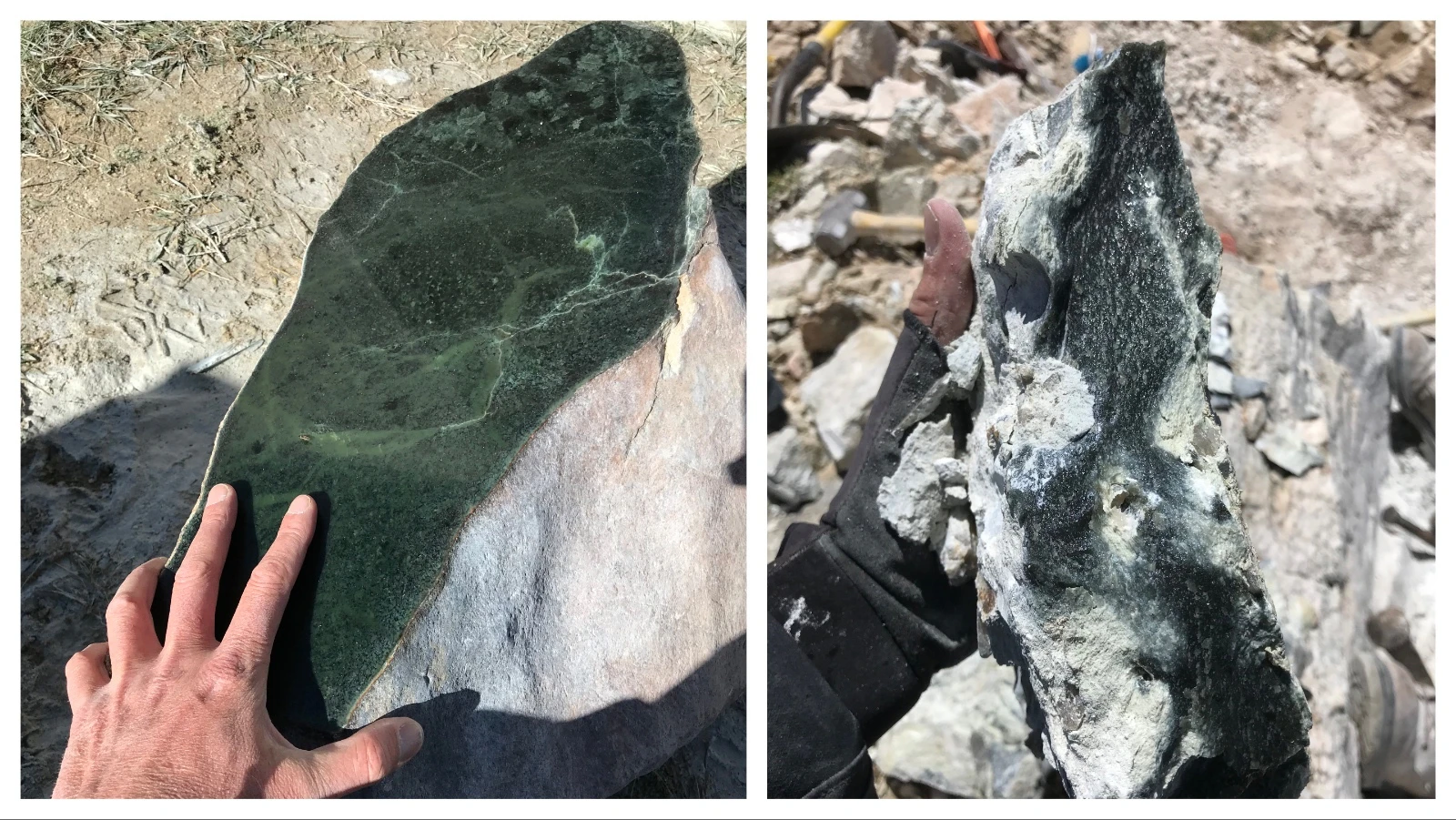
While most jades worldwide consist of recrystallization of a previous rock, Wyoming’s jade appears to have crystalized at greater depths within the earth, resulting in a much purer, more predictable material that takes one of the best polishes found in nephrite jade worldwide.
That is why it’s so highly prized by the Chinese.
Finding New Jade Sources
Jutras returned from his Chinese trip after a month with a mission in mind.
Conventional wisdom had it that Wyoming jade had petered out in the 1970s, but geological knowledge had evolved since that determination was made, as had the technology for finding precious gems, minerals and metals.
“What you have to unravel is why jade was in a particular location in the first place,” he said. “Where did it come from? So you could go to a place where people have picked all the surface stuff and see if there’s a source somewhere beneath it.”
Instead of chasing more famous, rock-hounding spots like Bull Canyon, Jutras instead sought bedrock targets, which he believes could be the original sources of all that loose jade once picked up by the bucketful. These are targets he believes can support a small, but steady, jade industry over the long haul.
The work, which began in 2018, has cost Jade Leader roughly $337,000, and has included six phases of field work north of Jeffrey City, including trenching, mapping, and scientific studies.
Results of that work have been published in the Journal of Gemology, which is the British Gemological Society’s association publication. The peer-reviewed article outlines two distinct types of jade found by Jade Leader.
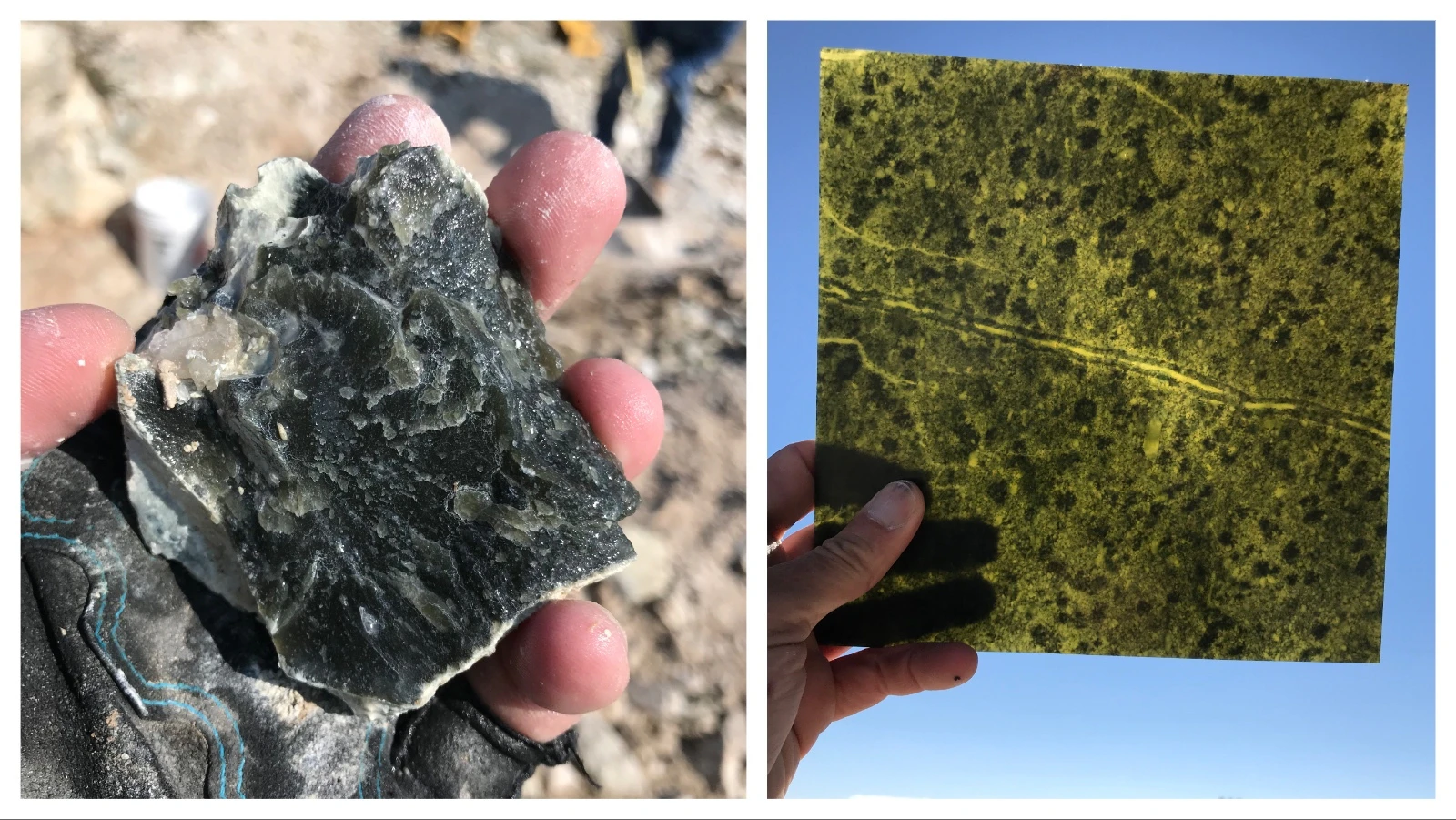
There’s the smoother, more homogenous material that’s suitable for jewelry, which he refers to as gem jade. Then there’s a rougher, more mottled stone called ornamental jade.
Not Just A Rockhounding Relic Anymore
Once, ornamental jade was only suitable for carving little souvenirs to sell in tourist shops, but Jutras said the time is right for a new use.
“LED technology is improving all the time,” he said. “Cutting technologies are improving all the time.”
That now allows this type of jade to be cut into thin, translucent slices that can be backlit to stunning result.
“We see a space here where the ornamental jades can be an addition to the luxury stone market,” Jutras said.
To test the theory, Jade Leader has taken a small quantity of its ornamental jade to create a few test installations and see if this idea can find footing in the luxury architecture space.
They’ve also sold a $50,000 batch of Wyoming’s rough jade into experimental projects where designers are testing how the stone looks in thin backlit panels.
Tiny Mine, Small Footprint, Big Bet
Jutras’ vision for Jeffrey City will depend on finding demand for niche, high-end architectural and carving jade.
For now, the project is in the early days. It’s backed by promising field work and it’s economically feasible, Jutras said, because his targets are small and have a small environmental footprint, one that does not require use of anything hazardous.
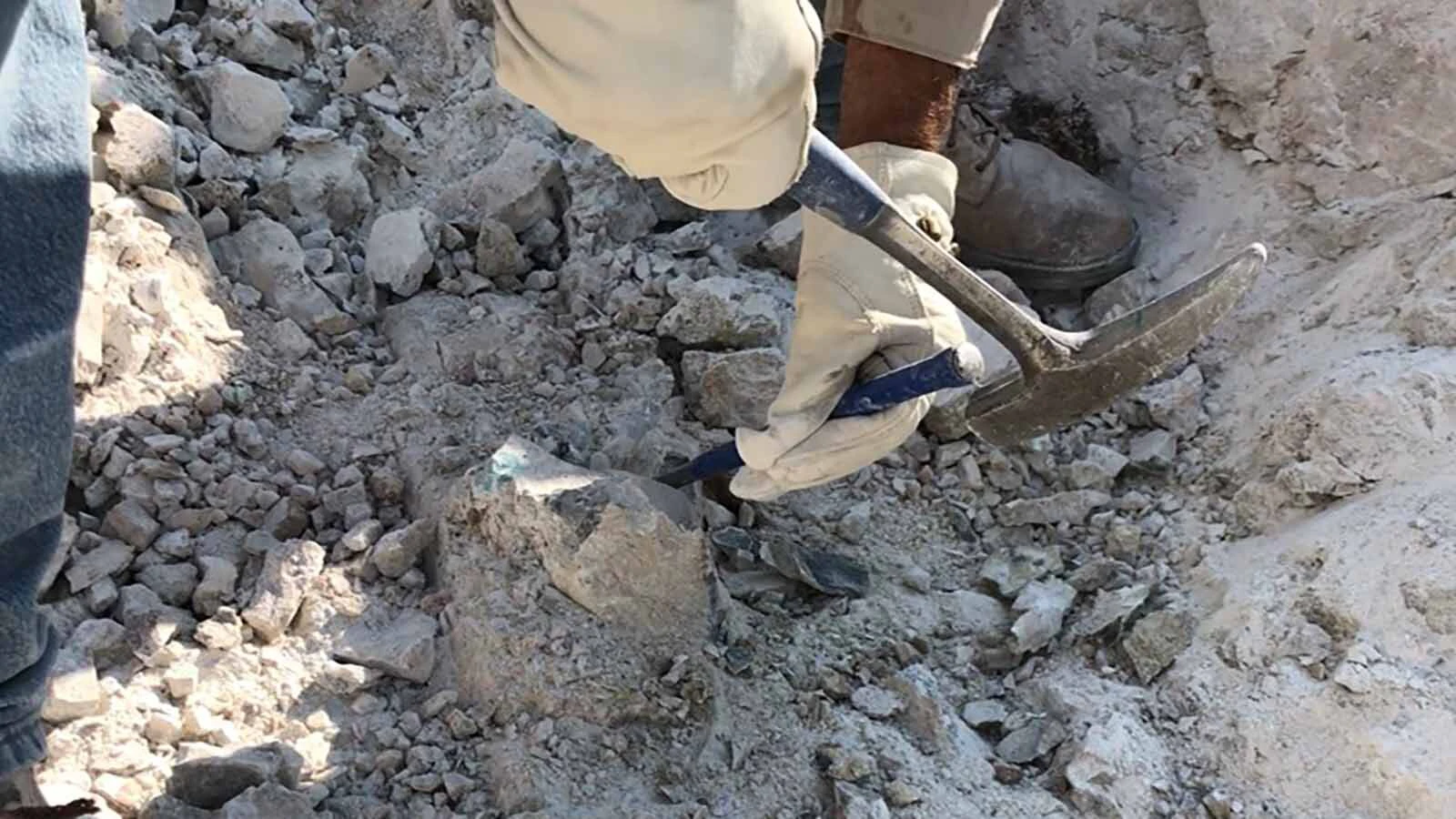
“We’re talking about 1 to 2 acres essentially, to harvest the material,” he said. “And then all we do is just jackhammer the rock and extract whatever jade is contained within it, and then put the debris back into the excavation for reclamation. There’s no need to build up any kind of large infrastructure at all.”
There’s also no need for large amounts of water to process the stone, nor any crushing, tailings or mechanical separation required.
“It’s all done by hand,” he said. “And there’s no need for processing the material outside of just polishing a side of the pieces, so it shows us the inside texture, color and translucency of the stone.”
For now, Jeffrey City is still an open question. But if the market for architectural jade proves out, the windswept outpost might find itself a new niche in the jade world.
Its second act might not be written in uranium at all, but translucent green instead.
Renée Jean can be reached at renee@cowboystatedaily.com.


