
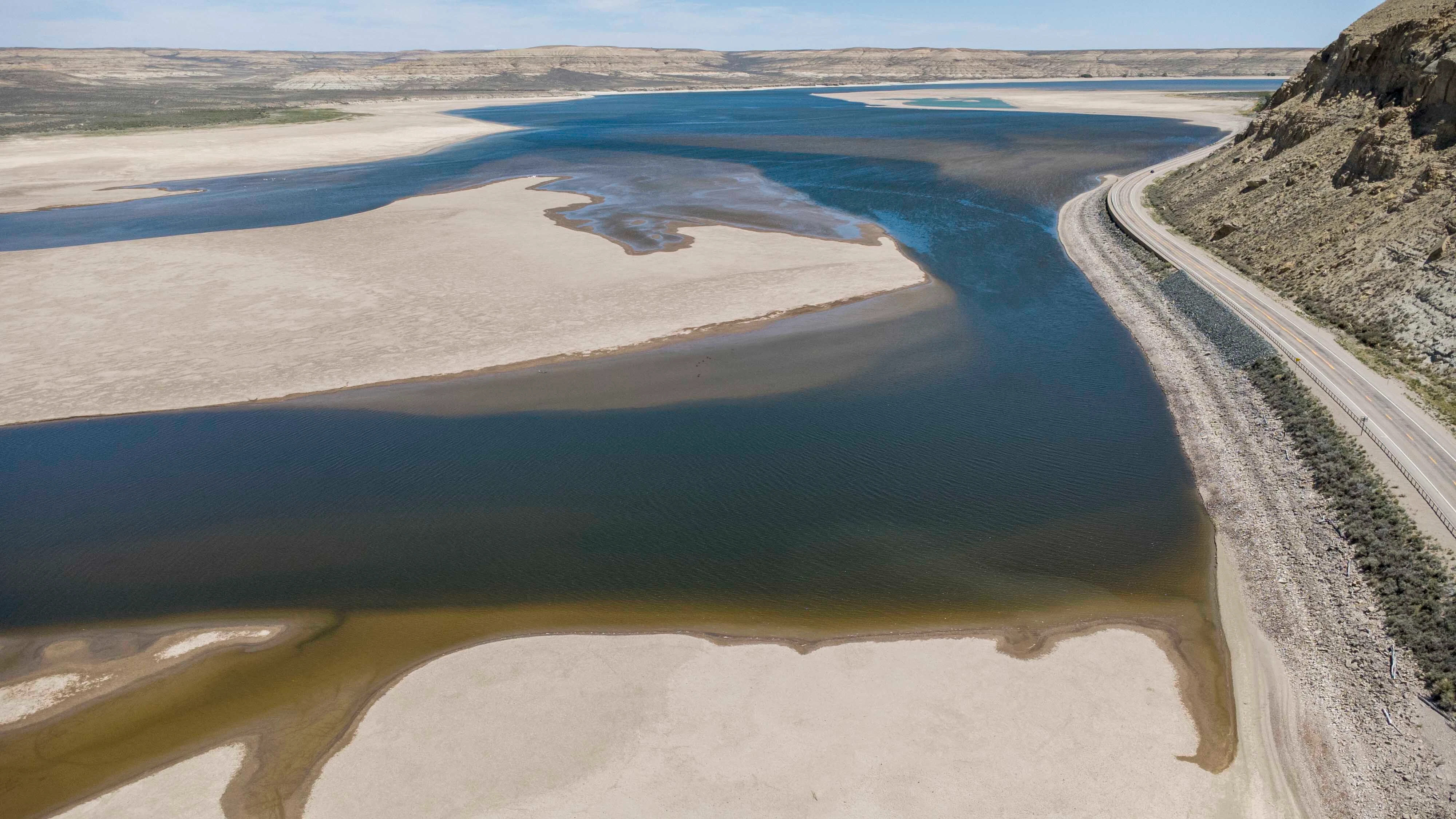
The situation with the Colorado River is dire, and likely will keep getting worse if the river continues to be managed according to arcane policies, officials representing the four Upper Basin states said Tuesday.
Water-management policy needs to shift away from legal wrangling and toward the realities of water availability, or hydrology, members of the Upper Colorado River Commission said during a meeting in Denver.
The commission didn’t make any policy decisions, and plans to meet again this summer.
At issue is whether the Upper Basin states – Wyoming, Colorado, Utah and New Mexico – can keep meeting downriver demands according to water allocations drawn up under the 1922 Colorado River Compact.
The compact also includes the Lower Basin states – Arizona, Nevada and California – as well as Mexico and numerous Native American tribes.
The headwaters of the Colorado River are in Colorado. Wyoming’s Green River is one of its main tributaries.
Wyoming and Utah share Flaming Gorge Reservoir. It’s facing a million acre-foot drawdown in an effort to replenish desperately low Lake Powell, on the Utah-Arizona state line.
Worst Year On Record
The conversation must shift from legal wrangling to managing the river according to what nature provides, commission members said.
“As I’ve been saying for years, this is a problem that needs to be settled by hydrology,” said state engineer Brandon Gebhart, Wyoming’s representative on the commission.
“This is one of the worst, if not the worst, hydrologic year on record,” he added.
Longstanding drought conditions across the West, coupled with the unusually dry 2025-2026 winter, have left ranchers, farmers and communities facing tough choices, commissioners said.
“It is dire; the pain is felt in every corner of every state in the Upper Basin, Colorado commissioner Beck Mitchell said.
In Utah, some small towns have already run out of water and are hauling it in, Utah commissioner Gene Shawcroft said.
There have been calls for a “statewide state of emergency” because of drought, he added.
Gebhart said all of Wyoming is also essentially in a state of drought.
Bad News For Ag
At one point, commission executive director Chuck Cullom displayed slides showing aerial photos of agricultural areas in each Upper Basin state.
There was stark contract between widespread greenery in images from 2024, when water was relatively abundant, and those from 2026. This year's photos show far more brownish, dry land and shrunken reservoirs.
Regarding images taken along South Piney Creek in Wyoming, Gebhart said more than just a lack of green crops is at stake.
South Piney Creek ranchers might have to cut back their cattle herds because of a lack of forage, he said.
Mitchell said farmers and ranchers in the Upper Basin states are facing conditions that can’t be ignored.
“In a year like this year, they’re impacted in ways that we can’t imagine sitting in a room in Denver, trying to keep cattle alive, trying to keep crops alive, trying to make it through one more day,” she said.
Hoping For ‘Snowmaggedon’
On one optimistic note, it was reported to the commission projects are underway in each state to curb secondary water losses during crop irrigation. That includes installing more efficient headgates on irrigation canals, and lining canals with concrete or other materials to keep water from leeching into the ground.
Wyoming has roughly $6 million earmarked for such projects, staff reported.
Management of dams and other infrastructure in the Colorado River Basin should be managed for long-term water conservation, Mitchell said.
“When we consistently release more than what is coming into our reservoirs, we drain the system,” she said.
And this is a pivotal year for Colorado River management. Water-use negotiations and infrastructure operations were last updated in 2007, and are up for renewal at the end of 2026.
The Upper Basin can’t be managed in a perpetual cycle of diminishing returns, Shawcroft said.
The effects of drawdowns to feed the Lower Basin accumulate on long-term storage, he said.
“There’s likely to be little to no carryover storage (this year),” he said.
And there will likely be even worse water shortages next year, “Unless we have a Snowmaggedon runoff,” he added.
Mark Heinz can be reached at mark@cowboystatedaily.com.


