
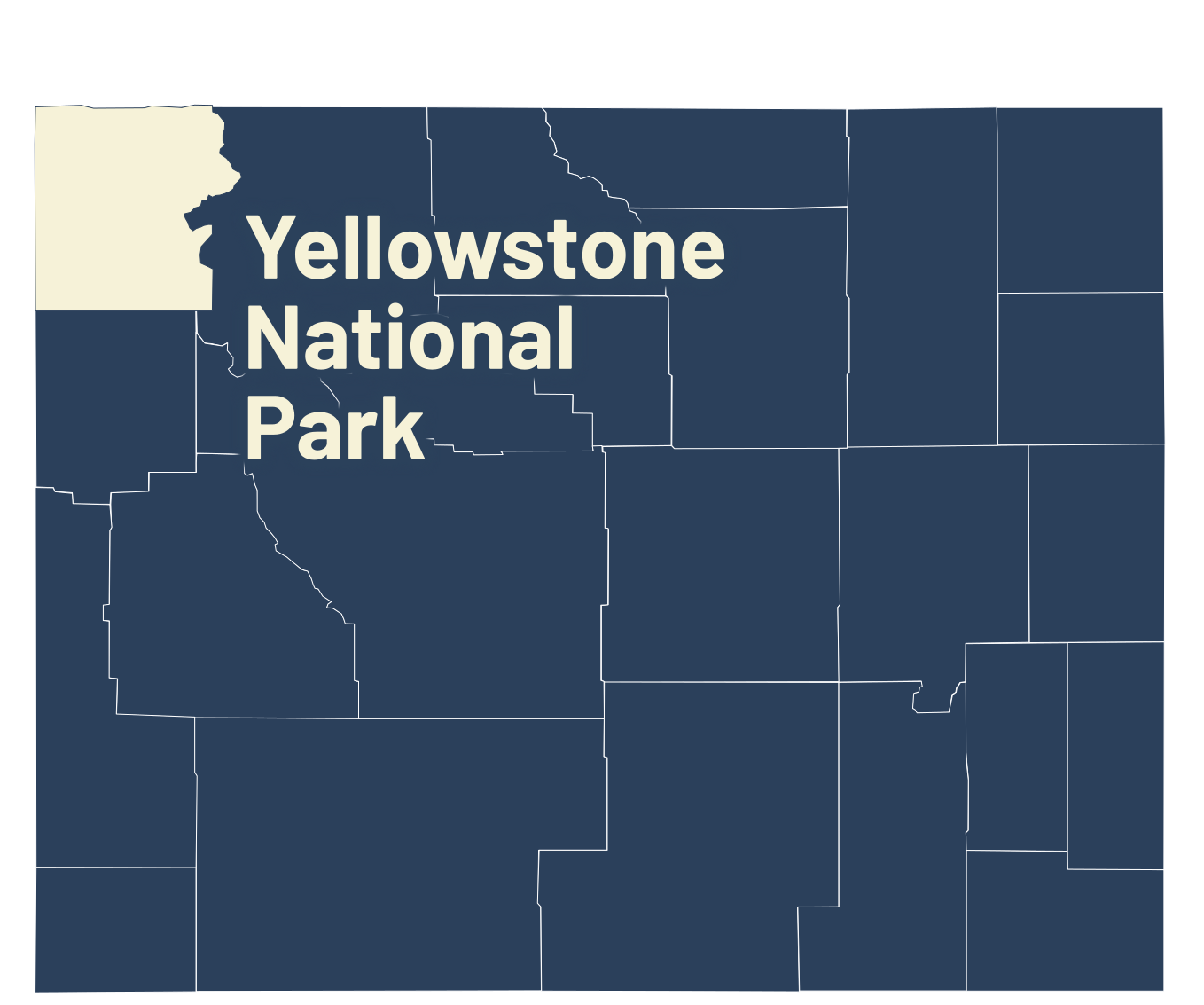
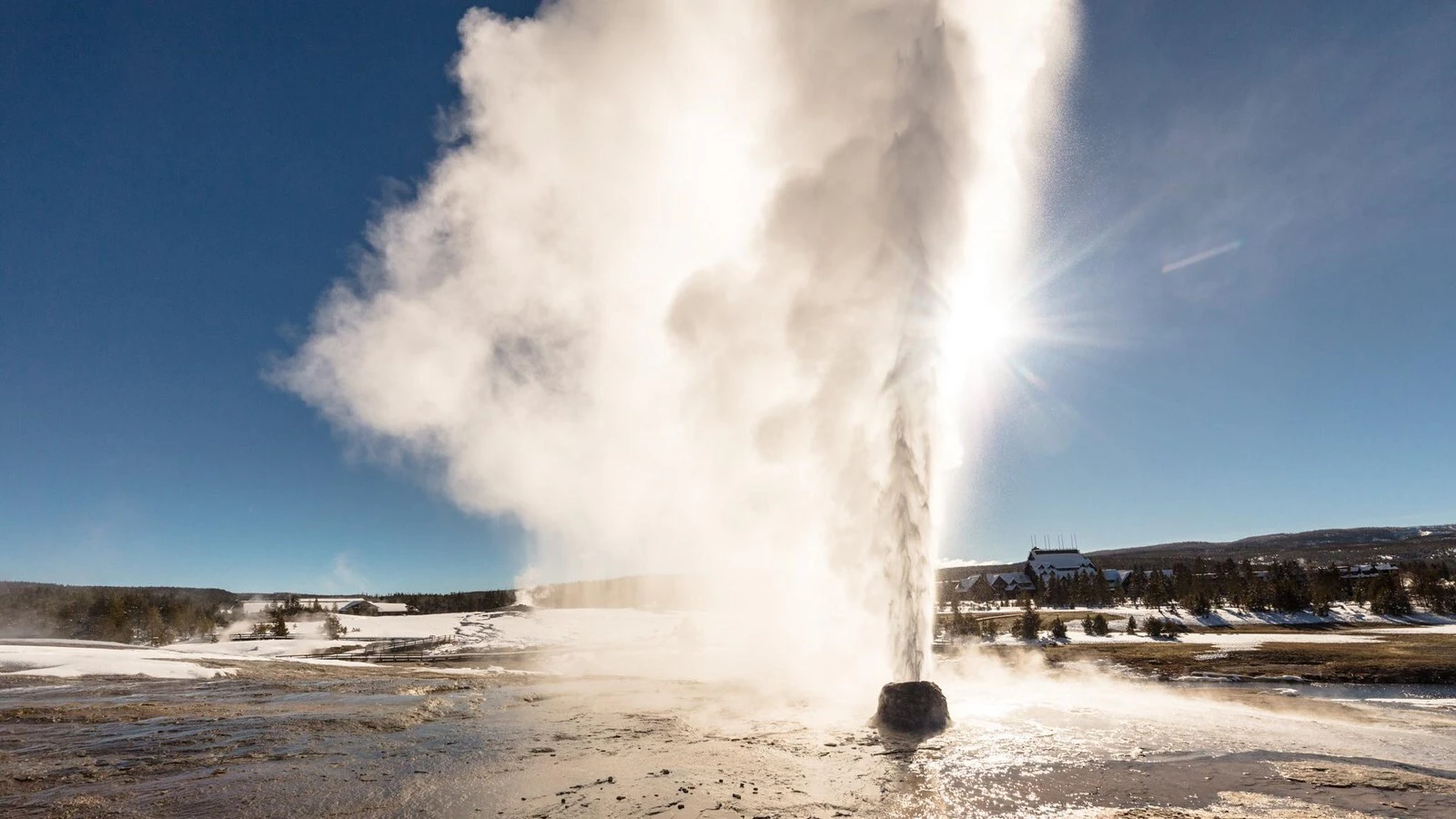
Yellowstone National Park’s Old Faithful is the most famous geyser in the world, and yet it’s regularly upstaged by one of its nearby neighbors.
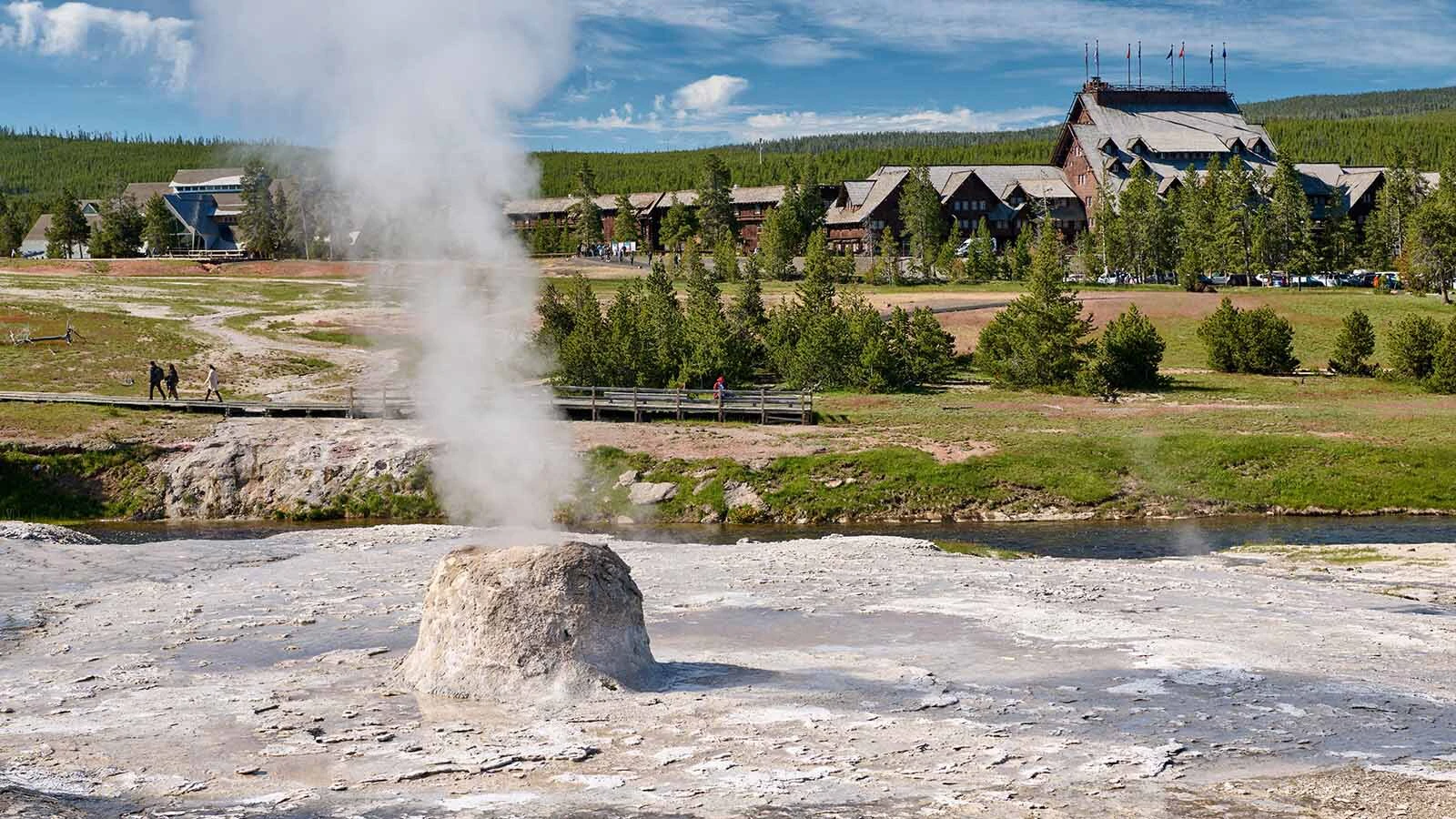
Beehive Geyser sits on Geyser Hill, less than 1,000 feet from Old Faithful. It isn’t as prominent as Old Faithful, but makes its presence known during its less-frequent but spectacular eruptions.
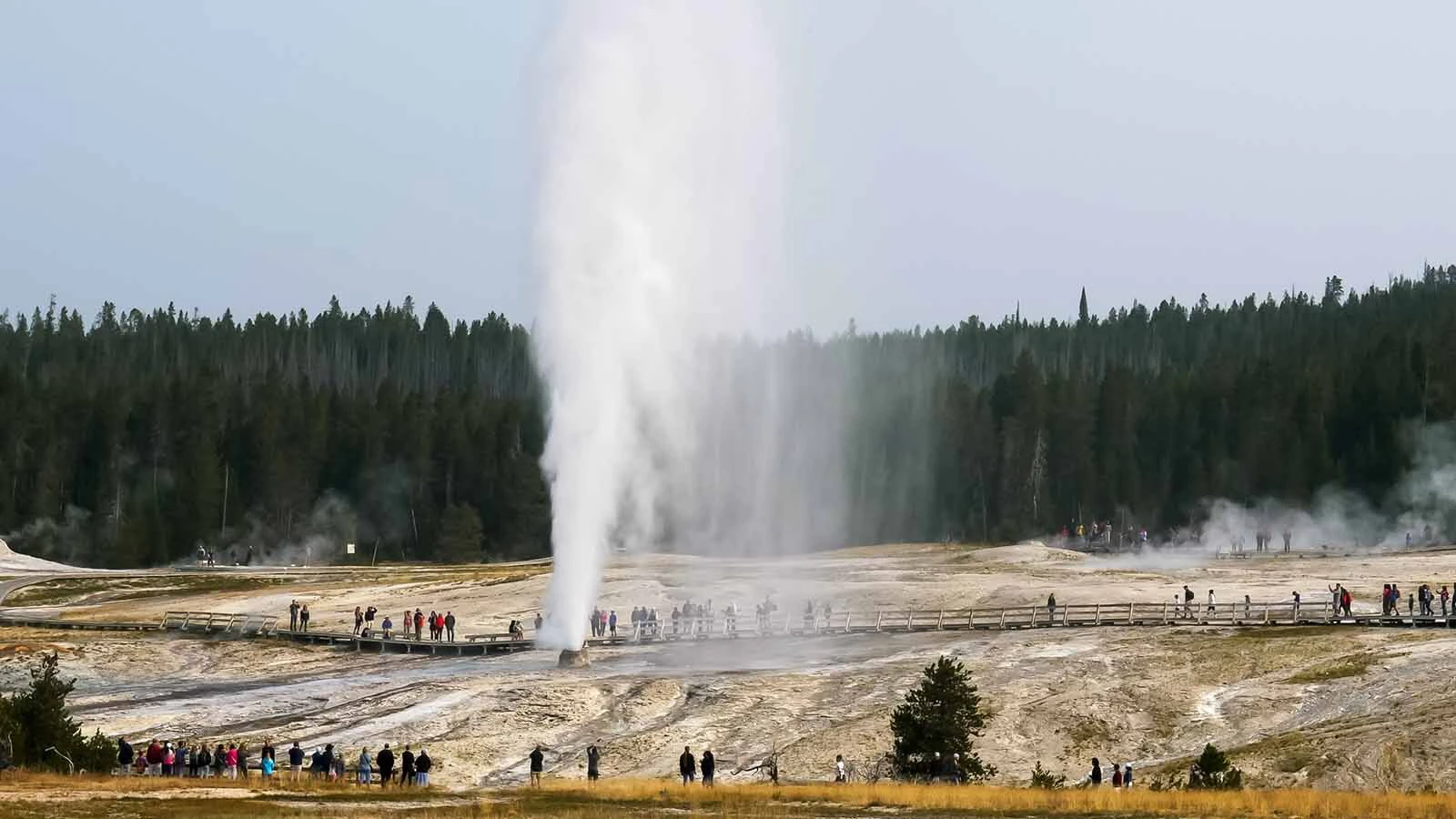
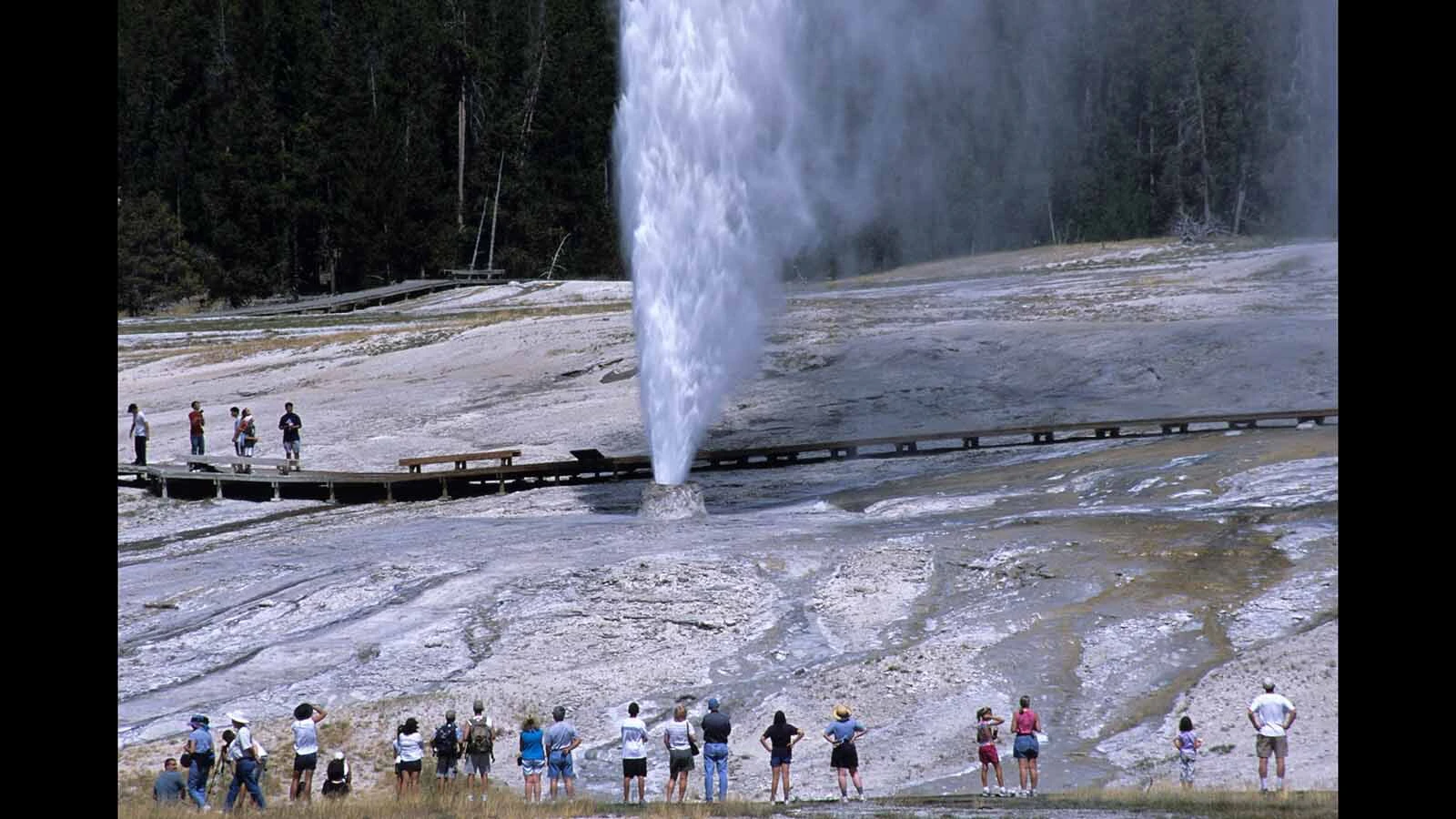
It’s also an up-close and personal experience for anyone daring enough to stand on the boardwalk when it’s erupting. They'll be less than 50 feet, right in the "splash zone," from one the park's most famous geysers.
“If somebody has not experienced it up-close, they should,” said Janet Jones, a Cody resident and geyser enthusiast. “It’s so different from Old Faithful, and some would even say it's better.”
Important Geyser
Beehive has been one of Yellowstone’s most notable geysers since the first scientific and surveying expeditions in the 1870s. The first recorded sighting came from the Washburn party on Sept. 19, 1870, according to Lee Whittlesey’s book “Yellowstone Place Names.”
“(It) is a symmetrical cone resembling an old-fashioned straw beehive with the top cutoff,” wrote Nathaniel Langford in 1871. “The stream did not deflect more than four or five degrees from a vertical line, and the eruption lasted eighteen minutes. We named this geyser the ‘Bee Hive.’”
Since then, eruptions of Beehive Geyser have been irregular but spectacular. Geologist Arnold Hague said the geyser “has no superior for beauty of its jet and sharpness of outline” in 1911.
An average eruption lasts between four and five minutes in 2026. Eruptions as long as 18 minutes were documented by the Washburn party in the 1870s.
The average height of an eruption is between 150 and 200 feet, with some observations as high as 222 feet.
That beats the average height and duration of an Old Faithful eruption, which is around 130 feet tall and lasts between 1 and 4 minutes.
Beehive’s namesake cone might have something to do with its greater height. The narrow opening constricted the flow of water, like holding a thumb over the end of a hose, leading to greater pressure and longer, taller eruptions.
However, that’s more speculation than scientific theory. Beehive hasn’t been as rigorously studied as Old Faithful, which had its average water volume measured for the first time within the last few years.
“We haven't had a lot of opportunity for scientists to go in and prove what we're seeing from the surface,” Jones said.
Feel The Power
An average Old Faithful eruption draws thousands of people, standing a good distance away from the mighty geyser as it sends 7,300 gallons of hot, salty water into the air.
Beehive Geyser doesn’t draw as big of a crowd, but that doesn’t make its eruptions any less spectacular.
“Many people are very thankful that they stayed for (a Beehive eruption), because they feel that it was better than Old Faithful,” Jones said.
While Old Faithful is surrounded by a massive semi-circle of boardwalks and benches, there’s only one boardwalk that passes Beehive. However, that boardwalk lets people get within 50 feet, even during its eruption.
The water erupted by Beehive Geyser has an average temperature of 198.5°F. That’s hotter than Old Faithful, overall, but the behavior of its eruption means it can be experienced that close with a relative degree of safety.
“I encourage people to get close, if they have the time,” Jones said. “As the spray comes up, it's diffused into tiny droplets. Even though they come out at or above boiling temperature, the droplets go up 200 feet, and they’re cool to almost ice cold by the time that they reach people on the boardwalk.”
The wind accelerates the cooling of the water droplets. While Beehive sends water higher than Old Faithful, the wind often cuts off the top of the water column, cooling down and further spreading the spray.
Jones has stood underneath the spray of Beehive many times and has never been burned or scalded. That said, anybody standing under the spray will take a bit of Beehive with them, like it or not.
“The spray does contain silica,” she said. “You’ll want to keep that spray off of your glasses and camera lens, just because it will dry and leave a hard water deposit.”
The proximity to Beehive also gives people the experience of feeling the force of the erupting water and steam, something you can feel from the Old Faithful vantage points.
“You’re standing much closer than Old Faithful,” Jones said. “That's probably the main allure of it. You can really feel the power of it and still be safe.”
Faithful But Irregular
Catching a Beehive Geyser eruption can be difficult given that it doesn’t have a regular schedule.
Unlike Old Faithful, which usually erupts every 90 minutes or so, Beehive consistently erupts once or twice a day, with intervals of between 18 and 23 hours.
According to Jones, we should consider ourselves fortunate Beehive is that consistent. Like most of Yellowstone’s thermal features, its behavior has changed over the years.
“It has had many dormancies in the past,” she said. “A paper by geologist George Marler said there was only one recorded eruption of Beehive between 1896 and 1922. There were even two short periods of dormancy in 2007, ranging from 24 days to two months.”
There is one reliable indicator of an imminent eruption. A smaller geyser, known as Beehive’s Indicator, starts erupting a 6- to 15-foot water column within a 30-minute window of a Beehive eruption.
“That's an indicator that the pressure has been building in Beehive,” Jones said. “When geyser gazers or park staff know that the indicator is going, they encourage people to stick around for 10 to 15 minutes to catch the eruption.”
It also gives people an opportunity to explore Geyser Hill. The knob near Old Faithful contains more than a dozen geysers, hot springs, and other hydrothermal features within a 400-foot area.
Jones said Geyser Hill has “the highest concentration of large geysers in the world.” Not all are as active as Beehive, but they can be equally spectacular.
On July 15, visitors got a rare opportunity to see Beehive and Lion Geyser, both on Geyser Hill, erupting at the same time. It was captured on video, thanks to the National Park Service’s Old Faithful webcam.
Buzz By Beehive
To reach Beehive Geyser, visitors only need to find Old Faithful, which isn’t hard, and follow the Upper Geyser Basin Trail over the Firehole River until the boardwalk brings them to it.
A lucky Yellowstone visitor will get to see Old Faithful and Beehive erupting at the same time. It’s rare but can and does happen.
Nobody’s guaranteed a Beehive eruption, as it can take many hours before there’s any indicator. Still, it’s a unique Yellowstone experience that Jones encouraged every visitor to seek out.
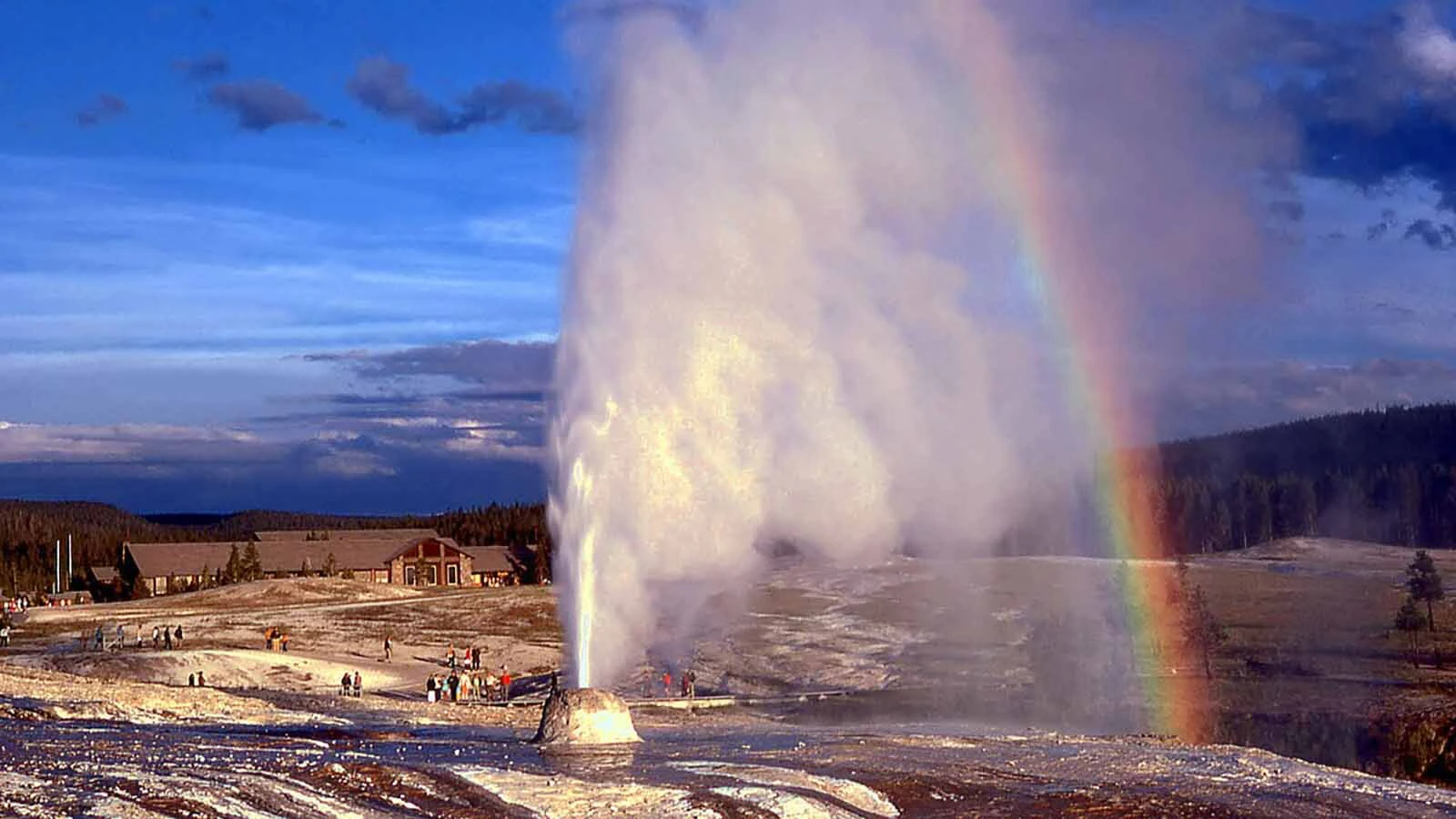
“I’ve gotten some of my best rainbow pictures with Beehive from the Old Faithful side of the river,” she said. “Getting both at once is like your windshield wipers matching to the music on the radio. If you can catch it, it’s one of the prettiest and most graceful geysers in Yellowstone.”
Andrew Rossi can be reached at arossi@cowboystatedaily.com.


