
A 28-year-old Australian man has been found dead near Grand Teton National Park.
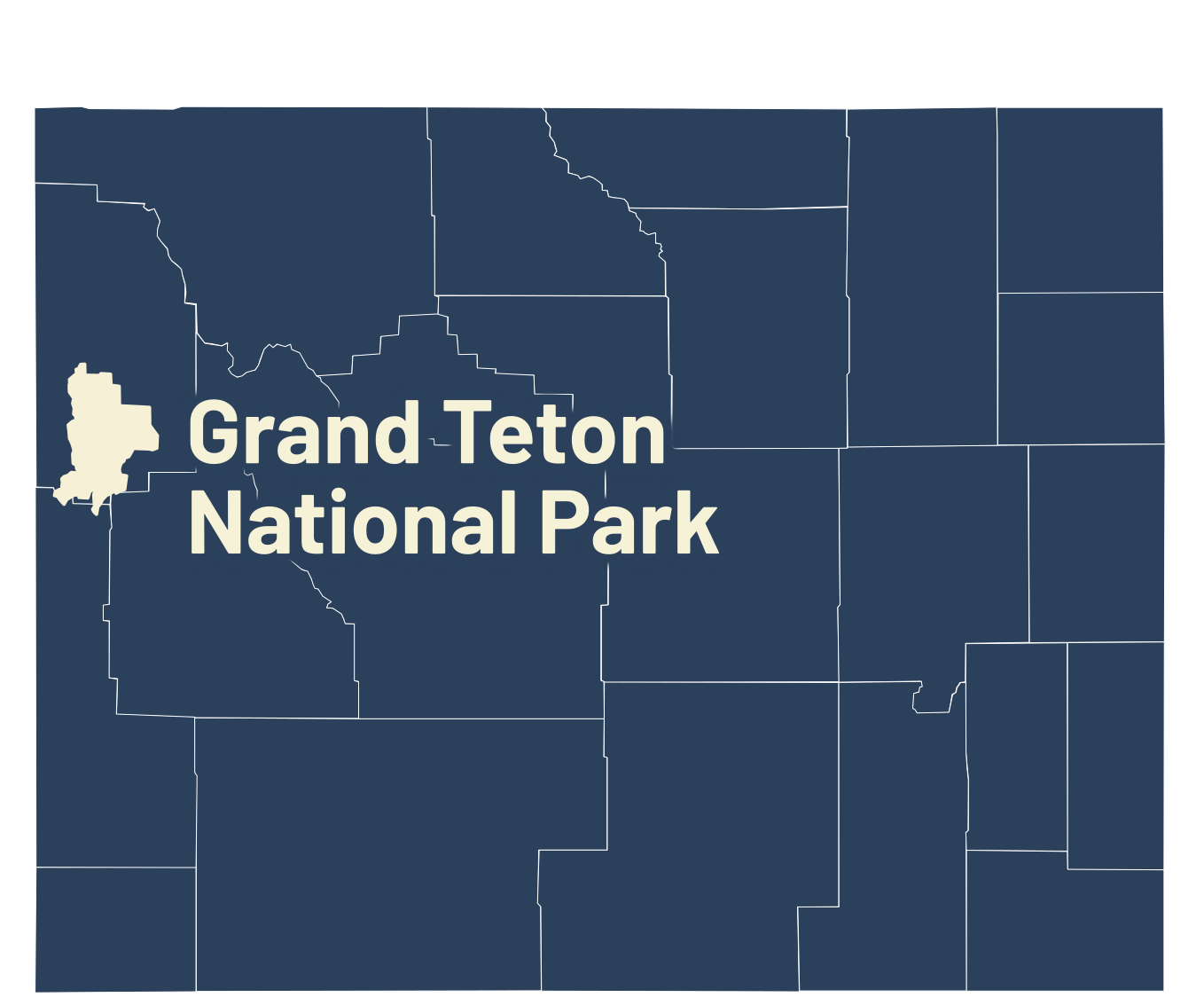
Teton County Search and Rescue (TCSAR) recovered the body of the unidentified man Wednesday morning. He was found in an area known as The Wigwams on the west slope of the Tetons.
According to TCSAR, the man is believed to have died from a fall from “a steep, high-altitude ridgeline” that separates Grand Teton National Park and the Jedediah Smith Wilderness.
“TCSAR sends its sincere condolences to the family and friends of the deceased and wishes to express its gratitude to the partnering federal agencies who assisted in the investigation,” the agency said in a statement.
Cowboy State Daily could not reach TCSAR or Teton County Sheriff Matt Carr by the time of publication.
A Difficult Search
According to the information released by TCSAR, the Australian man was attempting a thru-hike of the Continental Divide Trail, a 3,028-mile route that stretches across the Rockies from Alberta, Canada, to Chihuahua, Mexico.
The victim started from Canada and headed south, keeping his family informed of his progress via a Garmin satellite device.
By July 19, he reached Old Faithful in Yellowstone National Park and sent a message with his intended route through the Tetons and into the Wind River Basin.
The last communication the family received was a check-in from his device without coordinates or a message. Along with a video he sent via Facebook, his family placed him somewhere in Grand Teton National Park.
After four days without any updates, the victim’s family contacted Grand Teton officials July 27.
Using the Garmin device, it was determined that the July 23 check-in had been sent near The Wigwams in Teton County, near but outside the western boundary of then park.
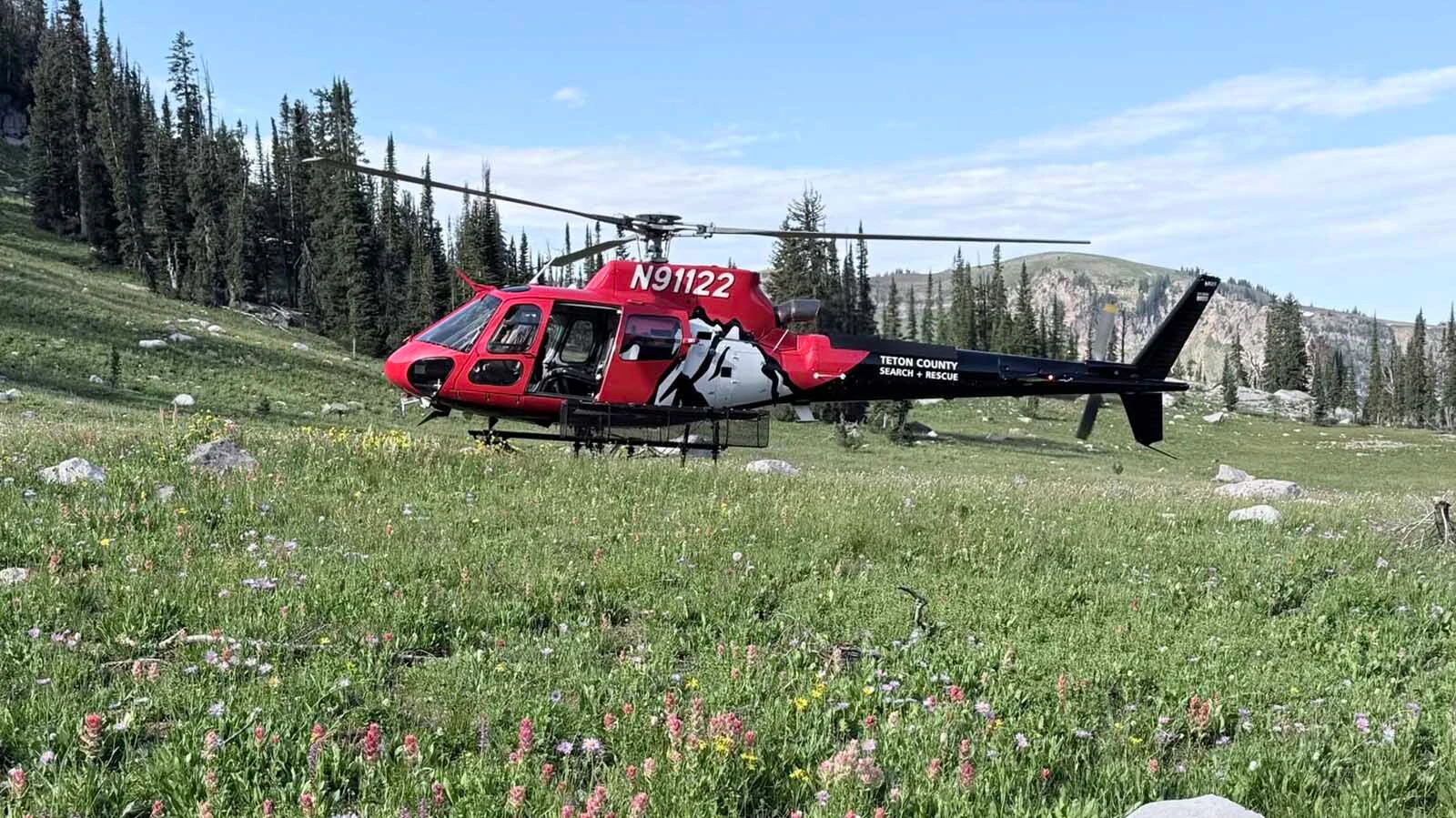
At this point, TCSAR took over the search and rescue operation. A short-haul team was assembled to reach The Wigwams via helicopter Wednesday morning.
The victim’s body was found below a ridge south of North Wigwam Peak. He was located from the air because of his bright orange backpack.
The body was recovered and transported to the Teton County Coroner’s Office.
A Tough Trail
Hiking the entire Continental Divide Trail can take between two and seven months.
Thru-hikers attempt to do it continuously, from start to end, in one attempt. They only stop to sleep or resupply in communities along the route.
Marty Lee of Socorro, New Mexico, was hiking the Wyoming section of the Continental Divide Trail when he was 69 years old. He told Cowboy State Daily how thru-hikers regularly powered past him.
“Out in the Great Divide Basin, I was making 22-23 miles a day, but thru-hikers were blowing by me," he said in July 2023.
Lee was section hiking, taking multiple years to complete the Continental Divide Trail. By July 23, he’d finished the stretches in New Mexico and Colorado, and was hoping to finish the Wyoming and Idaho sections that summer.
Jordan Thorn of Gillette finished a 2,198.4-mile thru-hike of the Appalachian Trail in 2024. He was averaging 18 to 22 miles every day, and it was an ordeal.
“In the first four months I wasn't sick, I didn't twist my ankle and had no major injuries, but I ended up pushing myself to the finish,” he said. “It was like running a marathon, and on your very last corner, you crash into the drinks table, and you end up having to crawl across the finish line.”
He reached the end of the trail, Mount Katahdin in Maine, on Oct. 6, 2024. It had taken him five months to get there.
“When I made my way up to Katahdin and saw the sign, it was kind of strange,” he said. “It was a total non-event. It was like, ‘There's the sign, let's go get my pictures and get off the mountain.’ I think I was just so ready to be done.”
According to the Appalachian Trail Conservancy, only 1 in 4 people who attempt a thru-hike of the Appalachian Trail actually finish it. No similar statistics exist for the Continental Divide Trail.
More, More, More
TCSAR has been busy in 2026. Its volunteers respond to every call, but at the cost of significant impacts on personnel and resources.
Of the 4,990 search and rescue missions in Wyoming between 2009 and 2026, 1,205 were in Teton County. Lincoln County was a distant second with 583 missions during the same period.
TCSAR can recover some of its costs as a 501(c)(3) nonprofit, which allows it to obtain grants and donations. Other funds are available, but they’re distributed to SAR teams throughout the state via the Wyoming Office of Homeland Security.
TCSAR’s call numbers jumped in 2021 and have stayed relatively high since. The 64 calls between Dec.1, 2024, and May 31, 2025, used to be as many as the agency got in an entire year.
That correlates with the steady growth of the outdoor recreation industry, which shows no sign of slowing down. That likely means more calls, more expenses, and more asked of volunteers going forward.
TCSAR hasn’t released the name of the Australian man who died in the Tetons, but statistics say that 72% of their calls are for males.
Demographically, 16- to 30-year-olds accounted for 33% of the rescues, followed by 31-to 45-year-olds, with 29%.
Nevertheless, TCSAR’s all-volunteer force will always mobilize as quickly as they can. No matter where or what, the job gets done.
“Rescues come in all shapes and sizes,” TCSAR Chief Advisor Cody Lockhart told Cowboy State Daily in July 2025. “We’re there to give you a hand without judgment.”
Andrew Rossi can be reached at arossi@cowboystatedaily.com.


