
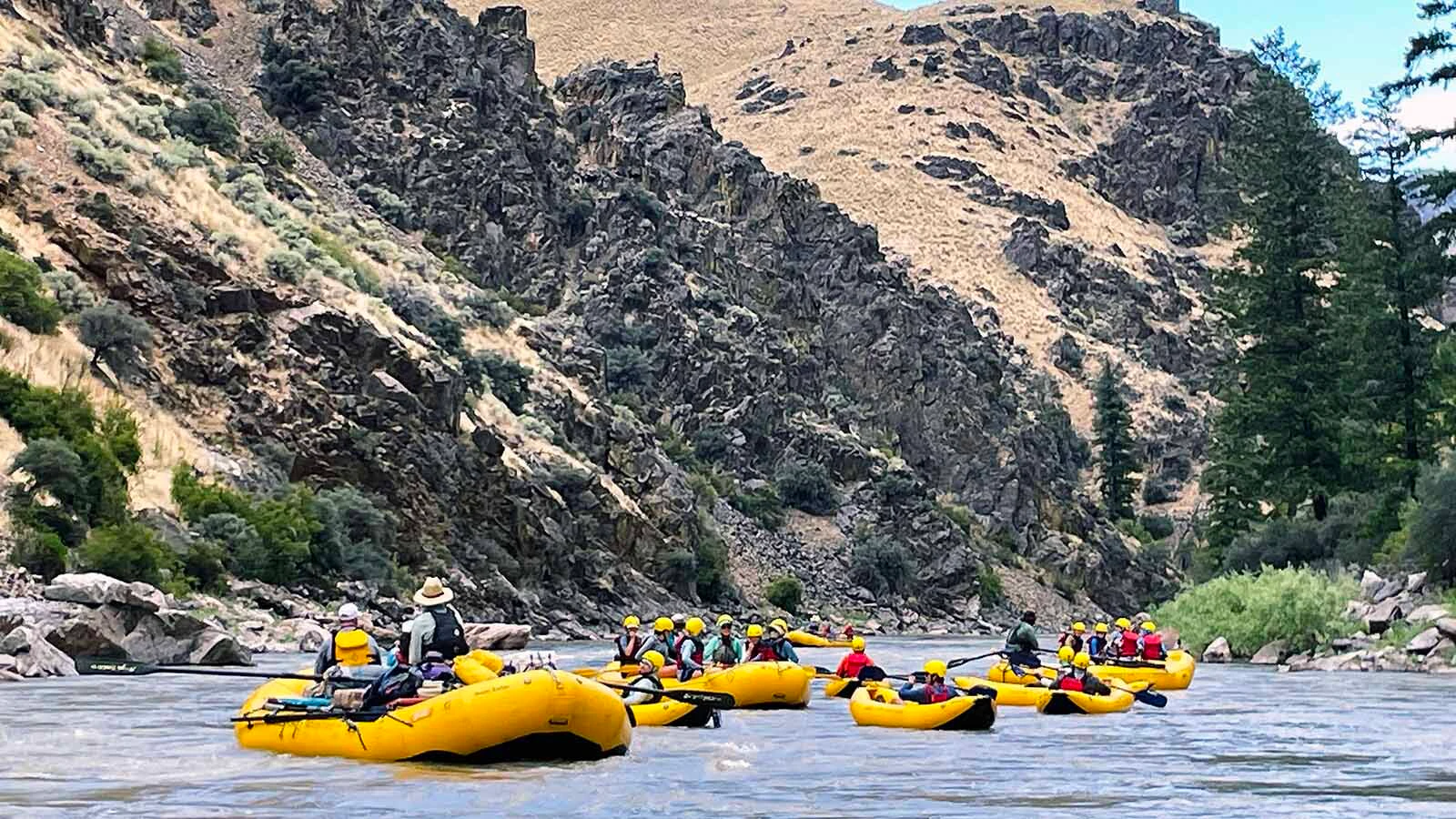
A few hundred yards downstream, after 70 miles of twists and turns and memories and restoration of a base human spirit, a white pickup truck appeared beyond the vertical lip of a canyon wall on river right and disappeared swiftly behind another tower of rock on the left.
Almost in unison, 22 hearts — one for each first-time floater on the revered emerald gem that is central Idaho’s Middle Fork of the Salmon River, including and especially mine — sank.
The truck harkened an inevitability we all understood and accepted, but still dreaded as this jarring reality loomed ever larger each day.
We were plying the last stretch of the crown jewel of America’s wild rivers and, in my case, closing the book on an elusive spiritual pursuit 40 years in the making.
An odyssey that began six days earlier with a backcountry flight into a dirt airstrip was now a few half-hearted oar strokes from takeout at busy Cache Bar, after a left turn and one more mighty rapid on the Main Salmon River.
Silence engulfed us, save for the ever-fainter roar of the last of the Middle Fork’s 100-plus rapids, the chirp of chukars pecking at bugs on a boulder-strewn shore, and the goodbye echoes of wind whispering off canyon walls that towered above us like granite cathedrals.
Our bearded and tanned trip leader Murph, no stranger to this moment and its emotional swings, swiveled his head toward the four other yellow rafts and read our collective minds like a seasoned therapist.
“Welcome,” he announced, “to the most depressing place on Earth.”
Murph himself was wrestling with those emotions, as he’d conceded he would when he first gripped his oars at the Indian Creek launch site in the heart of America’s largest contiguous wilderness area.
He pirouetted his raft 180 degrees and pointed it upstream, putting the growing vehicle traffic out of sight if not out of mind, and we all followed suit. We gazed one final time up the waters we’d covered, contemplating a landscape unmatched in the Lower 48 states.
Even the group’s six 11-to-14-year-old kids, who’d spent the morning playfully smacking the water’s surface with paddles and gleefully celebrating drenching descents through rapids with foreboding names such as Devil’s Tooth and Foreplay and House of Rocks, solemnly rested those same paddles across their knees.
No heart was at once more melancholy and yet full as the one belonging to the second-oldest member of the expedition.
Mine.
Unaltered For Millennia
The Middle Fork of the Salmon is born at the confluence of gin-clear Marsh and Bear Valley creeks on the eastern edge of the Sawtooth Mountains. The river carves a serpentine chasm through the craggy Idaho Batholith and, climactically, Impassable Canyon, the third deepest gorge in North America.
Its waters plunge an average of 30 feet per mile, producing nearly continuous rapids over its 104 miles.
Its flow, unaltered for millennia, is regulated purely and solely by Mother Nature — no dams, no agricultural pumps, no diversions, no community water systems, no wastewater effluent, no rip-rap and no spans save for a handful of suspension bridges for foot and equine trail traffic.
The trout fishing is world-class, the hot springs restorative, the rapids exhilarating as well as — with one notable and intensely personal exception — forgiving.
To safeguard the Middle Fork’s fragile integrity, a scant seven launches per day are allowed between commercial and private trips. The odds of the average citizen winning the Middle Fork lottery are about 1 in 55, with 20,000 applicants vying for roughly 350 slots each year.
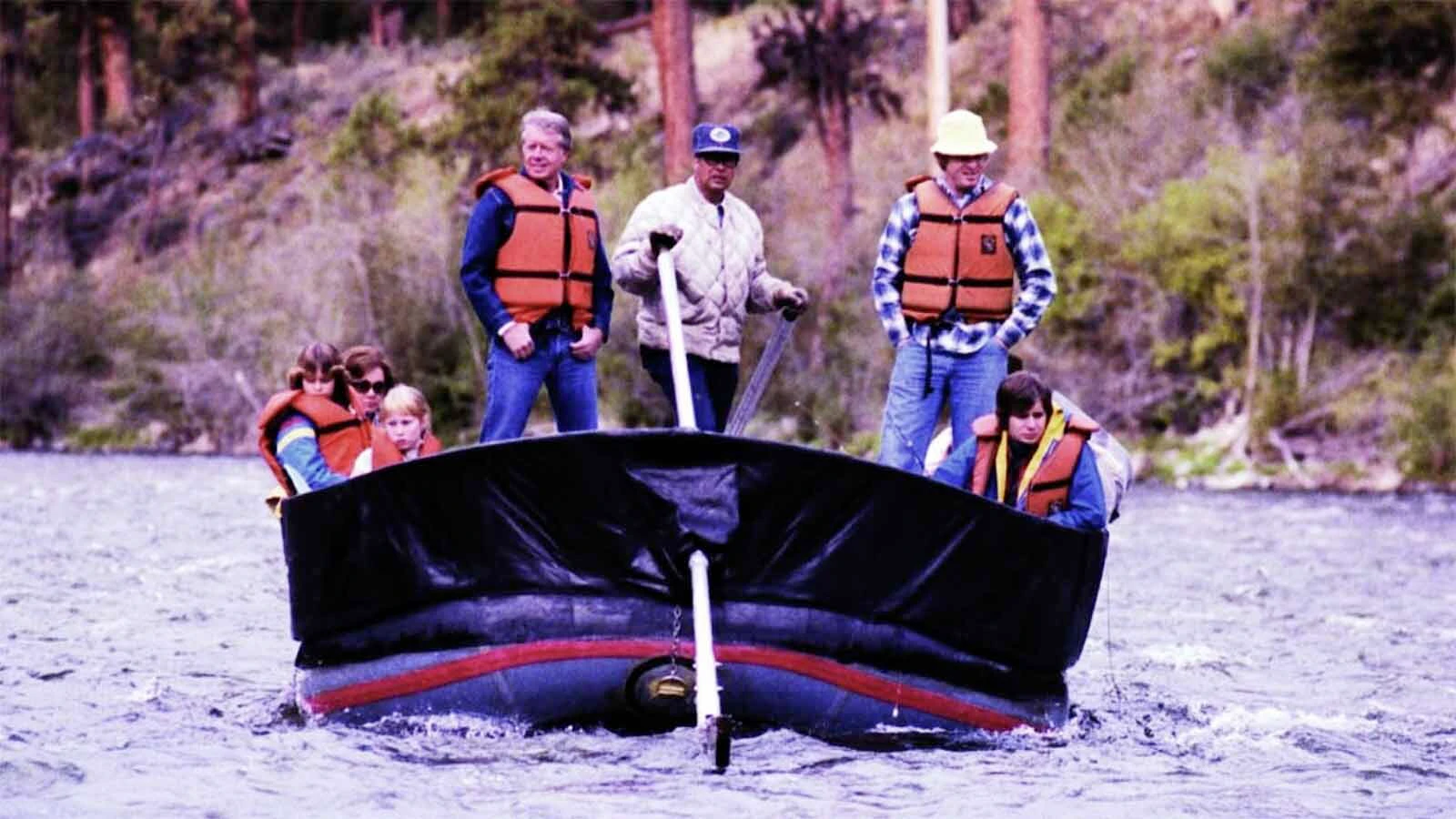
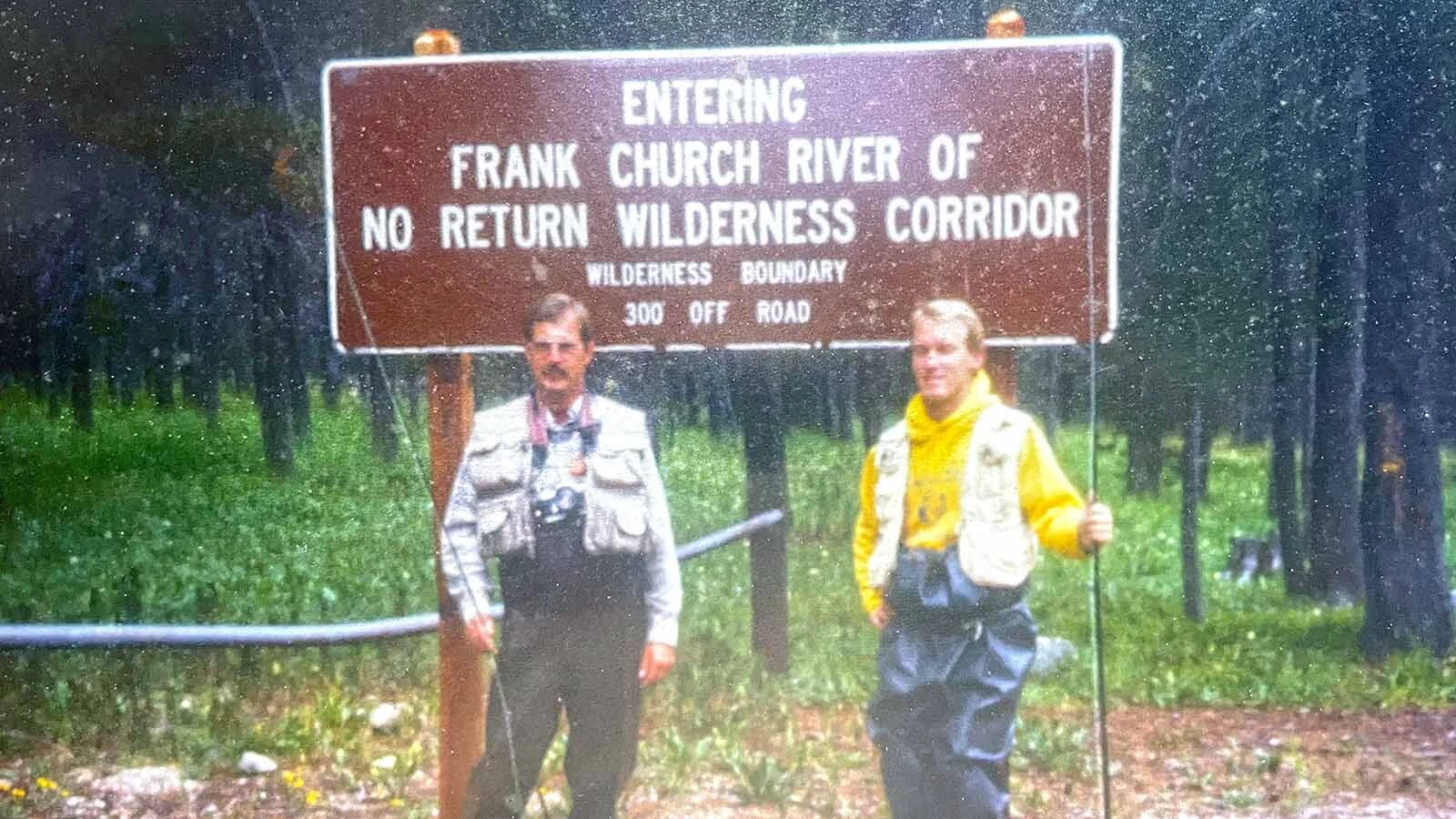
President Jimmy Carter wasn’t encumbered by such long odds in August 1978 when he floated the Middle Fork, along the way instilling in his wife, Rosalynn, a passion for fly-fishing. Two years later he would sign the Central Idaho Wilderness Act into law, the name soon to change to Frank Church-River of No Return Wilderness.
“I think if I had to pick out the three or four best days of my life in politics, it was the time I spent going down the Salmon River by raft two summers ago. This was a delightful trip,” Carter said at the 1980 signing. “The River of No Return, encompassing the Middle Fork of the Salmon River, is indeed one of our nation’s treasures.”
Even the Colorado River of the Grand Canyon, for all its aura and remoteness, is bookended by dams, its flows dictated by the demands and whims of far-flung water users.
The Middle Fork is as pure as the driven snows that blanket its upper reaches and feed it, along with the dozens of creeks that sustain and nurture it.
The mere utterance of the words “Middle Fork” moves riverkeepers worldwide to genuflect.
A Young Man’s Vision Quest
A Middle Fork descent became a vision quest for me a few years after Carter’s visit, when as a 20-something Idaho journalist and budding river enthusiast I was entranced by the local reverence for it.
Grown man-card-carrying, beef-eating, Idaho-bred men admitted to weeping at the sight of those same anti-climactic trucks and boat trailers.
While awaiting my turn, I rafted and kayaked many of the West’s great whitewater rivers — Idaho’s Main Salmon, Lower Salmon, South Fork of the Payette, South Fork of the Boise, and even the impossibly elusive Selway with its single launch per day; Oregon’s Rogue, Deschutes, McKenzie and Illinois; the Alberton Gorge section on Montana’s Clark Fork; and my splashy introduction to rafting at age 22 in Lunch Counter and the Big Kahuna rapids on Wyoming’s Snake — measuring each against a vision of the Middle Fork adventure certain to come.
Yet year after year, hope gave way to futility.
The lottery sneered at my every annual application. Speed dials in hopes of a rare cancellation were fruitless. Invitations from the friends who’d occasionally struck Middle Fork gold were always ill-timed.
And, of course, there were those all-consuming daily demands such as parenting and work.
Compromising my chances, for many years testosteronal stubbornness prohibited me from even considering one of the commercial trips, which I derided as for soft East and West Coast elitists.
Over time, I’d begun to concede in the twilight of my own serpentine journey that my dream would always be just that, and that any Middle Fork floats would be relegated to vicarious YouTube fantasies.
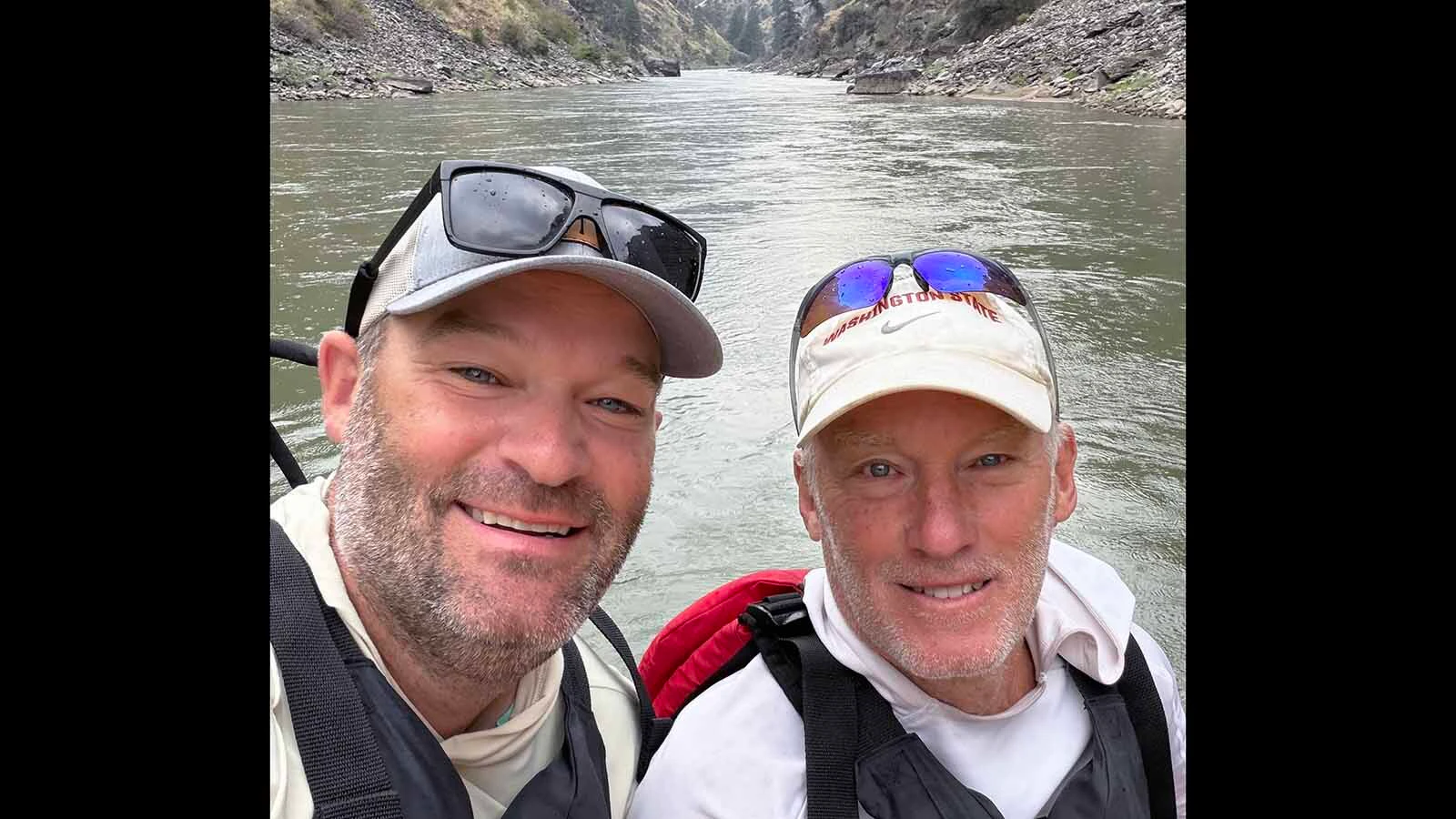
Then, for the Christmas of my 66th year, my wife, Sherry, herself once a river rat who’d said “yes” to our engagement on one Rogue River descent and “yes” to matrimony at the same remote lodge on the same day a year later, handed a laptop computer displaying an invoice to my son Matt, whose eyes knowingly widened.
“Do you think he’d like this?” she asked with an impish grin.
Matt nodded vigorously.
“Do you think you’d like it?” she continued.
He nodded even more emphatically.
Matt handed me the computer and my eyes moistened as I saw the words: Middle Fork Adventures.
After 40 years, I’d finally won the Middle Fork lottery.
No Outside World Access
On July 15, after the short flight from Stanley to Indian Creek, I wandered down the launch ramp. For the first time, I dipped a sandal into the waters of a stream I’d touched only with my eyes from 30,000 feet.
“Holy waters,” I said to a guide I’d just met, and he nodded with a smile.
For the next six days, we would have no access to the outside world, save for the seven-person crew’s emergency satellite phone and a brief stop at a pastoral lodge and hunting camp called Loon Creek Ranch.
It is one of several guest ranches and busy airstrips grandfathered into “The Church”, a counter-intuitive concession nevertheless necessary to persuade politicians that this national treasure merited protections under The Wilderness Act of 1964.
At Loon Creek, Starlink made Apple Pay and thus the purchase of huckleberry ice cream possible in a tiny white “store” with mule-deer antlers above the door, across a yard from the horses and pack mules in a nearby corral.
Cell phones were otherwise of no use except for time, photos/video and satellite mapping until they inevitably died.
For the 22 of us, the dopamine urge to doom scroll on social media each morning left our fingertips with surprising ease the moment we took off from Stanley and banked across the flanks of the Sawtooths. Early pining for World Cup results also tapered quickly.
A lanky 14-year-old boy from Seattle, paddling alongside Matt in an inflatable kayak, or “ducky”, offered that his baseball team was in the state playoffs.
“But I’d rather be here,” he said, his parents beaming later when the sentiment was relayed to them.
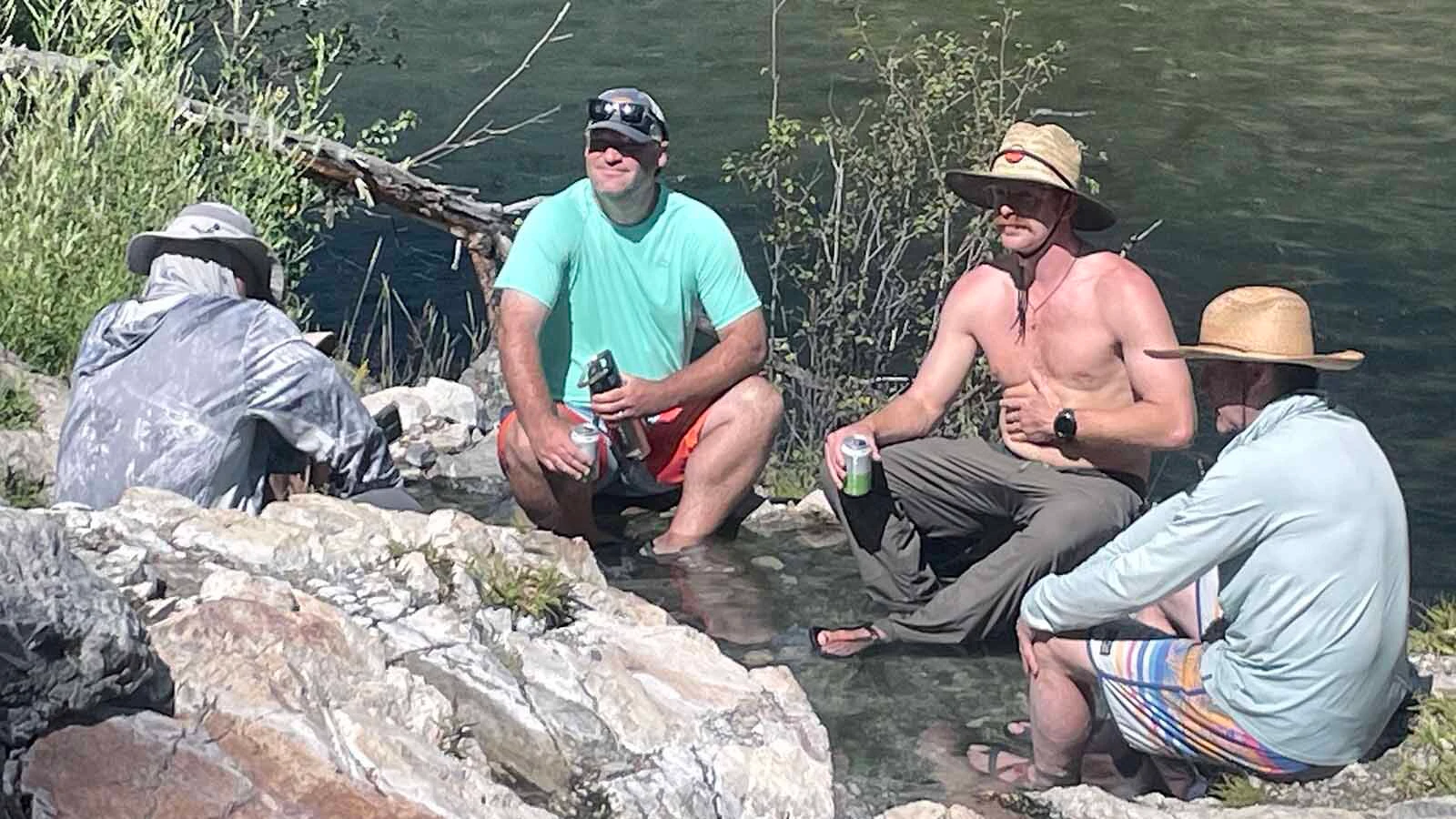
Day after day, we navigated rapids, hiked to Sheepeater pictographs, soaked in hot springs, drank straight from cold springs, caught wild cutthroat trout, climbed to waterfalls, poked around abandoned cabins once inhabited by crusty hermits, admired bighorn sheep and bald eagles and mule deer, and sat contemplatively in the mist of a cool grotto surrounded by 500-foot walls.
And from dawn to dusk, in our rafts and on our hikes and at lunch stops and around the campfire, we engaged in a lost art.
We talked.
An eclectic group from each corner of the country and varied walks of life converged and, for a week, we became family.
Entering The Cheese Grater
On the penultimate day, just a few hundred yards from our final camp at Otter Bar, I plopped into a ducky for the final time and followed Matt into a Class III rapid called Cliffside that’s notorious for “munching” inflatable kayaks.
Its name comes from the bony cliff on the left known as “Cheese Grater Wall”. As fate would have it, the rapid is most challenging at the present and otherwise ideal flow of 2.5 feet; it’s easier to skirt at higher water in the spring and slows to a relative trickle later in the summer.
“I have seen more botched runs and wall crashes in this rapid than any other,” wrote Matt Leidecker in “Middle Fork of the Salmon River: A Comprehensive Guide”, as if he knew before I did that I would indeed one day float this river.
I deftly navigated the first wave, riding its crest like a cork, then instantly knew my fate was sealed when a side wave surged off Cheese Grater, pushed the nose of my ducky hard right, and left me helplessly parallel to another wave that upended me into the maelstrom.
Down I went, gashing my shin on a submerged rock, before eventually emerging between waves long enough to claim a single hurried breath. Down I went again only to re-emerge moments later in time to gasp for another breath between waves and see I was in a headlong rush toward the Grater.
I raised my hands, briefly flashed on whether a ledge might suck me underneath the wall, pushed off and was summoned into the depths a final time. Upon my third emergence I managed two breaths and spied calmer water a few smaller waves ahead.
“Are you OK?” Murph shouted from his rescue raft, shifting from first responder back to boat captain. “Just stay calm.”
I nodded, and moments later another guide pulled me by my life jacket into the back of an oar raft, shaken but otherwise unbruised except for my shin and my ego.
“Welcome to the Salmon River Swim Team,” Taylor said with a grin once he knew I hadn’t inhaled a pint of Middle Fork Pale Ale. “It’s an exclusive club. We’ve all been there.”
My penance came that night in what guides call “booty beer.” I had to announce around the campfire what I did wrong (listened to the guides tee-hee), what I’d do different (not follow Matt tee-hee) and what I’d learned (people were legit scared when my yellow helmet twice vanished into the depths) before a rite of passage required me to guzzle a 12-ounce Pabst Blue Ribbon from toe to heel out of my river sandal.
It was, fittingly perhaps, the first time I’d ever flipped either a raft or so-called IK, giving me a kinship with this river unlike any other. The Middle Fork had taken something from me while at the same time giving something back.
The next morning, as we reached the confluence of the Middle Fork and Main Salmon, we grudgingly turned our rafts back toward the transition zone and what our culture curiously calls “the real world.”
“Thank you, Middle Fork!” Murph yelled one last time, looking over his shoulder up the canyon and saluting the restorative powers of the river and its wildness.
From the back of an oar boat, Matt and I watched an eagle talon a trout from the depths before we stood and held on tight for a final bucking bronc ride through Class IV Cramer Creek Rapid.
As we sat back down on the tube, the ramp at Cache Bar and its throngs of milling people inching ever closer across another placid emerald gem, Matt turned and put his arm around my shoulder.
“Well,” he said, “you finally made it.”
Yes, I finally made it, and my heart, though tinged with melancholy and a sense of loss that still has me off-balance as I write, was full at long last.
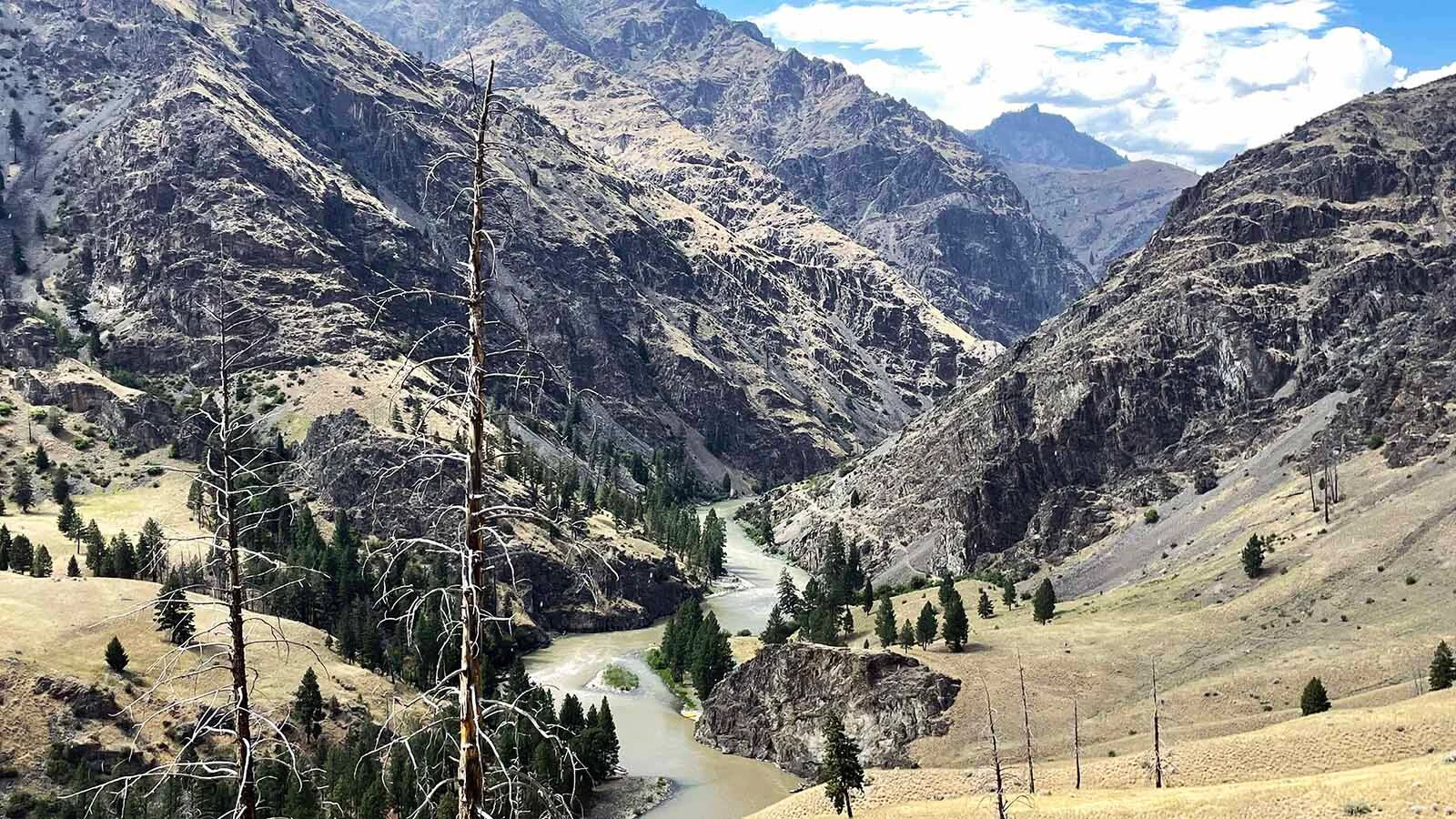
The Middle Fork of the Salmon begins the final stage of its 104-mile journey, through Impassable Canyon and the biggest whitewater on the six-day trip. (Jeff Welsch, Cowboy State Daily) 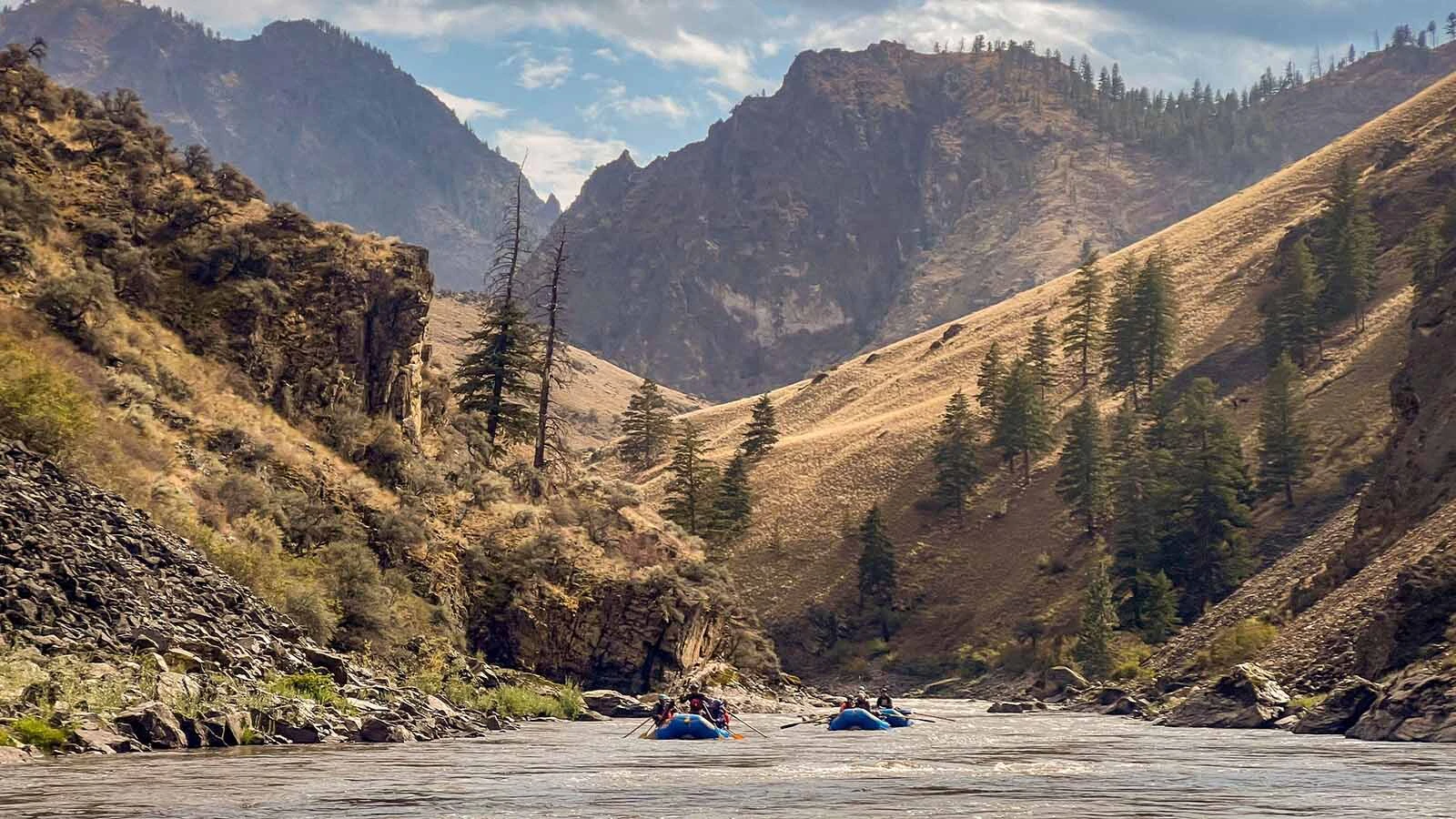
Forty years after first seeing the reverence for Idaho's Middle Fork of the Salmon River, Jeff Welsch finally gets his day on the crown jewel of America's wild rivers. Over six wild and wet days, it proved every bit as restorative as he'd dreamed. (Greg Vaughn via Alamy) 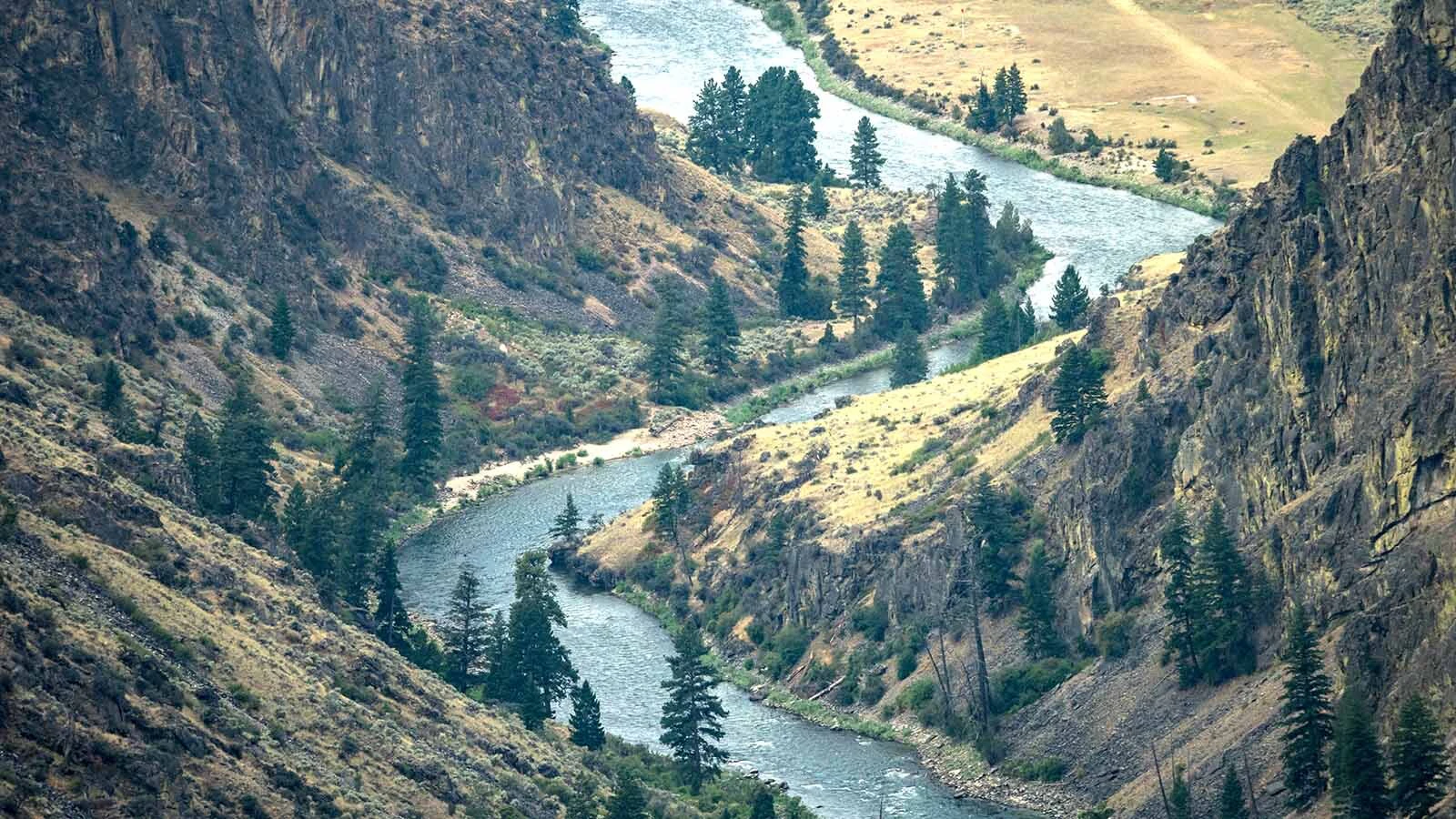
Middle Fork of the Salmon River flows 104 miles in the Frank Church-River of No Return Wilderness through the third deepest gorge in North America. (Getty Images)
Jeff Welsch can be reached at jeff@cowboystatedaily.com.


