CHEYENNE — If you were trapped in the deadliest flood to ever hit a Wyoming city, Judy Brayton was exactly the kind of hero you’d hope would find you.
When she came home to Cheyenne’s eastside Lakeview addition on Aug. 1, 1985, the Wyoming National Guard medic saw the field behind her house had become a river.
“Six people were floating in water over their heads, grasping at tree limbs and trying to stand up (on) a van that was slowly sinking,” she told reporters the next day.
Brayton and three of her Guard co-workers quickly went into action. A makeshift hospital was soon set up in a neighbor’s garage.
“I asked for blankets and I bet I got 50 of them,” she recalled.
Brayton said six men who were chained together and tied to a front-end loader swam to rescue victims.
“People were shining the headlights of four-wheel-drive vehicles on the scene, and another man in a motor boat searched the water for other vehicles,” the medic said.
For two hours, Brayton stood in waist-deep water, talking to and aiding victims. When they were brought into a garage for medical assistance, Brayton said she kept calling out their names, like a roll call, “To give them hope and let them know they’d be OK.”
People mounted rescue efforts in other parts of the city but were having a difficult time reaching those who were trapped in their vehicles in Dry Creek in the northern part of the city, normally a dry drainage basin.
‘Opened Up a Faucet’
Cheyenne Mayor Don Erickson, who recently turned 89, was in charge when the city experienced the worst tornado ever in Wyoming in 1979, and then the 1985 flash flood, which ranks with the blizzard of 1949 as one of the state's greatest disasters.
During a news conference in his office the day after the flood, Erickson came up with a quote that made national news with its metaphor about the freak storm.
“It was like someone opened up a faucet right above our city and kept it open at ultra-high pressure,” he said of the deluge that dumped more than 6 inches of water in just hours.
Then and now, Erickson also praised Cheyenne’s volunteer spirit.
“It’s not only volunteers for Frontier Days, which had 3,000 volunteers,” he said. “The entire community was affected. We had neighbors working night and day to get the hail and water out of these basements, especially for our seniors. It was up to the rafters!”
A dozen people, all Cheyenne residents, died in the flood. All but one drowned: Don Shanor, 67, director of the Downtown Development Association and retired educator, had spent the evening trying to bail the water out of his home.
One of the last things he said, according to his family, was to tell his grandson that he felt like he was trying to run uphill with a heavy bucket. After Shanor went to bed, he died of a heart attack.
About 70 people were hurt.
Half Of Annual Rainfall in 4 Hours
Stalled thunderstorms hovered over the capital city and dropped 6.06 inches of rain between 5 p.m. and 9:30 p.m. That’s half of Cheyenne’s annual rainfall.
Beginning at 1:30 p.m., the National Weather Service issued a severe thunderstorm watch until 8 p.m., but it was quickly upgraded to a severe thunderstorm warning.
By 6 p.m., hail was falling and getting bigger.
A half-hour later, tornado spotters were dispatched around Laramie County to watch for funnel clouds. At 7:15 p.m. tornadoes were spotted about 8 miles south of Cheyenne. Within a half-hour, two more were sighted.
On July 15, 1979, a twister tore through Cheyenne, damaging about 400 homes and causing $25 million in damages. A 14-month-old boy died in a trailer park. It’s the most destructive tornado in Wyoming’s history, and part of its path ran along Dry Creek, the site of even more death and destruction six years later.
The Cheyenne flood damaged about 150 homes beyond repair, and 1,600 other houses to a lesser extent. Property damage was estimated at $65 million, affecting homes, businesses and infrastructure.
Warning Sirens Sound
At 7:55 p.m. on the night of the flood, warning sirens — which weren’t available in many locations six years earlier — sounded throughout the city at the same time the National Weather Service issued a severe flash-flood warning.
The Civil Defense Division of the city and county said some people were confused about whether they should go to their basements to seek protection from tornadoes or seek higher ground.
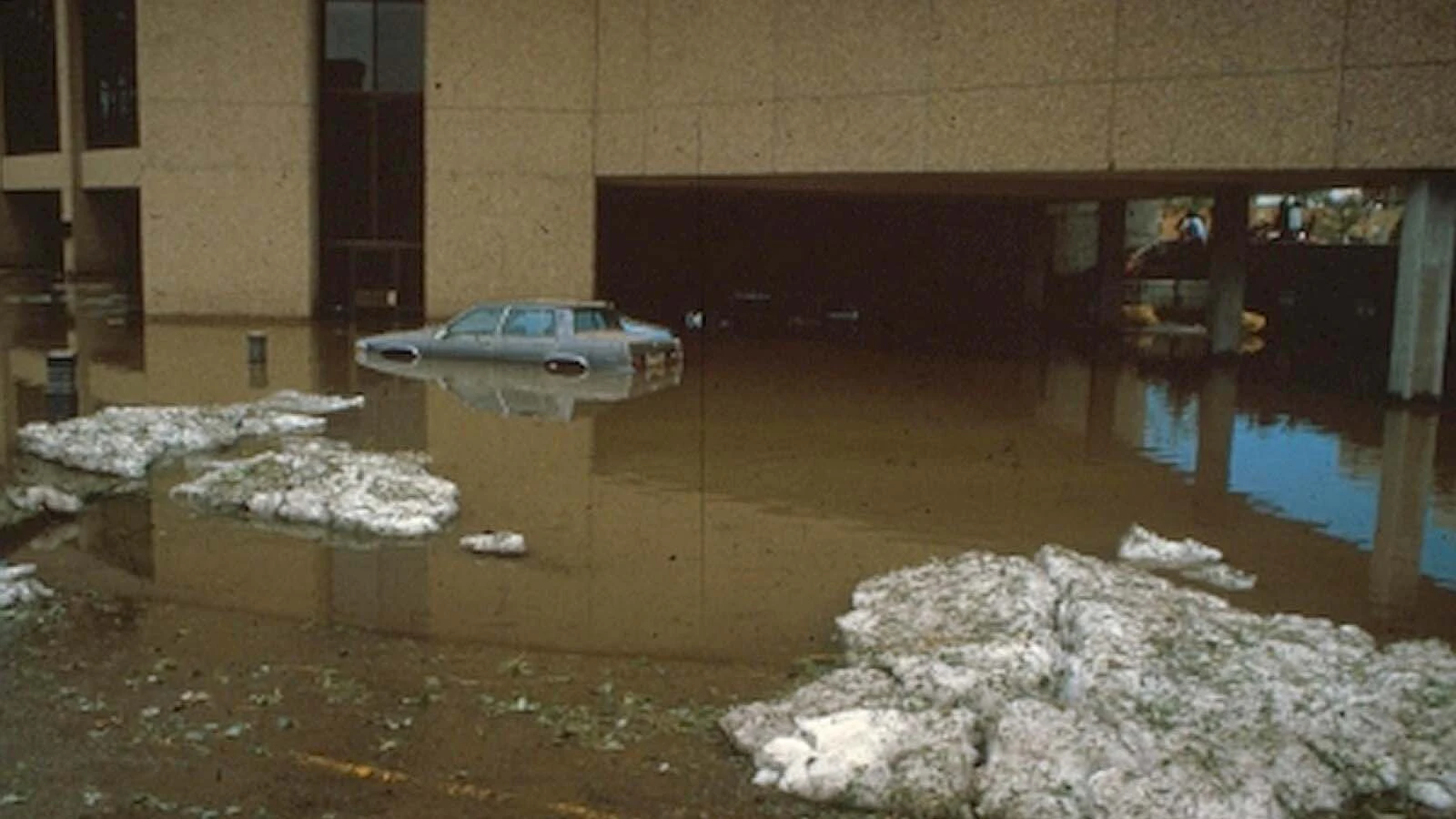
At 8:30 p.m., a 3-foot wall of water struck downtown Cheyenne, breaking glass doors in the city and county building and shattering storefront windows on nearly every block.
The emergency operations center in the building’s basement was flooded, temporarily shutting down 911 communications for the city police and fire departments, plus the county sheriff’s department.
Dave Guille, the city’s emergency management director, later observed what went wrong that fateful night. He said it wasn’t lack of preparation or planning, it was the magnitude of the event.
“It was like the world came to an end, as far as [the] coordination we’ve been working on for years,” he said. “It failed because we had a flood through the entire network.”
By 10:30 p.m. a mobile command center was established downtown and emergency communications were back in operation.
An hour later, Gov. Ed Herschler authorized use of the Wyoming Army and Air National Guard. In parts of the city, Sgt. 1st Class Brayton and other Guard personnel had started their own rescue operations many hours earlier.
Many of those who lost their lives were youngsters. Four were between 3 and 7 years old, and three were teens. A 27-year-old mother, Lynn Williams, drowned with her son John, 5.
Deputy Lost His Life
One of the most tragic events involved Deputy Sheriff Robert Van Alyne Jr., 33, who had already rescued a mother and two children from a van when he went back for 6-year-old Kristy Hernandez, who was trapped by rising floodwaters atop the vehicle.
Van Alyne waded through the swift current to the vehicle, holding a rope he tied to himself that had been attached to a fixed object.
It somehow became untied and the deputy and the little girl were swept away. Their bodies were found the next day about a mile from the vehicle.
“Some would say he was acting in the line of duty,” The Rev. Robert Ware of First Presbyterian Church said at his services, which drew more than 600 people. “But he was acting out of the kind of man he was. This was his nature, his character, his life.”
Van Alyne was a Vietnam War veteran who worked at the Cheyenne Police Department for eight years before joining the Laramie County Sheriff’s Office in 1984.
The oldest person who died in the flood was Alice Paulson, 73, who lived on West Seventh Avenue in the Capitol Heights neighborhood. The next day, her husband, 75-year-old Herb Paulson, opened his flooded home to Mike Barber of the Federal Emergency Management Agency and Bob Storey, a city councilman.
The flood, Paulson told them, left several feet of water in his basement, where he led them.
“When I looked in here and saw the water level, I knew [Alice] was gone,” he said. “It’s very sad.”
The Paulsons had lived in their home for 50 years.
He was working at his service station when the flood began, and he couldn’t reach his wife by phone. When he got back to their house, he saw their flooded basement and knew what happened.
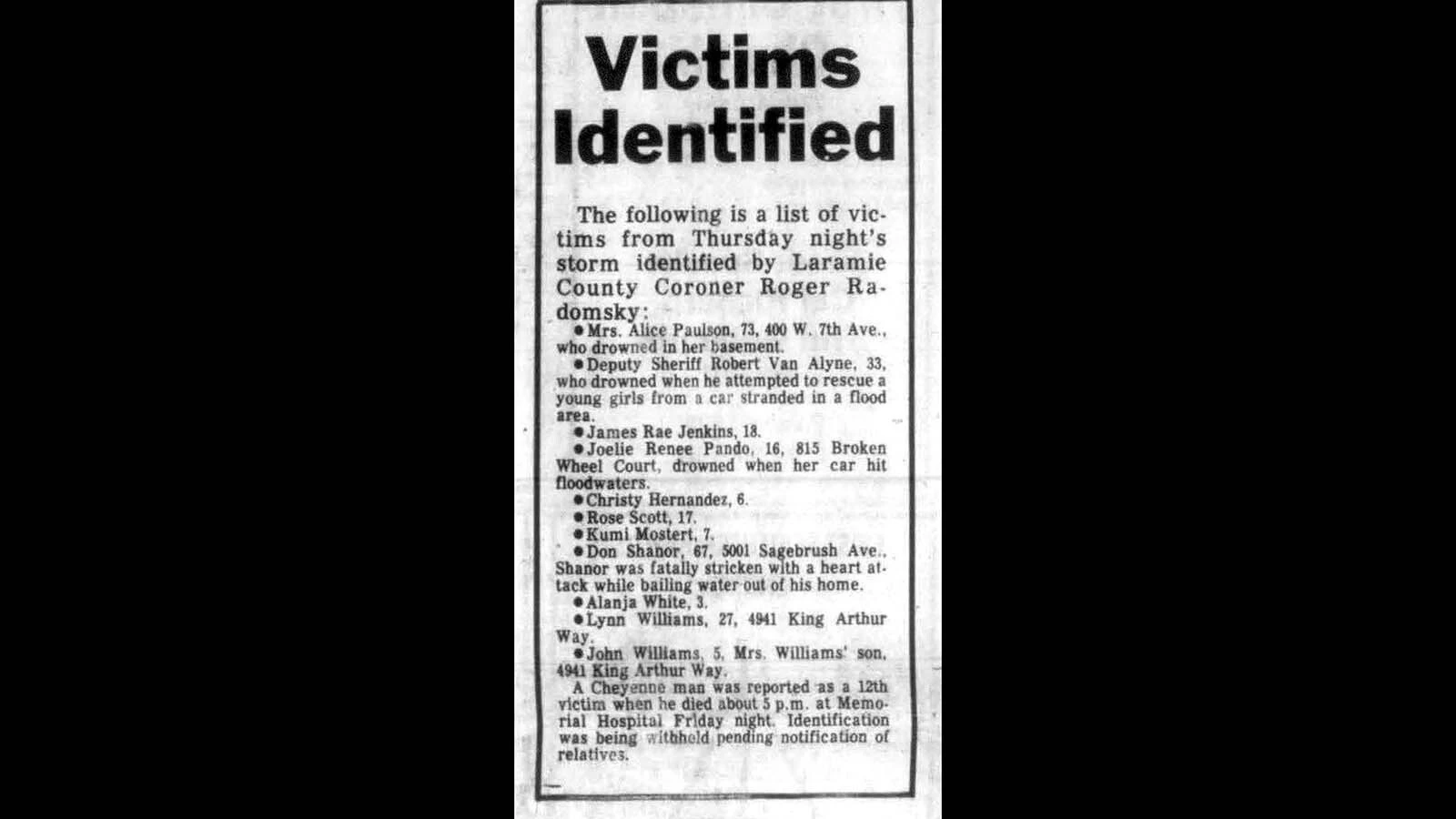
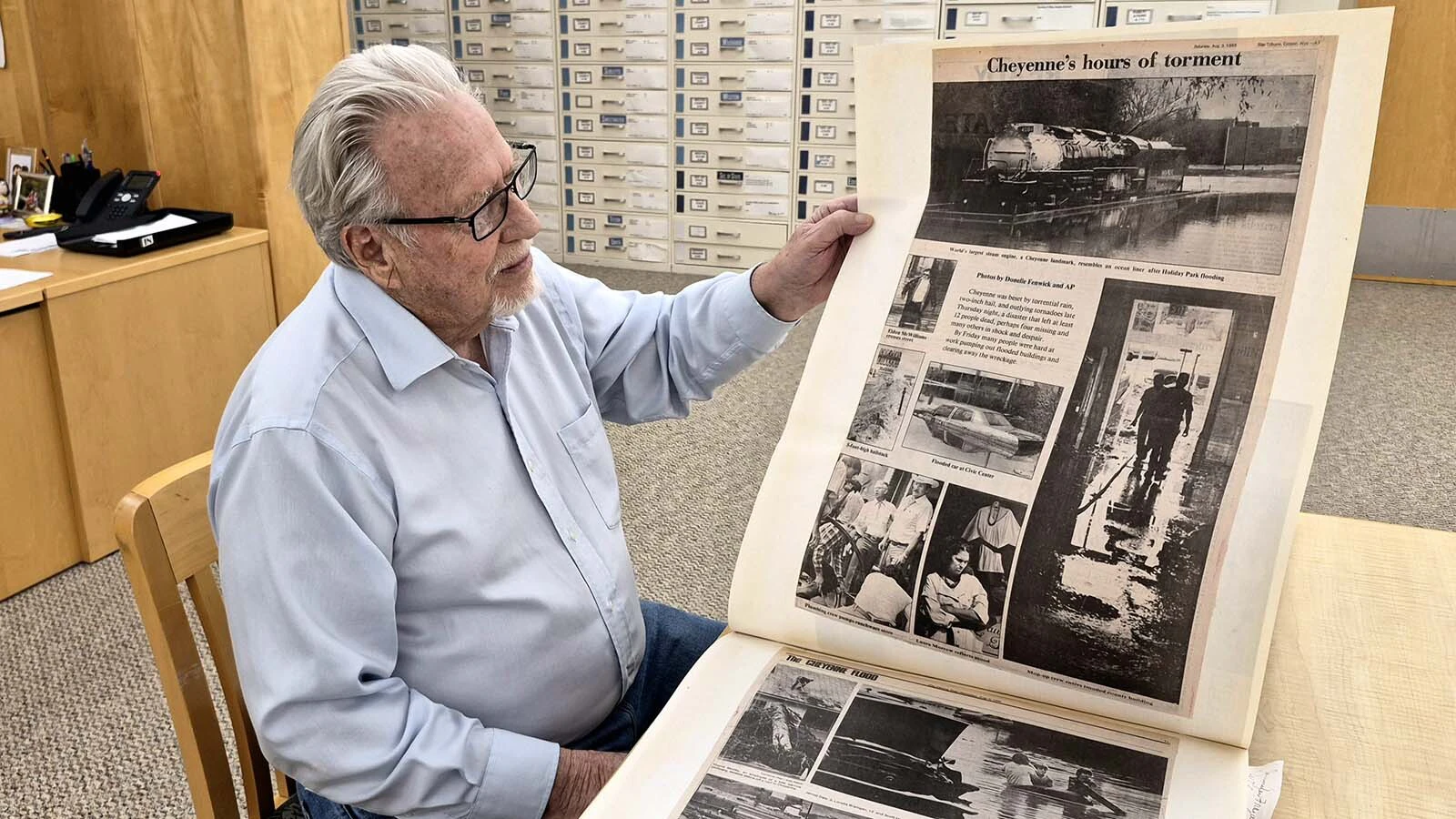
The Aug. 3, 1985, edition of The Wyoming Eagle printed a list of victims of the 1985 flood. 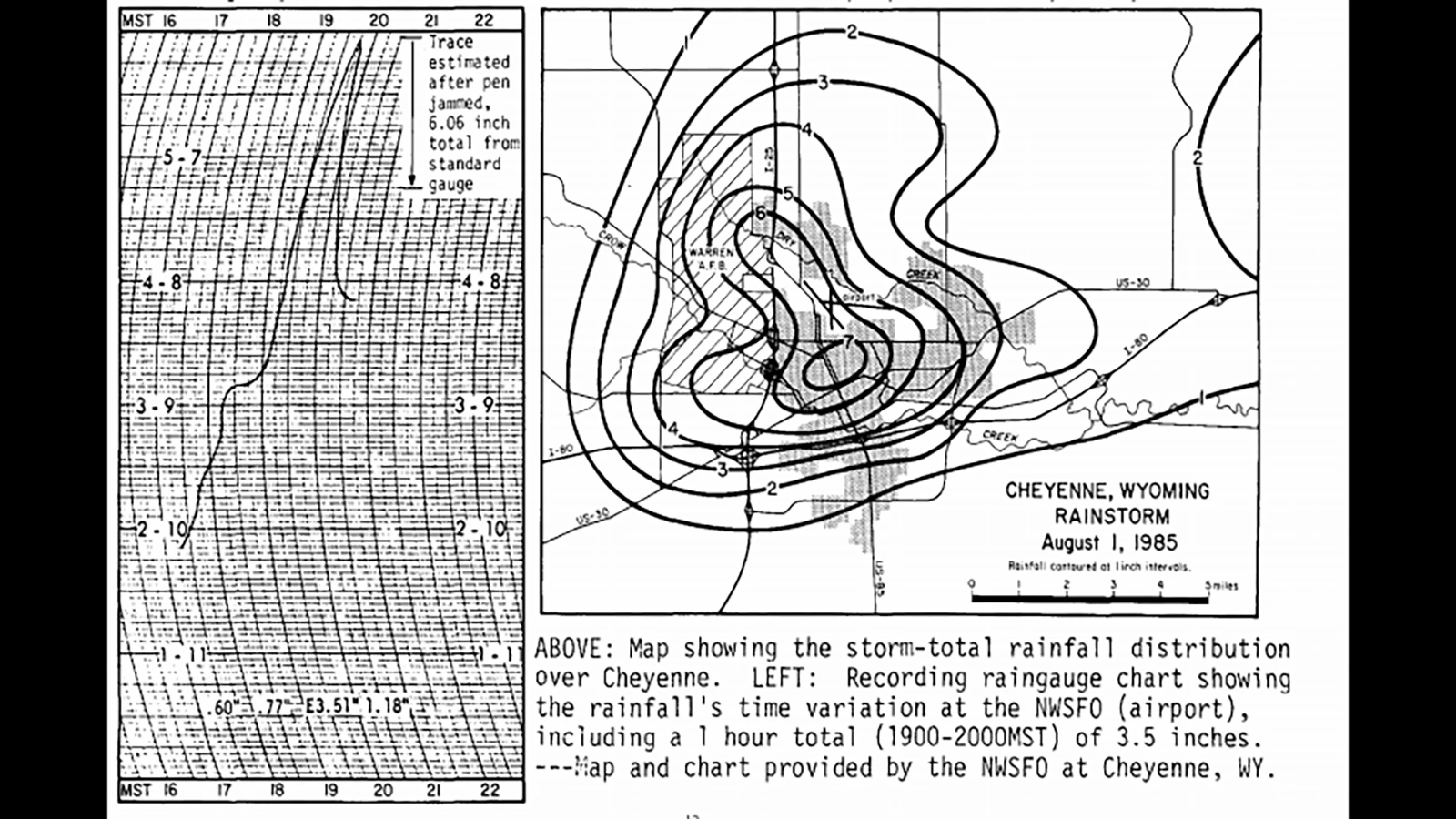
Flood Rainfall map and rain gauge chart from the Cheyenne National Weather Service Office.
‘Too Many Memories’
“She had heard that tornado warning and got scared,” Paulson told the two men. “Then the flood got her,” along with their two dachshunds.
In addition to losing his wife, he also had to clean up the damage to their home and wondered aloud to a Denver reporter if he might not be better off selling their home and living in a small place behind his service station.
He pointed to all of the damage and explained, “Too many memories in there.”
Meteorologists from the National Weather Service explained to residents through local media what had happened.
“The bowl effect of mountains to the west and Cheyenne Ridge to the east of the city was the perfect trap for the storm cell that spawned what has been labeled a 100-year flood," they said. “Moist unstable air flowing in from the southwest — the norm for the area all summer long — built up over Cheyenne through the afternoon, forming a storm cloud.
"The top of the cloud was approximately 65,000 feet, as compared to 40,000 to 50,000 feet for a typical thunderstorm.”
As temperatures rose, the NWS reported that the storm broke loose, dumping the tremendous buildup of moisture onto the city.
Light winds kept the thunderstorm stationary long enough for 6 inches of rain to drench the city. Normally, higher winds will move a storm steadily across a much larger area, spreading out the rain evenly and lessening the damage.
But in this case, the thunderstorm kept redeveloping in a pocket right over the same 10- to 12-mile area. Cities and towns surrounding Cheyenne received only a trace of rain.
Culprit Was Topography
Ron Goodman of the NWS explained that for the flash flood that hit Cheyenne, the culprit was the topography: nearby deep canyons and sharp slopes, and a soil base of clay and rock.
“So it really didn’t matter how much rain there was in the last few days,” Goodman noted.
The combination of swiftly moving water and solids too dense to allow saturation sent most of the stormwater into creeks that overflowed.
“That led to low-level flooding that submerged basements and some first floors in residential areas,” Goodman said.
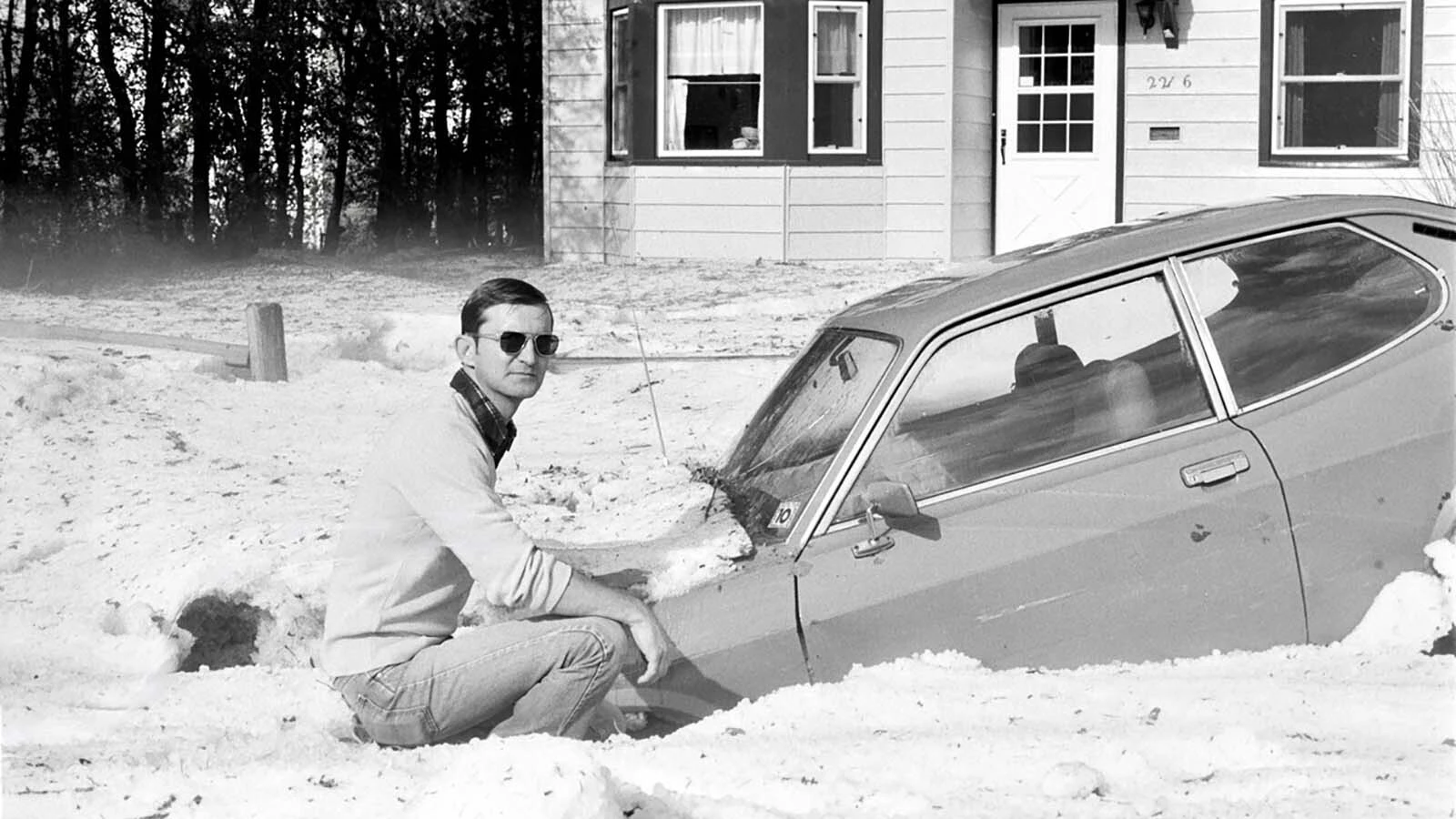
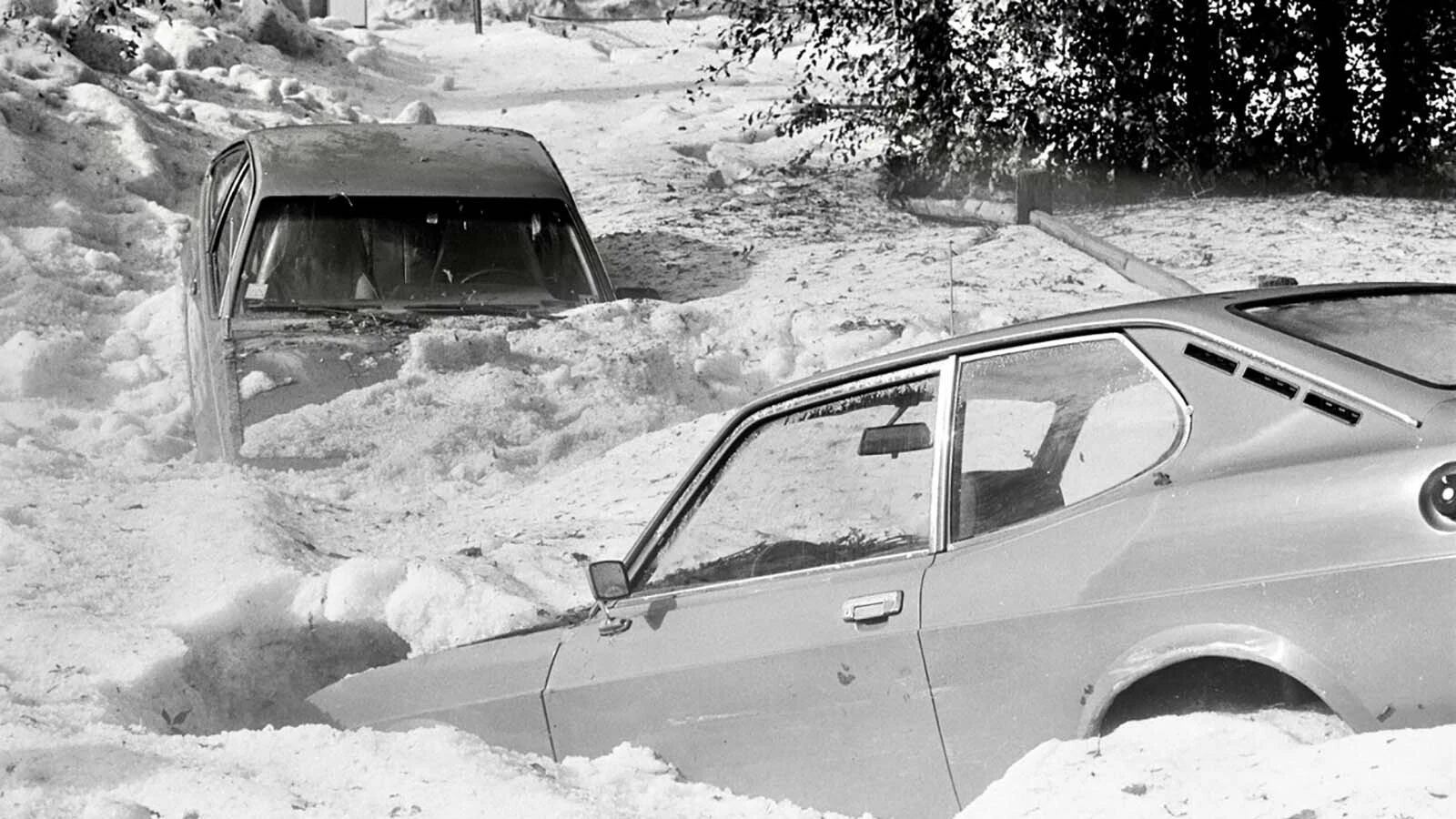
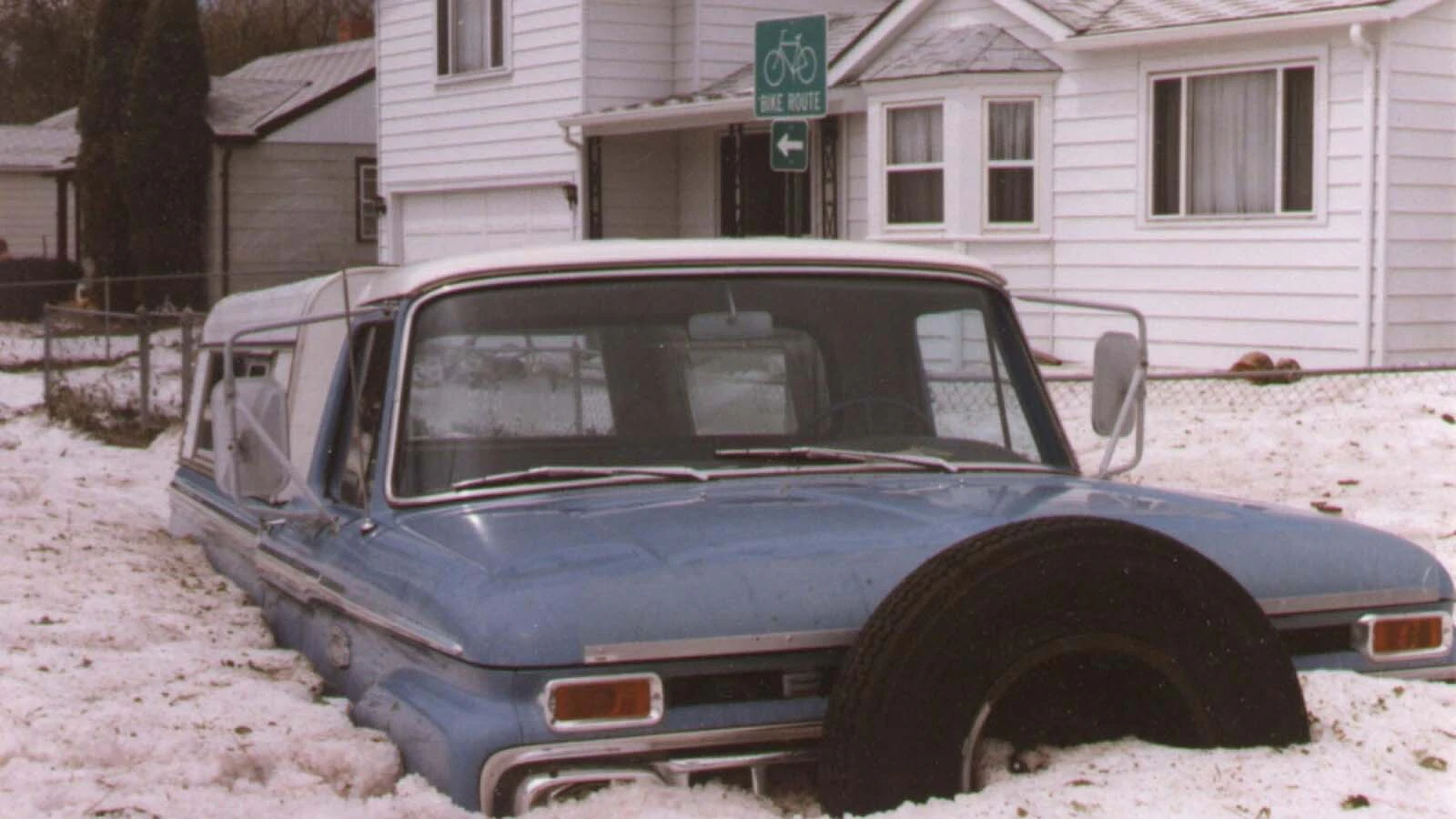
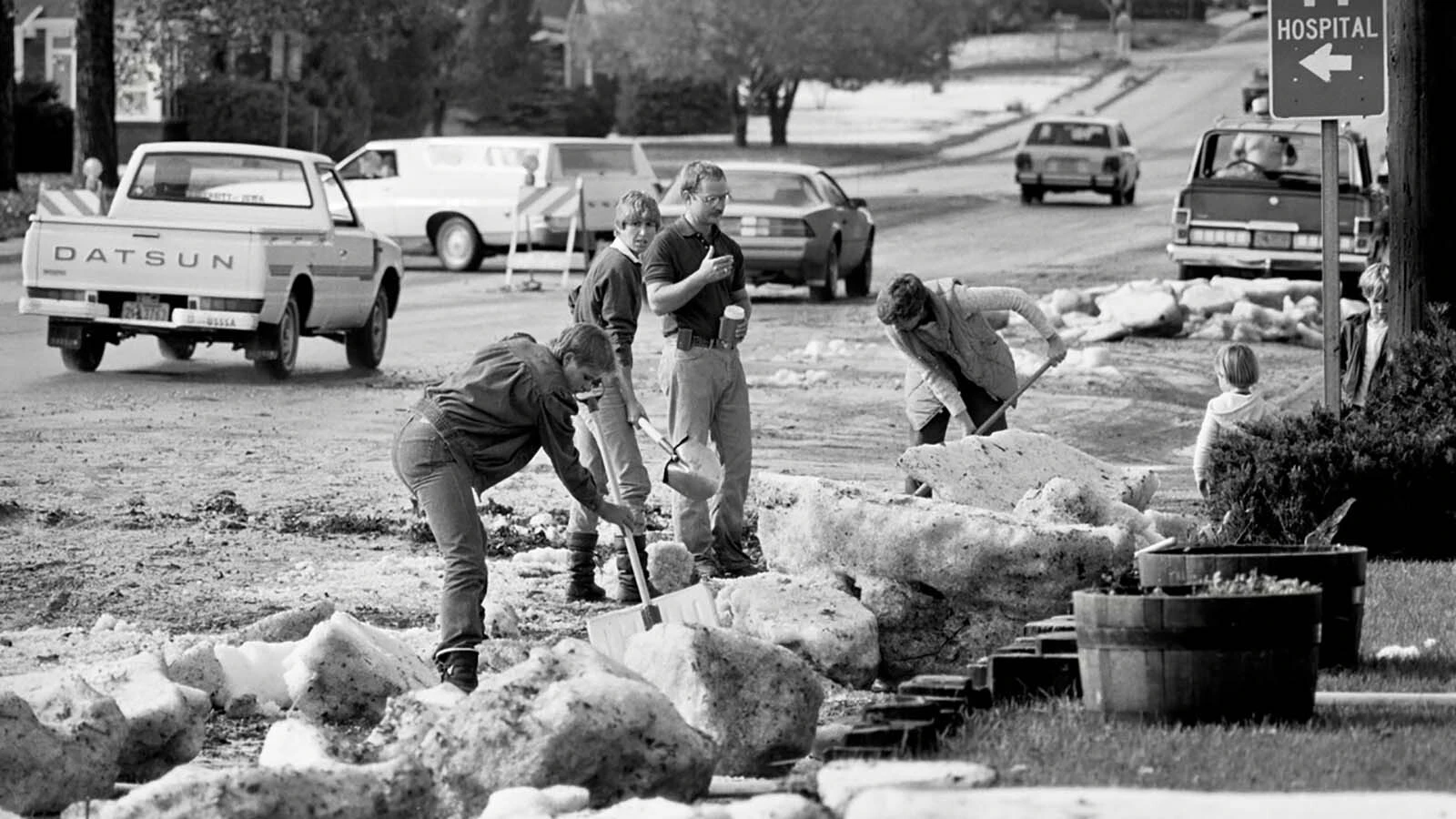
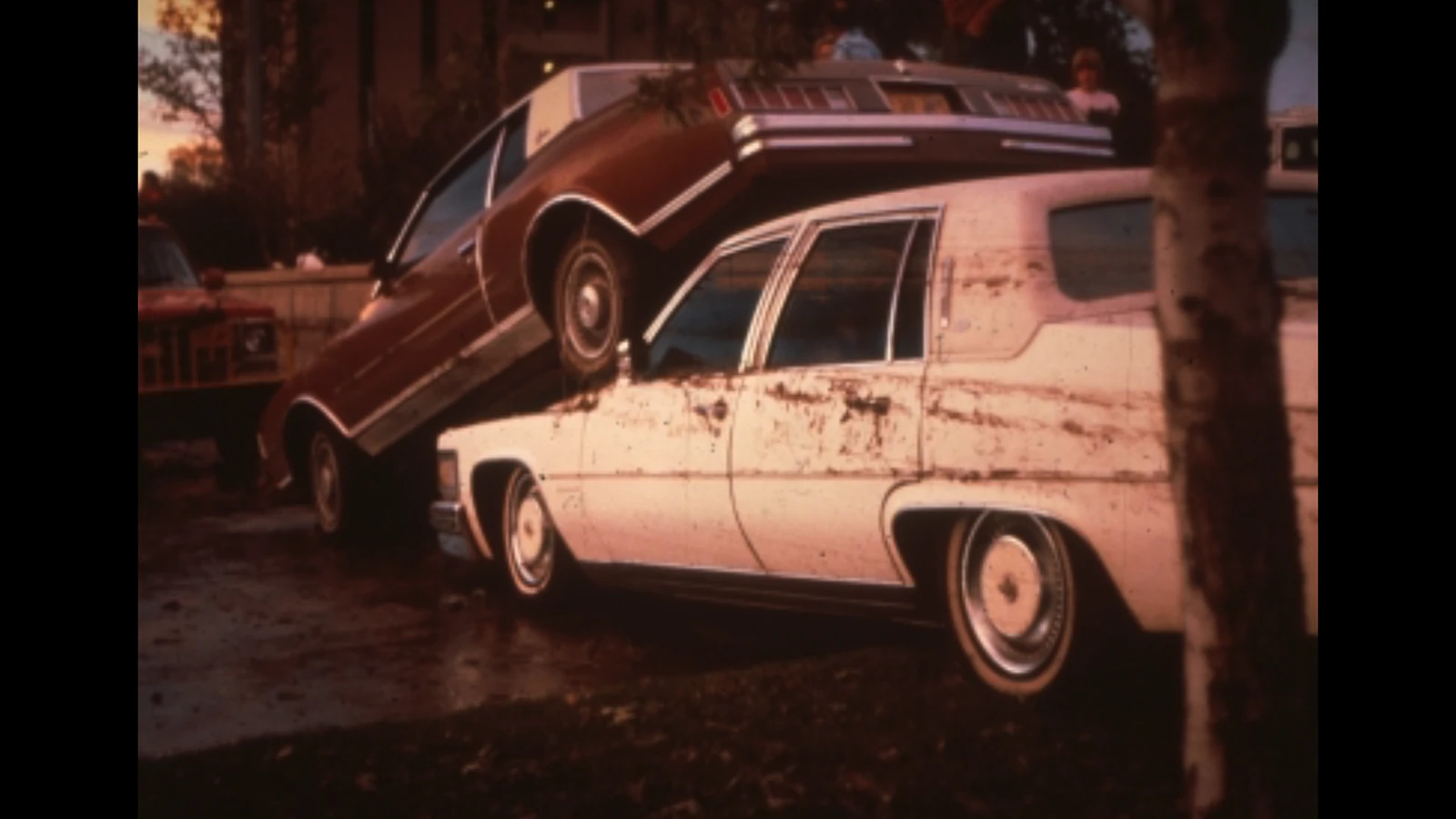
In some basements, up to 8 feet of hail poured through broken windows. In the streets, in many places the hailstones made it look like a blizzard, burying cars and trucks.
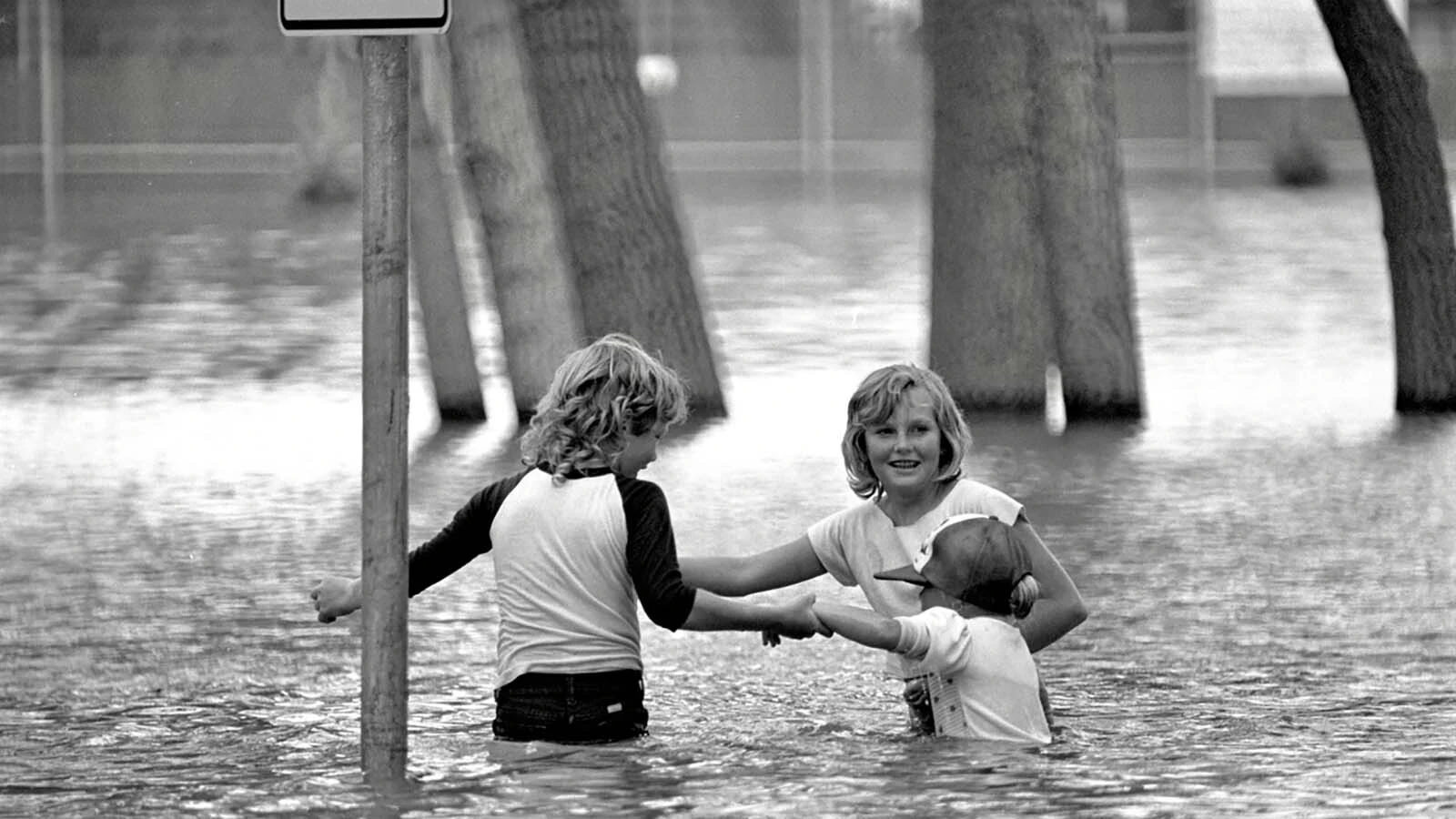
But many residents’ flood experiences were vastly different compared to the lethal conditions along Dry Creek. While there was certainly danger, in portions of the city people did their best to get to high ground and wait out the storm.
One of those places was the Atlas Theater on west Lincolnway downtown. As with the recent Cheyenne Frontier Days celebration, a melodrama was completing its run.
With the theater’s tin roof being pummeled by rain and hail, Atlas Manager Alma White said the audience of about 200 couldn’t hear the actors and relied on hand gestures to understand what was happening on stage.
“It sounded like a couple of freight trains in here,” White told the Wyoming State Tribune.
One performer took it upon himself to start singing any weather-related tunes he could think of, like “Swanee River” and “Row, Row, Row Your Boat.”
“I played anything that I could that would get the audience to sing with me,” the actor said. “I wanted to take their minds off what was going on.”
Over at the Cole Square Cinema off Pershing Boulevard and Converse Avenue east of downtown, Mark Junge, the state’s historic preservation officer and a photojournalist, and his son Dan were watching the latest hit movie from Hollywood — the soon-to-be classic “Back to the Future.”
‘Oh, Was That Realistic’
“You remember the scene where lightning is striking all around, and Christopher Lloyd is scrambling to make the connection so Michael J. Fox can get ‘back home’ to 1985, and there’s lightning popping, and we both heard lightning above us," he said. “We went, ‘Oh, was that realistic!'
“We didn’t know until the usher came down the aisle that we were in trouble,” Junge recalled. “He said there’s this severe storm going on and we’re not to leave. The authorities told them, ‘Don't let your people go out.’ It was dangerous, with flash flooding, and there was water running like a thin sheet over the parking lot.
"I told Dan we’ve got to get home, and he said, ‘We can’t. We’re not supposed to leave.’ I said we’re gonna leave. We ran to the parking lot to the car, and we made waves pushing through these streams of water until we got to our house in Sun Valley.”
What made him do it? Decades of negatives and photos that were stored in Junge’s basement.
“I was in such a panic, so I asked the neighbor kid if he’d come over and help,” he said. “Finally, we didn’t have to worry.”
The father-and-son team hit the streets the next day to document the damage in much of the city.
“There were mountains of hail, and you could climb these things like snowdrifts,” Junge said. “It was hot, and steam was rising off the streets.”
The photographer had even more content for his collection the next day. It’s a good bet that they didn’t go into his basement.
Kerry Drake can be reached at: Kerry@CowboyStateDaily.com