American robins are such a common sight in Wyoming that most people barely notice them.
They bounce across lawns, tug worms from flower beds and chatter from fence posts all summer long. They're so familiar that they practically become part of the landscape.
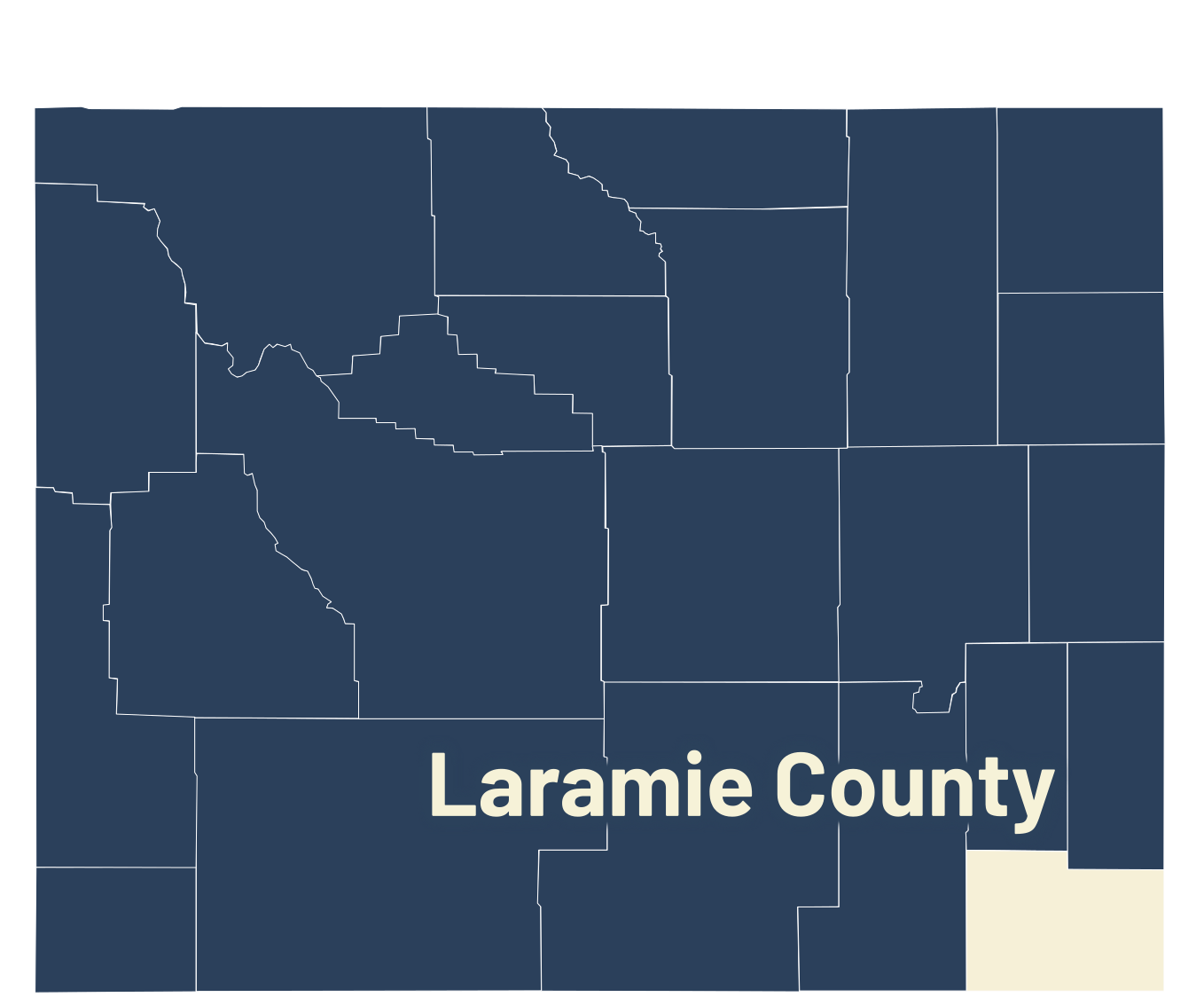
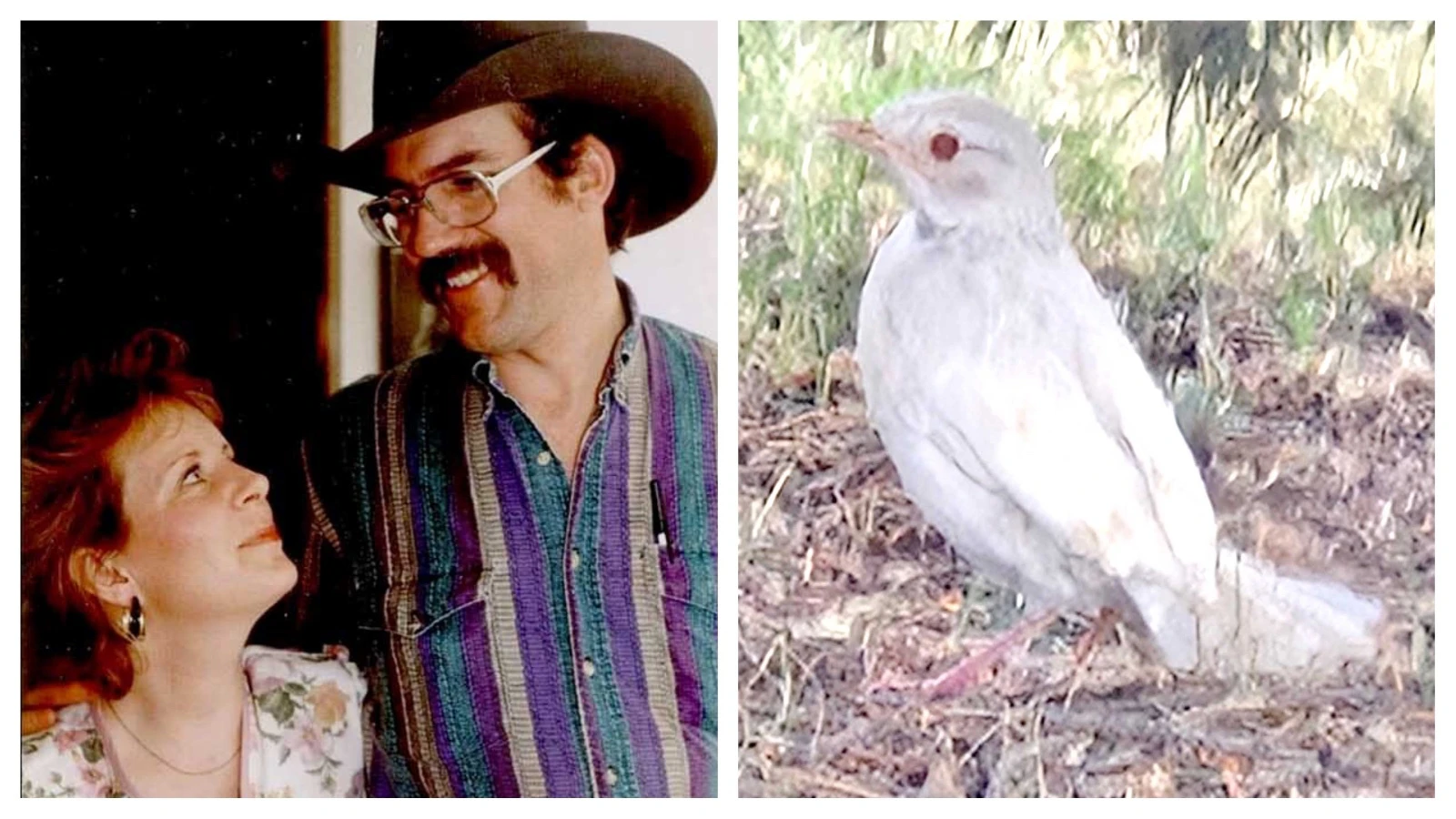
But when a rare 1-in-30,000 albino robin showed up in the yard of a Cheyenne-area couple, they noticed this bird was something special.
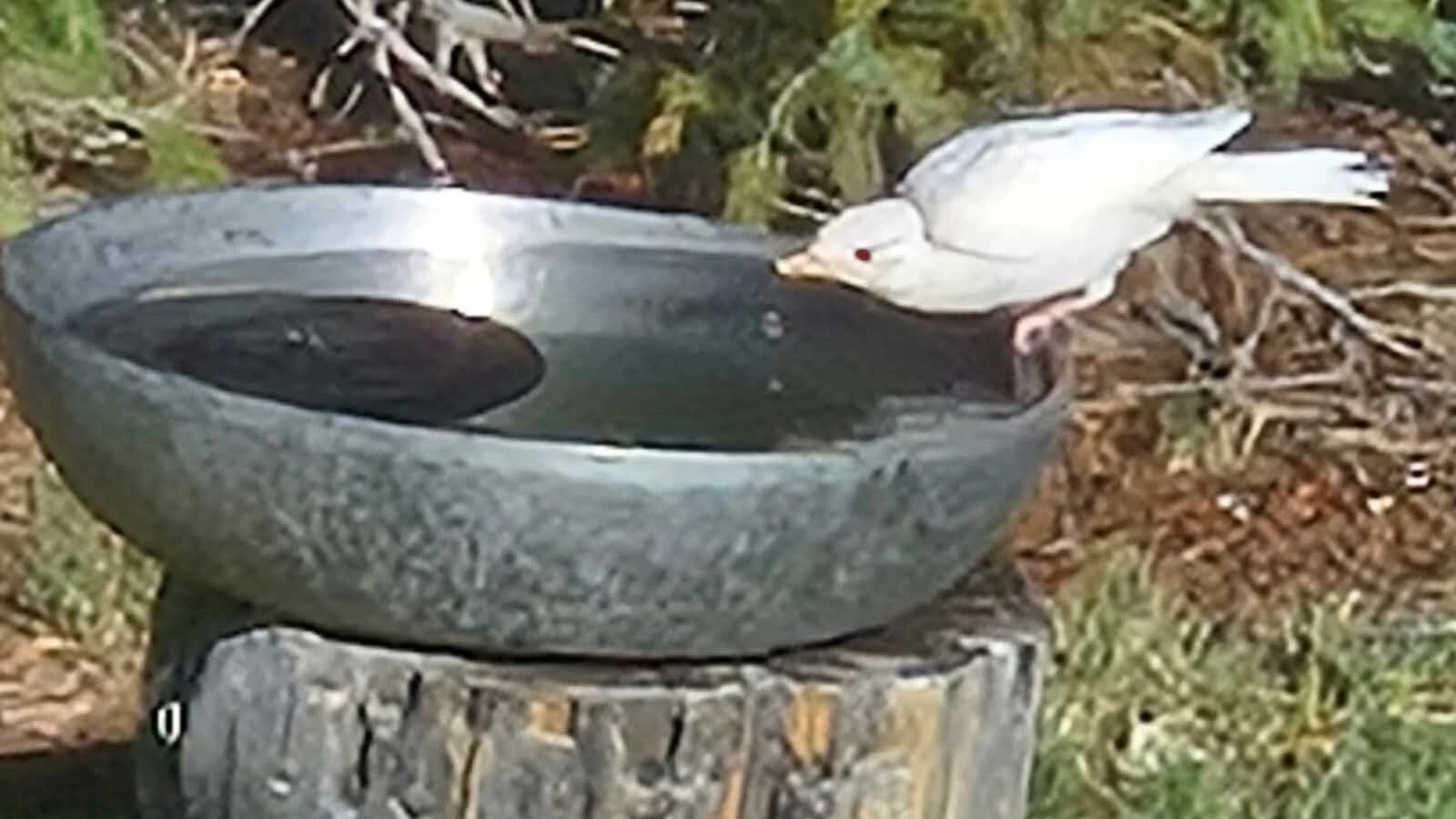
Heather and Eric Wiseman said that they’ve been keeping tabs on a snow-white fledgling robin with pink-red eyes since it first appeared in their yard June 6.
"Look what I found," Eric Wiseman told his wife, showing her a cellphone photo of the unusual visitor.
That also was the day of a memorial service for one of their friends, Gail.
"If I was to call the bird anything, I'd call it Gail,” Heather Wiseman said.
Coincidence or not, the robin quickly became something the couple looked forward to seeing each day.
"It got me a little down when I didn't see him for a day,” she said. "Then last night, he came back.”
Backyard Haven
By day, Heather Wiseman works as an X-ray technician. By evening, she's become something of an amateur birdwatcher.
"I just have a pair of mini binoculars," she said. "I'm not a real birder, but I might join the Audubon Society after this experience."
The couple's property has become something of a sanctuary for small wildlife. They keep fresh water available, maintain two bird baths, and have a bird feeder that attracts a steady stream of visitors.
"Nothing special, but they love it," Wiseman said.
The albino robin seems particularly fond of several towering blue spruce trees she planted about 30 years ago.
The trees provide shade and shelter, and the young bird often disappears among the branches before reappearing on the lawn.
The unusual robin isn't the only surprise visitor the couple has hosted recently. A few weeks ago they spotted a Western tanager. Then came a red-headed woodpecker.
"Three birds in less than three months that we haven't seen before," Wiseman said. "We live in the county, and it's a haven for birds."
Following Mom
The white robin's appearance caught the attention of Zach Hutchinson, community science coordinator for Audubon Rockies.
After reviewing photographs of the Wiseman’s bird, Hutchinson confirmed the bird is a fledgling American robin and that it appears to be a rare albino.
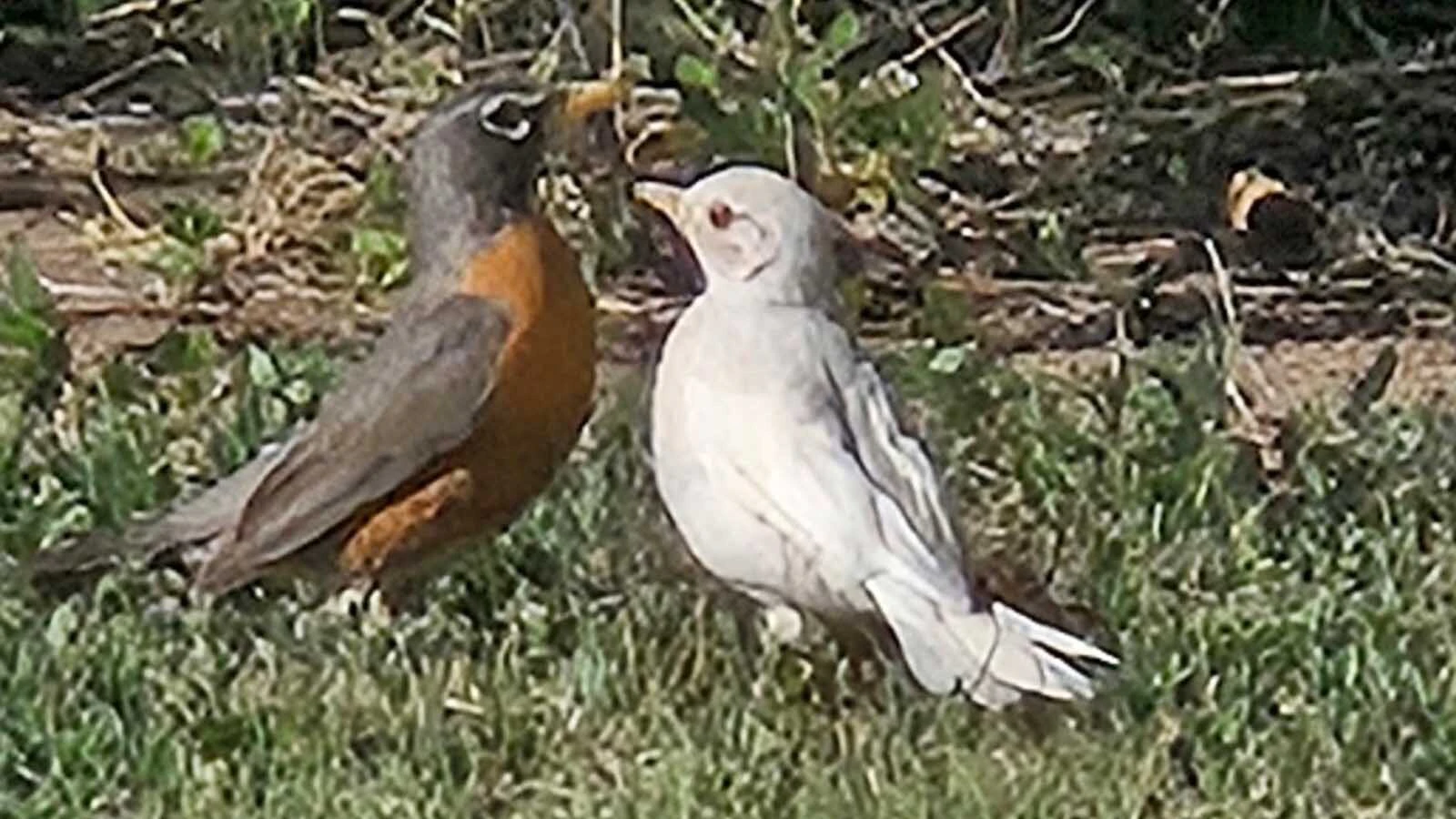
"It's following its mother around and begging for food," he said.
Several of Wiseman's photographs capture exactly that.
In one image, the young bird stands with its mouth open while an adult robin delivers food. In another, the pair forage together in the grass.
Despite its unusual appearance, the fledgling appears to be behaving like any other young robin.
To its mother, there doesn't seem to be anything unusual about it at all.
Rare, But Vulnerable
What makes the bird remarkable is its coloration.
The robin's white feathers and pink-red eyes are consistent with albinism, a genetic condition that prevents the body from producing melanin, the pigment responsible for color in feathers, skin and eyes.
The red eye visible in Wiseman's close-up photographs is one of the strongest indicators of true albinism, said Hutchinson.
While the condition creates a striking appearance, it can also create challenges.
"These animals are easily found by predators, and the albinism can have other effects on their physical health," Hutchinson added.
Birds rely on melanin for more than color.
"For instance, in birds, the lack of pigmentation of feathers leads to extreme feather wear and weakened feathers," he said.
That means albino birds often stand out in ways that can make survival more difficult.
Against the dark green branches of a blue spruce tree, the Wisemans' robin seems to glow. Perched on a fence post against a Wyoming-blue sky, it's almost impossible to miss.
Rooting For Gail
Researchers have long noted that albino robins seem to appear disproportionately often among reports of albino birds, likely because robins live so closely alongside people.
Most unusual birds can disappear unnoticed into forests or grasslands. Robins, meanwhile, spend much of their lives in backyards, parks and neighborhoods where people are more likely to spot them.
For now, the Wisemans aren’t focused on scientific theories. Heather said she's simply enjoying the chance to watch an extraordinary bird grow up.
The robin has become something of a celebrity among family and friends.
"I had some family over last night and I got to show them the bird," she said. "It was nice to share."
The photographs that sparked interest online weren't taken with expensive camera equipment or professional lenses.
"I just have a cellphone," Wiseman said. "I don't have a Canon or anything."
Yet those snapshots captured something many birdwatchers never see — a one in 30,000 albino robin.
Kolby Fedore can be reached at kolby@cowboystatedaily.com.