
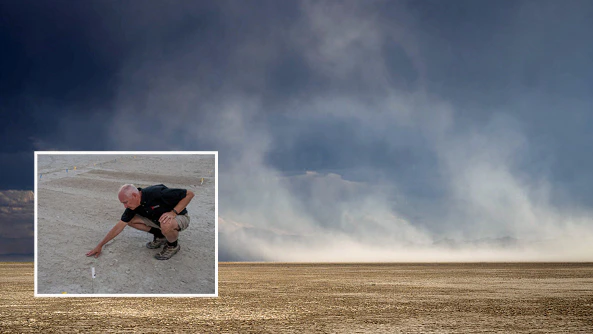
A shrinking Great Salt Lake is exposing hundreds of square miles of lakebed to the wind, raising concerns among Utah scientists that dust carrying potentially harmful materials could spread into neighboring states, including southwestern Wyoming.
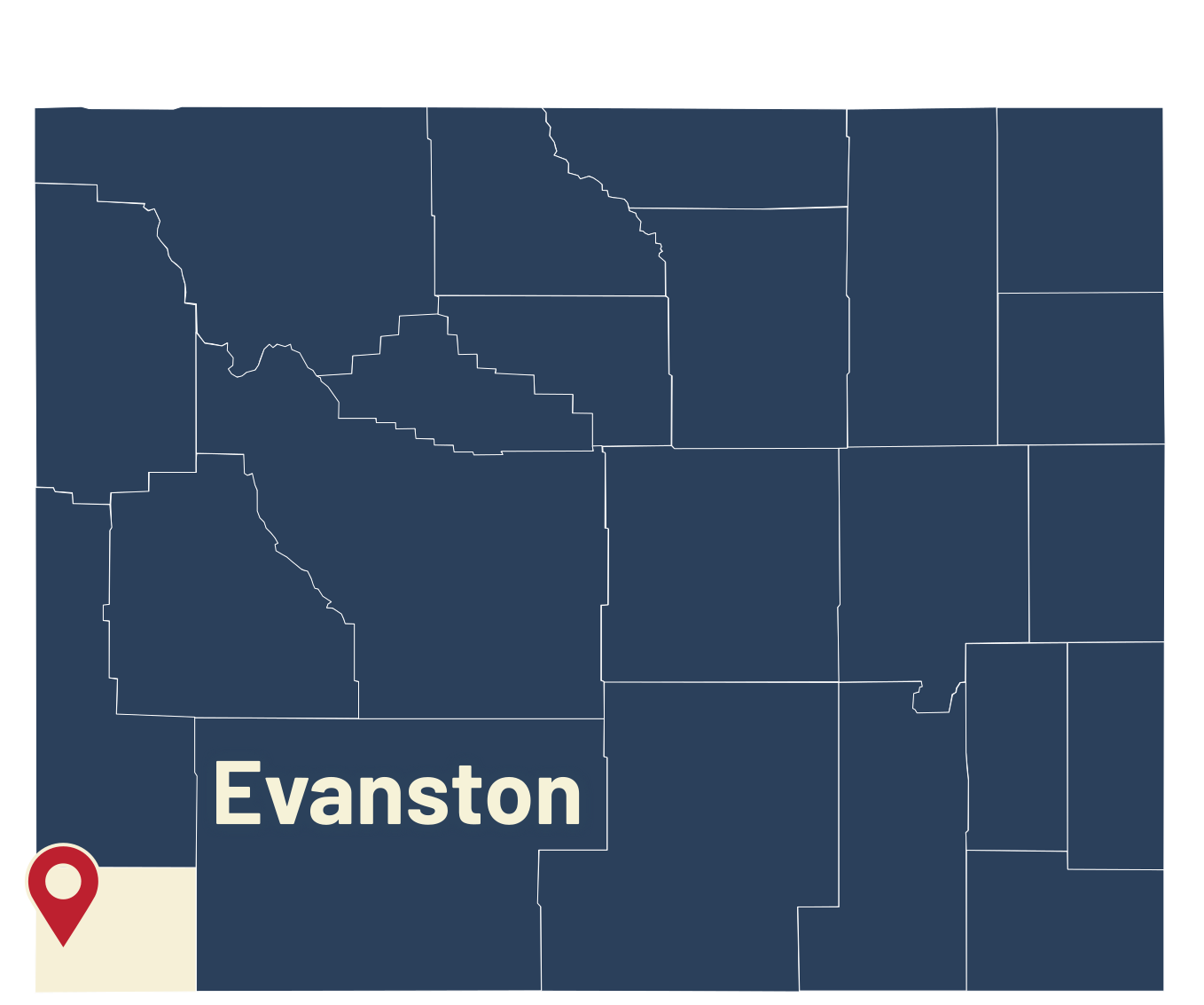
A map showing where the harmful dust could potentially impact people puts Evanston within reach.
But so far, Wyoming officials say there is no evidence yet that Great Salt Lake dust is affecting Wyoming's air quality.
That leaves an important question largely unanswered: How much of the harmful dust is reaching Wyoming, and what exactly is in it?
“We’re worried that the dust has started to become more frequent, more severe,” said atmospheric scientist Kevin Perry of the University of Utah.
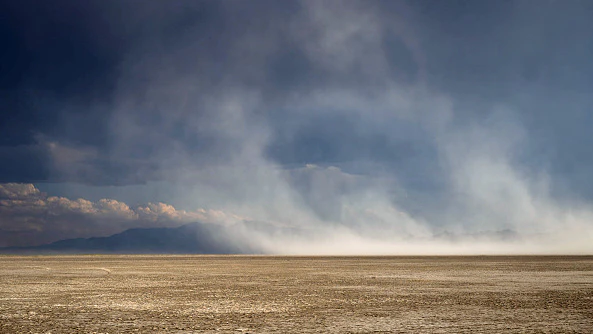
Dust storms – such as one that kicked up from the Great Salt Lake on July 8 – cause spikes in airborne particulate matter, potentially leading to respiratory issues, especially among people with asthma or chronic obstructive pulmonary disease (COPD).
Perry said strong winds from the south and southwest can carry dust from the exposed lakebed north and east, sometimes reaching southwestern Wyoming.
“People should be aware of it,” he told Cowboy State Daily.
It's enough of a concern that President Donald Trump’s 2027 budget proposal includes a $1 billion request to fund a federal program that includes addressing the toxic dust and stabilizing the shrinking Great Salt Lake.
An Exposed Lakebed
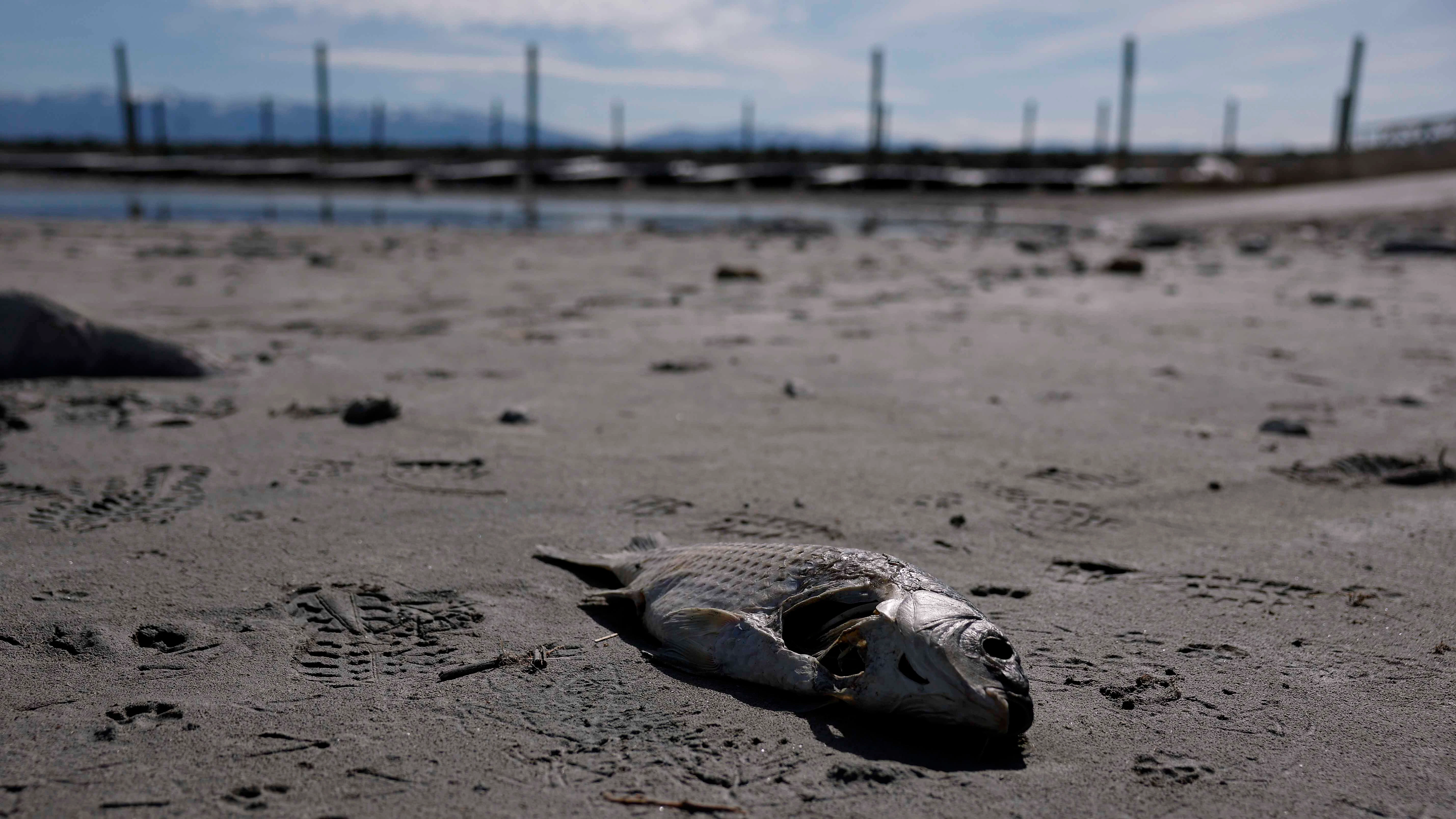
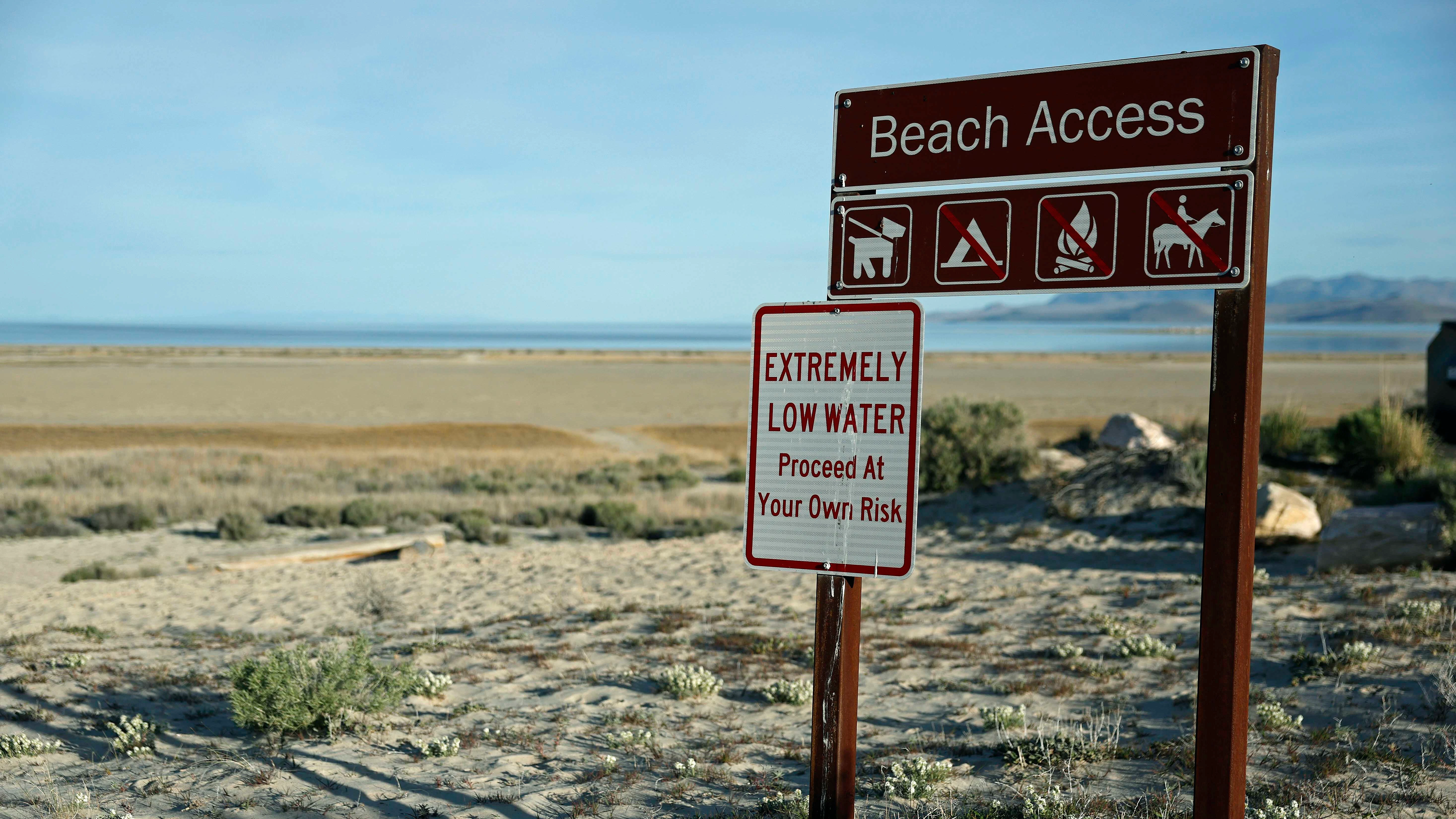
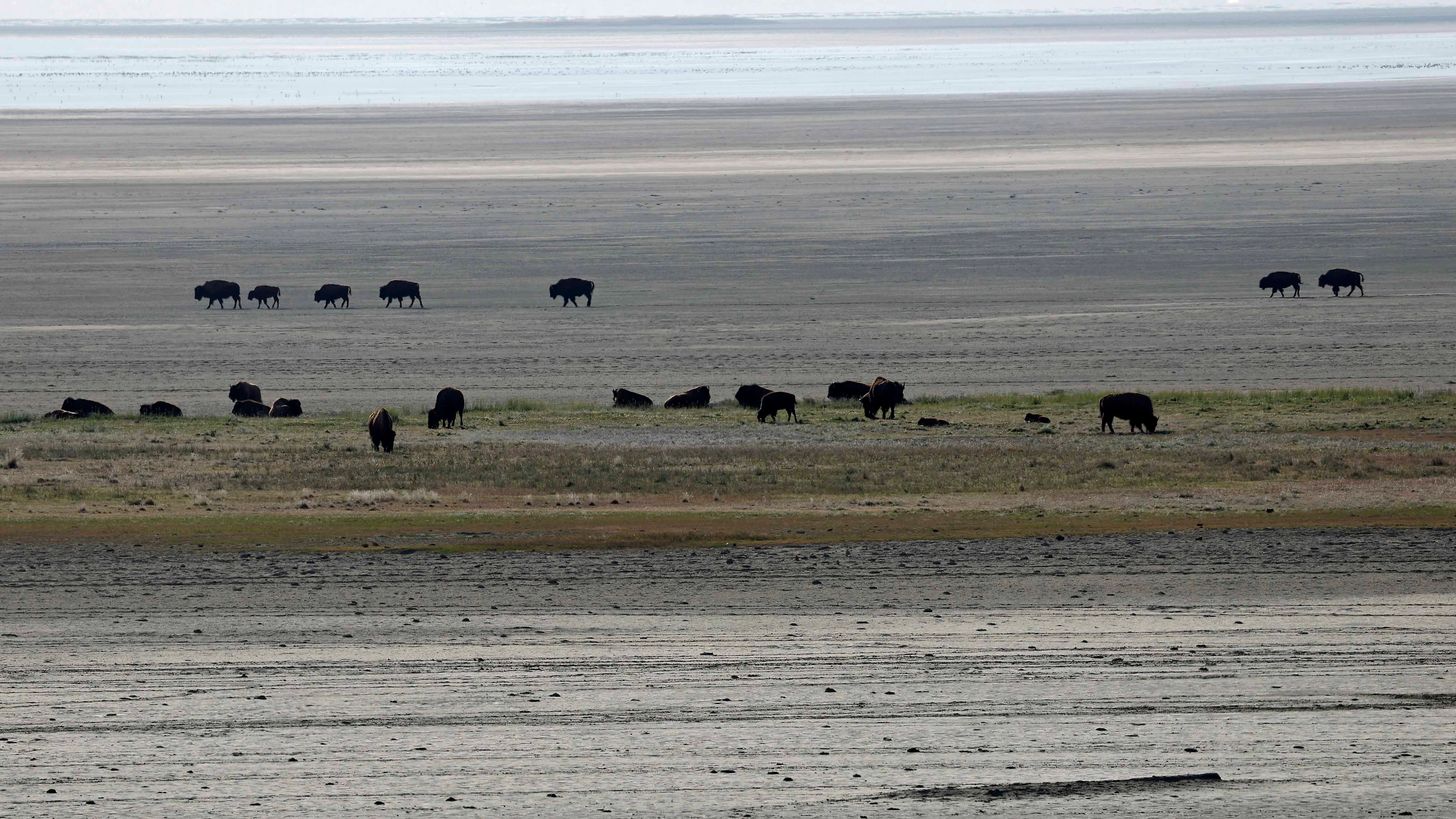
The Great Salt Lake has been shrinking for roughly four decades, exposing more than 800 square miles of lakebed, according to Perry.
Ben Abbott, an ecologist at the University of Utah, said the decline – more than half of the lake – is largely the result of water being diverted for communities and agriculture throughout the lake's watershed.
“We’ve been using more water than is sustainably available in the Great Salt Lake watershed,” Abbott said.
Abbott said the lake has been shrinking since the federal government built dams and allowed communities to consume more water.
“We started doing things like having lawns and growing commodity crops like alfalafa,” he said.
When strong winds move across the newly exposed lakebed, they pick up fine particles and carry them into surrounding communities.
“That toxic soup becomes airborne,” Abbott said.
Researchers have found minerals and metals in the dust, including aluminum, iron, silicon, titanium and salt. Some studies have also raised concerns about metals that could pose health risks with prolonged exposure.
Abbott said larger particles generally do not travel as far, but smaller particles can remain airborne much longer and travel significant distances.
Evanston is roughly 70 miles from the eastern edge of the Great Salt Lake as the crow flies.
“You can imagine, you expose an area that big and a lot of unexpected things happen,” Abbott said.
Differing Viewpoints
Abbott said the lake's decline cannot be viewed solely as a Utah issue, because water usage in neighboring Wyoming and Idaho have contributed to the lake’s depletion.
The Bear River, which winds through Utah, Idaho and Wyoming, is the Great Salt Lake’s largest tributary, providing more than half of its water. All three states have water rights to the river.
Abbott estimated that roughly 80% of the lake's decline is attributable to upstream water use and said communities throughout the Bear River watershed, including those in Idaho and Wyoming, play a role.
“This is a national water policy and ag policy issue,” Abbott said. “We need to figure out how to change our relationship with water.”
But Perry puts more of the responsibility on Utah, saying that Utah uses its water rights the most and needs to cut its water consumption by 30%.
“I really view this as a Utah problem,” he said. “We use too much darn water.”
He added, however, that Utah's environmental problem does not necessarily stop at the state line.
“We’re causing the problem, but it could impact you,” Perry said.
What Wyoming Knows
For now, Wyoming's environmental regulators say they have not documented a problem.
The Wyoming Department of Environmental Quality monitors air quality throughout the state for various pollutants.
Jillian Scott, a spokesperson for the DEQ, told Cowboy State Daily the agency is aware of Utah research showing dust from the exposed Great Salt Lake lakebed can contain elevated levels of certain metals.
But Wyoming is not specifically monitoring Great Salt Lake dust as an air-quality issue.
“At this time we have not observed information indicating impacts in Wyoming related to Great Salt Lake dust,” she shared in an email. “We do not currently have data that would allow us to characterize or confirm those claims for Wyoming.”
Instead, the most common air-quality issues in Wyoming are particulate matter from construction, unpaved roads and industrial activity and wildfire smoke. The agency also monitors winter ozone in the Upper Green River Basin.
Routine air-quality monitoring alone would not establish whether toxic elements came specifically from the Great Salt Lake.
“It’s very hard to source (where a pollutant comes from) unless it’s in the general vicinity,” Scott said.
Scott said confirming such a connection would require collecting air filters during a dust event, analyzing them for trace metals and comparing Wyoming samples with known Great Salt Lake dust profiles. Atmospheric modeling also could help determine whether the particles originated at the lakebed.
That type of specialized analysis is not part of Wyoming's standard monitoring program, she added.
Wyoming Residents Unaware
In Uinta County, where Evanston sits within range of dust transported from the Great Salt Lake, the issue has generated little apparent concern.
Kathy Payne, who works at Rocky Mountain Care, a skilled nursing and rehabilitation center in Evanston, said she had not heard about the issue.
Kerri Sabey, district manager with the Uinta County Conservation District, also said she was unaware of research indicating Great Salt Lake dust was affecting the county.
Adrian Hunolt, who ranches in southwestern Wyoming about 90 miles from the shrinking lake's shores, lives along the Bear River.
Hunolt said dust storms are not unusual in the region, although he could not say how much of that dust comes from the Great Salt Lake.
“When the wind blows down there we definitely get dust storms up here, and it covers us in dust,” he told Cowboy State Daily. “How much of it comes off the west desert down there and how much of it comes off the Great Salt Lake dry lakebed, I don’t know.”
Hunolt said he sees dust on his property several times a year. Weather conditions sometimes leave a layer of white dust across the area.
Abbott said he is not aware of research from Wyoming or Idaho examining whether Great Salt Lake dust is affecting water, crops or soils in those states.
Repeated calls to Uinta County Public Health were not returned.
Measuring the Dust
Utah is beginning to gather more information.
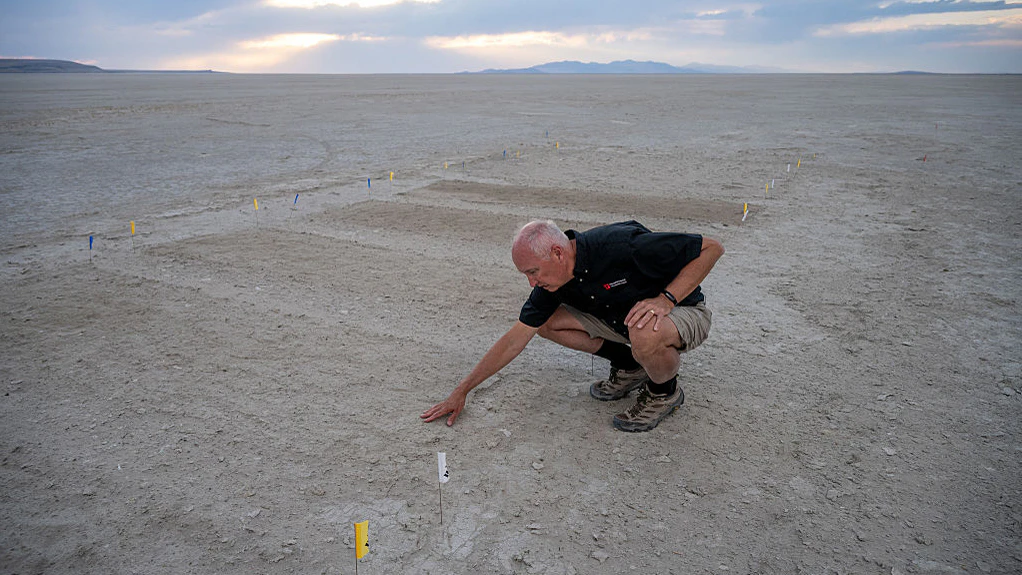
The state has been establishing a network of dust monitors designed to measure airborne particles and determine what metals and minerals they contain – and how much.
Some of the monitors are already operating, Perry said, with the network expected to be completed by early spring 2027.
The additional data could help researchers determine not only how frequently dust is being generated, but also how far it travels and what contaminants it carries.
Abbott said the first step is recognizing the scale of the problem.
“I think people are starting to wake up to the potential loss of the lake,” he said.
He also cautioned that restoring a shrinking inland lake becomes increasingly difficult as water levels fall and exposed lakebed expands.
A Warning From Lake Aral
Abbott points to the history of the Aral Sea in Central Asia as a warning of what can happen when a large inland lake is allowed to shrink dramatically.
Once the world's fourth-largest inland body of water, the Aral Sea began disappearing after the then Soviet Union diverted massive amounts of water from its tributary rivers for agriculture.
As the lake receded, large expanses of contaminated lakebed were exposed. Dust from the former lakebed was carried by the wind into surrounding communities and agricultural areas.
As the lake declined, Abbott said, cancer rates increased by 60%, and cardiovascular diseases spiked.
Abbott said the resulting environmental and public health problems illustrate the risks that can accompany the collapse of an inland water body.
A ‘Big Open Question’
For Perry, the solution remains relatively straightforward: Put more water back into the Great Salt Lake by reducing human consumption.
For Wyoming, however, another question remains.
Until the dust is specifically measured during storms in southwestern Wyoming, it may be impossible to know whether the particles settling on Wyoming soil and blowing through Wyoming communities are coming from the Great Salt Lake, nearby drylands or somewhere else entirely.
“This is a big open question,” Abbott said. “Can we do something new? Can we blaze a path to wise stewardship of the environment rather than ignorance and depletion?”
Abbott said the contaminated dust caused by the shrinking of the lake could be one of the biggest public health crises to impact the state.
“A lot depends on getting this right,” he said.
Kate Meadows can be reached at kate@cowboystatedaily.com.


