An elk calf made a decision that could have been fatal by ignoring a wildlife-friendly panel on a ranch fence and trying to plow through the middle of another section, only to become hopelessly entangled.
Luckily for the calf, the ranch hand and his wife were out for a walk and found the calf in time to free it.
Apparently wiser after its near-fatal mishap, the calf scrambled toward the crossing panel and leapt over it to freedom.
The ranch hand, Logan Wilson, told Cowboy State Daily that as far as he’s concerned, freeing the calf was just part of his job.
“We care about all of the wildlife living out here,” he said.
‘That Sucker Was Caught’
Wilson is a former resident of Buffalo and frequently hunted mountain lions in the Big Horn Mountains. He’s since moved to the Diamond Cross Ranch near Birney in southeast Montana.
The ranch is in prime wildlife habitat, with ample numbers of elk and deer.
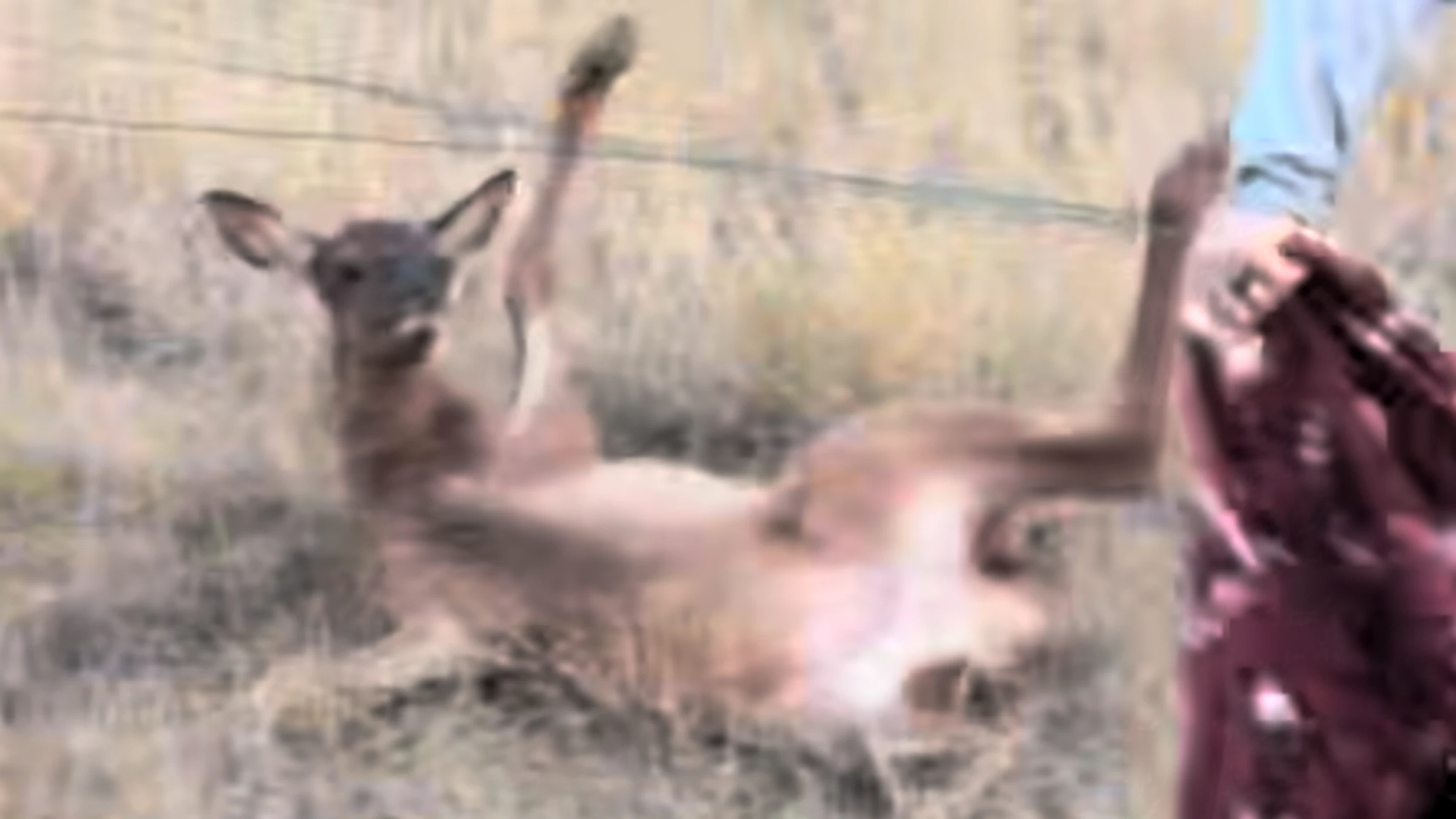
Wilson said he and his wife were “going on a daybreak walk” when they happened upon the calf. Its back legs were entangled in fence wire, and it was squealing loudly.
“That sucker was caught. It wasn’t going anywhere,” he said.
While his wife took video, Wilson went about freeing the calf.
He started by placing a jacket over its eyes to calm it.
That’s an effective tactic. Wildlife researchers frequently blindfold animals to keep them calm during field examinations or transport by helicopter.
‘A Ramp On The Elk Side’
Willson freed the calf in short order. Once it got its feet underneath it, the calf took off running.
This time, in the right direction, toward the panel designed to help elk cross the fence safely.
“It’s a panel with a ramp on the elk side (outside of the field) to assist herds in crossing," he said.
The ranch installed the elk crossing panels to help ease some pressure on the fence and to protect elk.
“The elk go into the fields at night and back out in the morning,” Wilson said.
Most of the time the herd funnels toward crossing panels. But not always.
“We had a bull caught in the fence once. A big bull, but we got him out,” Wilson said.
It’s kind of chaos when a herd of elk get to a fence and they get all balled up,” he said.
“They can tear up the fences and eat the hay crops,” Wilson said. “It’s a constant thing; we have to follow around and fix fences behind the elk.”
Wilson said he doesn’t resent that at all.
He loves seeing the elk, “and they bring in a lot of revenue” from hunters and outfitters given permission to hunt on the ranch, he said.
Wildlife-Friendly Fencing Matters
Wildlife-friendly fencing has been a boon for game herds across Wyoming and the West, biologist Kevin Monteith told Cowboy State Daily.
Fences can be built in several ways to make them safer for wildlife. That might include smooth lower wires to allow pronghorn to crawl under. Or upper wires strung at heights that allow deer to jump over, said Monteith, a biologist with the Haub School of Environment and Natural Resources at the University of Wyoming.
“Anything that can enhance the freedom of movement” helps herds find the best habitat and migration routes, Monteith said.
The calf getting stuck in the middle wires of a fence sounds typical, he said.
“Especially when they’re young like that, they try to pass through the middle of fences,” he said.
Mark Heinz can be reached at mark@cowboystatedaily.com.