Wyoming coal is getting an unexpected lift as rising electricity demand, driven in part by a rapid buildout of data centers, forces utilities to keep coal-fired power plants online longer than planned.
Across the country, aging plants once scheduled for retirement are being granted longer lives, not because the energy landscape has turned back the clock, but because the nation’s appetite for power is growing faster than new infrastructure can keep up.
That tension is putting Wyoming’s signature coal industry back into the conversation, say industry insiders.
“If you look at current coal demand, it’s up," said Kyle Wendtland, deputy director of the Wyoming Energy Authority.
Wendtland talked to Cowboy State Daily during a break at the WEA’s Next Frontier Energy Summit in Laramie on Tuesday.
“We’re in a situation now where demand is outstripping supply,” Wendtland said. “In order to keep the lights on we’re going to have to maintain a baseload dispatchable affordable form of power.”
Last fall, the U.S. Department of Energy announced a $625 million investment aimed at strengthening the nation’s energy supply chain amid the intensifying artificial intelligence race — a sector heavily dependent on energy-hungry data centers.
Georgia Plant With Wyoming Roots
One of the clearest examples of this shift is unfolding more than 1,800 miles from Wyoming.
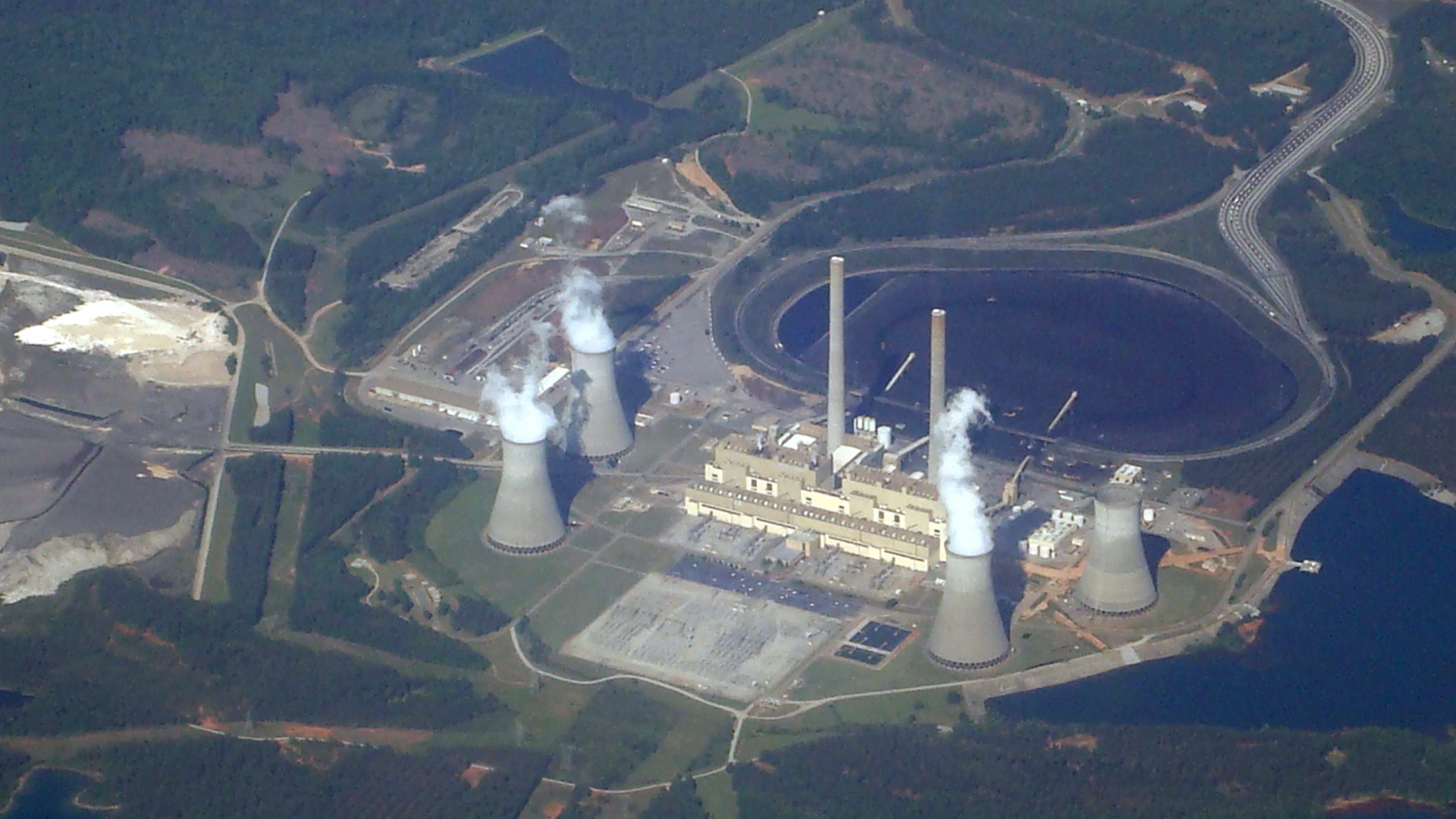
At the Robert W. Scherer Electric Generating Plant, one of the largest coal-fired power plants in North America, a coal-fired power unit once scheduled to retire by 2028 will now remain in operation.
The decision reflects growing electricity demand, with data centers playing a notable role.
Facilities that power cloud computing and artificial intelligence require enormous, constant energy loads, the kind coal plants have historically provided.
For Wyoming, the decision carries direct economic weight.
The Scherer plant has relied on coal from the Powder River Basin since the 1980s, shipped by rail across the country to Juliette, Georgia, about 70 miles south of Atlanta.
A Broader Slowdown In Coal Closures
The Scherer decision is not an outlier.
“If you look across the entire coal fleet, you’ve seen several of these plants that are extending dates on exiting units,” said Wendtland. “We’re all getting more electrified every day.”
The U.S. Energy Information Administration reports that 4.8 gigawatts of a planned 8.5 gigawatt retirement capacity was delayed to a future year and the operators of two coal plants canceled plans to retire.
The pace of coal plant closures has slowed noticeably since 2022.
Four coal-fired power plants retired units in 2025, according to the U.S. Energy Information Administration.
More would have likely retired, but the Department of Energy issued emergency orders to keep several coal plants online to protect grid reliability during high demand.
Where Wyoming Fits In
Wyoming remains central to the national coal picture.
According to a Wyoming coal study released in February by the Wyoming Energy Authority, Wyoming coal accounts for about 40% of the annual U.S. coal production.
Much of that Wyoming coal comes from the Powder River Basin, which supplies power plants in 26 states.
Even so, long-term projections remain uncertain.
The study outlined three scenarios for power sector demand. The Blue Case predicts what is most likely under current rules.
The Gray Case predicts a more favorable outlook for coal, assuming policy shifts that support continued plant operations. The Green Case predicts sharper decline tied to stricter environmental rules.
Reliability Driving The Conversation
Industry leaders agree that coal remains a necessity.
Rusty Bell, CEO of Energy Capital Economic Development in Gillette, said the delays in the retiring of coal-fired units reflect a simple reality: the grid needs dependable power, and it needs it now.
“We need all of the power we can generate right now,” Bell said.
Wendtland agreed.
The delay in coal plant closures doesn’t necessarily point to an expanding market, he said, but rather a stable market.
“The need is there and it’s a long-term need,” he said. “I just think we have a solid place in the market for Wyoming coal.”
Wind, solar and natural gas are all part of the mix, but replacing large-scale, always-on coal generation takes time — especially as data centers and population growth push demand higher.
Until new generation comes online at scale, existing coal plants remain a critical backstop, Bell said.
A true coal resurgence, he added, would require building new coal-fired plants — something that has rarely happened in recent years. Only one such plant came online in the United States in 2025.
Economic Stakes At Home
For Wyoming, the implications go well beyond energy policy.
Coal production supports state and local budgets, with tax revenues helping fund K-12 education and other public services.
“It really makes a difference whether those coal-fired power plants stay open,” Bell said. “It has a big impact on the economy in Wyoming.”
Kate Meadows can be reached at kate@cowboystatedaily.com.