
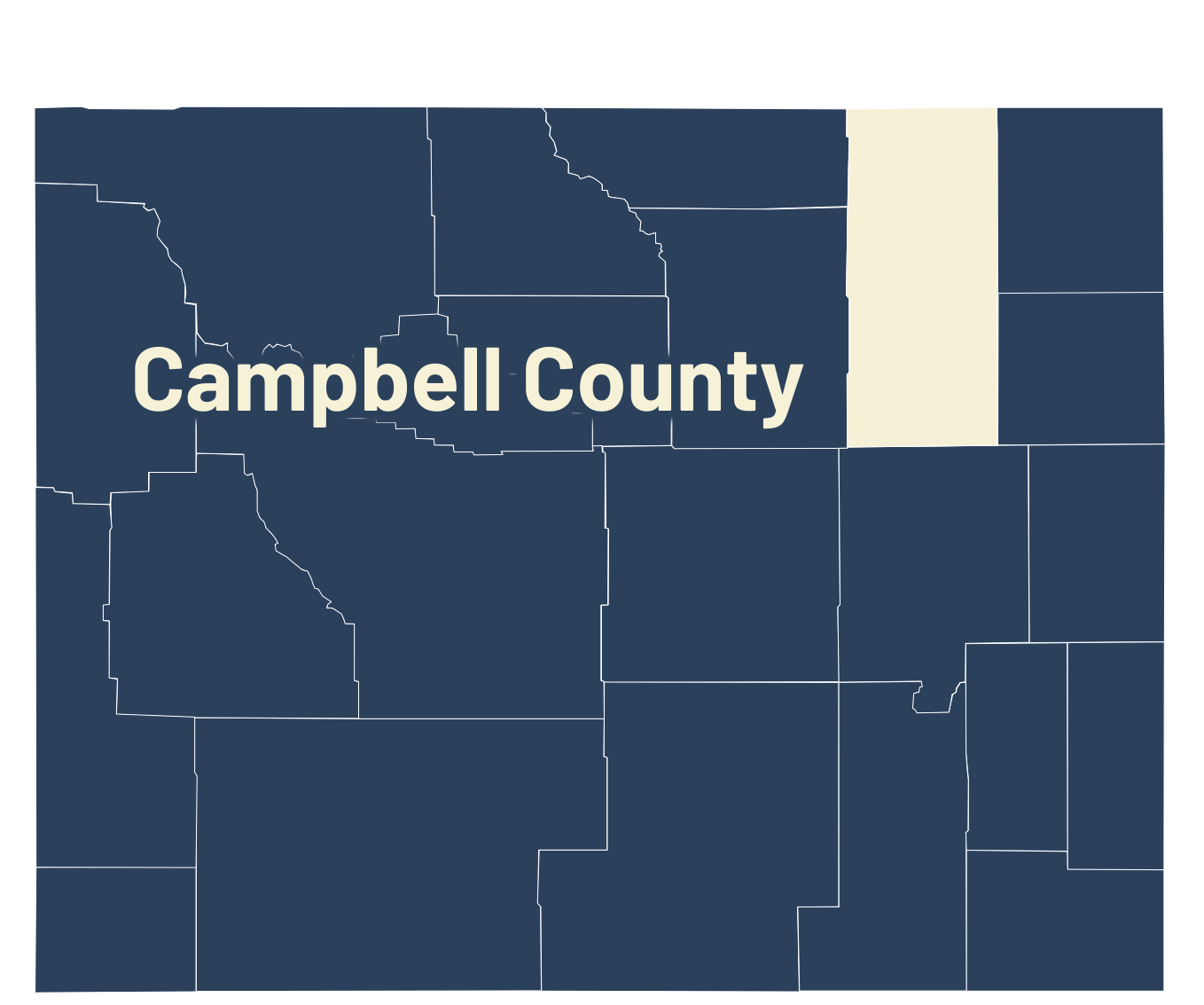
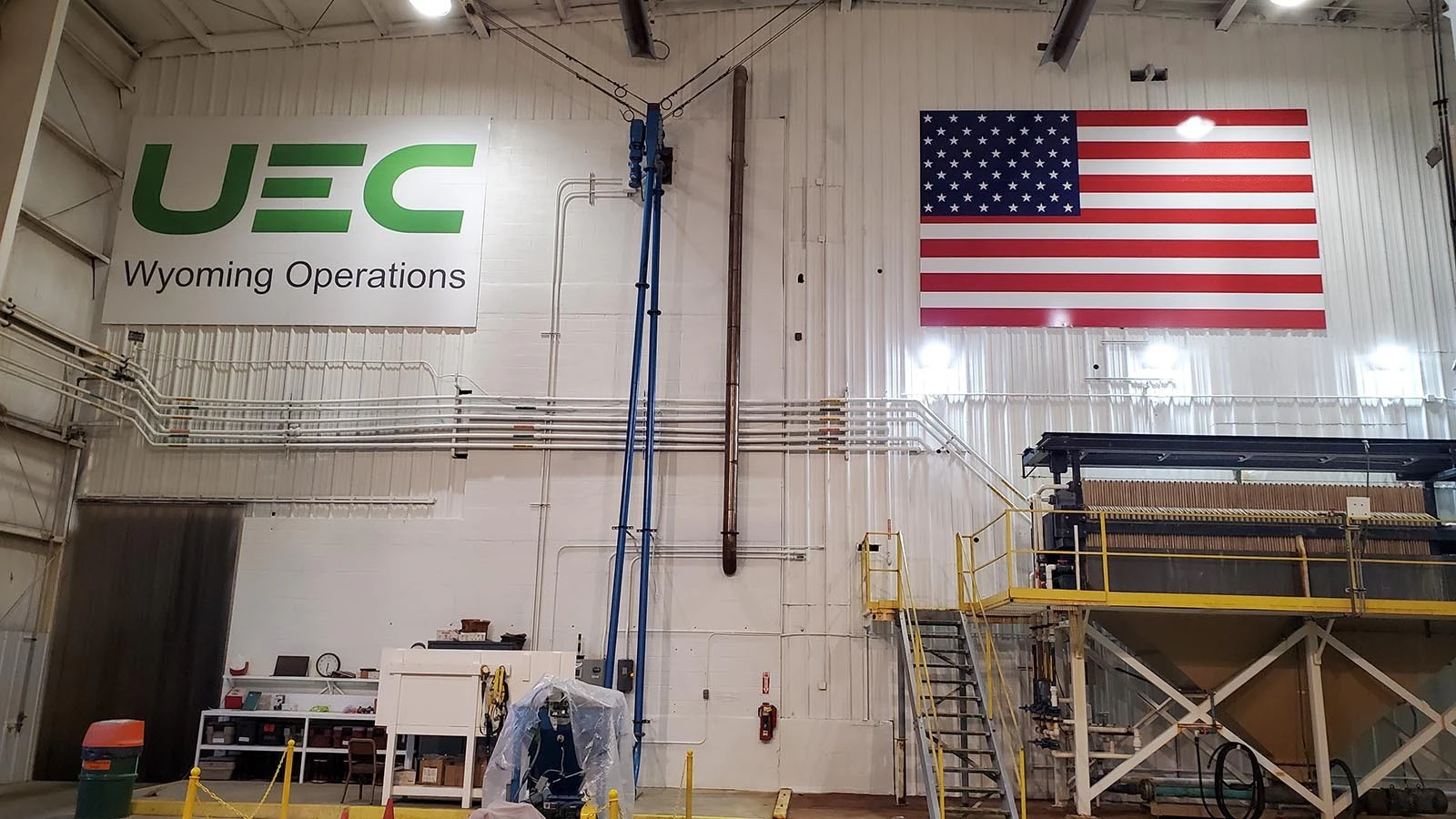
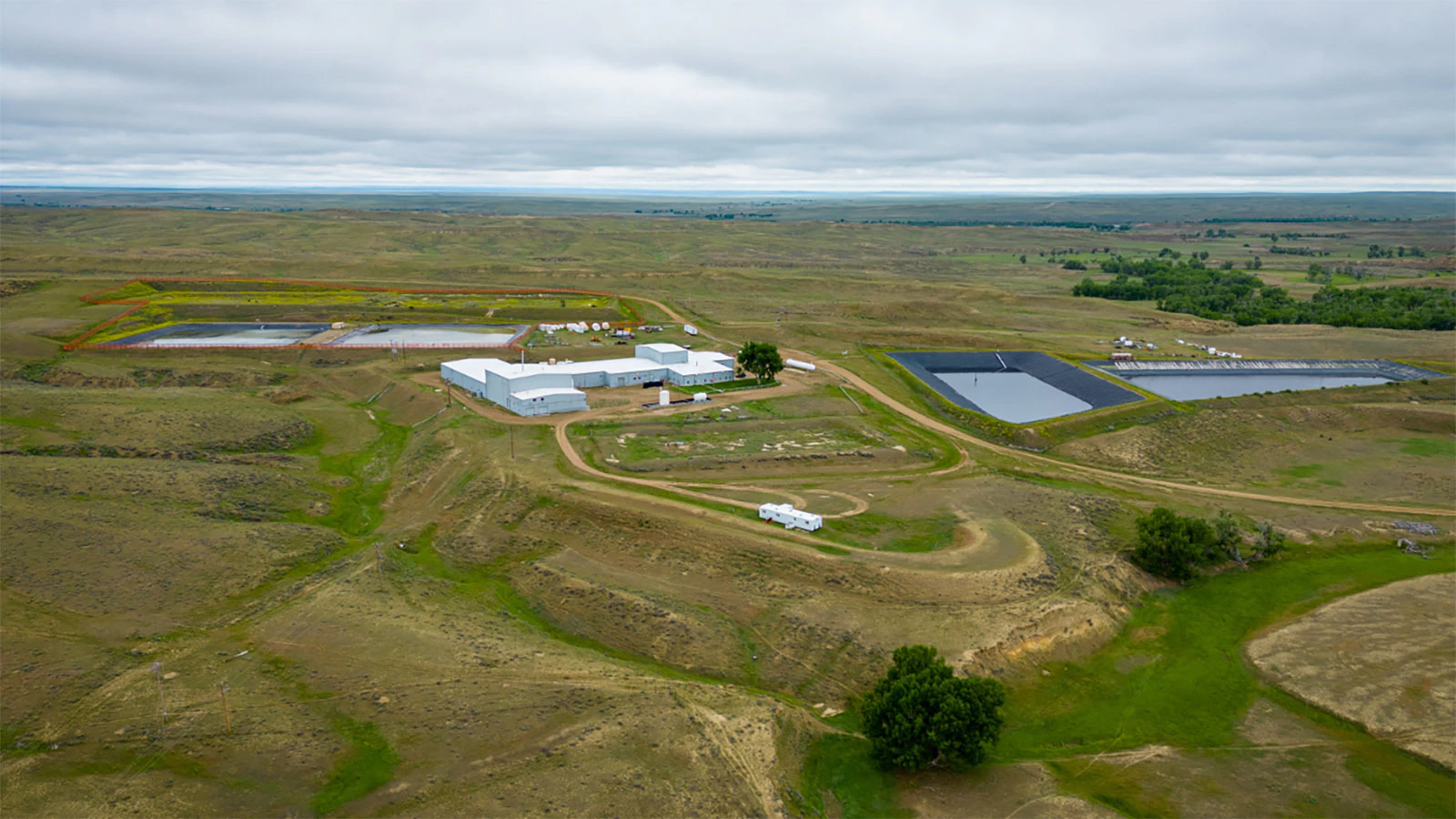
For nearly a decade, 100,000 acres of Wyoming’s uranium fields in the Powder River Basin — including 4.1 million pounds of U.S.-warehoused uranium — belonged to a Russian company called Uranium One.
That company was controlled by Russia’s state-owned Atomredmetzoloto, the mining arm of the Russia nuclear agency Rosatom.
It was a story that played out quietly at first in corporate securities filings and, eventually, federal approvals at the highest levels of American government.
All of that happened far from the in-situ uranium mines in northeast Wyoming.
In fact, no one visiting the site itself would have ever realized there was any Russian connection at all.
“They kept all the same people on the ground,” Wyoming Mining Association Executive Director Travis Deti told Cowboy State Daily. “It was Americans doing the work.”
The chapter raised few eyebrows in Wyoming at the time, but looks very different now that uranium is listed as a critical mineral and the United States is racing to rebuild its nuclear fuel supply chain.
No Real Fuss In Wyoming
A national controversy developed around Uranium One’s Russian ownership of American assets, though Deti doesn’t recall much talk about it in Wyoming at the time.
“There was no legislation or anything,” he said. “I have been asked in committee about Russians in Wyoming, and my answer to that is, ‘Well, they’re not here anymore.’”
Deti did end up meeting some of the Russian executives during a global uranium symposium in Casper, he recalled.
“It was before COVID, somewhere around there,” he said. “But yeah, I met some of those (Russian) guys, and I don’t remember them now.”
As far as what drove the Uranium One deal, Deti wasn’t sure, other than uranium is a global commodity.
“Companies choose where they want to go,” he said. “And if they meet their permitting obligations and all that stuff, we do allow foreign companies to operate in the United States.”
Making Wyoming Uranium American Again
Uranium Energy Corp. (UEC) CEO Amir Adnani mentioned the Russian connection to Uranium One during the recent Next Frontier Energy Summit in Laramie.
Adnani said Wyoming is still very much in the running to become home to a nuclear conversion facility, alongside Texas, where UEC is headquartered.
Wyoming Energy Authority Executive Director Rob Creager took the moment as an opportunity to ask how Wyoming could tip the scales in its favor.
“Well listen, first of all, our commitment to the state is extremely elongated,” Adnani replied. “In Wyoming, the largest owner-operator of uranium mining assets was a company that was Russia’s state-owned nuclear energy company.”
Adnani’s company bought it out in 2021, making it American again.
“No one knows how they got permits, when they did, or the approvals to be able to own and operate uranium mines in the U.S.,” Adnani said. “Like, if the shoe was on the other foot, we’d never be allowed to mine uranium in Russia or China or anything like that.”
Growing In Wyoming
After acquiring Uranium One assets, Adnani’s company also acquired global mining company Rio Tinto’s assets in the Great Divide Basin as well.
“Clearly we care,” Adnani said. “We are interested in the state. We would love if ultimately, a conversion facility goes alongside the mines we operate and other companies operate in the state to capture and retain as much of that economic value and activity here as possible.”
Local support will be the key to that, Adnani said.
“We’re not going to force the issue and say, ‘We have to build it here,’” he said. “With a mine, you’re limited to where Mother Nature has given you a deposit, so you have to work with that.
"With the conversion facility, you’ll take it to the communities that absolutely want it, so you can have that local partnership right off the get-go.”
Anti-energy rhetoric, Adnani said, is a serious issue when it comes to siting a facility.
“Not that I’m saying we’ve experienced any of that,” he added. “But I think, at the end of the day, companies like ours are looking to invest in the fuel cycle, moving forward to meet the next 50- to 100-year needs that the country has in front of it.
"So we need to make sure we have that local partnership.”
Clinton Connection, First Act
Canadians owned Uranium One before Russians did.
Canadian mining tycoon Frank Giustra orchestrated a buyout of three state-run uranium mines from Kazakhstan in 2005, with former president Bill Clinton by his side.
Within days, Giustra had a preliminary deal with Kazakhstan, which was swiftly followed up by a 2007 merger with South African company Uranium One.
Giustra then sold his stake in the company, which went on to snap up several other uranium assets, including a mill in Utah and holdings in Wyoming, Texas, and Utah.
The company’s stated goal at the time was to become a “powerhouse” in the U.S. uranium sector, a go-to supplier for American utilities.
Clinton’s involvement in the deal was downplayed at the time by Kazakhstan officials, though a New York Times investigation would later show a trail of donations to the Clinton Foundation surrounding these uranium deals.
That includes a fundraiser five months later for the Clinton Giustra Sustainable Growth Initiative to foster better environmental and labor practices in the natural resources industry, which raised $16 million in pledges.
Clinton Connection, Act 2
Shares in Uranium One began tanking in 2009 amid a Kazakhstan scandal over the sale.
Kazatomprom’s head, Mukhtar Dzhakishev, was arrested on charges he had illegally sold uranium deposits to foreign companies, including the ones now owned by Uranium One.
At the same time, Russia began angling for a stake in the company, saying it lacked adequate domestic supply. It bought an initial 17% stake in June of that year, but soon upped that to a 51% controlling share.
The deal required the American government’s approval, through the Committee on Foreign Investment Investment in the United States (CFIUS), a body that includes America’s most powerful cabinet members — the attorney general, secretaries of the Treasury, Defense, Homeland Security, Commerce, and Energy; as well as then Secretary of State Hilary Clinton, a role in which she served until 2013.
Barrasso Leads Charge To Block Deal
Russia had agreed when it bought its 17% share that it would seek American approval for the deal as required. But it was the 51% stake that dialed the intensity of the whole transaction up. Way up.
Four representatives wrote letters expressing concern about the deal to CFIUS. Wyoming Republican Sen. John Barrasso, meanwhile, joined New York Republican Rep. Peter King in efforts to block, investigate, and kill the deal.
Barrasso at the time wrote President Barack Obama, saying, “(this) would give the Russian government control over a sizable portion of America’s uranium production capacity.”
Equally alarming, Barrasso added, the sale would give Russia a significant stake in rich uranium mines in Kazakhstan.
The Nuclear Regulatory Agency wrote Barrasso back, saying that the uranium mine’s production would be reserved for domestic use no matter who owned it.
To legally export it, Russia would need a permit from the NRC.
A Rosatom spokesperson, meanwhile, downplayed the Wyoming mines that came with the deal, saying their real target was the Kazakh assets.
Ralph Kanode with Strata told Cowboy State Daily that was the focus he saw when he was employed by the company.
“I worked for Uranium One for four or five years, mostly in Kazakhstan, and then other projects around the world,” he said. “They had seven projects in Kazakhstan. They had projects in Australia and Africa, and the project in the U.S.”
The Hope And Change Era
CFIUS would ultimately approve the Uranium One transaction in spite of the controversy.
Because CFIUS deliberations are classified, the nature of the discussion — and what factors they weighed — remains secret.
At the time the deal was approved, there was increasing optimism about U.S-Russia relations.
The Obama administration was fresh from its “hope and change” campaign and eager for a new era of cooperation with Russia on core issues, including nuclear nonproliferation, expanded use of Russian territory to supply American troops in Afghanistan, and preventing Iran from getting a nuclear weapon.
Many of these hopes have not panned out, and although the company had promised to keep Uranium One public, its shareholders ultimately approved a deal that took the company private.
It became a wholly owned subsidiary of Rosatom in 2013.
Uranium One’s operation in Wyoming continued for five years after that, then its Willow Creek in-situ recovery mine shut down.
Next Nuclear Era
The world today is a very different place, Deti acknowledged, and a deal like that one would not likely pass muster these days.
Uranium has since been formally recognized by the U.S. government as a critical mineral, and the broader fuel cycle — from mining through conversion, enrichment, and fuel fabrication — has been reframed as a national security asset.
That reframing is what prompted UEC to consider building a conversion facility in either Wyoming or Texas, Adnani said.
“It seemed odd to us that we would be mining uranium here in Wyoming, dry packaging it and having this incredible product that we then would have to ship across state borders to Illinois, where they would charge taxes and all types of other things,” he said. “So it seems kind of crazy not to capture that downstream economic value in the fuel cycle, which begins with the product we mine.”
Adnani said the company is now studying several locations where it might build such a facility, and hasn’t yet made up its mind.
“Whether we build this new conversion facility in Wyoming or Texas or elsewhere … that’s what we’ll see,” he said. “But we have mining operations in Texas, and we have mining operations here.
"We think the real play and the real necessity is to be vertically integrated and to have a supply chain solution upstream of the fuel cycle, all the way from mining to conversion.”
Unanswered questions about how Russia came to own a good chunk of Wyoming’s uranium may linger, but what’s more pressing to many in the energy sector is who will control the nuclear fuel cycle going forward — and how best to keep the supply chain firmly domestic.
Renée Jean can be reached at renee@cowboystatedaily.com.


