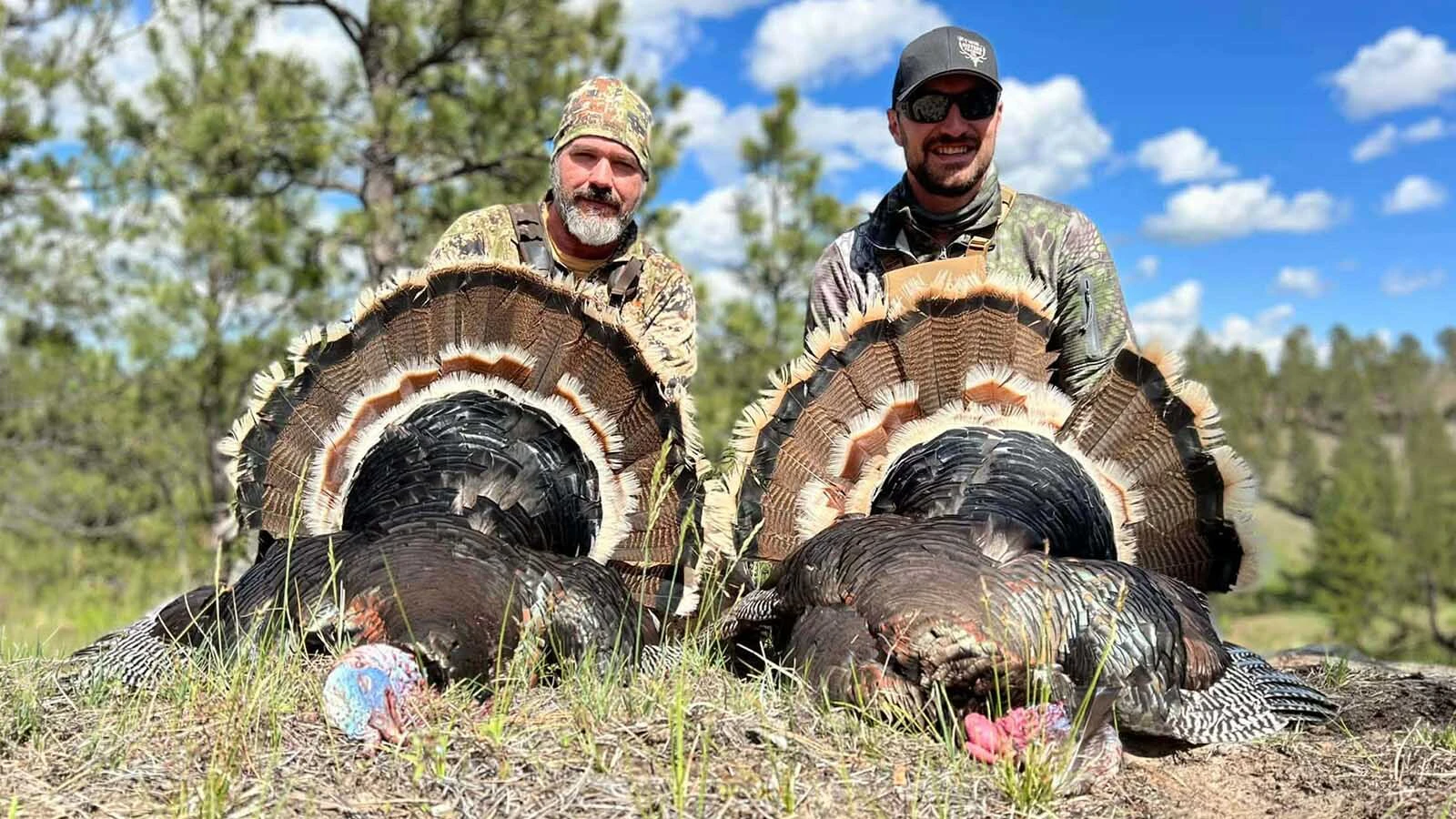
If there ever was a time to take up turkey hunting in Wyoming, it’s now, some seasoned hunters say.
A mild winter resulted in high survival rates of polts, or young turkeys, Zac Hearon told Cowboy State Daily.
“The population is going to explode,” he said. “We should have a lot more turkeys this year."
Hearon lives in Hardin, Montana, and frequently travels to Wyoming to hunt with his friend Owen Miller.
Miller lives in northeastern Wyoming and is an avid turkey hunter and hunting guide.
“I feel like everything’s starting early,” because of a mild winter and warm spring, Miller told Cowboy State Daily.
Wyoming has both spring and fall turkey hunting seasons. The spring season opens April 20.
Don’t Even Blink
Male turkeys, called gobblers or toms, are in mating mode about a month early, strutting their stuff and trying to impress hen turkeys, he said.
The favored method of hunting turkeys is to move stealthily until the challenging gobbling of a big tom is heard.
Then hunters will hunker down and use a call to imitate the noise of a rival tom, in hopes of luring in the real tom turkey.
If the gobbler gets within range without being spooked, hunters will shoot it, either with a shotgun or a bow and arrow, trying to hit the head and/or neck.
Wild turkeys are extremely cautious, because they have so many natural predators, and they have extremely sharp eyesight.
So, good camouflage is a must. And Miller offered simple advice to novice hunters: “Don’t move."
Even the slightest movement, such as the blinking of a hunter’s eyes, can be enough to scare a tom off before the shot can be made.
Miller said he usually squints his eyes while a gobbler is making his final approach.
It’s best to set up uphill from a turkey, he added.
“Turkeys respond better to being called uphill than to being called downhill,” he said, adding that he’s not sure why.
Reaper Knows How To Freeze
Hearon warns the turkey hunting can become addictive.
He started hunting turkeys with Miller in Wyoming about six years ago and has also hunted them in just about every other state that has turkeys.
For a turkey hunter, “hearing a turkey gobble is like giving a kid his first ice cream cone,” he said.
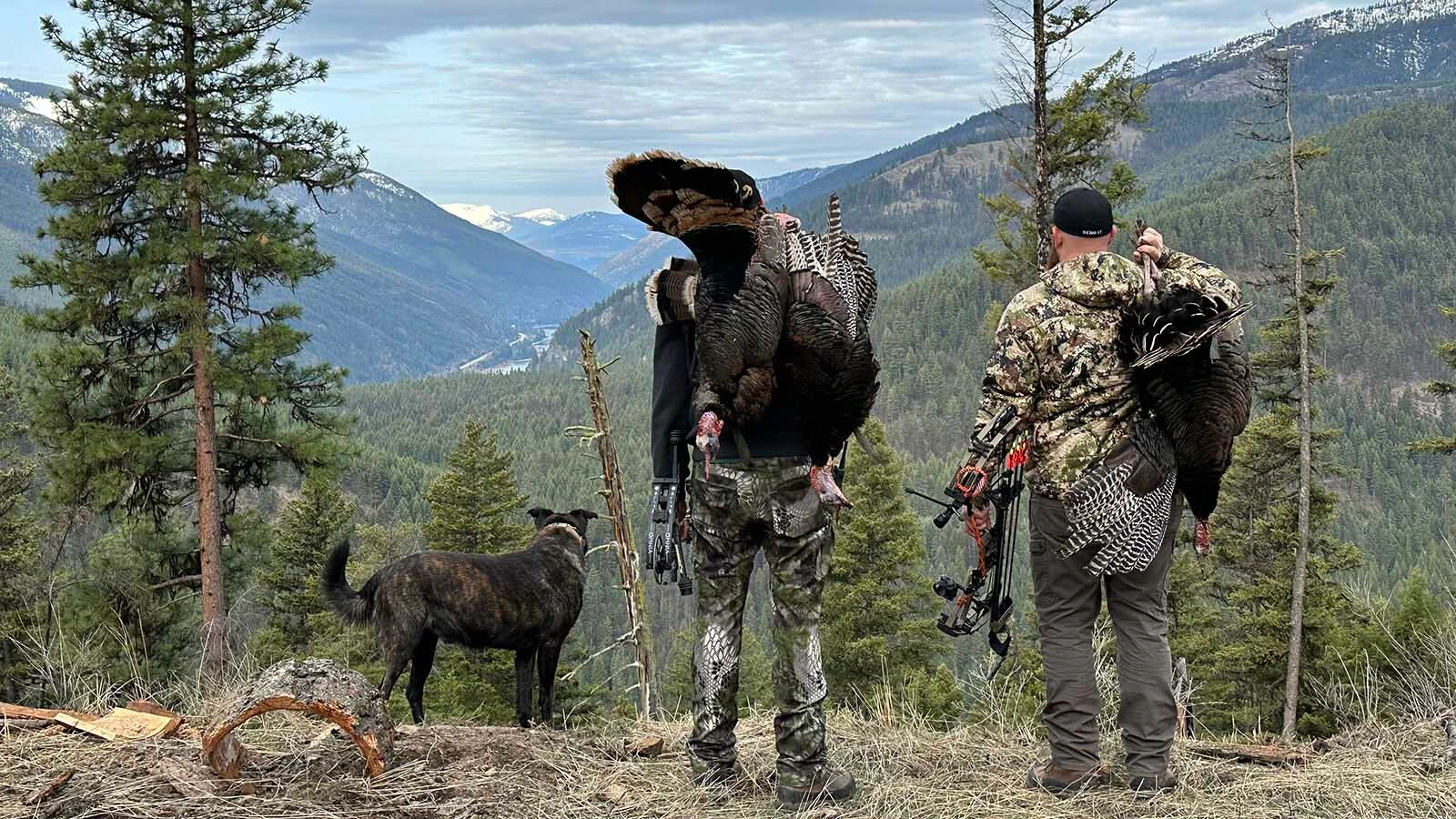
Hearon is an Afghanistan combat veteran and stopped hunting with firearms after he got home from the war. So he hunts turkeys exclusively with a bow.
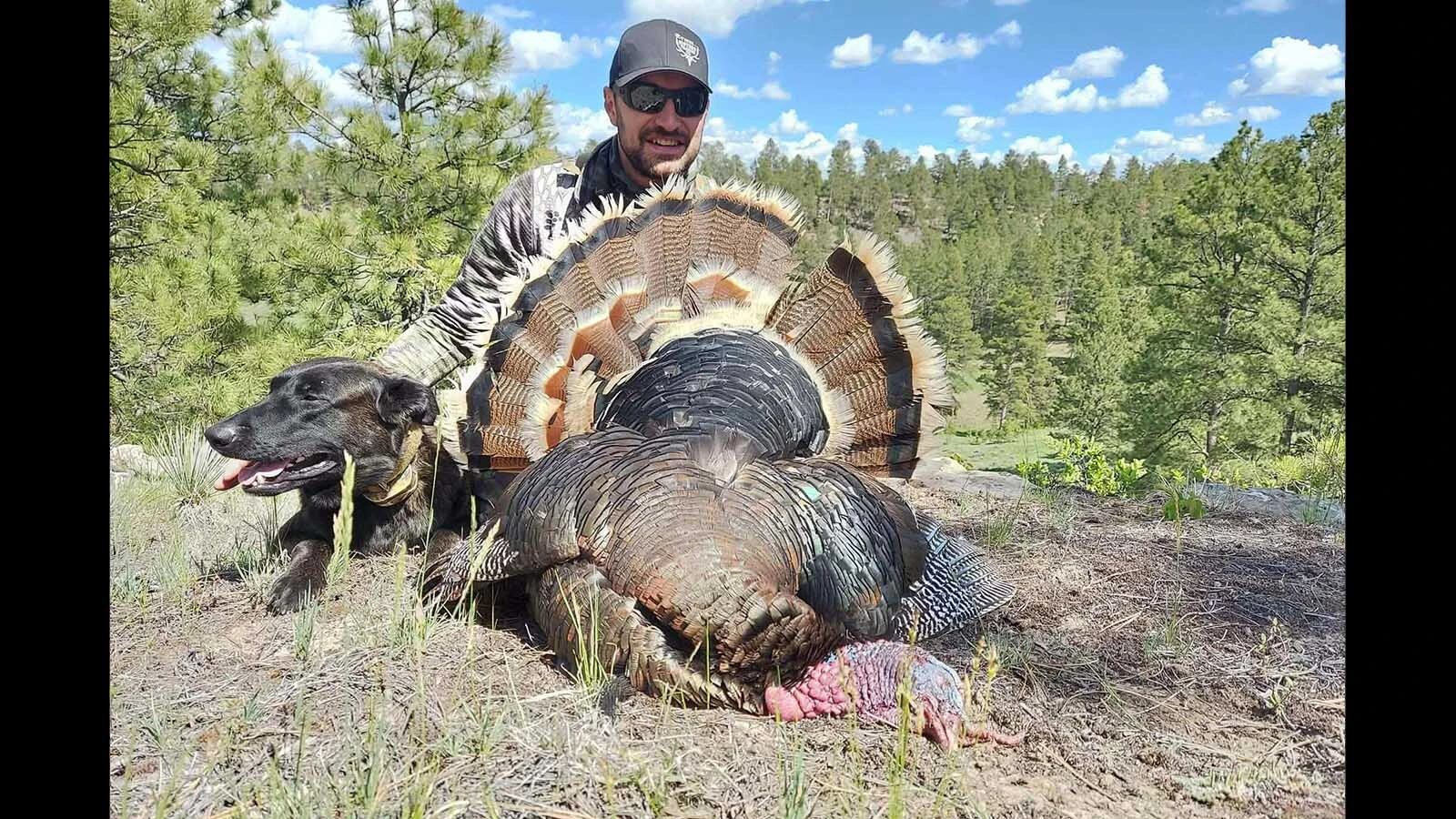
He also takes along his service dog, Reaper, a Dutch shepherd.
Reaper doesn’t participate in the hunts; he’s just there for companionship.
And he knows how to stay completely still, so as to not scare the turkeys and ruin Hearon’s shots.
“This dog has military training. You could put a steak two inches in front of his nose, and he wouldn’t budge until you told him he could have it,” he said.
The Grand Slam
Hunters can earn a “turkey grand slam” by bagging all four main species of wild turkeys in America, Miller said.
Wyoming has Merriam’s turkeys, and many of the hunters he guides come from out-of-state to check the species off their grand slam list.
Hearon said he’s proud to have completed his turkey grand slam with a bow.
The other grand slam species include Osceola turkeys, found mainly in Florida, and Rio Grande turkeys, in Texas, Kansas, Oklahoma and parts of California.
And there are also Eastern turkeys, found in numerous states east of the Mississippi. They are considered the most challenging species to hunt.
Having hunted turkeys all over the country, Hearon said the landscape is his favorite part of hunting in northeast Wyoming.
“The terrain is different from anyplace else you will find turkeys, with rolling hills and stands of pine trees,” he said.
Miller likened turkey hunting to archery hunting bull elk during the early fall rut, or mating season. That also involves trying to call in combative males.
“It is like elk hunting. To bring in a wild bird like that — strutting and gobbling in response to your call — is a huge thrill,” he said.
Mark Heinz can be reached at mark@cowboystatedaily.com.