Allyse Taylor went for a Sunday jaunt up Casper Mountain and came across something she doesn’t normally see that made her heart sink.
“I’m an avid hiker,” she said. "I’m up there at least three times a week, as soon as it’s warm enough to be up there. This year, the lodgepole pines are all turning yellow.
"Historically, they do not turn yellow. They are evergreen. We call them ‘evergreen' for a reason.”
Taylor is sure that the ongoing drought with historically low snowfall and record low snowpack is to blame.
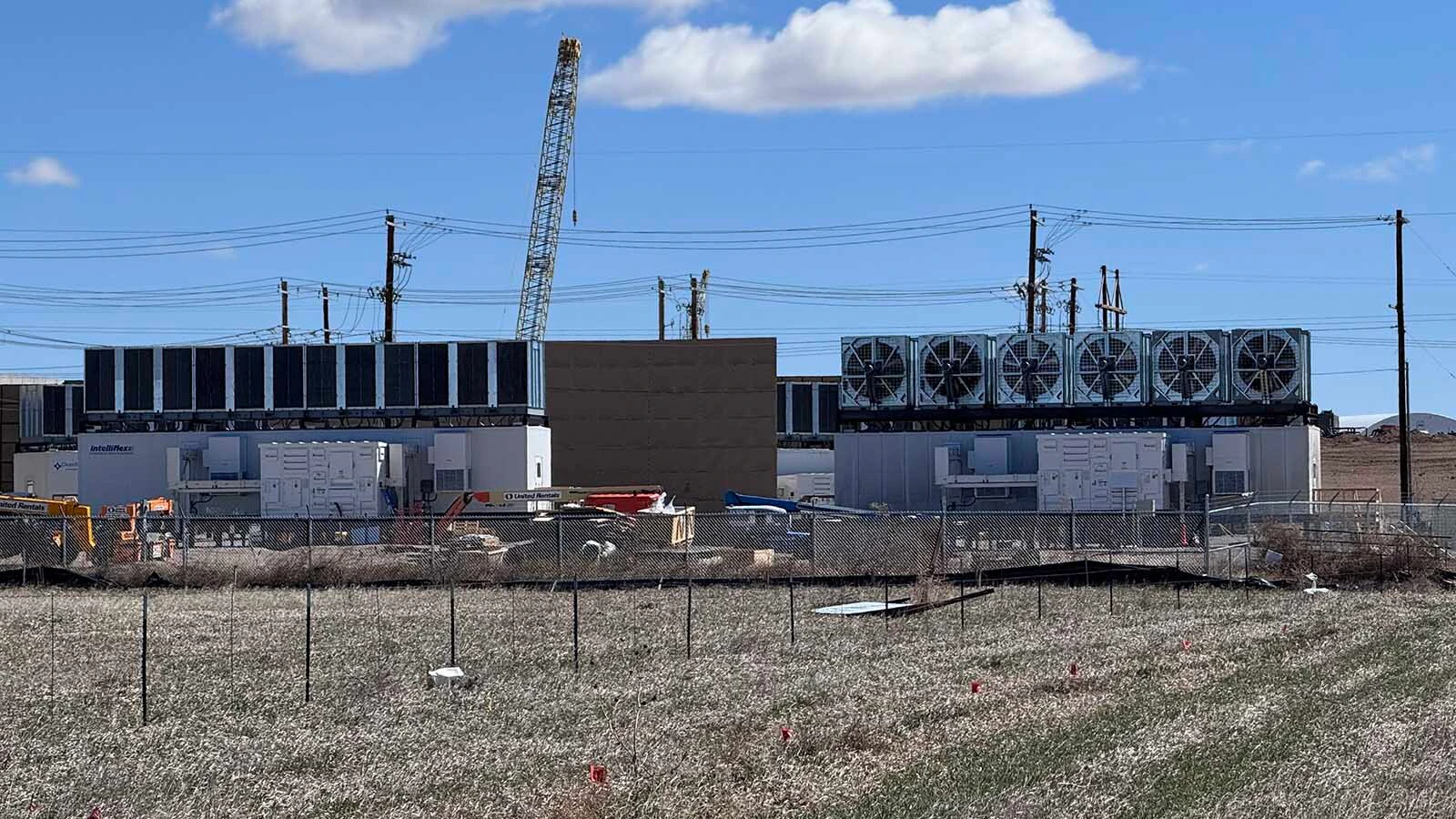
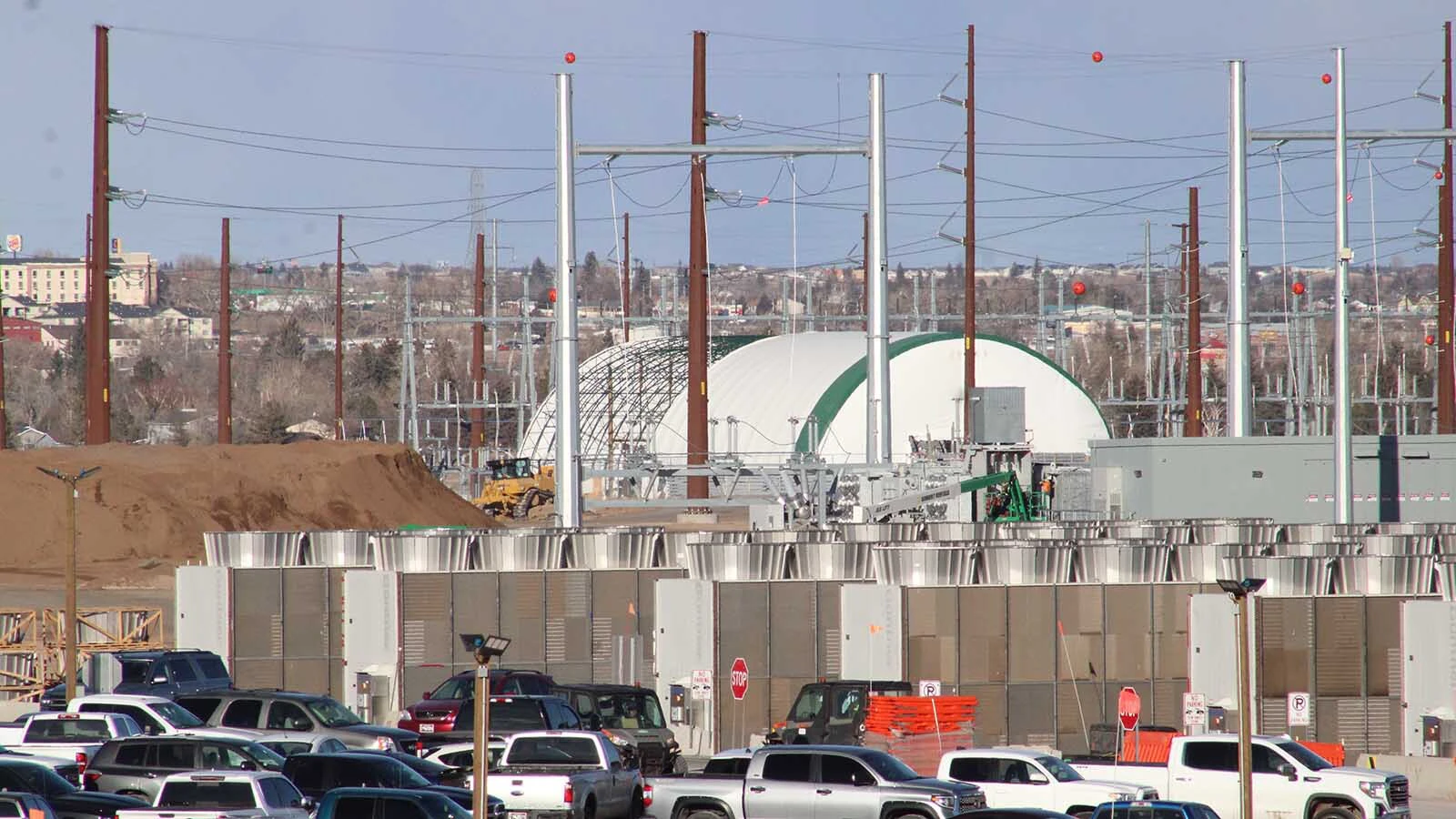
To her, it’s a flashing neon warning sign as people in Converse and Natrona counties absorb news of a massive new neighbor — a 1.5-gigawatt data center and power complex on private ranchland proposed by Wyoming startup Prometheus Hyperscale.
“I think (the yellow pines) are a pretty blatant sign that where we’re at with snowpack, where we’re at with water, is very dangerous,” she said. “And any strain on that system from these proposed data centers is something that we cannot have as a community and as a state.”
Her fears are part of a wider backlash that started in Cheyenne and has been spreading across Wyoming.
Residents around industrial-scale data centers proposed near Casper and Evanston are raising a number of questions about whether data centers are right for Wyoming, ranging from water and electricity use to fears of a growing artificial intelligence-powered surveillance society.
Water Worries Go Beyond Cooling
Taylor has heard Prometheus’ public assurances that its Wyoming data campuses will rely on closed-loop cooling systems designed to use far less water than older, evaporative designs.
Taylor’s questions go beyond just cooling the data centers.
She wonders about the water footprint for the gas-fired power plants Prometheus has said it will use to power its Casper campus.
“If these data centers require 1.5 gigawatts of power, where is the energy for that going to come from?” she asked. “What kind of water usage will that energy require?
"And how is that going to affect not only our water throughout the state when we’re in such a terrible drought, but how is that going to affect every other facet of life that would go into that electrical load?” Taylor asked.
Big Muddy Petition: ‘We Chose This Place To Call Home’
She’s not the only one with questions.
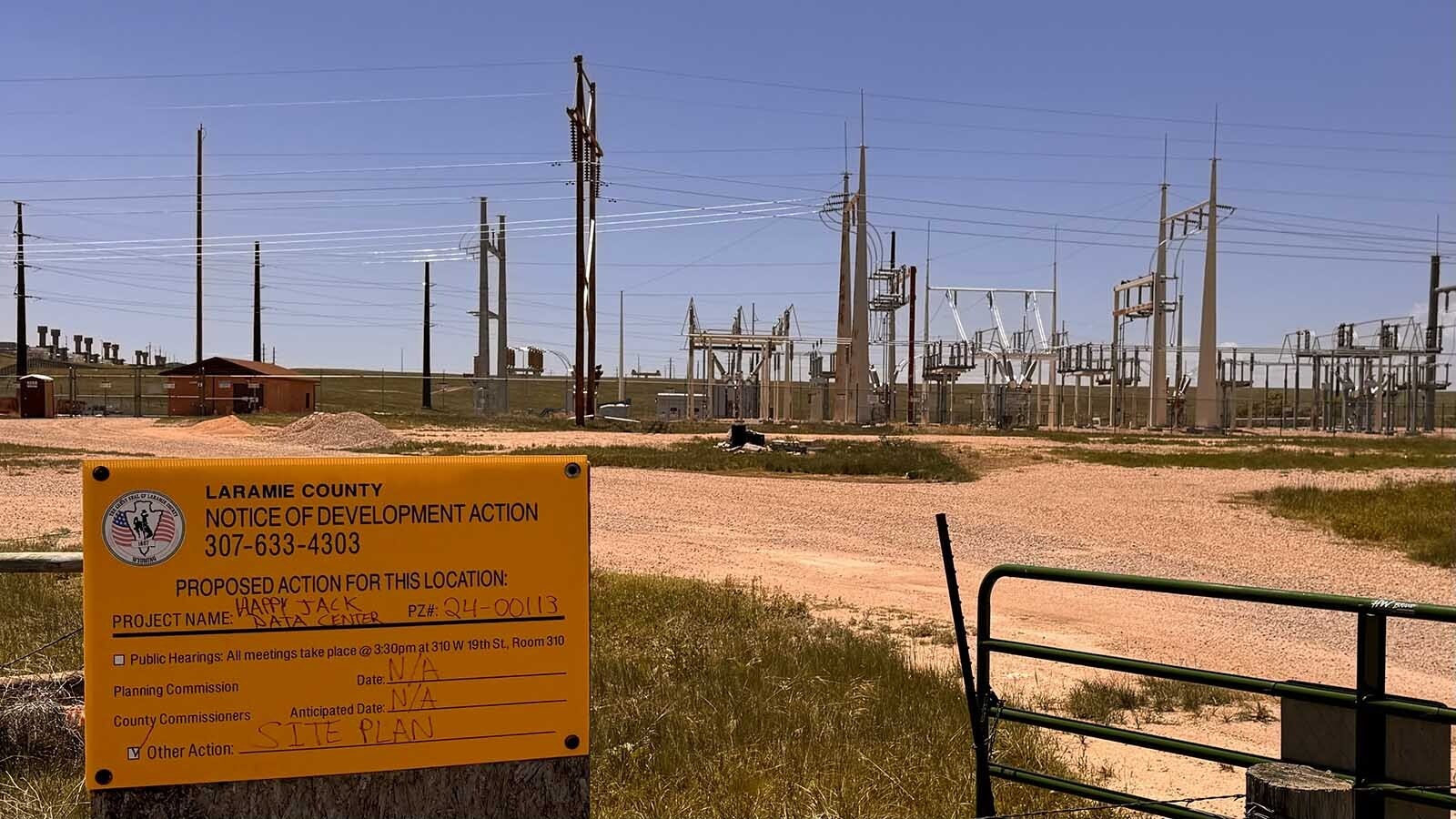
Casper already has a petition circulating that seeks to stop Prometheus Hyperscale with a couple hundred signatures on it.
The petition’s author is listed at change.org as Charlotte Naylor, who did not respond to Cowboy State Daily inquiries for comment.
In her petition, she identifies herself as a resident of Big Muddy Creek Ranchettes who is deeply concerned about the data center, which will be adjacent to her property.
She fears it will ruin the tranquility and environment of her neighborhood.
“Many of us moved here for the peace and natural beauty,” she wrote. “This project jeopardizes the very reasons we chose this place to call home.”
She believes the data center should concern others as well.
“The construction and operation of a data center can introduce numerous issues, including noise pollution, increased traffic and environmental degradation,” she wrote.
“These factors not only disrupt daily life but also potentially lower property values and detract from the pristine quality of our surroundings,” she added.
Naylor also questions water usage, as well as power consumption, which she fears could lead to higher costs for everyone.
“We urge our local officials to reconsider this project and explore alternative locations that do not encroach upon residential areas or natural landscapes,” she wrote. “It is crucial for community voices to be heard and for us to stand together in opposition to a project that does not align with our community’s best interests and values.”
Cheyenne Moratorium Debate
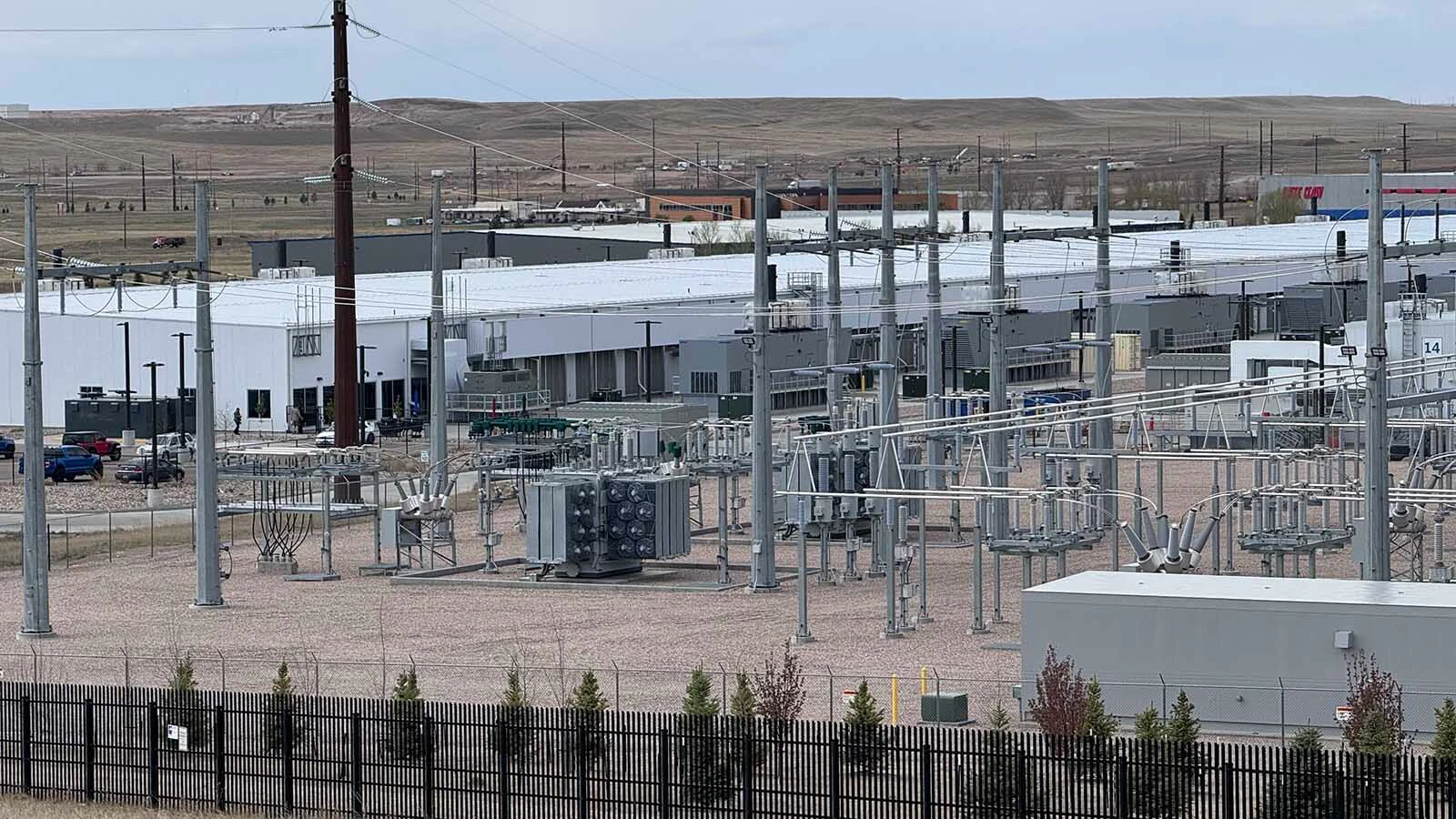
The concerns now surfacing in Natrona County along Big Muddy Creek and in Uinta County near the Utah border echo a debate that’s already been stewing in Cheyenne for the better part of a year.
That culminated Monday in debate of a proposed 12-month moratorium on new data centers in Cheyenne, which drew hours of emotional testimony.
The hearing pitted union workers excited about jobs against neighbors worried about water and power use, as well as the overall pace of construction.
Supporters of the moratorium said Cheyenne needs to take some time to study cumulative impacts on water, power, zoning and local workforce, while opponents said a pause like that would threaten hundreds of high-paying construction jobs already in the pipeline.
Ultimately, the committee failed to make any recommendation for or against the moratorium, which will go back to the full City Council for a final decision.
The discussion highlighted gaps in state law that the legislature should address, Rep. Daniel Singh, R-Cheyenne told Cowboy State Daily.
“On both sides you had some people saying, ‘We appreciate the jobs, but there are issues that this particular industry brings,’” he said. “And I thought it was really interesting to hear that. So, I think that we as state lawmakers should be looking at what needs to change when it comes to Title 35, 37 and 41.
"But I’m glad that Cheyenne took the lead in talking about this issue,” Singh added. "I think everyone agrees that there just needs to be more education on existing procedures and the actual impacts that these projects are having in Cheyenne.”
Company Says ‘Avalanche’ Of Misinformation
Prometheus Hyperscale President Trevor Neilson has described the data center’s cooling load in terms of only a few households’ worth of water, rather than the “bazillions” that residents fear.
Neilson said he’s seen an avalanche of outright misinformation online about Prometheus’ data centers, and said his team is working hard to meet face-to-face to discuss people’s concerns and give accurate information.
Prometheus Founder Trenton Thornock, meanwhile, has touted his family’s five generations of farming and ranching in Uinta County and said nothing is more important to him than doing things “sustainably.”
“Other people may not have that goal, but that’s one of the ways that we’ve crafted our design is to not use any water,” he said. “You know, we’re a ranching family, so we want to stay away from (hogging water).”
As far as the water usage of energy generation, Neilson told Cowboy State Daily that the data centers will use closed-loop systems for cooling, and will not be water hogs.
Face-To-Face Meetings Planned
“We really want to hear what people have to say,” Neilson added. “That’s why we have been out meeting with people in person in Casper … in a factual manner, both addressing their concerns, but then reminding them of the thousands of jobs that will be created through these projects.”
The Evanston-area data center doesn’t have any adjacent neighbors, Neilson said, though there are a few in Casper.
“In terms of people who are within a kilometer of the proposed site near Casper, if all of those people haven’t been directly met with, there’s a process underway to meet with them in person,” he said.
Those discussions will include information about earthworks to shield the site from neighbors’ view, as well as proactive measures ensuring that the noise is less than that which already runs alongside the site from the highway.
“The flip side of it is this is a project that’s on private land,” Neilson said. “And it’s in accordance with all the laws associated with private land.
“So, I think the desire to engage with people is going to be consistent throughout both projects, and throughout the process associated with both projects."
Fueling Hopes With New Jobs
Jobs are what has Eric Wyatt of Lyman supporting the Prometheus Hyperscale project near Evanston.
His son wants to go into cybersecurity.
Before Prometheus, Wyatt said they’d already been talking about how his son would likely have to leave the state to find a suitable job.
Now with data centers on the horizon in Cheyenne, Evanston, and Casper, they think he might be able to get a job in Wyoming instead, maybe even close to home.
That would feel like a miracle to this family.
“If we want our kids to stay in the state, we have to bring in those jobs that they’re looking for,” Wyatt said. “But also let’s say it’s not just 100 employees, but potentially 100 families moving to the area.”
Those families will be looking for ways to spend money, Wyatt said, and that can turn into more jobs.
“If people are spending money with Uinta County, people might decide, ‘I can open up my business and I know I’ll be successful,’” Wyatt said. “And then what happens is that money stays here in the county.”
Wyatt has also talked to other students about their plans after graduation.
“I think there’s three out of probably 20 or so who are planning to stay in the area,” Wyatt said.
That figure doesn’t bode well for future enrollment in area schools, which are projecting lower and lower enrollments ahead.
“We need more kids coming into our schools, but families can’t get the jobs they’re looking for here,” he said. “You look at Lyman, and it has one restaurant in the town.
"But if there’s more people who live here, all of a sudden a new restaurant can open up.”

Pushing Back Against The Surveillance Society
For some opponents, though, the issue with AI goes much deeper than power, water, or land use.
It’s also become about the kind of society they want to live in.
“One of the major concerns that I have with data centers is their use, like what it is that they’re storing,” Taylor said. “The expansion of the surveillance state is something that is a deep concern to myself and many other individuals within our community.”
As she sees it, AI is hurting people’s cognition, taking away entry-level jobs, and leading to questionable practices by businesses, which are seeking to commoditize everything they can about a person’s data.
“I don’t think they’re helping anyone out,” she said. “Like we, especially in Wyoming, really value individual liberties and individual freedoms.
"The expansion of constantly being watched through all of our devices, and cities getting this network of Flock cameras — if you are constantly being surveilled, and that data is constantly being stored, how does that protect your individual liberty and your individual freedom?”
It’s because of issues like that state Sen. Cale Case, R-Lander, has warned that Wyoming is lagging behind on digital privacy protections for consumers, even as it markets itself as a tech-friendly state.
“It’s not necessarily on point to the data center construction itself, but every place you go to buy something, they want you to be part of their membership,” he said. "You have to give your phone number at the grocery store or your email so that you get targeted.”
Geo-targeting, meanwhile, is honing directly in on everyone’s phone, tracking where people go and building consumer profiles, all the better to target advertising.
“People talked about being worried when you got vaccines that the government was putting microchips in you,” Case said. “Well, you carry the microchip around in your pocket.
"It’s very creepy what we put up with now that we said we’d never put up with.”
Renée Jean can be reached at renee@cowboystatedaily.com.