
America’s new $140.9 billion nuclear deterrence program hit a major speed bump when soaring costs for the new Sentinel missile system triggered a Congressional review in 2024.
Now the effort appears poised for a high-stakes game of catchup, with Wyoming at ground zero for a push many see as critical to national security.
Pentagon and Northrop Grumman officials are touting “acceleration” and “momentum” in media releases. But what’s really happening, according to people who sit in on community meetings about Sentinel’s progress, is getting the project back to where it was supposed to have been.
“Things are definitely speeding up,” Wyoming Chamber of Commerce CEO Dale Steenbergen told Cowboy State Daily. “I guess more than an acceleration, we’re just kind of getting back on track.”
Steenbergen is seeing more boots on the ground in Wyoming and in surrounding states that are part of the missile upgrade.
“There’s going to be a test bed for fiber done this summer in the missile field in Wyoming, Nebraska, and Colorado,” he said. “Although I think the test is going to be in Nebraska, they have outlined that they were moving missiles from Colorado and back into Nebraska and Wyoming, and they announced they would test fire the new missile sometime in ’27, so an above-ground test.”
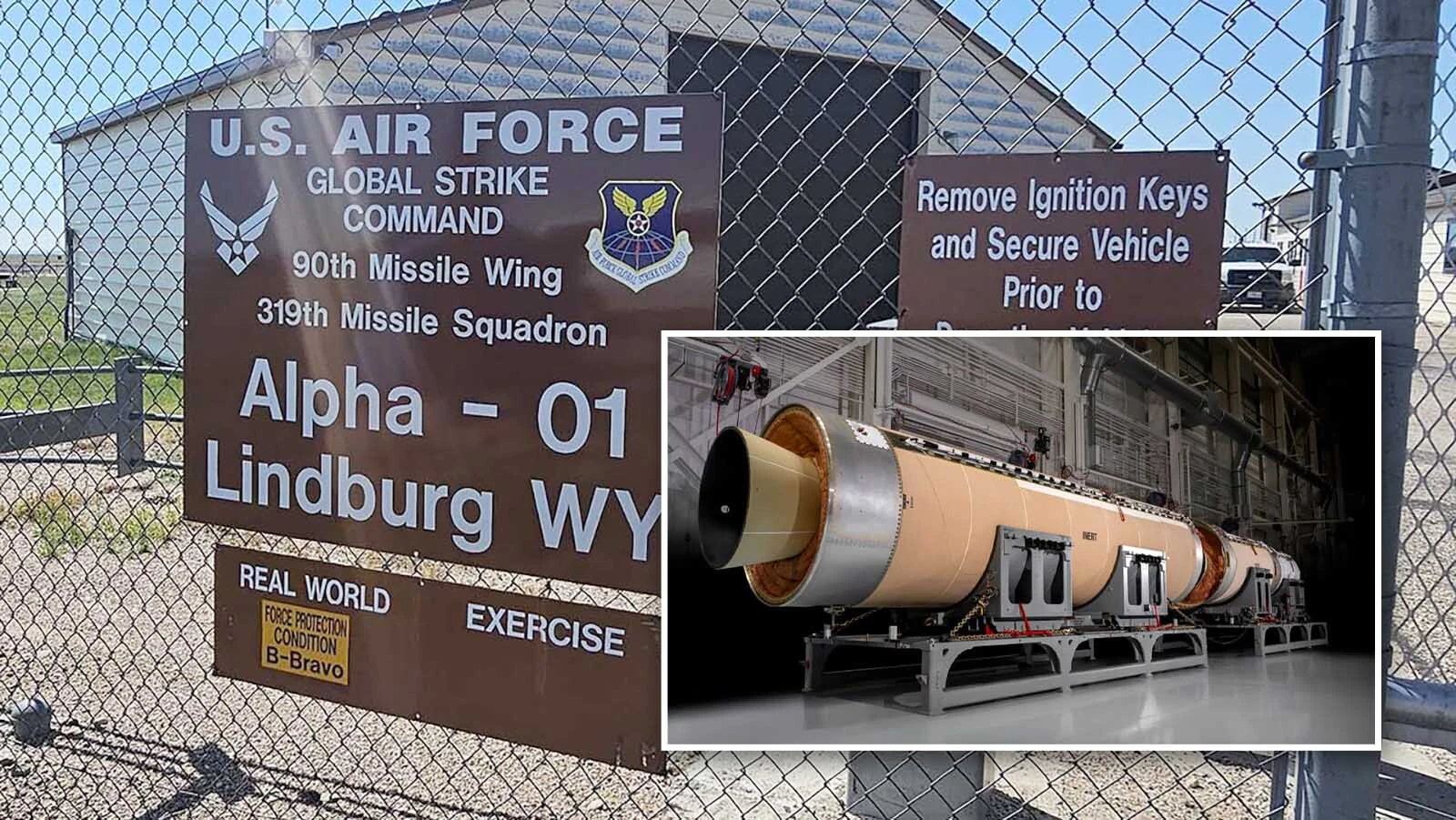
Northrop Grumman has also built a launch silo prototype at Promontory in Utah, which company officials told Cowboy State Daily will be key to minimizing risks for the entire project.
“That effort is about building a prototype,” Northrop Grumman’s Sentinel spokesperson Matt Dillow told Cowboy State Daily. “And prototyping is really important in major acquisition programs like Sentinel because of the sheer scale of the program.
"It’s important that we do some risk reduction.”

Prototype Getting Built In Utah
The prototype will be an early look at whether Northrop’s concepts and design approach will achieve everything they are supposed to.
“You also want to make sure you understand how to build it, what are the challenges going to be there?” Dillow said. “And you want to understand what kind of workforce you might need to build that launch silo and the logistics of it, what is the best approach.”
After that, the company will begin to scale up for accelerated construction at the 450 launch silos.
“That’s how many launch silos we will end up building for Sentinel,” he said. “And we’re trying to move fast here with Sentinel. We’re accelerating the program to get it fielded as soon as we possibly can.”
In parallel, Air Force and contractor teams are surveying existing Minuteman sites where many of the Sentinel silos will be placed to understand flooding risks, soil conditions and other on-the-ground realities.
That won’t be the only thing happening concurrently. To make up for time, early test flights from pads at Vandenberg Space Force Base in California will start before new launch silos are fully built and certified.
“That allows us to do some early testing of the missile itself without waiting for a launch silo to be built first,” Dillow said. "When you’re able to do things in parallel versus in a serial manner, then you’re able to get data and information sooner to accelerate the program that way.”
Meanwhile, Northrop says every propulsive element of Sentinel has already been prototyped and tested, including staging events.
Solid rocket motors are already in production, and guidance hardware has survived sled tests meant to mimic flight stress — another step in proving the system before it ever leaves the pad.
Sentinel’s first flight test is slated for mid-2027, with initial operational capacity in the early 2030s, according to public statements by the Air Force and Northrop Grumman.
Push Coming From Military
Promontory is where Northrop produces solid rocket motors. It plans to produce the first two stages of the Sentinel missiles there.
“We’ll also do a lot of the prototyping activities there as well,” Dillow said. “And the launch silo that we’re building now is just one of the prototyping activities happening there.”
The acceleration push has originated with the U.S. Air Force and U.S. Strategic Command, Dillow added.
“They’ve all been very vocal about, ‘We need Sentinel. We need the operational capability of Sentinel as soon as we can possibly get it,’” he said. “So, acceleration is really about providing to the Air Force that initial capability of a Sentinel missile in the silo as early as we possibly can.”
Sentinel, Dillow added, has been designed to be the most capable ICBM ever fielded. It will be a missile that can better withstand emerging threats, while being easier for airmen to operate and maintain on Day 1.

Pressure Building To Move Faster
For years, America’s land-based nuclear deterrent has been running on what the nation’s military experts have characterized as borrowed time. The ground-based leg of the nation’s nuclear triad is a vast enterprise spanning more than 32,000 square miles across five states.
The nation’s aging Minuteman III missiles were buried across a large swath of the Great Plains that includes Wyoming in the 1960s and 1970s.
They have been renovated multiple times, but a visit to the secret underground missile bunkers is telling. The equipment looks old, and the journey feels a whole lot like one has stepped back into time.
Other countries, meanwhile, have moved ahead with new technology and new capabilities for their missile programs.
That’s putting new urgency behind efforts to replace the nation’s aging Minuteman III missiles with better, much more advanced weapons.
“I couldn’t be happier right now with what we are doing, that we are finally getting this back on track,” Steenbergen told Cowboy State Daily. “Because while we are thinking about it, the Chinese are putting missiles in the ground, and they’re expanding into the third island chain, and they’re doing all this stuff. America has got to compete.”
Minuteman III has served the nation well as a vital component of the nation’s nuclear deterrence strategy, Steenbergen said. But he believes it’s time to quit patching an aging system.
“We should all be very glad for the security of this nation that we’re finally seeing our No. 1 deterrent for war is getting upgraded,” he said. “Because it’s been a long, long time since we put those missiles in the ground.”
Geopolitical flexes seem to have become more common of late, Steenbergen added.
“Even the Iran thing has a lot to do with China,” he said. “That’s where (China) gets all their power. And I’m in Washington, D.C., right now in meetings, and we’ve just been talking about how the Chinese are active in Africa, they’re active in South America and they’re active all over the world.”
China has become more and more ambitious, Steenbergen said. That’s disquieting when viewed through the lens of aging nuclear deterrence capabilities.
“They don’t have our best interest, or most of mankind’s best interests, at heart,” Steenbergen said. “And so, as a country who respects individuals and supports free enterprise and innovation, we’ve got to be pushing back on that, and this is one way we can do that.”
Cost Overruns Have Attracted Critics
Sentinel was initially projected to cost around $78 billion, but the most recent estimate is that the replacement is going to cost $140.9 billion.
Some of that is due to inflation, but there have also been unforeseen complexities, as well as a desire to improve infrastructure rather than try to retrofit aging Minuteman III silos.
The cost overrun prompted a Nunn-McCurdy review and fresh criticism from arms control advocates and budget watchdogs who say Sentinel is an unnecessary and overly expensive upgrade that risks locking the nation into an expensive system for decades.
Pentagon officials and military experts, however, have insisted the program is essential to modernize America’s aging missile force. The program is moving full speed ahead under the Trump administration.
Billions Flowing Into Wyoming
Sentinel’s missile upgrade in Wyoming will come with huge economic ripple effects, based on what Steenbergen has seen happen with previous missile upgrades.
The project will bring at least $2.6 billion in construction money to southeast Wyoming alone, as well as thousands of workers — anywhere from 2,000 to 5,000, according to estimates Steenbergen has been told.
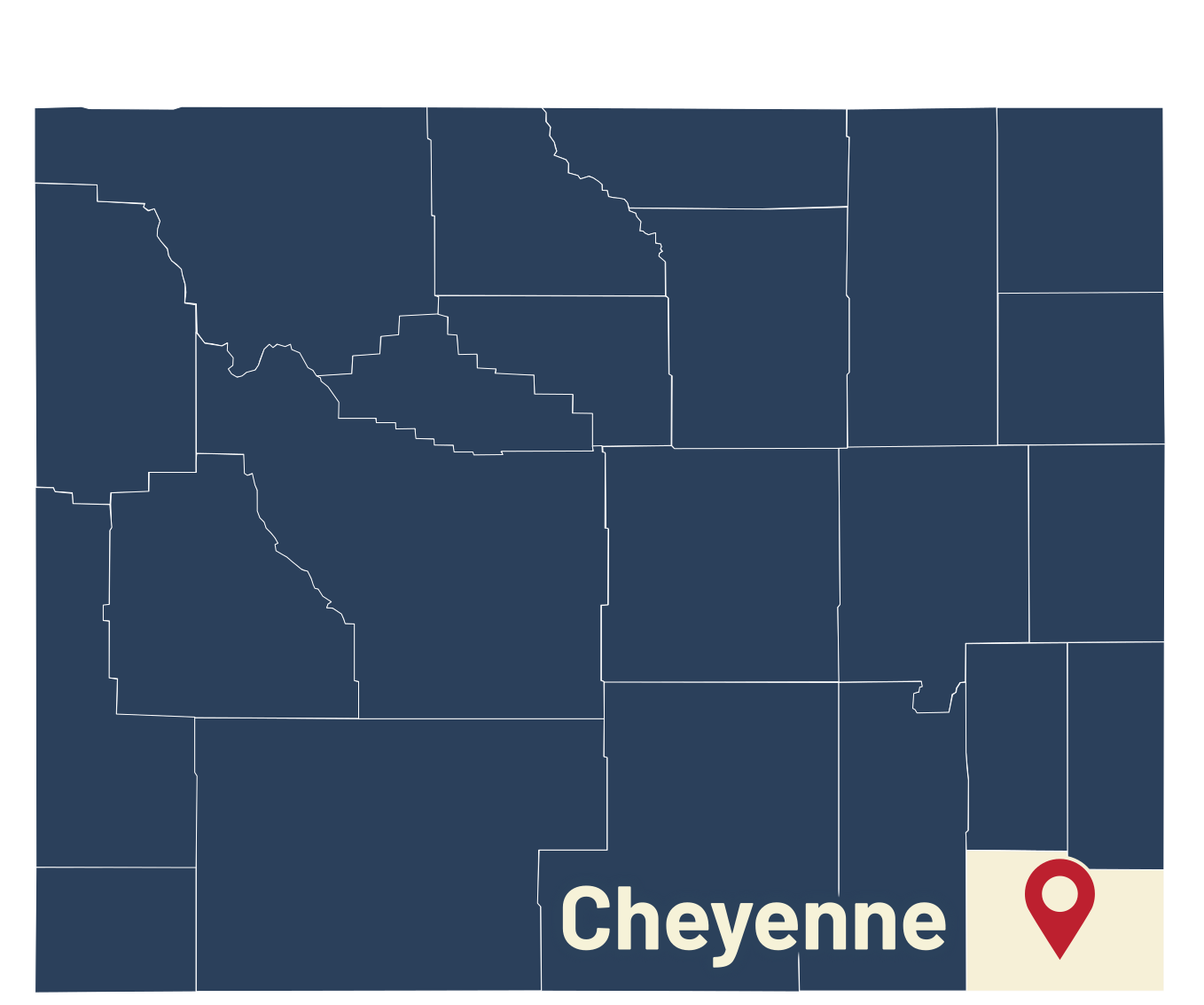
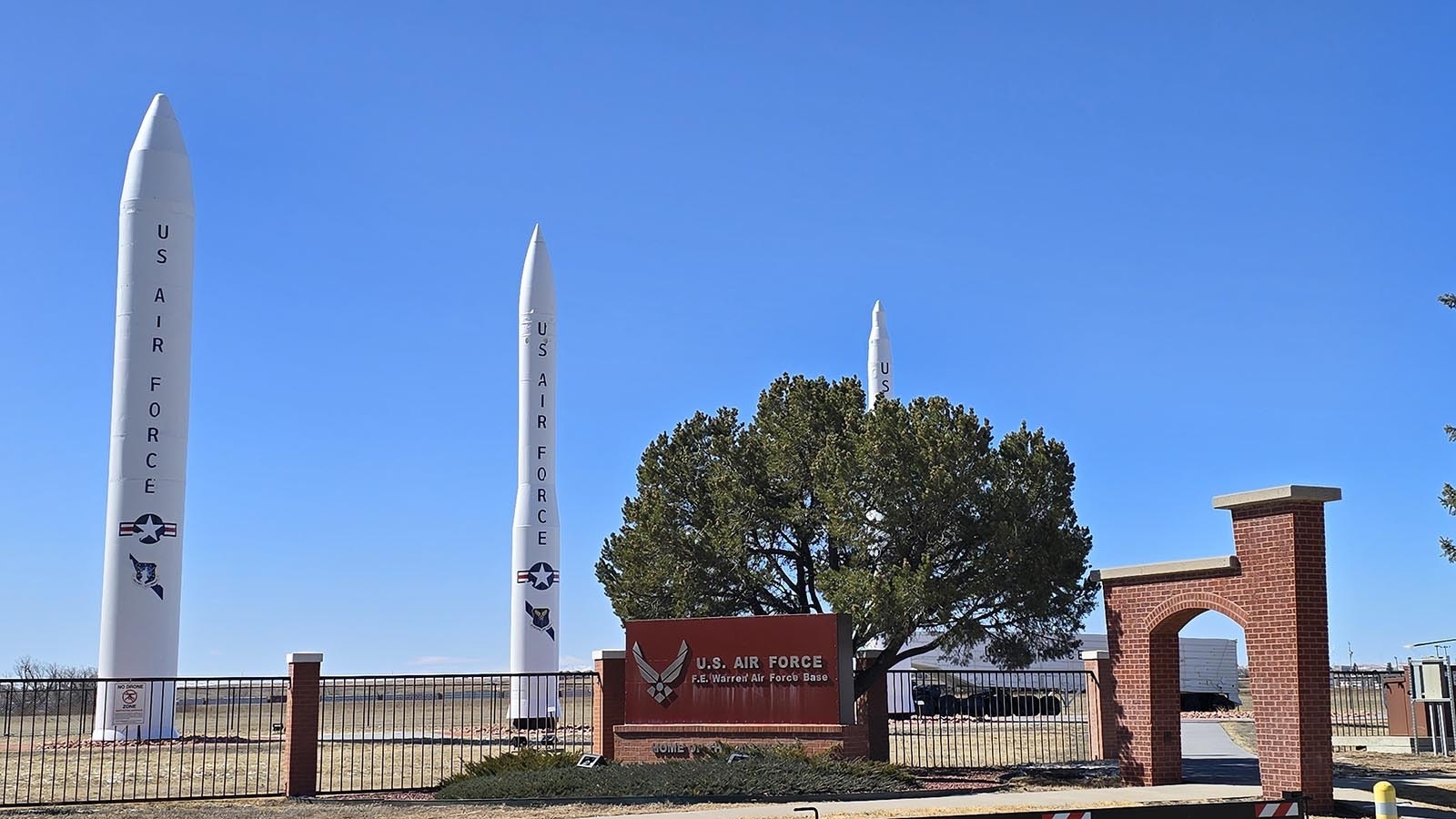
That $2.6 billion figure is just for construction at F.E. Warren Air Force Base in Cheyenne. Modernizing the land-based portion of the nuclear triad is estimated to cost $107 billion.
That big push is still far off on the horizon, but he’s already seen hundreds of new boots on the ground across the region.
“If you’re going to put in 24 miles of fiber in a test bed in Nebraska this summer, I think we all know what that means,” he said, referring to a boost in workforce. “And we’ve also had folks doing rights of way and we’ve had $2 billion in construction at Warren Air Force base that’s ongoing.
"So, there are a lot of people on the ground, and there’s a lot of economy that has already been spurred by Sentinel, and we’re not even to the big portion of it yet.”
Those billions won’t come with without headaches. Officials are scrambling to prepare for everything from tighter housing to more crowded schools and added strain on roads and other public services.
Lasting, Long-Term Benefits
Historically, previous missile upgrades have brought huge numbers of scientific jobs into southeast Wyoming, Steenbergen has told Cowboy State Daily. That’s had huge, positive ripple effects for businesses and communities across the region.
“When you think about that, you have these super smart people who are being put in the region for at least a certain amount of time,” he said. “And we’ll have the ability to keep some of them longer term, because they can use this as a kind of hub for the work they do at other bases.”
The impact of the influx isn’t just a one and done, either. It tends to last for decades.
Having so many people with expertise and innovative ideas has “tended to benefit us for the entire life of the missile,” Steenbergen said. “So, I expect on this one too, I think we’re going to have positive impact from this for the whole 50 years the missiles are here.”
Renée Jean can be reached at renee@cowboystatedaily.com.


