An enemy bullet hit his leg as a Green Beret special forces operator in Vietnam, he was burned in a helicopter crash training to be a pilot, and on a May day in 1967 was shot seven times times while flying a UH-1 Huey on a mission.
He kept flying and completed the mission.
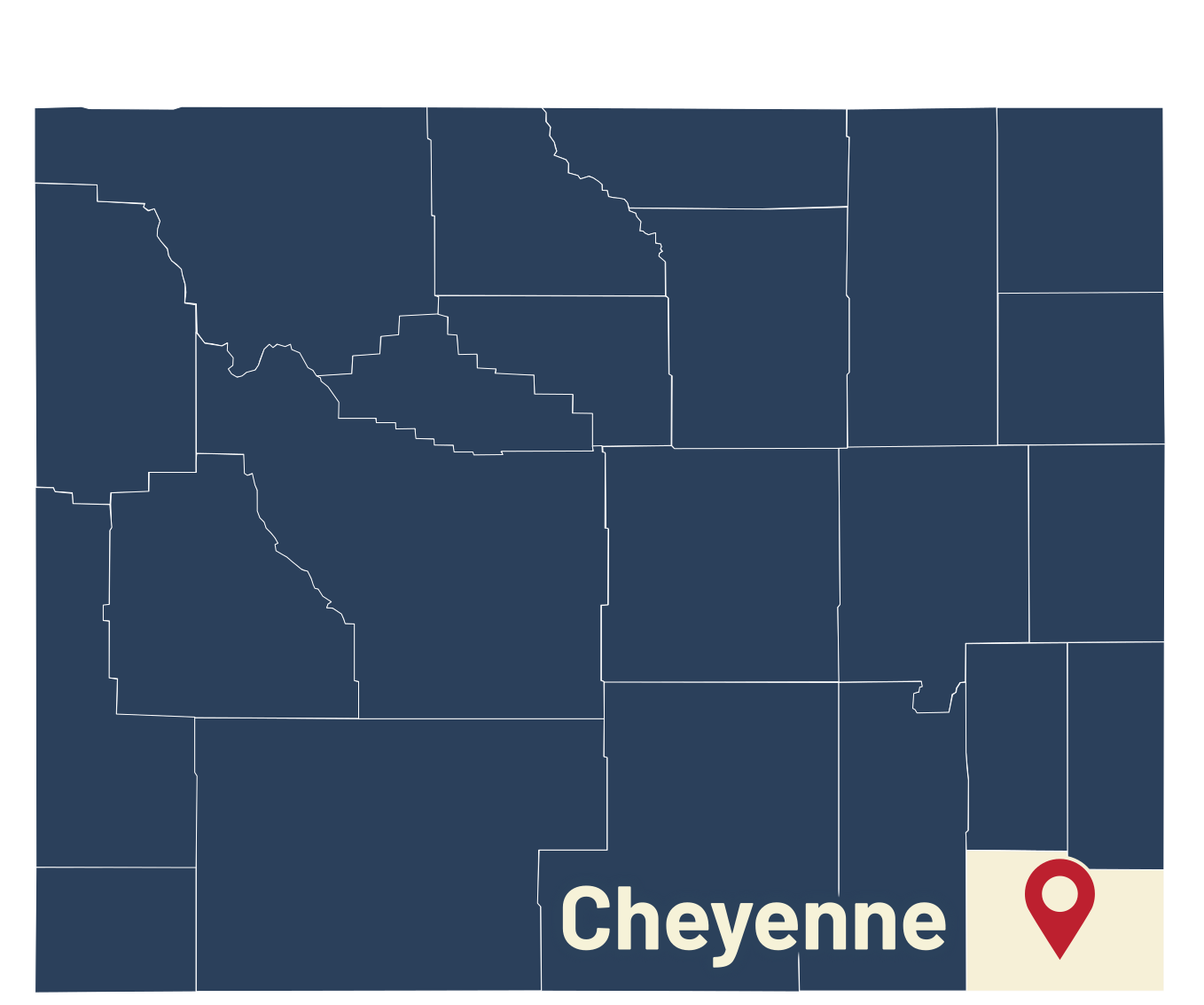
But Jerome “Jerry” Montoya, 86, of Cheyenne would go on to take the controls of a chopper again and finish a 25-year career with the U.S. Army. His scars leave him with no regrets.
“Do the thing that you are good at and do the thing that you love to do,” he said. “And I did that through all the obstacles. I still would try it again.”
The Cheyenne resident’s service career brought him 27 air medals, three purple hearts, and a prestigious Legion of Merit, but the memories and relationships forged during his career mean much more to him.
Montoya was born in Fort Collins, Colorado, on July 20, 1940, and his family moved to Cheyenne when he was 1 year old.
His father served in World War II and was killed before the end of the war. He doesn’t know the circumstances.
As GIs returned to Wyoming, his mother lost her job and he had to be placed in orphanage in Torrington because his mother could not take care of her four children.
“She got us out when I was about 8. I think I escaped the orphanage once, and I got all the way to Cheyenne on a train,” he said. “The (Wyoming) Highway Patrol picked me up and took me back to the orphanage.”
Montoya graduated from Cheyenne Central High School in 1959 and joined the U.S. Army.
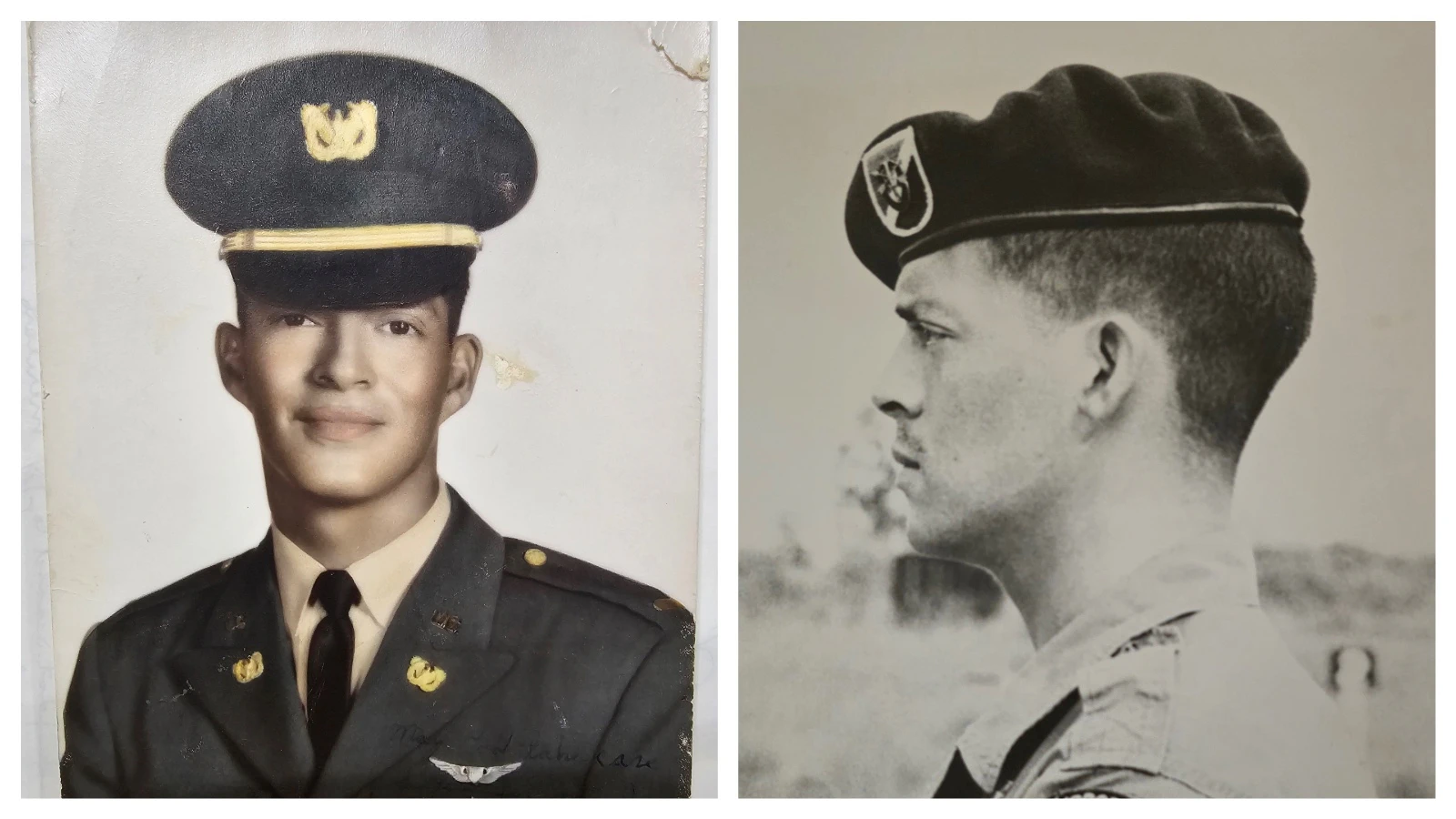
He initially was part of an artillery unit in Europe and then after returning to the states saw a master sergeant who was wearing a green-colored beret. He liked the way he looked.
Montoya also understood that he would get more money because of airborne jump pay as a Green Beret.
Green Beret
“I thought, ‘Maybe I’ll try that,'” he said.
He went on to qualify for Green Beret training in 1962 and became a fully qualified A-team engineer sergeant.
Montoya said he initially had no idea what the Green Berets did, but once in training became qualified in high-altitude parachute jumps above 30,000 feet, went through demolition training and CIA sabotage school.
He said he helped put Navy SEALs through high-altitude training and also took part in training in Virginia that involved learning how to get in and out of submarines under stress.
During training in Colorado working with helicopter crews, he remembers thinking that the pilots didn’t seem to be doing much.
He asked a pilot about his job and got a ride the next day.
“I thought, this is neat,” he said. Montoya said he also thought about the flight pay, which was more than the parachute jump pay he received as a Green Beret.
In 1964, he was ordered to Vietnam and during his first and only tour during the war as a special forces operator their camp was attacked one evening.
He and a friend who handled demolitions on their team were running for the gate to the compound to shut it.
He initially thought his friend tripped him and he told his friend to watch where he was running.
“He said, ‘Jerry, you are bleeding,'” Montoya said. “It didn’t hurt until he told me.”
He was med-evacuated back to the United States. At that time, the Green Beret had six-month tours overseas.
After recovery, he sought and received an opportunity for flight school piloting helicopters.
His training progressed to where he had soloed for 45 minutes and during training one day, another student flying behind him mistakenly took Montoya’s landing spot and Montoya did not see him until it was too late.
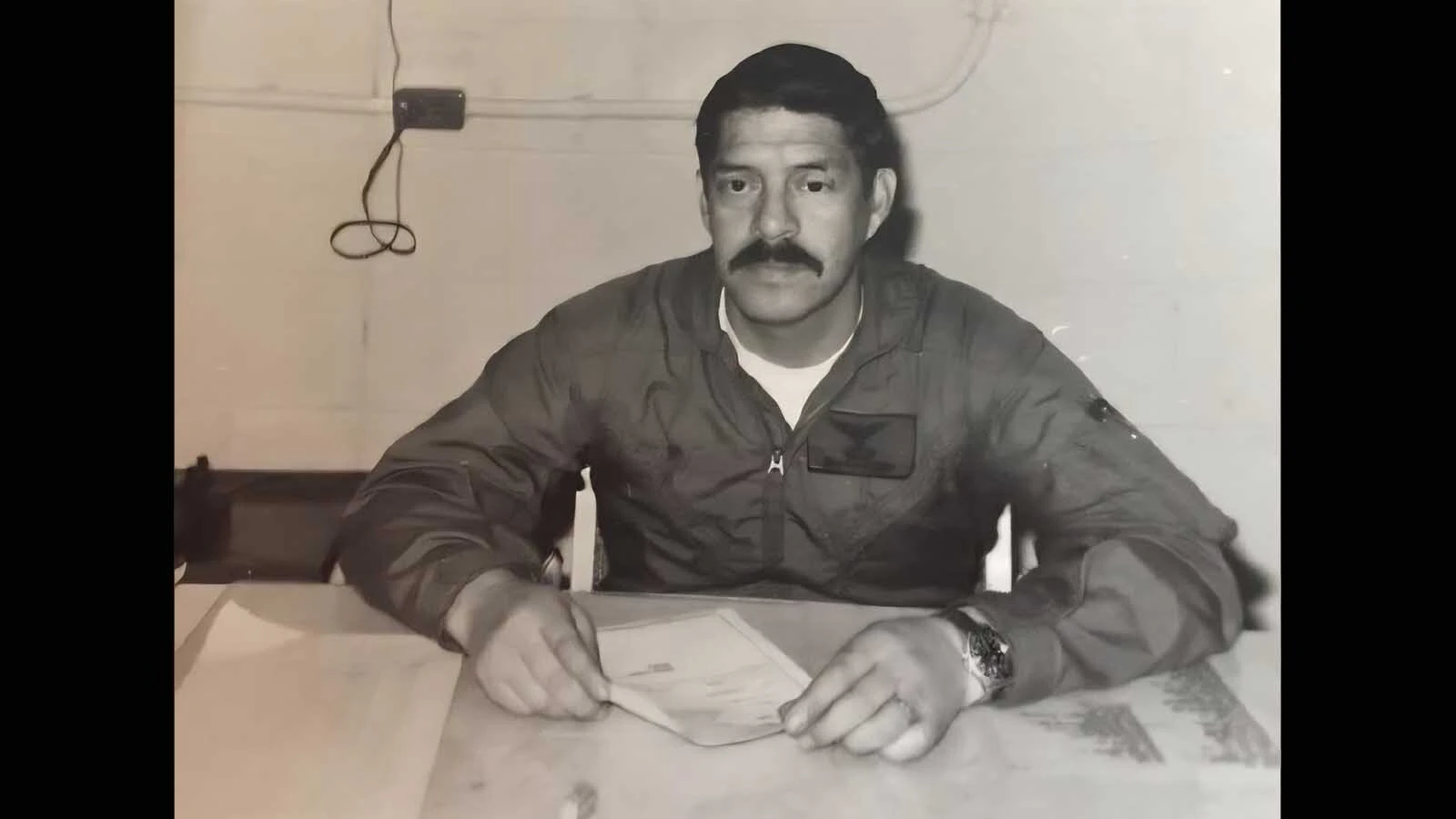
Crash And Explosion
Montoya’s helicopter landed on top of the other student’s and then fell on its side. There was an immediate explosion.
“My instructor was burned pretty bad and I had all my clothes burned off,” he said. Initially he could not escape the helicopter as the flames and smoke enveloped it because his instructor blocked the way and had not taken off his seat belt.
"Montoya was able to get the seatbelt unfastened and push his instructor out his door. I had to look it up, but the capital A is correct) nbit ot's follow him.
Once outside, Montoya’s uniform was on fire and another student pilot ran to him with a fire extinguisher to put it out.
His initial thought was that he had already escaped death in Vietnam and “now you guys are trying to kill me.”
Montoya received another medical evacuation on a stretcher tied to the skid of a helicopter.
His instructor lived and had severe burns to his hands. Montoya said because he had all the safety gear on as a student, despite the flames on his clothes he escaped with light burns and a flash burn on his face.
After initially thinking he was done with flight school, another instructor convinced him to give it another try.
An investigation of the crash cleared Montoya to resume training. He finished flight school one class behind his original one.
In the class behind was a guy named Kris Kristofferson, who would go on to become the famous Nashville songwriter, singer and Hollywood actor.
“Our classes were all going to Vietnam, everybody, except Kris Kristofferson,” Montoya said. “He went to Europe. His daddy was a one-star general.”
Back in Vietnam in 1966, Montoya was assigned to the 281st Assault Helicopter Company flying missions that included supporting the 5th Special Forces Group and a lot of reconnaissance flights associated with Project Delta that involved special forces “hunter-killer missions.”
Often, Montoya said he would drop a team into the jungle and the Viet Cong would be waiting for them.
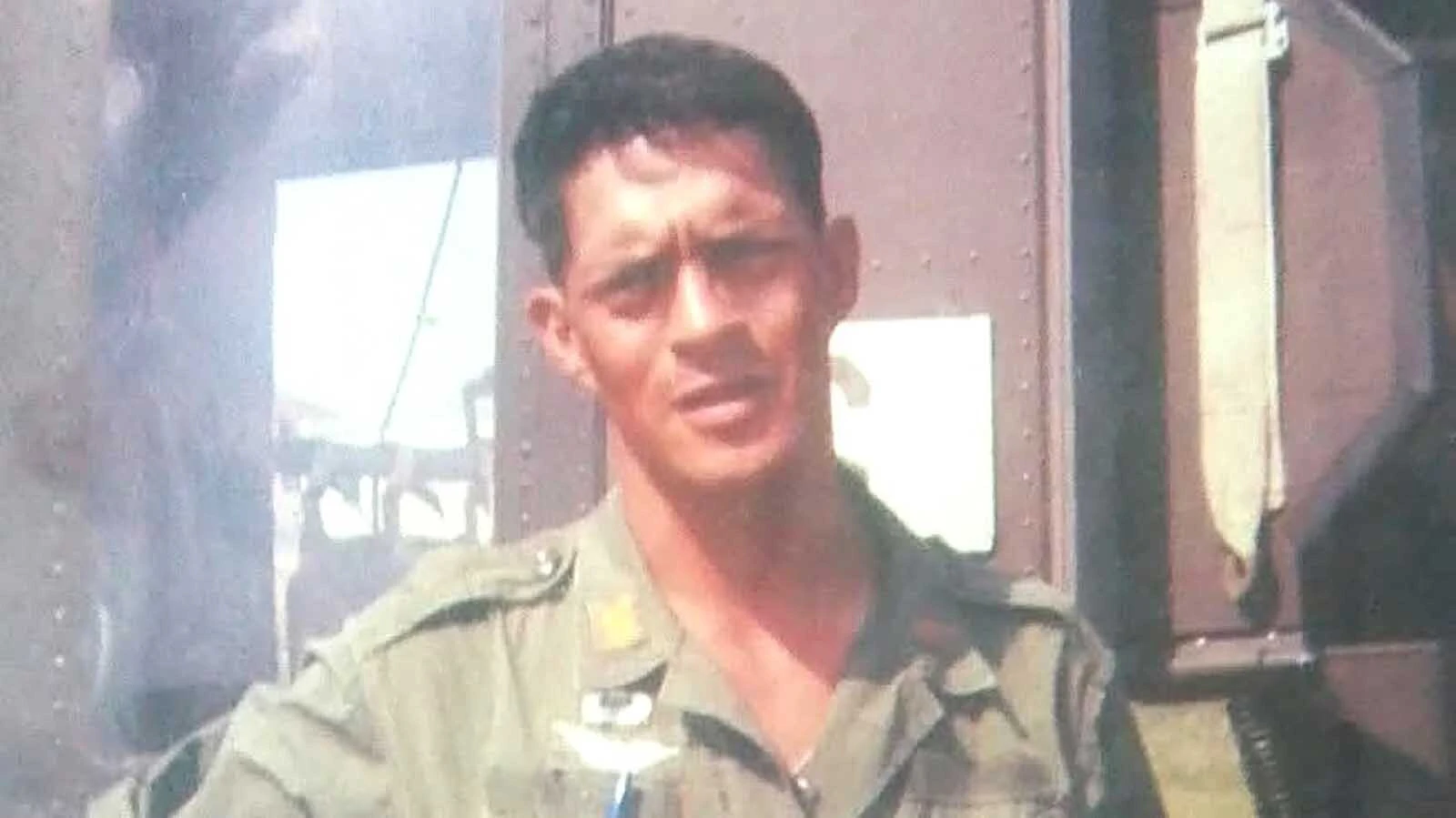
7 Bullets
He characterizes the missions as a “dangerous job” that involved four helicopters with one acting as the controller, two gunships hovering above to supply fire, and a fourth gunship putting the team down into the hostile area.
“There’s three guys on each side of the helicopter and as soon as that skid hit the grass, they were gone,” he said.
On a mission on May 21, 1967, in A Shau Valley near the border of Laos, he remembers turning to talk to his copilot when a bullet came through the windshield and struck him in the face.
“One bullet came through my windshield and hit my microphone, blew the microphone through my face,” he said. “Another one hit me in the right jaw and broke my jaw and knocked all my teeth out.
"A third hit me in the neck and we were down inside of a valley trying to turn around and come out, and (a fourth) that bullet came through the roof and hit (me) in the neck by the collarbone.”
Three other bullets hit armor plating he was wearing, breaking five ribs.
The copilot told him to flip his seat back so those behind could pull him away from the controls and help him.
But instead, Montoya said because of the armor on the seat it would have been too heavy to flip up, so he unbuckled himself and collapsed in a medic’s lap in the back of the helicopter.
He said he was flown back to base and taken to the hospital where he remembers someone saying that they could not find a pulse.
He was stabilized and sent to a hospital ship, then back to Vietnam where he was put on an airplane and sent to Fitzsimons Army Medical Center in Denver.
They told him he was going to be medically discharged and that he could no longer fly or be on active duty.
Montoya challenged them.
“I said, ‘I want to stay and I want to fly,’” he said. The Army compromised and allowed him to stay in but told him he could no longer fly, but could be a maintenance officer. He did a tour in Europe as a maintenance officer, but kept arguing for an opportunity to fly.
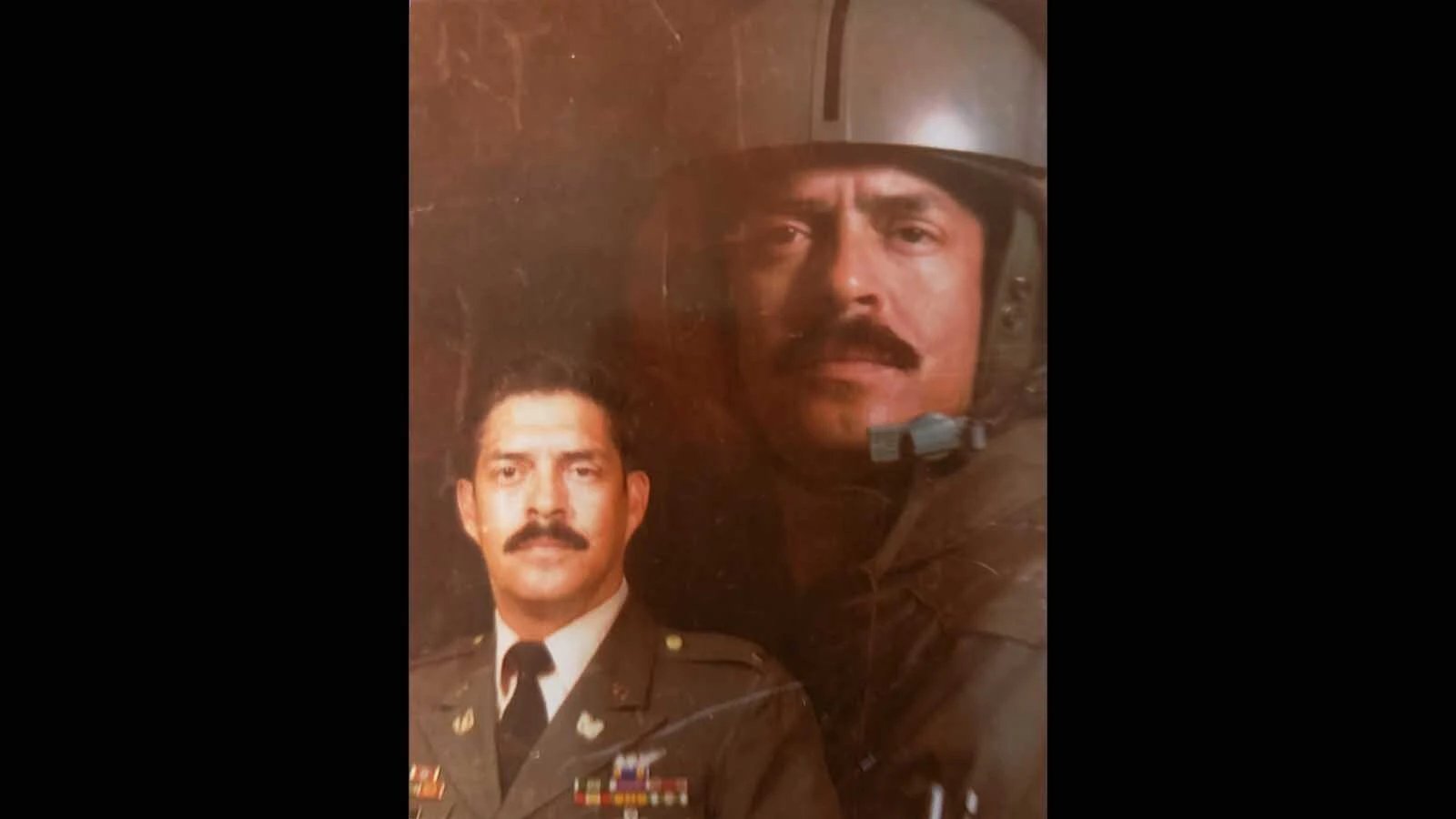
Jerry Montoya said as a helicopter pilot in Vietnam the missions were too many to remember. He would finish one assignment, and be sent out immediately on a another one. (Courtesy Jerry Montoya) 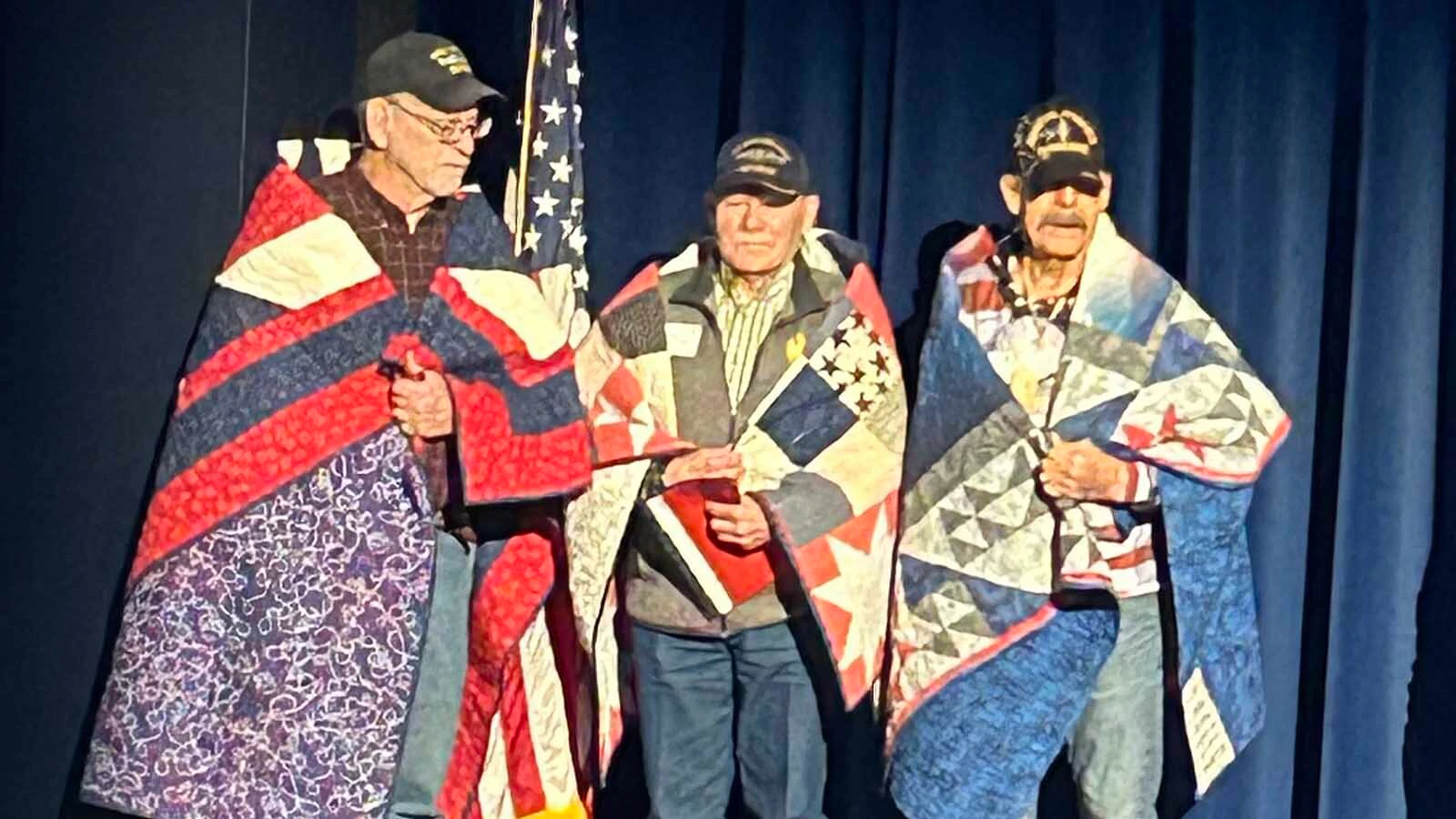
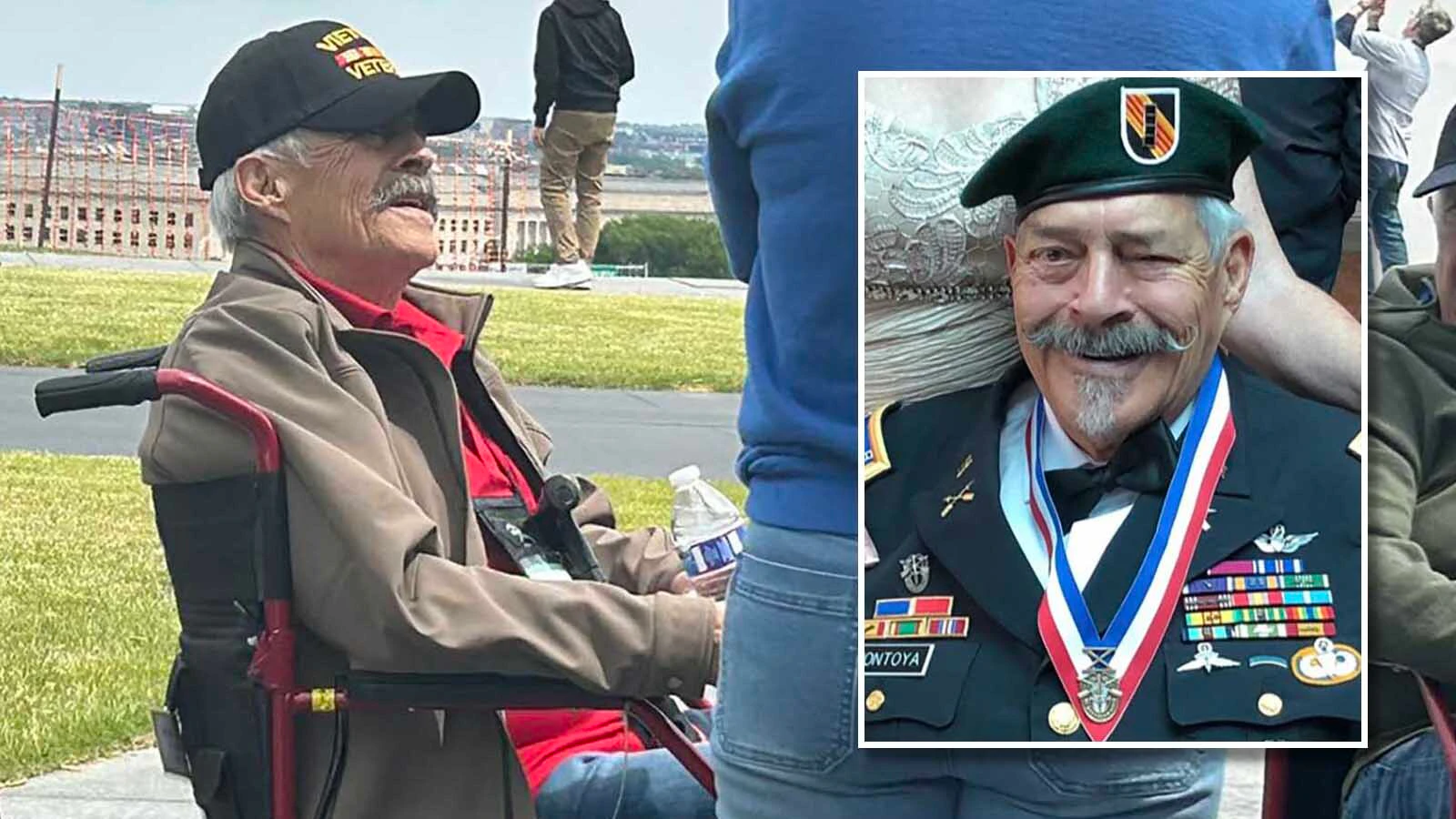
Jerry Montoya, right, and other veterans are celebrated as part of a recent Rocky Mountain Honor Flight. (Courtesy Rocky Mountain Honor Flight) 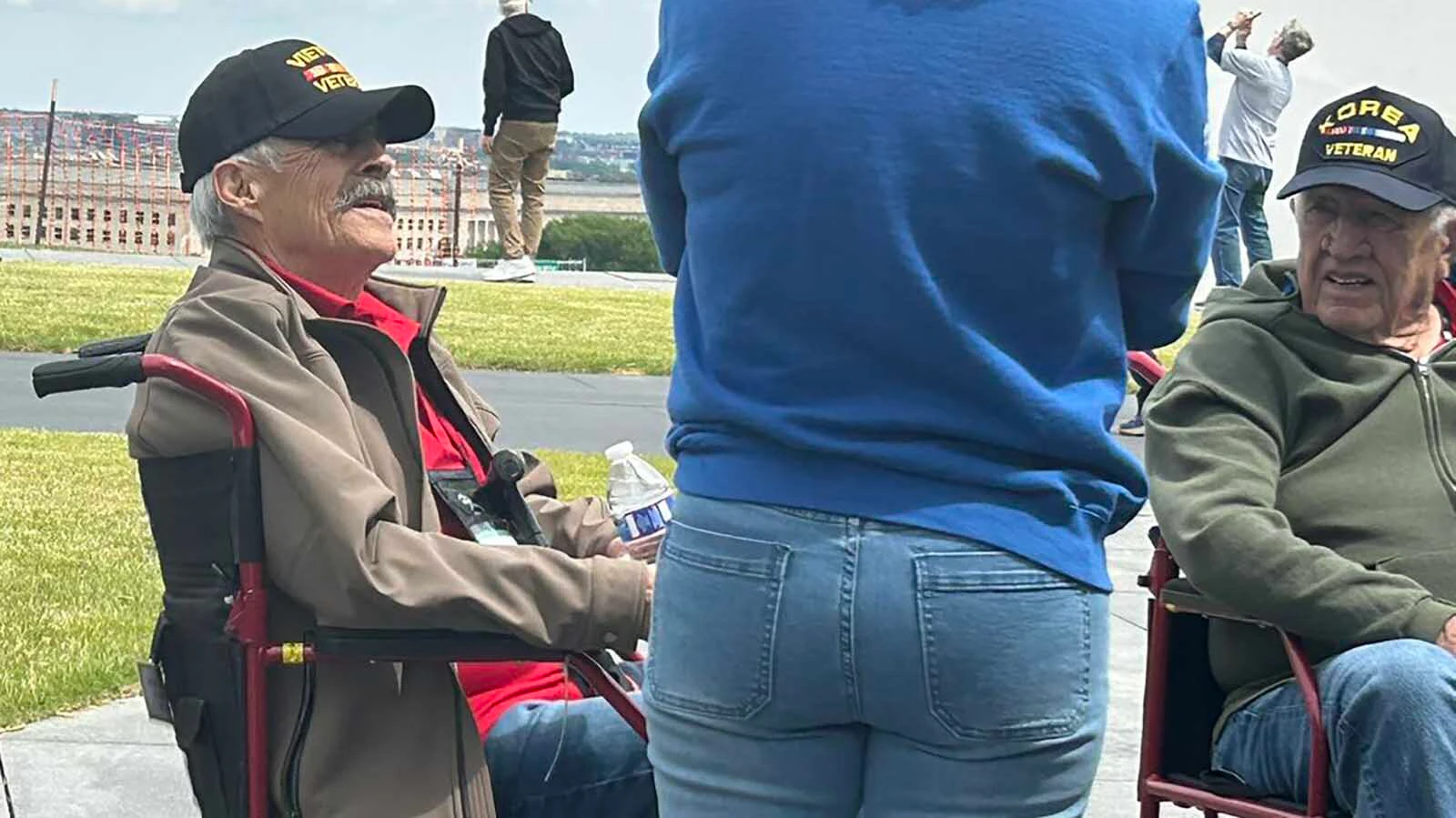
Jerry Montoya was a Green Beret chopper pilot when he took seven bullets and had his eye shot out while in the air, but it didn’t stop him from completing his mission. “I flew for another 14 years as a one-eyed pilot,” said Montoya, now 85. (Hank Runland via Facebook) 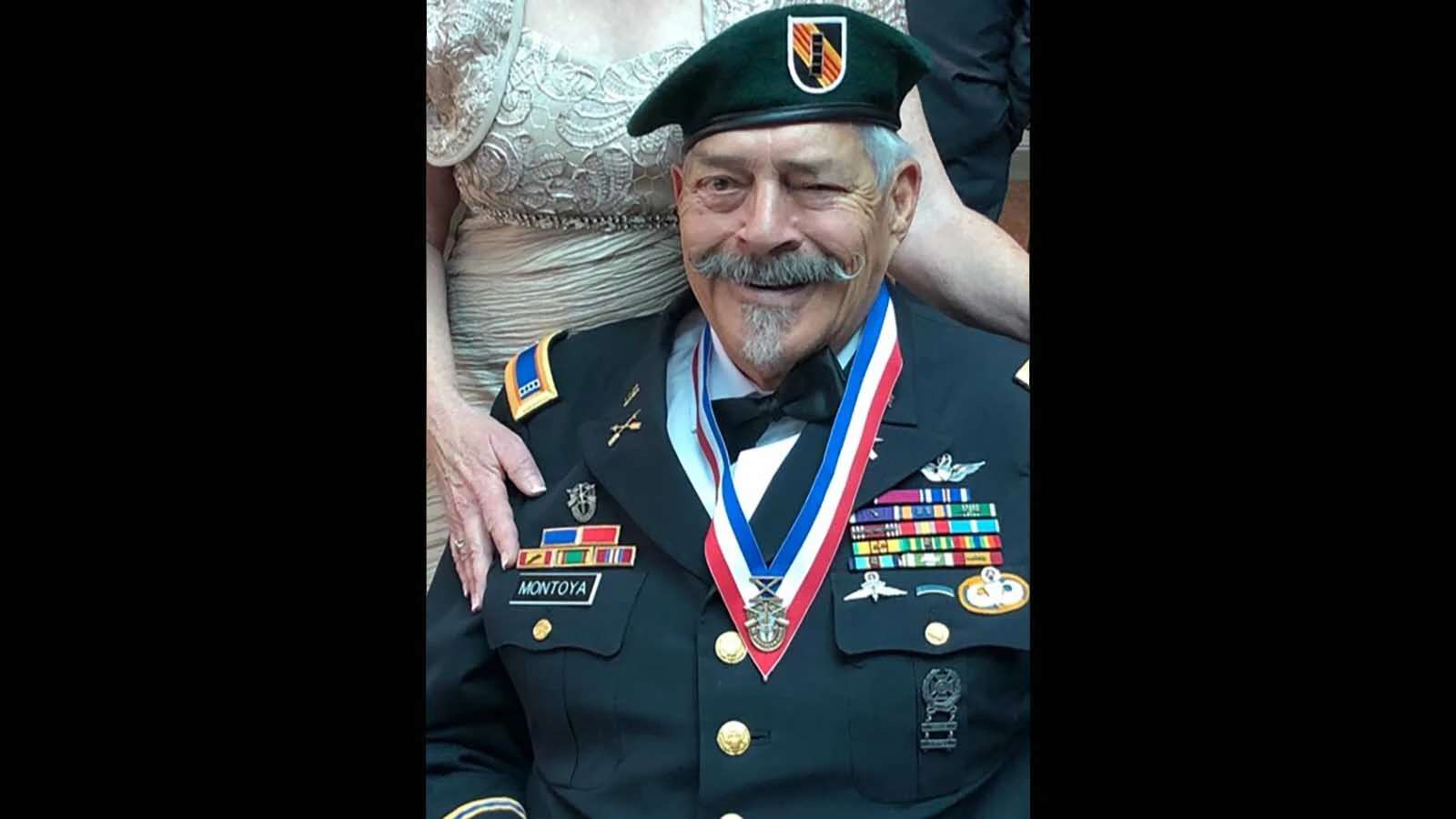
Jerry Montoya received more than two dozen medals and honors during his military career. (Courtesy Jerry Montoya)
At Fort Rucker, Alabama they tested his ability to fly with one eye. He flew all the mandatory patterns by shifting his body slightly to keep his field of vision comparable to two eyes.
He passed the test and was allowed to fly as a copilot in the right seat.
“I flew for another 14 years as a one-eyed pilot,” Montoya said.
He said depth perception and night vision were challenging, but he relied on the instruments to give him the information he needed.
In 1984 at age 44, the chief warrant officer 4 had a heart attack. His military career was over.
Montoya said he has no regrets.
He recently returned from a Rocky Mountain Honor Flight to Washington, D.C., that recognizes and honors those who served in Korea and Vietnam.
Though he said he could dwell on a lot memories from Vietnam that involved the loss of friends, washing the blood and worse out of his gunship after a mission to immediately go on another one, he keeps his mind on the positive things.
“I have a lot of memories that people would call disabling,” he said. “I have a lot of wonderful, wonderful memories, wonderful friends,
"People ask me, ‘Does Vietnam bother’ me? And I said, ‘That was then, and now is now. I got to live now. I don’t have to live then.'”
Dale Killingbeck can be reached at dale@cowboystatedaily.com.