Animal welfare advocates want to ban the commercial sale of trapped wildlife fur in Colorado, an idea that Denver voters already rejected, and the state’s wildlife agency opposes.
Advocates of the fur sales ban told Cowboy State Daily that it’s not about banning trapping, but rather ridding their state of the commercialization of wildlife.
Colorado Parks and Wildlife (CPW) recommended against the wildlife commission approving the ban, which the Center For Biological Diversity petitioned for in June 2025.
In 2024, Denver voters defeated a measure to ban the making or selling of fur-based products there by a margin of 58% to 42%.
Even so, hunters and trappers aren’t taking it for granted that they’ve won the fight.
Things could go the other way on Wednesday when the Colorado Parks and Wildlife Commission is expected to rule on the matter, a Colorado outdoorsman told Cowboy State Daily.
The commission is bracing for a huge turnout from both sides of the issue.
Dan Gates, spokesman for Coloradans for Responsible Wildlife Management, said that as he sees it, the commission is packed with “vegans and vegetarians” who oppose consumptive wildlife use.
He was busy on Tuesday with back-to-back media interviews and rallying supporters to show up at the meeting and speak out against the petition to ban fur sales.
Please Leave Weapons At Home
Anticipating a packed house, CPW moved its meeting to a larger venue, the DoubleTree by Hilton in Westminster, northern suburb of Denver.
In a website post ahead of the meeting, CPW reminds people that there might not be enough time for everybody who wants to comment to speak “due to the anticipated high volume of attendees.”
One of the groups supporting the ban, Prairie Protection Colorado, is telling its followers to show up as early as 6 a.m., even though fur sales aren’t on the commission’s agenda until afternoon.
CPW also reminds attendees to leave their weapons at home, per the hotel’s policy.
“CPW will be enforcing this policy at the hotel’s request,” the agency says. "Members of the public who plan to attend the meeting in-person should plan to arrive early as you will be expected to enter through a security checkpoint.
"You will be denied entry if you cannot comply with this policy."
‘Misinformation’
“Misinformation” about the petition has blown its intent out of proportion, said Samantha Miller, senior carnivore campaigner with the Center of Biological Diversity.
It’s not about trying to ban trapping and hunting, but to bring trapping in line with the North American model of wildlife management, she told Cowboy State Daily.
That model is the time-honored template for ethical hunting and wildlife management, and one of its core principles is forbidding its commercialization.
That's the reason that while big game hunters are allowed to give meat away, they can’t put it up for sale.
As Miller and other supporters of the petition see it, banning the commercial sale of wildlife fur only makes sense, according to that core principle.
“If we shouldn’t have commercial markets for big game, it should be the same for all wildlife,” she said.
Misinformation and rumors have spread that the petition aims for a total ban on fur in Colorado.
That’s not true, Miller said.
“It’s specific to wildlife” and would not apply to such things as products made from animals raised on fur farms.
She also rejected the idea that there’s a long-range agenda to end trapping and hunting.
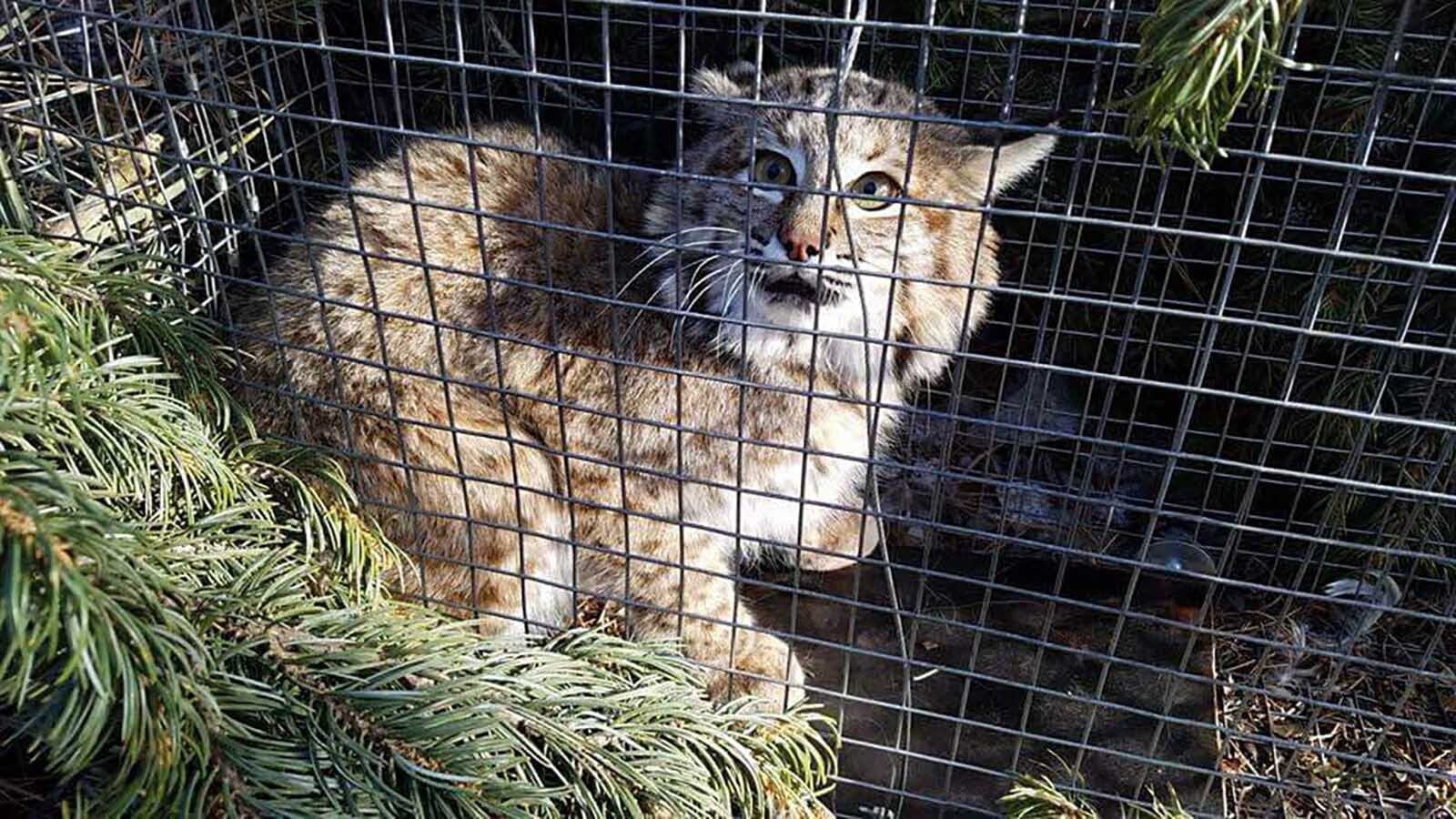
Cage Traps
Prairie Protection Colorado spokeswoman Deanna Meyer said she was exposed to trapping years ago when she lived in Alaska.
“I’m really glad I had the experience, but it’s something I never wanted to do again,” she told Cowboy State Daily.
Although she doesn’t like trapping, Meyer reiterated that the petition isn’t about trying to ban the practice in Colorado.
She said CPW doesn’t do accurate population counts of such wildlife as pine martens, bobcats and swift foxes beyond “what trappers kill.”
So, it’s difficult to tell if any of those populations are struggling, she said.
“We know that the swift fox is in trouble, but we don’t know how much trouble because we don’t have a robust population study,” she said
Banning the commercial sale of wildlife fur could curb the killing of those species, she said.
Colorado allows only cage-style traps — not leg traps or necks snares — but permits unlimited trapping, she said.
“I think everybody can agree that the biggest issue facing wildlife if habitat loss. I don’t think we should commercialize and incentivize more killing, especially if we don’t have accurate population numbers,” Meyer said.
‘Let The Agency Manage Wildlife’
Gates said he thinks that animal welfare advocates have greatly exaggerated the effects of trapping on Colorado’s wildlife.
Since only cage traps are allowed, there isn’t much trapping in the state anymore, he said.
“The majority of the fur that's harvested in Colorado is harvested by hunters, so it’s not even really about trapping,” he said.
He said that there has been a long campaign against hunting and trapping in Colorado, and the petition to stop the commercial sale of wildlife fur is just the latest move.
“The governor and the first gentleman are animal rights extremists, and they’ve appointed people with similar views to positions of influence,” Gates said in reference to Colorado Gov. Jared Polis and his husband Marlon Reis.
The commission should reject the petition and “let the agency (CPW) manage wildlife,” he said.
CPW Against Ban
In a memo to the wildlife commission, CPW recommends that the commission reject the petition.
“The petition relies heavily on uncertainty about these species’ population trends and the possibility that the commercial sale market is driving harvest past sustainable population limits,” according to the recommendation. "But the petition lacks solid evidence that commercial fur sales drive harvest levels in Colorado.
“Even if the petition supported the claim that commercial fur markets have a significant relationship to Colorado harvest levels, the Division does not have data that indicates unsustainable harvest levels."
Mark Heinz can be reached at mark@cowboystatedaily.com.